

Why Performance Evaluation Systems Don't Work Without Gamification
Performance evaluation without engagement is a formality that works against the business. Employees see it as control and a threat, not as a growth tool: numbers drop, initiative disappears, top specialists burn out. As a result, a system designed to increase efficiency demotivates the team and lowers sales.
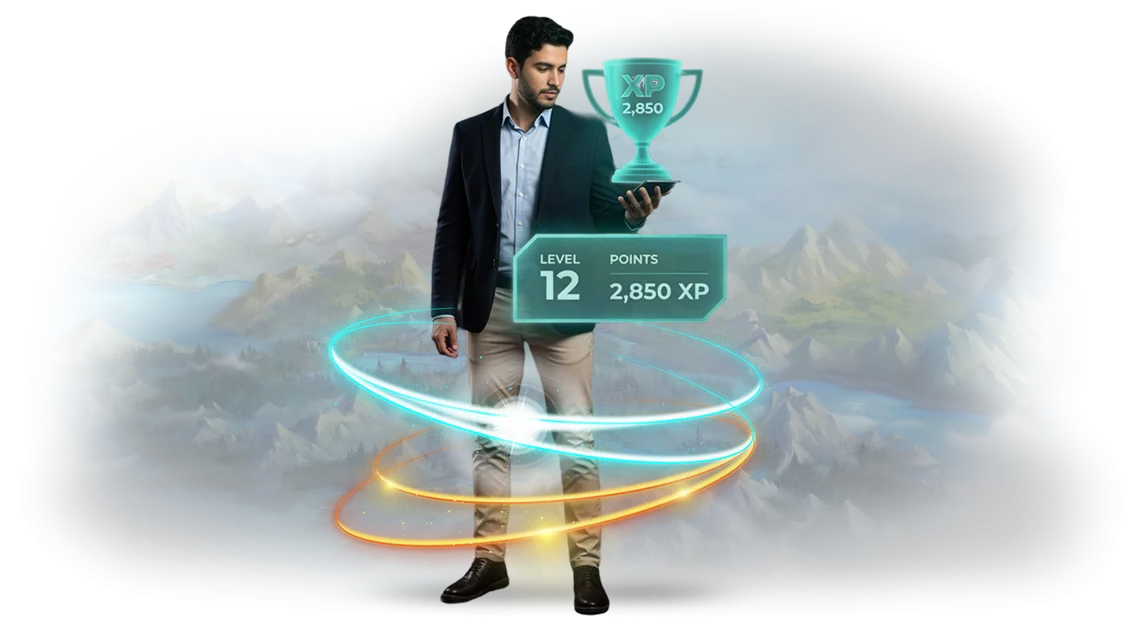
The problem is that classic evaluation answers the question “who is worse” rather than “how to get better.” It creates tension and fear of mistakes. Gamification changes the psychology: instead of pressure — clear goals, visible progress, and recognition of achievements. The employee starts to perceive evaluation as a game they enjoy taking part in, not as an exam.
Game mechanics in business are not points for points' sake. They are a way to make performance visible and achievable: the employee sees how their actions bring them closer to the goal, receives feedback immediately rather than once a quarter.
Employee engagement grows because excitement arises and with it the desire to surpass one's own results.
The concrete effect is growth in key metrics. When evaluation becomes part of the game process, CRM activity increases, conversion rises, and task completion time decreases.
The team itself strives for high results, and the manager gets a transparent view of efficiency without coercion or conflicts.
We address this need: we design evaluation gamification so that it works toward the business result. To do this, we combine game mechanics with company goals and the motivation system.
As a result, you get not a “game for the sake of the game” but a working tool that strengthens sales and retains strong employees. Here is the body of the section in markdown (without h2). Performance evaluation without engagement is a formality that works against the business.
Employees see it as control and a threat, not as a growth tool: numbers drop, initiative disappears, top specialists burn out. As a result, a system designed to increase efficiency demotivates the team and lowers sales.
The problem is that classic evaluation answers the question “who is worse” rather than “how to get better.” It creates tension and fear of mistakes. Gamification changes the psychology: instead of pressure — clear goals, visible progress, and recognition of achievements. The employee starts to perceive evaluation as a game they enjoy taking part in, not as an exam.
Game mechanics in business are not points for points' sake. They are a way to make performance visible and achievable: the employee sees how their actions bring them closer to the goal, receives feedback immediately rather than once a quarter.
Employee engagement grows because excitement arises and with it the desire to surpass one's own results.
The concrete effect is growth in key metrics. When evaluation becomes part of the game process, CRM activity increases, conversion rises, and task completion time decreases.
The team itself strives for high results, and the manager gets a transparent view of efficiency without coercion or conflicts.
We address this need: we design evaluation gamification so that it works toward the business result. To do this, we combine game mechanics with company goals and the motivation system.
As a result, you get not a “game for the sake of the game” but a working tool that strengthens sales and retains strong employees.
What Gamification Gives to Company Business Processes
Gamification of business processes turns routine tasks into a clear system with goals, progress, and feedback. The employee sees not abstract KPIs but their own path: what has been done, what remains, how the result affects overall success.
This is exactly what raises employee efficiency — they stop “clocking in” on tasks and start engaging with the process because every action receives a measurable response.
For the company, this means predictable growth in key metrics. When process gamification is built around real business metrics, productivity grows not through pressure but through intrinsic motivation.
Employees themselves strive to do more and better — because now they understand how their personal contribution affects the team result and rewards.
An additional benefit is reduced turnover and increased loyalty. Game mechanics create a sense of development and recognition: a person sees their progress, receives rewards for achievements, and feels valued.
This fosters healthy competition and engagement, which means the team changes less frequently and reaches planned targets more steadily.
Finally, business gamification helps onboard new employees and implement changes faster. Instead of long instructions and control — short game scenarios that train through action.
In the end, processes become more transparent, and the company gets a manageable, motivated, results-oriented team.
Formats for Developing Gamification for Your Task
Gamification is not a single scenario but several formats that differ in depth of design and scale. A light version suits a quick start, a medium one suits a real competitive environment, and a comprehensive one suits systematic work on business metrics.
We choose the format according to your task: increase evaluation frequency, speed up onboarding, or create a healthy competitive spirit. The types of game mechanics and their balance depend on what result you need — spontaneous activity or long-term behavior change.
Three Types of Gamification
| Format | For whom | What it gives the client |
|---|---|---|
| Light — levels, points, rewards | Teams that need to quickly revive their evaluation system | Fast launch and a noticeable increase in activity within the first weeks |
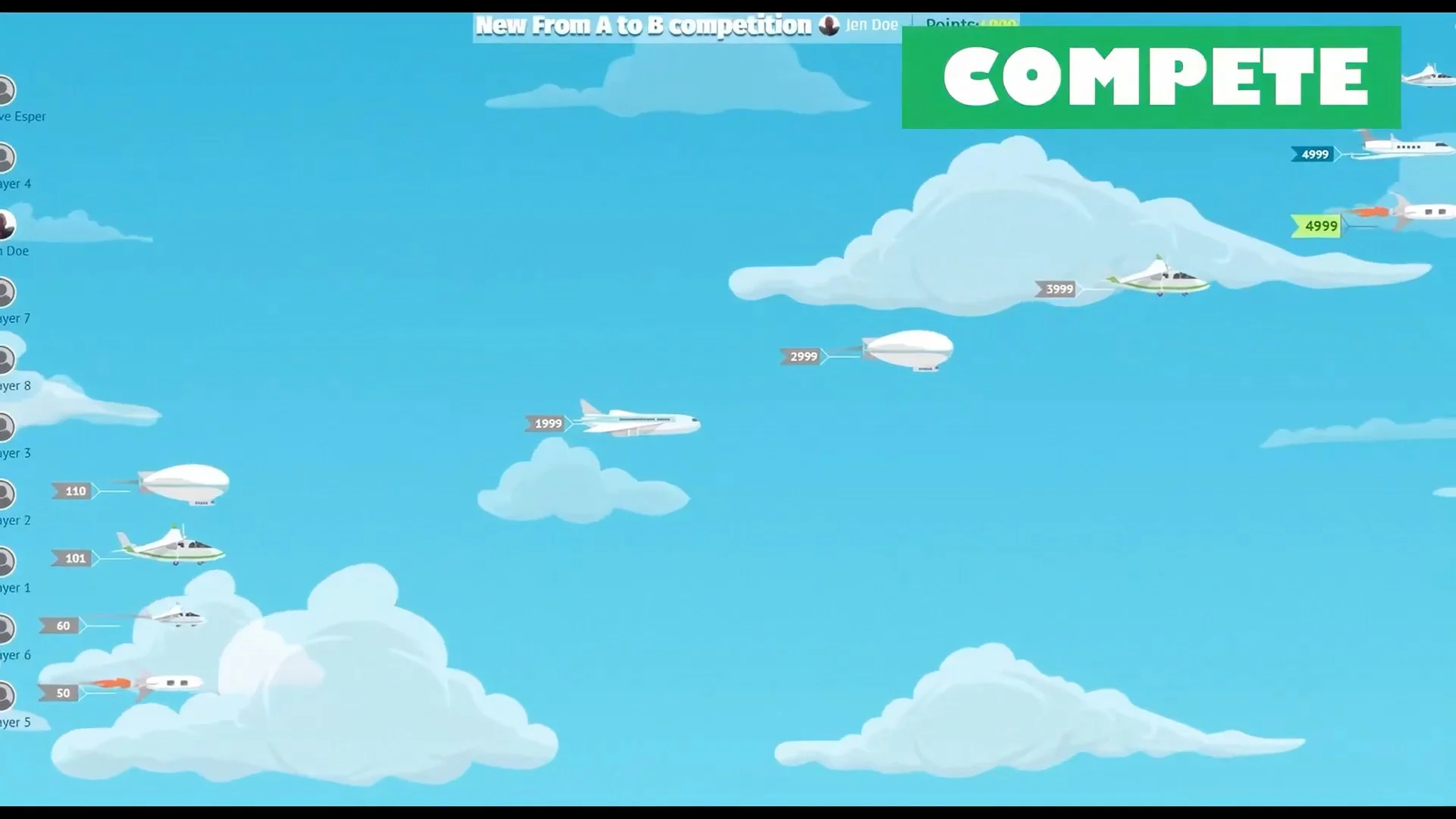
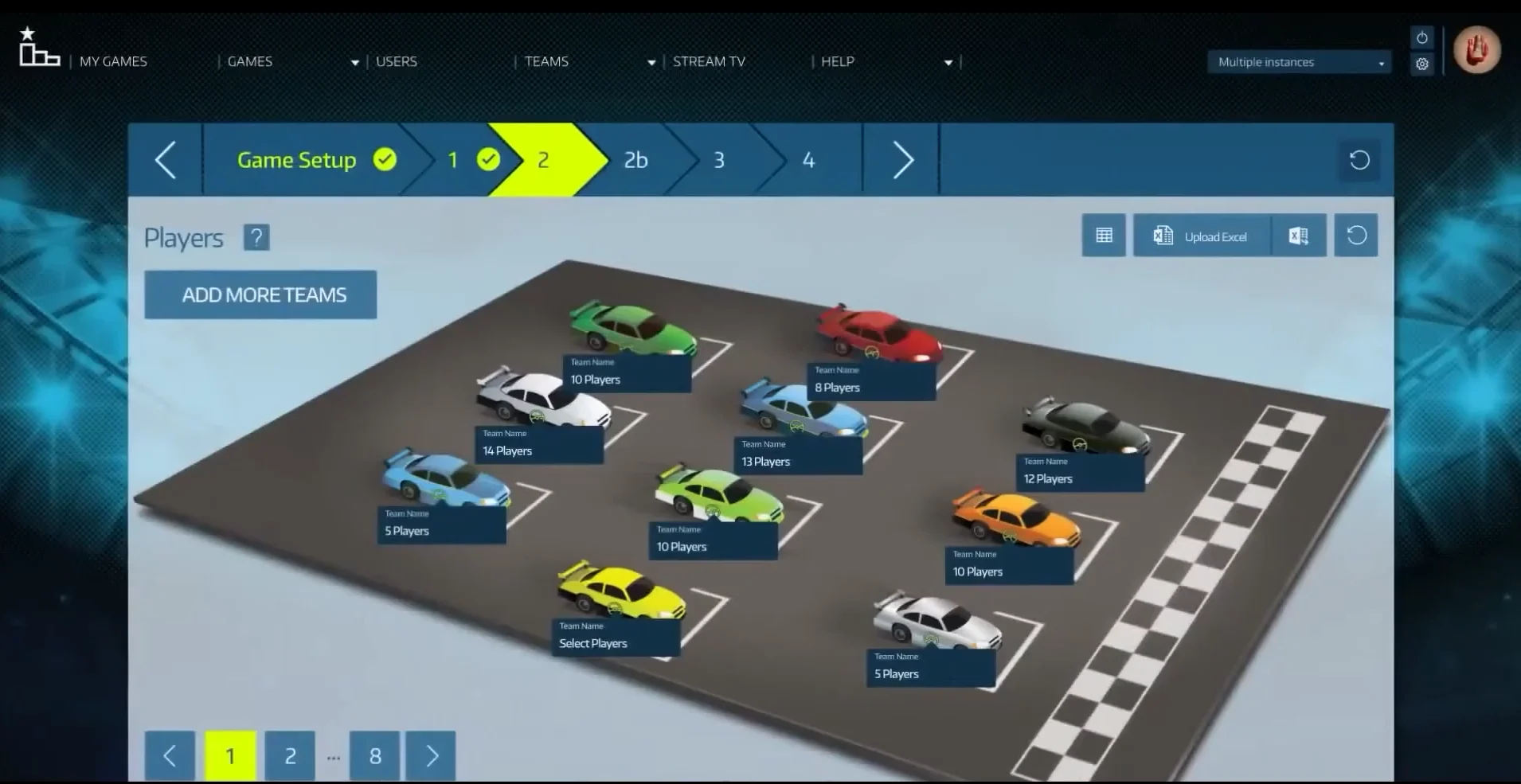
| Medium — quests, challenges, team assignments | Sales, marketing, and training departments | Sustained engagement, excitement without burnout, transparent competition |
| Comprehensive — game balance, long scenarios, connection to business metrics | Large departments, retail, holding companies | Systematic motivation, measurable connection between game mechanics and business metrics |
In the light format, we use familiar mechanics — they work right away. In the medium format, we add storylines and periodic events. In the comprehensive format, we design a full game balance: it holds interest for months and prevents the mechanics from “sagging” due to monotony.
How We Design Game Mechanics: Our Work Stages
We launch performance-evaluation gamification not as a “points add-on” but as a tool that changes employee behavior. Therefore, every project follows a clear path from brief to support, with approval of key decisions and transparent reports at each step. This way you see not only the result but also how it is achieved.
-
Brief and audit of the current system. We study how results are currently evaluated, where motivation is lost, and which processes should be supported with game mechanics. We set objectives: higher engagement, better work quality, faster employee learning.
-
Game model design. We define the scenario, roles, rules, points and level system — so that employees understand the logic and trust the evaluations. We agree on balance: a reward should be neither too easy nor unattainable.
-
Mechanics and interface development. We create a prototype and then a working version in your environment. At this stage, you see how gamification embeds into daily processes rather than hanging as a separate application.
-
Integration with performance evaluation. We link game metrics to real KPIs, configure reports and notifications. All employee actions appear in a clear dashboard — the manager always has a transparent picture.
-
Pilot launch and tuning. We roll out the system on a control group, gather feedback, and adjust the balance. This reduces risks and helps prepare employees for full implementation.
-
Full implementation and support. We deploy gamification for the entire team, train administrators, and hand over documentation. After launch, we support the system, monitor metrics, and refine it for new business tasks.
This approach to gamification development delivers a predictable result: you get a system that truly works toward company goals rather than just a collection of game gimmicks.
What Is Included in the Delivery of a Gamification Solution
You receive not scattered files but a complete set that can be implemented immediately. All documentation, settings, and regulations are organized so the team can launch the system without lengthy approvals or rework.
The gamification solution delivery includes:
- Game design documentation — a description of game mechanics, scenarios, and motivation logic. You understand how and why the system affects employee performance.
- Game balance — calculated levels, points, rewards, and achievement thresholds. The risk that some employees lose interest or others get too easy goals is eliminated.
- Rules and instructions for administrators — step-by-step regulations for adjusting the system to business changes: new departments, seasonal tasks, or KPI revisions.
- Employee guides — short, clear instructions that explain the rules of the game from day one. This reduces the number of questions in the first weeks after launch.
- Built-in reports for managers — visual analytics on engagement, team progress, and individual results. You see not only the game but also its impact on business metrics.
- Post-launch support scheme — it is clear what to do when processes change, who is responsible, and by what deadlines edits are made. The system is not left unsupported.
Each delivery item answers the question, “How does this work in my company?” The project result is not a “finished program” but a working performance management tool that the team adopts and uses every day.
Case Study: Gamification of Evaluation in a Retail Chain
It looks like you sent an empty message — the request text did not load. Please repeat your request: for example, select a role (case_trust with <cite>, pain_intro, faq_details, etc.), specify the page topic and key ideas. I will immediately prepare a ready-made block in markdown.
How to Choose a Gamification Format for Your Evaluation System?
Choosing a gamification format begins not with mechanics but with the question of what role the game should play in your performance evaluation system. If you need a one-time burst of energy at a corporate party or quarterly meeting, team building is enough.
If you want employees to see the connection between their actions and results every day, you need systematic gamification embedded in processes.
The difference is not in flashiness but in the duration of the effect: a one-time game gives emotions for one evening, a systematic one gives managerial transparency for years.
When choosing gamification, assess three criteria: evaluation frequency, data transparency, and managers' readiness to use game results. In team building, evaluation happens at the moment of activity: the team won — it got a prize, and an hour later everyone forgot.
In systematic gamification, employees constantly see points, levels, and ratings, and they are tied to metrics that are already built into the personnel evaluation system. This turns the game from entertainment into a feedback tool.
Compare: a one-time format answers the question “how well did we work together,” while a systematic one answers “how do we work day after day.” If your goal is to strengthen execution discipline and identify leaders by objective metrics, choose gamification tied to specific indicators.
If your goal is to diversify the corporate culture, limit yourself to a team game. The main selection criterion: will the game result influence future decisions — bonuses, projects, employee development? If yes, you need a system; if no, you need team building.
Therefore, before launching, ask yourself: what should happen in six months if the gamification works? A systematic approach automatically collects data on employee achievements and shows objective dynamics, without forcing managers to keep manual spreadsheets.
That is the right choice for a performance evaluation system: gamification strengthens management decisions rather than replacing them. Start with a pilot in one department, compare with metrics — and you will quickly understand which format will take root in your company.
Frequently Asked Questions About Implementing Game Mechanics
Managers often hesitate before implementing gamification: will it break work processes, how much time will launch take, and will employees lose interest after a month. These are normal concerns — we hear them in almost every project. We answer the key questions without technical details, in business language.
Game mechanics in a performance evaluation system are not a replacement for existing processes but a way to make them clearer and more engaging. Below are answers to the questions most often asked before a project starts.
Will gamification break work processes?
No. The performance evaluation system remains the foundation, and game mechanics are an add-on that motivates employees to complete their tasks. Implementation takes place in stages, using your real data, with the ability to return to the previous version if something goes wrong.
We work on proven tools and server architecture, so the risks of failure are minimal. After launch, we stay in touch: we support the project, train the team, and quickly resolve any issues.
In essence, you get not a “new system” but an improved version of the current one — with stability in mind.
How long does implementation take?
It depends on the scale: for one department, from a couple of weeks; for the whole company, several months. We recommend starting with a pilot in a limited area so you quickly see results and we can adjust the mechanics before the full rollout.
This approach saves time and resources: you do not wait for a long “all at once” launch, but get a working prototype within the first weeks. After confirming effectiveness, we scale the solution to other teams or processes. The time investment pays off through increased engagement and transparency of results.
Won't employees get bored of playing after a month?
If the system is built only on points and ratings — yes, interest will fade. That is why we design long-term motivation: levels, team goals, gradually increasing task complexity, and unexpected rewards. Such mechanics sustain interest rather than merely creating a short-term spike in activity.
After launch, we analyze engagement dynamics and update scenarios in time — we add new challenges, change rewards, and adjust the balance. As a result, employees perceive evaluation as part of their work routine that brings recognition and tangible bonuses, not as another “toy.”
Tell Us About Your Tasks — We'll Find the Right Format
Any performance evaluation system works effectively when employees understand why it exists and how it affects their results. Gamification turns a formal rating into a clear game with goals, levels, and rewards — but to make it useful, it must be designed for your team. Therefore, we start not with ready-made templates but with analyzing your tasks.
Leave a request for gamification — tell us what you want to change: task completion speed, quality, engagement, or evaluation transparency. We will ask clarifying questions, suggest a suitable format, and prepare a project estimate.
This does not obligate you in any way: you will get a concrete idea of timelines and scope before the start.
What you get after reaching out:
- A discussion of your task and gamification goals in the context of your performance evaluation system.
- A format recommendation: competition, levels, team quests, personal trackers — whatever suits your team.
- A project estimate: timeline, stages, scope of work, and expected result — no vague promises.
- A clear implementation plan that does not disrupt familiar processes and does not require employees to study complex instructions.
- A guarantee of support at the start: we will help launch the mechanics, explain the value to the team, and adjust the balance based on the first weeks' results.
We work remotely, so we are not tied to your city and can quickly join the process. We record all agreements in the project plan and deadlines in the production calendar.
If after launch it turns out that some mechanic does not resonate, we will adjust the rules and balance without additional payment during the implementation phase.
You can discuss the task in a convenient messenger or by email — we will reply within one business day. Tell us about your evaluation system, and we will offer a format that will motivate the team to achieve more.