

Hotel Complex Management: Gamification vs. Guest Churn
Guests don't leave a hotel because of bad beds or slow internet — they leave because of a lack of experiences. Hotel complex management is built around comfort, but that's not enough: guests remember emotions and return for them. If every visit is the same, choosing a competitor becomes a matter of chance and price.
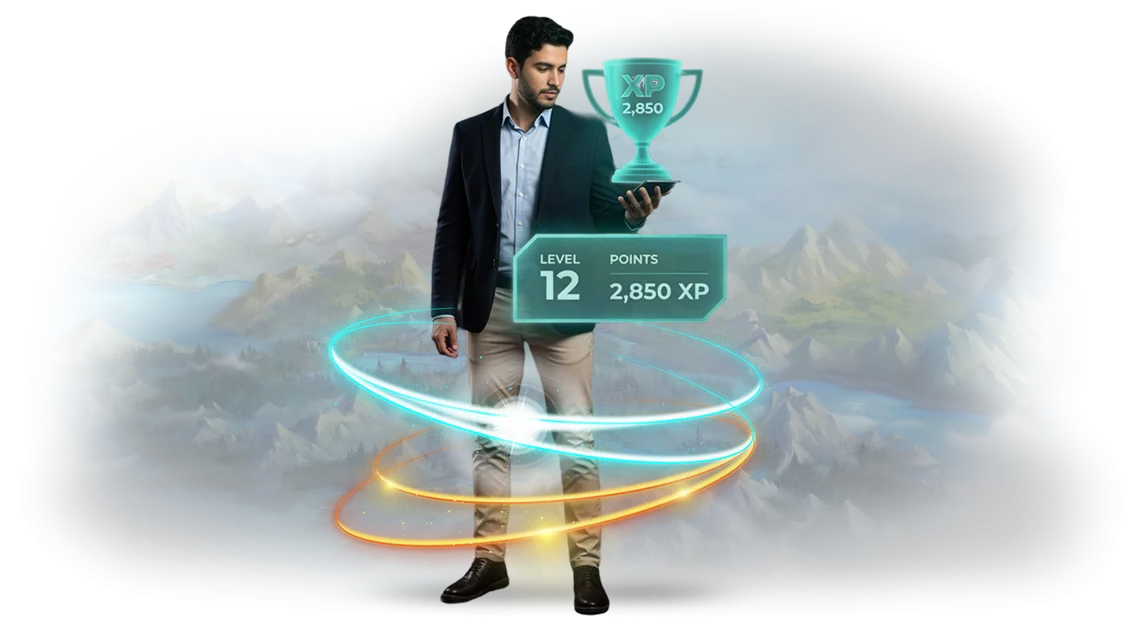
Gamification solves this problem through game mechanics embedded in the guest journey. Welcome program, personal challenges, status levels, rewards for visiting the restaurant, spa, or tours — the guest gets drawn into the "game" from the first minutes of check-in.
They enjoy discovering something new, and the hotel steadily earns upsells for services that usually go unnoticed.
For a manager, this is a controllable growth tool, not entertainment for its own sake. Game mechanics create a predictable stream of repeat visits: guests want to reach the next level, earn a privilege, recommend the hotel to friends, and get a bonus.
Thus, hotel loyalty turns into a habit of coming back, and the hotel's profit gains an additional revenue stream without advertising spend.
Wehave been designing gamification for business for more than 10 years and know what works in the hospitality industry.
First, we break down the guest journey, find the points where guests are lost and services are undersold, then we design a balanced set of game mechanics and embed them into the hotel's operations.
The result is a system that increases guest return rates and average check, not just another "toy" on the website.
What Gamification Will Give Your Hotel: 5 Key Benefits
A hotel lives by its service, and service is created by people. When staff act without enthusiasm, guests feel it. Gamification turns routine into a system with goals, rewards, and feedback — you get a manageable tool, not just motivation.
We build such systems on a professional platform, tailoring the mechanics to your hotel's goals. Here's what it gives you:
- Staff engagement. Ratings, levels, and bonuses for quality create healthy competition, reduce turnover, and speed up onboarding. Employees work with interest rather than under pressure.
- Repeat bookings. A loyalty program with points and statuses motivates guests to come back. Guests see their progress and receive privileges — this creates an emotional connection to the hotel.
- Improved service. Guest ratings directly affect staff rewards. Managers get a transparent control system, and employees get an incentive to exceed expectations.
- Higher average check. Game mechanics encourage additional services: points are awarded for spa, restaurant, or room upgrades. Guests spend more willingly because it's beneficial.
- Attracting new guests. Guests share achievements on social media and tag the hotel. Reach grows without advertising investment.
Gamification Formats for Different Hotel Complex Objectives
Gamification in a hotel is not a "game for game's sake" but a working tool that solves a specific business problem: increase weekday occupancy, raise the average check, retain staff, or make an event memorable.
The key is to match the format to your goal — then the mechanics deliver measurable results rather than merely entertaining the guest.
Below is a comparison of formats with typical hotel complex tasks. It's a starting point for your choice; we then adapt the mechanics to the specifics of your property, seasonality, and guest profile.
Table: Gamification format and hotel objective
| Format | For which objective | What it gives the business |
|---|---|---|
| Guest quests | Increase weekday occupancy, extend guest stays, boost on-site spending | More direct bookings and additional orders (restaurant, spa, tours), vivid experiences, and natural social media content |
| Loyalty programs | Retain repeat guests, bring them back in the off-season | Higher share of repeat visits, a stable base of direct clients, less dependence on booking aggregators |
| Staff training | Quickly bring newcomers up to service standards, reduce turnover | Fewer operational mistakes, higher guest service ratings, savings on hiring and training |
| Hotel events | Gather a target audience, stand out from competitors | More participants and social media reach, extra revenue from tickets and services, a reason to come back again |
It's important that the chosen format doesn't contradict the hotel's positioning — for example, business guests need one set of mechanics, while family guests need another.
Properly designed gamification considers the guest scenario at every stage, from booking to checkout, so it works as a single system rather than a one-off lobby quest.
We help you choose the right format for your property and configure it so the result is measurable: growth in direct bookings, staff engagement, repeat visits.
If you're unsure where to start — start with an audit: we'll show where gamification will have quick impact and where it will require preparation.
How Gamification Implementation Works: Stages of Working with You
We've structured the process so you can see at every step what's happening and what value you're getting. No "black box" — you take part in key decisions, and gamification becomes a transparent tool that increases guest loyalty and hotel revenue.
-
Hotel and goal diagnostics. We collect data on room occupancy, guest profiles, current loyalty programs, and staff workload. Together we define the main business metric: repeat bookings, average check, review platform rating, or check-in speed.
-
Strategy and implementation plan. We propose a gamification concept: scenarios for guests and staff, reward mechanics, and touchpoints — from reception to restaurant. We show how the game fits into the service and budget, and set timelines and performance metrics.
-
Game experience design. We develop scenarios and balance: levels, points, rewards, and difficulty — so guests are engaged and staff can easily sustain the process. We factor in seasonality and the specifics of your complex.
-
Design and integration. We create the game's visual style and configure it for your infrastructure: mobile app, website, front desk, QR codes in rooms. Everything runs on professional hardware without failures even during peak check-ins.
-
Game launch and team training. We prepare the staff: how to welcome guests, give hints, and track successes. We run a pilot period, collect initial data, and adjust the balance. You get a game that truly engages from day one.
-
Support and growth. We analyze metrics and propose updates — adding new levels, seasonal events, and rewards. Gamification evolves with the hotel, and we stay in touch as a reliable partner.
What's Included in the Delivery: A Gamification Launch Kit
You get not a presentation but a working gamification system embedded in the hotel's processes. The kit is assembled so your team can launch the game without external contractors and see first results within a week.
The delivery includes:
- Turnkey game design — scenarios, levels, rules, and game economy tailored to hotel complex objectives: increasing guest loyalty, boosting ancillary service sales, and motivating staff.
- Game mechanics and balance — points, badges, ratings, team competitions. The mechanics are clear to both guests and staff and require no manual oversight.
- Setup and integration — we connect the game to your booking and accounting systems. You don't need to change your usual procedures: gamification becomes an add-on to them.
- Instructions and policies — simple guides for staff and administrators: how to launch a promotion, award prizes, and resolve disputes.
- Analytics and reports — clear summaries: who participates, which mechanics deliver results, and how this affects revenue and occupancy. You see ROI and growth areas.
- Launch support — we help implement, test scenarios, and adjust the balance based on initial feedback data.
This is not an abstract concept but a ready-to-use set: documents, settings, and materials. The result is a manageable system that improves the hotel's key metrics and remains a tool for long-term service improvement.
Case Study: How Gamification Increased Hotel Revenue by 18%
A hotel can invest in advertising, but if guests don't return, every marketing budget is wasted. This is especially critical for managing a hotel complex: competition is high, and repeat guests are the most reliable source of revenue.
Our task was to turn one-time visitors into loyal ones and increase revenue without aggressive price increases.
We designed a loyalty program with game elements for Sosny Country Club. Guests earned points for stays, direct bookings, reviews, and participation in hotel events.
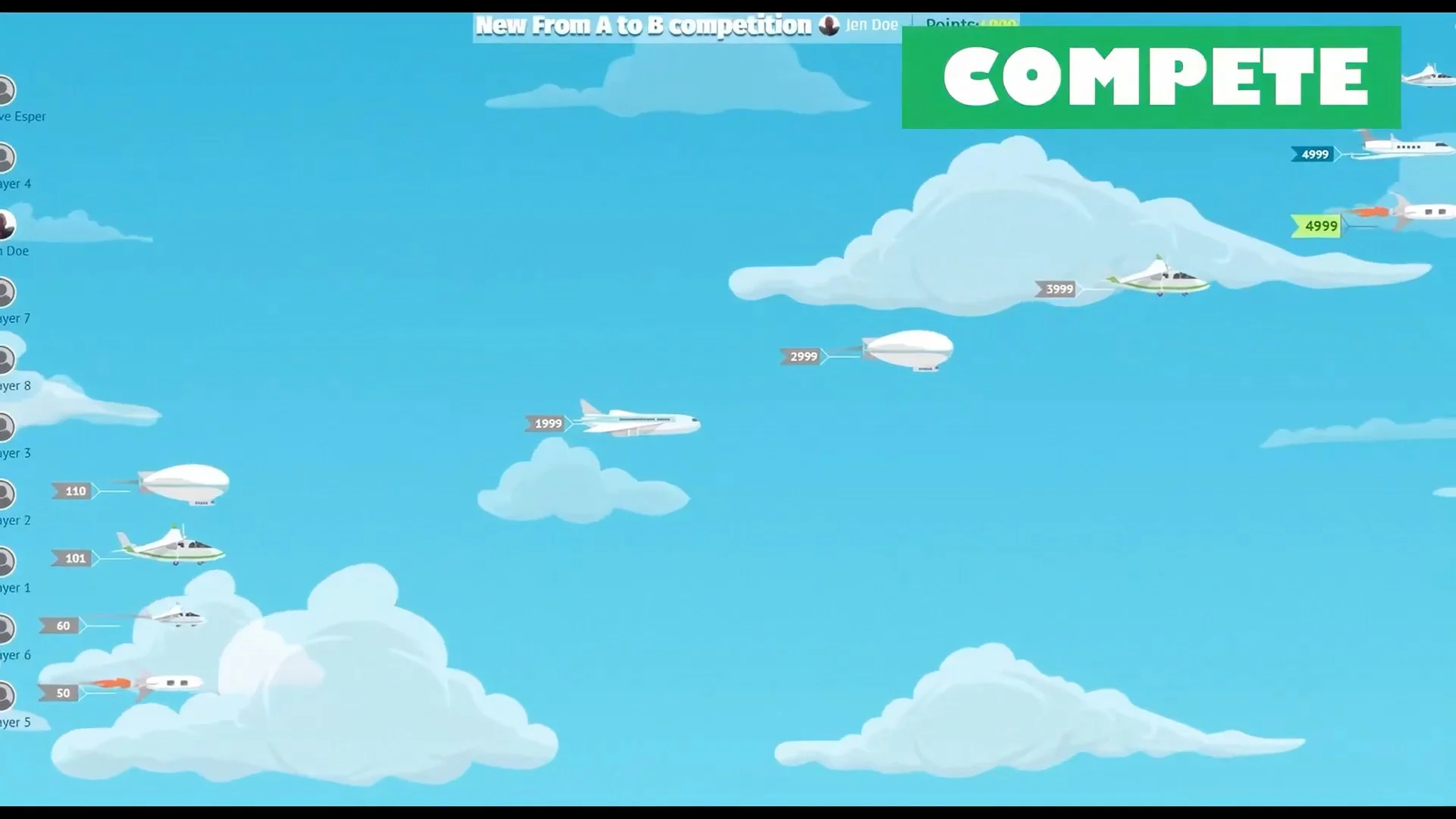
Instead of boring discounts, there were levels, personal challenges, and rewards: the more actions, the higher the status. Guests saw their progress and understood the next privilege was within reach.
Implementation result
In the first six months, hotel revenue grew by 18%. The share of repeat guests increased from 20% to 35% — repeat bookings became the main source of occupancy. Guests extended stays more often and used additional services more actively: spa, restaurant, equipment rental. Even in the low season, occupancy remained stable thanks to the loyalty program.
Why it worked
The secret isn't discounts but game dynamics. Guests enjoy building status and gaining emotions. The system hinted at which action would lead to a reward, and managers could see who was close to the next level and help in time. The program became part of the service, not a marketing campaign.
After the first months, the hotel ordered further development of the mechanics: team competitions and seasonal events were added. The system continues to generate revenue and operates on an ongoing basis.
How to Choose a Gamification Format for Your Hotel?
There is no universal "boxed" gamification solution — what works perfectly in a small family hotel can get lost on the grounds of a large complex, and vice versa.
To avoid wasting your budget, you need to start from three things: hotel size, guest profile, and the specific business goal you want to achieve.
For a small hotel with 20–50 rooms, light mechanics that don't require complex infrastructure or interfere with staff work well. This could be a gamified loyalty program: guests earn points for breakfasts, early bookings, or reviews, and then exchange them for nice perks. Such a system increases repeat visits without overloading operations.
A large complex with extensive grounds, restaurants, spa, and multiple buildings needs formats that engage the space and keep guests for a full day.
Territory quests, on-site competitions, seasonal games with point-hunting or augmented reality — all of this adds value to the stay and a reason to come back.
Guests will feel the difference between "just a night's sleep" and "spending time with family or friends."
The audience defines the language of the mechanics. In a family hotel with children, simple reward-based challenges that a child can understand work well, and parents are happy that their child is occupied.
In a business hotel where guests carry status, competitions for titles, exclusive levels, and bonus access are appropriate. In a resort complex with multiple generations of guests, it's important for the game to have difficulty options and not make anyone feel awkward.
And finally, goals. If the key objective is increasing loyalty and repeat bookings, we focus on accrual-based game programs. If you need to raise the average check in the restaurant or spa, we launch time-limited quests and challenges.
If the hotel is striving for a high rating and word-of-mouth, the focus will be on mechanics that motivate guests to share experiences on social media.
We help clients choose a format that truly fits their property — we calculate workloads, develop a scenario for their specific audience, and show how the game will affect the hotel's key metrics.
In the end, you get not a "game for game's sake" but a tool that pays off and works toward your numbers.
Answers to Frequently Asked Questions About Hotel Gamification
Owners of hotel complexes most often ask about complexity, cost, compatibility, and risks before launching gamification. We answer directly, without technical details — in the language of results.
Isn't gamification too difficult to implement in hotel complex management?
No, if you hand the project to a team with experience from dozens of implementations. We take on the entire journey: from idea and scenarios to staff training. Your team only needs to use the ready-made tool and get results.
How much does gamification cost and when will it pay off?
The cost is calculated after an audit and depends on the scope: number of scenarios, guest touchpoints, integrations with your booking system, and loyalty program.
We prepare a calculation for your hotel and show which metrics — higher average check, repeat visits, additional sales — will drive the payback.
Is gamification compatible with our current processes?
Yes. The mechanics are designed to complement current services, not replace them. Gamification integrates into the restaurant, spa, tour desk, and front desk operations without stopping operational processes.
What are the risks, and what happens if something goes wrong?
The main risk is low guest engagement. We eliminate it by testing scenarios before launch, and after start we stay in touch: we monitor metrics, suggest improvements, and quickly adjust the mechanics.
If you still have questions about gamification for your specific hotel complex, ask us — we'll suggest a solution tailored to your property.Get a Custom Gamification Plan for Your Hotel
The hotel business is built on repeat visits and guest experiences. Gamification helps staff work more effectively and guests come back. But only if the mechanics are designed for your property, not copied from someone else's project. A custom plan is the foundation that turns game elements into measurable business results.
Leave a request — and we'll prepare a personal document for managing your hotel complex. It will include:
- A custom gamification plan: which hotel processes to make game-based first, where to expect quick results, and which mechanics will deliver long-term impact.
- Stage-by-stage timeline estimates — from balance design to launching the first game program. You see intermediate milestones right away.
- Payback forecast tied to metrics: room occupancy, repeat bookings, average check for additional services.
- Team composition: game designer, analyst, developer, and your internal coordinator — with areas of responsibility for each.
- A pilot scenario for one process — you'll see the effect before full-scale implementation.
- A list of data and access needed from your side so the project doesn't get delayed.
We work with hotels and chains of different scales, so the plan is grounded in practice, not general theory. You'll receive the document with no obligations — the decision remains yours.