

Why You Lose Clients Without Gamifying Your Sales Funnel Management
Every day without systematic work on your sales funnel means missed clients and lost revenue. Most companies lose up to half of potential orders at the first-contact stage, when the manager doesn't know how to engage the prospect and close the deal.
Funnel conversion is built from the actions of every employee, but if those actions aren't motivated, results inevitably decline. Clients go to competitors, and winning them back costs many times more than keeping them from the start.
Routine kills enthusiasm even in strong salespeople. Monotonous calls, report filling, lack of visible progress — managers burn out, become less active, and clients sense the indifference and leave for somewhere they're cared for.
Client loss doesn't start on the website; it starts the moment an employee stops seeing meaning in their work.
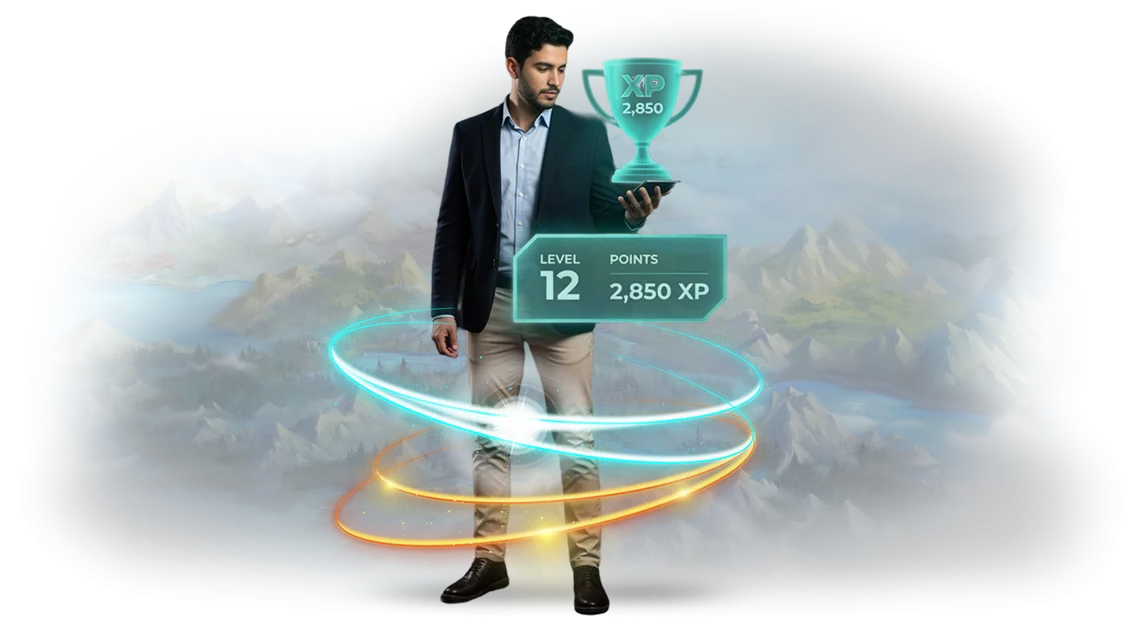
Business gamification turns the sales funnel into a manageable system where each stage is a clear goal and each employee's result is visible immediately. Game mechanics boost team motivation, create healthy competition, and make the sales process transparent for the manager.
Funnel conversion grows not through pressure but through engagement. This isn't a one-off campaign; it's a permanent system that maintains interest and gives employees a sense of achievement.
We design gamification that integrates into your business process and works for results: higher conversion, stable team motivation, and reduced client loss. You get a tool that pays for itself through increased sales efficiency and client retention.
What Gamification Will Give Your Business: 5 Key Results
Gamification is not a game for game's sake but a sales funnel management tool. Instead of an abstract "we need to sell more," you get a clear system where every step by an employee, client, or partner brings the company closer to a measurable result.
Over 10+ years of practice, we've identified five key results that make businesses launch gamification.
- Sales growth. When an employee sees deal progress and clearly defined rewards in advance, they spend less time on routine. Plan completion grows by 20–30% in the first months — our projects across various industries confirm this.
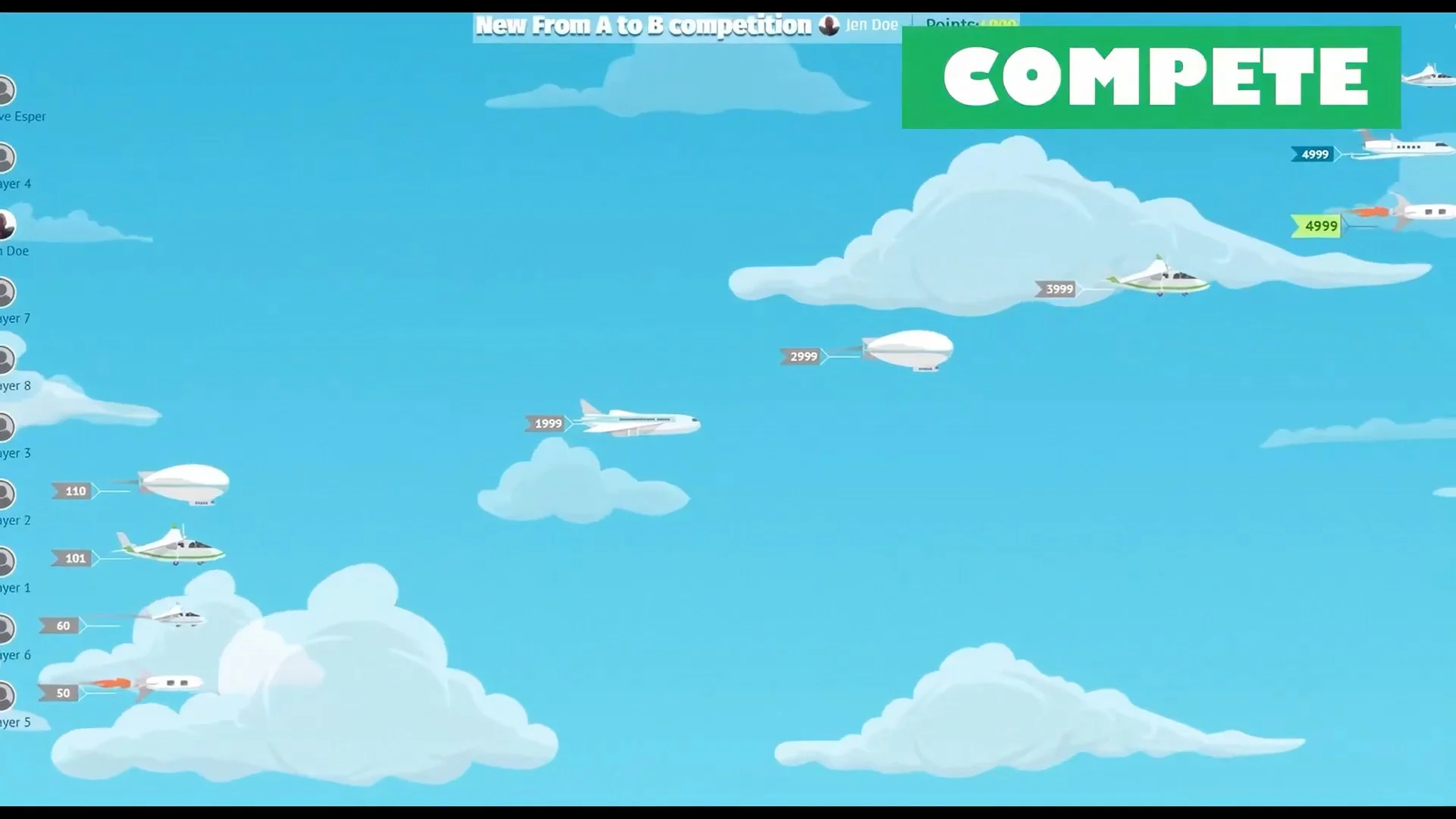
- Employee engagement. Gamification adds excitement and healthy competition: people naturally strive for top positions, and the manager doesn't have to constantly push the team. Energy goes into results rather than arguments and control.
- Transparent KPIs. Game mechanics are built on the same metrics as the sales funnel: number of calls, meetings, proposals, and closed deals. The manager sees bottlenecks and adjusts work without lengthy reports.
- Faster onboarding for new hires. New employees learn the sales stages faster because gamification shows which actions actually lead to results. The first deal closes twice as fast as usual.
- Long-term business results. Gamification changes team habits rather than just temporarily lifting metrics. A transparent motivation system improves client work quality, which increases conversion and the share of repeat orders.
In the end, you get not just entertainment but a system that works toward the company's strategic goals. Every result is easy to measure: through funnel metrics, employee surveys, and profit dynamics.
Gamification Formats: Which One Fits Your Task
The choice of mechanics determines whether gamification delivers results or remains just entertainment. Sales, marketing, and client service teams work with different metrics and motivations, so a universal game won't work here.
We choose the format for your task: sometimes you need a competitive spirit, sometimes cooperative level progression, and sometimes a branching scenario that trains a skill.
Below is how typical formats map to department tasks and what they deliver to the business in practice.
| Gamification format | For whom / what task | What it gives the client |
|---|---|---|
| Ratings and leaderboards | Sales department: higher conversion, meeting plan targets | Healthy competition inside the team, more "hot" deals without increasing the payroll budget |
| Quests with levels and rewards | Marketing: engaging in training and practicing scripts | New hires quickly reach target KPIs, lower turnover during the probation period |
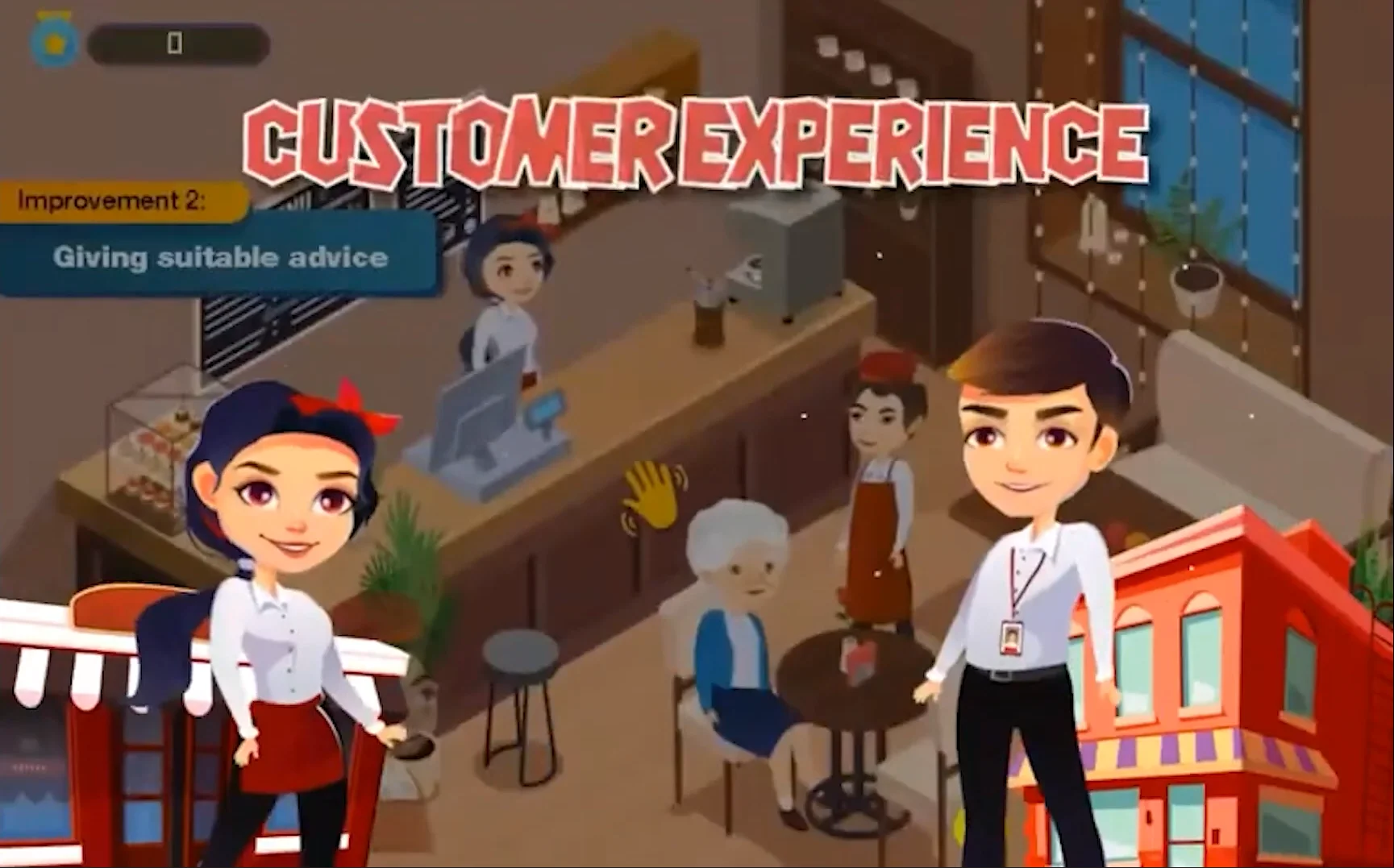
| Role-playing simulators with dialogues | Service and support: handling objections, service quality | Confident responses to clients, fewer escalations, more repeat requests |
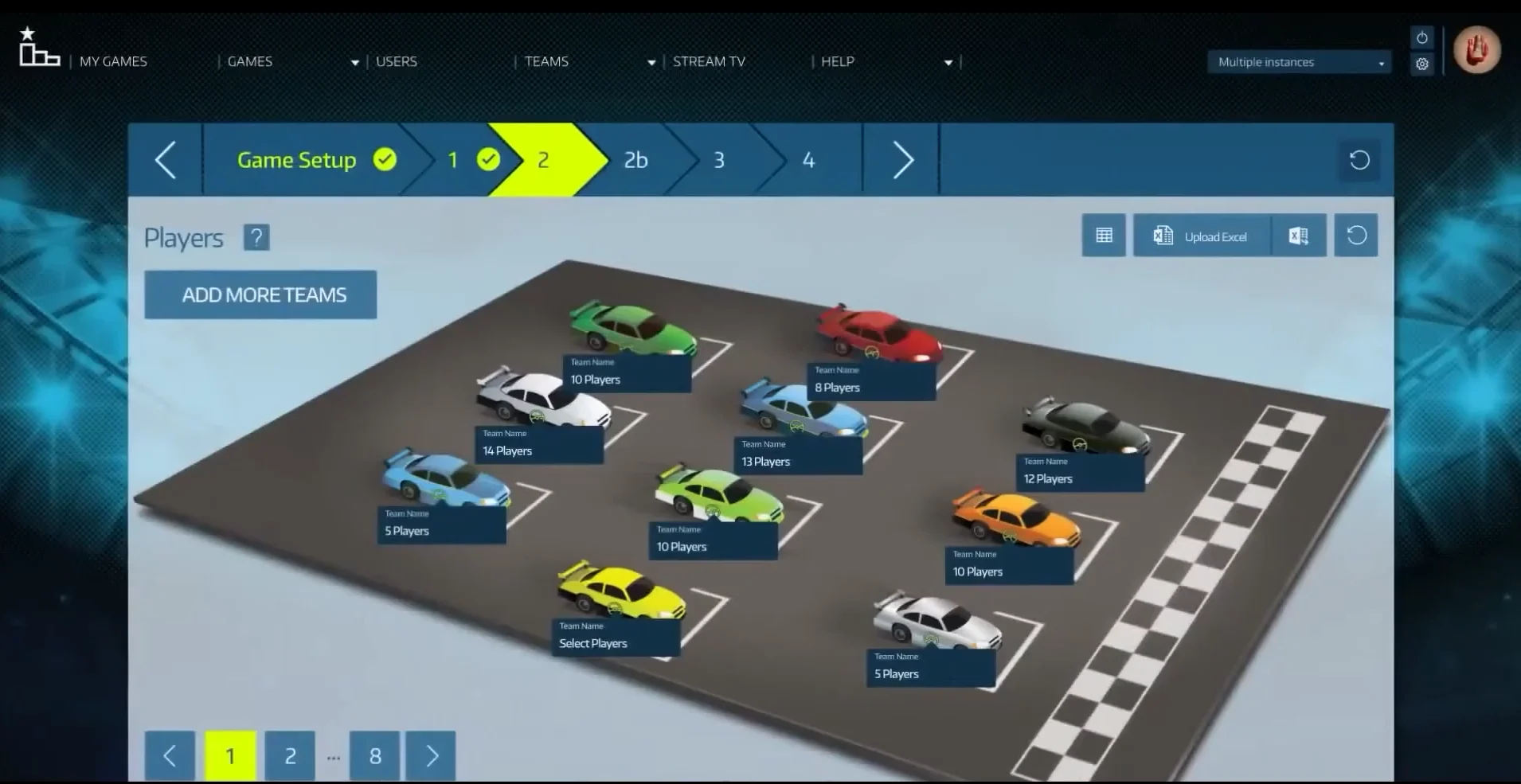
| Team games for a shared result | Mixed departments: cross-functional projects (marketing + sales) | Department alignment, higher lead quality and faster lead processing |
| Personal "marathons" with scenario choice | Individual tasks: each employee's personal plan | Personalized motivation; the employee sees their progress and sets their own pace — results come without coercion |
We don't "layer" a game over your CRM; we design it around your funnel and employee behavior. First, we identify which action needs to be strengthened — a call, a meeting, a repeat sale, or response speed.
Then we choose the mechanics and write a personalized scenario that fits into the team's daily rhythm instead of distracting from work.
How Gamification Development for a Sales Funnel Works: 7 Steps
Developing gamification for a sales funnel is not a one-off campaign but a phased turnkey effort. We don't hand over "raw mechanics"; we refine the game to a stable result: you get a tool that increases conversion and keeps clients engaged at every stage of the deal.
-
Brief and task immersion. We identify at which funnel stage clients are lost and which behavior model needs to be strengthened: more leads, repeat sales, or campaign engagement. We agree on success criteria and deadlines.
-
Funnel and audience analysis. We study the client journey, typical objections, and motivation. We identify touchpoints where the game will give the biggest conversion boost and select mechanics for your product.
-
Scenario and game mechanics development. We design the story, roles, tasks, and reward system so that participants naturally want to take the next step. The scenario integrates into your managers' workflow and requires no extra manual work from them.
-
Game balance calculation. We tune difficulty, reward frequency, and progression pace. You get transparent rules: the client sees how many actions are needed for a bonus, and you get a plan-completion forecast.
-
Interface creation and implementation. We integrate the game into your CRM, website, or app without stopping current processes. We think through how employees will see client progress and respond to their activity.
-
Test launch and refinement. We run a pilot with a small group, gather feedback, and refine the scenario. This reduces risks before the full launch and makes implementation smooth for your team.
-
Launch, support, and sustainability. We roll out gamification across the entire funnel, train employees, and stay on for support. We track metrics, adjust the balance, and refresh scenarios — the mechanics keep working after the campaign ends, and you get a tool you can reuse.
What You Get in the Package: Turnkey Gamification Bundle
We work on a turnkey basis: you get not an abstract idea but a ready-made gamification package that can be immediately implemented in your sales department and funnel.
Inside is everything you need to launch, control, and scale the mechanics without involving external contractors.
- Role and level matrix. Allocation of rights, responsibilities, and statuses within the team so every employee sees their growth path and understands what earns them recognition.
- Game rules. Clear conditions for earning points, bonuses, and promotions — no ambiguous interpretations or conflicts between salespeople and managers.
- Regulations and scenarios. Procedures for standard and non-standard situations, including disputes, result reviews, and a participant exiting the game.
- Game economy. A balanced system of rewards and challenges that maintains the right sales pace and prevents the mechanics from "burning out" after a couple of weeks.
- Prototypes and templates. Ready-made forms for internal communication, result-tracking tables, and materials for a quick start — the department won't have to build them from scratch.
- Metrics and analytics. Metrics that show how gamification affects conversion, average ticket, lead response time, and plan completion.
This package solves three problems at once: it makes motivation transparent, accelerates new-hire onboarding, and turns sales funnel management into a predictable process. You get a working tool, not a document that will sit on a shelf.
How We Doubled Conversion for an Industrial Distributor
When the industrial distributor Promsnab came to us, we saw a typical picture: managers worked well with "warm" leads but stumbled on long approval stages.
Moving from a proposal to a contract took weeks, some clients went to competitors, and the plan was only met thanks to rare large deals. The challenge wasn't sales training — we needed to keep the team focused at every step of the funnel.
We proposed gamification as a sales funnel management tool: instead of an abstract plan, a clear game mechanic with levels and interim rewards. Each employee sees their progress, understands how many steps remain to close the deal, and gets quick feedback for every action.
This removes the main pain point — the loss of motivation at routine stages where clients are usually lost.
Results appeared within two months: plan completion grew by 40%, and client churn from the funnel dropped by 20%. Most importantly, sales conversion doubled.
At the same time, neither the product, nor the team, nor the motivation system changed — only the approach to managing deals.
The secret isn't competition for competition's sake, but the way game mechanics make people regularly return to the task. We set the rules so that every funnel stage had its own weight and was tied to a real result, not a formal "checkbox" in the CRM.
Employees themselves saw which actions brought the deal closer, and that changed their daily behavior.
This gamification case became a starting point for us: now we apply similar mechanics for sales departments, service teams, and partner networks. Want the same implementation example at your company?
We'll start with a quick funnel audit and choose game mechanics for your specifics — without reworking processes or losing manager control.
How to Choose a Gamification Format for Your Business Specifics
Every company has its own sales funnel: some work with a long deal cycle, some sell a mass-market product, and some get clients only through referrals.
A ready-made game with template mechanics won't work here — it will either be uninteresting to your audience or fail to fit your process.
That's why a gamification format should be chosen not from a catalog but for your business. We analyze your funnel: where clients get stuck, what motivates your employees, and which result matters most to you.
Based on that, we select or design game mechanics — from simple point systems to multi-level scenarios that guide a client from first contact to deal.
Customization covers not only the game rules but also touchpoints. For example, if the deal cycle is long, we add interim wins and rewards to maintain interest. If you have a non-standard funnel that requires partner participation, we build in joint tasks and ratings. Everything adapts to your processes, not the other way around.
As a result, you get a tool that doesn't distract from work but helps achieve goals. Participants move through the necessary steps faster, postpone decisions less, and you find it easier to forecast results. It's precisely adaptation to your business specifics that makes gamification work.
We can handle this: already at the brief stage, we gather information about your funnel, audience, and internal processes to propose a format that fits you. Tell us about your task, and we'll show what gamification could look like in your case.
We Answer Common Doubts About Business Gamification Development
Before launching gamification, managers have the same doubts: "what if it's just a game and not a sales tool," "what if employees ignore the mechanics," "who's responsible for technical failures." These questions are natural: gamification of business processes looks unconventional, and the price of a mistake is lost time and funnel results.
We've worked at the intersection of game design and marketing for over 10 years, so we've addressed the most common fears point by point.
What if the game breaks in the middle of a campaign?
The main fear is a technical failure that stops sales. That's why we design fault-tolerant server architecture: it withstands peak loads, and data is saved automatically. During business hours, you always have a team on call that quickly restores operations.
In years of projects, there hasn't been a case where gamification stopped a sales funnel for more than a few minutes.
What if the mechanics don't suit our employees?
Any gamification starts with a short pilot. We take your real funnel metrics, discuss the team's motivation, and only then propose specific mechanics. If we see the scenario isn't landing, we adjust it before the full-scale launch. In the end, you get a tool embedded into the usual work rhythm, not another "must-do."
What if the effect is short-term?
Gamification doesn't work "just once" when it's tied to business metrics. We configure the mechanics to support the actions we need from salespeople: regular CRM updates, calls, repeat sales.
The system motivates employees not for a week but on an ongoing basis — with tasks and levels updated to match current funnel goals.
These are just some of the doubts we hear at the start of projects. Below, we've covered other common concerns — or just write to us, and we'll address your case individually.Start Gamification Implementation: Get a Turnkey Plan
Sales funnel gamification is not a one-off campaign but a system that motivates managers and clients day after day. But for it to work, you need a plan: which mechanics fit your business, where they'll deliver quick results, and where they'll require patience. Over ten years, we've walked this path with dozens of companies and know where to start.
Submitting a gamification request takes a couple of minutes — then we do a free analysis and send you a turnkey plan. Concrete, tailored to your funnel, no fluff.
What's included in the analysis for every client:
- Free audit of your current sales funnel — we find the points where clients are lost and where gamification will deliver fast growth.
- Consultation with a game designer — we explain, using your examples, how the mechanics work in your industry.
- Project estimate before launch — cost calculated after audit, timelines, and expected impact, so your decision is well-informed.
- Step-by-step implementation plan — what we do first, second, third, and who's responsible for the result.
- Examples for your business — we show similar cases and adapt them to your funnel.
- Post-launch support — we adjust the balance based on data, not "by eye."
After your request, we'll call at a convenient time, answer questions, and confirm the next step. Even if you decide to postpone implementation, you'll keep the funnel audit — it will show where you're losing clients and what to focus on first.