

How Gamification Solves the Knowledge Management Problem
Every year, companies silently lose their most valuable asset — employee experience. People leave, retire, move to other departments, and with them disappear proven workflows, knowledge of clients, and process nuances.
New specialists have to retrace the same path of mistakes, and the company pays for it in time, money, and stress — this is the core problem of knowledge management.
Gamification of business processes solves it not through coercion but through the natural human desire to get involved. When experience sharing becomes an engaging game with clear goals, levels, and rewards, employees themselves begin to share what they know.
Employee engagement grows, and knowledge stops staying locked in people's heads — it gets captured, structured, and made available to everyone.
As a result, dependence on individuals decreases: the company stops being held hostage by someone's irreplaceability. New employees ramp up faster, mistakes are repeated less often, and best practices automatically rise to the surface. Managers see not just activity but real growth in team competence.
This is why we suggest looking at gamification not as entertainment but as a working tool for knowledge management.
We help build a system that keeps experience inside the business, motivates employees to develop, and ultimately strengthens your team — without the risks associated with knowledge loss.
What Will Change in the Company After Gamification Is Implemented
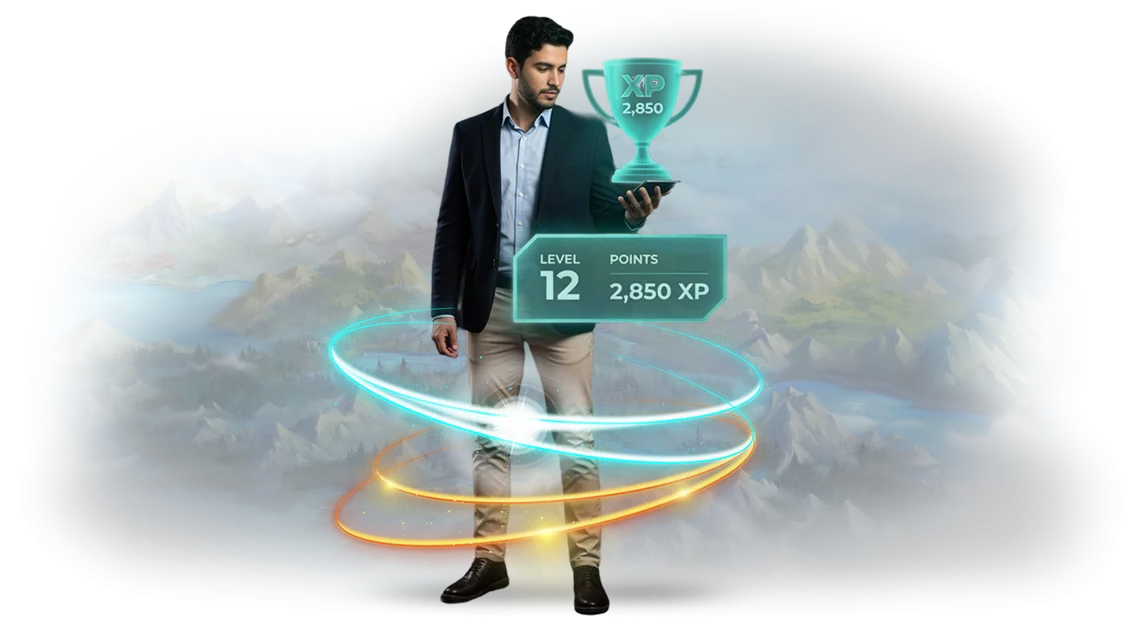
Implementing gamification changes not the interface but people's behavior. Employees stop perceiving learning as a formality — they get involved because they see their progress, compete with colleagues, and receive recognition for achievements. Instead of forced courses, internal motivation appears: to understand, apply, and show results.
Increased engagement automatically leads to more active knowledge sharing. People share experience more willingly when it brings points, statuses, or virtual rewards. Knowledge ceases to be personal property — it becomes a contribution to the common result.
This eliminates the situation where key expertise is locked in the heads of a few employees, making the company more resilient to any changes.
Employee learning accelerates: newcomers get up to speed faster, and experienced specialists reinforce their expertise by explaining material to others. The game balance is designed so that difficulty grows gradually — without overload or loss of interest.
Short task cycles turn learning from rare events into daily practice, which directly affects work speed and decision quality.
Corporate culture becomes more transparent and friendly. Shared challenges unite teams, healthy competition replaces internal politics, and everyone's successes are visible to all.
Employees start to take pride not only in personal victories but also in colleagues' achievements — this is how an environment forms where people want to stay and grow together with the company.
The head of personnel development at one client company described the result this way: "We expected an increase in activity, but we got more — employees themselves started proposing improvements and helping newcomers. Gamification became a catalyst for changes we couldn't achieve through other means."
Gamification implementation pays off not only in activity metrics but also in the quality of interactions. It is a systemic shift that managers, HR, and employees themselves feel from the first weeks.
That is why projects based on game mechanics deliver an effect that persists after the main implementation stage is complete.
Gamification Formats for Your Task
No training program will work if it doesn't take into account how employees actually acquire knowledge. Quests, simulations, and competitions solve different problems: some help people settle into a role faster, others help refine skills, others keep the team in good shape. We match the format to your goal, not the other way around.
The table below shows three basic scenarios that clients most often bring to us. Mechanics, storyline, and difficulty level can be configured for each one.
| Format | For whom | What it gives the client |
|---|---|---|
| Quests for employees | New employees, interns | Quick immersion in processes: regulations and standards are remembered through story, not rote learning |
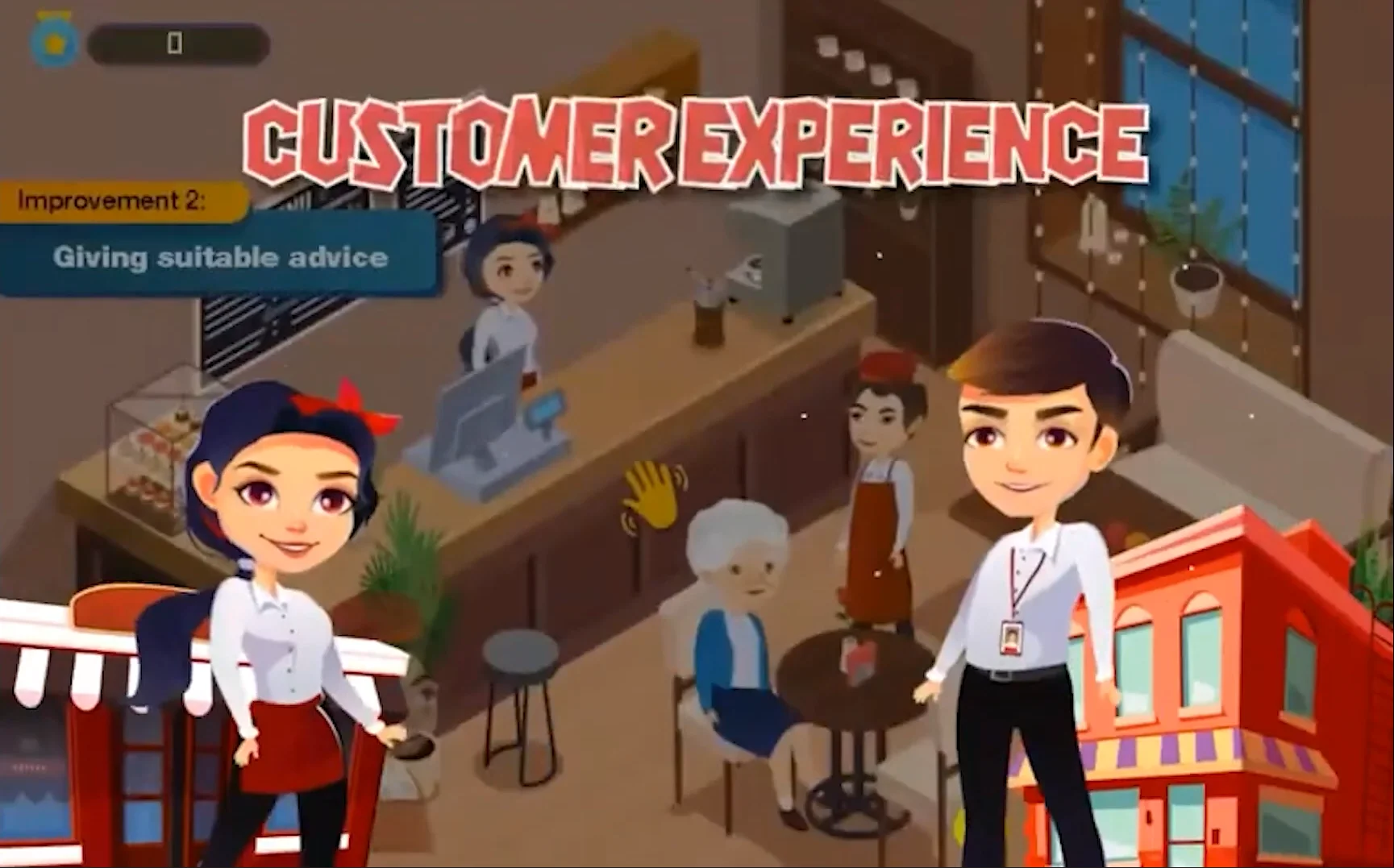
| Training simulations | Frontline staff, salespeople, managers | Practicing skills without risk to the business: the employee trains on scenarios, not on real clients |
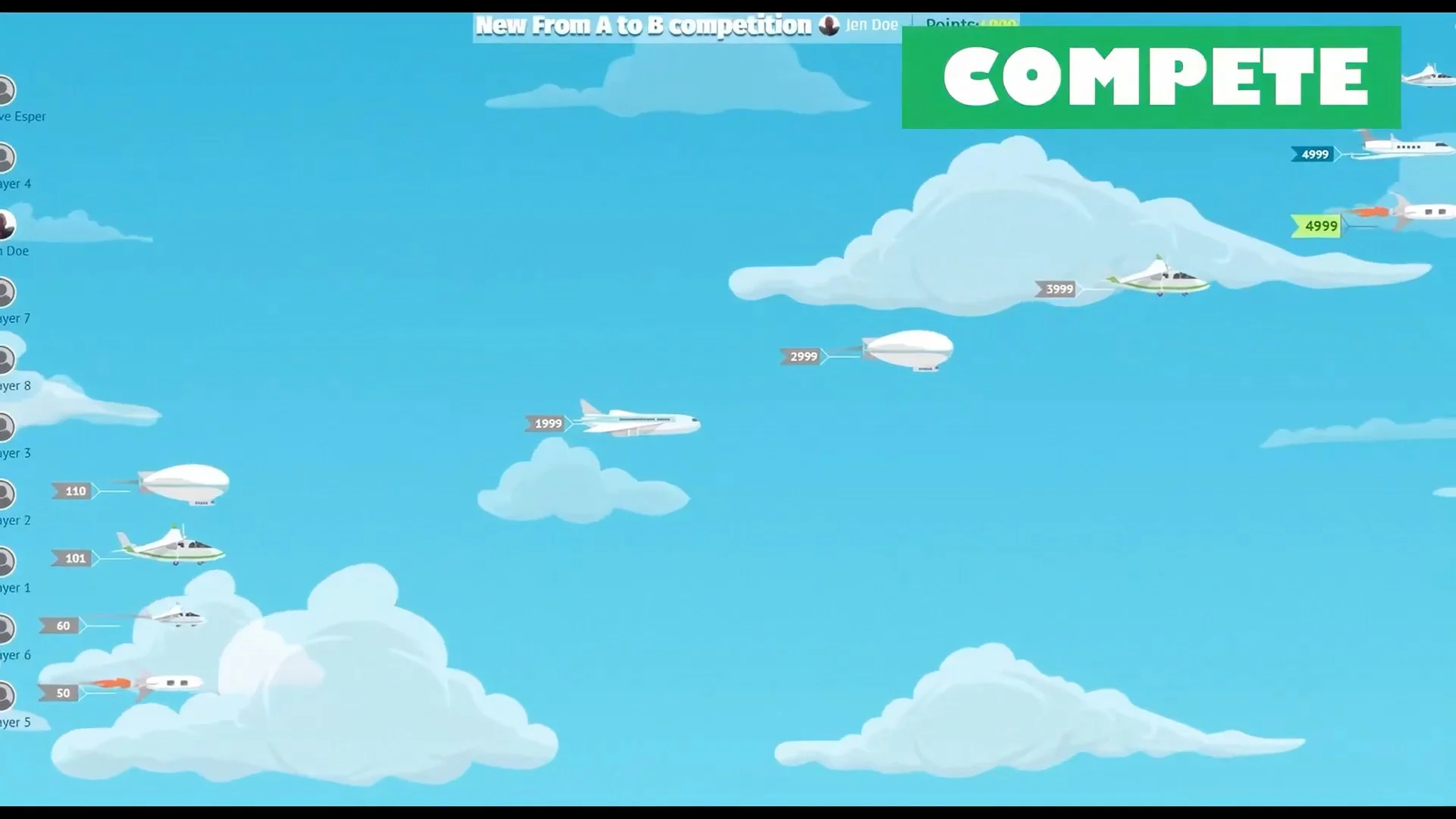
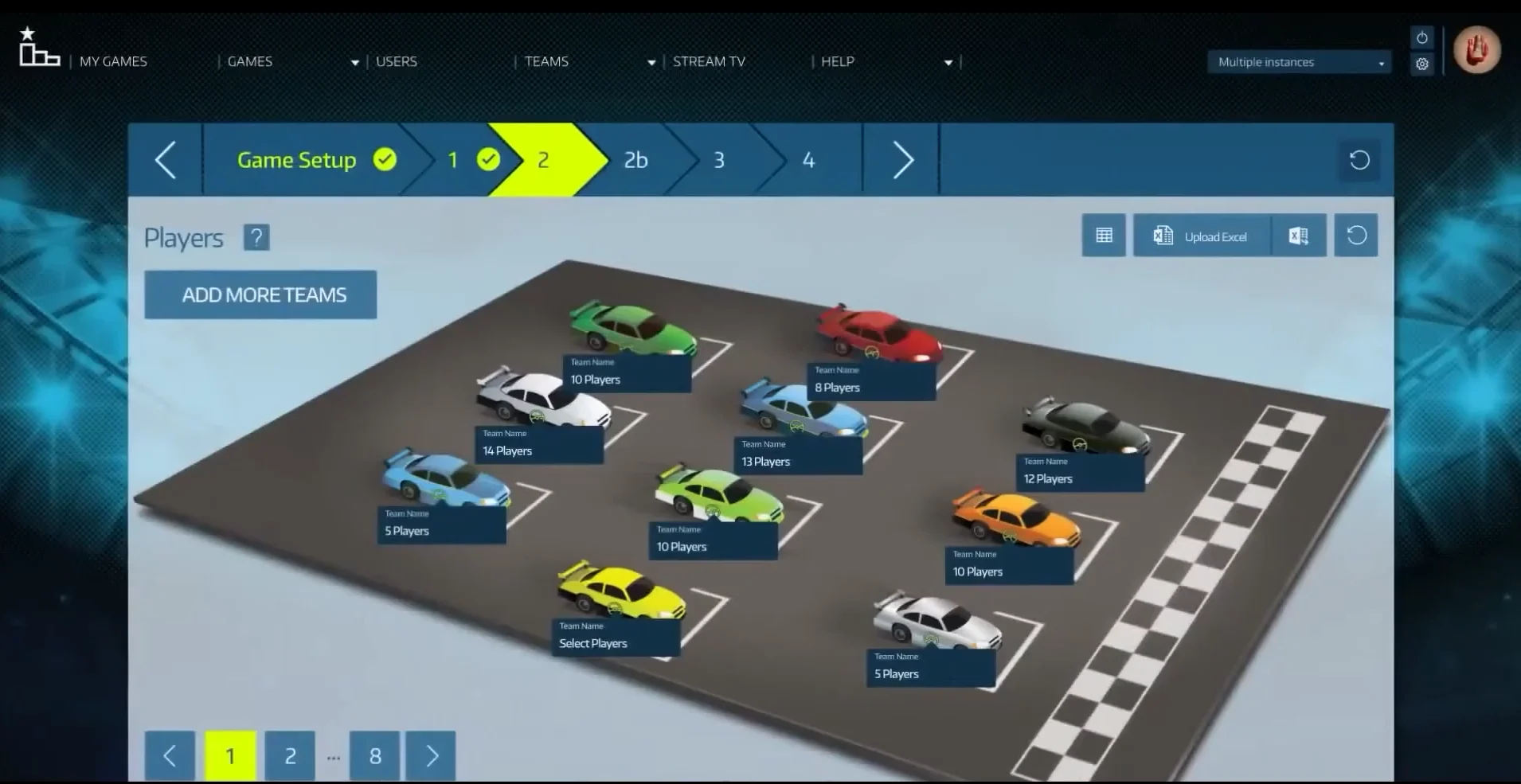
| In-company competitions | Teams, departments, branches | Higher engagement and healthy competition: knowledge is reviewed regularly, and results are visible over time |
These are not mutually exclusive options. In longer training programs, we combine formats: for example, start with a quest for onboarding, then simulations for skill practice, and quarterly competitions to maintain knowledge levels. This makes learning continuous rather than a one-off event.
The main thing is not the format itself but the result it produces. Together with you, we define metrics before and after launch: time for a newcomer to reach performance targets, number of errors in processes, share of employees who completed training.
This is what lets us evaluate whether gamification works as a knowledge management tool rather than just entertainment.
How We Implement Gamification: Project Stages
Implementing gamification is not just purchasing a ready-made program. It is a project that affects how employees learn and share knowledge.
That is why we built the process from clear stages: you always know what is happening at each step, what is already done, and what comes next. The key is alignment at all critical points so the result matches your expectations exactly.
-
Brief and process immersion. We record the goals of the gamification project: what knowledge management problem we are solving, who the audience is, and what employee behavior needs to be reinforced.
We discuss the current training system and internal regulations so that the new mechanics fit naturally into the workflow.
-
Game design and concept approval. Based on the brief, we design the scenario, game mechanics, reward system, and levels. First, we show you the scheme with simple examples — no complex jargon. You see how employees will be engaged and what they will get for completing tasks. We move forward only after your "okay".
-
Development and launch preparation. We set up gamification in your system — for example, on the internal portal or in the learning environment. We connect the relevant departments and define administrator roles.
Along the way, you receive intermediate versions and can provide feedback. This is the stage where transparency matters: we show how the project looks from the employee's perspective.
-
Pilot launch and testing. Together with you, we select a small group of employees who will go through the game scenario first. We collect their impressions, look at activity, achievements, and where difficulties arise. The balance of challenge and motivation is adjusted before the whole company sees the project.
-
Full launch and communication. We prepare the announcement and training materials for all participants. You receive ready-made texts for email or an internal network post so that onboarding is easy and clear.
The launch takes place with our support: we are available in the first days, quickly resolve issues, and gather initial results.
-
Support and evolution. After launch, we monitor usage dynamics, help administrators, and propose updates: new levels, seasons, additional scenarios. Gamification is alive — it must evolve together with the company's objectives.
"We needed the process to be transparent. We saw every stage, made edits in time, and ended up with exactly what we discussed — no surprises," notes the head of training at one of the companies where we launched the project.
This sequence helps avoid the main risk: when gamification is done "for the drawer" and doesn't serve business objectives. Each implementation stage ends with a concrete result you can verify.
And the final launch is not the end of the work but the beginning of continuous improvement of the knowledge system within the team.
What Is Included in Building a Knowledge Management System
When we take on a knowledge management system, you receive not "some kind of working prototype" but a complete package that the team can use immediately after launch.
Every detail is thought through — from scenarios to rules that maintain employee interest and turn learning from an obligation into a clear process.
- Game scenarios — step-by-step scenarios for different situations: onboarding newcomers, professional development, knowledge assessment. Each scenario accounts for your team's specifics and business goals, so employees gain exactly the knowledge needed for their work.
- Game balance — tuning difficulty, points, and rewards so that employees want to participate and keep learning rather than quit after a week. You see each person's progress and can adjust the workload in time.
- Gamification rules — clear regulations: how points are awarded, what levels and statuses exist, how feedback works. The rules are described in plain language to avoid disputes and unnecessary questions in the team.
- Training materials — ready-made modules and cheat sheets for the team: brief instructions, checklists, example breakdowns. Everything needed for a quick start without a long introductory course.
- Support methodology — recommendations for maintaining interest in the system when engagement starts to decline. These are ready-made activation and reminder scenarios that your manager can easily run.
- Launch plan — a step-by-step implementation plan with role assignments so you know who does what at each stage. You understand timelines in advance and don't depend on our team for small details.
You receive this package in a convenient format — documents, presentations, instructions. You can hand it over to your employees and start the process within days, while we remain available for adjustments.
Case Study: Training Engagement Up 40%
For the medical clinic network AlphaMed, employee training had become a "check-the-box" chore: courses were completed for the sake of the record, and knowledge was quickly forgotten.
The training manager wanted a measurable result, but tests and lectures were losing momentum — engagement fell below a third by the end of the course.
We proposed turning training into a team game with levels, rewards, and a leaderboard. Within a month, employees were completing the course voluntarily and helping newcomers.
Training results
Employee engagement increased by 40%, fully completed courses doubled, and time spent in the system tripled. At launch, 120 employees from three branches completed more than 250 scenarios, and 80% continued learning after the final.
Client feedback
We thought adults wouldn't play at work. The key is the right mechanics: it motivates regular practice and application of knowledge in real situations. We got an increase in customer service quality, not just numbers.
After the first gamification case, the client ordered a second stage for the sales unit and plans to extend it to mentoring. That is what sustainable performance growth looks like: training becomes part of the job, not a one-time punishment.
Frequently Asked Questions About Gamification of Business Processes
Gamification of knowledge management raises natural questions from clients: how will employees react, will deadlines slip, and who is responsible if the system fails. Below are answers to the main concerns before ordering.
If your question is not on the list, ask us directly — we will honestly explain how the work will be structured.
What if employees don't want to participate?
We don't start with mechanics; we start with the audience: we study the team's motivation, habits, and pain points. We select a scenario where participation brings clear value — recognition, rating, privileges.
After launch, we monitor activity and adjust the rules if we see a decline. Gamification works on interest, not coercion.
What risks do you take on?
The main risk is formal participation — points accumulating without knowledge being absorbed. We design tasks around real business processes: quizzes, cases, simulations. The employee applies knowledge right here and now, and points reflect value to the company.
The second risk is overloading people with competition, so we balance individual and team activities.
What happens if something breaks after launch?
After delivery, we don't disappear. The project includes warranty support: we configure the system, train administrators, and fix issues promptly. If business processes change, we update the game rules and mechanics. You are dealing with a living system, not a "box" left to its own devices.
What guarantees and timelines do you commit to?
We set timelines, scope of work, and support terms in the contract before the start. You see the stages and the result of each stage, and after completion you receive documentation and instructions.
If follow-up work is needed, you will have a clear plan and a cost calculation without surprise fees.
How to Choose the Right Gamification Format?
There is no single "correct" gamification format — the same mechanic can work brilliantly in a sales department and fail in an IT team.
So the selection doesn't start with a ready-made solution but with a question: what business problem are you solving — accelerating newcomer onboarding, improving how the knowledge base is used, or making training regular without coercion?
You also need to account for your team's characteristics: size, age, readiness for competition, and usual communication channels. If employees work in CRM, gamification should fit into their daily flow rather than require switching to a separate platform.
If public competition is not accepted in the team, we choose cooperative mechanics and personal achievements instead of shared leaderboards.
We provide the implementation consultation for free and before development begins. We gather requirements, look at how employees actually interact with information, and offer 2–3 suitable formats with an engagement forecast.
You receive not an abstract "game" but mechanics that solve your specific problem — from simple quizzes and levels to multi-stage scenarios with roles and team goals.
Choosing the right format saves budget and nerves: if the mechanics don't match the team culture, even a well-designed system will go unused. That is why we test the concept on a small group, show the results, and only then scale.
This way, you see in advance how the tool works in your environment and make decisions based on data, not assumptions.
Leave a request — we will analyze your situation and propose specific gamification options that fit your team and business goals.
Order Turnkey Gamification Development
For a knowledge management system to actually work, employees must want to use it — not open it out of obligation.
Well-designed gamification turns the routine of experience sharing into a clear and engaging process that delivers visible results: faster onboarding, fewer mistakes, higher engagement.
When you order turnkey development, you get a ready solution, not a set of abstract ideas.
- Analysis of your processes — we find the points where knowledge is lost and determine which mechanics will deliver the greatest effect in your team specifically.
- Game scenario tied to business goals — we design tasks, levels, rewards, and feedback so they support work objectives rather than distract from them.
- Prototype and testing — before launch, we test the mechanics on a small group, remove what doesn't work, and only then roll it out across the company.
- Seamless integration — we connect gamification to your portal, CRM, or messenger so employees don't have to learn yet another tool.
- Administrator and user training — after launch, your team manages the system independently, and employees quickly understand the rules.
- Ongoing support and refinement — we analyze initial results and make adjustments to the mechanics so interest doesn't fade after a month.
Contact us — we will calculate the cost of the project and propose a plan that fits your budget and timeline. Leave a request on the website or call us: we'll discuss your goals, answer questions, and show how gamification will work in your case.
Start with a short audit — we'll show where you can strengthen employee engagement and preserve knowledge inside the company.