

Causes of Low Effectiveness of Internal Corporate Communication
Internal corporate communication is often perceived as exchanging messages, but in reality it determines how quickly employees make decisions and how fast the company reaches its goals.
When internal communications falter, departments live their own lives, and strategic initiatives sink in a stream of mailings, meetings, and chats — while business metrics decline imperceptibly.
Employee engagement directly depends on whether they see the connection between their tasks and the company's results. If information arrives through fragmented channels, without clear logic or feedback, people stop reading, reacting, and proposing ideas. This quietly but noticeably hurts productivity, deadlines, and quality of work.
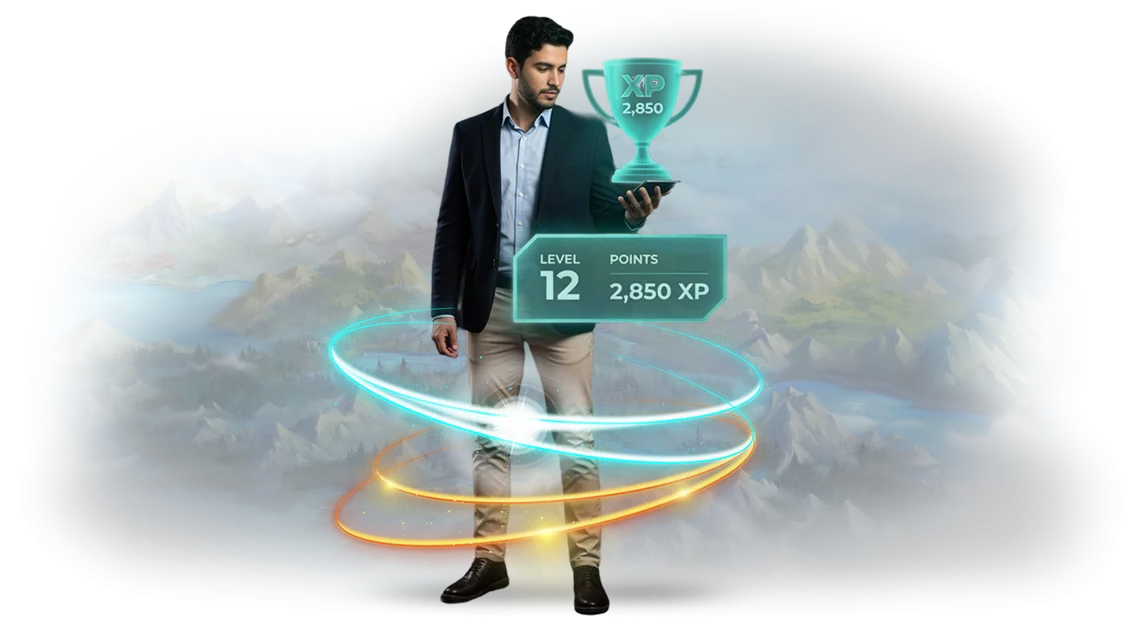
Business gamification closes this gap by turning routine communications into a clear and emotionally engaging system.
But before introducing game mechanics, it is important to see the root of the problem: usually it is the absence of a common goal, weak feedback, and information overload.
The consequences of weak internal communication are visible in numbers: project launch speed drops, employee turnover rises, and clients are lost due to uncoordinated team actions.
Corporate culture suffers imperceptibly — employees are formally present but do not engage with tasks or feel responsibility for the result.
We help systematically improve internal corporate communication through gamification so that it works for business metrics. Not just mailings and portals, but scenarios that engage employees and make achieving goals a natural process.
What Gamification of Business Processes Gives Your Team
Routine tasks, long mailings, and mandatory training quickly become boring. Gamification turns them into a game with clear rules, progress, and rewards — employees get involved on their own, not on command.
Wehave been designing game mechanics for business for 10 years. Here is what the team gets after implementation.
- Higher engagement. Employees participate more willingly when they see their progress and can compare results with colleagues. Activity in corporate channels increases many times over.
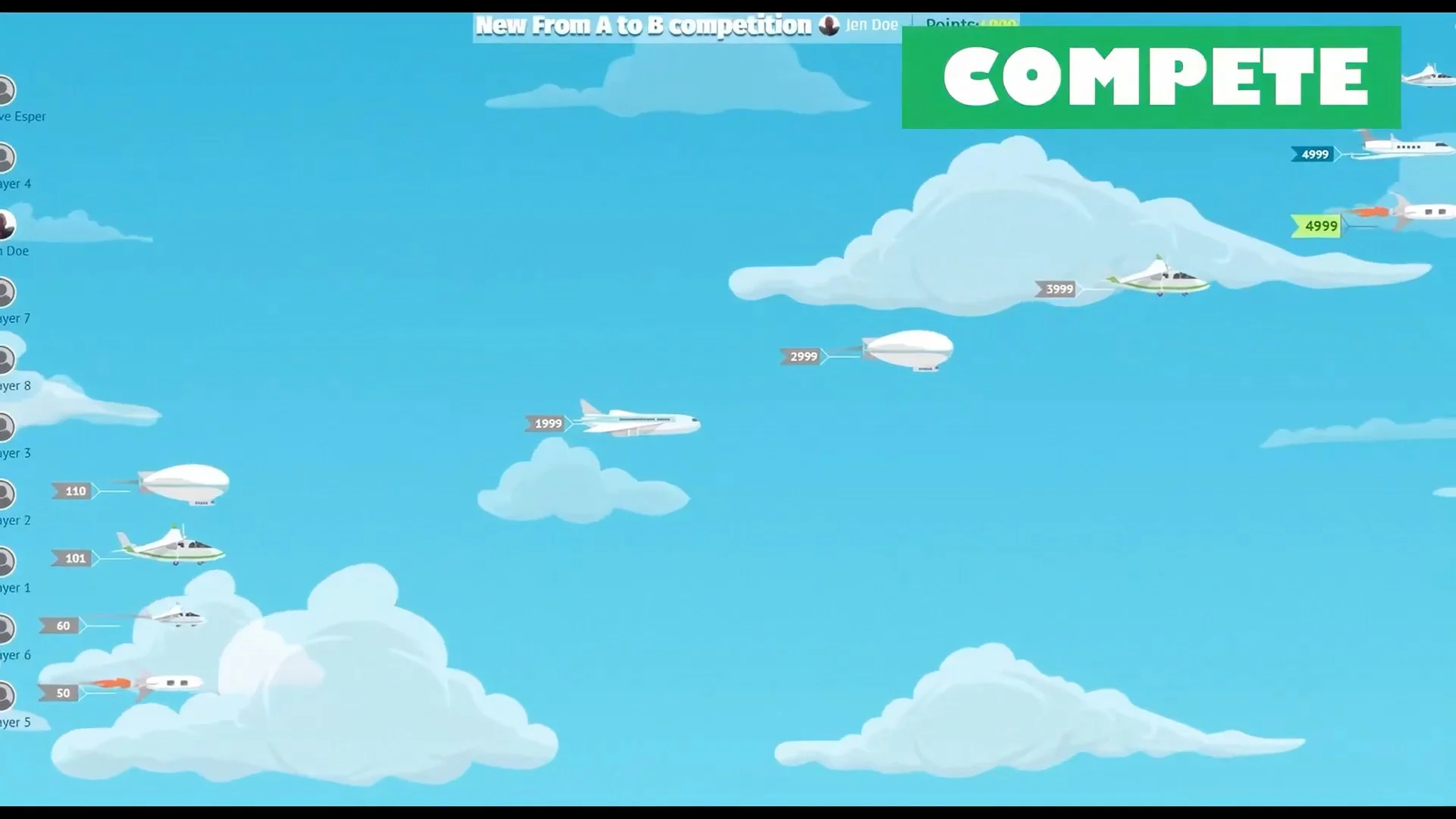
- Motivation without pressure. Instead of directives and reminders — excitement and the desire to win. Internal ratings and awards create healthy competition.
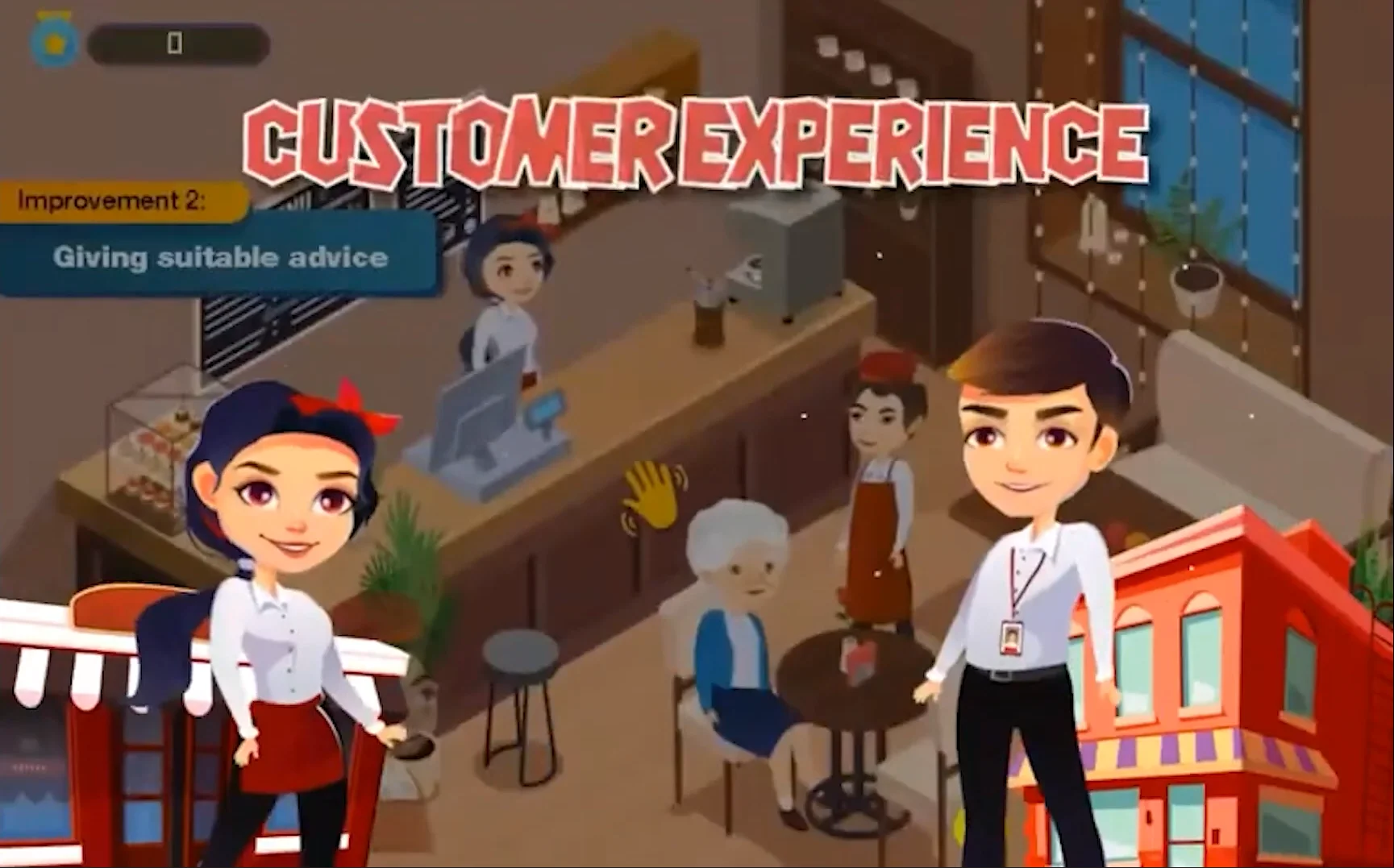
- Faster corporate learning. Game scenarios and quizzes help absorb material faster, and knowledge checks become an engaging process.
- Transparent goals. Everyone understands how their actions affect the overall result. This reduces the number of questions and increases autonomy.
- Team effectiveness. Joint tasks and shared bonuses strengthen ties between departments — information stops getting lost at the seams.
- Better informed staff. Important news, regulations, and changes reach employees in a format they want to read, not delete.
Each item can be implemented separately or combined into a single system. Start with one process — and within a month you will see the difference in engagement and speed of task completion.
Gamification Formats for Internal Corporate Communication
Internal corporate communication comes alive when employees do not just receive information but become participants in the game. Some gamification formats work for daily engagement, others create vivid events that unite the team.
The choice of gamification type depends on the goals, team size, and how employees interact — in the office or remotely.
Below are the main formats of internal corporate games and what each one gives the business.
| Format | For whom | What it gives the client |
|---|---|---|
| Tabletop and floor games | Small departments, offline meetings | Live communication, team spirit, emotional release |
| Quizzes and trivia | The whole company, online or offline | Quick engagement, knowledge checks, common topics for conversation |
| Online quests | Distributed teams, branches | Uniting employees from different cities, skill development, a vivid event |
| Long-term games with points and levels | Regular motivation, meeting plan targets | Gamification of business processes, achieving goals through play |
| Hybrid formats (online + offline) | Large events, conferences | Reaching all participants, synergy of live and digital experience |
Each format solves internal corporate communication tasks in its own way: from lifting spirits on weekdays to engaging people in strategic projects. We help you choose the right game mechanics and adapt the format to your corporate culture.
The main thing is that the game works for business results: greater engagement, better knowledge sharing, and stronger bonds between employees.
How Gamification Development Works: Project Stages
A transparent process is the key to a predictable outcome. From the very beginning, you understand what is happening, what decisions are being made and why, and each stage ends with a clear intermediate result.
We start with a brief and take the project through to launch, then evolve the game along with changes in your business.
-
Brief and immersion in the task. We study which business processes need strengthening, who your audience is, and what goals internal corporate communication faces. We record expectations and success criteria — what exactly the game should give the company and its employees.
-
Designing mechanics and scenario. Based on the brief, we propose a concept: what employee actions the game will support, how it fits into the work rhythm and corporate culture.
You receive a clear description of the mechanics and scenario — without technical details, in business language.
-
Prototype approval. We show you a working prototype or detailed scenario so you can evaluate how the game looks and feels. At this stage, it is easy to make changes — before the main development begins. This saves time and money.
-
Development and integration. We create a full version of the game and embed it into the channels your employees already use: the corporate portal, messenger, or mobile app. We conduct testing on a small group to make sure everything works reliably.
-
Launch and support. We roll out the game, prepare short instructions, and help employees get comfortable. In the first weeks, we are in touch, resolve issues quickly, and collect feedback.
-
Analytics and evolution. After launch, we analyze how actively employees participate and whether the game achieves its goals. Based on the results, we refine the scenario: add new levels, rewards, or change the balance so the game remains interesting and valuable.
You are never left alone with a launched game. We support the project after the start so gamification grows with the business and continues to deliver results.
What's Included in the Delivery: A Gamification Launch Kit
You receive not just a set of files but a working system that can be launched immediately after handover. The kit includes everything the team, manager, and HR need to launch and maintain the game process: from scenario to ready-to-use materials for employees.
- Game scenario and mechanics. A detailed description of rules, levels, and tasks with examples. The employee understands what to do and how to earn a reward, and you understand how the game affects work metrics.
- Game content for platforms. Ready texts, images, and interactive elements. The content is adapted to the corporate style, so the game looks like a natural part of internal communication.
- Gamification documentation for managers. Regulations, instructions, and motivation tables. Managers quickly learn the rules and can answer team questions without involving developers.
- Reward and recognition system. Defined achievement levels and methods of encouragement: from virtual badges to valuable prizes. Transparent rules increase engagement and reduce the risk of disputes.
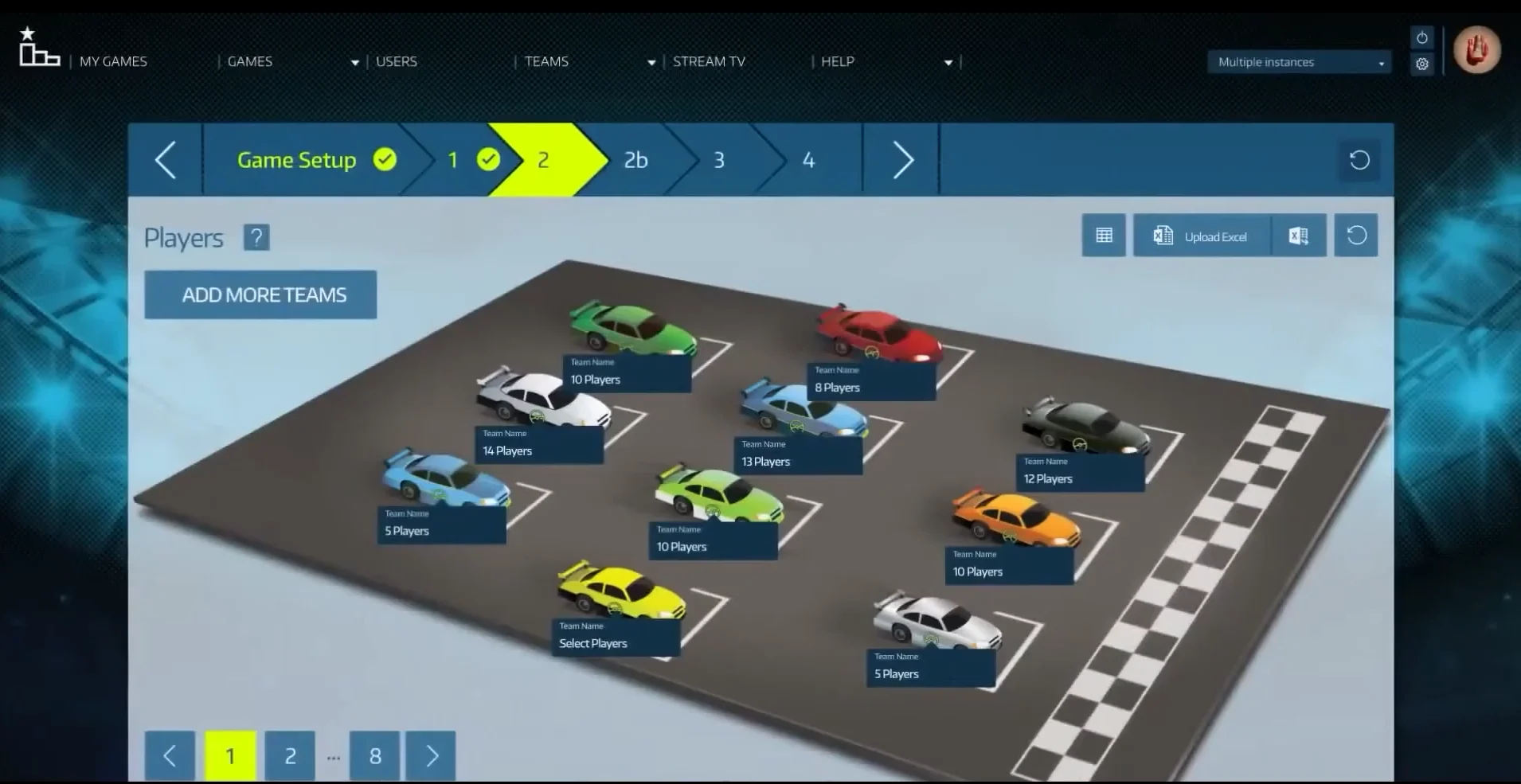
- Admin panel for the team. You manage events, tasks, and users yourself, without turning to programmers. Any change — a new contest or an adjustment to rules — takes minutes.
- Engagement analytics reports. Regular data on how many employees participate, which mechanics work best, and where interest drops. Based on this data, you improve the game and see the return on investment.
We complete the kit with a short launch guide and administrator training. In the end, you get not a "raw" product but a ready-made tool for increasing engagement and improving internal communication.
Case Study: Engagement Doubled After Gamification Implementation
We implemented gamification for the sales department of a distribution company. The task was simple: employees had stopped participating in internal communications — they did not read news, skipped surveys, and did not join discussions. The result was a decline in team spirit and slower distribution of important information.
Instead of yet another corporate portal, we proposed game mechanics based on the internal chat. Each employee received a personal avatar and level; points were awarded for completing planned tasks, and at the end of the month, leaders received prizes.
The game itself became a separate topic: colleagues started discussing who was pulling ahead, sharing tips, and supporting one another.
Three months after launch, we measured key indicators. Engagement in internal communications doubled: news reading activity increased by 85%, the number of comments and reactions tripled, and surveys reached 90% employee participation for the first time.
The client Atlant received not just a "game for the sake of the game" but a working tool that turned routine into a familiar competition.
As the company's HR director noted: "We expected a one-time activation, but we got a systemic shift. Employees remind each other about tasks because they want to win. This is exactly the behavior we had been trying to achieve for a year."
The case did not end with the project's finale but with a new stage: six months later, the client asked to expand the mechanics to other departments. Today, gamification covers the entire company, and attention retention indicators remain consistently high.
If you want the same measurable results, tell us about your task — we will select a scenario and calculate the effect before launch.
How to Choose a Gamification Format for Your Company's Goals?
Choosing gamification starts not with selecting mechanics but with a clear answer to the question: what business problem are you solving?
Increasing employee engagement, accelerating onboarding for new hires, product training, supporting healthy competition between departments — each goal has its own suitable format, and that is what determines the result.
The second selection criterion is the audience. It is important to understand how many people are participating, how they are used to communicating within the company, and how willing they are to get involved in the game.
A small team needs only light mechanics, while a distributed branch network requires gamification that works on familiar channels and does not require employees to learn new tools.
The third point is measurability. Any game mechanics should fit into existing business processes and provide clear metrics: speed of task completion, growth in participation, lower turnover, better communication between departments.
The format is chosen for the company's tasks so that you see the benefit in numbers, not just "run an activity for the sake of activity."
We do not offer universal templates. At the start, we conduct a short consultation, analyze goals, audience, and constraints, and then select mechanics for your company's specific processes.
This approach helps avoid the mistakes of a game that does not resonate or does not affect work performance.
Properly chosen gamification is one that quietly becomes part of the work rhythm: employees engage on their own, and you get a measurable effect for the business.
If you are not sure where to start, start with a conversation with us: tell us about your task, and we will propose a format that will actually solve it.
Common Doubts: Answering Questions About Gamification
Before launching gamification, any manager asks three questions: will the system break, can the team handle it, how to measure the effect. This is normal — over 10 years, we have gone through this path with dozens of projects and know where risks usually hide.
Integration with your processes happens without stopping work. We test the load in advance and adapt the mechanics to your infrastructure — the result is stable and surprise-free.
The team is not left alone with a new system: we train administrators and take technical support on ourselves.
Return on investment is visible in numbers before launch. You get metrics — from the number of active participants to scenario completion speed.
This data shows how gamification affects internal corporate communication and key business indicators, not just that "it was fun to play."
What if the system cannot handle the load?
We design mechanics with a safety margin and test them before launch. Even under peak activity, everything works reliably — without data loss.
Will we need a dedicated support employee?
No, a dedicated person is not needed. We take on technical support and mechanic updates. All you have to do is set the task.
How quickly will we see results?
The first changes are visible within the first weeks. We compare baseline indicators with final ones — you immediately see growth in engagement and improved communication.
We guarantee stable operation and support the project after launch. If doubts remain, ask us, and we will show solutions in practice.Launch Gamification This Month: Project Request
Leave a project request — and we can start preparing for the gamification launch this very month.
You do not need to understand mechanics or game scenarios: after your inquiry, you will get a consultation, have the cost estimated, and understand how gamification will fit into your business processes.
What happens after the request:
- You receive a consultation — we discuss internal corporate communication tasks, the audience, and the expected result.
- We calculate the cost — we give you an exact figure for your scale, with no hidden surcharges.
- We prepare a launch plan — timelines, stages, responsible people, and control points.
- We record agreements — we approve the scenario, balance, and mechanics before work starts.
- We launch the project — we assign a team, configure, and test.
- We support after launch — we adjust balance and rules so engagement keeps growing.
The next steps are simple: fill out the form on the website or write to us in a messenger. A manager will contact you within one business day, clarify the details, and prepare a preliminary estimate. You can start gamification this month — you just need to take the first step.
A project request does not obligate you to cooperate. You will get specifics, timelines, and budget, and you can decide calmly, without rushing. We work remotely across the entire country, so geographical boundaries are not an obstacle. Contact us now — and in just a few weeks, your team will feel the difference in communication.