

Safety training isn't working: how to increase its effectiveness?
Every year companies invest effort in safety training, but the result is often the same: employees formally mark their attendance, and a week later they don't remember how to act in a fire or a leak.
The reason is not staff laziness, but the format — lectures and presentations don't spark interest, so the information doesn't stick. Occupational safety instruction turns into mandatory routine rather than a practical skill.
Employee engagement is the key point where standard programs fall apart. When a person passively listens, their brain doesn't form stable connections.
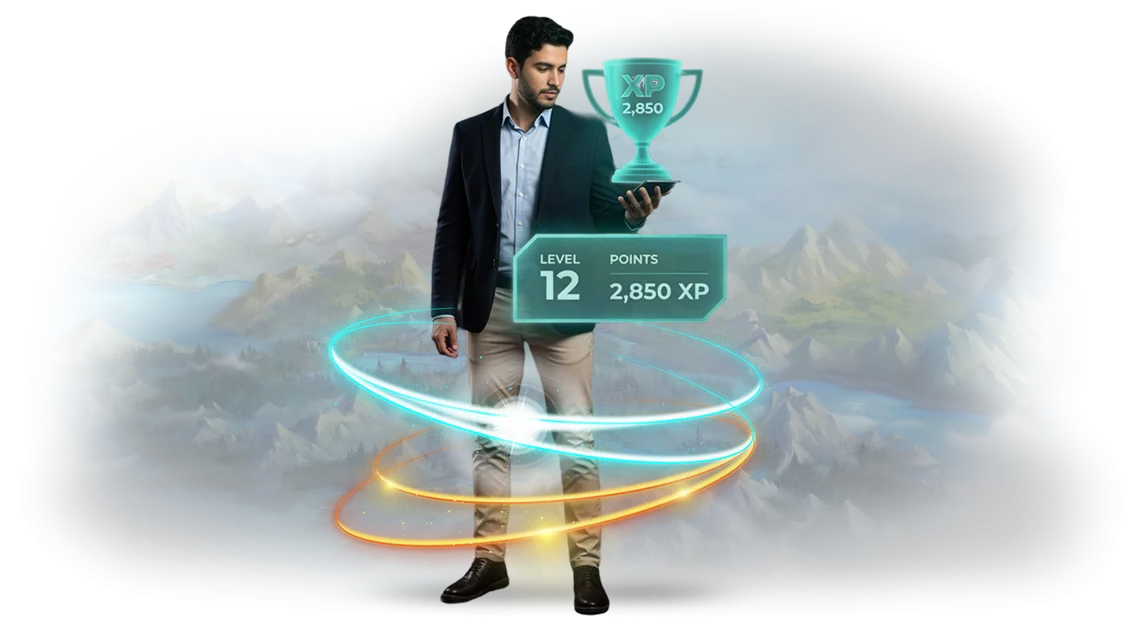
But when an employee enters a virtual situation and makes a decision themselves — they experience the scenario, and that experience stays with them. This is what sets gamification apart: safety training becomes action, not reading instructions.
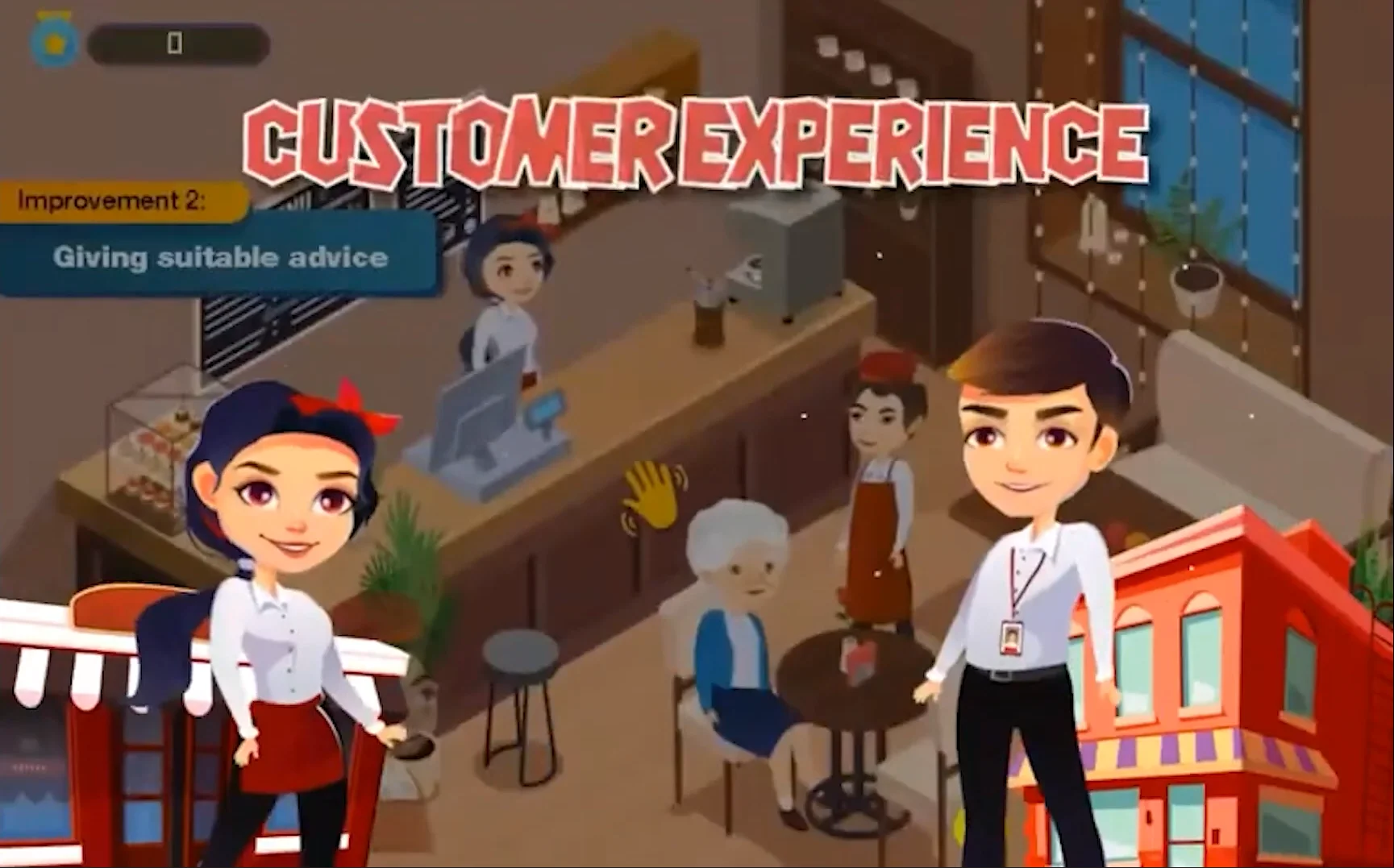
Ordinary courses test knowledge of text, not readiness to act in real conditions. We flip the process: the employee explores the company's 3D world, finds hazards, corrects mistakes, sees consequences.
This way employee engagement grows naturally — through interest and game mechanics, not through coercion.
We use professional equipment and proven development tools to create an environment that accurately replicates your facilities and workflows. As a result, safety training ceases to be a checkbox and becomes a clear, memorable part of the job.
Benefits of gamification: greater engagement and fewer injuries
Ordinary safety briefings often become a formality: the employee listens to the material, signs the log, and a week later no longer remembers the key rules. In a critical situation, what matters is not memorized phrases but practiced actions.
Gamification moves training from passive viewing to active practice, where each employee goes through scenarios themselves and remembers the right decisions.
Here's what a client gets by implementing game-based training:
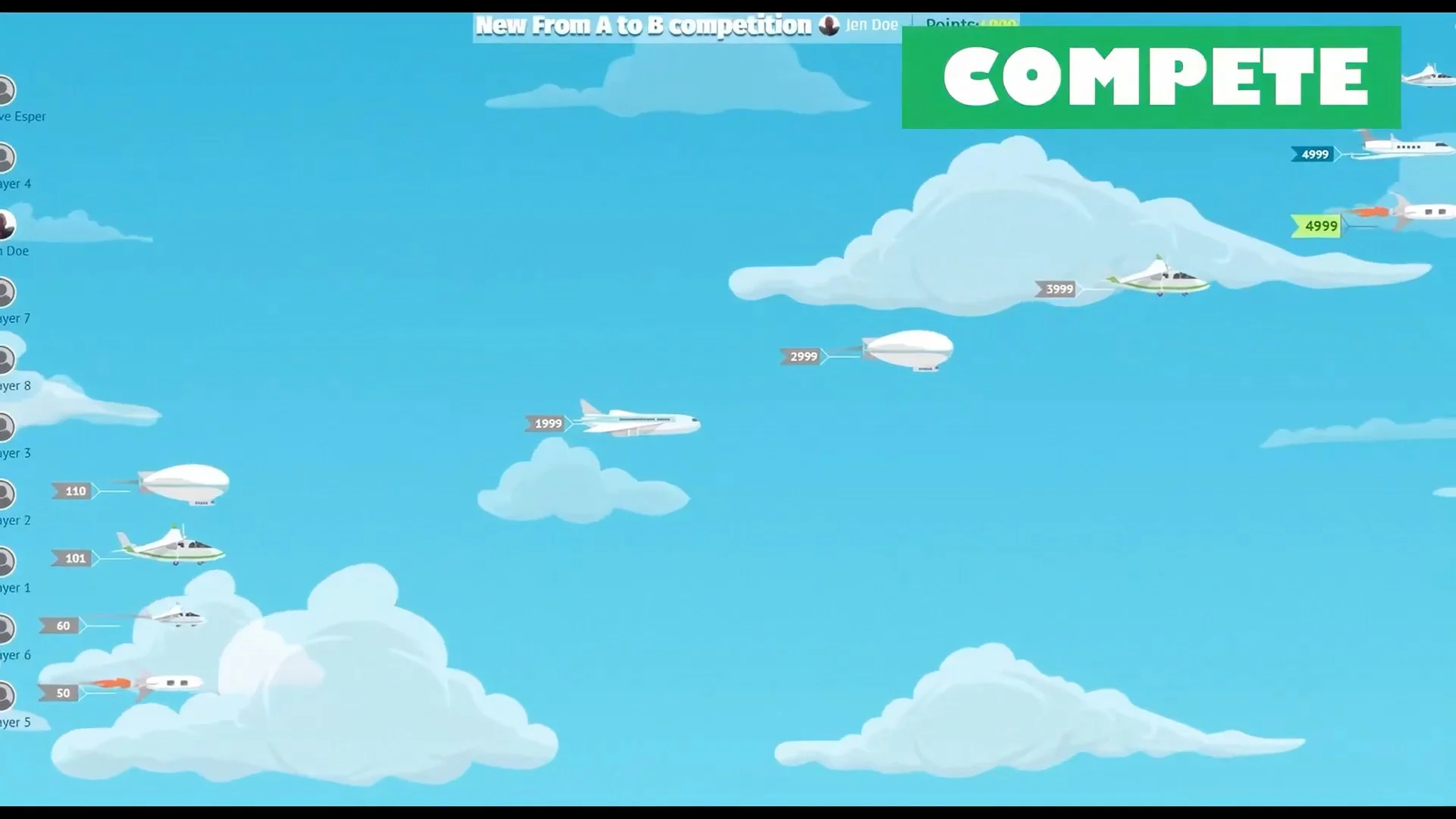
- Employee engagement. The interactive format holds attention, and employees complete the course instead of skipping through it "just to check the box." Engagement with and trust in the training program grow.
- Fewer errors. In a 3D world, you can make mistakes without real consequences — and immediately see what a violation leads to. That kind of experience is remembered better than dozens of slides with rules.
- Faster learning. Concise game sessions replace long lectures: employees master the material more quickly and return to work sooner. Training time is reduced while training effectiveness increases.
- Improved safety. The employee finds themselves in a realistic environment where they need to notice a danger in time, make a decision, and follow the correct procedure. After such training, actions in real situations become more confident, and injuries decline.
We create 3D avatars and the company's virtual world on Unity so employees can interactively go through all key scenarios — from working with equipment to responding to incidents.
This is not just simulation for entertainment but a tool that embeds into your existing training system and delivers measurable results: fewer violations, a stronger safety culture, and lower costs for incident consequences.
3D world formats for safety training
Safety training cannot be turned into a lecture: employees let information go in one ear and out the other, and real knowledge testing only happens in a critical situation.
It's far more effective to let a person make mistakes safely in a virtual environment — then correct actions become a habit. We build a 3D simulator for a specific task: from familiarizing with the territory to practicing emergency scenarios.
We choose the safety training format together with you, based on who and what needs to be taught: new hires, experienced employees, managers, or mixed groups.
A virtual trainer can be individual or team-based, last 10 minutes or an entire shift — the important thing is that the scenario covers the real risks of your enterprise. Below are typical options that we adapt to your specifics.
Which formats suit your employees
| Format | Target audience | Client benefits |
|---|---|---|
| Virtual tour | New employees and contractors | Rapid familiarization with the facility without access to hazardous zones, fewer introductory briefings |
| 3D emergency simulator | Staff at hazardous production facilities | Practicing actions during a fire, leak, or evacuation without risk to life or equipment downtime |
| Virtual equipment trainer | Operators and maintenance personnel | Fewer errors and injuries through repeated practice in a safe environment |
| Team drills in a virtual world | Shift supervisors and safety departments | Testing coordination and decision-making under stress without stopping production |
Whichever format you choose, we take on the development of the world, scenarios, and integration with your training system. In the end, you get a ready-made virtual trainer that measures each employee's progress and generates reports for regulatory authorities.
Stages of gamification development: from brief to launch
Gamification development is a project where it's important for you to understand what happens at every step. We structure the work as a transparent process: you always know what's already done, what's in progress, and when the result will appear. Below are the typical implementation stages: from brief to post-launch support.
-
Brief and task immersion. We study your business goals, training specifics, and audience. The outcome is a clear understanding of which scenario will deliver the right result, along with a work plan.
-
Scenario design and approval. We develop the storyline, roles, and tasks for employees. We approve the scenario with you and make edits before development begins — this eliminates rework and unnecessary costs.
-
Creation of 3D avatars and the company's world. We fill the space with elements of your brand, making it recognizable and engaging. We use professional equipment and proven tools — this speeds up the work and improves the quality of the result.
-
Development of game mechanics and interface. We assemble the training into a single product: clear instructions, rewards, feedback. Employees understand what to do and don't lose motivation during the course.
-
Testing and debugging. We check scenarios on different devices and fix errors. You get a stable system, not a "raw" version that fails at a crucial moment.
-
Launch and implementation. We deploy the solution, train administrators, and run a pilot launch. Your employees start training without delays or technical issues.
-
Support and development. We stay in touch after launch: we answer questions, update content, and add new scenarios when business objectives change.
What's included in the 3D trainer package for skill practice
The complete 3D trainer package is a ready-made training system that can be implemented immediately. We assemble it around your task so you don't have to refine anything: everything is included.
- Training scenarios. Practice of real situations according to your regulations — from fire to emergencies. Skills are reinforced through action, not reading instructions.
- 3D employee avatars. First-person perspective helps employees memorize safe behavior algorithms faster.
- Three-dimensional model of the enterprise. Employees train in a familiar environment, so they easily transfer skills to real work.
- Integration with your LMS. Results automatically go into the e-learning system — supervisors see progress without manual report collection.
- Learning analytics. Each completion shows errors and improvement trends. You know exactly who needs more training.
- Instructions and administrator training. Ready-made materials for launch and operation, plus remote training for your employees.
- Post-launch support. Content updates and technical support stay available.
Such a gamification package covers the entire safety training cycle — from getting acquainted with the trainer to monitoring results. You get a working tool that raises the level of employee preparedness and reduces business risks.
Case study: how gamification reduced workplace injuries
For the large manufacturing holding StalProm, we developed a safety course that replaced boring briefings. Previously, employees formally watched presentations, and knowledge checks were reduced to a test with hints.
Injuries at the sites kept repeating because of the same mistakes — people didn't see real consequences.
We built a 3D trainer where each worker completes a shift in a virtual workshop and encounters dangerous situations. A wrong action leads to a realistic accident, a line stoppage, or a "fine" in game currency. This made participants think rather than guess answers.
Implementation results
In the first six months, the number of safety violations fell by 37%, and related injuries dropped by a factor of 2.3. Knowledge-check errors fell from 22% to 6%, and 1,400 employees completed the course in a month — three times faster than with ordinary lectures.
The head of the occupational safety service noted: "For the first time, employees are asking to extend access to the trainer themselves.
We've seen that safety can be taught in an interesting way with measurable results." After the pilot, the client expanded the program to all five sites and ordered modules for new hires and managers.
This gamification case study confirms: safety training is not entertainment but a working tool for reducing risks. Want the same result at your facility? We'll start with a pilot at one site — you'll see the metrics with your own eyes.
How to choose the right gamification format for your objectives?
When the question of gamifying safety training comes up, many expect a single universal solution for the whole company.
In practice, the right format choice is directly tied to your objectives: how many employees need training, what risks exist at each site, and how quickly people must react in an emergency.
It is precisely this that determines what's better — a short interactive briefing or a multi-level scenario with changing conditions.
The first step in selecting a solution is to understand exactly what knowledge and skills should remain with the employee after training. If it's about mass familiarization with the territory and basic rules, a light 3D tour with checkpoints is enough.
If you need to practice the sequence of actions during a fire, leak, or other accident, you need a scenario with decision points and a demonstration of the consequences of each step. This approach turns training into practice, not just viewing material.
Gamification tailored to a task also depends on the specifics of your industry and established regulations.
For production floors, a detailed simulation of the work process works; for an office, modeling dangerous situations in a familiar environment; for logistics companies, interactive cases on the procedures in a traffic accident.
It's important that employees transfer skills from the virtual world to the real one, so the format is always adapted to your corporate standards.
We don't push a "boxed" product; instead, we select gamification for your task after a short audit. We look at the number of scenarios, the level of detail, session length, and ways to evaluate results.
In the end, you get a solution that employees complete with interest, and knowledge checks take minutes rather than hours. The main thing is that training starts working to reduce injuries and improve safety culture without disrupting production.
Frequently asked questions about implementing 3D gamification
Implementing 3D gamification in safety training raises questions — and that's normal.
Any new format requires clear answers before you start: how much it costs, whether it's compatible with the current system, whether employees will accept it, and whether the result will be measurable.
Below we address the typical objections our clients encounter and show how our team resolves them.
How much does 3D gamification cost and when will it pay off?
The cost depends on the scale: the number of scenarios, the level of world detail, and integration with your training system. At the brief stage, we fix the scope of work and the estimate — it doesn't change during the process.
We calculate payback not by price but by results: reduced onboarding time, fewer errors, and fewer incidents create an impact already after the pilot launch.
Is it compatible with our equipment and infrastructure?
We design the solution for your infrastructure, not the other way around. There's no need to purchase expensive equipment: the trainer runs on standard computers and laptops already available in the company. If employees work remotely, we include a web version that isn't tied to a specific location.
Will employees resist the new training format?
Gamification is one of the fastest ways to engage people: the scenario is closer to a game than to an instruction, so employees take part voluntarily. The mechanics are simple and clear from the first minute, and in-process feedback helps reinforce knowledge without stress. This is especially important for safety topics where the cost of a mistake is high.
What guarantees do we have that the result will be measurable?
At the start, we set goals — for example, the share of employees who complete training or the reduction in violations. We conduct a test launch on a pilot group, collect feedback, make changes, and only then scale up. At every stage, you receive a progress report and access to a demo version.
If you still have questions, send them to us. We'll recommend the optimal 3D gamification format for your business objectives, calculate timelines and impact, and a pilot launch will help resolve any remaining doubts.Order the development of 3D worlds for your employees
Standard briefings don't provide the needed level of engagement — employees listen formally and forget the algorithms within a few days. The client gets not a presentation but a 3D world where every team member trains in conditions close to real ones. This reduces the risk of errors and increases readiness for emergency situations.
We create training spaces based on Unity for industries with high safety requirements. By ordering process gamification, you receive a custom proposal that takes into account your regulations, number of personnel, and specific risks.
The 3D content is developed from scratch, so the virtual world fully matches your corporate culture.
The custom proposal includes a full list of work for your project:
- Gathering requirements and analyzing your safety scenarios.
- Designing 3D locations and avatars for your brand.
- Developing a prototype and test level for evaluation with a focus group.
- Creating a complete training package with a results tracking system.
- Preparing instructions for employees and administrators.
- Integration with the corporate e-learning system and technical support after launch.
To order gamification, simply leave a request on the page. We'll get in touch with you, clarify the details, and prepare a custom proposal within a few business days: a list of work, stages, and implementation timelines.
You'll be able to discuss details with our expert before the project starts — and choose the optimal format for your budget and company objectives.