

Operator Training: The Cost of Every Mistake
Every CNC operator error is not just a defective part. It's a stopped line, missed deadlines, and a lost contract. Under a tight schedule, one wrong step can turn into hours of downtime that multiply costs and hurt the shop's profitability.
The situation is made worse by a shortage of skilled workers. Finding an experienced specialist who works without defects from day one is nearly impossible: the best operators are already busy, and newcomers need long, patient instruction.
Traditional on-the-job training distracts mentors, slows output, and does not guarantee that an employee will not make a critical mistake in the very first month of independent work.
As a result, the company pays twice: for the training itself and for the consequences of incorrect actions. Every such case means lost time, wasted materials, and exhausted teams.
Business needs a way to train operators quickly and safely, without putting equipment or the production plan at risk.
We address this need with interactive training in virtual space. Personnel practice skills on a precise digital replica of the work process, and mistakes happen where they cost nothing. The company gets a trained operator without production downtime or defective parts.
Gamification of Training: What the Business Gets
Machine operators are key production employees. But training beginners takes months, and mistakes on real equipment are expensive: downtime, breakdowns, injuries.
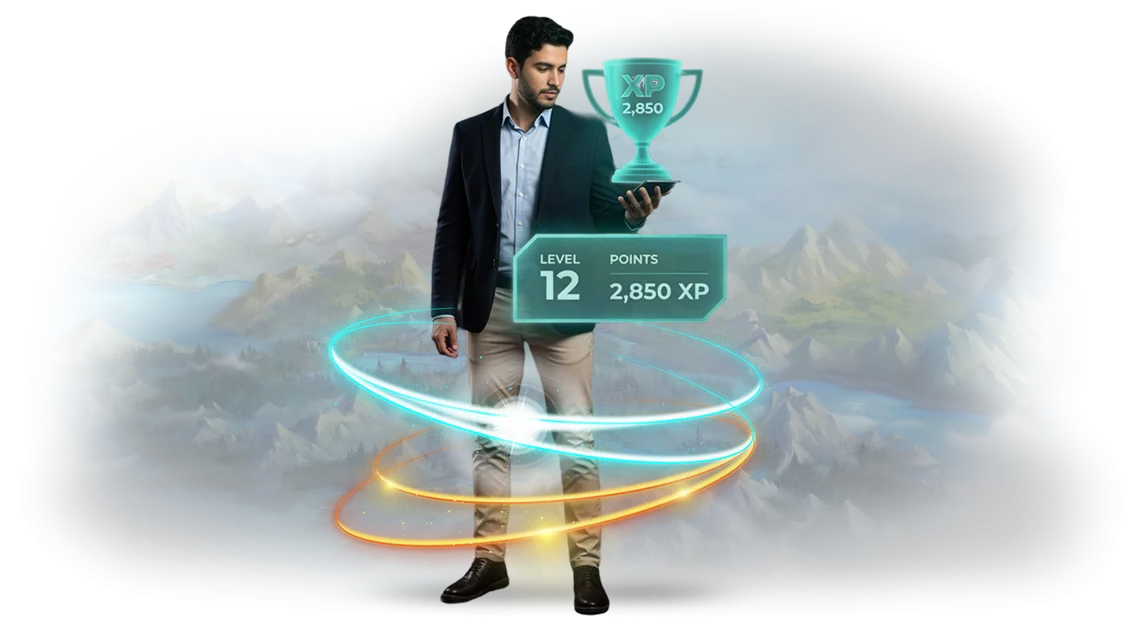
Gamification moves training into a safe virtual environment where employees can learn from mistakes without consequences for the business.
Employee Engagement
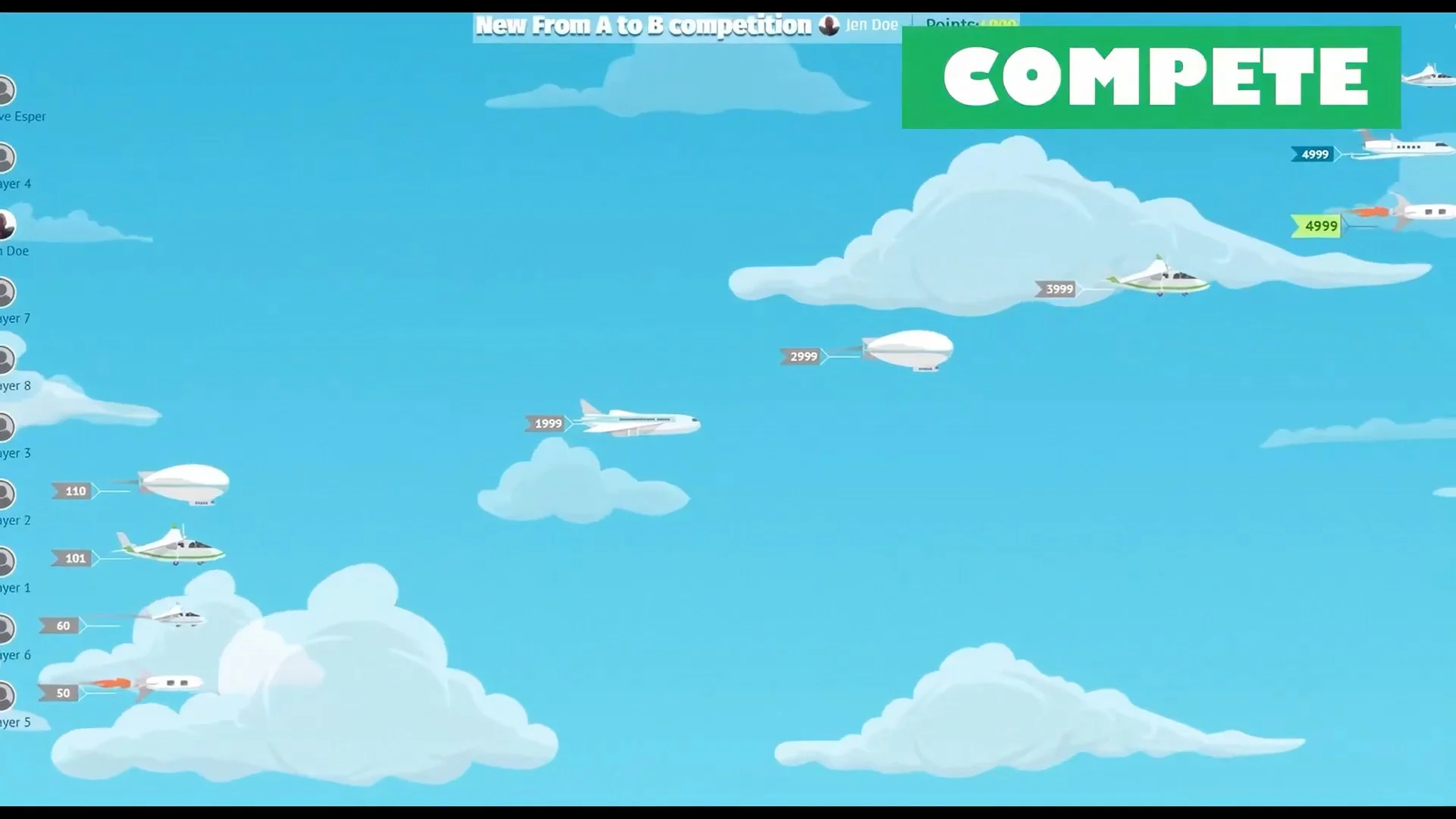
Boring briefings do not hold attention. Game scenarios and rewards turn training into a process people want to complete. Employees keep coming back to the simulator on their own — knowledge is absorbed more deeply.
Training Speed
Instead of long practice on a real machine, a beginner practices operations in a virtual workshop. No need to wait for available equipment or risk the plan. Standard actions become automatic in weeks, not months.
Fewer Accidents
Hazardous situations — unexpected stops, jamming — cannot be practiced in real life. In the simulator, they are safe. The employee learns to act correctly under stress, and that reaction carries over to real work.
Investment in People
Quality training increases loyalty and reduces turnover. Employees see that the company develops their skills and respond with responsible behavior. This reduces recruitment and onboarding costs.
We work on the professional Unity platform — it ensures stable simulator performance and quick changes tailored to your tasks. You get a reliable tool that pays for itself by reducing risks and accelerating employees' path to full productivity.
Gamification Formats for Different Tasks
Each training task has its own format. A new operator needs to safely master the machine, an experienced one needs to practice emergency situations, and a supervisor needs to quickly check the knowledge of an entire shift. The same gamification approach does not solve all these tasks equally effectively.
That is why we match the format to your specific business task: sometimes a short test is enough, and sometimes a full 3D simulator with immersion in the work process is needed.
You get not a "game for the sake of a game," but a tool that delivers the training outcome you need.
| Format | Target Audience | What It Gives the Client |
|---|---|---|
| Virtual machine simulator | New operators, students, staff retraining | Safe skill practice without risk to equipment or people; fewer errors on the real line |
| 3D simulator of a production area | Experienced operators, emergency response practice | Full immersion in the work process, actions during accidents and downtime, versatility across different machine models |
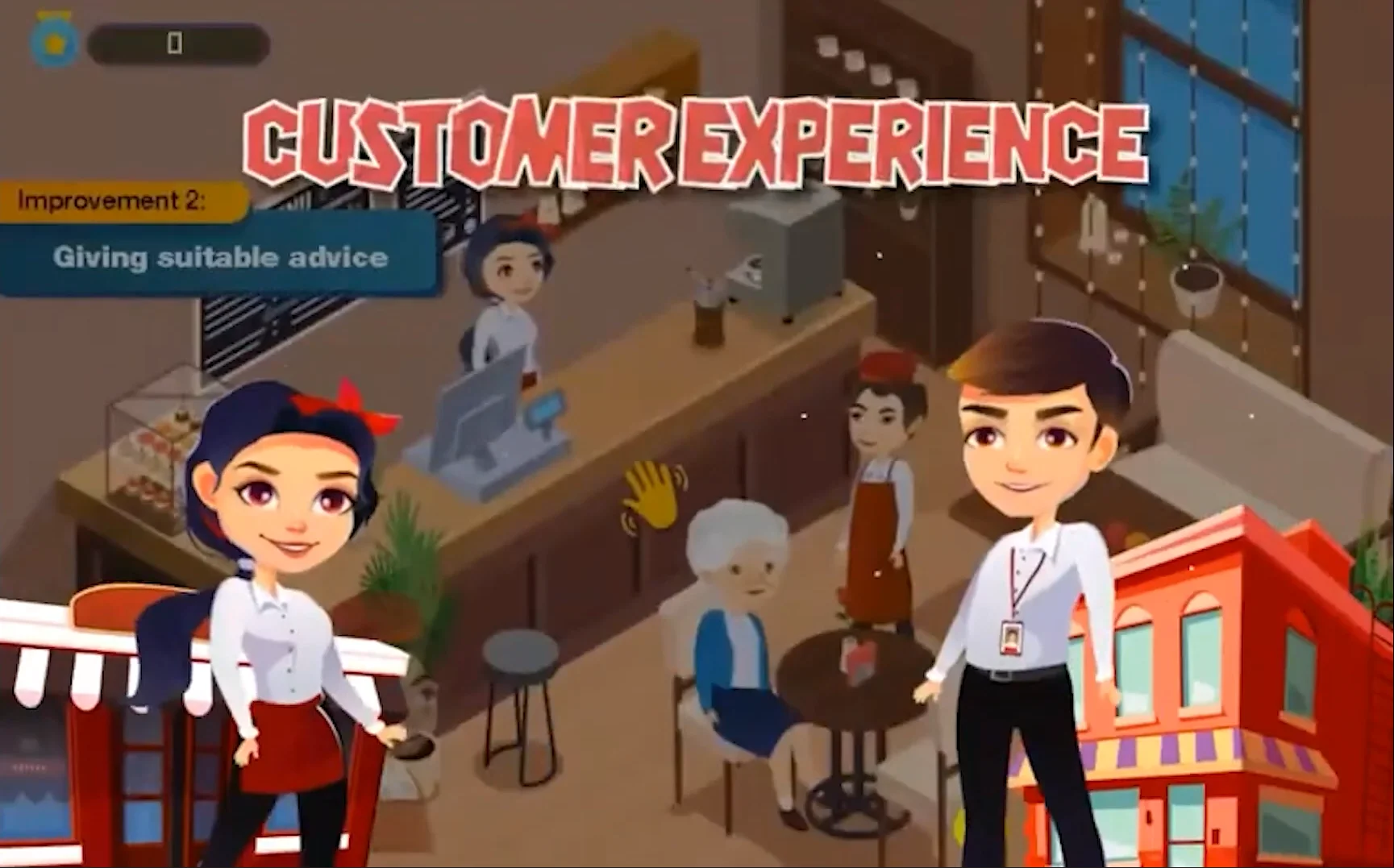
| Gamified course with a 3D avatar | Large-scale workforce, onboarding training, engagement boost | Learning theory through story and character: employees remember the material instead of memorizing an instruction |
| Interactive test with instant feedback | Knowledge checks after training, certification, work authorization | Fast screening of all personnel, automatic performance reports, transparency for the supervisor |
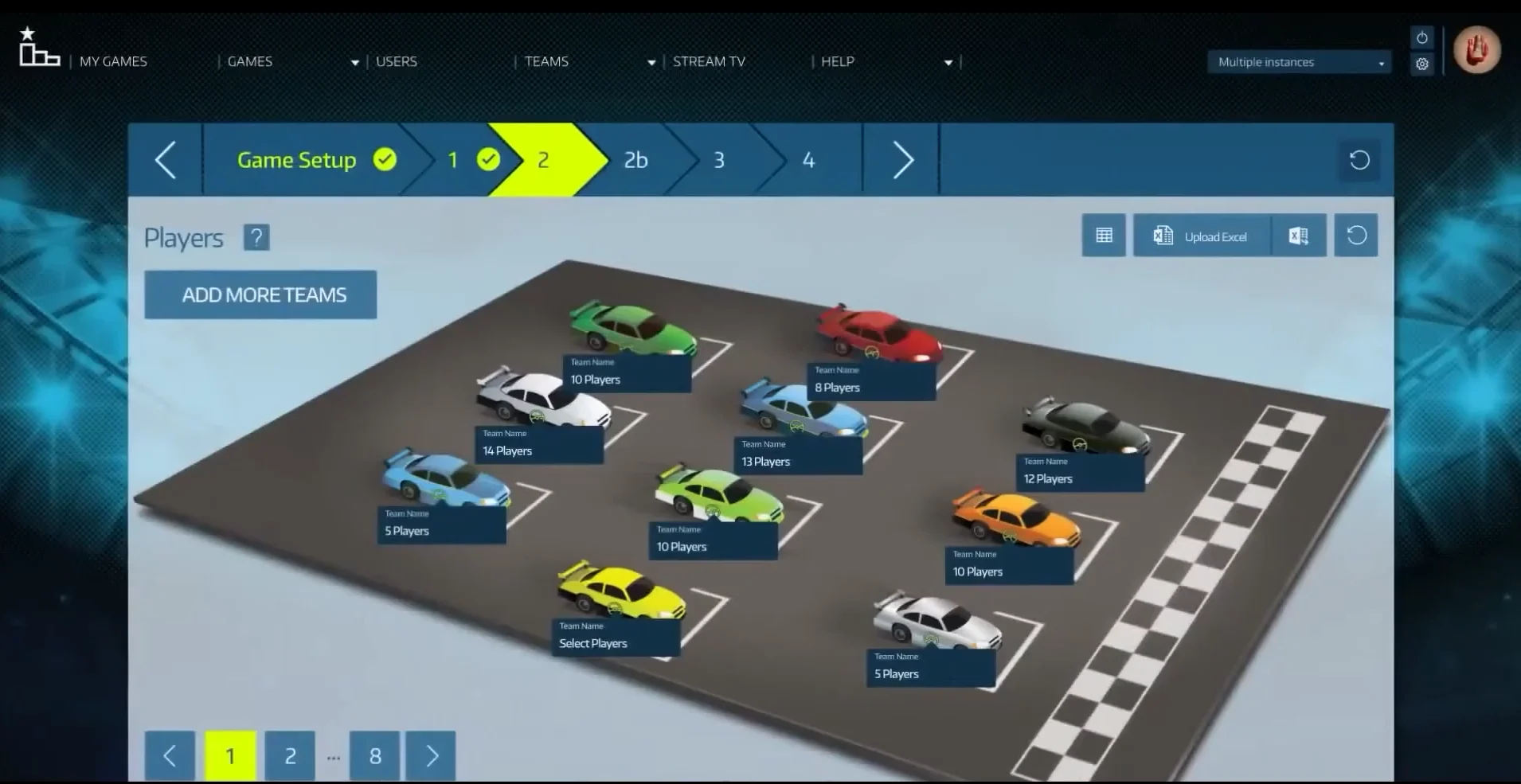
This combination of formats saves budget: the expensive 3D simulator is used only where deep practice is required, while mass training and knowledge checks are covered by lighter tools. At the same time, all formats work in a single system and collect statistics on every employee.
How a Project Works: From Brief to Launch
Gamification training projects require a clear process — otherwise it is easy to drift into development without measurable results. We have structured our work so that at every stage you understand what is happening and can influence decisions. Below is the typical path from the first brief to a working system and its continued support.
-
Brief and task audit. We define what skills machine operators must acquire, how many people need training, and by what rules success will be measured. This is the basis for all further decisions.
-
Project plan and scenario approval. We prepare the gamification concept: which training situations will be modeled, what the employee learning process looks like, and which metrics are considered key. You approve the plan before the main development stage begins.
-
Visual mockups and prototype development. We create 3D avatars of workstations, the interface, and standard scenarios. At this stage, you already see how the training will look and feel — and can make changes before extensive resources are invested.
-
Training module assembly. We implement simulator logic, operator feedback, an error and hint system, and, if necessary, integration with your internal training program. We account for the specifics of your machines and production processes.
-
Testing with real operators. We bring in a group of employees and test the scenarios in practice: whether tasks are clear, controls are comfortable, and learning goals are achieved. We make adjustments based on the results.
-
Training launch. We onboard operators, provide instructions, and hand over configuration and administration to those responsible. We organize a smooth start without stopping the production process.
-
Gamification support and development. We remain in contact: we update scenarios according to regulatory changes, add new exercises, and analyze training results. We help scale the system to other areas.
Each stage ends with an understandable deliverable: a document, layout, working version, or report. This keeps the project on schedule and gives you control over timelines and quality.
What Is Included in the Final Solution
You receive not just a simulator, but a complete operator training tool that works from day one. The delivery includes everything needed to launch training without involving developers or methodologists on your side.
Here is what the complete solution includes:
- Training scenarios for your operations. Modules replicate the real operator workflow: from machine startup to troubleshooting. Training progresses from simple to complex — the employee masters every stage without risk to equipment.
- Accurate 3D models of equipment and workspaces. Digital copies of machines and tools match real components, so the operator studies exactly what they will encounter in the shop. This eliminates the gap between training and practice.
- Integrated instructions and hints. At every step, the employee sees what action to take and why. The system gently corrects mistakes and prevents incorrect skills from taking root.
- Training analytics dashboard for the supervisor. You see which operators have completed the program, where difficulties arise, and who is ready to work on real equipment. Every decision about machine access is backed by data, not personal impressions.
- Updates and support after launch. If process sheets change or new operations are added, we update the training scenarios. The solution remains relevant without purchasing a new program.
The entire delivery is built around your task and handed over as a finished product. You do not need to understand the technical side — just assign someone responsible for training and give employees access. Everything else is configured, tested, and supported by us after launch.
Case Study: Plant Reduced Onboarding Time by 40%
For a large machine-building plant, operator onboarding was a bottleneck. New employees were trained directly on the line, and every mistake meant line downtime or expensive repairs.
The plant needed a way to shorten training time and protect equipment. We designed a 3D simulator that replicates the control panel and production operations. The Unity environment gives trainees a safe space where they can try, make mistakes, and immediately correct them.
Training took place in a virtual workshop: startup sequence, setup, tool changes, part processing. The trainee sees the machine's response, but there are no damages or injuries. Skill practice becomes calm and methodical — without the fear of breaking expensive equipment.
After two months, measurements showed that the time to independent work had dropped by 40%. Instead of three months — just under two.
The number of emergency situations in the workshop fell by half: employees arrive with established skills instead of learning through costly mistakes.
For the client, this means faster onboarding and lower repair and downtime costs. The training program became predictable, and operators work more confidently from day one. The plant is now scaling the solution to its equipment maintenance area.
How to Choose the Right Gamification Format?
Choosing a gamification format is not a technology question — it is a question of your production goals. Before deciding which option fits, it is worth answering two simple questions: how many people need training, and what skills must they practice. Both the budget and the implementation timeline depend on the answers.
A small workshop with a few operators does not need a complex system. A compact simulator that practices standard machine operations and reviews common mistakes is sufficient.
This is a fast and affordable solution that addresses the core need: safely introducing employees to equipment without taking them away from work for long.
A large enterprise with dozens or hundreds of employees needs a different scale. Here, a full virtual company world pays off: multiple workshops, different machine models, scenarios for new and experienced operators.
Such a solution allows for parallel training, tracking each individual's progress, and standardizing training quality across all departments.
Budget is not a limitation — it is a selection criterion. If resources are limited at the start, we choose a format that delivers maximum effect for the investment: a focused simulator for a key operation or a modular program that can be expanded.
If the budget allows, we design a large-scale solution from the start, with built-in room for company growth.
We determine the final format after a short analysis: we review how training works today, where losses occur, and which scenarios will deliver quick results.
You get not "gamification for the sake of gamification," but a tool that solves a specific problem in your workshop with a clear budget and predictable impact.
Common Concerns and Questions About Gamification
Gamification of operator training is an unfamiliar approach, so questions are natural: what if the technology fails, will we lose hands-on mentoring, how do we fit simulation into shift schedules. Here we answer what we most often hear from production managers.
What if the simulator breaks or can't handle the load? How reliable is it?
We build the simulator as a working system, not an entertainment app: before launch, it undergoes trial operation with your operators, and a specialist supports the setup.
Data is saved automatically, so an unexpected equipment or network failure does not interrupt a session or lose the student's progress.
After implementation, you are not left alone with the system: support responds to requests within agreed timeframes, and scenario and material updates are performed remotely without stopping training.
Will the simulator replace live instructors?
No, on the contrary — it will lighten their workload. The operator practices actions in a safe environment, and the instructor steps in where personal experience is needed: error analysis, non-standard situations. One instructor can handle more students and spends less time repeating the same instructions.
How can we introduce training without stopping production?
We work in stages: a pilot group of several operators, scenario adjustments for your machines and parts, then scaling. Training happens in short sessions during off shifts, in parallel to output — there is no need to stop the workshop.
Can operators with no 3D program experience handle it?
The controls follow the logic of the real machine, not a computer game: inspect, switch on, process the part. An instructor learns the system within a day, and operators work from the very first session.
Request Gamification Development
Operator training means direct costs on materials, mentor time, and the risk of expensive mistakes.
Gamification turns the process into a manageable system: employees practice skills before entering real equipment, and you get predictable results and faster readiness for independent work.
We suggest starting with a free consultation and demo version — we will show you what your training scenario will look like and which business metrics it will cover. All you need to do is leave a request for gamification, and we will prepare an offer tailored to your task.
What you get after contacting us:
- a free consultation and a cost estimate (calculated after audit) for developing gamification for your process;
- a demo version based on your scenario — see how an operator interacts with the simulator;
- an analysis of your current training and the points where gamification will have the greatest impact;
- an implementation timeline estimate and a stage plan with checkpoints;
- a presentation for management with the business case and performance indicators;
- support at every stage — from brief to launch and result maintenance.
Leave a request for gamification to get a consultation and demo version. We will contact you within one business day, clarify your task, and propose a solution that pays off through reduced material consumption, fewer accidents, and faster training for machine operators.