

Sales Training for Industrial Equipment: Knowledge Doesn't Work
Companies invest in sales training, yet a month later managers work the old way. Money for training is spent, but deal metrics for industrial equipment don't move — and this is a familiar pain for many executives.
The reason is not employee laziness. Classic training provides information, not skill: you listen, take notes, but in a real conversation with a client you act out of habit. Knowledge doesn't turn into action because there's no environment where it can be safely practiced. That's where process gamification comes in: it creates controlled practice, not another lecture.
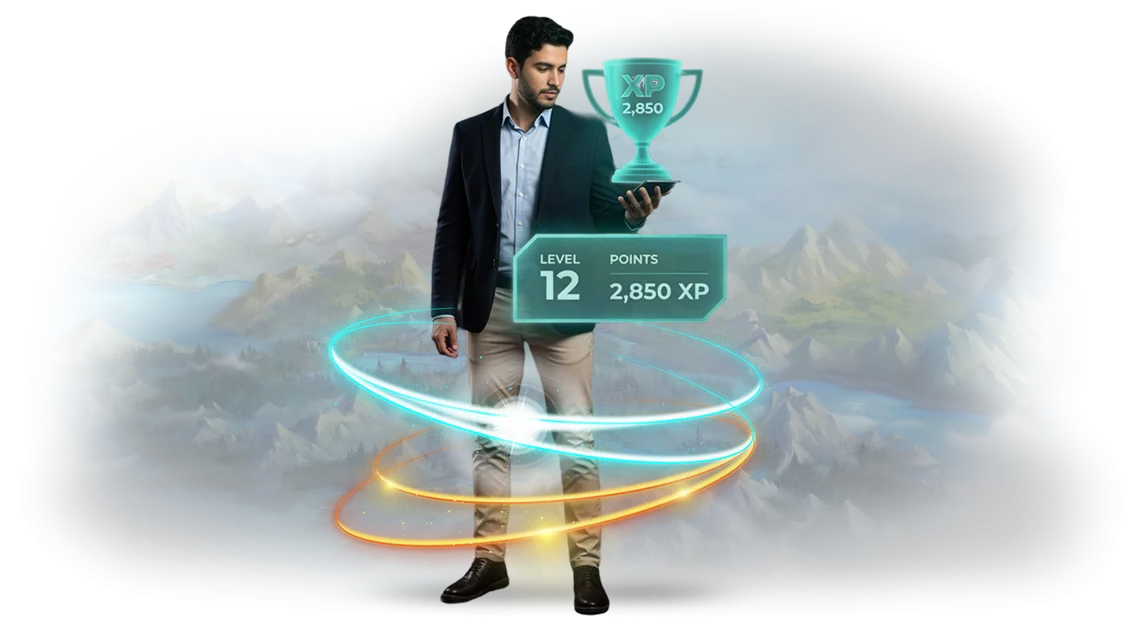
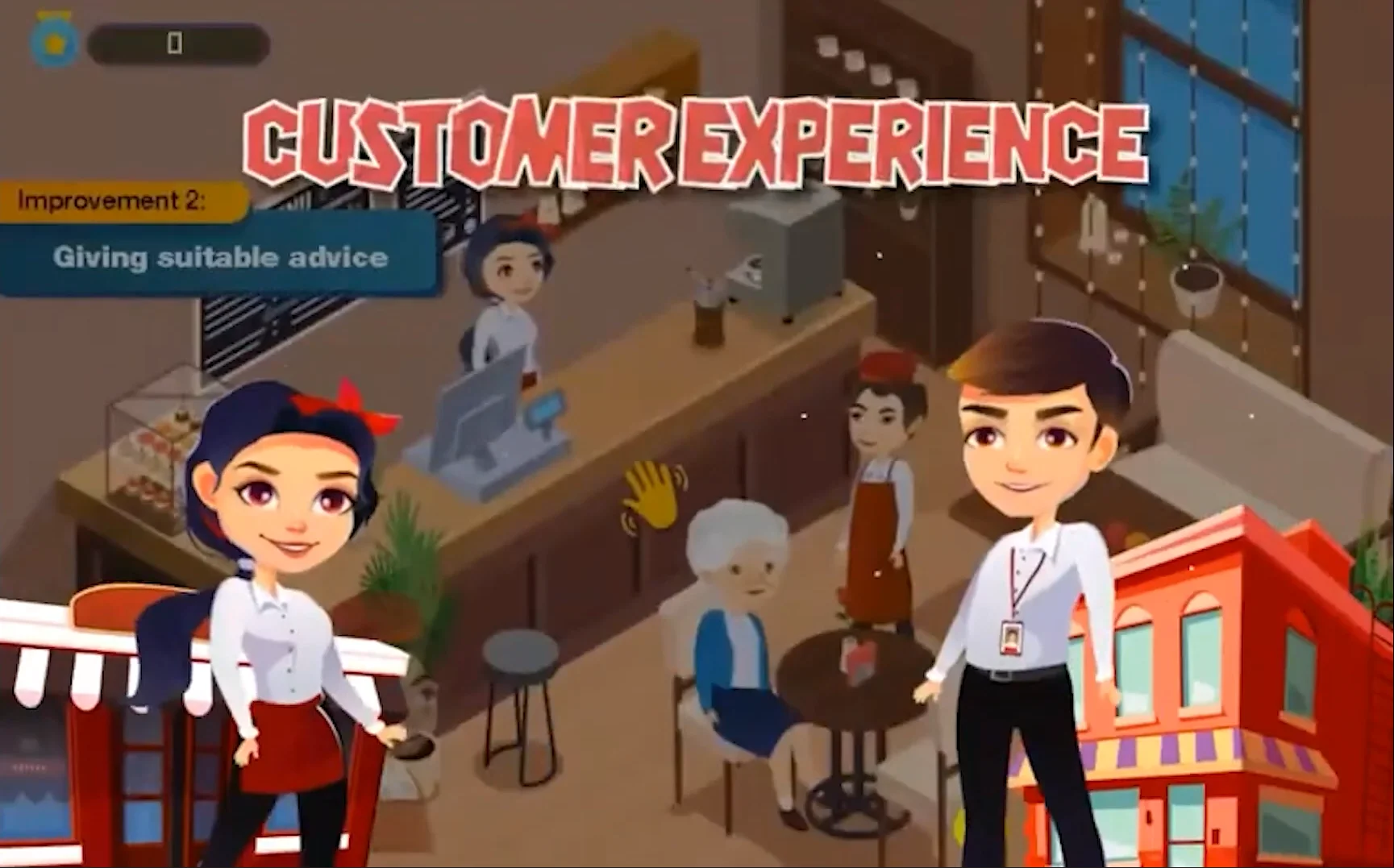
When a manager steps into the company's interactive 3D world, they experience sales scenarios — from first contact to handling objections. Every mistake becomes experience, not the loss of a real client.
Implementing gamification in sales training for industrial equipment makes the training measurable: you see who absorbs the material and how, where an employee stumbles, and which skills need improvement.
Training effectiveness grows because learning becomes regular practice, not a one-off event. Process gamification is embedded into daily work and gives managers a clear action script for any negotiation.
As a result, the company gets not a "listened-to course" but ready-made skills that directly affect revenue. That's exactly what we address: we turn knowledge into working sales of industrial equipment.
What Business Results Gamification Delivers
Gamification turns training from a formality into a game where every step brings a real deal closer.
Employee Engagement
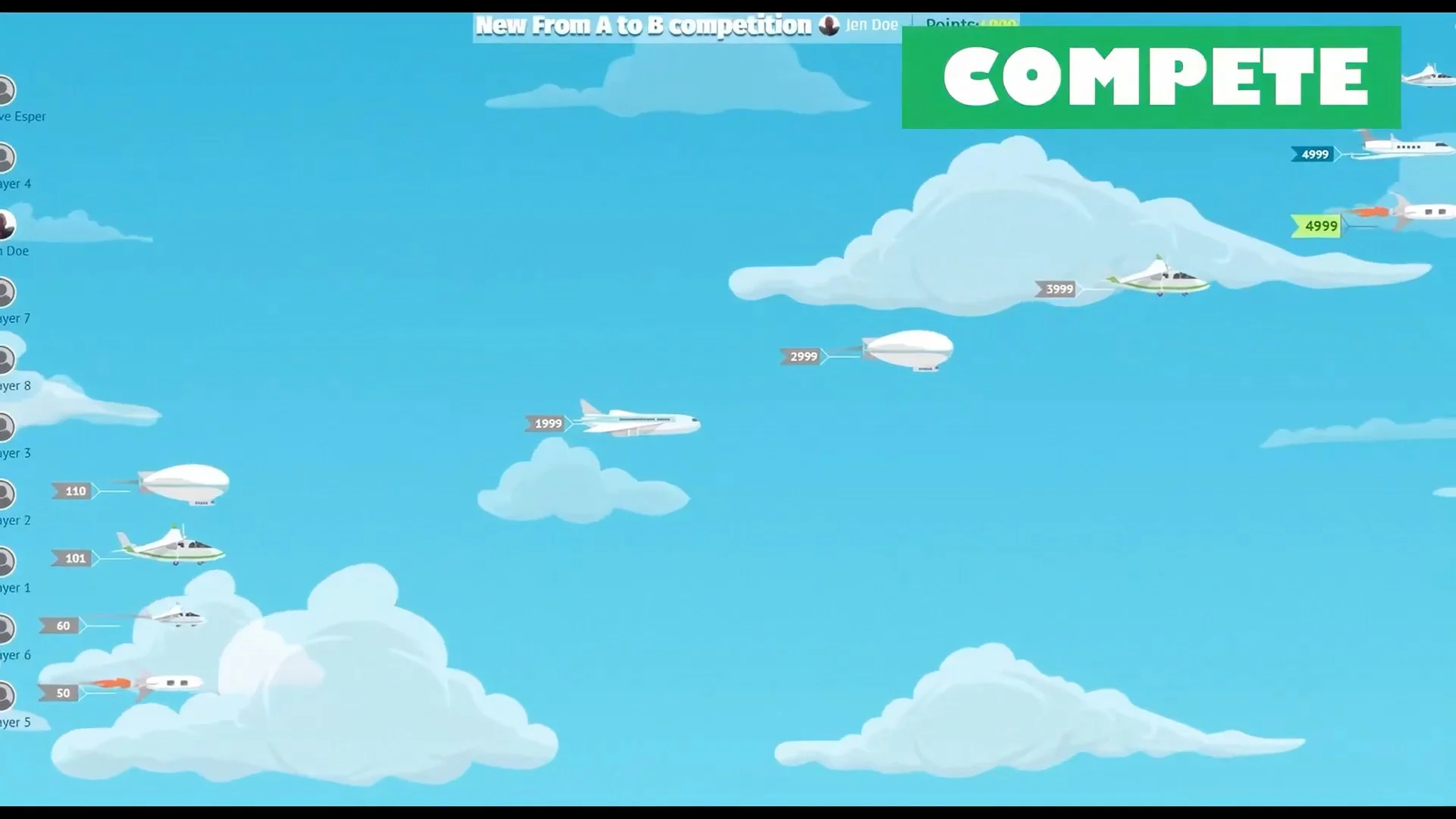
Boring lectures don't work: attention drifts within 15 minutes. The game format with 3D avatars holds focus 3-4 times longer, and competition among managers makes them return to the simulator again.
Higher Sales Conversion
Managers experience scenarios with real objections — "it's expensive," "we already work with another supplier," "we need approval." Mistakes in a virtual dialogue don't cost a client, and the skill is reinforced to the point of automation.
In real meetings this translates into more successful negotiations. The average check increases and the deal cycle shortens.
Measurable Metrics for Managers
The system shows who has worked through difficult topics and who avoids challenges. Typical mistakes and each manager's progress are visible — making it easy to plan targeted training.
A Unified Corporate Training Standard
Gamification is designed so that new employees quickly reach the level of experienced colleagues. Scenarios don't depend on a mentor, and sales training for industrial equipment is the same across all branches.
Gamification Formats for Company Objectives
One-off trainings create a spike of motivation that fades after a couple of weeks. Gamification helps sustain the skill: it turns learning into ongoing practice where employees want to return to challenging sales scenarios.
The difference between formats lies in scope, depth, and regularity, so it's worth defining the goal first.
In practice, this is a choice between a short training simulation and a full company game environment. The former solves a specific task — "practice objections" — quickly and precisely.
The latter builds a system: employees practice skills daily, compete with each other, and see their progress. Below are typical scenarios to make choosing the scale easier.
| Format | For whom | What it gives the client |
|---|---|---|
| Mini-course of 3-5 game scenarios | Sales department with typical objections | Quick competency improvement without leaving work, visible results in 2-3 weeks |
| Educational 3D sales simulation | Newcomers and trainees who need safe experience | Reaching real clients without the mistakes of the first weeks, shorter onboarding time |
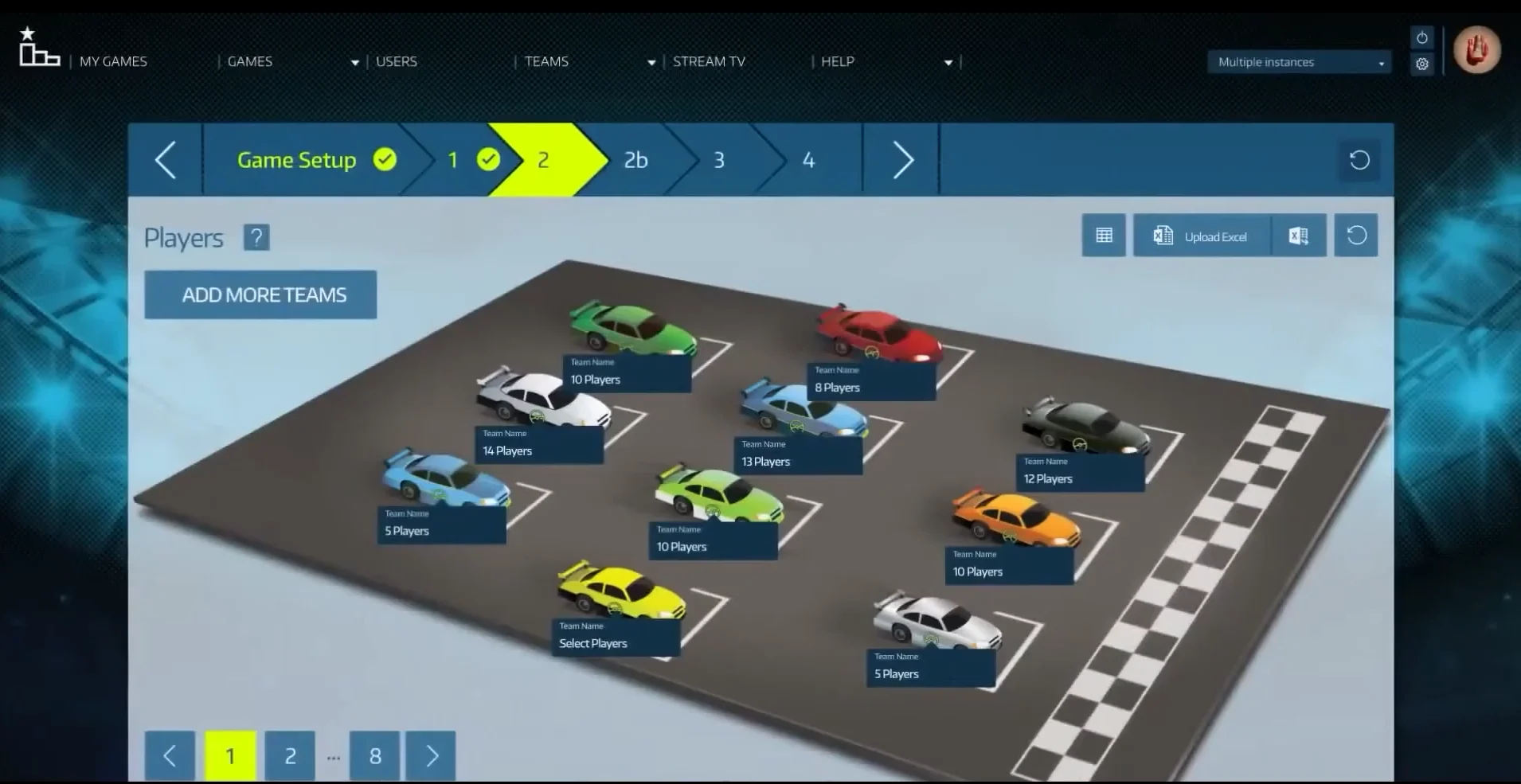
| Competitive mechanics with ratings | A stable team that needs performance growth | Higher conversion and average order value through healthy competition |
| Permanent company game world | Large teams that need a unified training system | Endless content for new products, employee retention, and revenue growth |
If it's hard to choose right away, proceed step by step: start with a simulation of one sales stage and evaluate the result after a month. We'll advise which format will work for your specifics — based on the number of managers, rotation frequency, and current issues.
The key is that employees don't just "complete a course" but genuinely change their approach to selling industrial equipment.
How We Work: From Brief to Launch
We work on a transparent scheme: you always know what stage the project is at, what is ready, and what happens next. Each step ends with a checkpoint — you see the result and make a decision rather than "trusting blindly."
-
Brief and task analysis. We meet, examine how equipment sales currently work, where managers lose deals, and which client objections are handled worst. We record training goals and metrics — for example, increased conversion to the next funnel stage.
-
Scenario approval. Based on the brief, we prepare a training scenario: typical dialogues with buyers, working with equipment specifications, deal stages. You make edits based on your team's real experience — the scenario becomes an exact replica of your sales process.
-
Prototype of the 3D world and avatars. We show what the learning environment will look like: locations, characters, interface elements. You approve the visual style before the main development starts — this eliminates rework in the final stages.
-
Gamification development and content. We create the 3D world, dialogues, scoring, and reward systems. Every 2-3 weeks we hold a demo: you see a working fragment and immediately provide feedback. No "black boxes" between the briefing and the final product.
-
Testing and launch. We test the training with a group of your managers and collect their feedback and results. We make final adjustments and launch the project for the whole team — without downtime or firefighting.
-
Post-launch support. We monitor how managers complete training, where they linger, and in which scenarios they lose interest. We help update content for new equipment models and changes in sales scripts.
At each stage, you know your area of responsibility — approve the scenario, provide deal examples, give access to a product expert. We handle development, testing, and launch. As a result, you get a predictable process and training that genuinely boosts sales.
What's Included in the Delivery: Staff Training Materials
After project completion, you receive not just a program but a complete set for embedding into your training system.
All intellectual property — scenarios, mechanics, and source materials — passes into your hands, so you aren't dependent on the developer and can develop the product yourself.
Here's what remains yours after implementation:
- Content and source material rights. Full ownership of all scenarios, 3D models, and mechanics. You can use them for other training programs or resell them within the holding company.
- Training scenario library. A ready-made base of typical situations in industrial equipment sales: handling objections, presenting complex products, negotiating, and reaching the decision-maker. Scenarios are already adapted to your product line.
- Trainer's methodological materials. Instructions on how to integrate the simulator into classroom training: procedures, evaluation checklists, and breakdowns of difficult moments. The trainer needs minimal instruction — everything is intuitive.
- Training level builder. You can change inputs, prices, and deal terms without involving programmers. This allows you to quickly update material for market changes or run competitions between departments.
- Analytics dashboard for managers. Reports on each employee: completion speed, number of attempts, typical mistakes. You see department progress and understand who is ready for real negotiations and who needs additional training.
- Instructions and manuals. Clear documentation for the system administrator and users so that launch and operation go without questions.
We hand over the project with support during implementation and stay in touch after launch. Adapting materials to new tasks and developing scenarios is the next stage, but you can always return to us for refinements on clear terms.
Case Study: How a Game Simulator Increased Managers' Conversion
For the manufacturing company PromEngineering, the main pain point was low conversion of first contacts: managers knew the product but got lost when clients raised objections.
Typical "sold by script" scenarios stopped working when it came to complex equipment and a long sales cycle. Every failed call meant not only lost time but also damaged brand reputation in the eyes of potential customers.
We proposed replacing boring role-playing games with a game simulator on Unity — a virtual company world where managers practice real dialogues with client avatars in a safe environment.
There are no consequences, but there is full immersion: the avatar reacts to words, hesitates, and asks uncomfortable questions. The employee runs the scenario as many times as needed, and the system shows where they lose the thread of the conversation.
The project results exceeded the client's expectations. After three weeks of training, the conversion of first client contacts rose by 38%, and the number of meetings brought to demonstration increased by 1.5 times.
Managers stopped fearing cold calls — they know how to respond to objections because they've already played out these situations dozens of times in the simulator.
The sales department head assessed the result this way: "We used to spend a month on mentoring before a new manager could talk to clients properly. Now they make their first calls within a week, and the quality of conversation is immediately visible. The simulator paid for itself in two quarters thanks to conversion growth."
The team continues to work with this client: we update scenarios for new product lines and are expanding the simulator to the service department. For us, this confirms that game-based learning is not entertainment but a working tool that delivers measurable value to the business.
How to Choose a Gamification Format for Your Company's Objective?
The gamification format is determined not by budget but by the training goal and the specific stage where managers lose sales.
If you only need to practice short objections, a 10-15 minute scenario is enough, where an employee talks to a virtual customer and immediately sees mistakes.
For complex negotiations on industrial equipment, a full-fledged world with roles, deal stages, and different client types is better — it pays off when you need to systematically increase the department's conversion.
You should start with a small module: one scenario, several branch points. In a couple of weeks, you'll test how the team accepts the game format and get first results without major investments.
Experienced departments that need to practice negotiations with decision-makers will benefit from a large-scale game with 3D avatars and the company's virtual world — here, an employee goes from first contact to closing a contract.
The budget depends on how often the game will be used. For a one-off training, a short interactive scenario is enough. If you plan to train hundreds of managers regularly, it's better to invest in a platform that can be extended with new scenarios without rebuilding.
Where to start? Define the main metric: sales growth, reduced objections, or speed at which a newcomer reaches their target. We select a format for your task, show examples of similar solutions, and create a pilot scenario — you see the result before full development.
This reduces risks and helps you understand whether a large game is needed or a local training is enough.
Common Concerns Before Starting a Project
Most often, concerns are not about technology but about employee readiness, result measurability, and the project's fate after launch. That's normal — let's explain how we mitigate these risks at each stage. We've spent 10+ years refining an approach that addresses the client's main fears.
Employees won't accept the new format — will we waste the budget?
We design gamification on mechanics familiar to everyone: levels, points, team competition, and feedback. Sellers don't need to master a complex interface — they simply play and learn on real situations.
Before the full launch, we run a pilot with 10-15 employees. We collect feedback, adjust scenarios and interface, and only then scale up. This way, we remove resistance in advance and get the first ambassadors inside the team who engage the rest.
Training results can't be measured — how do we know it works?
We configure analytics to your business metrics: module completion, mistakes in negotiations, speed of response to objections, and plan execution dynamics. You see which skills improved and where the team stumbles.
If needed, we tie results to CRM and compare sales before and after training. A month after launch, you receive a clear report: engagement, completed scenarios, and change in conversion to deal.
It's unclear who will support and continue developing the project?
We provide post-launch support for the gamification. The contract specifies technical support, content updates, and scenario development for new products or changes in sales.
You are not left alone with the problem: if the product range changes or new client objections appear, we update the simulator. The project remains a living tool, not a one-off "cube" forgotten after a month.
Concerns are resolved at the start — through a pilot, clear analytics, and support secured in the contract. That's the minimum that gives you confidence in the result before launch.Launch a Project That Pays Off
Sales training for industrial equipment is not a one-off lecture, but systematic work on managers' skills.
A 3D avatar and the company's digital world allow practicing real negotiations with typical objections, product specifics, and deal-closing techniques — without risk to the client.
The result is faster onboarding of newcomers, higher sales conversion, and team confidence when working with complex equipment.
We understand that you have your own product line, clients, and sales challenges, so we don't offer a "boxed" solution. Gamification is designed around your task and your sales department processes.
Leave a request for a quote — within 1-2 days you'll receive the project cost, timeline, and implementation plan you can use to make a decision.
What you get with the quote:
- Exact cost for your scale — without hidden fees or "surprises" mid-project.
- Implementation plan with stages, deadlines, and areas of responsibility — clear what happens at each step.
- Consultation with a gamification expert — we'll advise how to structure training for your product.
- Demonstrations of similar projects for your industry — you'll see how it works in practice.
- Adaptation of scenarios to your products and typical client objections.
- Post-launch support and refinement based on results from the first training groups.
Start a project that pays off. Fill out the form or contact us in any convenient messenger — we'll discuss the task, show examples, and offer a solution that strengthens your sales department.
We'll calculate the cost and prepare an implementation plan for your business, so you can launch training in the coming weeks.