

Why Offline Executive Training Loses Its Effectiveness
Executives do not change their behavior after training sessions — this is the main problem with leadership training in the classic format.
Lectures, case studies, and discussions provide knowledge but do not build skills: within two weeks, managers return to old habits, and investments in training fail to deliver measurable results.
Offline workshops also lose on engagement: adults do not like to feel like students, are afraid to make mistakes in front of colleagues, and therefore simply sit through the session.
Even active exercises in the room are a sequence of "correct answers" rather than real decisions under time constraints, uncertainty, and responsibility. This format barely engages emotions — and without emotions, new behavioral patterns are not cemented.
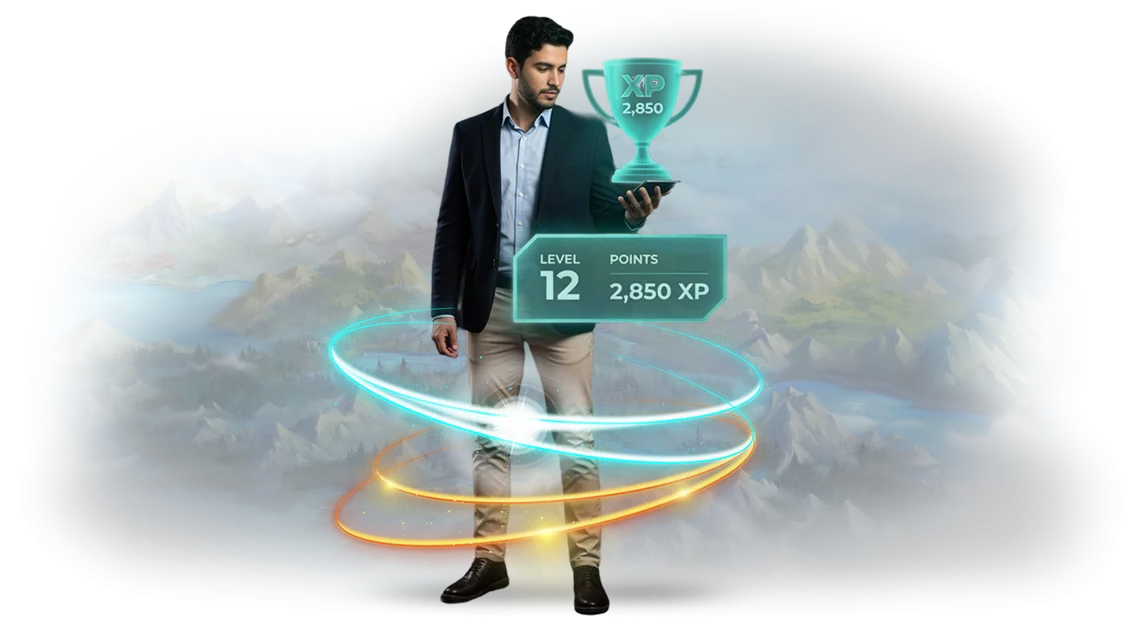
Gamified learning solves this problem differently. An executive steps into a simulation of their own work situation: allocates resources, negotiates, makes personnel decisions — and sees consequences immediately, in a safe environment.
Here they can try, fail, analyze, and try again. That is how lasting skills are formed, not just memorized theory.
We have been building training 3D worlds and avatars for the specific needs of companies for more than 10 years. Instead of abstract slides, an executive experiences their own business scenarios and receives personalized feedback.
That is why training effectiveness multiplies — participants do not listen; they act, and results become visible in actual processes.
What Gamification of Business Processes Delivers
Gamification of business processes turns executive training from a formal obligation into a working development tool. Instead of boring lectures, simulations let every manager experience real situations, see the consequences of decisions, and receive feedback. For the company, this means measurable changes in how the management team operates.
- Higher engagement in training. Executives complete the program instead of dropping out after the first module: the story, the competition, and the clear personal benefit keep them interested.
- Better knowledge retention. Simulation practice reinforces the material better than notes: after a month, an executive will accurately recall how to act in a crisis — because they have already done it.
- Development of management skills. Negotiation, delegation, and decision-making are practiced in a safe environment, without risking clients or the budget. A mistake costs time for a retry, not a financial loss.
- Increased employee loyalty. When a company invests in its executives’ development, they see growth opportunities and are less likely to leave for competitors. Simulation-based training is perceived as genuine care from the business, not another mandatory chore.
- Objective competence assessment. Simulation results reveal who acts effectively under pressure and who avoids responsibility. This helps fine-tune the development program and build a talent pipeline.
This approach pays off within a few months: decision-making speed grows, turnover decreases, and changes are implemented faster. We build simulations based on your business’s real challenges — so executives train on what matters to you, not on abstract cases.
Executive Training Formats: From Simulations to a Full 3D Company World
Executives do not learn from instructions — they need situations where they can make mistakes without losing time, money, or reputation.
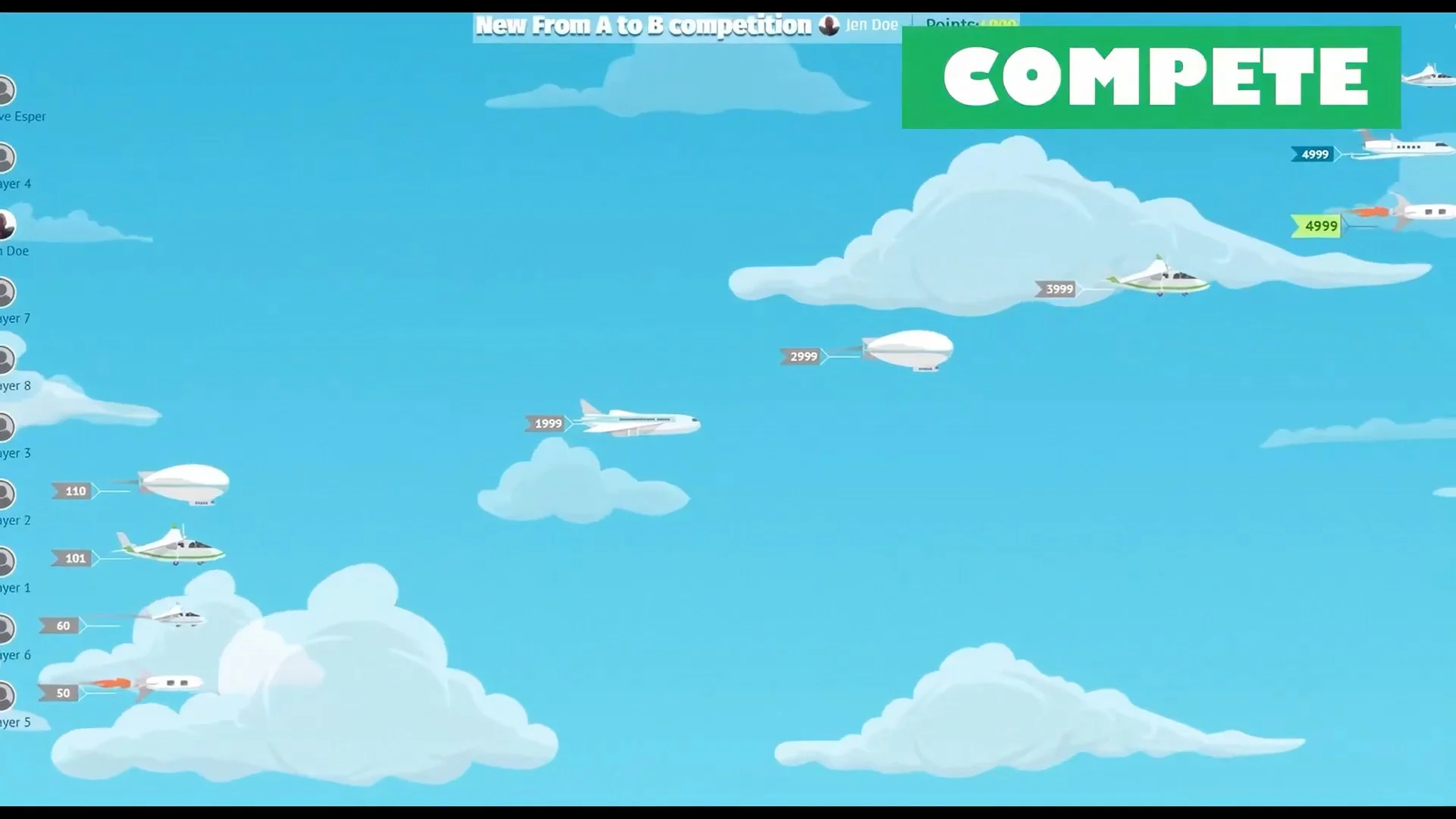
Gamification provides exactly that safe training ground: the simulation reproduces a real business environment and immediately shows the consequences of every decision. This allows trying different strategies, seeing their outcomes, and transferring proven models into real work.
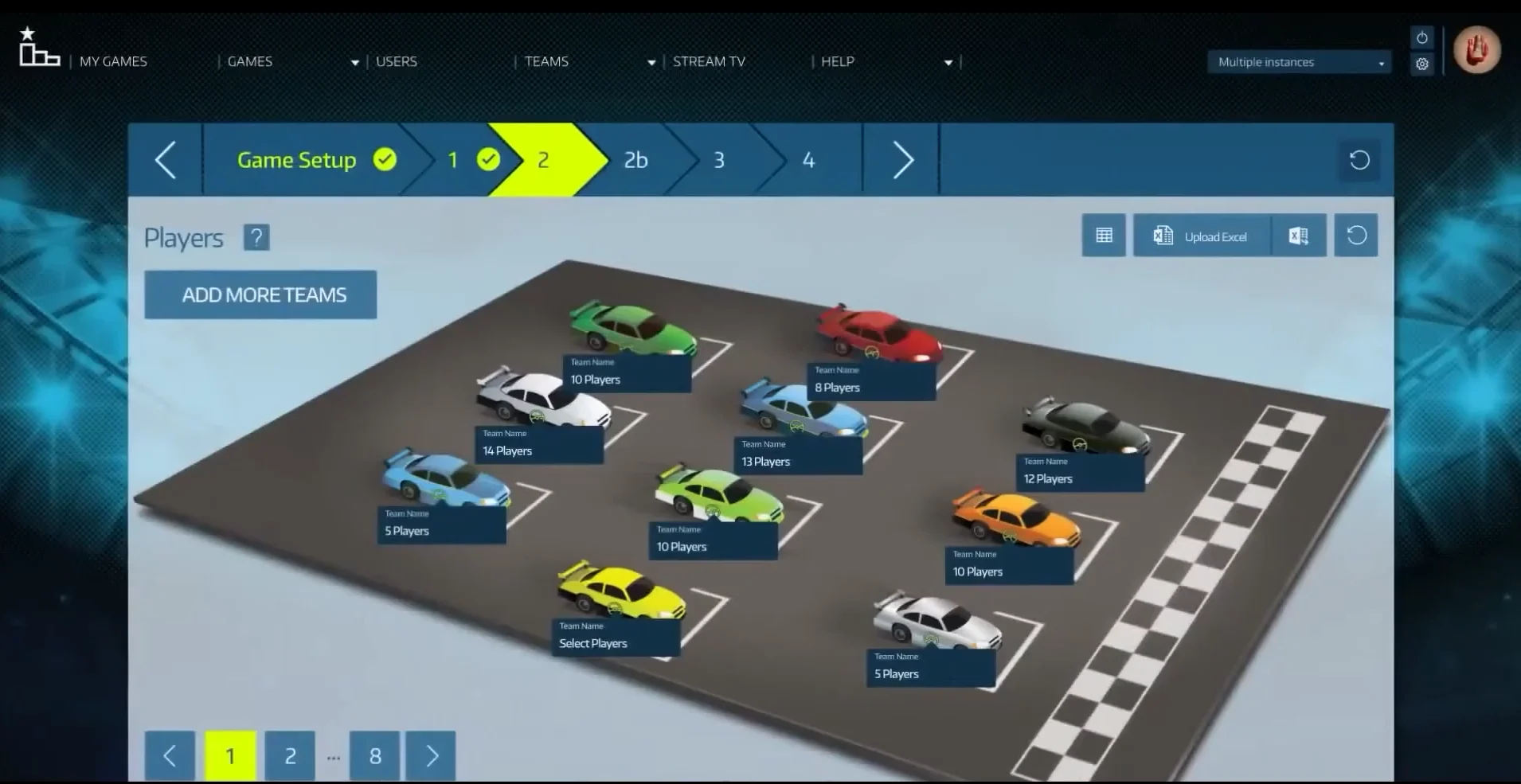
We use four core gamification formats — from lightweight case games to a full 3D company world. They differ in depth of immersion, duration, and which management skills they develop. A comparison of the formats is in the table below.
| Format | Suitable For | What It Gives the Executive |
|---|---|---|
| Case games | Practicing a specific situation: negotiations, product launch, crisis management | A quick "here and now" skill, ready-to-use action algorithm |
| Team scenarios | Developing the management team, aligning interdepartmental interaction | Sees colleagues' roles under stress, learns to delegate and coordinate |
| 3D avatars | Individual practice: public speaking, difficult conversations | Practices behavior without reputational risk, receives objective feedback |
| Full 3D company world | Strategic sessions, reorganization, launching changes | Sees the business as a whole and tests strategy in a safe environment |
How to choose a training format? If the task is narrowly focused, a case game or 3D avatar is enough — this takes a couple of days. If you need to change the behavior of an entire team, team scenarios are appropriate.
A full 3D company world is justified for major changes: a new strategy, merging branches, entering new markets.
During a free briefing, we analyze your task, suggest the right format, and show how it will fit into your current processes.
The scenario is written for your industry’s specifics, so the training never feels like a game for its own sake — every step is tied to real business tasks and measurable results.
Stages of Developing Gamification for Your Company
We structure the work so that you see a result at every step and keep full control over project timelines. The process of developing training games for executives consists of six transparent stages — from the initial briefing to launch and support. You always know what is happening with the project and when specific results will be ready.
- Briefing and immersion in the task. We study your business processes, learning objectives, and audience. We determine which executive skills need to be developed and how the game will help achieve that.
- Scenario and mechanics design. We create the game concept: storyline, tasks, roles, and scoring rules. You see the plan of the future product and can make edits before development starts.
- Pilot version. We build a working model of the key scenarios. You go through it yourself and together with your employees — this confirms that the mechanics engage and achieve the goal.
- Full version development. We fill the game with your content, corporate style, and the logic of your real business processes. At this stage, you see the finished product in its final form.
- Testing and refinement. We run a check with a group of future participants, collect feedback, and eliminate flaws. In the end, you get a polished game with no rough edges.
- Launch and support. We integrate gamification into your learning process, train administrators, stay in touch, and update the product as your tasks evolve.
We commit project deadlines in the contract and stick to them, so you can confidently plan executive training without risks or surprises. Each stage ends with a clear, tangible result — nothing is left to "blind" waiting.
What Is Included in the Gamified Training Delivery
Gamified training is not just a single game; it is a complete package delivered ready to use. The system includes scenarios, a virtual environment, a methodological base, and HR system integration — everything you need to launch the program without lengthy preparation.
We shape the gamification project scope around your business tasks. Below are the key components included in the standard delivery.
- Training scenarios and storylines. Developed around executive challenges: crisis management, negotiations, operational efficiency. Scenarios include decision branches so participants can see the consequences of their choices.
- The company’s virtual world. A 3D space that mirrors your office and production areas. A familiar environment accelerates the transfer of skills into real work.
- Methodological materials. Lesson plan, handouts, and debrief guides. All you have to do is set a date and gather the group.
- HR system integration. Training results automatically flow into your management system. Less manual work, more objective data.
- Analytics module for HR. Shows session duration, mistakes, and participant progress. Helps quickly adjust the development program.
- Technical support and updates. We set up access, run the first session, and update scenarios whenever business processes change.
Such a package saves months of development and approvals. You get a working turnkey solution — from the first launch to regular use.
Case Study: How Gamification Increased Executive Engagement
Executives rarely make it to the end of training: urgent tasks, divided attention, and results that are hard to measure afterward.
In a project for a large retail chain, we faced exactly this pain — we needed to retrain 240 regional managers without taking them away from their work.
Solution: 3D Company World
Instead of lectures and presentations, managers stepped into a virtual copy of their own store. We built a scenario where each manager’s avatar handles real situations: a conflict with an employee, a supply disruption, negotiations with a contractor.
Every decision affects the shift’s results — participants live through the material rather than simply reading theory.
Results of Executive Training
The results exceeded the client’s expectations. Program completion rose from 61% to 94%, even though the training became a third longer.
Three months later, the HR director assessed behavioral changes: 86% of participants apply the new tools in daily work, and the number of regulatory violations in their stores nearly halved. That is the direct ROI of training — the same budgets, but managers actually change what they do.
This gamification case confirms: what keeps employees engaged is not the mechanics of points and rewards, but familiar context. When an executive sees the consequences of their decisions in a safe environment, training transforms from a mandatory formality into a working tool.
The client has already launched the next batch for directors in other regions and is scaling the program to all management levels.
How to Choose the Right Format for Your Team?
Choosing a gamification format starts not with technology, but with answering the question: "What, specifically, should change in executives’ behavior after training?" If the goal is to practice decision-making in a crisis, a short simulator for a few hours is enough.
If you need to change the management culture across the whole company, you will need a multi-session program embedded in the team’s working rhythm. It is the goal that defines the budget, timeline, and scale — not the other way around.
The second criterion is the participant profile. The logic for a group of 50 executives is different from that for three top managers: mass training requires an automated evaluation system and ready-made scenarios, while an elite group can receive individual development branches.
Think about how critical launch speed is for you and whether there is an internal team that will continue to use the platform after the project ends. If no such team exists, choose a format that includes ongoing support and knowledge transfer.
Budget should also be evaluated through the cost per trained executive, not just the total estimate.
A good 3D world pays off when executives transfer practiced behavioral patterns into real negotiations, launch new products, and make faster decisions — this directly affects revenue.
So do not choose the "cheapest option"; instead, calculate the economic effect of changing management habits.
We will help you choose a format that fits your specific task, budget, and implementation horizon. During the initial consultation, we will review your scenarios, show examples of similar projects, and define the criteria you can use to evaluate training outcomes in 3–6 months.
You will not get a "magic button," but a transparent framework: which goals gamification covers, what not to expect from it, and where your company’s break-even point lies.
Common Client Concerns Before Starting a Project
Before launching a project, clients raise the same concerns: it is expensive, it takes too long, it will not pay off, and employees will not play. We hear these on every call, so we have prepared honest answers to the main objections.
This is expensive — is the cost justified?
Gamified executive training is an investment in a business outcome, not a one-time expense item. It pays off through shorter onboarding time, fewer mistakes, and faster decision-making.
We always propose a phased launch: we start with a pilot module, assess the impact, and only then scale.
The project will take too much time?
The standard cycle is two weeks to two months, depending on complexity. In that time, you get a working scenario, not a "raw" prototype: managers are already training in the company’s 3D world at the first stage. Modules are then added iteratively, without stopping the process.
How do we know the training will pay off?
We build measurable indicators in at the briefing stage: time to full competency, the number of correct decisions in complex situations, and the program completion rate. These metrics are compared against a control group without gamification. You see the return in numbers, not vague promises.
Employees will not play — how do we engage executives?
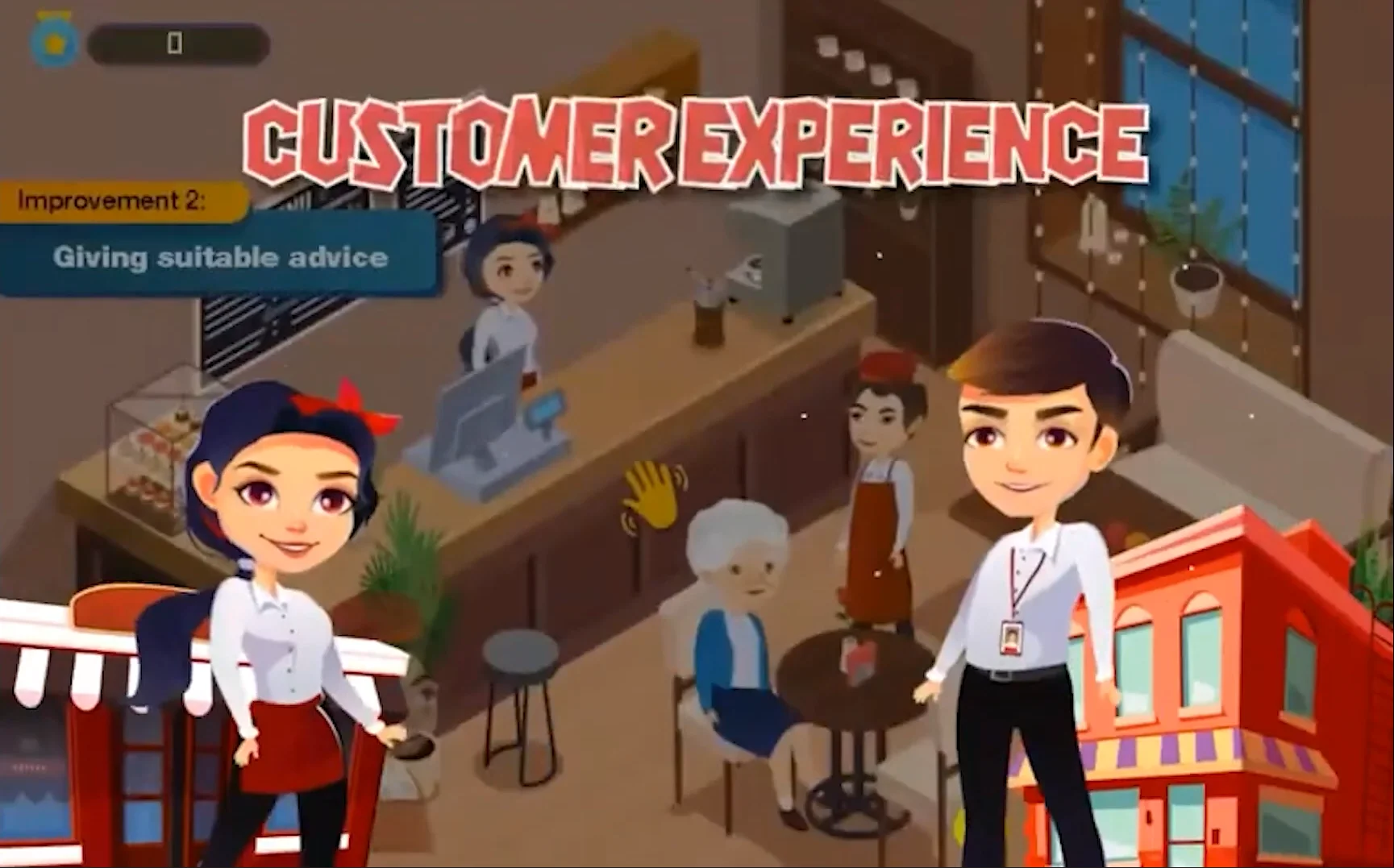
Executives are a pragmatic audience, so we do not create "games for the sake of games." The scenarios are based on real work cases: negotiations, crisis management, resource allocation.
Participants solve tasks, get instant feedback, and see how their decisions affect business metrics. This holds the attention of even those who "do not play."
If you have doubts about any of these points, invite us for a short demo. We will show you the process on a similar task and calculate the cost for your scenario.Order Gamification Development and Get a Ready-to-Use Tool
You already know that executive training through texts and presentations does not create the needed engagement: skills are not retained, and practical decisions remain the same.
Gamification turns the process into guided practice, where each participant acts in a safe environment and immediately sees the consequences of their decisions.
We handle the entire turnkey development — from scenario to launch — so you get a finished tool, not a semi-finished product.
So you can evaluate the result before the start, we will prepare a demo version of one scenario block: you will see how the training is built and how it fits into your business processes.
After that, we will send a cost calculation for your scope — with no hidden costs or "additional options" that surface only at the end of the project. Implementation is phased: first a pilot group of executives, then adjustments and scaling with ongoing support.
Leave a request — and within one business day we will get back to you, show the demo, and propose a plan for your tasks. In the final email you will receive:
- A demo version of the gamified module for executives.
- A cost calculation based on your headcount and scenarios.
- A training implementation plan with stages, timelines, and owners.
- Recommendations for adapting your existing learning content.
- Training for your team on how to use the tool.
- Support at every stage, from launch to results evaluation.
Ordering gamification now means getting a ready-made tool that pays off through faster decision-making and better management skills in your executives. Fill out the form on the website — we will contact you, answer your questions, and prepare a proposal for your business.