

How to Retain Customers? Training Network Marketers — The Solution.
Customer retention in network marketing depends directly on how confidently employees know the product and how well they can build a dialogue.
If network marketer training comes down to occasional lectures and dry presentations, newcomers quickly lose motivation, act by rote, and customers leave for those who speak their language.
The problem is that classic training programs do not hold adults’ attention. Information is forgotten within a week, and sales skills are not practiced — so the company spends resources on training but sees no growth in repeat sales. As a result, both customer retention and the entire network’s income decline.
Gamification of training changes the approach.
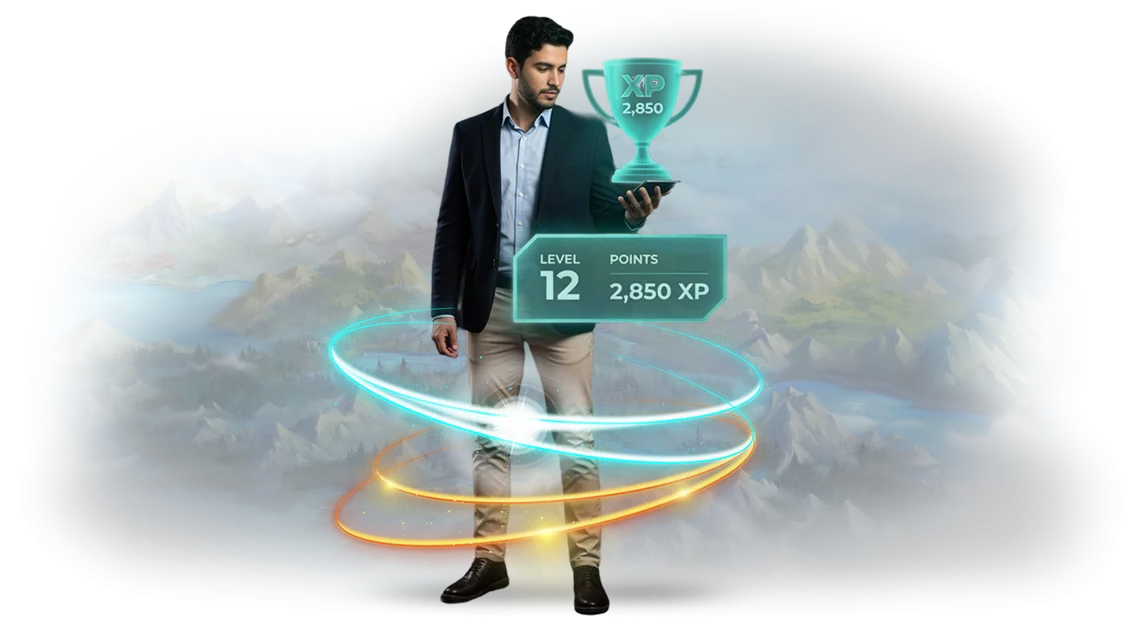
When network marketer training becomes an interactive experience — with roles, scenarios, levels, and a visual 3D environment of the company — employees engage in the process themselves instead of “sitting out the hours.” They practice in situations close to real negotiations, receive instant feedback, and reinforce correct behavioral patterns. This builds not temporary interest but a sustainable motivation for the sales team to grow.
We help companies retain customers precisely through this kind of training gamification. Instead of dull regulations — a living brand world where every agent learns through action and sees their progress.
Implementing such programs improves employee qualifications, strengthens their loyalty, and, as a result, increases the share of repeat customer requests.
Boosting Training Effectiveness: 5 Business Benefits
Network marketing relies on live communication, so sales and partner acquisition depend on employee preparation. Ordinary lectures and tests do not deliver the required result: newcomers lose motivation, and knowledge quickly fades. We turn training into a game built on Unity, where every step responds to business objectives.
Here are five measurable benefits you get from implementing gamification:
- Increased training coverage. Game mechanics hold attention to the end of the course. Course completion rates grow multiple times — the whole team receives unified knowledge and works by the same standards.
- Sales growth. In the simulator, an employee practices negotiations and objections dozens of times — until it becomes automatic. After launching gamification, the conversion of leads from training into real sales noticeably increases.
- Time savings for managers. The system itself evaluates employee actions, shows mistakes, and recommends repeating a difficult module. Supervisors and mentors stop spending hours on repetitive explanations.
- Fast results. A practical skill is formed in a couple of hours of gameplay rather than weeks of theory. A new employee starts selling and attracting partners within the first month.
- Team retention. Ratings, levels, and rewards create excitement and a sense of progress. People stay with the company longer, and the cost of constantly recruiting newcomers decreases.
These benefits are built into the project from day one: from scenario to analytics. You will see how training stops being an expense item and starts generating profit.
Gamification Formats for Your Task
There is no single universal gamification format: what motivates some employees leaves others indifferent.
That is why, before launch, we analyze your task — whether to quickly train newcomers, sharpen the sales skills of experienced networkers, or increase product awareness among partners.
Below are the main types of gamification we use for training network marketers. The table helps you match a format to a specific business task.
| Format | For Whom | What It Gives the Business |
|---|---|---|
| 3D simulation of the work process | New employees, trainees | Fast immersion in the product without mistakes in real deals |
| Quest scenarios with decision choices | Sales managers | Practicing objections and negotiations in a safe environment |
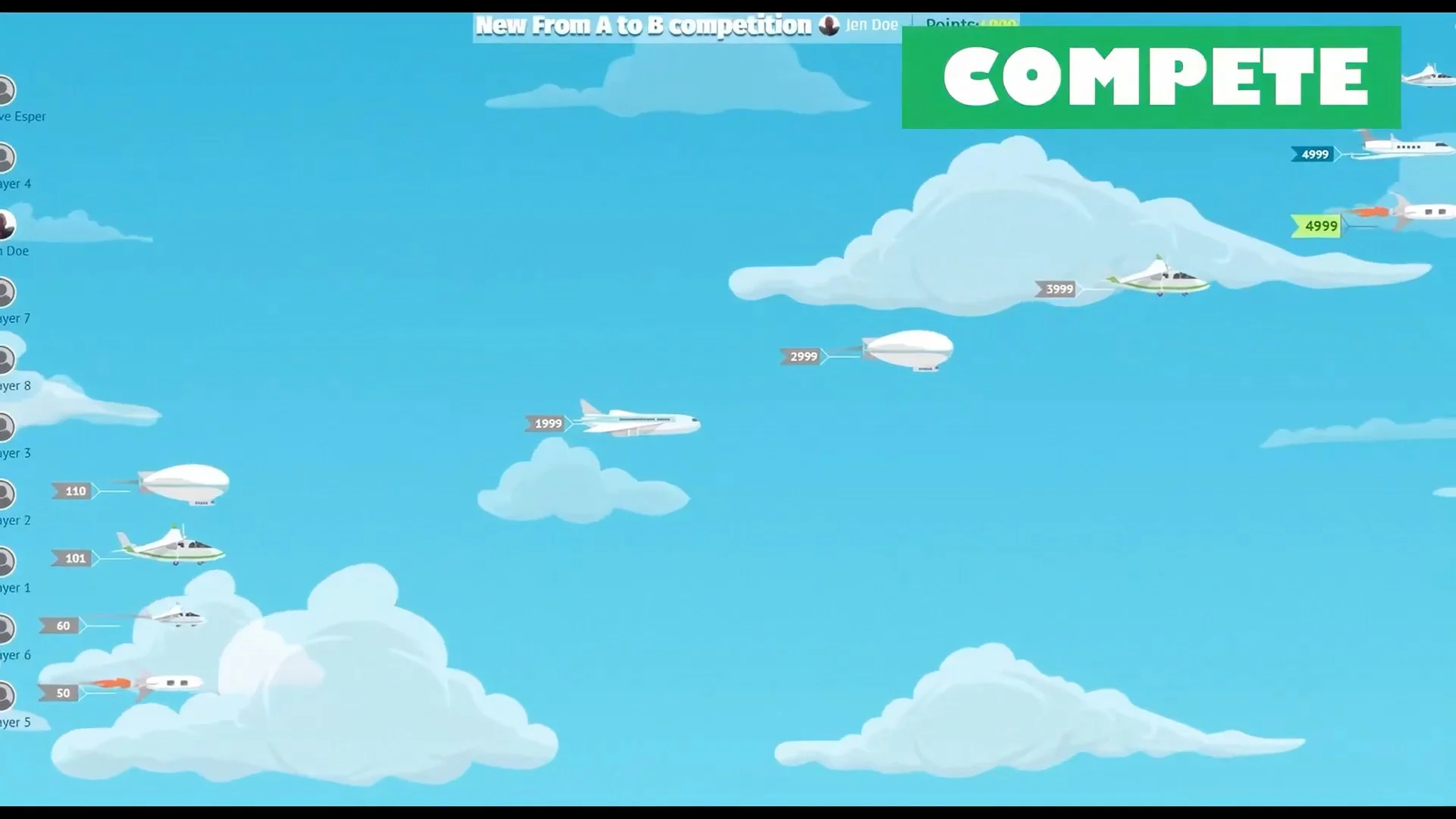
| Ratings and competitions | Whole team, active distributors | Increased engagement and healthy competition among participants |
| Training through interactive dialogues | Mixed groups | Developing communication skills and working with different client types |
Each of these formats is part of a thoughtful game mechanic for business, not just a “mini-game for fun.” We combine elements to fit your strategy: from a simple adaptation simulator to a full 3D company world where participants explore the product through their own experience.
We develop gamification on a professional engine — this ensures smooth graphics and stable operation on laptops and mobile devices. Participants are not distracted by technical glitches and fully immerse themselves in training.
We will help you choose a format that delivers measurable results: increased sales conversion, reduced adaptation time, and higher partner loyalty.
Project Stages: From Brief to Launch and Support
Training gamification is a process where it is important for the result to match business expectations. We have structured the stages so that at every step you see what is happening, control deadlines, and can make edits before the solution goes into operation. Below is the path from the first brief to ongoing support.
-
Brief and task immersion. We study your business, the structure of your network marketing team, current training materials, and the goals that gamification must meet. You receive a work plan and an understanding of which mechanics suit your audience.
-
Concept and game scenario. Based on the brief, we propose a storyline, roles, a reward system, and how a 3D avatar and virtual world will help practice sales, communication, and objection-handling skills. At this stage, you see how gamification will integrate into training.
-
Prototype approval. We show an interactive mock-up of key scenes — avatar, location, interface. You evaluate the logic and visual appearance and make edits without reworking the entire system. This saves budget and time.
-
Development and content. We create a full virtual world, fill it with tasks and scenarios, and connect it to your training program. We regularly show intermediate results so you can see progress and adjust details.
-
Testing on real scenarios. We check how the system works using your typical situations: module completion, point accrual, feedback. We fix errors before training is launched for the entire team.
-
Launch and support. We implement gamification into the training process, train your administrators, and connect support. After launch, we stay in touch: update content, add new levels, and analyze how training affects your marketers’ results.
What’s Included in the Delivery: A Complete Launch Package
We deliver not “project files” but a ready-made package that covers the entire network marketer training cycle: from the first encounter with the product to confident sales.
It is a working tool that your trainers can use immediately after handover, without involving developers or technical specialists.
-
Interactive 3D company world with avatars — an environment where employees practice sales scenarios, learn about the product, and learn to handle objections. Participants grasp the material through practice, not presentations.
-
Ready-made training scenarios and game mechanics — tasks, quests, and simulations that hold attention and increase engagement. Instead of boring lectures — clear steps that drive toward results.
-
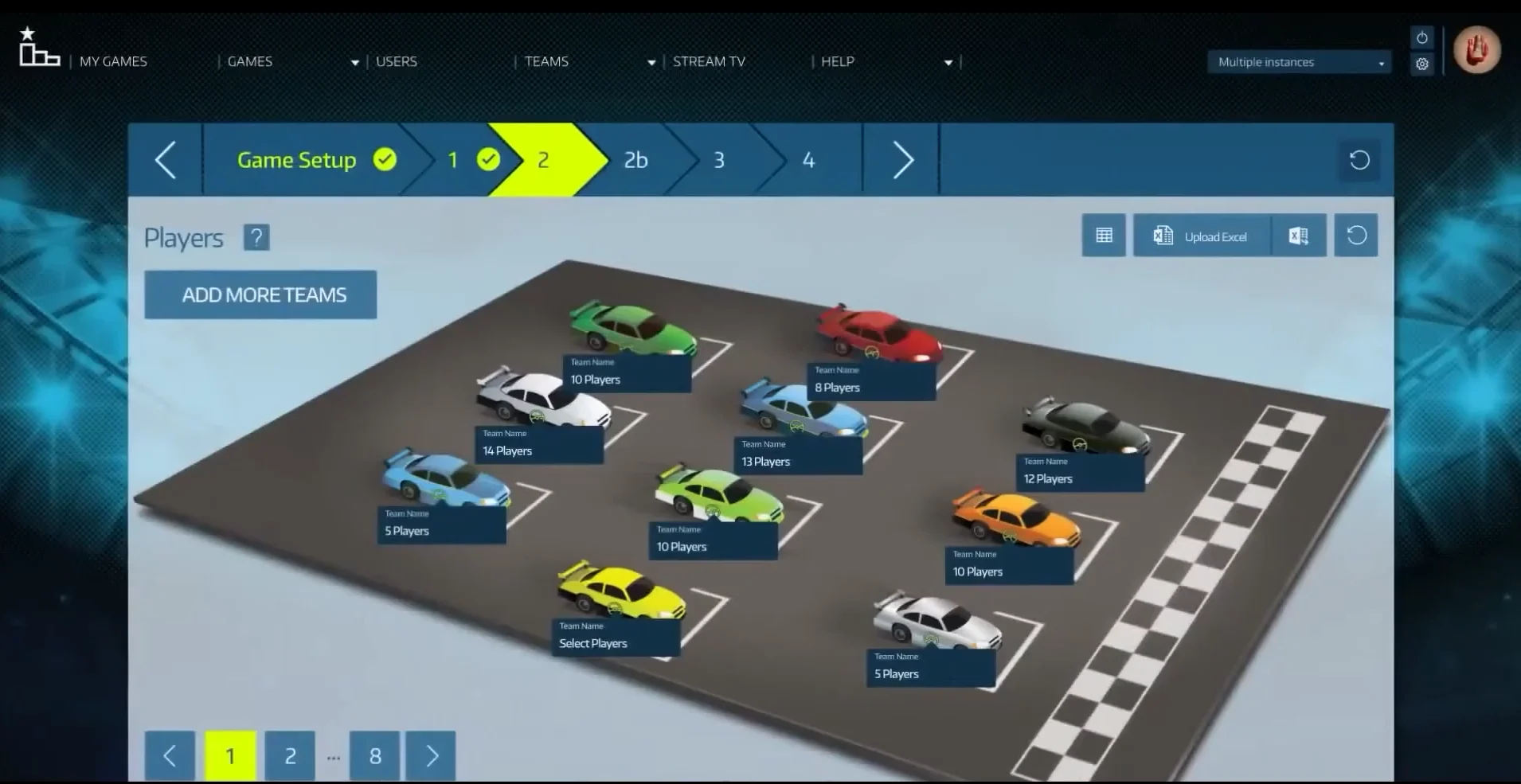
Team management dashboard — trainers and managers see each participant’s progress, completion time, and test results. All statistics in an understandable form, without technical details or complex reports.
-
Launch instructions and regulations — short guides for trainers and HR that help launch training on your own. No need to study technical documentation or wait for external specialists.
-
Methodological materials for mentors — tips on integrating gamification into your current onboarding program and increasing its effectiveness. You strengthen existing processes rather than build training from scratch.
-
Support at launch and after — we stay in touch to help with organizational issues, update scenarios for new products, and expand the world as your team grows.
As a result, you get a system that brings newcomers into sales faster and improves the quality of work of existing partners. All necessary elements are already packed — you just need to choose a launch date and invite the first group.
Case Study: How Game Mechanics Raised Sales by 42%
At a distributor of natural cosmetics, training for new marketers took two weeks of theory. Practice was done in pairs with a mentor using scripts — tedious and slow.
Many never reached their first sales, and the existing network worked by trial and error, spending months to reach a stable income.
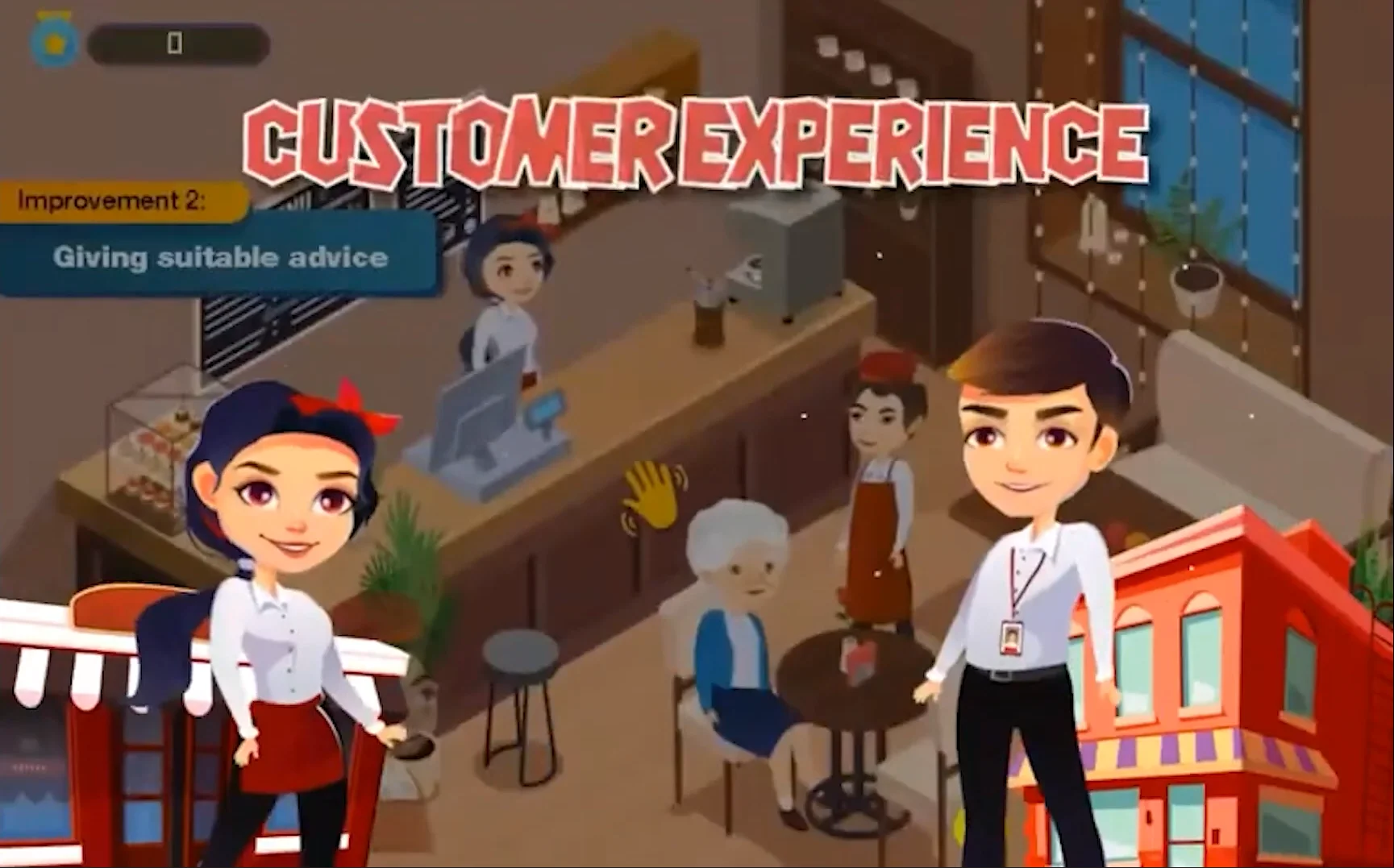
We built a 3D company world for them on the professional Unity engine: each employee gets an avatar and goes through scenarios in the sales floor, at a client meeting, and in conflict situations.
Given the specifics of network marketer training, we focused on practicing objection handling and trust-based dialogue. This is not a game for game’s sake — it is a simulator where any mistake is safe and the correct action is immediately reinforced.
The gamification results exceeded expectations: within the first month, sales grew by 42%, and quarterly turnover doubled.
This gamification case became exemplary — the share of repeat orders increased by a quarter, and the time for a newcomer to reach the planned norm was reduced almost threefold. People stopped fearing negotiations and began applying practiced scenarios in real sales.
The secret is that the game format creates emotional involvement and allows a manager to experience dozens of negotiations in a couple of weeks.
This is exactly the kind of implementation example we build into every project — you get not a “training tool” but a revenue growth instrument.
If you want the same result in your team, we will start with an audit of one business process and show how gamification will change its cost and speed.
How to Choose the Right Gamification Format for Your Task?
Choosing a gamification format starts not with technology but with the question: what business problem are we solving — training newcomers faster, increasing the regularity of contact with partners, or preparing mentors? Each goal has its own scenario, and there is no universal solution.
Network marketers have a distinctive trait: they work in the field, interact with people a lot, and learn better through practice than theory. Therefore, the format must simulate real situations — a conversation with a client, a product presentation, handling objections. If this is taken into account, training becomes skill practice rather than memorizing instructions.
The selection criteria are simple: audience composition, employee skill level, and the growth points you want to address. For newcomers, short scenarios with instant feedback work well; for experienced staff, comprehensive cases with strategy choices.
Additional requirements such as a branded company space or team-based training are resolved at the design stage.
We match the format to your task, not the other way around. First, we listen to the specific requirements of your business, then we offer options — from light simulators to a full 3D company world where employees train in the atmosphere of your brand.
This maintains engagement and achieves measurable results: higher sales conversion, faster newcomer adaptation, and more active partners.
The answer to the question “how to choose” is this: define your goal, describe your audience, and do not be afraid to state specific requirements. Based on that, we will build a scenario that works for your revenue.
Frequently Asked Questions and Doubts Before Starting
Doubts before launching gamification are a normal part of the process. People usually ask whether the system will work reliably, whether the game will distract from tasks, and who is responsible for the result. Below are answers to common questions that address the main risks.
What if employees don’t take the training seriously?
Gamification is built on clear motivation: we include competition elements, rewards, and visible progress. It is not entertainment for entertainment’s sake — every stage is tied to work skills.
The client gets a dashboard showing who completed the training, how long it took, and what results they achieved.
What about data security and guarantees?
We work under a contract with fixed deadlines and project scope. Employee data is stored on the client’s servers or in a secure environment — access is limited to authorized persons.
Upon completion, we hand over source materials and train your team so you can develop the project independently.
How is uninterrupted operation ensured?
We design the load for the actual number of users and build in a safety margin. If activity peaks above forecasts, the system remains responsive. We also include technical support during the launch period and monitoring so we can respond quickly in the first weeks.
Each project starts with task analysis and briefing — you get not a “boxed” solution but a mechanism that fits into the company’s processes. We take on the risks and tailor gamification to your goals. All that remains is to take the first step — request a preliminary estimate.Ready to Discuss Your Project? Get a Free Consultation
To ensure gamification truly increases network marketers’ engagement and sales, it is important to align expectations and capabilities from the very start.
A free consultation is not a quick phone call “on the fly” but a structured analysis of your task, after which you understand how to move forward.
Here is what our joint journey looks like:
- You leave a request on the website — indicate a convenient time and contact details.
- We contact you within one business day and clarify the goals of gamification.
- We conduct a free analysis of your current training and motivation system.
- We propose a concept: which format, for which audience, and with what effect.
- We calculate the cost and timelines — you receive a transparent commercial proposal.
- You make a decision — and we move on to development.
Immediately after your inquiry, you will receive:
- A checklist of data to gather for the project start;
- A preliminary gamification implementation plan with stages;
- A budget and timeline estimate for your task;
- Recommendations on the formats best suited for training network marketers;
- The contact details of a manager who will accompany you at every stage.
No obligations: the consultation is free and does not commit you to anything. Even if you are not ready to order development yet, you will still benefit — you will understand which mechanics are worth implementing in the training of your network structure.
Leave a request now: we will answer your questions, help you calculate the cost of gamification, and suggest concrete next steps. Whether to order gamification or think it over first is up to you, but after the conversation you will make a decision based on facts.