

Low Training Efficiency in Logistics — There Is a Solution
Traditional training in logistics often turns into a formality: employees listen to lectures, pass tests, and within a week forget most of the material.
As a result, warehouse errors, vehicle downtime, and inefficient routes remain the same — which means the company loses money on every operation.
The problem is not the people, but the format. When training comes down to presentations and instructions, employee engagement drops, and training effectiveness in logistics stays low. People do not understand why they need this knowledge and do not apply it in real work.
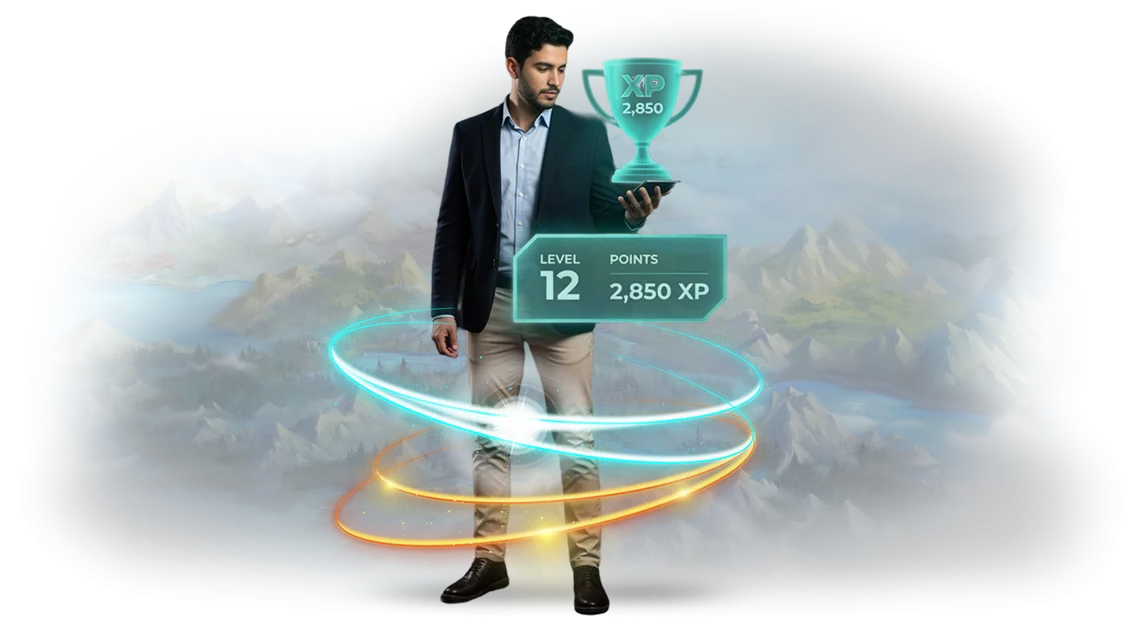
Staff gamification changes the approach. Instead of passive memorization — interactive scenarios where the employee makes decisions themselves and sees the consequences.
Training becomes clear, interesting, and tied to real logistics tasks: order picking, warehouse management, route optimization.
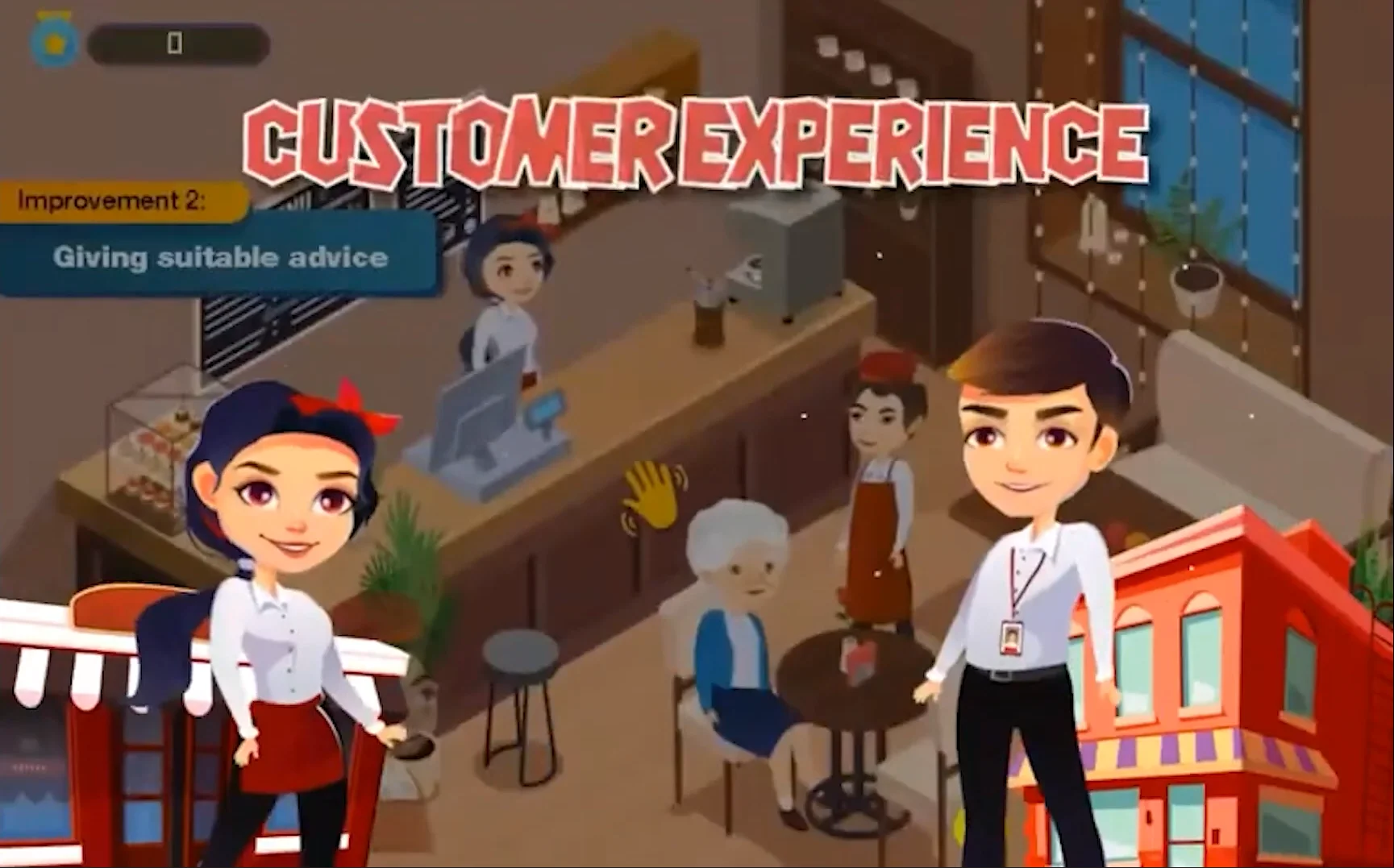
We create a 3D space of the company where employees practice skills in a safe environment. This is not imitation for the sake of imitation, but a tool that increases employee engagement and turns training into practice. This approach closes the gap between knowledge and real actions.
As a result, you get not "training for the sake of a checkmark," but a team that masters processes faster and makes fewer mistakes. Training effectiveness in logistics grows, and this is reflected in the company's operational metrics. We help implement staff gamification that works for your business.
What You Get from Game-Based Training Formats
At our team we build game-based formats so that logistics training works for your metrics, not just "looks good." The main benefits are higher engagement, quality of knowledge retention, and time savings.
Benefit: Higher engagement
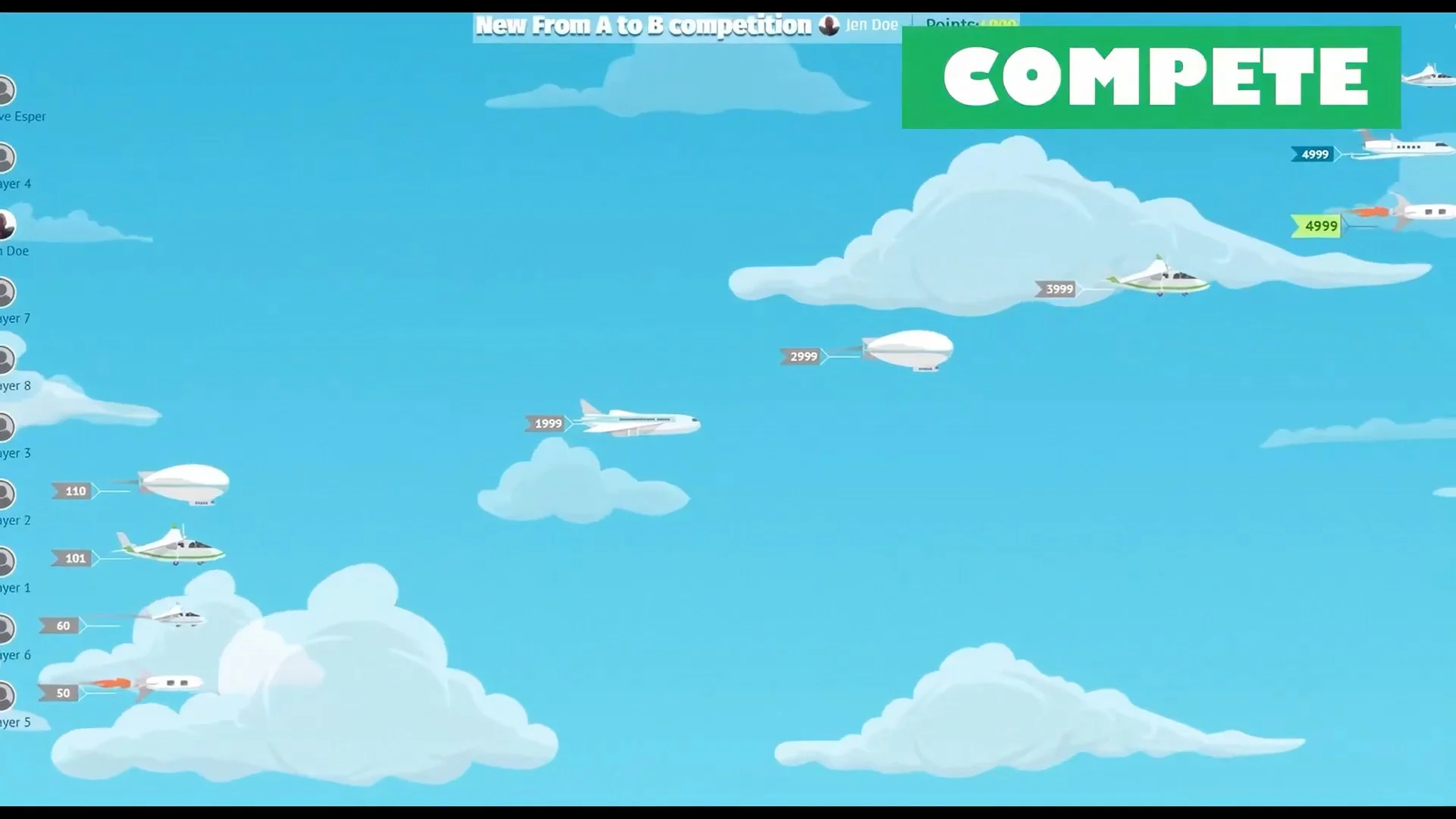
Employees skim through instructions and skip trainings because they are bored. A game format with roles, levels, and feedback changes behavior: people return to the materials on their own and compete with each other.
Participation becomes voluntary and exciting. At the same time, you can see who is completing the training, who is leading, and what share of the team reached the final result.
Benefit: Quality of knowledge retention
In a game, you cannot "read and forget" — you have to make decisions. The employee practices actions in simulations of warehouse, routes, and receiving, and errors are analyzed right away. Practice in a safe environment builds lasting skills.
As a result, there are fewer mistakes in real work and newcomers reach the required pace faster. Training becomes measurable: you know what percentage of employees truly mastered the process.
Benefit: Time savings
Game scenarios compress multi-hour lectures into short, intensive sessions. Instead of a week of courses — a few hours that fit into shift schedules. Mentors do not waste time repeating the same things.
The team directs the freed-up time to client work and current tasks. This means the format pays off quickly.
Benefit: Brand recognition and leads
Training takes place in the company's world, with its avatars and visual style. This strengthens brand recognition, and participants share results on social media. A demo version for partners or events collects contacts and turns the training into a source of leads.
This way, game-based training solves several tasks at once: it develops the team and promotes the brand at the same time.
Gamification Formats for Your Task
Every business process in logistics — from receiving to the last mile — requires its own skills. Some employees need to learn how to act in non-standard situations, others need to coordinate warehouse and transport operations.
There is no universal solution, so we select a gamification format for a specific task: a quest, a business game, or a simulation.
The formats differ not in name, but in result. A quest engages through story and competition, a business game teaches role interaction and decision-making, a simulation provides safe practice on real operations.
When training personnel, logistics companies often combine these formats: one for motivation, another for drilling algorithms until they become automatic.
Often a client comes with a request for one format, but after the brief we see that a combination delivers the best result. The table shows basic scenarios; in projects we adapt them to your logistics and team.
| Format | For whom | What it gives the client |
|---|---|---|
| Quest | Newcomers, line staff | Fast immersion in processes, emotional engagement, retention through story |
| Business game | Managers, related departments | Practicing interactions, conflict resolution, team building |
| Simulation | Operators, drivers, dispatchers | Training on real operations without business risk, practice to the point of automation |
At our team we choose a format based on your goal and audience. For example, for logistics training we combine a quest and a simulation: the former creates excitement and engagement, the latter builds a lasting skill. Tell us about your task — we will suggest a suitable format and calculate a measurable result.
How Gamification Mechanics Are Implemented
Implementing gamification is not just connecting a new program, but embedding game mechanics into your business processes.
To make the result predictable and ensure employee buy-in, we work according to a transparent plan: we agree on each implementation stage with you, show intermediate results, and take feedback into account. This way, you always understand what is happening and how it affects training and work performance.
- Brief and process audit — we identify which tasks need improvement: onboarding of new hires, professional development, skills practice in logistics. We record goals and target metrics by which we will evaluate effectiveness.
- Scenario and game mechanics — we design how employees go through the training, what actions are rewarded, and how competition or cooperative completion helps them absorb the material. We take into account the specifics of your logistics.
- Implementation plan and approval — we prepare a detailed plan with stages, timelines, and checkpoints. You approve it before development starts — this eliminates unexpected rework.
- Prototype and test group — we create a working prototype and test the mechanics on a small group of employees. We collect feedback and refine details before the full-scale launch.
- Development and integration — we embed the system into current business processes and work tools so that employees do not have to switch between programs. We configure roles and access rights.
- Launch and team adaptation — we launch the gamification, train administrators and supervisors. Your specialists will be able to manage tasks, levels, and rewards on their own.
- Support and development — we analyze engagement and results, make improvements, and add new scenarios. We help scale gamification to other departments.
What Is Included in the Delivery of Gamified Training
The delivery package includes everything needed to launch gamified training in logistics without lengthy preparation or outside contractors.
This is not a separate simulator, but a complete system: scenarios, methodology, control tools, and support at all stages of implementation.
- Scenarios and roles — typical situations: receiving, warehouse, routing, document handling. Each is broken down by difficulty levels, and the trainer receives ready-made lessons and lesson plans — nothing needs to be invented.
- Methodological materials — trainer guides, handouts, and evaluation criteria. Your trainers launch the training right after a short online session, without developer involvement.
- Company virtual world — a 3D space that replicates your real warehouses, transport, and loading zones. Employees practice actions in a safe environment and transfer skills to work — mistakes on site become rare.
- Analytics dashboard for managers — you can see the progress of each employee and the group as a whole: errors, task completion time, number of attempts. You understand who is already ready to work independently and who needs additional training.
- Setup and update instructions — clear checklists for IT specialists: installation, backup, updates. Technical issues are resolved without lengthy approvals.
- Internal trainer training — we run a practical session, after which your trainers lead classes on their own and adapt scenarios to new tasks.
- Support and maintenance — we adjust scenarios when company processes change, add new situations, and help with questions in a work chat. Training stays relevant even when regulations change.
The result of implementation is faster onboarding of new employees to a working level, fewer mistakes and less turnover, and a transparent picture of team competencies.
You get a ready-made tool that works for your business metrics, not just a "virtual game for employees."
Gamification of Training in Logistics: Case Results
In logistics, the cost of a mistake is measured not only in money, but also in customers' time: new employees train for weeks, and their first shifts still involve delays, missorting, and unnecessary movement.
Ordinary lectures and text instructions provide theory, but do not build the necessary skills. You need practice without risk to the business.
We addressed this need through gamification. For the logistics operator Severny Veter we created an interactive 3D warehouse world where an employee goes through the full work cycle: receiving, putaway, picking, and shipping.
The system reacts to every action, shows the consequences of errors, and suggests the optimal order of operations.
Project results
Training time for new employees was cut in half — from two weeks to one. Engagement grew: 90% of newcomers completed the course instead of dropping out halfway, as often happens with regulations.
The number of errors when starting real shifts decreased by a third — confirmed by control measurements from mentors.
The main thing the client notes is that employees stopped being afraid of complex operations. In the simulator, they can try different scenarios, make mistakes, correct them, and understand the logic of the process. Experience is reinforced through action, not rote memorization.
After the project launch, the operator expanded the solution to three additional warehouses and, a few months later, came back to us for new modules to train line staff. For us, this is the main indicator: gamification solved a problem that standard formats had not.
Answers to Frequently Asked Questions about Gamification
Gamification of training in logistics often raises questions even before it starts: will it break existing processes, how long will implementation take, and who is responsible for the result.
Below we address the most common concerns — honestly and based on our experience with completed projects.
Is it too difficult to implement gamification into current training processes?
The complexity depends on the scale, but in practice most projects are embedded into the existing training system without stopping operations.
We start with an audit of your scenarios: what skills need to be practiced, who will take the training, and what results are already measured. After that, we assemble a module that complements, not replaces, current programs.
For the training department, this means a clear transition: instructors stay, materials are preserved, and the 3D world with avatars becomes a tool for practicing practical situations.
How does gamification align with real warehouse operations or transportation?
Scenarios in the 3D world are built on your regulations — from receiving goods to transport routing. The trainee enters a virtual warehouse or transport hub and repeats the same actions as in real life: checks documents, places pallets, responds to non-standard situations.
At the same time, an error does not cause disruptions at the real facility. This way, the company gets a safe environment for practice, and the employee gains confidence before going out on the line.
How long does it take to create a training 3D world?
A typical project from brief to launch takes 4–8 weeks depending on the number of scenarios and the volume of content. The first working version is shown within 2–3 weeks — it can be tested on a focus group of employees.
Then, through iterations, we add levels, characters, and a reward system. This approach allows you to launch training faster and adjust the course based on staff response, rather than after development is fully complete.
What guarantees do you provide on the result?
We specify in the contract the deadlines, scenario composition, and acceptance criteria: for example, the completion of the course by a certain number of employees or an increase in the share of successful operations in tests.
After the launch, we support the project: we update content when regulations change, help analyze statistics, and refine the program if we see a drop in engagement. This is not "deliver and leave," but work toward your business result.
Have other questions? Leave a request for a consultation — we will review your situation and show how gamification can fit into your specific logistics training program.Ready to Make Training Engaging? Leave a Request
Training in logistics becomes engaging when employees do not just watch videos and instructions, but act on their own in the company's virtual world.
3D avatars and game scenarios turn routine processes into live practice: newcomers get up to speed faster, and experienced employees practice rare situations without risk to cargo or deadlines.
Leave a request for gamification — and we will prepare a cost calculated after audit, a format proposal, and an implementation plan for your task.
During the consultation, we will clarify which result matters most to you: reducing time-to-competency, increasing engagement, or reducing warehouse errors.
After your request, you receive:
- a cost calculated after audit for your scale and timelines — no hidden work or overpayments;
- a training format proposal: 3D avatar, virtual warehouse, game scenarios;
- an implementation plan with stages, timelines, and responsible parties;
- consultation on training employees in logistics specialties;
- examples of similar projects and metrics achieved by our clients;
- support at all stages — from brief to launch and feedback collection.
From there it is simple: you send a request, we get on a call, and prepare a solution. Already at the calculation stage, you will see how gamification pays off in your business. Start with a short message — the rest takes just a few minutes.
How to Choose a Gamification Format for Your Task?
The right gamification format is determined not by trends, but by your business goal. In logistics, this could be reducing the onboarding time of new employees, reducing errors in order picking, or practicing actions in non-standard situations.
If the goal is fast practice of repetitive operations, short simulations with instant feedback work better. If you need to develop management skills, scenarios with branching decisions and a company game world are a good fit.
The second criterion is the audience. A courier, a warehouse worker, and a warehouse manager perceive training differently. For line staff, simple interfaces and short 10-15 minute game sessions are important so they can fit into a shift.
For managers, deeper scenarios with 3D avatars can be used, where the consequences of management decisions are visible. Also take into account the level of digital literacy: the simpler the entry into the game, the higher the engagement.
The third is budget and timelines. A full 3D world requires more resources than a modular course with game mechanics.
But if the training is designed for a constant flow of newcomers, investment in avatars and a virtual environment pays off by reducing the load on mentors and increasing the speed to results. At the brief stage, we propose a format that achieves the goal within your constraints.
And finally, the main criterion is the ability to measure the result. Choose a format where the employee's actions are visible: the number of correct decisions, time per operation, repeated mistakes. This turns training into a source of data for improving business processes.
The final choice is a balance between goal, audience, budget, and timelines. We help you find it and implement it as gamification that is clear to your employees and useful for the company.