

Why Most Team Building Programs Don't Deliver Results
Most team building programs are built as one-hour entertainment: a host runs games, employees look up from their phones, and two days later nothing has changed.
Employee engagement remains formal, corporate events turn into mandatory attendance, and the business gets neither a cohesive team nor new skills.
The problem is that the classic format doesn't touch real work scenarios. Participants are passive — they observe from the sidelines instead of making decisions, taking responsibility, and seeing the results of their actions. So training effectiveness stays low, and the team building budget doesn't pay off.
We took a different approach. Instead of lectures and contests, we build the program as a digital adventure where every employee is an active player and skill development happens through collaborative problem-solving.
This approach engages from the first minute and delivers measurable results — changes in communication, decision-making speed, and team spirit after the event.
What Business Gains from Engaging Employees Through Games
Employee engagement is not entertainment but a tool that affects profits. When the team is involved in the process, work speed and decision quality grow.
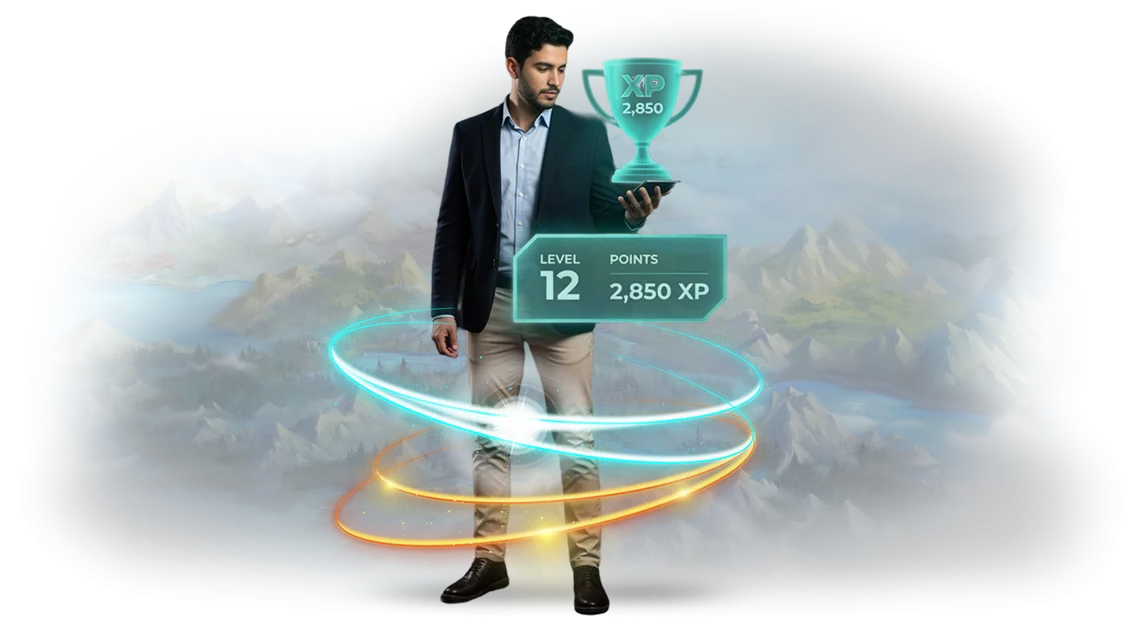
We turn corporate programs into 3D worlds with avatars, where every employee becomes a participant rather than an observer.
Growth in Team Loyalty and Motivation
The game format creates an emotional connection between the employee and the company. When people see they are valued, they engage in daily tasks. This reduces turnover and strengthens the desire to work for results.
Employee Training Through Game Scenarios
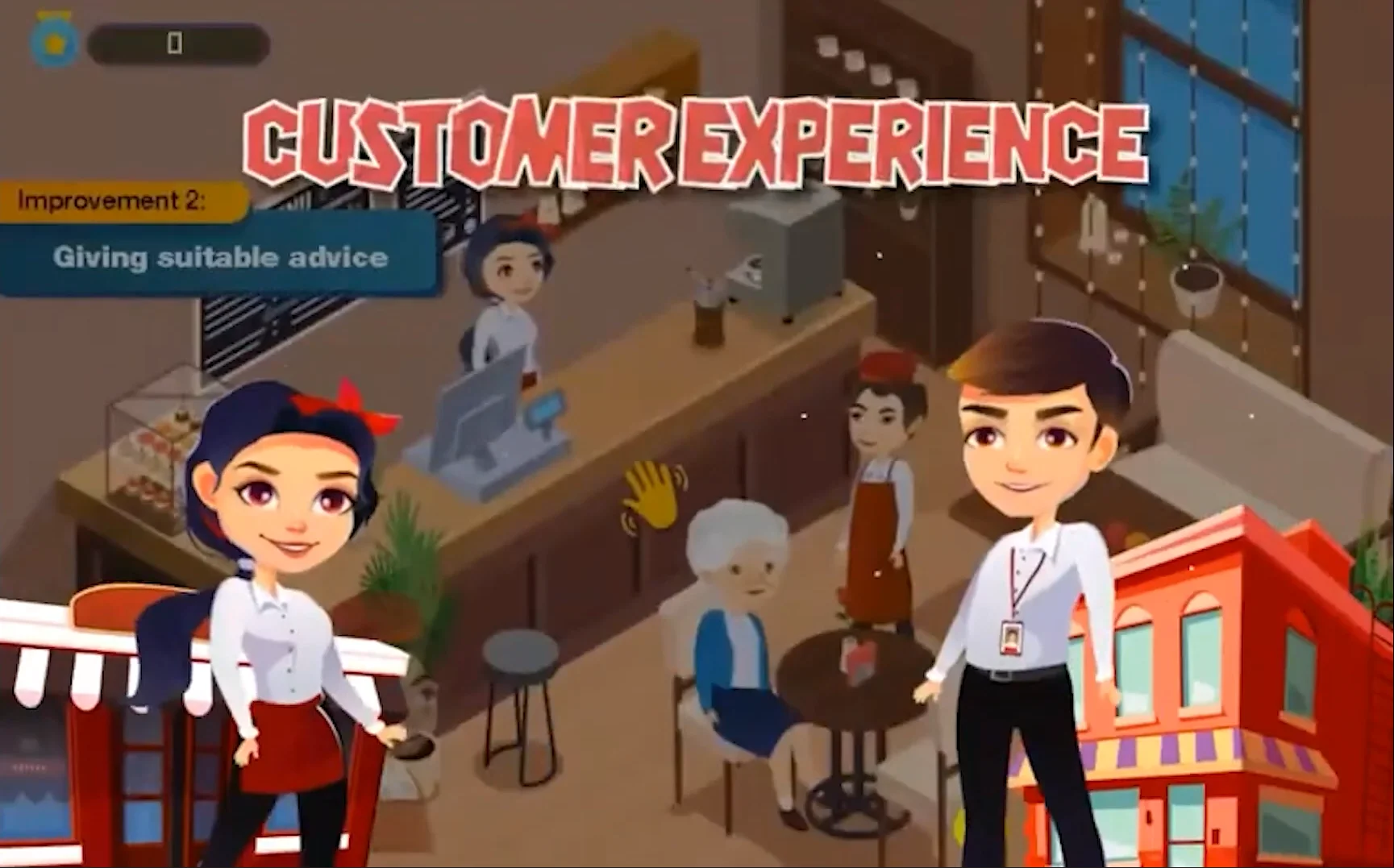
Regular training provides theory; games provide practice. In a safe environment, an employee tries new roles and sees the consequences of decisions without risks. Gamified learning helps acquire skills faster and apply them at work.
Stress Relief and Team Cohesion
Corporate culture is built on relationships between people. Game scenarios relieve tension, help colleagues open up, and build trust. After such a program, the team works more smoothly with fewer conflicts.
Employer Brand Recognition
Employees share memorable game moments on social media. This builds a sustainable employer brand and attracts strong specialists. You get not a one-off event but a long-term marketing asset.
Gamification Formats for Team Building Programs
Each team building program solves its own task: one team needs to learn to negotiate faster, another needs to connect employees from different departments, a third needs to engage remote specialists. There is no universal format, so we match gamification to the specific scenario. The table shows the main options that clients use most often.
| Format | For whom | What the client gets |
|---|---|---|
| Business game | Teams that need to improve processes and decision-making | Practicing real scenarios in a safe environment: employees try on roles, see the consequences of decisions, and learn to negotiate without unnecessary stress. |
| Employee quest | Large groups where it's important to engage everyone | Participants go through challenges in mixed groups — they meet, exchange experience, and the excitement keeps energy high until the end of the event. |
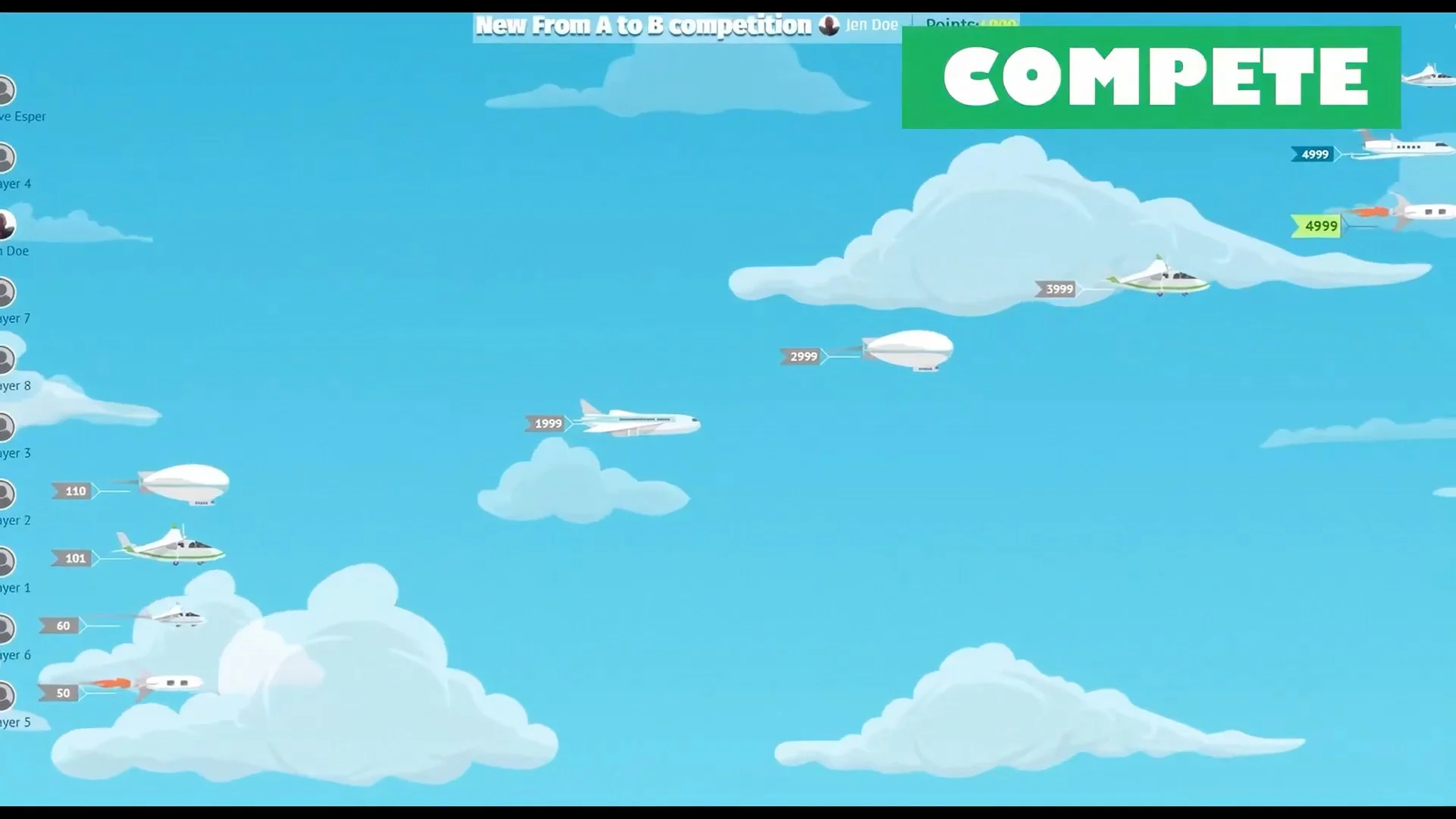
| Virtual team games | Remote or distributed teams | A single platform brings together employees from different cities: competitive spirit and shared problem-solving strengthen the connection that is missing online. |
| Corporate games | Holidays, anniversaries, team outings | An emotional anchor for the event: the brand is remembered, and guests leave with photos and stories, not boring presentations. |
The format choice directly affects the result: a properly selected game delivers a measurable effect — higher engagement, more cross-department connections, and lasting brand memories.
We'll advise which option fits your team and goal, then adapt the mechanics to your corporate culture.
How the Project Goes: From Brief to Launch and Support
We know: team building needs not only a vivid game but also a predictable process. That's why we structure every project according to a proven scheme: you always understand what development stage you're at, what you're approving, and what you'll get in the end. No "black boxes" — only clear steps, timelines, and someone accountable for the result.
- Brief and immersion. We hold a short discussion: event goals, team composition, desired impressions, and technical limitations of the venue.
- Concept and script. We develop the game idea: plot, roles, game mechanics, and a link to company values. We show what the avatars and space will roughly look like.
- Concept approval. You receive a document and presentation describing all mechanics. We make edits, lock the final version, and set exact game launch dates.
- Development. We build the 3D world, avatars, tasks, and result scoring system. At each stage, we show intermediate versions so you can see progress.
- Testing and preparation. We run a technical dry run: check how the game behaves on your equipment, fix issues, and prepare instructions for the host.
- Game launch and event support. On the event day, our specialists stay in touch: help participants connect, manage the game, and promptly resolve any issues.
- Results review. After the game, we provide a final report: participation statistics, engagement, screenshots, and recommendations for the future.
This approach has proven itself across dozens of corporate events — from small teams to large-scale events. You get not just a game but a managed process: from brief to event support, with clear communication and a guaranteed result.
What's Included in the Delivery and What You Receive
Each project ends with a working kit, not a "folder of files." You get a ready-made solution that your team and host can use immediately — without hiring outside developers.
- Game script — detailed mechanics and plot moves adapted to company values and team building goals. You know what happens at each stage and what result you get.
- Company 3D world — a virtual space in brand style that immerses employees in a recognizable brand environment. This boosts engagement and makes the game part of corporate culture.
- Host instructions — a step-by-step script with timings, cues, and control zones. Your employee can run the program even without gamification experience.
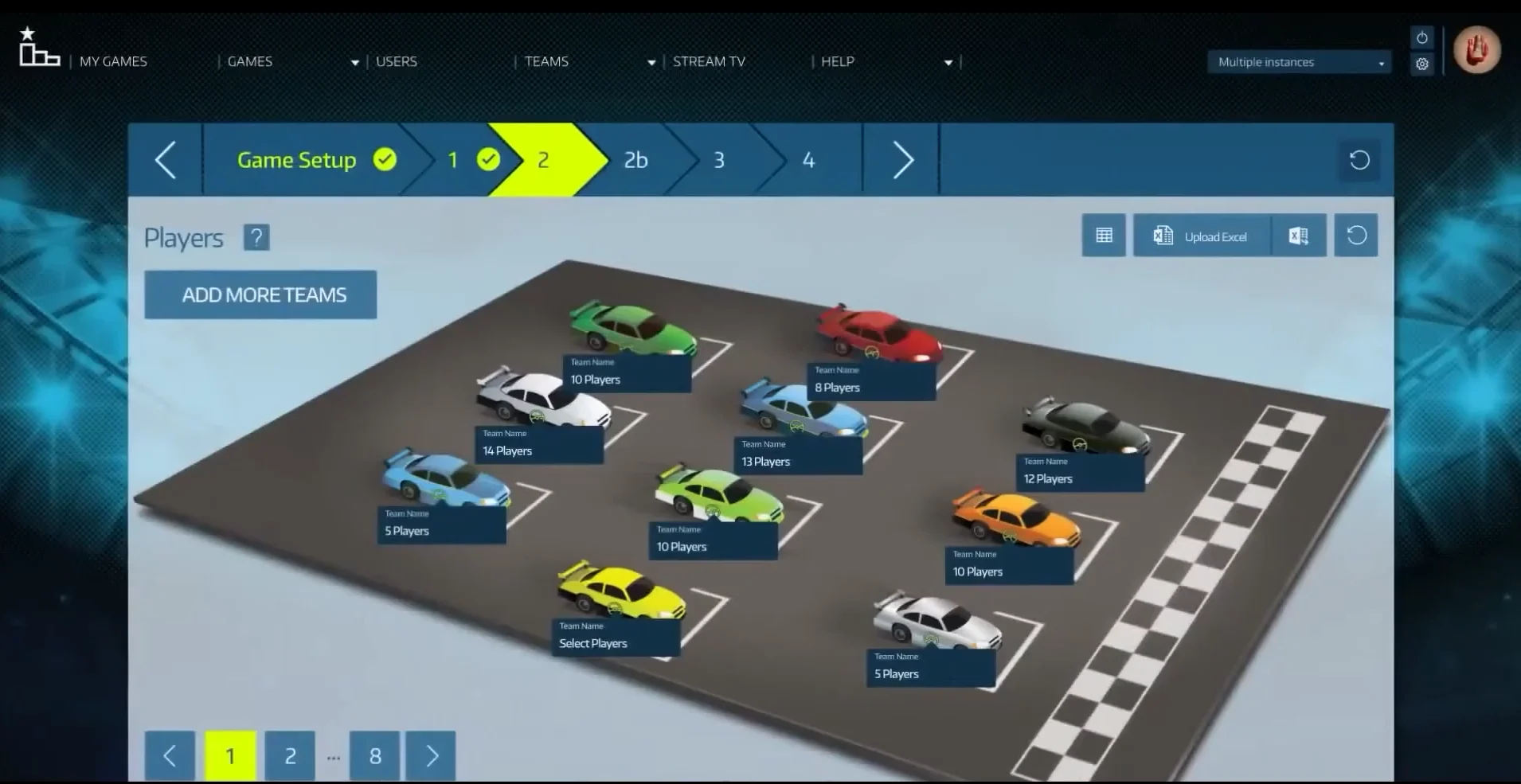
- Control panel — a clear interface for setting up teams, launching rounds, and tracking the game in real time. The moderator sees what's happening and responds without technical training.
- Methodology materials — participant guides, preparation checklists, and space setup recommendations so the game runs smoothly.
- Final report — participation statistics and team results. You get data to evaluate engagement and arguments for leadership about the program's value.
If the game needs to be adapted for a new set of participants, we'll supplement the kit for your tasks without rewriting the project from scratch. Everything you receive stays yours and can be used at any future events.
Case Study: How We United 500 Employees in One Company
A manufacturing holding company approached us: 500 employees at the head office and three branches barely interacted with each other. Surveys showed declining engagement, and HR recorded rising turnover.
Regular corporate parties, lectures, and off-site programs no longer worked — they needed a format that would make people see colleagues and the company in a new light.
We proposed gamification of business processes: using Unity, we built a virtual copy of the office and production facilities.
Each employee received a 3D avatar, and mixed teams from different departments shared a quest: assemble a virtual assembly line, allocate resources, and prevent a production "failure." The game lasted two weeks, and tasks unlocked on a schedule, so participation easily fit into the workday.
We anticipated that some employees had no gaming experience, so we made the interface as simple as possible and explained the rules with short hints right inside the virtual world.
The "this isn't for me" barrier disappeared by day two — teams appointed captains and scheduled joint sessions themselves.
What Changed After the Game
All 500 employees participated in the game — that's 100% coverage of the target audience. Employee engagement reached 94%: almost all participants made it to the finish and returned to the game the next day.
One month after launch, the employee loyalty index rose by 18 points, and resignation requests dropped by a third.
The HR lead noted that this gamification case became the most prominent event of the year. Six months later, the holding company ordered a second season — with new levels and expanded branch geography.
The repeat order confirms: the game delivered measurable results for loyalty and retention, not just a one-time emotional spike.
How to Choose a Gamification Format for Your Team's Task?
Choosing a gamification format starts not with technology but with a question: what problem are you solving? Uniting remote employees, introducing new departments, practicing negotiation skills, or simply giving the team a reset — the mechanics depend on the goal.
Quick team sessions work for introductions; multi-stage scenarios suit deep interaction work. We always start with an interview with the manager and a short participant survey to understand pain points.
The second factor is headcount. A group of 10–15 people needs one set of formats; 50–100 needs another. Small teams need everyone involved; large teams need synchronization and visible group progress.
We select a format so that no one stays an observer: every participant affects the overall result — and that's the main criterion for a successful team building program.
The third factor is the event budget. Gamification pays off not through price but through results: lower turnover, faster onboarding, and durable connections within the team. That's why we offer a range of solutions — from compact programs to full digital company worlds. Every budget has an option with clear returns, and you know in advance what effect you'll get.
In the end, format choice is our joint analysis. We help the client weigh team goals, headcount, and budget, then propose a specific scenario: with stages, timing, and expected results. All you have to do is launch the program and watch the team start working more cohesively.
Frequently Asked Questions and Concerns Before Starting a Project
Before launching team building programs, clients worry about one thing: whether the project will fall apart due to employee indifference, management complexity, or technical issues. We know these questions and answer them directly.
What if employees refuse to participate?
Refusal usually happens when the game is perceived as coercion. We design the scenario so participation is voluntary: active people get a challenge, reserved people join at their own pace. Before launch, we hold an introduction session and collect feedback.
How difficult is it to manage gamification after launch?
You receive a clear admin interface with key metrics: number of participants, task completion. No need to understand the tech — we train the responsible employee in a short webinar and provide support on request. We make script edits remotely.
What if there are technical failures during the event?
We eliminate technical risks at the preparation stage: professional equipment is tested in advance, and a backup plan is ready. On the event day, a specialist monitors the system and switches the program to a fallback scenario if something fails — guests won't notice a thing.
How is employee data protected?
Participant information is stored in a secure environment and used only for gamification. We don't share it with third parties; only authorized people on your side and our team have access. If needed, we sign a confidentiality agreement.
It's better to talk through concerns before the start — that way you get a plan without surprises. Tell us what matters for your company, and we'll show how we solve it in practice.Launch Gamification for Your Company This Quarter
Gamification is no longer an experiment — it's a working tool that noticeably boosts employee engagement and makes team building programs more effective. If you've read this far, the need is already forming: all that's left is turning it into a concrete plan with clear timelines.
We take care of the entire journey — from the first consultation to integrating the game into your corporate events. You get a transparent process, fixed deadlines, and a team accountable for results. No "we'll finish later": after launch, the mechanics work and you see the return.
What you get after reaching out:
- Consultation with our producer: we review the goals, audience, and format of your event.
- Brief and preliminary assessment: you understand how gamification will map to business objectives.
- Cost and timeline estimate: a transparent quote with no hidden work or surprise add-ons.
- Script and prototype: you see in advance what the team will play and can make edits.
- Launch and game integration: we help embed the mechanics into the team building program, run the first session, and collect feedback.
- Post-launch support: we fine-tune details based on the pilot results so the game works long-term.
To order gamification, leave a request — we'll get back to you with a proposal within one business day and confirm the exact launch date. Start with a free consultation: it's non-binding, but you'll leave with concrete ideas for your task.