

Onboarding Programs: Why Do Employees Leave?
Every third new employee leaves the company within the first six months — and more often than not the reason is not salary but the feeling that "nobody was expecting me here." The first weeks on the job decide everything: if an employee hasn't absorbed the culture, hasn't met the team, and doesn't understand how processes work, they start looking for alternatives by the end of the probation period.
Staff turnover is not just an HR metric but a direct loss: repeated recruiting, interviews, ramp-up time, and constant pressure on mentors.
Classic onboarding programs built on briefings and presentations do not solve the problem: information is forgotten within a day, and no emotional connection with the company is formed.
We are changing the approach: we turn employee adaptation into a living experience inside your company's 3D world.
A new hire does not read rule books but goes through a journey — gets familiar with the office, the team, the brand's history, receives clear guidance, and feels "I belong here." This is the format that holds attention in the first weeks and strengthens the desire to stay.
This is how onboarding programs stop being a formality and become a tool for reducing turnover. We build the world on a professional game engine, implement it turnkey, and support the team after launch — so that adaptation works for the business from the very first days.
What Gamification of Business Processes Gives Your Team
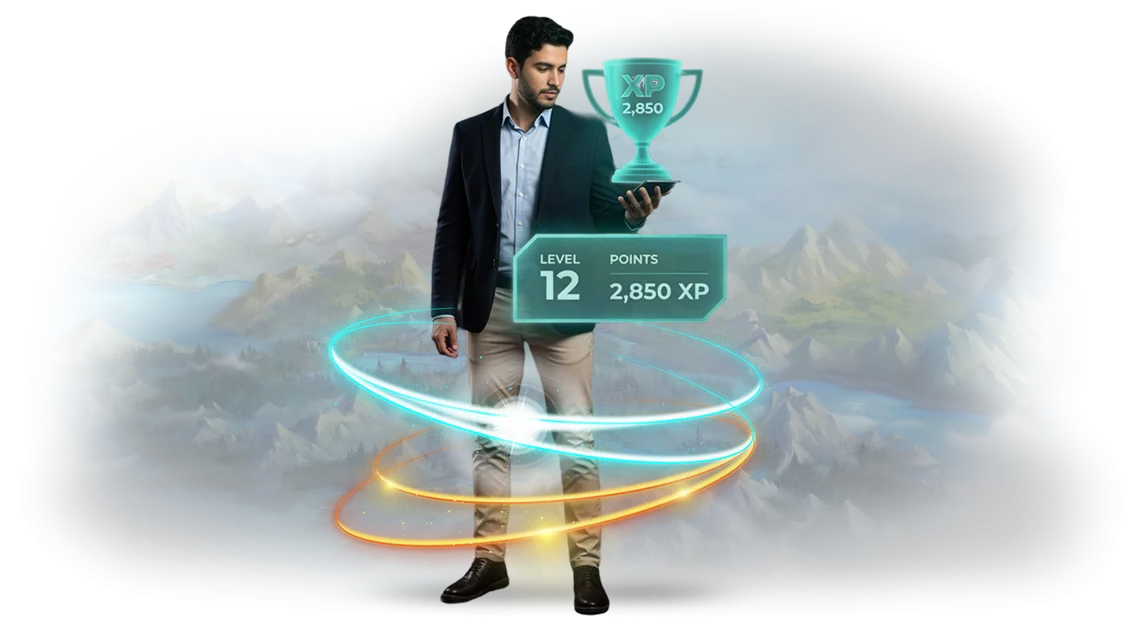
For a manager, gamification of business processes is not a game for its own sake but a working tool for team management. When employees see the goal, progress, and the result of their own actions, routine turns into a meaningful process.
We use this approach to make onboarding programs deliver measurable business results.
Increased Team Engagement
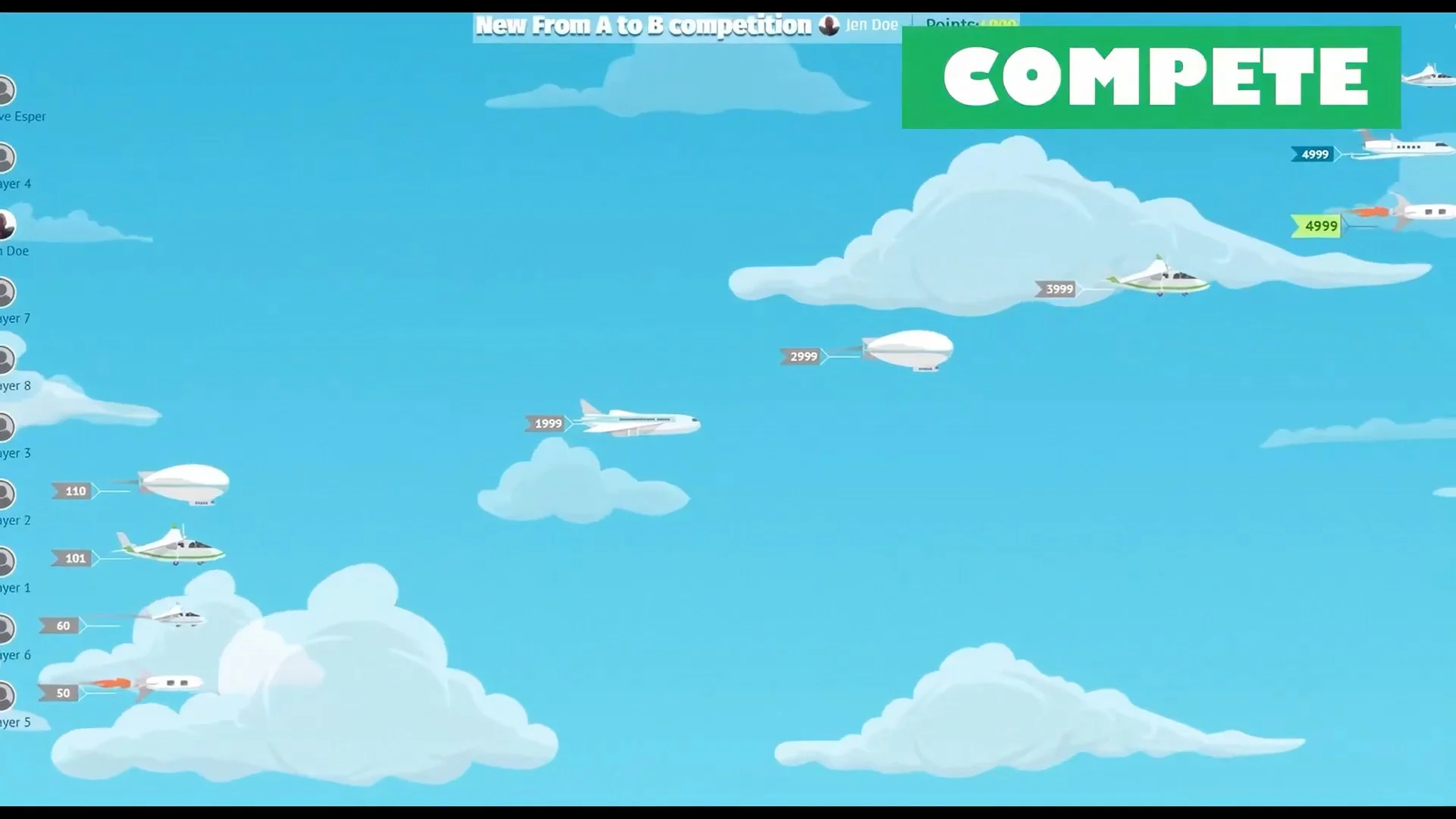
New employees go through training with interest when it feels like a journey through the company's virtual office rather than reading instructions. Competition elements, levels, and rewards hold attention, and employees return to tasks on their own. Engagement grows without force — people join in because they enjoy it.
Faster Time to Target Metrics
Gamification shortens the time from day one to confident performance. A new hire immediately sees which skills to improve and gets hints at the right moment.
Instead of three months of adaptation, the team reaches target metrics faster — which means hiring and training costs pay off sooner.
Reduced Turnover
When new employees feel progress and support, they are less likely to leave within the first six months. Gamification creates a sense of growth: a person sees their level rising and receives recognition for achievements.
This reduces turnover and keeps knowledge inside the company, saving budget on rehiring and adaptation.
Employee Motivation
A transparent system of points and bonuses turns abstract KPIs into clear steps. Employees understand that their actions affect the team's result, and this motivates more strongly than ordinary directives.
We bring these mechanics into the company's 3D world on Unity so that training is visual and works smoothly on any device.
As a result, gamification of business processes solves three manager challenges: it engages the team, accelerates adaptation, and retains valuable people. Each of these benefits directly affects operational metrics and business profit.
Gamification Formats for Your Business Objectives
Gamification of onboarding programs is not just "a game for its own sake" but a tool that turns adaptation and training into a clear, engaging process.
A new hire masters the rules and internal policies faster, and you see a transparent result at every stage — from the first day to confident performance.
We choose the format for a specific business task: short onboarding for mass hiring, deep training for complex roles, or regular support for team engagement. The table below shows typical scenarios for which companies most often order gamification.
Formats and Business Outcomes
| Format | Who it is for | What the client gets |
|---|---|---|
| 3D quest through the corporate world | Mass hiring, new employees without experience | Quick introduction to the company's values, history, and team. A new hire remembers routes and key locations 30% faster. |
| Training scenario with a mentor avatar | Employees in complex roles (sales, support, production) | Practicing real situations without risk to the business. A person gains the skill even before the first working day. |
| Motivational track with levels and rewards | Teams that depend on KPIs and probation completion | Clear goals and progress, higher engagement, and a greater share of employees successfully completing probation. |
| Team competitions in a virtual office | Departments that need to improve communication | Natural networking and joint problem solving — removes barriers between new hires and experienced colleagues. |
This structure helps you design the result rather than guess: for each employee category, you get clear metrics — speed of reaching target performance, engagement, and readiness to apply knowledge in practice.
We combine formats and refine the mechanics to match your corporate style. This way, gamification becomes part of the training system rather than a one-time event. All that remains is to measure how adaptation time and new hire productivity have changed.
How the Project Development Works: From Brief to Launch
An onboarding program is not just a page or a video but a process that needs to be built from the first minute of meeting the company to the moment when a person confidently works independently.
We take on the whole journey: from the brief to the launch of gamification and post-launch support. Below are the implementation stages that the project development goes through.
-
Brief and immersion in the task. We define the program's goals, the new hire profile, and expected results. We determine how the game will help with adaptation, training, and memorizing company policies.
-
Scenario and game mechanics. We develop the storyline, task system, rewards, and progression. We show a prototype so you can see what the onboarding program will look like before the main development begins.
-
Creating avatars and the world. We design characters, locations, and interfaces in the company's brand style. At this stage, the project gets a visual identity that supports brand recognition and emotional engagement.
-
Assembly and testing. We combine the scenario, graphics, and mechanics into a single solution. We check how the game behaves on different devices and under different loads so that the gamification launch goes smoothly.
-
Gamification launch. We deploy the project on your platform or provide convenient access. We help integrate it with the training system and set up analytics so you can see each new hire's progress.
-
Support and development. We collect feedback from participants, improve the scenario, and add new levels and tasks. This way the project stays relevant and continues to deliver value even after the pilot launch.
What's Included in the Delivery: A Complete Launch Kit
You receive not an abstract description of "how we will work" but a concrete kit that can be launched right away. Everything created during the project stays with you: scenarios, settings, instructions, and training materials.
You don't need to hire a separate specialist to understand the mechanics — we hand over the project fully packaged.
Here is what's included in the delivery:
- Ready-made onboarding program scenarios — step-by-step scenarios with branching for different employee roles. A new person goes from getting to know the company to their first independent actions, and every step is supported by game mechanics.
- Configured game mechanics and rules — a system of points, levels, rewards, and feedback that keeps a new hire motivated throughout the program. The mechanics are described in clear language so you can make changes without a programmer.
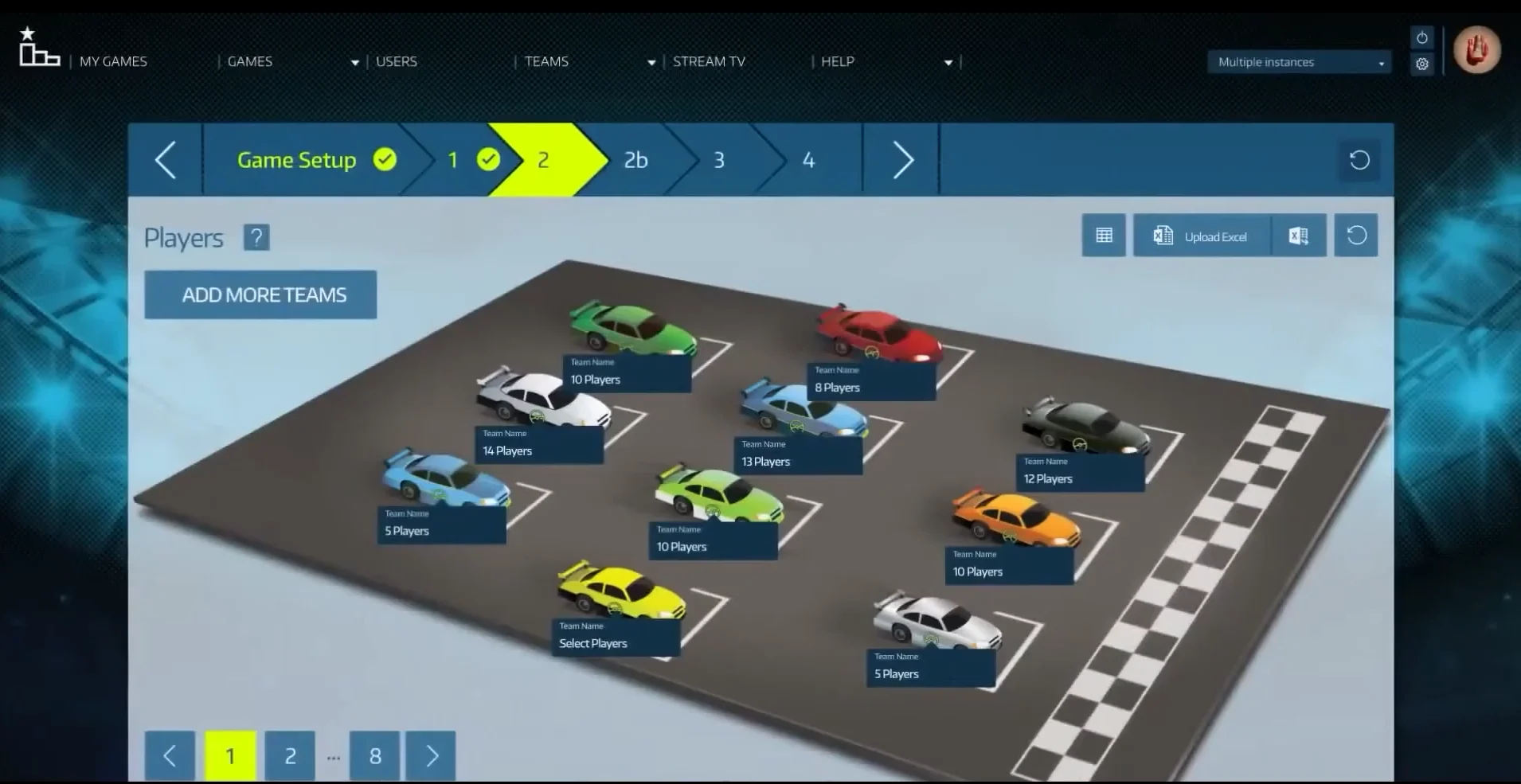
- Administration tools — a dashboard where you see each participant's progress, bottlenecks, and completed stages. No need to compile reports manually — everything is generated automatically.
- Program completion reports — clear data: what percentage of new hires reach the end, where difficulties arise, and how much time each stage takes. Based on these numbers, you understand how to improve the program and speed up adaptation.
- Instructions for the team and participants — short guides for HR, mentors, and the new hires themselves. They explain how to use the mechanics, what to do in an unusual situation, and where to ask for help.
- Customization for your corporate culture — terminology, scenarios, and visual design are adapted to your brand. Employees see not an abstract game but the internal world of the company.
- Launch support — we help you roll out the project, train administrators, and answer the team's questions. You are not left alone with the tool in the first weeks of operation.
- Documentation for project development — a description of how to add new levels, change tasks, and scale the program to other departments. This is your roadmap for expanding gamification without hiring a contractor.
In the end, you get not a "project" but a working tool that delivers value right away: new hires integrate into processes faster, and you see measurable results — shorter adaptation time, higher engagement, and less load on mentors.
The kit is designed so that within a week after handover, you can develop the program independently.
Case Study: Reduced New Hire Turnover by 30% in Two Months
A large retail chain was losing one in three new employees in the first two months of work. Hiring and training costs were growing, and stores operated in a constant state of staff shortage.
Classic adaptation — presentations, briefings, tests — did not hold attention, and new employees left before they could feel a connection with the company.
We proposed a gamification case: to turn adaptation into an engaging journey through the company's virtual world.
For the SmartMarket chain, we developed an onboarding program where every employee goes through quests, completes tasks, and earns rewards for real steps — from meeting the team to their first operations on the sales floor.
We took into account the specifics of retail: shift schedules, stress, and different levels of digital literacy.
How It Worked
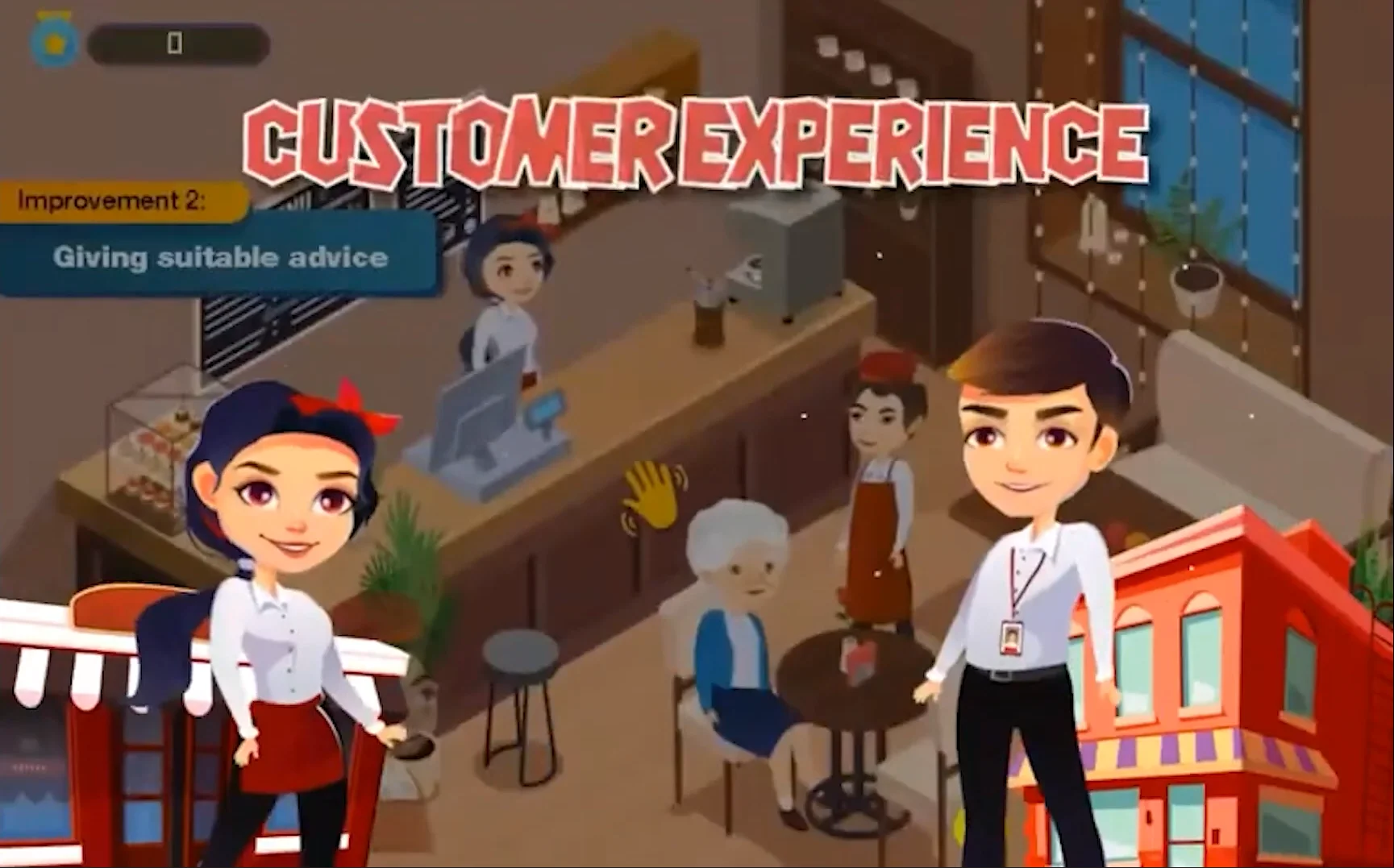
A new hire enters a 3D avatar of their future workplace. Instead of a dry manual — living scenarios: receive goods, arrange a display, respond correctly to a customer.
Each action earns points and unlocks a new level, while the mentor sees progress and gives a timely hint if the employee is stuck.
This approach changes attitudes toward work even before the first day in the store. A person arrives already understanding the processes and with the feeling that they are expected, not just put on the schedule.
Business Results
Within two months, turnover among new hires fell by 30%. The time to full integration into work dropped from three weeks to ten days — the company gets a return from every hired employee faster. The share of employees successfully completing probation increased by 40%.
Most importantly, the chain received not a one-time campaign but a system that keeps working. Six months later, SmartMarket ordered an expansion of the gamification to other positions and new training scenarios.
The repeat order speaks for itself: the tool proved its value and became part of the personnel management processes.
How to Choose a Gamification Format for a Specific Task?
Choosing a gamification format starts not with a trendy mechanic but with a business task. First, define what problem the project solves: new hire adaptation, reducing training time, increasing employee engagement, or growing sales.
The answer to this question immediately narrows down the suitable tools — and only then do we select a solution for it, not the other way around.
For onboarding programs, the best format is immersion in the company's corporate 3D world: a new employee gets to know the office, team, and processes through an avatar instead of a boring presentation.
For training and knowledge assessment, interactive scenarios and quizzes work better; for motivation — ratings, levels, and rewards. The key is that the mechanics reinforce the desired behavior rather than being an end in itself.
The solution is always selected together with you. We analyze current processes, the audience profile, and desired metrics: time to confidence in the role, the number of successfully completed stages, and the frequency of returning to materials.
Based on this analysis, we propose a format that delivers measurable results, not just a bright picture.
Do not choose the most complex mechanic if a simple quest solves the task. An overloaded world scares employees away, while a too primitive format does not provide the necessary immersion.
The rule is simple: the complexity of gamification should match the scope of the task and the habits of your audience. Therefore, we always offer 2–3 options with an impact forecast for each.
The bottom line is simple: choosing the right format is a trade-off between the business goal, participants' expectations, and your timelines. We handle the selection and justification, and you get a ready-made concept with clear metrics.
This approach eliminates guesswork and guarantees that the mechanics will work toward your company's results.
FAQ About Gamification: Answers Before You Start
Most often, before a project starts, we hear the same questions: will we meet the deadlines, will the solution fit into current processes, and will people lose interest after a week. We answer briefly and to the point — the same way we answer every client before starting work.
How long does it take to develop an onboarding program?
A standard project takes 4–6 weeks. The first results — a virtual 3D world of the company with avatars — appear within two weeks: that is enough to evaluate the style and adjust details before the main stage.
We fix the deadlines in the contract and deliver the work in stages. You always see what step the project is at: from idea and scenario to final setup and launch.
Is it difficult to integrate gamification with our current systems?
We deliberately make the solution self-contained: it does not require replacing your HR platform, LMS, or corporate portal. The program runs in parallel, and completion data is exported in a convenient format.
Our specialists help you set up integration with your tools so that employees enter the 3D world through their familiar working environment. This saves time on implementation and prevents downtime.
What if employees don't like it or lose interest?
Gamification is built on scenarios that people find engaging: exploring a world, interacting with avatars, and earning rewards for achievements. In our projects, new hire engagement in the first week reaches 80–90%.
If you see activity dropping, we quickly make changes: add new tasks, levels, or game mechanics. Post-launch support is included in the cost, so the solution will not be left "as is."
What guarantees do you provide?
We guarantee the program will launch on time and run stably — we use the professional Unity engine, which ensures smooth interaction with the 3D world on any employee device.
After launch, you receive technical support and the right to refinements for two months. If something does not work as expected, we fix it without extra charges or unnecessary approvals.
Let's Discuss Gamification for Your Onboarding Program
An onboarding program is the first impression that shapes a new hire's attitude toward the company. If the process consists of dry instructions and slides, interest fades within the first weeks.
Gamification turns training into an engaging journey: new employees integrate faster, remember brand values, and show initiative. Our team creates such programs with your business objectives in mind.
We will provide a free consultation and review your current onboarding program. We will suggest which game mechanics suit your team specifically and show how to implement them without disrupting work processes. You will receive a concrete concept even if you decide not to order development.
After you reach out, you will get:
- An analysis of your onboarding program from a new hire engagement perspective.
- A gamification concept tailored to your team's tasks — no cookie-cutter solutions.
- Examples of successful projects for companies in your industry.
- An estimate of timelines and budget for development — transparent and clear.
- Recommendations on how to build game mechanics into your existing process.
- A plan of first steps to start making changes within the next month.
If you want to order gamification for your onboarding program, start with a free consultation — leave a request on the website or contact us in any convenient way.
We will respond within one business day and discuss how to make onboarding effective and the transition into the role smooth and memorable.