

Are Customers Leaving Because of Chaos in Processes?
Chaos in processes quietly undermines a business: approvals get stuck, mistakes repeat, standards are observed “on paper.” The customer feels this before you see the reports — and simply stops coming back.
Money doesn’t disappear for one single reason, but because of a system where each department is responsible for its own piece, yet no one is responsible for the overall result.
Quality control in such conditions becomes a formality: checks are done just for show, and employees perceive them as a “witch hunt.” Resistance grows, engagement falls, and with it, efficiency.
Implementing new regulations doesn’t help — people sabotage what they don’t understand or find boring.
Gamification of business processes shifts the approach from “punish for a mistake” to “teach through play.” The quality control system becomes transparent and alive: each employee sees their contribution to the result, understands what affects quality, and receives instant feedback. That’s how processes stop being chaos, and employee motivation starts driving efficiency growth.
This isn’t about “quests and achievements for fun,” but about a tool that makes control a natural part of the work. When rules are clear and the result is measurable, the number of errors drops, timelines accelerate, and customers return.
We address this pain point and turn the quality control system from a source of conflict into a driver of business growth.
What Gamification Will Bring to Your Business
Gamification of business processes turns routine tasks into a game format: employees see goals, receive feedback, and understand how their actions affect the overall result. The benefits of gamification are increased engagement, improved quality, and higher profits.
This effect is especially visible in quality control systems. We build such solutions on the professional platform Unity, so they are stable and easily integrate into your infrastructure.
Employee Engagement
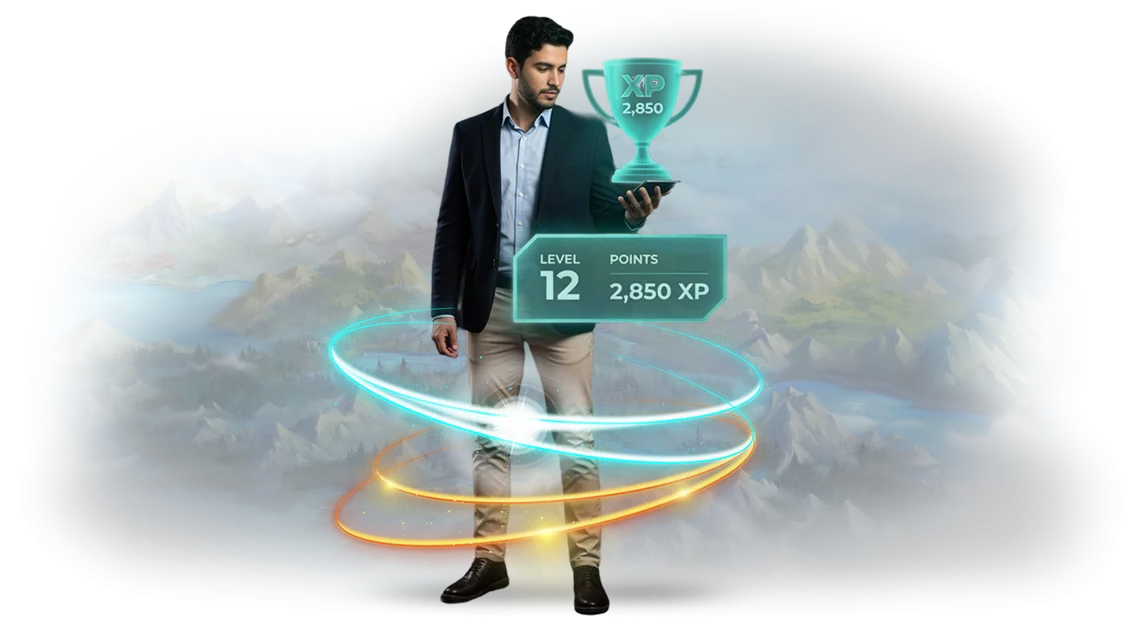
Employees stop “just sitting through shifts” when they see their progress, points, and competition. Routine tasks become an engaging process with a clear goal.
Engagement directly affects productivity: people complete operations faster, get distracted less often, and are more willing to help colleagues.
Improved Quality
In quality control systems, gamification is especially effective: inspections become a quest, not a duty. Employees actively look for nonconformities because they earn points and recognition.
The result: fewer defects, fewer complaints, and higher customer loyalty. Control becomes a natural part of work, not a forced measure.
Sales Growth
Engaged staff work faster and more attentively, which means every customer interaction brings more value and revenue.
This increases conversion and average check size — sales grow without expanding the advertising budget or hiring new employees.
Long-Term Effect
Gamification is not a one-off campaign but a system that lives and grows with your business. It maintains employee interest not only in the first month but also years later.
We design it so you can add new scenarios and mechanics without stopping processes. This delivers steady profit growth with minimal maintenance costs.
Gamification Formats for Quality Control Systems
Implementing a quality control system often runs into the human factor: employees go through briefings, but in practice they miss defects and act out of habit. Routine inspections are seen as a chore, so attention fades by mid-shift.
Gamification turns control into a meaningful game where every step brings the employee closer to a clear goal — this noticeably reduces the number of errors and increases engagement.
Different tasks require different game mechanics. Some formats suit initial training and onboarding, others suit regular skill checks, and still others help strengthen team spirit. Below is a table of the main formats and the specific value they bring to quality control systems.
| Format | For whom | What it gives the client |
|---|---|---|
| Educational quest in 3D space | New employees and warehouse staff | Quick immersion into quality standards: a newcomer learns the rules by going through scenarios with real production situations and comes to the line already prepared |
| Defect-finding simulation | QC inspectors and line staff | Practicing attentiveness on realistic examples of defects: the employee learns to spot deviations that are normally “invisible to the eye” |
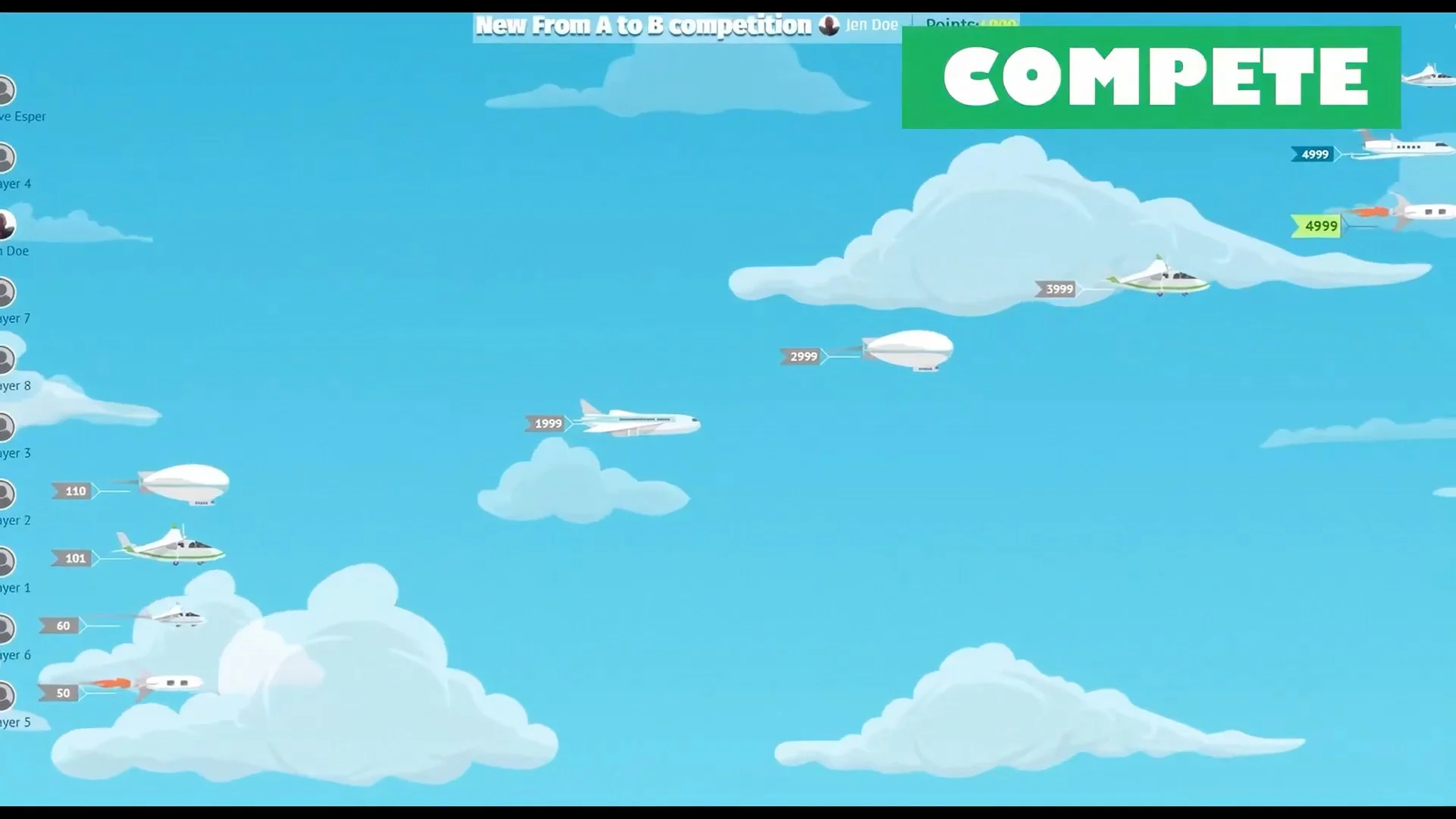
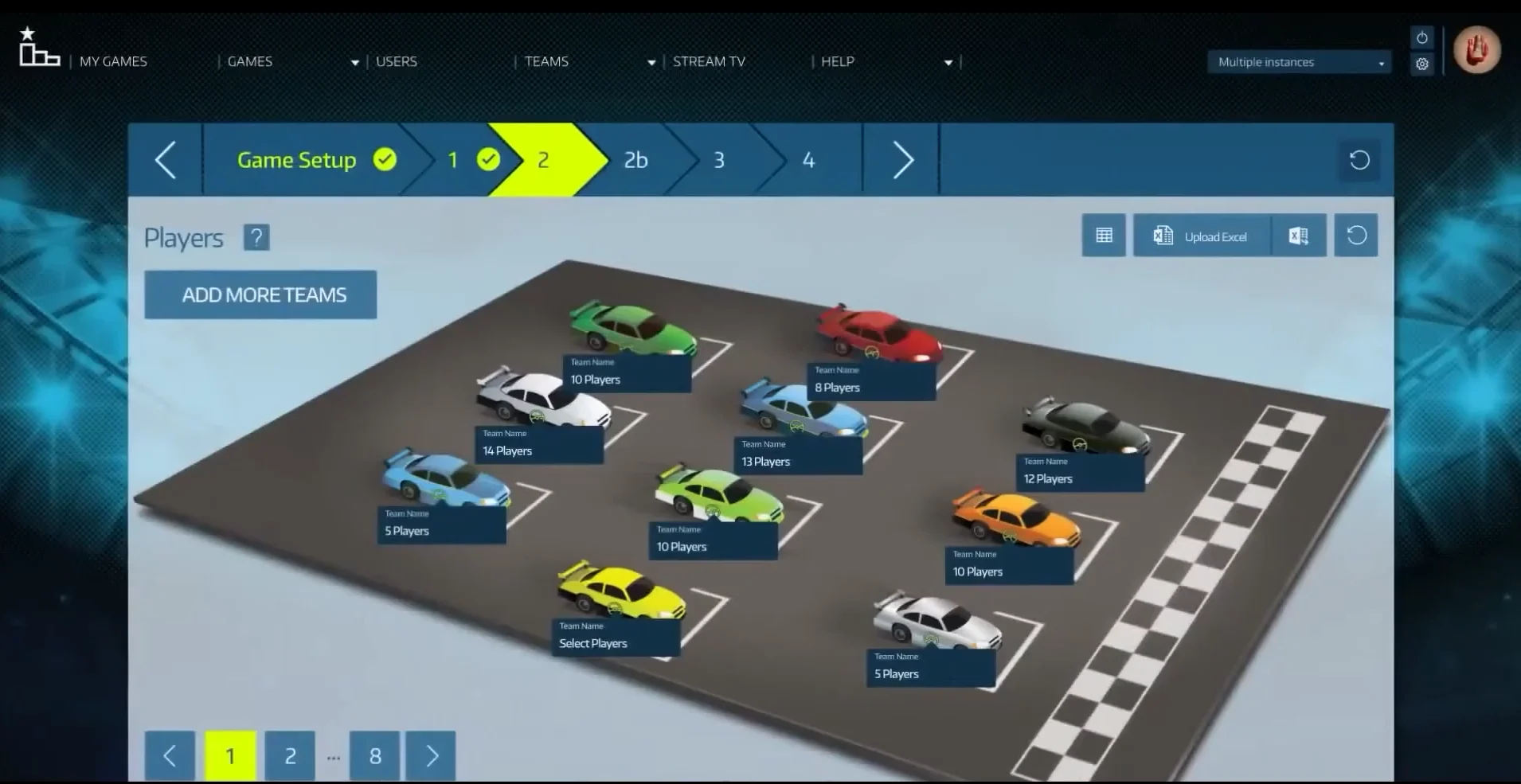
| Competition between departments for a shared quality index | Department heads and teams | Increased engagement through healthy competition: teams see their contribution to the overall result, and the manager receives transparent statistics for each area |
| Role-playing simulator “Supplier Assessment” | Procurement and receiving staff | Unified standards for checking deliveries: the specialist practices making decisions about compliance and rejections without waiting for real mistakes to be reviewed |
| Virtual mentor with hints | All employee categories | Support at the moment of real work: an avatar prompts critical control steps, reducing the dependence of the result on a specific person’s experience |
Game mechanics here work not as entertainment but as a quality management tool: the employee repeatedly practices key actions in a safe environment, while the manager gains objective data on personnel readiness.
We select the format for your specific business process, help with implementation, and adapt the game to your standards — so that quality control becomes clear to every employee.
How We Implement Gamification: A Step-by-Step Plan
We have been implementing game mechanics into business processes for 10 years, and we know that uncertainty scares clients. That’s why gamification development follows a transparent plan: you see every stage, understand the timeline, and control the result.
The implementation stages are fixed in the contract — project approval doesn’t turn into endless discussions.
- Brief and audit. We dive into your quality control system: we study how checks are organized, who participates, and where employee motivation gets lost.
- Project approval. We show the concept of 3D avatars and the company world on Unity, describe scenarios, timelines, and cost. We fix the scope in the contract — changes at this stage don’t break the estimate.
- Gamification development. We build working mechanics: tasks, rewards, ratings, levels. We integrate it with your processes so employees don’t have to change their usual workflow.
- Intermediate demo and revisions. We present a prototype to your team, collect feedback, and adjust details before the system goes live, not after.
- System launch. We train managers and employees and introduce gamification into working mode. The transition takes days, not months.
- Support and development. We monitor engagement dynamics, prepare impact reports, and refine scenarios as your system grows.
This sequence eliminates surprises: you understand in advance what you get at each step. And after launch, we stay close — so the result works for your quality metrics, not becomes a “built and forgotten” toy.
What Is Included in the Solution Delivery Package
The delivery package includes everything needed to launch gamification in quality control systems: methodological materials, reporting setup, and operating procedures.
You get not just a program but a ready-to-use tool that your team can start using immediately after implementation.
- Methodological guide: gamification scenarios for quality control objectives, sample tasks, and recommendations for motivating different employee categories.
- Configured reporting: the manager sees engagement, task compliance, and error dynamics in clear dashboards — without needing to ask programmers.
- Admin panel: independently change tasks, difficulty levels, rewards, and rules without technical skills.
- Employee training materials: instructions, cheat sheets, and videos for a quick start and comfortable work with the system.
- Maintenance regulations: response times, update procedures, and warranty support boundaries.
- Development plan: how to scale the solution to other departments and add new quality metrics without new development.
Case Study: How Quality Improved Thanks to Gamification
The client is an enterprise with a quality control system across several lines. Managers noticed that employees were missing violations, even though the regulations were written correctly. The reason was a lack of engagement: inspections had become a formality. Gamification turned the routine into a competition with transparent statistics.
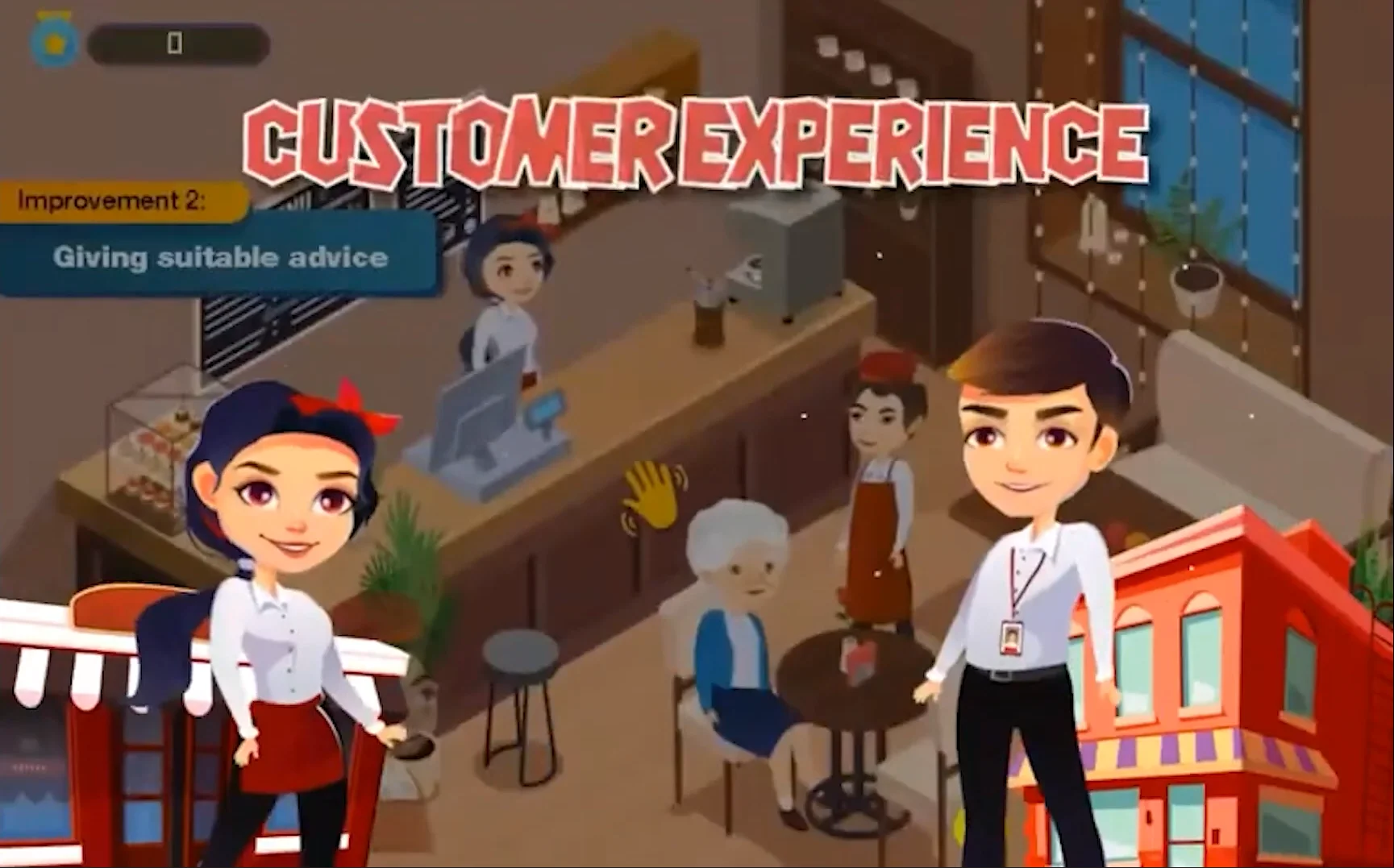
We developed 3D avatars and a virtual factory world on Unity. Employees go through control scenarios in a game format: they find violations, assess risks, and earn points and levels. The manager sees in real time who is completing training and who needs support.
How the Metrics Improved
Within three months after implementation, the rate of missed violations dropped by 37%. Reaction time to deviations was cut in half. Another notable result was engagement: 9 out of 10 employees complete game scenarios regularly, not just “for show.”
Client Feedback
The head of the quality department said: “We expected results in a year, but saw the first numbers after a month.
The most important thing is that people themselves ask to continue, even though before we had to persuade them to go through the training.” After the pilot, they ordered scaling to the entire production cycle.
This case isn’t about a “pretty toy” but about a working tool that pays for itself by reducing defects and rework costs. Call us — let’s discuss how this approach can apply to your quality control system.
How to Choose the Right Format for Your Task?
There is no universal gamification format — what engages employees in a sales department won’t work for a quality control system. So the right choice starts not with a trendy solution but with the question: what business problem are you solving, and who will be the user?
If you need to enforce compliance with standards, train staff, and reduce errors, these goals define the mechanics, scenario, and format.
For quality control systems, formats with repeatable scenarios usually work best: the employee goes through a virtual situation, makes decisions, and immediately sees the consequences.
This approach turns abstract regulations into concrete actions: the participant remembers the correct algorithm not from instructions but through practice.
At the same time, you get data on typical errors — this helps improve processes precisely, rather than “patching holes” across the entire enterprise.
Specific requirements always affect the solution choice: how many employees will complete the training, on which devices (desktop computers, tablets, VR headsets), and whether integration with your internal accounting system is needed.
We find all this out before development begins — during a short consultation, the client describes their situation, and we propose two or three formats with an explanation of what each one will bring to the business.
This approach excludes the situation where a solution is chosen and a month later turns out to be a poor fit for your processes.
How to choose a format? Consider these criteria: implementation timeline, audience coverage, measurability of results, and maintenance cost. If you need quick coverage, use a web format; if complex control operations require deep immersion, use a 3D environment with avatars.
For quality control systems, a combination is often effective: short modules for mass training and in-depth simulations for key specialists. We’ll help you set priorities and avoid overpaying for excessive complexity.
Write to us — we’ll ask 5–7 clarifying questions and, within one business day, suggest a format that solves your specific task. The consultation is free and non-binding: you’ll receive concrete options, not generic recommendations.
Frequently Asked Questions About Process Gamification
Before ordering gamification for quality control systems, most managers have the same questions. That’s normal: every new direction involves doubts about timelines, budget, and ROI.
We’ve collected answers to the most common questions so you can make a decision without guesswork or risk.
Below are short, honest explanations of how the work is structured, what’s included in the cost, and what guarantees you get.
Does gamification really improve work quality, or does it just entertain employees?
Yes, if it’s embedded into quality control, not standing apart from it. We design mechanics that link the fulfillment of work standards with clear feedback and motivation.
Employees see their progress and growth areas — this directly affects discipline and reduces the number of errors.
How long does gamification implementation take?
Timelines depend on the scale of the system and the number of processes. For a typical task — for example, quality control in manufacturing or service — a basic scenario launches in 2–4 weeks. A full-fledged project with a 3D company world and team training takes 1–2 months. We set the exact schedule after the brief and keep approvals moving.
What guarantees do you offer that the result will work?
We guarantee functionality and set key performance indicators in the contract. After launch, you get a test period during which we fix any issues for free and fine-tune the mechanics to the required metrics.
We also stay in touch for support and improvements — this isn’t a one-off project but long-term support.
What if employees can’t figure out the system?
We make the interface intuitive and provide short team training. In the 3D world on Unity, navigation is based on natural actions — employees quickly get used to it. Plus, you receive instructions and support at every stage, so staff resistance is minimal.
Is it worth the effort — what results will we see in numbers?
The effect is visible in the before-and-after dynamics: reduced control time, fewer violations, and higher engagement. On average, clients see a 15–30% decrease in errors during the first months.
We discuss these figures personally for your process so you understand the payback before you start.
Book a Consultation on Gamification
Gamification of a quality control system isn’t entertainment but a working tool that increases employee engagement and reduces the error rate. But for the mechanics to “click” with your team, you need to discuss it with people who have already launched such projects.
At a free consultation, we’ll analyze your task and propose a solution that fits your timeline and budget.
You’ll receive specifics, not generic statements:
- an assessment of your quality control system and the points where gamification will deliver quick results;
- a format proposal: 3D avatars, team competitions, points, and rewards — what’s appropriate in your case;
- a pilot launch plan: which area to start with so you can see results in a month;
- an understanding of the cost and implementation timeline — before signing the contract or making any payments;
- answers to questions about integration with existing processes and your motivation system;
- a fixed commercial proposal you can take to your management.
Call us or leave a request on the website — we’ll call you back within one business day and set up a convenient time. We’ll discuss the task, answer your questions, and prepare a proposal specifically for your quality control system. You can order gamification today — start with a free consultation.