

The automotive industry needs new engagement tools
The automotive industry operates in a highly competitive environment where results depend directly on the motivation of dealers and partners.
Traditional KPIs and loyalty programs have long ceased to be effective tools: they are perceived as a formality, do not create emotional engagement, and quickly stop influencing behavior.
As a result, sales slump, the best employees leave for competitors, and partners lose interest in brand development.
The problem is compounded by the fact that dealers and partners work with different car models and audiences, and a unified motivation system does not account for their specifics.
Ordinary ratings and bonuses for meeting the plan do not create healthy competitiveness; rather, they demotivate those who lag behind. Businesses need tools that engage on the level of personal interest, turn routine tasks into a game, and provide clear feedback.
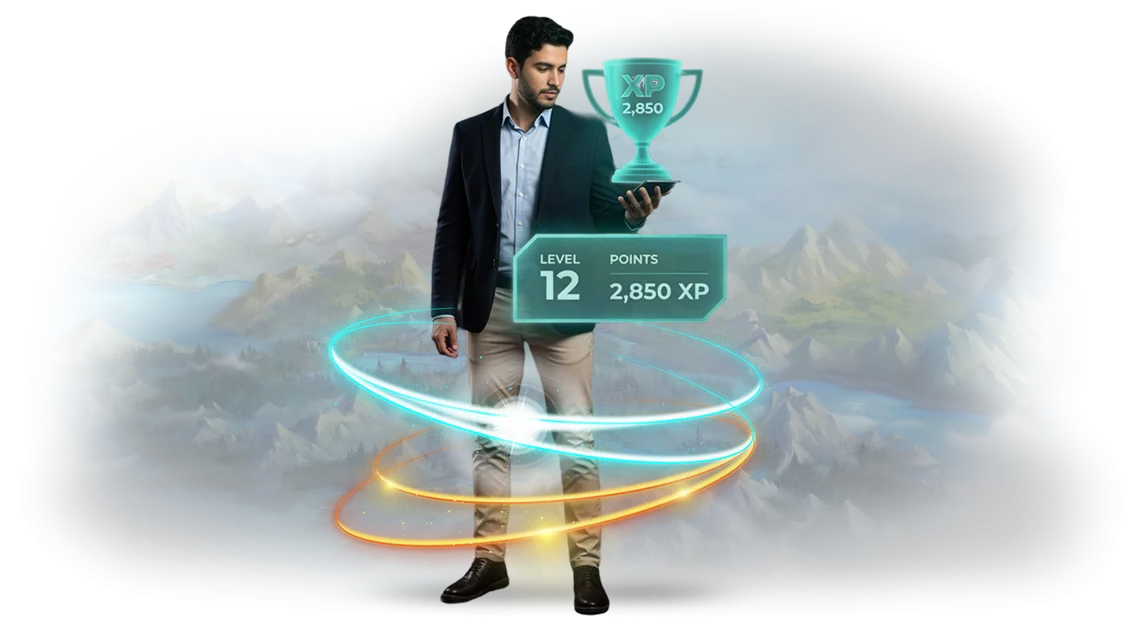
This is where gamification of business processes comes to the rescue. It translates company goals into a system of challenges, rewards, and statuses that are understandable to every participant.
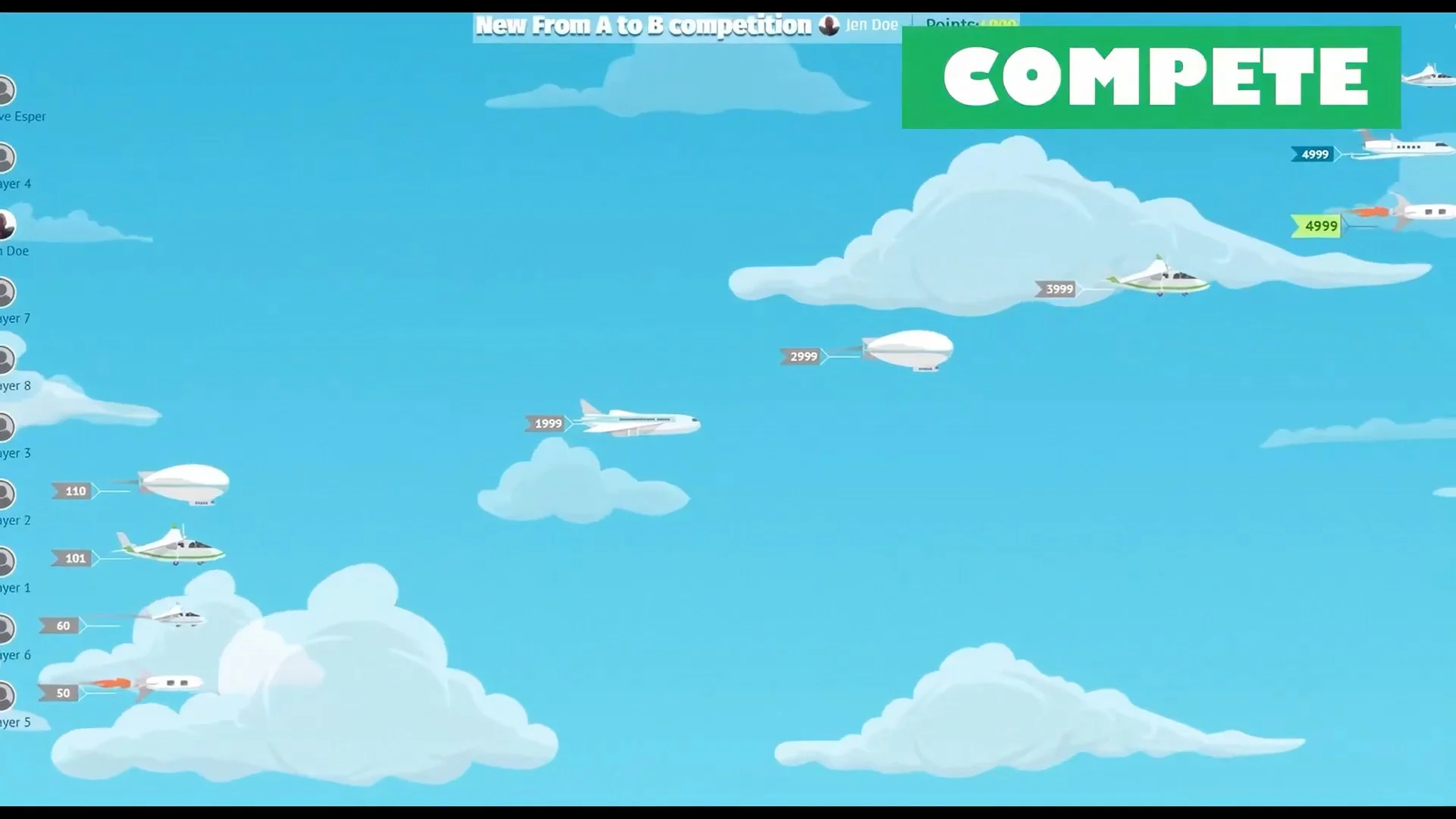
Competitive mechanics and ratings allow dealers and partners to see their progress, compare results with colleagues, and receive recognition for achievements. This creates sustainable motivation that works without constant administrative pressure.
In the automotive industry, gamification is especially effective because it unites disparate partners into a single ecosystem with transparent rules of the game.
Engaging partners through ratings, levels, and bonus scenarios increases their loyalty, stimulates them to meet targets, and reduces churn. All of this directly impacts revenue and market share.
We know how to design a game system that will work specifically in your industry. Not just rewards and points, but well-thought-out mechanics that take into account the specifics of the dealer network and the motivation of specific people.
This approach fulfills the need for new engagement tools and turns dealer motivation into a manageable business process.
What you get from introducing game mechanics
our team will help turn routine processes into transparent competition where every participant sees their contribution and its impact on the business. Here is what a company gets after implementing a game system.
- Sales growth through competitive mode. Sales departments and service centers work more actively when the best results are visible to everyone. Ratings and rewards for achieving goals directly increase conversion and average check.
- Employee engagement without coercion. Employees get involved on their own: they complete tasks, take training, and share successes. Turnover decreases, vacancies are filled faster, and onboarding of new hires takes less time.
- Loyalty of dealers and partners. Car dealers receive statuses, bonuses, and access to closed programs for meeting plans. This makes cooperation profitable and long-term, reducing dealer network churn.
- Transparent competition between branches. Overall ratings show who is really moving the company forward. Managers see an objective picture for each division rather than averaged reports.
- Collecting customer data for precise decisions. Game mechanics motivate customers to leave contact details, take test drives, and participate in promotions. A database of preferences is accumulated, on the basis of which personalized offers are built and repeat sales grow.
- Measurable results in numbers. Each stage of gamification is tied to business indicators: number of test drives, share of plans met, frequency of repeat visits. You see the return on implementation within the first few months.
Each item addresses a specific challenge of the automotive business — from staff motivation to customer retention. And we take on the entire cycle: analytics, mechanic design, launch, and support.
Gamification formats for your tasks
Different tasks require different mechanics — a sales department rating and dealer network motivation work on opposite principles.
We select the format based on your audience and business goal: where you need to quickly boost activity, and where you need to build a long-term incentive system.
Below are typical gamification formats that we implement in automotive industry companies. This is a guideline: in practice, we combine mechanics and adapt them to your structure, KPIs, and corporate culture.
| Format | Target audience | What it gives the client |
|---|---|---|
| Simple ratings | Sales department, customer relationship managers | Rapid activity growth thanks to a public results table. Easy to understand without training, launches within a week |
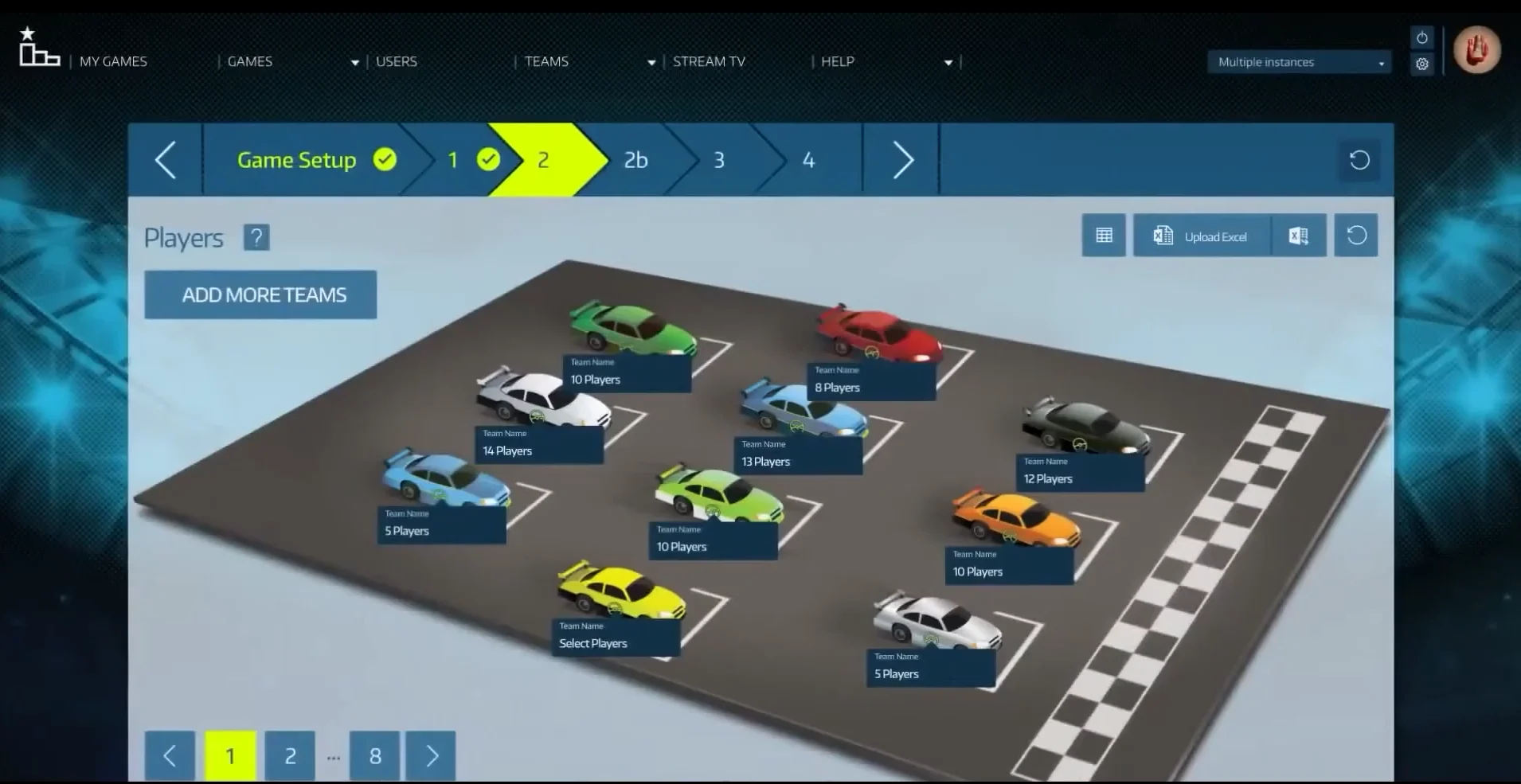
| Team competitions | Dealer centers, regional branches | Healthy competition between divisions. Team spirit and plan fulfillment even where personal motivation does not work |
| Quests and missions | All staff, including service and parts departments | Completion of specific actions through a game scenario. Suitable for launching a new model or promotion |
| Multi-level system with levels and rewards | Permanent staff, staff rotation | Long-term employee retention. The employee sees their growth, the business gets systematic work with its personnel base |
| Seasonal leagues | Dealer network, large teams | Regular repetition of the competition cycle. Creates a tradition and maintains momentum throughout the year |
Formats scale easily: start with a simple rating — after a couple of months add teams, levels, and special tasks. We design the system so that it grows with your tasks rather than becoming outdated a month after launch.
The main thing is that the game works for business indicators: growth of the average check, fulfillment of plans by makes and models, reduction of customer churn. Therefore, before launch, we fix target metrics and, after the pilot, show what has changed.
How game systems are implemented
Implementing a game system of competitions and ratings for the automotive industry is a manageable process, not an experiment. We divide the project into clear stages: you always know the current status, timelines, and who is responsible for what. All intermediate decisions are agreed with you, so the outcome is predictable.
- Brief and audit. We analyze your task — employee motivation, dealer sales growth, or customer engagement. We determine which indicators will affect the rating and how to measure the result.
- Project plan and timelines. We fix the scope of work, stage dates, and acceptance criteria. You receive a clear plan and budget before development starts — no hidden surprises.
- Game mechanic design. We select competition formats, levels, rewards, and point calculation rules. We take into account the specifics of the automotive business — seasonality, different employee roles, and dealer network characteristics.
- Mockup and logic approval. You see a prototype of the future system: what the ratings look like, what actions earn points, how participants receive feedback. We make changes before the development stage.
- Development and integration. We configure the system to fit your processes — connecting it to lead management, internal reporting, or company services. Work proceeds without interrupting current operations.
- Testing and launch. We verify the correctness of point accruals, load, and participant behavior scenarios. We launch with minimal risk — first on one team or department.
- Support and development. We monitor dynamics, resolve issues promptly, and refine the system — adding new competitions, rewards, or participant categories. All changes are made only with your approval.
As a result, you get a working tool that pays for itself through increased engagement and sales. And a transparent plan with clear timelines allows you to control the process — both during implementation and after.
Delivery package and project timeline
The delivery package is not just code, but a ready-made solution that your team starts using immediately after launch. We hand over a game platform with already configured competition and rating rules adapted to your business tasks, and we take care of all technical matters.
The delivery includes:
- A ready-made game platform with leaderboards, rewards, and a transparent point calculation system.
- Configuration of competition rules — from simple promotions to multi-level scenarios that motivate employees and customers.
- Interface design: corporate style, adaptation to your audience, and ease of use on any device.
- Integration with CRM and internal systems: participant data, their actions, and results automatically enter your database.
- Team training: we conduct workshops, provide clear instructions, and support the first launch.
- Technical support during operation — we are in touch to ensure the system runs stably.
This approach allows you to launch gamification without a lengthy implementation process and without hiring separate developers. All stages are clearly planned: from brief to launch usually takes 4 to 8 weeks depending on complexity. You get a working tool, not a “raw” product that still needs finishing.
We work remotely but provide full support at all stages.
Over 10+ years, we have implemented dozens of projects across various industries, including the automotive industry — for example, we developed a rating system for a dealer center that increased repeat customer visits by 30% within two months. Our experience and refined tools allow us to guarantee results within agreed timelines.
our team — your partner in creating gamification that brings measurable value to business.
Implementation results in the automotive industry
In the automotive industry, brand success directly depends on how actively dealers promote new models and meet sales plans. But standard KPIs and reports rarely truly motivate teams: managers get used to the numbers and stop fighting for results.
This was exactly the challenge brought to us by a major car distributor, AvtoTrade — we needed to revive the competitive spirit among 120 dealer centers and raise overall sales efficiency.
We developed a game system of competitions and ratings where each dealer center could see its place in the leaderboard in real time. Teams earned points for meeting sales plans, test drives, and service appointments, and moved up in the rating.
A manager at any center could open a dashboard and understand what needed to be done today to overtake their neighbors — the competition became visible and understandable to every manager.
The result exceeded expectations: within three months after launch, dealer activity grew by 40%. Sales in lagging centers caught up with the leaders, and internal competitions became a familiar part of the work.
Center managers use the rating as a management tool: it shows who deserves praise and who needs additional support.
Most importantly, the system works without constant control on our side — it is embedded in daily processes and itself prompts managers with next steps.
For the automotive business, this means not a one-time spike but sustainable growth: dealers themselves look for ways to sell better, and the brand gets data on which models and conditions actually motivate teams.
How to choose the right gamification format?
Choosing a gamification format starts not with technology but with three parameters: audience size, business objectives, and budget.
In the automotive industry this is especially important — here it is equally common to need to motivate the dealer network, plant employees, and end customers.
The same mechanic will work differently in each of these groups, so first it is worth determining who the game is aimed at and what result you expect in a month or two.
For audiences of up to a couple of hundred people, light formats work well: contests, bonus points, competitions between departments.
When it comes to thousands of dealers or customers across the country, more scalable solutions are needed — ratings and leaderboards that unite participants into a single system and create healthy competition.
The more people involved, the more important automation becomes: point accrual without manual work, rules that are clear at a glance, and transparent calculation of standings. This reduces the burden on managers and eliminates disputes like “why is he above me.”
The second criterion is the specific business task: if the goal is to meet the sales plan, seasonal competitions with prizes for winners and a dealer center rating are suitable.
If you need to train employees on a new model or improve product knowledge — gamification around tests and training modules with points accumulated for completion.
For customer retention after purchase, loyalty programs are used with ratings of active owners, bonuses for service, and participation in events. The format must hit the target precisely, otherwise interest will fade within a month.
The third criterion is budget and campaign horizon. You can start with a simple rating in a table and then gradually add mechanics: team races, long leagues, levels, rewards for regular actions.
At this stage, it is important not to overpay for unused capabilities, but also not to skimp on what creates engagement.
We usually recommend a starter set of mechanics sufficient to test the hypothesis and separately calculate which modules will strengthen the result at subsequent stages.
We help you select a gamification format for automotive industry tasks: we analyze the audience, goals, and budget, and then design a system that delivers a clear result.
At the consultation, you will receive a mechanics plan, point calculation logic, and an engagement forecast — without being tied to a specific tool and without unnecessary technical burden.
This allows you to quickly implement the game and see the first changes in sales or team activity within a few weeks.
Frequently asked questions about gamification implementation
Most often, before launching gamification, the same questions arise: will the system break, how quickly will everything work, and what happens after launch. We answer the main ones — briefly and to the point, so you can make a decision without unnecessary doubt.
Will the system break and will we lose data?
We work on professional equipment and use refined tools that have been proven in dozens of projects. All data is protected, and backup is configured — even in the event of a failure, you will not lose anything. The security policy is specified in the contract, so risks are minimized.
How quickly will we launch gamification?
Timelines depend on complexity, but on average take from two to four weeks: from brief to full launch. We work in stages: you see intermediate results at each step. If you need it urgently, there is an accelerated format to fit your event schedule.
Who will support the system after launch?
We do not disappear after project delivery. A personal manager remains in touch, and technical specialists monitor stable operation. We train your team, help with content, and make changes when business tasks evolve. Support is included in the contract — you always know who to contact.
How will gamification fit into our processes?
We adapt the mechanics to your specifics: we account for dealer network characteristics, employee motivation, and current regulations. The system does not require equipment replacement and easily integrates with your tools. Employees do not need additional training — the interface is intuitive.
Still have doubts? Ask your question — we will tell you how we solve similar tasks in your industry.Launch gamification for dealers in a month
We will help you launch gamification for dealers in a month — without lengthy approvals and downtime. You get a clear plan, a turnkey team, and a result that motivates managers, increases sales, and creates healthy competition between showrooms.
Here is how it happens:
- Request and consultation — you leave a request, we get on a call and discuss tasks, metrics, and the competition format. Within a week we prepare a launch plan tailored to your specifics.
- Week 1. Brief and scenario — we fix the leaderboard rules, point system, and prizes. We account for automotive business specifics: sales, service, additional equipment.
- Week 2. Development and implementation — we build the game mechanism on a professional platform: leaderboards, progress, notifications. We integrate it into your internal processes and CRM.
- Week 3. Testing and training — we run it on real data and prepare instructions for dealers. We explain how to participate and what it gives them.
- Week 4. Launch and support — we activate the competition in a pilot group or in all showrooms at once. You see the first results on day one.
After launch we stay in touch: we adjust rules, add new mechanics, and help maintain interest throughout the season. You can leave a request in the form below — we will contact you within a day and propose a plan specifically for your case.