

Why the hospitality industry loses guests and how to avoid it
The hospitality industry suffers from a systemic problem: guests come once and never return. Traditional loyalty cards with accumulated points have stopped working — today's guest chooses a place by experience, not by discount.
If a guest has no reason to come back, they go to a competitor, and you have to win them back all over again through advertising.
Guest retention is not about saying “thank you for your purchase,” but about creating a habit of returning.
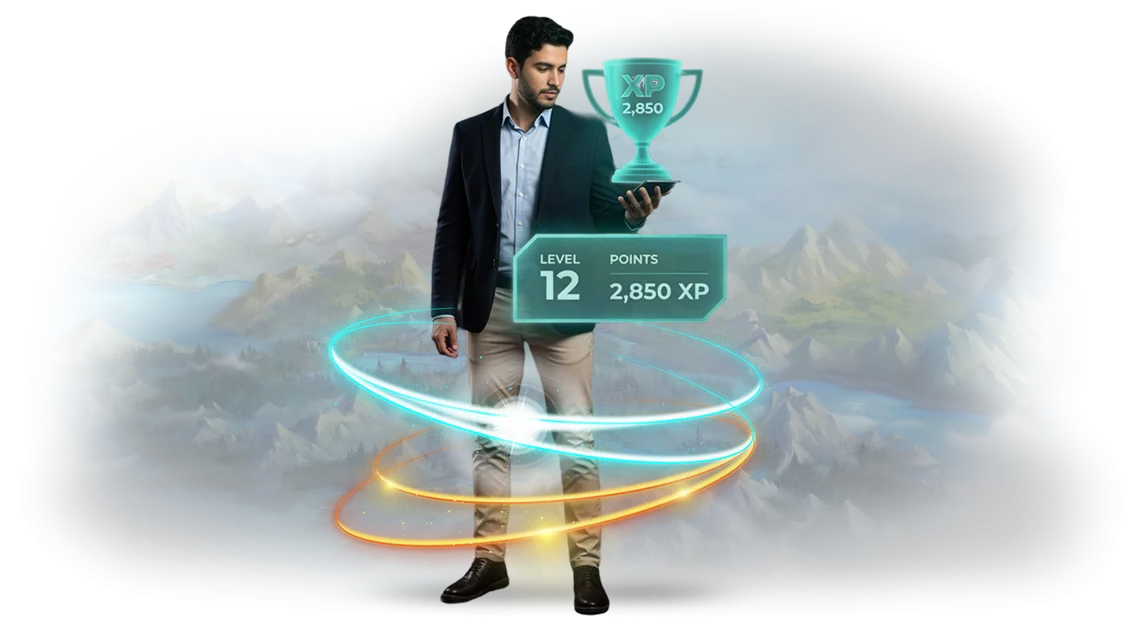
This is exactly where business gamification helps turn an ordinary visit into an emotional experience: guests earn levels, statuses, personal tasks, and rewards for repeat visits.
Game-based motivation taps into competitive interest and the desire to unlock everything the venue has to offer, so every visit becomes part of a bigger goal.
Loyalty in hotels and restaurants today is built not on discounts, but on engagement. When a guest feels personal progress and sees their achievements recognized, they return not because “I need to spend my points,” but because it feels good and interesting. It is precisely these mechanics that turn one-time visitors into regular guests.
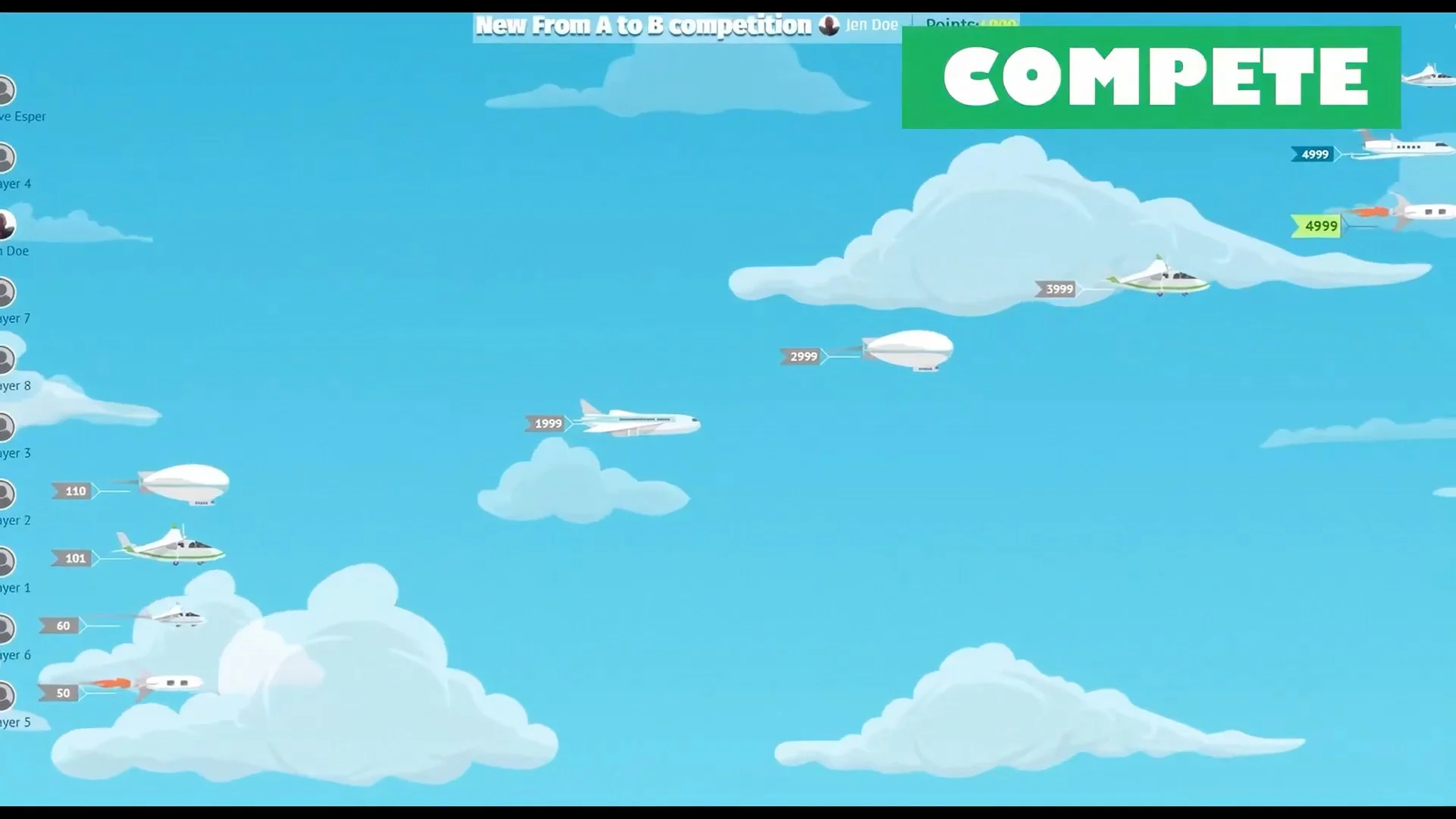
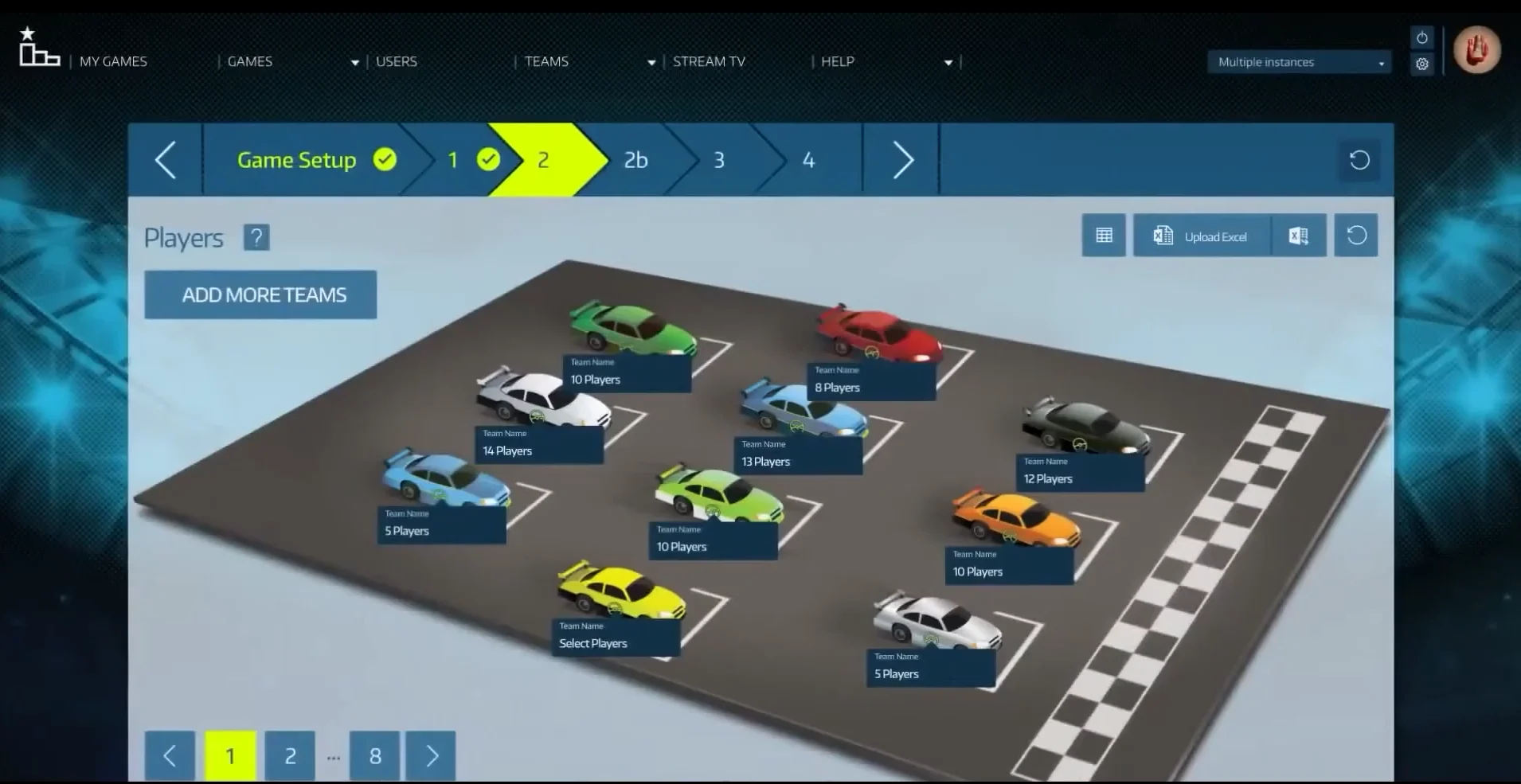
We create game systems of competitions and leaderboards for the hospitality business: we design scenarios, choose metrics for ratings, and set up automatic rewards.
As a result, the venue gets more repeat visits and sustainable loyalty that does not depend on discounts or promotions.
What game mechanics give hotels, restaurants, and event venues
Game mechanics turn an ordinary visit into an event people want to return to. The guest does not just receive a service — they take part in a competition, see their progress, and get an emotional reward.
This creates the foundation for stronger loyalty: the guest starts associating pleasant memories with your brand, not with a one-off experience.
The average check grows naturally, through the desire to earn more points or complete a task. The guest voluntarily orders an extra item, comes during quieter hours, or tries something they had never chosen before.
You are not pushing a purchase — the mechanics themselves encourage it, increasing revenue without discounts or promotions.
A rating and competition system gives people a reason to talk about you.
Guests share results on social media, compare points, and invite friends to “beat the record.” This generates social reach: each participant brings new people, and mentions of your venue spread without an extra advertising budget.
Over time, this turns into lasting brand recognition, when your name comes up in conversations about the best places in town.
For hotels, restaurants, and event venues, game mechanics work as one integrated system: they increase repeat visit frequency, extend dwell time, and provide clear measurable metrics for evaluating performance.
You see which guests are active, which scenarios deliver the most value, and how to motivate different customers. This is not a one-off campaign, but a long-term tool that pays off through higher average checks, loyalty, and reach at the same time.
The key effect is turning a scattered set of visitors into a community around your brand. People come back not only for service quality, but also for the thrill, the status, and the sense of belonging to something bigger.
That is why game mechanics are an investment in regular customers who bring in new ones on their own and create a steady stream of revenue.
Gamification formats for hospitality: which one to choose
In hospitality, a guest returns to a place where they were not just served, but engaged. The right game format turns a one-off visit into a habit, and an ordinary client into a regular one.
To avoid getting lost among the many mechanics, start from a specific goal: retaining guests, increasing visit frequency, raising the average check, or building a community around the brand.
For clarity, let us compare the main formats we use in projects for hotels, restaurants, and multi-location venues. The table shows typical scenarios and their business impact.
| Format | Who it is for | What it gives the client |
|---|---|---|
| Guest leaderboards | Hotels, fitness clubs, restaurants with a regular audience | Stimulates competitive spirit, increases loyalty and return frequency |
| Points system | Coffee shops, bars, spas | Easy to understand, accumulates “like a piggy bank,” increases the average check |
| Customer quests | Boutiques, entertainment centers, hotels | Engages guests in exploring the space, increases dwell time and the number of items on the check |
| Challenges and competitions | Restaurants, hotels, sports clubs | Creates excitement and a sense of community, encourages regular visits and participation in promotions |
Each mechanic solves its own task: leaderboards appeal to ambition, points to accumulation, quests to curiosity, challenges to thrill. Combining them lets you cover several goals at once — for example, attract new guests and keep existing ones.
However, it is important not to overload the client: the game scenario must be clear from the very first visit; otherwise, instead of pleasure, it will cause irritation and the brand will lose trust.
We will help you choose the right format or a combination of formats, set up the rules, and reflect the mechanics in your loyalty system. Request a consultation — we will prepare options for your audience and a forecast for key performance metrics.
How gamification development works: from brief to launch
We do not start with code, but with business goals. On the first call, we find out which guest or employee behaviors need to be strengthened: coming more often, ordering more, participating more actively in the life of the venue. The mechanics and what we will measure after launch depend on this.
Then we move along a clear route — you always know what stage the project is at and what you will get in the end.
- Gamification brief. We discuss the task, audience, current metrics, and what you consider a successful result. We record the goals in a short document — it becomes the foundation for all the work.
- Plan and timeline. We define stages, dates, and responsible people. You get a calendar plan with clear checkpoints, not a vague “sometime next month.”
- Mechanics approval. We show how the game will work: competitions, leaderboards, rewards, rules. You make edits before launch — changes are inexpensive at this stage, rather than after the start.
- System setup. We build the game, integrate it with your processes, and test it on real scenarios. You see intermediate versions, not just the final result.
- Launch and team training. Administrators and staff receive a simple guide, and you get access to an easy-to-use control panel. In the first days, we stay in touch and respond quickly to questions.
- Post-launch support. We monitor activity, collect feedback, and suggest improvements. If something can be fine-tuned, we do it without long approval processes.
As a result, you get not “a game for the sake of a game,” but a working tool that influences guest behavior and helps achieve business metrics. And a team that stays with you after launch.
What is included in a ready-made game system: the project package
When you order the development of a game system, it is important to receive not just a “nice idea,” but a complete set of tools for launch. We deliver the full project package — from a description of the mechanics to materials you give to guests. You get a system that can be implemented immediately after setup.
The standard package includes:
- Description of the game mechanics and rules — in plain language, so every employee understands how the competition works and what is required of them at any given moment.
- Guest-facing rules: short, clear wording without complex terms. A guest understands in under a minute how to participate, what to do, and what reward awaits them.
- Prototypes of game materials: cards, badges, stickers, route sheets — everything you need to print and use from the very first day.
- Staff instructions: a step-by-step scenario for running the game, tracking participant progress, and quickly answering guest questions.
- Admin dashboard — a simple interface where you can see the guest leaderboard, task statuses, and competition results in real time.
- Templates for control and analytics: ready-made spreadsheets and reports so you can evaluate participant activity and decide whether to expand the mechanics to other areas.
- A one-page quick reference card for employees, so staff can refresh their knowledge before a shift without rereading long manuals.
This package covers everything: the team has a clear procedure, guests have simple rules, and you have a management and analytics tool. Everything else — our support at launch and in the first weeks of the system’s operation.
Case study: how a leaderboard mechanic doubled guest returns
Today’s guests are spoiled for choice: discounts and promotions no longer keep them coming back. But when a guest sees their status rising and their name on the leaderboard screen, returning becomes a game. It was exactly this emotion we relied on in our project for the Severnaya Gavan hotel chain.
Within three months of implementing the leaderboard mechanic, the share of guests who returned to the hotel for a second stay grew from 21% to 42% — in other words, it doubled.
Over the same period, the average check increased by 17%: guests chose higher room categories more often to earn more points toward their status. We changed neither prices nor staff — only the game mechanics.
How it works in practice
Every visit, review, and recommendation earns the guest points. A screen in the lobby and the personal account show the regular guests leaderboard — who is closest to the next level. The desire to hold their position and earn a special status encourages them to book again.
What the client got
- Doubled repeat visits within a quarter — a clear indicator of loyalty.
- Higher average check without discounts — the client chooses a more expensive option on their own.
- Natural word of mouth: guests share their status themselves and invite friends.
After the first season, the hotel extended the mechanics to all properties in the chain. The result proved stable: a leaderboard does not get boring if you keep it fresh with new levels and seasonal goals. That is why such systems deliver results not for a month, but for years.
How to choose a gamification format for the specifics of your project
Choosing a gamification format in hospitality starts not with trendy mechanics, but with questions about your project: who your guests are, how much time they spend at the venue, and what matters most to them — status, vivid experiences, or competitive excitement.
Specifics decide everything. A hotel guest stays for several days and has time to get involved in a long program with leaderboards and point accumulation, while a restaurant visitor is in the dining room for a couple of hours — they need fast scenarios with instant results.
The mistake is copying someone else’s format. A leaderboard that works great in one hotel may fail in a small countryside resort, because the duration of contact, the guest’s mood, and the business goal are all different.
That is why it is important to clarify at the start: what path does the guest take from entry to exit, which actions do you want to strengthen — repeat visits, average check, involvement in events — and how much staff is ready to support the game.
Based on this data, we choose a format: for a hotel it is often a system of statuses and privileges; for a restaurant, tournaments between tables and instant competitions. The main thing is that the mechanics work toward your business metric, not just entertain.
This is why we start with a consultation: we analyze the specifics of your project, answer questions, and propose a scenario that is easy to implement and measure. You get not an abstract game, but a tool with clear expectations for results.
Common doubts before ordering gamification
Before launching gamification, a client naturally has doubts: will the system handle the load, will we have to rebuild the entire business process, and most importantly — will we actually see results. These are normal questions, because it is about guest trust and reputation. Below we break down typical fears and show how we address them in practice.
Will the system break on the busiest day?
Gamification is not a “black box,” but a well-tuned tool that runs on professional equipment. Before launch, we run load testing under conditions close to real ones, so leaderboards and competitions can handle peak visitor traffic without failures.
In addition, we stay in touch after launch and support the project during the first weeks. If any small issue comes up — from a delayed score update to a staff question — we respond quickly, before guests even notice.
Will implementation be too difficult for our team?
We do not break your usual workflow. Gamification integrates into an existing process: staff continue using the same tools, only now with game mechanics built in. Training takes one or two short sessions; after that, the system works with almost no involvement from employees.
Moreover, we adapt the mechanics to your format in advance: hotel, restaurant, or event. So the team does not have to change its habits — the rules are clear to guests and simple to administer.
What if guests do not engage — was the money wasted?
We build gamification around what is already valuable to your audience: competition for status, prizes, public recognition. These are the mechanics that deliver measurable results — more repeat visits, higher average checks, and organic social media mentions.
When you see the first scenarios before launch, you already understand what the guest will get and how it affects profit. And after launch, we look at key metrics and adjust the mechanics if needed — so payback becomes predictable, not accidental.
Order the development of a game system for your business
To order gamification, you do not need to understand mechanics and leaderboards — just describe the task, and we will handle the selection and calculation.
After your inquiry, you receive an analysis of your business, timeline estimates, optional game mechanics, and a commercial proposal — all in one document.
We work with hotels, restaurants, and hospitality chains, so we immediately see where a competition will drive revenue growth and where a team game is better for staff retention.
In 5 years, we have completed 80+ projects in this area — from guest leaderboards to internal challenges for employees.
After you submit your request, you receive:
- analysis of current business processes and growth points;
- cost and timeline calculation for your scale;
- selection of mechanics: leaderboards, team competitions, seasonal ratings;
- commercial proposal with work stages and guarantees;
- examples of similar hospitality projects.
To have the cost calculated after an audit, send us a description of the scenario, the number of locations, and your desired timeline. We will respond within one business day and show how gamification will pay off in your case.