


Weak Marketplace Sales: The Cause Is a Lack of Gamification
Every day, a marketplace loses customers who simply never made it to checkout. It's not about product quality or logistics — visitors get no emotional reason to come back or choose your service among dozens of similar ones.
Without game mechanics, the customer perceives the platform as a faceless catalog: came in, searched, left — and, most likely, forgot about you until the next impulse query.
The absence of competitive elements directly hits key metrics: conversion drops, loyalty blurs, and customer churn grows with every week. Users don't feel progress, don't see their status, and don't understand why they should come back to you specifically.
We've been solving this problem with gamification for more than 10 years: we turn routine shopping into an engaging process that motivates customers to return again and again.
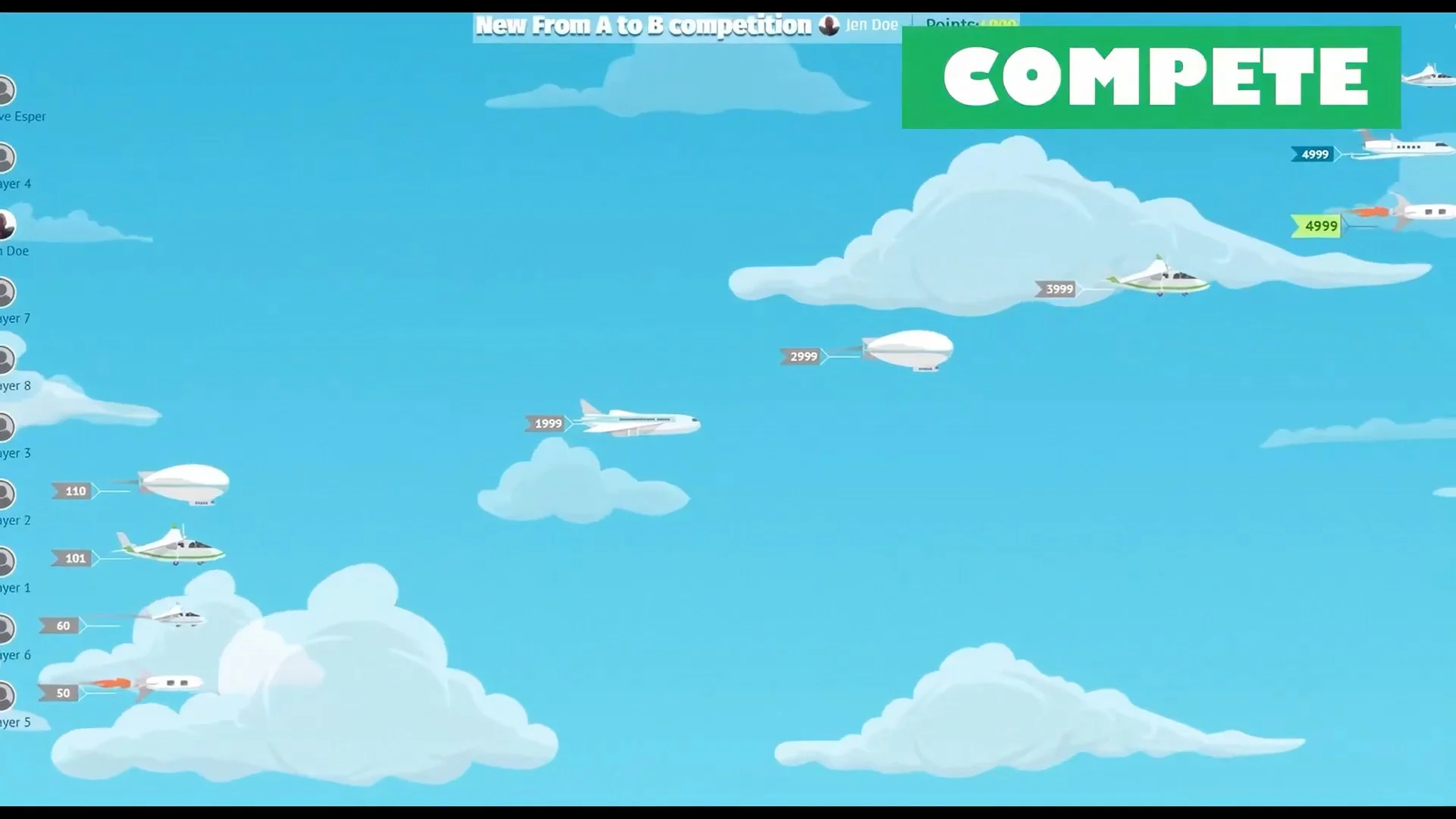
Ratings and competitions create a healthy habit: the customer tracks their achievements, accumulates points, climbs the leaderboard, and inadvertently brings friends along. This isn't just entertainment — it's a working tool for increasing conversion and retaining audiences.
The marketplace ceases to be a "storefront" and becomes a club where customers enjoy spending time, competing, and earning rewards for their activity.
Business Benefits: Increased Loyalty, Repeat Sales, and Excitement
On a marketplace, dozens of sellers compete for customer attention every day, and retaining a client after the first purchase is the key goal. Regular discounts and promotions are working worse and worse: customers need something that triggers an emotion and the desire to return.
A system of competitions and ratings turns the shopping process into a game where excitement and status become motivators.
Engagement through rating mechanics gives businesses three effects at once: increased loyalty (the customer associates emotions with the platform), higher repeat sales (they want to come back and climb the table), and a steady audience (participants invite friends themselves to compete).
The key is not just to "hang up" a leaderboard but to tie it to real bonuses: points, ranks, exclusive conditions.
| Competition Format | For Whom | What It Gives Your Business |
|---|---|---|
| Buyer ranking by total order value | Regular customers | Repeat purchase growth of up to 30% |
| Seasonal seller competitions | Active sellers | More quality listings on the marketplace |
| Game ranks with levels | New audience | Clear progress and a fast start |
We adapt each format to your niche: first we study audience behavior, then we design mechanics that deliver results, not just entertainment.
We work on professional equipment and stable server architectures — even at peak loads during sales days, competitive mechanics don't let you down. Want to measure how excitement affects your revenue? We'll do a pilot launch in four weeks — and you'll see the numbers yourself.
Marketplace Gamification Formats: What to Choose?
On a marketplace, game mechanics work for two audiences at once: buyers get emotions and real benefits, while sellers get an extra incentive to grow their store.
But the format should be chosen not "for looks" but for a specific goal: one thing is a one-time sales boost, another is keeping a loyal audience from leaving for competitors. Comparing the main formats will help you quickly assess which one suits your platform.
| Format | For Whom | What It Gives the Marketplace Owner |
|---|---|---|
| Ratings and leaderboards | Sellers and active buyers | Competitive spirit: top participants work on quality and turnover, while others catch up to the leaders. Overall order volume increases |
| Quests | New audience, "dormant" users | A series of game-style tasks introduces categories, increases visit frequency, and reactivates those who haven't placed orders in a while |
| Loyalty points | Regular buyers and sellers | Points for orders, reviews, and meeting conditions build a habit of returning. A loyal audience makes the marketplace their "default store" |
Each format has flexible settings: rating update frequency, quest difficulty, point accrual rules. It's important not just to launch a "game for the sake of the game" but to build it into the marketplace's logic — then the result will be predictable and measurable.
Often, the best effect comes from a combination: points work in the background to build ongoing loyalty, while ratings and quests create regular "waves" of activity around specific promotions or new products.
We take care of selecting mechanics based on your metrics: the number of active sellers, average order value, share of repeat purchases.
We calculate everything before launch and give clear recommendations so that gamification doesn't distract but systematically improves marketplace performance.
Gamification Launch Stages: From Brief to Support
We've worked with marketplaces more than once, so the gamification launch process is polished down to the details. You always know where the project stands, what happens next, and when the first results will appear. No extra bureaucracy — just clear steps, each of which delivers a concrete result.
-
Brief and goal setting. We discuss your objectives: increase the number of sellers, boost buyer loyalty, or motivate the moderator team. We record the metrics by which we'll know the system worked.
-
Concept and plan. We propose a rating, level, and reward mechanic that fits your marketplace. We show how participants will earn points and why this will drive them toward the desired actions.
-
Approval. We discuss the prototype, refine details, and approve the final version. You see what the system will look like before the work starts, not after — this eliminates surprise revisions.
-
Implementation. We build the competition system, configure point accrual, create leaderboards, and connect notifications. Professional tools and proven solutions make this fast and stable.
-
Launch. We get the system ready for production: run testing, fix minor issues, and train your staff. We deploy gamification without disrupting current marketplace operations.
-
Support and evolution. After launch, we monitor activity, answer questions, and adjust rules if we see a mechanic underperforming. When needed, we extend functionality — adding new competitions and prizes.
What's Included in the Delivery Package: Final Checklist
We deliver gamification as a finished product, not a pile of source code — you don't need to understand the details to get results. The package includes everything required for a fast launch and for verifying the effectiveness of the rating mechanics on your marketplace.
- Game mechanics for competitions and ratings — ready-made algorithms for calculating points, levels, and prize places. Configured to your marketplace's goals: they motivate sellers to process orders and increase order values, and buyers to come back for new statuses.
- Analytics dashboard — see how the mechanics affect key metrics: number of active participants, orders, repeat visits. A couple of figures are enough to demonstrate the launch's impact to management.
- Administrator guides — step-by-step instructions for running seasons, managing rewards, and resolving disputes. No need to be a programmer or game designer to moderate the system.
- Participant guides — short materials explaining the rules of the game and the benefits of participating. Post them in the personal account or send them by email — support inquiries will drop.
- Admin interface — a convenient management screen: changing rules, adjusting periods, manual corrections. Everything takes a few clicks, no developer required.
- Launch support — we help install the system, verify everything works correctly, and advise on announcing the competition start to bring in the maximum number of participants.
After handover, your team receives the full documentation set and access to the system. If needed, we stay in touch to fine-tune mechanics as business needs change — the ratings will keep working for your marketplace's growth after launch.
Case Study: Client Activity Growth After Implementing Game Mechanics
For the marketplace HomeMarket, which unites hundreds of sellers and tens of thousands of buyers, we implemented a rating and competition system.
The problem was familiar: customers came back to shop but didn't engage with the platform's life — they didn't track statuses, didn't join promotions, and visited less often than the owners would like.
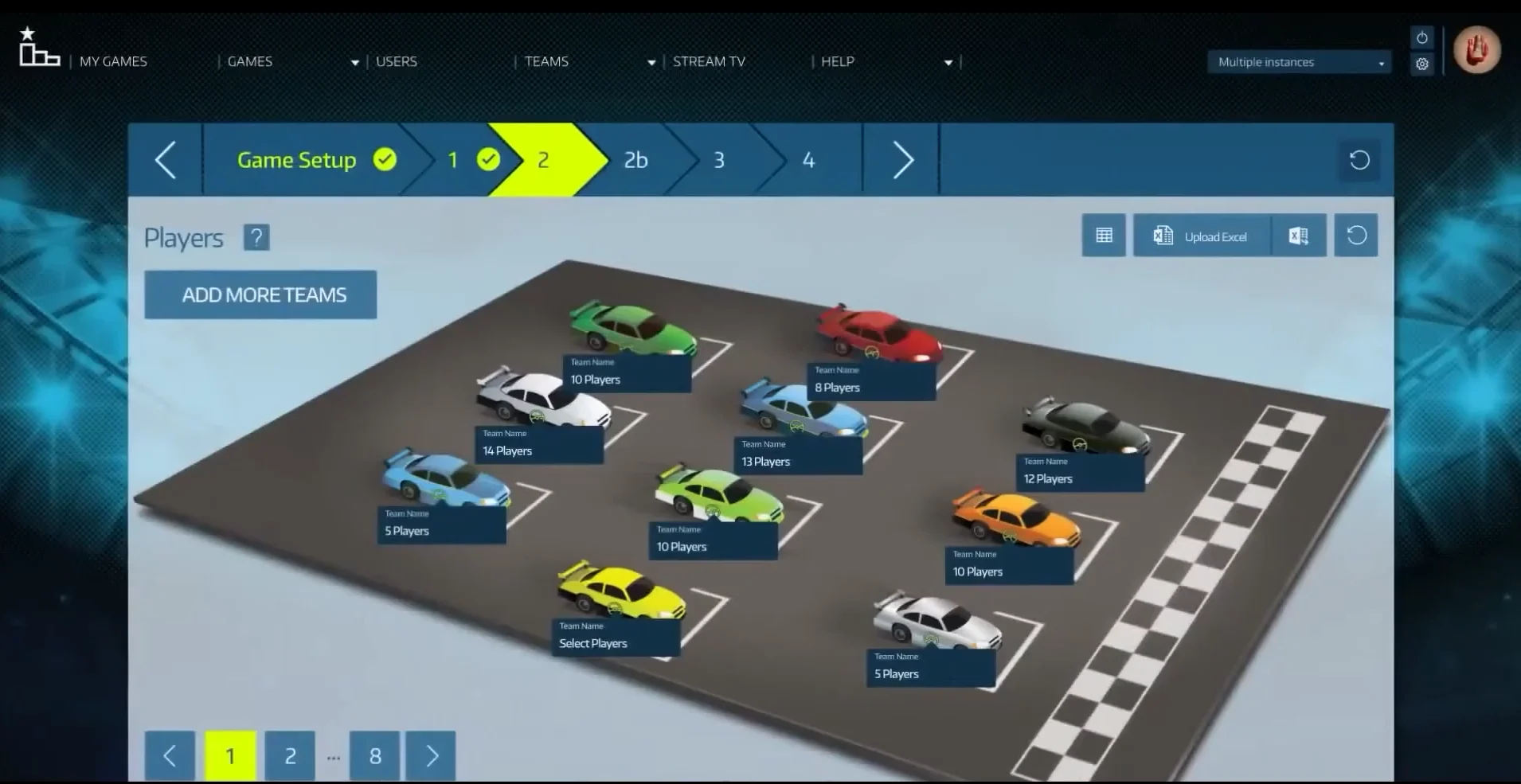
We proposed a light game mechanic: leaderboards among buyers and sellers, where activity earns levels and badges, and the rewards are real discounts and privileges.
This isn't "just a game" — it's a system built into the marketplace's logic: it makes returning to the platform frequently worthwhile.
Two months after launch, the metrics showed steady growth: daily visits rose by 35%, the average order value by 18%. More than 40% of buyers started placing repeat orders within a month (previously only 25%).
Time spent in the catalog doubled, and the number of ratings and reviews grew by 60% — the marketplace came alive.
The most important change was in behavior: sellers became more responsive to questions, and buyers started competing for top rankings.
The client was pleased with the results and launched two more game scenarios: one for retaining regular customers and one for attracting new users through friend-invitation mechanics.
This case shows how gamification solves a business problem: it doesn't just entertain — it boosts the metrics that drive revenue.
How to Choose the Right Gamification Format for Your Niche?
There's no universal "correct" format — the right mechanic depends on your business goals, niche specifics, and user behavior.
This is especially important for marketplaces: you can't copy other people's solutions because the same rating system can accelerate growth in one product category and drive users away in another.
So the choice starts not with a nice idea but with understanding exactly how you want to change the behavior of sellers or buyers.
The marketplace's specificity is that several roles operate on the platform simultaneously: sellers care about orders, buyers care about convenient search, honest reviews, and favorable terms. The game format must account for both sides.
For example, competition among sellers improves response speed and listing quality, while for buyers, accumulation scenarios work better — bonuses for activity or status levels for regular purchases.
If the mechanic isn't adapted to the niche, it creates false competition and shifts attention away from the main goal.
To choose a format, we first identify the critical business metric: growth in the number of active sellers, higher average order value, reduced churn of regular customers, or faster moderation time. The rating logic, game cycle length, and reward types are then built around that.
For everyday goods, short tournaments with quick feedback work well; for high-margin categories, long marathons sustain interest for weeks and build a habit of working with the platform systematically.
During the analysis phase, we test hypotheses against your platform's real scenarios: how different seller segments will behave, which mechanics will drive a customer to a repeat order, and whether there's a risk that gamification creates unequal conditions.
Only then do we finalize the format and describe it in plain language — no internal technical jargon, but with clear rules, timelines, and metrics by which you'll see the effect.
In short: the right format is one that builds on your niche's specifics and solves a concrete business problem, not one that simply adds excitement.
We handle the analysis, selection, and validation of mechanics on your data — you get gamification that pays off through growth in key metrics and doesn't require constant manual tuning.
Answers to Frequently Asked Questions About Business Gamification
Marketplace leaders often hesitate before launching gamification: will the risks outweigh the benefits, will it be hard to manage, and when will it pay off? Let's go through the most common questions — briefly and in business terms.
What are the risks of implementation?
The main risk is that the mechanic won't resonate with the audience, which is why we don't launch everything at once. First, we test the game on a small group of buyers, watch their reaction, and only then scale to the entire marketplace.
Technical failures are also ruled out: we use a proven server infrastructure and calculate load for peak spikes. Even on promotional days, everything works reliably.
Will it be difficult to manage?
Management is built on clear metrics: number of participants, return frequency, repeat order growth. Administrators don't need to understand game mechanics — configuring conditions, rewards, and campaign durations looks like a simple dashboard.
We train your team and hand over the instructions. Staff turnover won't stop the system, and you keep full control of the process.
When will gamification pay off?
The timeline depends on the goal. If you need to boost engagement, first results appear within 2–4 weeks: session counts and return rates grow. If the goal is revenue growth, the effect appears after the first full sales cycle, usually in 2–3 months.
Either way, you get reporting that shows exactly how the game mechanics impact revenue. That settles the main question about return on investment.
Ready to Strengthen Your Business? Submit a Project Estimate Request
Submit an estimate request — it's the first step toward a competition and rating system that will boost engagement among sellers and buyers on your marketplace.
We handle the entire process: from brief to launch and support, so you get a predictable result and a clear action plan.
From there, we follow a transparent seven-step process. You always know where the project stands and what happens next.
- Brief and audit — we discuss goals, study your audience, and review current business processes. We identify how ratings will affect key marketplace metrics.
- Cost estimate and commercial proposal — within 1–2 business days, we prepare a transparent cost calculation and timeline. No hidden conditions — just specifics for your task.
- Mechanic design — we develop a system of rewards, levels, and competition rules that motivates your specific users.
- Design and prototype — we show how the leaderboards and ratings will look and approve the details before development starts.
- Development and integration — we implement the system on your platform, connect the necessary services, and verify compatibility with user accounts.
- Testing and launch — we run load testing, train your team, and launch the system. We monitor the first results and adjust as needed.
- Support and evolution — we stay in touch, update mechanics as your business changes, and help improve competition conversion rates.
Submit your request today — within a few days, you'll have a ready implementation plan. We'll make the process clear and predictable, while you focus on growing your marketplace.