

Retail Pain Points: How to Keep Customers from Leaving
Every retailer faces the same problem: a customer comes in, makes a couple of purchases, and then leaves for a competitor. Discounts and promotions generate a short-term sales spike but don't create the habit of coming back.
The reason is simple — the customer doesn't feel a connection with the brand, and the impulse to "drop by your store" loses to the habit of visiting the neighboring one.
This is constant churn, which directly hits revenue and forces you to spend more and more on acquiring new customers.
The second pain point is staff motivation. Sales associates and cashiers work on a fixed salary, and their personal interest in the result is minimal. This leads to indifference toward customers, slow service, and lost sales.
A manager sees the numbers but can't change the situation: neither bonuses nor fines produce a lasting effect. Retaining customers and motivating employees are two tasks that retail usually solves separately, even though they are directly connected.
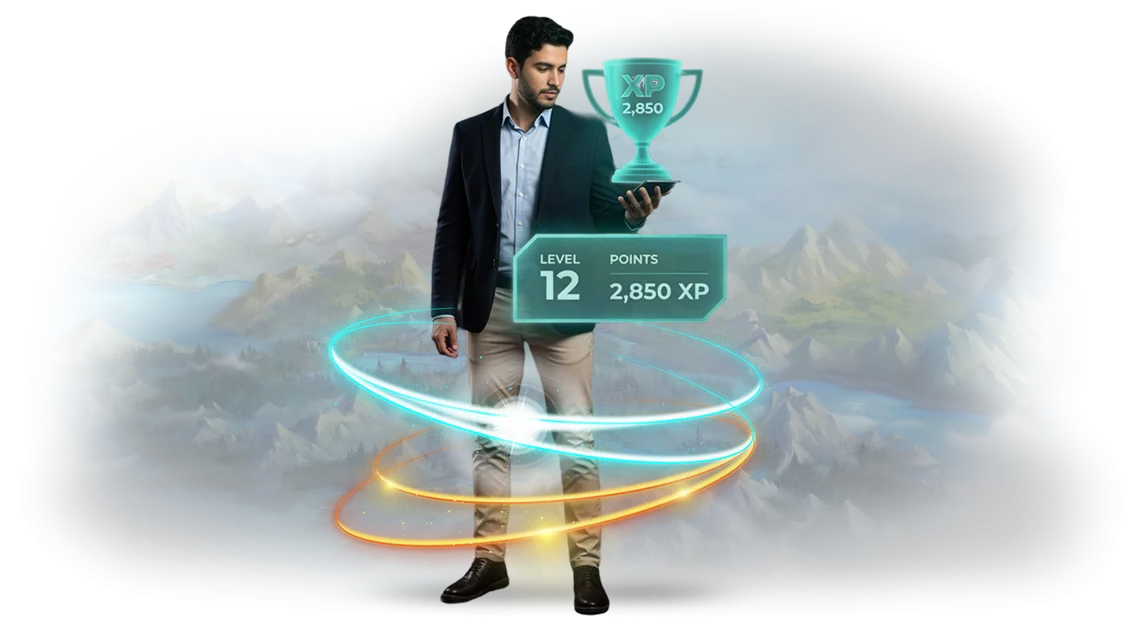
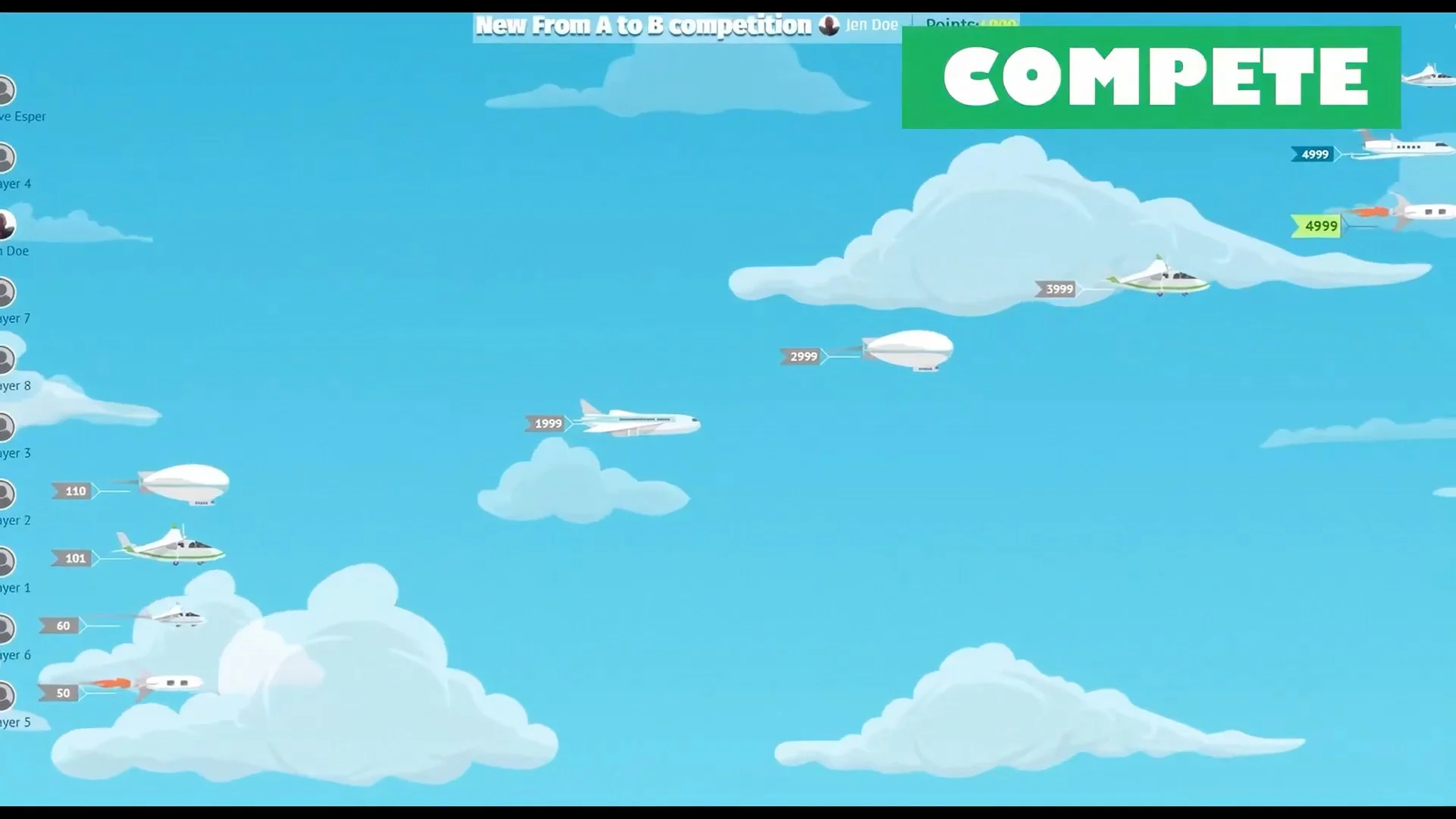
Retail gamification solves both tasks at once. A game-based system of competitions and leaderboards turns shopping into an engaging experience: the customer accumulates points, competes with other shoppers, and earns statuses they want to keep and level up.
This builds customer loyalty based not on a discount but on emotion and the thrill of the game. At the same time, the same mechanics work within the team: employees see their performance on the leaderboard, compete for the best results, and receive recognition for their outcomes. Staff starts retaining customers deliberately, not just "for show."
Implementing such a system doesn't require restructuring business processes. The software solution is embedded into the store's existing IT infrastructure, and all analytics are collected automatically.
Within a few weeks, you see a live picture: which mechanics engage customers, which store areas are underperforming, and which employees have become sales drivers. This data turns customer retention from an abstract goal into a manageable process with a measurable result.
And this is where we're ready to take on the project turnkey — from game mechanics design to launch and support.
What Gamification Delivers: Higher Sales and Customer Loyalty
Gamification in retail is not entertainment for entertainment's sake but a working tool that directly affects revenue. A shopper engaged in a game of competitions and leaderboards starts returning to the store more often and spending more — simply because it's interesting.
Purchase frequency grows when a guest has a goal. Daily tasks, accumulation streaks, or the fight for a spot on the leaderboard make customers plan their next visit.
Instead of "buy when I run out," it becomes "I need to come today so I don't lose my progress." This approach works especially well in retail, where visits can be made regular.
The average ticket increases thanks to mechanics that gently nudge customers to add to their cart. Bonus levels, collectible series, personal challenges — all of these create the desire to add one more item.
At the same time, you're not spending on discounts or losing margin — gamification turns one-off purchases into a steady stream.
Customer engagement delivers a long-term effect. The thrill of the game is remembered more strongly than a regular promotion; guests discuss leaderboards with friends, show off rewards, and come back with company.
This builds customer loyalty based not on price but on emotions and habit. As a result, sales growth becomes stable rather than one-off.
An added plus is result transparency. We configure the system so you can see which game mechanics drive growth and which need further refinement.
Gamification becomes a manageable sales channel: you understand what influences customer behavior and can quickly respond to changes in demand.
Gamification Formats for Retail Objectives
Classic discounts and promotions no longer hold attention: customers are used to them, and staff loses interest in planned targets. Retail objectives vary — boost sales at locations, engage customers with a new assortment, retain regular customers. There is no one-size-fits-all game; each goal needs its own mechanics and its own motivation logic.
We don't take a ready-made template; instead, we select a format for your specific task, network scale, and audience behavior. This way you get a game that solves a measurable business problem rather than just entertaining. Below are the basic formats we work with in retail and the objectives they cover.
| Format | Who It's For | What It Gives the Client |
|---|---|---|
| Store leaderboards | Networks with multiple locations | Motivates staff, boosts sales at each location, creates healthy competition and visible progress |
| Inter-store competitions | Large chains | Engages teams in hitting the plan, strengthens team spirit, increases the average ticket |
| Retail quests | Shoppers in the sales area | Increase time spent in store, introduce the assortment, raise visit frequency |
| Loyalty program | Regular customers | Retains customers, drives repeat purchases, grows the share of regular orders |
Formats can be combined: for example, back a customer quest with a leaderboard among sales associates, or link the loyalty program to team competitions between locations. At the start, we conduct a briefing, identify the key metric, and propose mechanics tailored to it.
Then come marketing support, launch, and result analysis, so the game pays off and scales to new locations.
Gamification Launch Stages: From Brief to Support
Implementing gamification in retail is not a one-off event but a sequential project. If you skip even one stage, the leaderboard system won't deliver the expected engagement growth.
That's why we've broken the process into six clear steps: so you always know what's happening and what you're paying for.
- Brief and audit. We dive into your business process, define the goals and target audience of the competitions. We gather requirements — you get a clear technical specification and an understanding of what result can be measured.
- Game mechanics concept. We select a leaderboard format and a reward system that motivates specifically your employees or customers. We agree on the scenario: how to earn points, how they affect status, and what the leader gets.
- Approval and work plan. We lock in timelines, team composition, and success criteria. You receive a quote and a calendar plan with no hidden stages or unexpected surcharges.
- Implementation and integration. We build the system on professional equipment and integrate it into your services so action data is pulled automatically. We configure the key elements to your specifics.
- Launch and training. We run a pilot launch, test the mechanics with real users, and adjust the details. We train your team to manage leaderboards and respond quickly to participant questions.
- Support and development. We track engagement metrics, analyze the mechanics' effectiveness, and make refinements. If needed, we expand functionality and launch new competitions — the system keeps delivering results.
What's Included in the Delivery: A Complete Launch Kit
This is not "just stick points onto processes" but a working gamification kit that will start affecting your metrics within a week.
You don't get scattered files but a complete system: scenario, rules, settings, and instructions — everything is ready to launch; all that's left is to assign a person in charge and run the kickoff.
What's Included in the Kit
- A game scenario tailored to your objectives. A storyline, stages, and tasks that are clear to employees and reflect real business processes: from hitting targets to service quality.
- Competition and leaderboard mechanics. Transparent point-earning rules, leaderboard levels, and conditions for moving between them. An employee always sees what to do to climb higher.
- System configuration for your structure. Ready-made roles, teams, groups, and links to your metrics — configured for departments, stores, or shifts.
- Regulations and instructions for the team. Guides for managers and employees: how to read the leaderboard, how to compete without imbalances or conflicts, how to challenge a result.
- Staff training. A short practical workshop for store managers and key employees. We walk through real situations: from the first launch to the weekly routine.
- Launch support. For the first few days, we work with you in support mode: answering questions and adjusting settings so the system delivers results right away instead of gathering dust.
All documentation and settings are packaged into a single gamification kit. You don't depend on individual specialists — even a new employee can get up to speed in a couple of hours thanks to the prepared materials.
After handover, all you'll need to do is press the "Start" button. We've already built into the kit all the agreements that usually delay a launch: rules, instructions, training materials, and technical configuration.
This saves your department from chaos in the first days: the system works, staff understands the rules, and managers see the first results on the leaderboard.
Case Study: How We Increased Repeat Visits by 22%
One of our clients — the supermarket chain "Vkusny Dom" — faced a typical retail problem: regular customers started visiting less often, and competitors were pulling attention away with promotions.
We needed to restore the habit of regular visits, but not through blanket discounts that eat into margins. We proposed gamification based on competitions and leaderboards.
The mechanics were built on two levels. Each customer earned points for purchases and participation in promotions, which determined their place on the overall leaderboard.
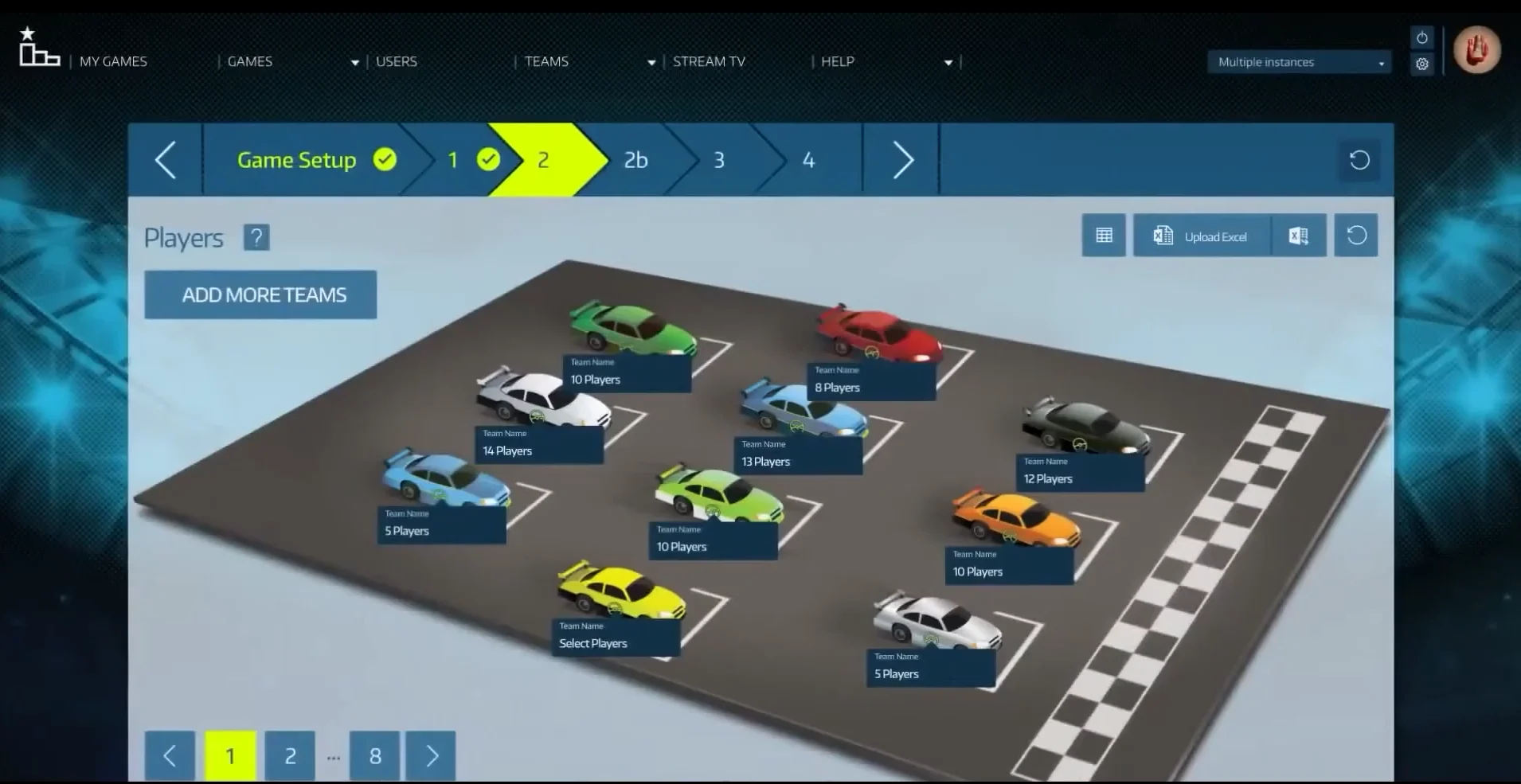
Additionally, we launched a competition between stores in the chain: the store whose customers earned the most points during the week won. Top participants received personal bonuses, and the winning store's team received a prize. This created excitement for both customers and employees.
The result exceeded expectations. In the first two months, the number of repeat visits grew by 22% compared with the control period — a confirmed, measurable effect.
More than half of the loyal customer base actively participated, and the average ticket among leaderboard participants increased by 9%.
The system works automatically: we set up weekly position recalculations and flexible reward rules, so the client doesn't have to spend time on manual management.
This gamification case is a clear example of how a properly designed competition system solves a retail business problem.
The result for retail is expressed not in abstract "engagement" but in numbers: growth in repeat sales, increased purchase frequency, and stronger loyalty without price dumping. Ready to create the same story for your chain? Tell us about your goals, and we'll select the mechanics for your audience.
How to Choose Game Mechanics for Your Business?
Choosing game mechanics starts not with trendy formats but with your business objective. For a store chain, this could be growing the average ticket, increasing repeat visits, or engaging customers in a loyalty program.
We identify the bottleneck in your business processes — and then select mechanics that will deliver a measurable result.
A game system for a store only works when it takes into account the specifics of your audience and the purchase scenario.
A customer leaderboard motivates regular customers, a competition between network locations boosts staff engagement, and accumulation mechanics gently nudge toward the next order.
That's why we don't use ready-made off-the-shelf solutions but create a custom format for your product category and seasonality.
The mechanics selection itself happens in three steps. First, we run a consultation and analyze what competitors are already doing and where your growth points are. Then we offer 2–3 mechanics options with an effect forecast and launch recommendations.
After the selection, we design the rules, interface, and motivation system so they are clear to the customer and don't require complex training.
For retail, competition and leaderboard mechanics are especially effective: they create excitement, a reason to come back, and a reason to share results with friends.
Properly chosen gamification turns an ordinary shopping trip into an event — and this directly affects loyalty and the average ticket.
Want to know which mechanics are right for your business? Leave a request for a consultation — we'll review your situation and propose a game system that solves your problem, not just adds a game for the sake of the game.
We Answer Questions About Business Gamification
Every retailer considering gamification asks the same questions: how long the launch takes, whether the game will break current processes, and who will continue supporting it. We'll answer briefly — only what affects your plan and budget.
How long does the launch take?
A standard project for a store chain takes 3-4 weeks. If the game needs to be connected to the POS system or loyalty program, we add 1-2 weeks for integration. The timeline is fixed in the contract before work begins.
Is it difficult to integrate the game with the accounting system?
No, there's no need to replace your accounting system. We develop a separate module that receives data on sales and employee actions and then delivers the results in a clear format. On your side — just access to the needed information; we'll set up the rest ourselves.
What happens after the launch?
our team stays by your side: we monitor stability, update season rules, and add new reward scenarios. Support and enhancements are covered in the contract, so you won't have to look for a new contractor.
We've covered the most common concerns: gamification launches quickly, fits into existing workflows, and keeps working after release. Still have questions? We've put together detailed answers by scenario below, and if you need to discuss your specific case — just write to us, we'll respond within one business day.Take the First Step: Get a Project Cost Estimate
Leave a request for gamification — and get a cost estimate tailored to your scale. No ready-made brief is needed: just describe how your current promotions and loyalty programs work. We'll run a free audit and prepare a cost calculation and project plan based on it.
What you'll receive after reaching out:
- A preliminary cost estimate based on the number of participants, locations, and scenarios.
- A timeline evaluation: when the first stage will launch and when a measurable result will appear.
- Suitable game mechanics for retail: competitions, leaderboards, team activities.
- Integration options with your existing loyalty and accounting programs.
- A first-stage plan: what we do right away, how we measure success, and what resources are needed.
After that, everything runs on a clear schedule: on the day of your request, we clarify the details; the next two to three business days are spent on the audit; then you receive the cost calculation and stage plan.
Usually it takes two to three iterations for you to see the first results without lengthy approvals.
There are no obligations at this step: you're free to adjust the scope, priorities, and timelines. We only commit to clear numbers and decisions. Submitting a request takes a couple of minutes — and you get a clear picture of the budget and start time. Leave your request, and our team will prepare an estimate for your business.