


Gamification for Insurance Companies: Why It Is Essential
Insurance companies face intense competition and declining engagement: products are hard to understand, clients rarely think about their policy until a claim occurs, and employees work on autopilot.
Clients switch to companies that offer not just protection but an ongoing dialogue and tangible benefits. Without clear retention mechanics, an insurance company loses market share to more agile competitors.
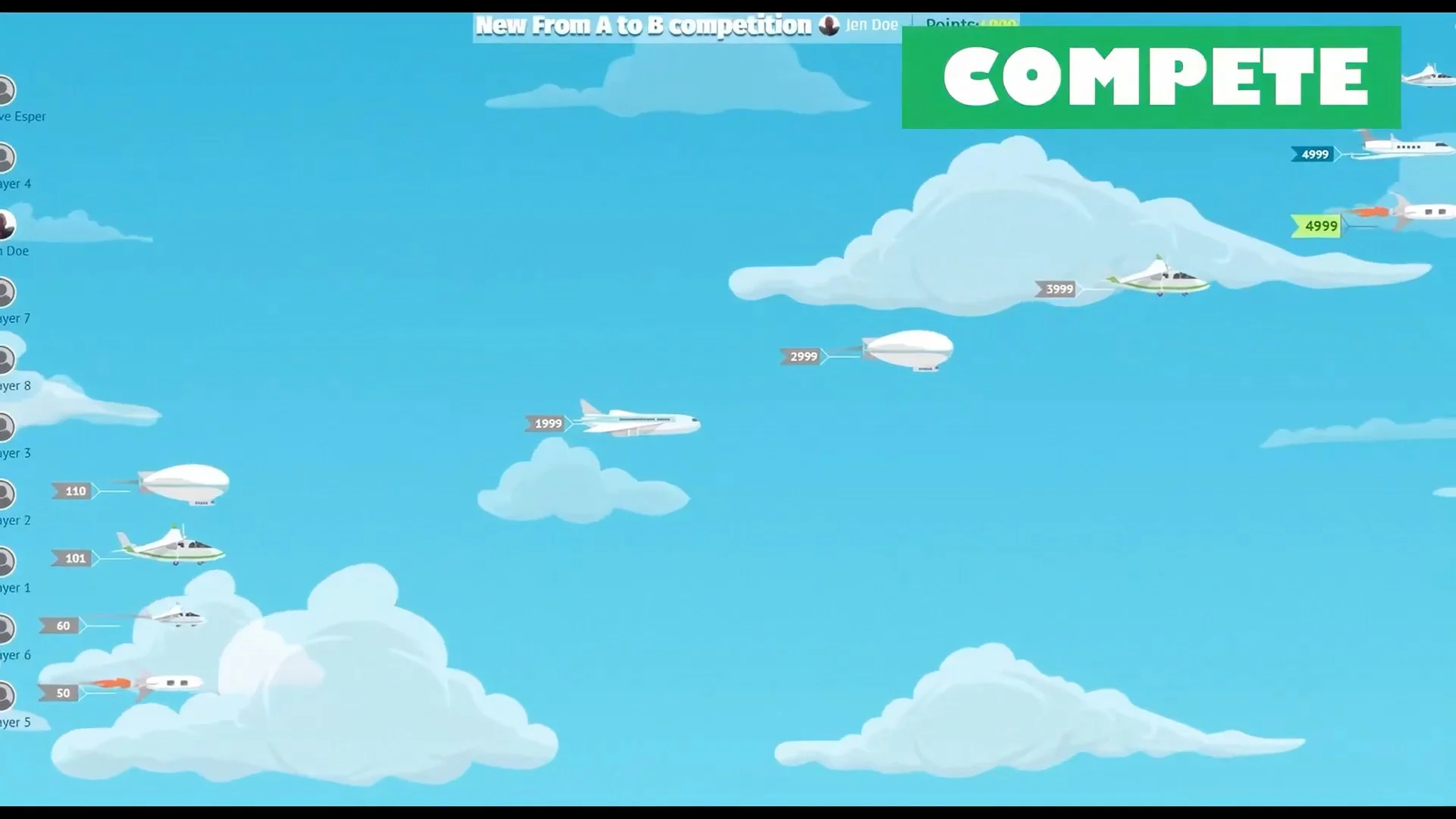
Business gamification solves this through game mechanics: competitions, statuses, points, and achievements.
For clients, insurance becomes easier to understand and more engaging — they have a reason to interact with the company regularly, renew their policy, and recommend it to friends.
For employees, it provides measurable motivation: leaderboards and challenges drive sales growth and service quality, reduce turnover, and make work more meaningful.
Implementing leaderboards and reward systems is not entertainment — it is a management tool. The company gains transparent activity metrics, higher loyalty, and additional reach as clients share their achievements on social media. In this way, gamification directly supports client retention and increases repeat business.
We design game systems tailored to an insurance company's objectives: from refining mechanics to launch and ongoing support. We help turn routine into achievement and clients into active participants in your product.
5 Benefits of Implementing Game Mechanics
Game mechanics in insurance deliver five measurable outcomes you can rely on when planning. The first is increased sales. A manager conversion rating creates healthy competition: employees follow up on leads more consistently and stop postponing calls. As a result, the sales department sees conversion grow by 20–30% without expanding headcount.
The second is a higher average check. A reward system encourages managers to offer extended coverage and additional services. The client gets a package; the company gets more revenue per contract.
The third is repeat sales and client loyalty. Renewal bonuses, no-claim discounts, and priority support build client loyalty. The number of repeat transactions grows by 1.5–2 times, and retaining a client is cheaper than acquiring a new one.
The fourth is engagement and lower turnover. Team competitions and recognition of leaders turn routine into a game, reduce burnout, and lower attrition. A stable team preserves experience and established client relationships.
The fifth is management transparency. Ratings show who delivers results, who needs support, and which products sell best. This is a ready-made basis for a sales plan and motivation adjustments.
These five effects work as a single system: higher conversion and average check, sustainable repeat sales, loyal clients, and a stable team. We implement game mechanics for your insurance product line and immediately define the metrics by which you can see the impact.
Gamification Formats for Insurance Companies
In insurance companies, results depend directly on agent activity and employee motivation. Standard targets and bonuses work up to a point — gamification adds emotion, a competitive spirit, and visible progress, which accelerates plan fulfillment and reduces turnover.
There is no single “ideal” format — each one addresses a specific challenge. Leaderboards spur on the best performers, team tournaments unite departments, and cumulative bonuses keep employees engaged over the long term. To choose the right mechanism, compare them in the table.
| Format | Who It Is For | What It Gives the Company |
|---|---|---|
| Leaderboards | Agents and sales managers | Sales growth through competition, transparent results |
| Team competitions | Departments, branches, regional divisions | Achievement of overall targets, development of mutual support |
| Cumulative bonuses | Employees and agents on the long haul | Repeat activities, loyalty, and reduced staff turnover |
Leaderboards work well in short periods — a month, a quarter. Team tournaments are appropriate for large-scale projects where the overall result matters. Cumulative bonuses are convenient for regular actions: issuing policies, cross-selling, collecting documents.
We help insurance companies select and combine formats that fit their goals: increase policy sales, activate the agency network, or strengthen corporate culture.
We develop a clear competition and rating system that easily integrates into current processes and delivers measurable results within the first few months.
How a Gamification Project Unfolds
For any gamification project, predictability matters: you know in advance what will happen at each stage, which decisions are coordinated with you, and when results will appear.
We structured the process so that insurance company management sees progress from the first meeting to launch, and agents receive clear rules of the game rather than a “black box.”
This is not abstract development — it is a project with checkpoints. Below are the main stages through which a competition and rating system is implemented.
-
Brief and immersion in business objectives. We study how agents currently work and which metrics matter: number of sales, volume of premiums, quality of client service. We record the goals gamification must achieve.
-
Agreement on the scenario and competition rules. We define which actions are rewarded, how points are calculated, and when results are summarized. All rules are documented and approved with you — so they are fair and clear for participants.
-
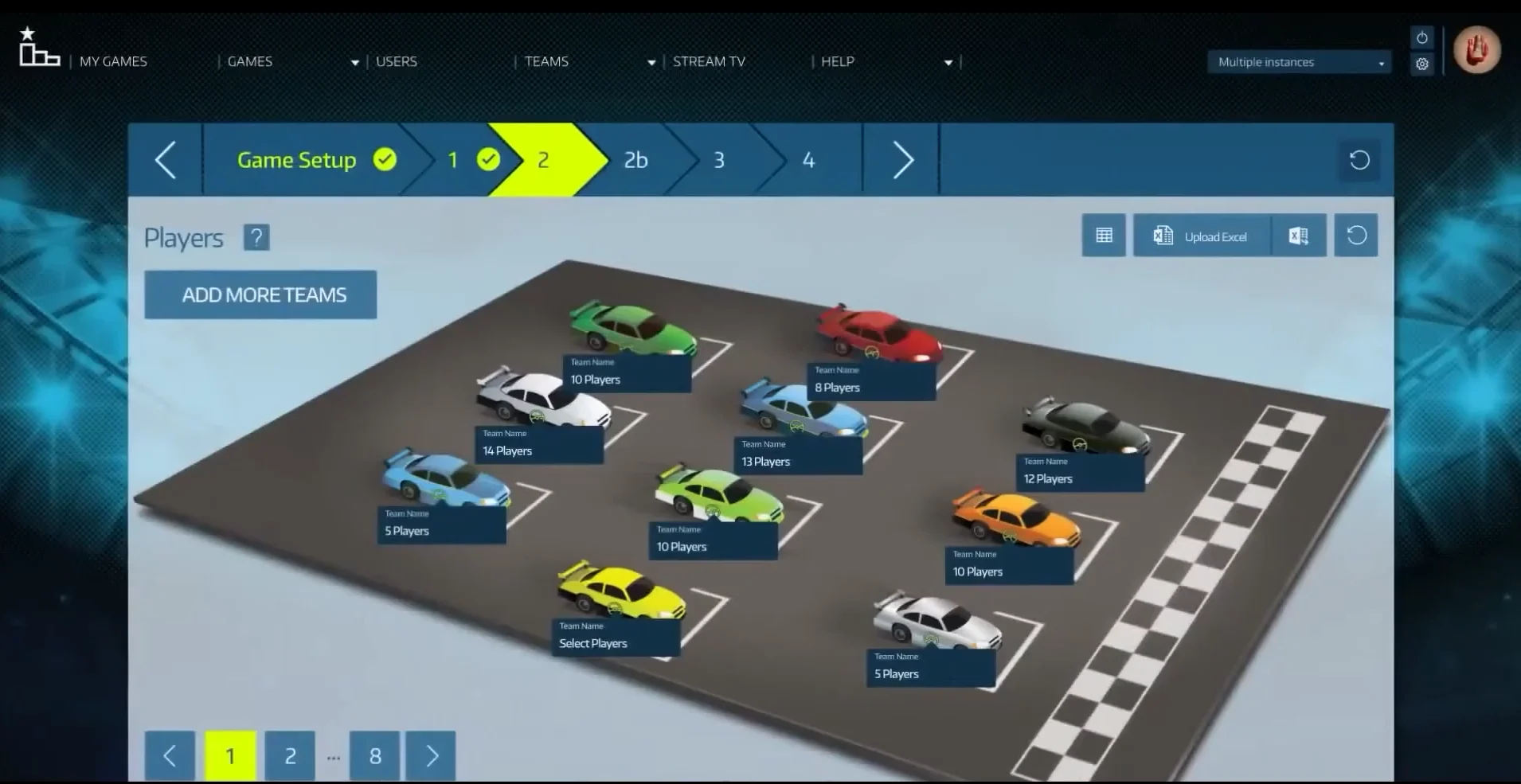
Prototype and interface development. We show how the rating will look on screen: leaderboards, progress, rewards. We make adjustments before the main development begins, so there is no rework later.
-
Integration into existing processes. We connect the system to your CRM or database and configure automatic calculation of metrics. Your employees continue working in familiar tools — no need to learn new software.
-
Launch and team training. We hold a kickoff session: explain the mechanics to agents, show how to use the rating, and answer questions. We launch the competition and monitor the first days.
-
Support and refinement based on results. We analyze activity, collect feedback, and adjust rules if something slows engagement. You get a working tool that delivers measurable value.
Each stage closes with a clear deliverable: a rules document, a UI mockup, or a live rating in the system. You always know where the project stands and what happens next — no surprises and no drawn-out approvals.
What Is Included in the Delivery: a Launch Kit
The kit includes everything needed to launch, not just “bare code.” You get a ready-made game system that your team can start using immediately after integration, without lengthy setup or internal approvals.
- A functioning rating and leaderboard system — competition among agents and sales offices starts on day one. Configured for your metrics: number of contracts, premium collection, plan fulfillment, or any other indicator.
- Ready visual design — a consistent style for all game elements in your corporate palette. Nothing to invent: from achievement cards to tournament tables.
- Game rules and motivation economics — the documented mechanics for points, levels, and rewards. Transparent rules eliminate disputes and feelings of unfairness.
- Technical integration — connection to your accounting system and CRM. Sales data is pulled automatically: the rating is always up to date, with no manual entry.
- Instructions and training for the team — short guides and videos for managers and agents. A person understands the rules in 10 minutes and stays focused on sales instead of resolving disputes.
- Administrative panel — manage seasons, prizes, and participants yourself. Change rules or extend a competition period in a few clicks.
This kit answers the question “how do we implement this?” — all that remains is to launch and track results.
Case Study: How We Increased Insurance Sales by 30%
One of our clients — Insurance Partner — is a federal chain of policy sales offices. Management’s task was to improve manager performance without increasing the payroll budget.
Standard targets and bonuses no longer drove growth, and competition between departments was mostly random.
We developed a competition and rating game mechanic. Each employee sees their own status, level, and progress relative to colleagues.
Teams compete on tasks involving meetings, calls, and sales — every action earns points, unlocks achievements, and progresses toward personal goals. The system automatically collects statistics, so managers get an objective picture without manual reports.
Results appeared in the first month: the number of deals grew by 30%, and the share of active managers who systematically work with clients doubled. Conversion to sale for certain products improved, and staff turnover decreased: employees simply found work more interesting.
“We had long wanted to energize the sales process, but didn’t know how to do it without complex motivation systems. The team proposed a solution within a week and implemented it in a month.
Now sales are growing, and managers track the rating themselves,” says the head of the sales department. “What is especially valuable is that support and refinements happen quickly — no need to wait for months.”
How to Choose the Right Gamification Format?
There is no universal solution: the gamification format should follow from the problem the insurance company is solving. Rating tables, team games, and point-accumulation scenarios are tools with different effects. The choice of format determines which business metric will start to change.
Leaderboards are optimal when you need to boost individual agent performance: premium volume, number of contracts, speed of handling requests. A transparent list of results creates healthy competition and gives managers a clear view of achievements.
For insurance companies with a large agency network, this is the fastest way to revitalize sales and identify those who can mentor others.
Team games work when results depend on collaboration between departments: for example, the interaction between sellers and claims specialists, or cross-selling of additional products.
This mechanic develops experience sharing and mutual support, which directly reduces the number of errors and increases client loyalty — clients can feel that the company works as a cohesive unit.
You don’t have to choose just one: hybrid schemes often work better.
A personal rating sustains the competitive spirit throughout the period, while team rounds embedded in the overall scenario unite the team and help achieve complex goals — for example, a quarterly client retention plan or the launch of a new insurance product.
We select a format for your specific situation: we analyze business processes, employee motivation, and the target metric. So you get not just a game, but a tool that solves your particular problem — increasing sales, improving service, or reducing costs.
Common Concerns Before Launching Gamification
Before a gamification launch, insurance company leaders ask the same questions: will ratings cause resistance among employees, how complex is the adaptation, and how do we measure results?
We answer honestly, without promising a “magic button.” Over years of working with insurance and financial organizations, we have learned to address these concerns at the briefing stage — below are the three most frequently asked questions.
Employees won’t accept competitions and ratings — what do we do?
Resistance appears when people don’t understand the rules or feel threatened. We build competitions on transparent metrics that every agent understands: number of policies, conversion, service quality.
Ratings are supplemented with team scores and personal goals, and before launch we run a pilot in one department — employees see the benefit themselves and objections dissolve.
Is it difficult to integrate gamification into existing business processes?
Integration does not require replacing your accounting system or restructuring regulations. We take data from your current reporting — number of requests, deal closure speed, plan fulfillment — and build real-time ratings. Employees work as before but receive additional feedback. Setup takes weeks, not months.
How do we know gamification actually works?
Before launch, we record baseline metrics — average request handling time, share of repeat interactions. After implementation, we compare indicators by period and by team.
You see not “in-game activity” but changes in operational results: faster processing, higher conversion, more consistent plan fulfillment. The report is generated automatically.
If you still have concerns, ask us directly — we will show how gamification can fit into your company’s processes.Get a Free Gamification Cost Calculation for Your Business
Leave a request, and we will provide a preliminary gamification calculation for your insurance company. It is free, non-binding, and takes minimal time: you get a concrete proposal, not general words.
How the process works:
- You leave a request on the website or by phone — it takes a couple of minutes.
- We make a call and briefly discuss your goals: sales growth, agent motivation, client engagement.
- We analyze your business model, client segments, and existing sales processes.
- We prepare the calculation: a suitable format for ratings and competitions, implementation timeline, and expected impact.
- We send a preliminary proposal and, if desired, hold a free consultation with our expert.
At the first step, you will receive:
- A concrete gamification format for your insurance company’s objectives: from simple ratings to multi-level competitions.
- An engagement estimate that such a system will bring to your agents or clients.
- Approximate launch timelines and work stages — no surprises.
- An estimated team composition and required resources — so you understand the scope of investment.
- A clear list of outcomes: which business metrics we can improve — reach, frequency of interactions, share of repeat sales.
- Recommendations on participant motivation and prize systems, if needed.
The calculation will be prepared by experts who have already implemented competition systems for the insurance sector. You get a ready foundation for decision-making — no prepayment and no obligations.
Leave a request today, and in just a few days you will have a clear answer: where to start, how long it will take, and how it will affect your business.