


Clients Leave Veterinary Clinics Due to Boredom and Indifference
Veterinary clinic owners often notice only one symptom: clients become rare, the average check drops, staff changes. But the reason is deeper — a boring atmosphere and indifference.
A visitor comes not by desire but by necessity: while the pet needs help, they tolerate queues and formal communication, but as soon as treatment ends — they forget about the clinic until the next case.
Low loyalty manifests not in scandals but in quiet churn: pet owners look for a place where the staff is more attentive to the pet, explains things more clearly, and where it's more pleasant to be.
Client churn is not just lost appointments but a double loss of profit. First, every departed client takes away regular visits: vaccination, check-ups, grooming, pet food.
Second, they stop recommending the clinic to friends and neighbors at the dog park — and in veterinary medicine, word of mouth brings up to half of new patients. To compensate for churn, you are forced to invest in advertising and discounts that eat into margins.
At the same time, the problem of a veterinary clinic is often not the quality of treatment but the fact that people don't feel a connection with the brand.
Boredom and indifference affect not only clients but also your team. Administrators get tired of monotonous calls, doctors burn out from stressful cases, and visitors pick up on all of it.
A cold reception, an indifferent tone, a lack of small joys — and the pet owner gets the impression that people here work "by the book." This is how even clients who were satisfied with the treatment are lost.
We solve this problem through gamification of business processes: we turn routine into friendly competition, add ratings and achievements for staff, and for clients — a cumulative care program that makes a clinic visit an event, not a duty.
When a visit brings positive emotions and tangible benefits, clients return on their own and bring others. We restore the living connection between your brand and pet owners — and this directly reflects on revenue.
What Will Change in Business After Implementing Gamification
Gamification in a veterinary clinic is not interface decoration but a tool that changes the behavior of staff and clients. Our team develop a system of competitions and ratings where every participant sees their progress and understands how to get a bonus.
As a result, the clinic works more efficiently without increasing headcount or the advertising budget.
For the Owner
The owner gets tangible growth in business metrics within the first months. The system is designed so that the benefit for the clinic is built into every game mechanic:
- Growth in repeat visits. Clients return because their pets participate in the loyalty program: they accumulate points for exams, vaccinations, and grooming, and receive statuses and discounts for activity.
- Increase in average check. Comprehensive examinations and additional services become part of the game logic — for example, "complete a full check-up and get a month of free care." This increases revenue per client.
- Profit growth without marketing costs. Satisfied pet owners bring friends — you can build in a "bring a friend" mechanic with bonus accrual for both sides.
- Transparent statistics for management decisions. You see which mechanics deliver results and can flexibly change competition rules.
For Staff
The second part of the system is team motivation. Veterinary doctors and administrators stop working "by template" because they have a goal and a clear path to a bonus:
- Transparent reward system. Every employee sees their rating and knows which action brings them closer to a bonus. This removes the question "why wasn't the bonus given to me."
- Competitive spirit. Healthy competition improves service quality — doctors strive to get more satisfied clients, and administrators strive to sell additional services.
- Reduced staff turnover. The best employees receive recognition and rewards, so they don't leave for competitors.
- Ease of adoption. The interface is understandable to any employee, training takes less than an hour and doesn't distract from work.
Bottom line: gamification turns routine into drive for the team and a source of stable growth for the business. We adapt the system to your clinic's goals — from simple ratings to comprehensive loyalty programs connected to your CRM.
Game Mechanics Formats for Veterinary Clinics
Routine in a veterinary clinic quickly exhausts both staff and pet owners. Game mechanics turn daily tasks into an exciting process: employees try to do more, clients are more willing to return for follow-up visits and recommend the clinic to acquaintances.
Competitions and Ratings: Engaging the Team
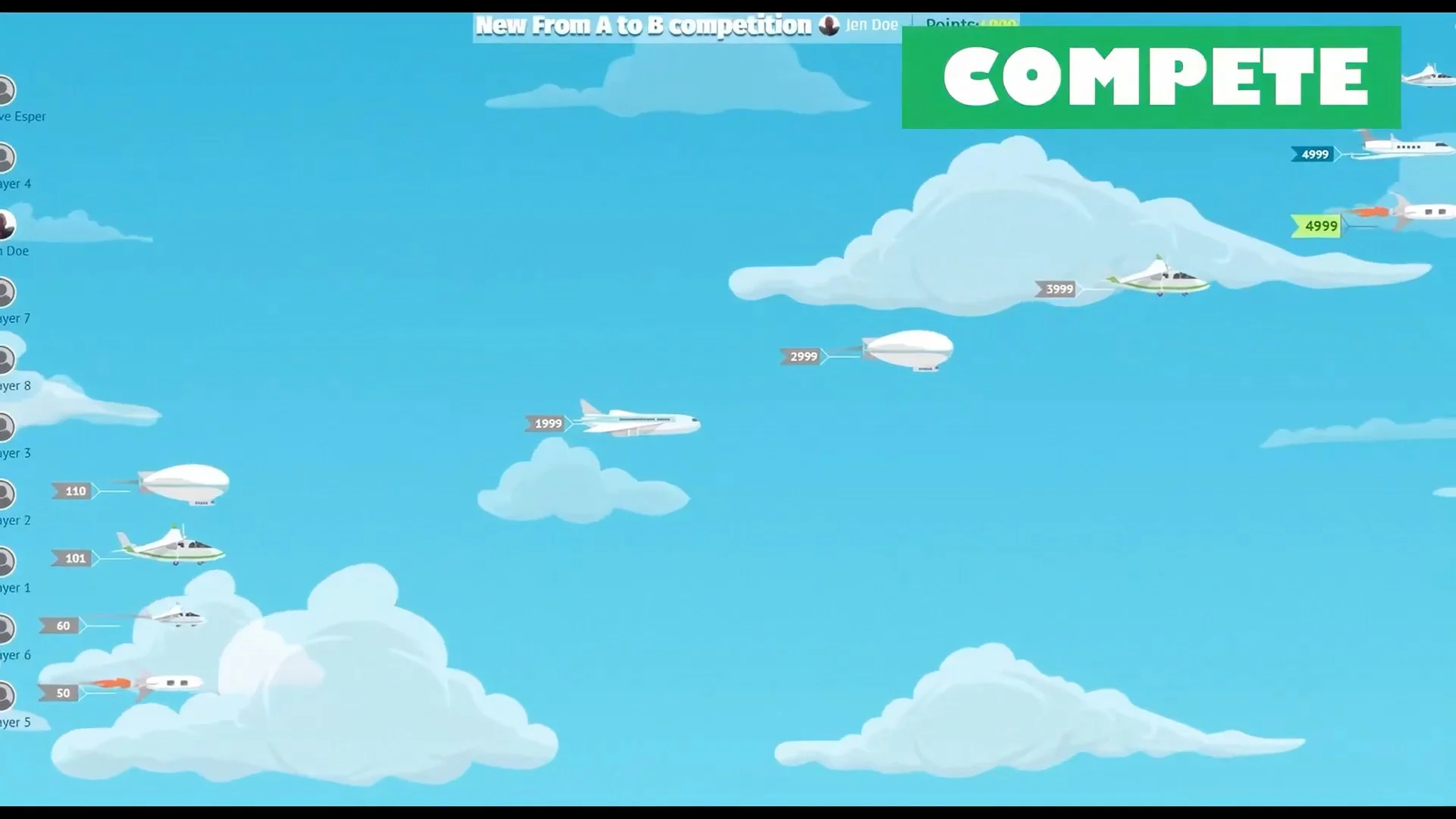
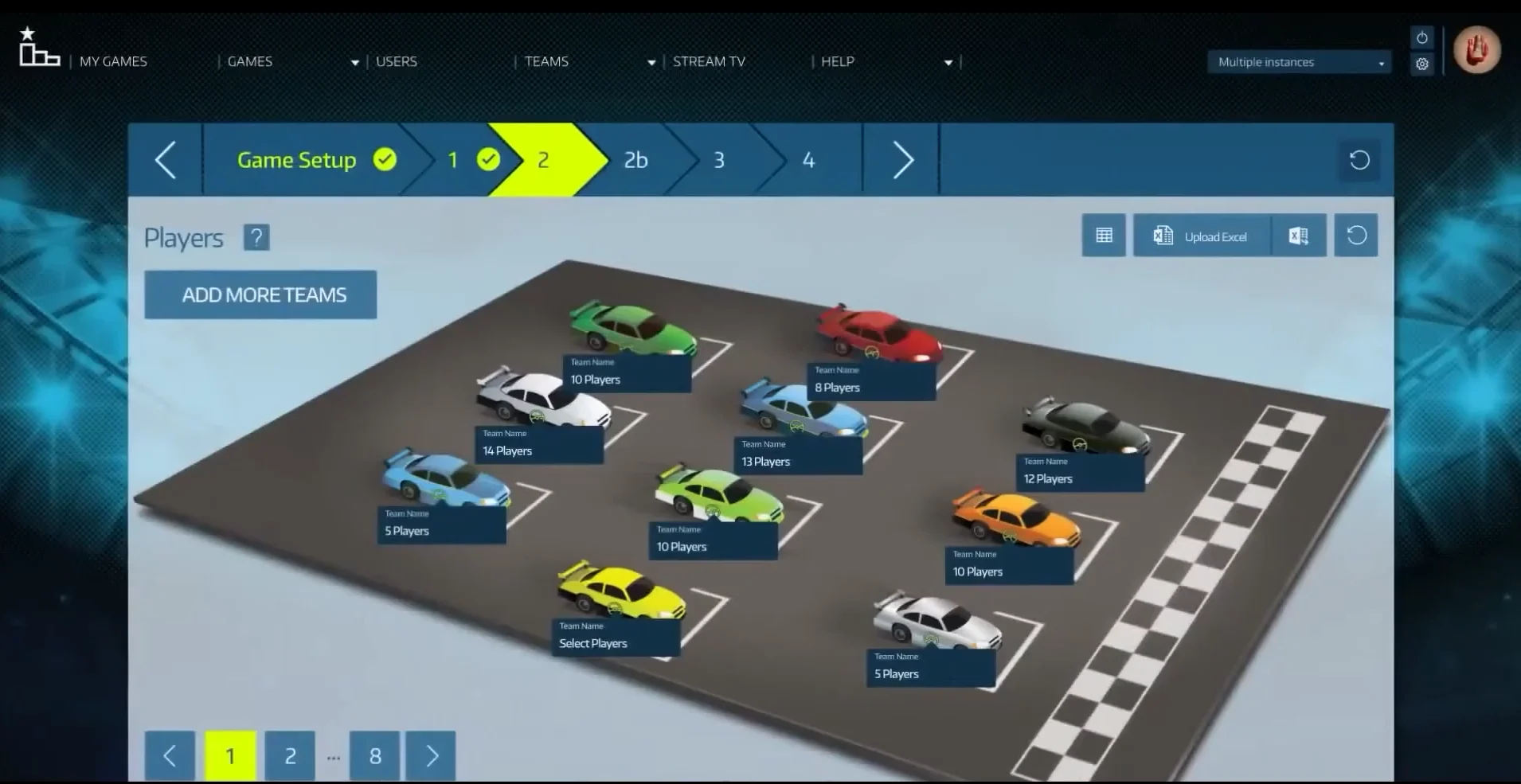
Employee ratings are the most understandable form of gamification. Doctors and assistants see how many patients each person has seen, what scores they receive from pet owners, and who closes urgent calls faster.
Healthy competition reduces turnover, and a reward for the best at the end of the month is a point of pride and additional motivation.
It's important that the rating takes into account not just quantity but also quality: patient return rate, thank-you notes, diagnostic accuracy. Then the competition works for the clinic's reputation, not just "hitting the plan."
Quests and Challenges for Clients
Pet owners like not only to talk about their pets but also to get bonuses for it. Quests like "bring your cat for vaccination" with point accumulation for procedures turn visits into a game.
The client plans appointments themselves, tracks progress in an app or via messages, and feels the clinic's care.
This mechanic increases the number of repeat visits and helps attract clients to preventive care on time — and that's exactly the service that provides stable capacity utilization.
Summary Table of Gamification Formats
| Format | For Whom | What It Gives the Clinic |
|---|---|---|
| Competitions between doctors | Staff | Growth in appointments and service quality, healthy competition |
| Employee ratings | Staff | Transparency of results, reduced turnover, visible motivation |
| Quests and challenges for pet owners | Clients | Repeat visits, early prevention, loyalty and recommendations |
| Joint promotions with pet-related sections | Clients and team | New patient flow, brand strengthening, community around the clinic |
When choosing a format, rely on the clinic's weak spot: if capacity is lagging — launch quests; if staff is leaving — ratings and competitions. And we'll advise on how to implement the mechanics without overloading employees and with quick results for your budget.
Stages of Developing a Game System for Business
We understand that you want a working tool, not just a set of mechanics. That's why implementing a game system follows a clear algorithm: you always see what's happening and control the result at every step.
- Brief. You tell us how the clinic works: who participates, what metrics you want to improve, why the system is needed. We capture the expectations and turn them into concrete tasks.
- Analysis. We study current processes: doctor workload, client communication, internal staff motivation. We find points where competition will drive growth rather than create tension.
- Concept. We propose the game format: ratings, points, rewards, levels. We show how this will look in the clinic's daily work and discuss details and constraints.
- Approval. You make edits, we adjust the mechanics. We approve the rules, point accrual conditions, and the visual scheme — we lock in what you get.
- Implementation. We build the system: configure the interface, connect it to your processes, and test it on trial scenarios. You get a ready-made game environment.
- Launch. We announce the start, train administrators and doctors, and support the first days. We help adapt the mechanics to the real conditions of the clinic.
- Technical support. After launch, the system lives at your site. We monitor stability, update mechanics as the clinic grows, and adjust settings for new tasks.
How Long It Takes
A short game with clear rules is launched in 2–3 weeks. A system with levels, rewards, and complex scenarios — up to 6–8 weeks.
We give an exact timeline after the brief and analysis: it depends on the number of participants, the number of rules, and how quickly you confirm decisions.
What's Included in a Gamification Project: The Complete Package
A gamification project is not a standalone "gimmick" but a system you integrate into the clinic's daily work. The package is assembled so that you get a working motivation tool, not an abstract idea: from competition mechanics to employee training and technical support.
Basic Package
- Game concept and goals. We determine which employee behavior needs to be strengthened: appointment speed, meeting the sales plan, service quality, reducing errors in documents.
- Clear rules and points system. An employee always knows what earns them points, how they lose positions, and how far they are from the leader. No "secret formulas" — motivation works when the rules are transparent.
- Design and styling. Ratings, badges, levels, and statuses in the clinic's brand style. The leaderboard looks presentable both in the office and on a shared screen — employees aren't ashamed of it, and guests see it as a mark of professionalism.
- Customization for your business processes. Integration with the clinic's accounting system: points are accrued automatically, without manual entry or distracting staff.
- Staff training. We conduct a short training session for administrators, doctors, and managers — explain the mechanics, address questions, and show how the game helps meet the plan.
- Technical support for the game. Support at launch, monitoring correct point accrual, and updating rules if goals or business processes change.
Additional Options
- Individual scenarios for different roles — custom conditions for administrators, doctors, and vet technicians.
- Employee notifications about position changes, new levels, and approaching rewards — via messenger or the clinic's internal chat.
- Quarterly analytics report for the manager: what changed in key metrics and which mechanics deliver the greatest effect.
The basic package covers the main task — launching and stable operation of the motivation system. Additional options are needed when you want to evolve the game: for example, introduce team competitions between departments or tie rewards to annual results. Everything is configured for a specific clinic without changing internal processes.
Case Study: Client Loyalty Growth After Game Implementation
For the veterinary clinic chain «Aibolit» we developed a game system of competitions and ratings. The core idea: pet owners earn points for every visit, preventive check-ups, vaccinations, and leaving reviews.
Accumulated points affect the status at the clinic: the higher the status, the more privileges — priority scheduling, additional services as gifts.
This gamification case solved the typical problem of animal clinics: clients come sporadically — when a pet gets sick, and after treatment they disappear. The rating system gently "attaches" the owner to the clinic, turning one-off visits into regular pet health care.
Results in Numbers
Three months after launch, we recorded clear metrics:
- Repeat visits grew by 35% — owners started coming for scheduled check-ups, not just when the pet was ill.
- The average check increased by 18% — clients became more willing to agree to additional diagnostic procedures.
- The share of active program participants reached 70% of all who came in, and revenue growth in these areas exceeded a quarter.
The implementation results proved sustainable: even after the promo period ended, clients continued to use accumulated points and return to the clinic. Pet owners began to perceive «Aibolit» not as an "emergency service" but as a permanent partner in their pet's health.
Profit growth happened without expanding the advertising budget — we leveraged the existing client base and motivated it to return more often.
The equipment and server infrastructure handled the load without failures, and clinic administrators needed just one short training session on working with the control panel.
The key takeaway: gamification in veterinary medicine works when it's understandable to pet owners and gives them tangible benefits. Ratings and points are not a game for its own sake but a tool that builds long-term relationships with clients and increases the clinic's profit.
How to Choose Mechanics for Your Goals?
The gamification format should be chosen not "for looks" but based on which behavior you need to trigger. If the main goal is to increase repeat visits, cumulative mechanics with bonuses for regularity work best.
When you need to motivate the clinic team to drive bookings and patient retention, competitive ratings with transparent metrics are more effective.
The key criterion is who exactly becomes the participant. For pet owners, care and benefits matter: statuses, rewards for completed examinations, personal discounts. For employees — the spirit of competition and a simple way to see their contribution to the overall result.
When choosing between ratings and point systems, first determine who needs to change their habits: clinic guests or staff.
The second criterion is the complexity of integration into current processes. Some tasks can be solved with a simple loyalty program in the form of a patient card. Others require a separate portal or screens in the lobby with a team-wide scoreboard.
We select a format that fits into the clinic's daily operations rather than creating extra paperwork for doctors and administrators.
The third benchmark is how you will evaluate the result. For example, for employee ratings we introduce clear metrics: number of scheduled patients, share of return visits, average check. For client mechanics, we look at visit frequency and the number of referrals.
If the chosen mechanic isn't moving these numbers, it's better to replace it with a simpler one than to complicate the rules.
That's why at the start we don't propose a ready-made solution but ask questions about your goals and your team's current workload.
Based on the answers, we put together 2–3 mechanic options with an effect forecast and leave the possibility of adjusting the rules after the first month of operation.
This way you don't get an abstract "game" but a tool that immediately solves a specific clinic problem.
Frequently Asked Questions About Gamification of Business Processes
We answer common doubts about gamification in a veterinary clinic and, separately, about guarantees if the mechanics don't work.
Will gamification suit a small clinic?
Yes. We start with a pilot area: one position or department. The mechanics scale to the clinic's size — from a single doctor to a chain of branches.
What if employees don't want to participate?
Before launch, we conduct a survey and build in incentives that matter to the team: days off, status, bonuses. The rating is voluntary, so engagement is high.
Will this interfere with patient care?
Metrics are taken from existing systems: patient cards, appointment schedules, plans. Employees don't need to keep records — the game takes minutes and doesn't interfere with appointments.
How do we measure the effect?
We record metrics before the start: average check, share of repeat bookings, doctor workload. After a month, we show the dynamics — the result is visible in numbers.
When will we see results?
Engagement is visible within the first two weeks, and business metrics grow within one to two months. We keep the pilot short so you get value quickly.
What if the mechanics don't work? What guarantees do you provide?
We set the goal in the pilot contract. If it isn't achieved — we refine the mechanics free of charge or change the incentives. In certain cases, we refund the cost of the pilot.
Ready to Implement Gamification? Get an Action Plan
If you've read this far — the idea of competitions and ratings for a veterinary clinic already looks workable. One step remains: turn it into a clear plan with specific timelines and budget.
Leave a request — and within a few days we'll prepare a gamification implementation plan adapted to your business processes. No fluff and no abstract promises: only what you need to move forward.
- Free consultation: we analyze your situation, answer questions, and point out where gamification will deliver results fastest.
- Cost calculated after audit: without hidden conditions or fine print, with a clear breakdown by stages.
- Preliminary concept: what the rating system will look like, what employees and clinic guests will see.
- Implementation plan with stages and timelines: you understand what happens at each step and when to expect first results.
- Recommendations for staff engagement: how to announce the launch so the team gets on board immediately, not a month later.
- Post-launch support: we adjust the mechanics to real participant behavior to keep interest alive.
After that — a short timeline. On the day of your inquiry, we contact you and conduct an initial consultation. Within two business days, we gather data and calculate the preliminary cost. A few more days — and you have an implementation plan with a concept in hand. Launch is possible within a few weeks.
All we need from you is to leave a request on the website. We'll take care of the analysis, calculation, and solution preparation. You get a ready-made gamification implementation roadmap — without risks and with a full understanding of the result.