

Gamification of Business Processes on Power Platform: How to Bring Back Engagement
Some time ago, employees would dig into details, argue, and propose ideas. Today they complete tasks in silence: checked a box, closed the plan, left. Sound familiar? This is a systemic issue, not a quirk of a particular team.
Lost engagement directly hits speed, quality, and profit: tasks stall, processes bog down, and the best people leave for those who know how to motivate.
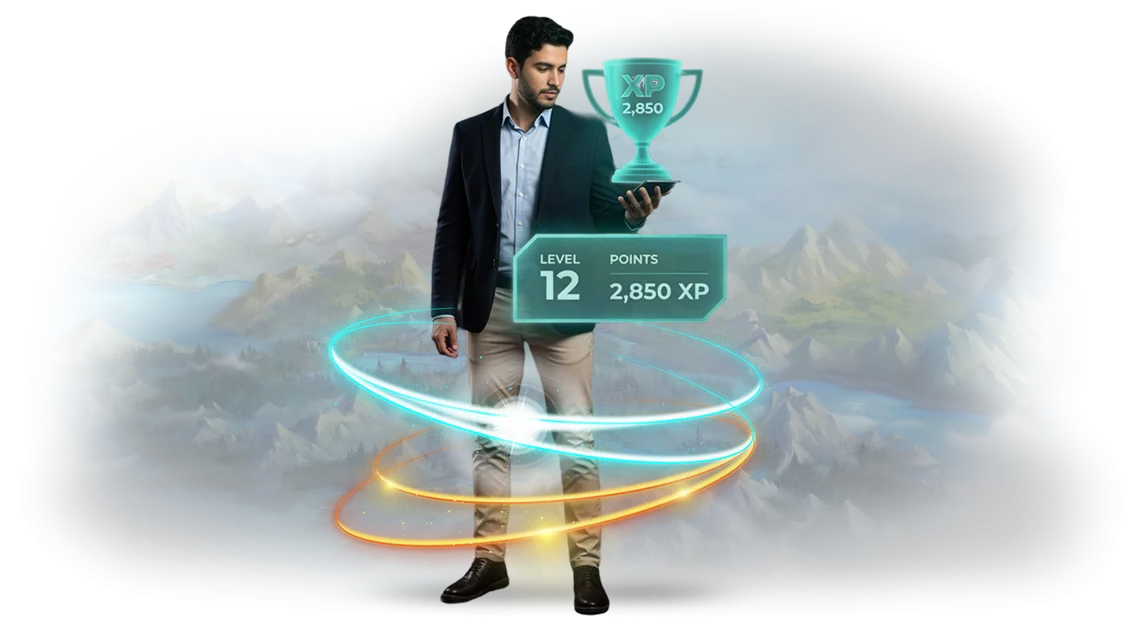
We bring back interest through game mechanics built directly into work tools. The platform where you already build your business processes becomes a space where every step provides feedback: goals, progress, recognition, competition.
Power Platform is not "just another program" but an environment where gamification works on your own infrastructure.
No, we're not about points for points' sake. It's about a clear connection: completed a task — got a result visible to the whole team; reached a goal — earned a status, bonus, or privilege.
The employee understands where they are going and why, and the manager sees a live engagement picture in real time.
What does the business get? Increased activity without coercion, reduced turnover, and faster adoption of change. Employees stop coasting — they start playing differently because a game embedded in everyday work gives what’s missing: clarity, excitement, a sense of progress.
We design gamification for your specifics and show the first growth points already at the implementation stage.
What Gamification Delivers: 5 Measurable Results for Business
Gamification turns routine business processes into a clear achievement system where every employee step brings them closer to a specific reward.
This is not a game for its own sake, but a tool that works toward measurable company metrics — from hitting the plan to retaining key specialists.
The first result is growth in key performance indicators. When employees see their progress in real time, they meet sales targets more accurately, process requests faster, and make fewer document errors.
Companies that have implemented such mechanics report a 20–30% increase in KPI achievement within the first months — without additional motivation costs.
The second effect is employee loyalty. A virtual reward store where points are exchanged for real prizes creates a long-term connection with the company.
People stop viewing work as "putting in hours" — they engage in competition, and recognition from colleagues reduces staff turnover. That is direct savings on hiring and onboarding new employees.
The third result is brand awareness. Gamification works not only inside the team but externally. Corporate contests with a public leaderboard and branded merchandise become a news hook, and employees happily share their achievements on social media. The brand gains organic reach without an advertising budget.
The fourth is lead generation. If reward mechanics are built into customer service — for example, a loyalty program or partner portal — each game session collects contact data and engages buyers more deeply. Growth in repeat inquiries and average order value is a natural side effect of this approach.
The fifth measurable result is process transparency. Managers see which employees are truly driving metrics and which need support. Gamification on Power Platform delivers up-to-date analytics in dashboards — decisions are made based on data, not intuition.
Together, these five effects turn a business into a self-learning system where every participant knows their goal and sees their contribution to the overall result.
Gamification Formats: How to Choose the Right One for Your Task
Sometimes a leaderboard is enough to boost a sales team's activity. But when you need to establish a long-term habit, a corporate reward store works better — employees see the real value of their achievements. The format you choose determines the result you get: a short-term spike or sustainable engagement.
We configure gamification on Power Platform for a specific business task. Below are three basic formats that cover most scenarios: from team motivation to onboarding new employees.
| Format | Who it's for | What it gives the client |
|---|---|---|
| Corporate reward store | Companies with loyalty programs that need to reward specific results | Employees accumulate points and exchange them for prizes. The share of repeat actions grows, and the value of achievements becomes tangible. |
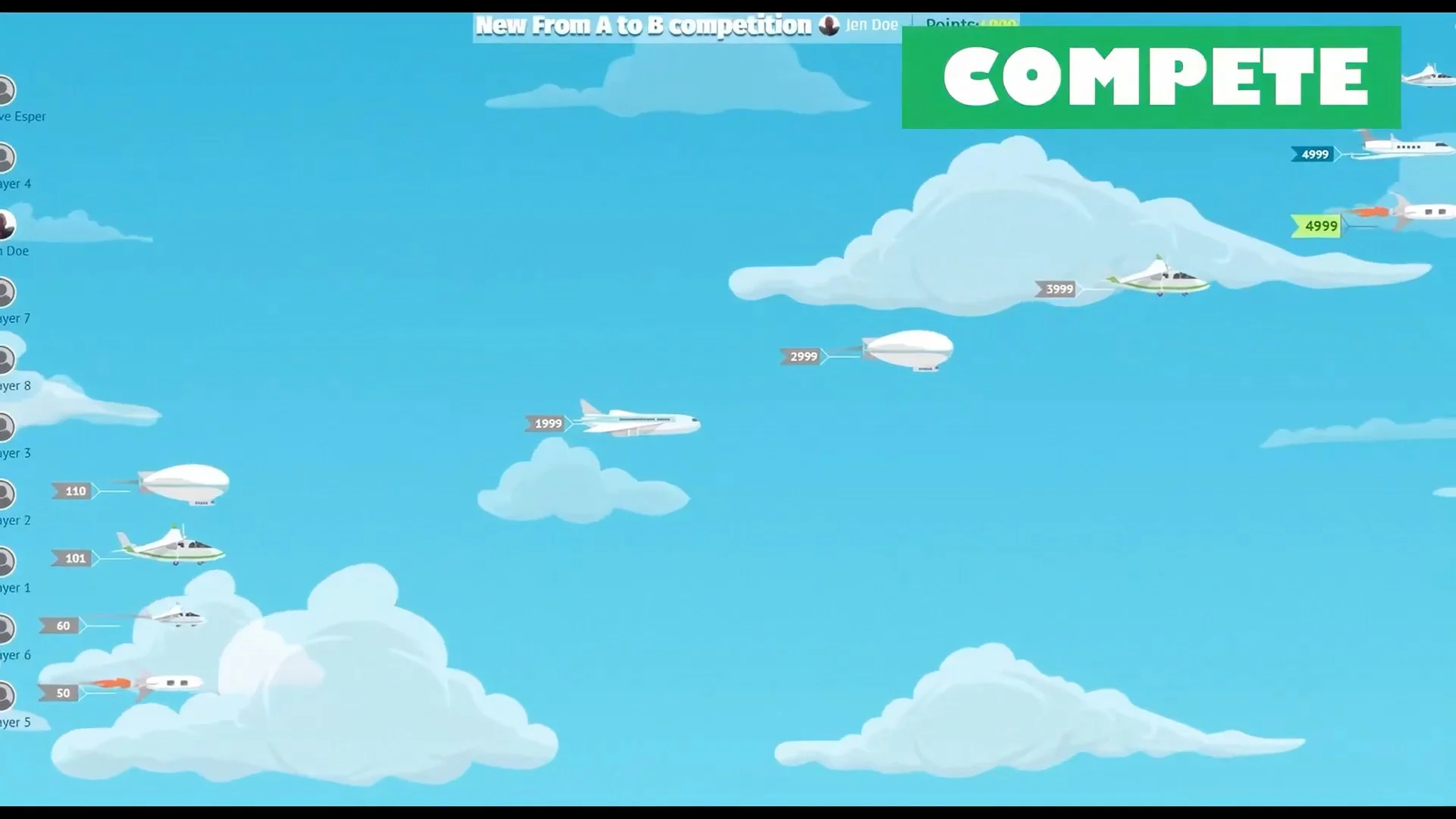
| Leaderboards | Teams where healthy competition and transparent results matter | Competitiveness increases activity. Managers see leaders and those in need of support without manual reports. |
| Quests | Onboarding, training, rolling out new processes | Employees master the material step by step in a game-like format. Engagement is higher, and the entry barrier for newcomers is lower. |
Formats can be combined. For example, a quest helps an employee get up to speed quickly, a leaderboard introduces a competitive element, and a corporate reward store reinforces success and builds the habit of working within the system. This way, gamification drives results rather than simply entertaining.
We select the format and its combinations for your specifics, configure point accrual rules and prizes, and provide managers with clear engagement analytics. You don’t need to understand the mechanics — we handle both the project and the launch.
Power Platform Implementation: Project Stages and Timelines
The implementation stages of Power Platform are structured so that you see results at every stage, not just at the end.
We start with a brief where we define the business goal: what gamification should change — engage employees, reduce operation time, or increase awareness of the reward program.
From there, we create a plan with clear timelines and checkpoints so you know what is happening and when it will be ready.
-
Brief and audit of the current process. We discuss how the reward system currently works, where losses occur, and what needs to be automated. We establish goals, audience, and success metrics — this is the foundation for all decisions.
-
Storefront prototype and user scenario. We create an interactive mockup of the virtual store: how an employee selects a reward, spends points, and receives confirmation. You see and approve the logic before development starts, so the risk of rework is minimal.
-
Development and configuration of Power Platform. We set up the catalog structure, point accrual rules, and roles for employees and managers. We use standard platform tools — this shortens timelines and simplifies future maintenance.
-
Testing together with your team. We check all scenarios: from issuing rewards to reporting. You participate in acceptance testing, make edits on the spot, and only after your "OK" do we prepare the launch.
-
Launch and training. We connect the storefront to your internal system, migrate points and reward data. We train administrators so they can change the assortment and rules without involving developers.
-
Support and development. We stay in touch after launch. We monitor stability and refine scenarios for new tasks — for example, adding seasonal promotions or expanding the program to new departments.
A typical project timeline is three to six weeks, depending on the complexity of the storefront and data volume. We set deadlines in the contract and report on each stage, so you always know what’s going on.
The main advantage of the approach is that you don’t just get a technical solution — you get a ready-made tool your employees start using immediately after launch.
What's Included in the Delivery: A Complete Launch Package
The delivery includes everything you need to launch a corporate reward store: from the prize catalog to access rights configuration. You get a working system, training, and analytics — and can immediately hand it over to your employees.
The virtual store works like a familiar online catalog: employees see their points, choose a prize, and place an order in a couple of clicks. Purchasing, inventory, and fulfillment are managed by a responsible specialist, not by your IT department.
What specifically is included:
- A virtual store with a storefront, prize catalog, and shopping cart.
- Role and access configuration: administrators, HR, managers, employees — each sees only their own operations.
- Automatic point tracking and deduction when an order is placed.
- Analytics: reports on prizes selected, category popularity, and employee activity.
- Instructions and training materials for administrators and participants.
- Technical support during launch and ongoing maintenance.
We build the system on Power Platform — this provides flexibility in adapting to your processes and easy integration with the company's internal systems. All analytics is collected automatically, and the interface is adapted to your brand style.
The result is a closed loop: motivation → points → prize → analytics. The system is self-contained and doesn't require constant developer involvement.
Case Study: How a Corporate Reward Store Doubled Activity
In a retail network with a thousand employees, the loyalty program was effectively not working: points accumulated, but nobody knew what to spend them on. Managers manually awarded rewards — the process took weeks and caused only frustration. What was needed was a simple system that would turn points into real value.
We developed a corporate reward store on Power Platform. In their personal account, each employee sees their point balance and the prize catalog — from gift certificates to extra days off.
Points are accrued automatically for meeting KPIs, and the manager simply approves the result. Everything works in a familiar interface without installing additional software.
Results That Speak for Themselves
Within two months, the number of active participants doubled — from 38% to 76%. The number of completed goals increased 2.2 times, and the average time from earning points to receiving a reward dropped from three weeks to one day.
Employees started reminding managers about their achievements themselves — gamification created healthy competition.
The reward store paid for itself in three months through reduced turnover and increased productivity. Managers gained transparent analytics, and HR gained a tool for retaining valuable specialists.
After a successful pilot, the project was scaled to all branches, and six months later they ordered an expanded catalog — the repeat case turned out to be even more profitable.
How to Choose a Gamification Format for Your Task?
Choosing a gamification format starts not with technology, but with the task you want to solve. If the goal is to increase employee interest in training, lightweight mechanics are enough: points, levels, ratings.
If you need to establish a long-term habit or build a transparent reward system, a deeper approach is required — for example, a corporate reward store with point accumulation and exchange for prizes.
The second criterion is the audience. Younger employees respond faster to competitive elements and public recognition, while conservative teams value clear rules and stability.
The format must match the corporate culture; otherwise, even well-designed mechanics won't deliver the expected result.
The key question is what counts as success: the number of completed actions, sales growth, service quality, or engagement in processes.
This determines the scope of work: sometimes a set of ready-made modules is enough, while in other cases you need custom configuration with integration into your internal system. It's important that gamification doesn't become an end in itself but works toward business metrics.
This is where Power Platform helps: it allows you to flexibly scale from simple applications to a full-fledged reward store, while all data remains in your ecosystem.
We help you determine the right format before development starts, so you get exactly the result you need without overpaying for unnecessary functionality.
In the end, the right format is a balance between goal, audience, and scope. We analyze your task, propose the optimal solution, and implement it with the required depth — whether it's light motivation or a comprehensive loyalty program. Reach out, and we'll discuss what works best for you.
Common Concerns: What If Gamification Doesn't Work?
Any new reward system raises doubts: will employees engage, will it justify the time and budget. These fears are normal, and we address them upfront. Here's how we cover the four main risks.
What if gamification doesn't deliver results?
We don't rely on luck. Before launch, we set target metrics — engagement, task speed, reward section activity. The pilot phase shows real reactions, and guarantees are written into the contract: if the goal isn't achieved, we refine the mechanics at our expense.
Who will support the system after launch?
You get a dedicated manager and tech support. We monitor the reward store, update the catalog, and add new reward scenarios. All changes go through testing so employees don't experience disruptions.
How will employees get used to the new system?
We build onboarding into the project: an intuitive reward interface, short training, and first achievements within the first few days. During the pilot, you see the team's reaction and adjust settings. Our support removes "why is this needed" questions before they grow.
Will the timeline slip?
Before starting, we set a plan with stages and checkpoints. You see the status at each step. Implementation takes from two weeks depending on scope — and that timeline is fixed in the contract.
We close any of these risks in advance, not after the fact. Guarantees, support, adoption, and timelines are all fixed in the contract — you control the process and know what you're paying for. All that's left is to choose the goals, and we'll take care of the rest.Ready to Discuss Your Gamification Project? Submit a Request
The discussion starts with a simple step — a request on the website. Then we contact you at a convenient time, ask a few clarifying questions, and offer solution options for your task.
No unnecessary approvals or long emails: the first conversation usually takes no more than 30 minutes.
After the consultation, you receive a transparent cost and timeline estimate rather than a "rough guess." We lock in goals, choose the gamification mechanics for your scenario, and prepare a launch plan. All you have to do is approve it — we take care of everything else.
- Request and consultation — you submit a request, we discuss the task and determine the right gamification format.
- Analysis and estimate — we study your business process and calculate the cost with a precise list of work.
- Plan and brief — we set goals, timelines, and expected results so you have a clear project map.
- Development and approval — we prepare a solution on the Power Platform, and you receive intermediate versions for review.
- Launch and support — we implement the mechanics, train employees, and stay in touch after launch.
When you order development from us, you get:
- clear timelines — we announce the launch date before work starts and stick to it;
- fixed cost — it doesn't change during the process unless you add new tasks;
- experience from dozens of implementations — we’ve launched gamification for companies across various industries;
- post-launch support — we help with configuration and refinements once the mechanics are live;
- results, not just code — you evaluate the growth in employee and customer engagement, not technical details.
Submit a request on the page, and we'll contact you within one business day, answer your questions, and prepare an estimate for your project. Start with a short conversation, and then you'll see for yourself how much faster a project moves when professionals take it on.