

Why a loyalty program in Workday loses effectiveness
Many companies implement Workday for HR management, but the system itself does not make the loyalty program come alive.
Employees see points in their personal account, yet don’t understand what to spend them on: the rewards showcase looks like a boring list, with no vivid emotions or personal choice. As a result, motivation quickly fades — points accumulate but don’t drive engagement.
For HR, this turns into constant manual operations: awarding bonuses, approvals, answering questions like “where are my rewards?” and “why haven’t my points arrived?”. Each such request takes time that could have been spent on team development.
The more employees, the heavier the load — and the more often the loyalty program is perceived as an obligation rather than a value.
In the end, the company pays for motivation, but engagement doesn’t grow. The tool exists, but there’s no emotional response: employees don’t see the connection between achievements and a pleasant bonus.
This is the classic situation where the system formally works but doesn’t deliver the expected business effect.
We solve this problem by turning Workday into a source of visible rewards. Instead of abstract points — a virtual corporate rewards store, where employees choose what’s valuable to them: from merch to experiences.
Integration with Workday automates accruals and removes manual work from HR. And engagement grows through emotion and conscious choice — exactly what the loyalty program was started for.
What gamification with a corporate rewards store delivers
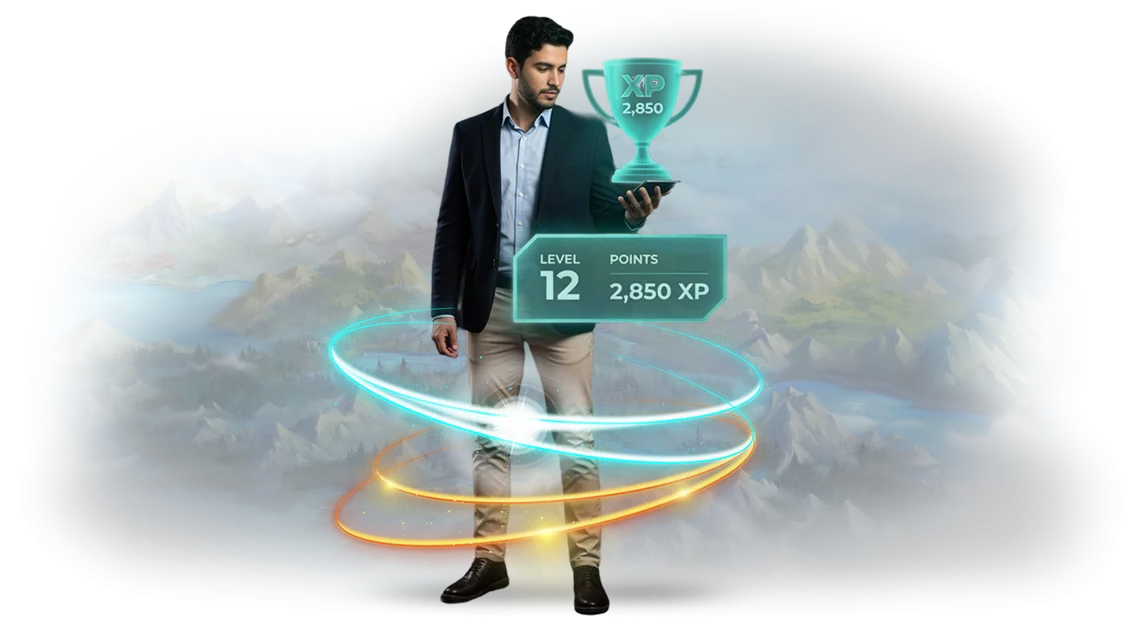
Gamification with a corporate rewards store turns scattered points into an understandable game where every step brings the user closer to real value.
For the client, this means employees actually use the incentive program, and HR stops spending weeks on manual approvals and bookkeeping.
Engagement
Employees participate more actively in corporate processes when they see progress and can exchange points for pleasant bonuses. The rewards store creates a tangible goal: save up — choose — receive. This builds a habit of achieving results and increases daily activity without extra reminders.
Transparency and autonomy
The rules for accruing and deducting points are clear to everyone, so disputes about subjectivity and “favorites” disappear. Employees manage their own results, while the system automatically processes point accrual and reward issuance, integrating with Workday.
HR doesn’t need to count points manually or track balances — this saves dozens of hours every month.
Convenience for HR
The interface is intuitive: showcase, cart, confirmation — employees don’t need long instructions. At the same time, HR gets a unified picture: who is active, which rewards are popular, and which areas are lagging. This makes loyalty programs easier to manage and adjust to the real interests of the team.
In short, gamification with a corporate rewards store increases engagement, reduces HR workload, and makes motivation transparent for all participants.
The company gets a working system without constant manual intervention, and employees get a clear, enjoyable way to receive recognition.
Virtual rewards store formats for your business
The format you choose determines how employees perceive your incentive program and how easily you can manage the reward fund.
The virtual store addresses three key objectives: it motivates through a clear choice, reduces HR workload, and provides transparent analytics for every reward. Below are the typical scenarios, from a compact catalog to a full marketplace.
| Format | Who it’s for | What it gives the client |
|---|---|---|
| Simple rewards catalog | Mid-sized businesses, first automation of incentives | Employees choose a gift from a fixed list without HR involvement. Fast launch in 2–3 weeks, minimal maintenance cost. |
| Branded catalog | Companies where corporate style matters | The rewards section looks like part of the internal portal: logo, colors, category structure. Increases brand recognition inside the team. |
| Storefront with bonuses and levels | Large teams with an advanced motivation system | Employees see not just items but also their achievements: levels, points, progress. Strengthens engagement and drives KPI performance. |
| Corporate marketplace | Holdings and companies with different employee categories | A full-fledged storefront with hundreds of items, limits, and approvals. Connects to your HR system, including Workday, and updates automatically. |
The format is selected based on company scale and current tasks: from “cover the need for gifts” to “make awards part of corporate culture.” We don’t sell a ready-made template — we configure the solution to your budget, team size, and frequency of accruals. That way you get the desired result without overpaying for unused features.
In every scenario, you get a clear interface for employees and a management panel for HR. The manager sees which rewards are in demand and can adjust the assortment in one click. This turns the virtual store into a personnel retention tool, not just a “gift storefront.”
How we implement gamification: a step-by-step process
Gamification implementation is not a “magic button” but a clear roadmap with approval checkpoints. You always see the current project stage and where your decision is needed. A transparent process eliminates surprises and makes the outcome predictable.
- Brief and immersion. We study business objectives and the current employee motivation system. We document goals — this is the foundation for all decisions.
- Scenario audit and plan. We identify where gamification will have the most impact: rewards, learning, regular tasks. We create a plan with timelines.
- Mechanics approval. We show with examples how points are accrued and exchanged for rewards. You make edits before development starts — quickly and without unnecessary cost.
- Implementation and integration. We build the module and integrate it into your working environment. If Workday is in use, the rewards showcase works directly inside the system.
- Pilot launch. We test the mechanics on a limited group and adjust based on results.
- Full rollout. We launch for all employees and prepare short instructions.
- Support and development. We track metrics, refine scenarios, and add new mechanics.
What’s included in the gamification solution delivery
You get more than just a module — you get a ready-made turnkey solution: the corporate rewards store is fully integrated into your HR environment and starts working from day one.
We handle all stages, from system configuration to employee training, so you don’t need to hire a separate contractor or deal with technical details.
Here’s what the delivery package includes:
- Workday configuration for gamification goals. We adapt the platform so the rewards program runs inside your familiar HR system, without duplicate data or extra manual steps.
- Rewards store design for your brand. Showcase design, prize catalog, level descriptions, and rules — all in your company’s visual style, so employees see the store as part of your internal culture.
- Setup of point accrual and deduction mechanics. We define the logic: which actions earn points, how points expire or accumulate, who can make nominations, and how approvals work.
- Integration with HR processes. We connect the rewards store with performance reviews, training, anniversaries, and other events — points and rewards appear automatically, without HR manager involvement.
- Training for administrators and the HR team. We run practical sessions: how to manage the catalog, add new rewards, change rules, and track statistics. Your team gets clear instructions and can maintain the system independently.
- Full documentation and policies. Ready-made administration guides, role and access descriptions, point calculation rules, and prize fulfillment procedures. Everything is organized so that the process doesn’t stop when the responsible person changes.
- Post-launch support. For the first few weeks after rollout, we stay in touch, answer employee questions, and quickly fix any issues. After that, ongoing support is available on request.
With this scope, you won’t need to refine or configure anything yourself. You get a working tool with clear rules, and your employees get a simple, transparent way to be recognized for their achievements.
Case study: engagement grows by 30% in a Workday-based company
In a company with 2,000 employees using Workday, the rewards program operated separately from the main system: points were calculated manually, and gifts were issued through chat-based requests.
Employees quickly lost interest, while HR spent up to five hours a week on administration. The client came to us to turn this fragmented process into a unified motivation system.
We developed and implemented a virtual rewards store integrated with Workday. We configured a catalog with 200 items, automatic point accrual rules for KPI achievement, and an employee personal account.
The entire process took two months, and the transition happened without disrupting operations — employees got access to the store immediately after launch.
After three months, program engagement grew by 30%: 85% of employees activated their accounts, and the number of active weekly users doubled.
HR time spent processing requests dropped by 40%, and the natural growth in repeat store visits showed that employees now see rewards as part of the company culture.
For the business, this means sustainable motivation without increasing the budget: points are distributed automatically under clear rules, and managers see the results in Workday.
The client was satisfied and has already ordered further development of the module for annual bonuses — the best proof that the solution works. This case confirms: gamification through familiar tools increases engagement and reduces the load on the team.
Frequently asked questions about gamification implementation
Before launching gamification, clients usually have similar questions: how it fits with current processes in Workday, how long the launch will take, and whether it will put extra pressure on HR. Let’s address the most common concerns.
Is gamification compatible with Workday?
Yes. The corporate rewards store is embedded into the Workday interface, so employees don’t need to switch between systems. All data — points, rewards, activities — syncs with the platform, and the rules are configured once and then run automatically.
How long does implementation take?
Initial results appear quickly: within 2–3 weeks after the brief, we show a working prototype, and the project is fully launched within 4–8 weeks, depending on the number of processes and employees.
After that, you get support and can expand the mechanics — add scenarios, change rewards, and grow coverage.
Will this make the HR team’s work more complicated?
No — it removes the routine. HR sets the point accrual rules and tracks results through clear reports, instead of handling manual calculations. The internal store processes reward orders on its own, automatically deducts points, and generates statistics for management.
What if we already have our own motivation rules?
We don’t impose a ready-made template. Gamification is configured around your logic: which actions to reward, which rewards to offer, and how often. Existing processes and rules stay intact — only the way they are presented and how employees engage with them changes.
Get gamification that actually works
We create gamification that fits into your business processes and delivers measurable results: higher engagement, faster learning, stronger loyalty.
Already at the brief stage, we show how the mechanics will work in your environment — including a corporate rewards store for Workday.
To help you make a risk-free decision, we offer:
- Free consultation: we analyze your challenge and recommend which game mechanics will deliver the most impact for you.
- Solution demo: we use live examples to show what gamification looks like in the employee interface and what scenarios it covers.
- Project estimate: we state the timeline and cost before the work begins, and fix the scope and expected results.
- Integration with your processes: we configure gamification to work with your HR platform and avoid process restructuring.
- Post-launch support: we track metrics, fine-tune the mechanics, and help you develop the system further.
- Result guarantee: we set target KPIs in the contract and take responsibility for achieving them.
Leave a request — we’ll call you back within one business day, answer your questions, and prepare a personalized offer. We’ll start with a free consultation, where you’ll see how gamification turns routine into momentum and increases the return on your corporate platform.
How to choose the right rewards store format for your goals?
The choice of rewards store format determines how actively employees engage with the program and how quickly it pays off. In Workday, you can implement both a simple storefront and a full corporate store with points, levels, and personalized offers.
To avoid mistakes, first answer this question: what matters more to you — recognizing achievements, driving engagement, or building a habit of new actions?
If your goal is to reward top performers, a catalog with fixed rewards is enough. If you want to turn routine processes into a game, you’ll need mechanics with point accumulation, progress, and surprise bonuses.
One important nuance: the format must match your corporate culture and employee expectations. For one company, a simple “spend points” button is enough; for another, a full gaming ecosystem with missions and achievements.
Once you define the goal, look at frequency of use. Regular motivation means ongoing challenges and small rewards. One-time campaigns are simpler and cheaper to maintain.
The number of users also matters: for a large distributed team, you need automatic synchronization with Workday and clear accrual rules.
Gamification only works when employees can easily understand what they earn points for and what they can buy with them. A transparent rewards showcase reduces HR questions, while automation saves managers time.
That’s why we help you choose a format that delivers results without unnecessary management complexity.
In the end, the best format is the one that solves your business problem: attracts attention, sustains interest, and motivates repetition of desired actions. If you’re unsure, start with a pilot on one team and validate the mechanics before scaling.