

Why Customers Leave Food Delivery Services and How to Stop It
Food delivery in a city is a fiercely competitive field. Customers have no reason to stay loyal to one service: order 10 minutes earlier once or get a small bonus from a competitor — and they never come back.
Every lost customer like this means lost revenue and rising costs for acquiring new ones. The main reason for churn is not the quality of the dishes but the lack of emotional attachment or accumulated bonuses that would be a pity to lose. Without a loyalty system, regular customers turn into one-time traffic.
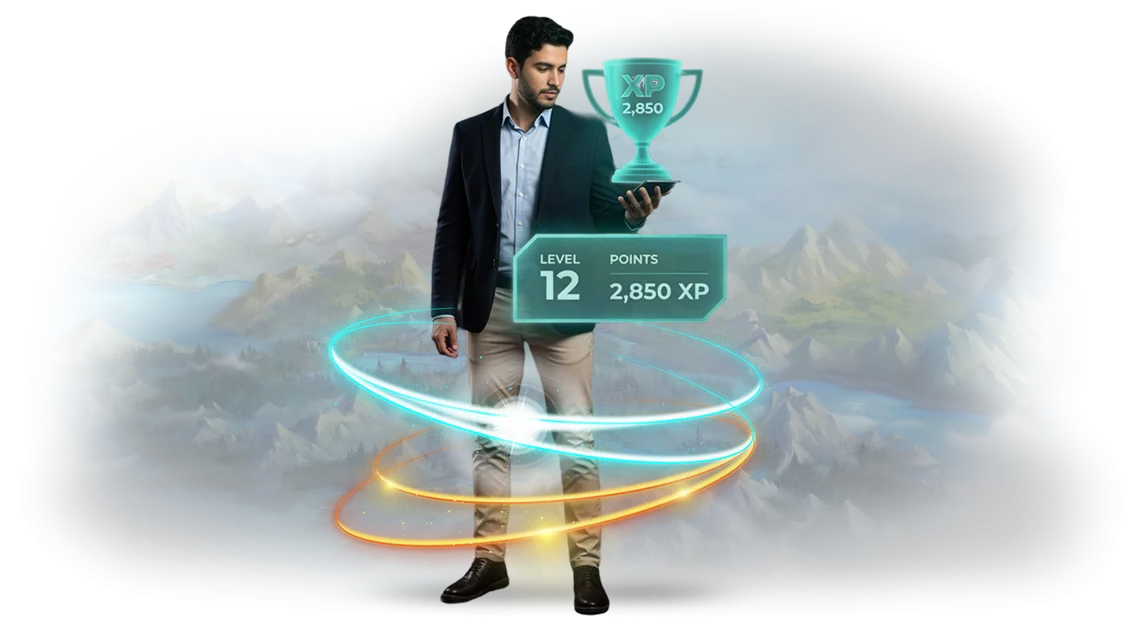
Gamification solves this problem. You build retention not on discounts but on engagement: points for every order, levels and statuses, goals and rewards.
Such a system turns ordinary delivery from a routine into a game, where every next order brings you closer to a pleasant prize.
As a result, the customer orders more often and more willingly — the share of repeat orders grows. They track their progress, read notifications about new challenges, and return to the service on their own, even if a competitor offers a temporary discount. This is exactly how real loyalty is formed.
The mechanics barely require changes in the delivery process. You simply add a game layer to your existing application — for example, through a Telegram Web App the client already uses. It integrates quickly and works across all scenarios: from regular orders to friend referrals.
We develop gamified solutions for food delivery that reduce customer churn and improve retention. Instead of mindless discounts, you get a tool that steadily drives repeat orders and increases profit without extra advertising spend.
What Benefits Gamification Brings to Business
Growth of Repeat Purchases
Gamification turns a one-time order into a habit. Accumulated points, levels, and personalized rewards give the customer a clear benefit: the more they order, the more they get.
This directly increases the number of repeat visits and makes revenue stable — without constant advertising investment.
Higher Average Order Value
Game mechanics gently nudge the customer to add a drink, dessert, or second dish to their order. Tasks like "build a combo" or "reach free delivery" grow the basket naturally, without aggressive discounts. As a result, the average order value rises while margins stay under control.
Engagement and Order Frequency
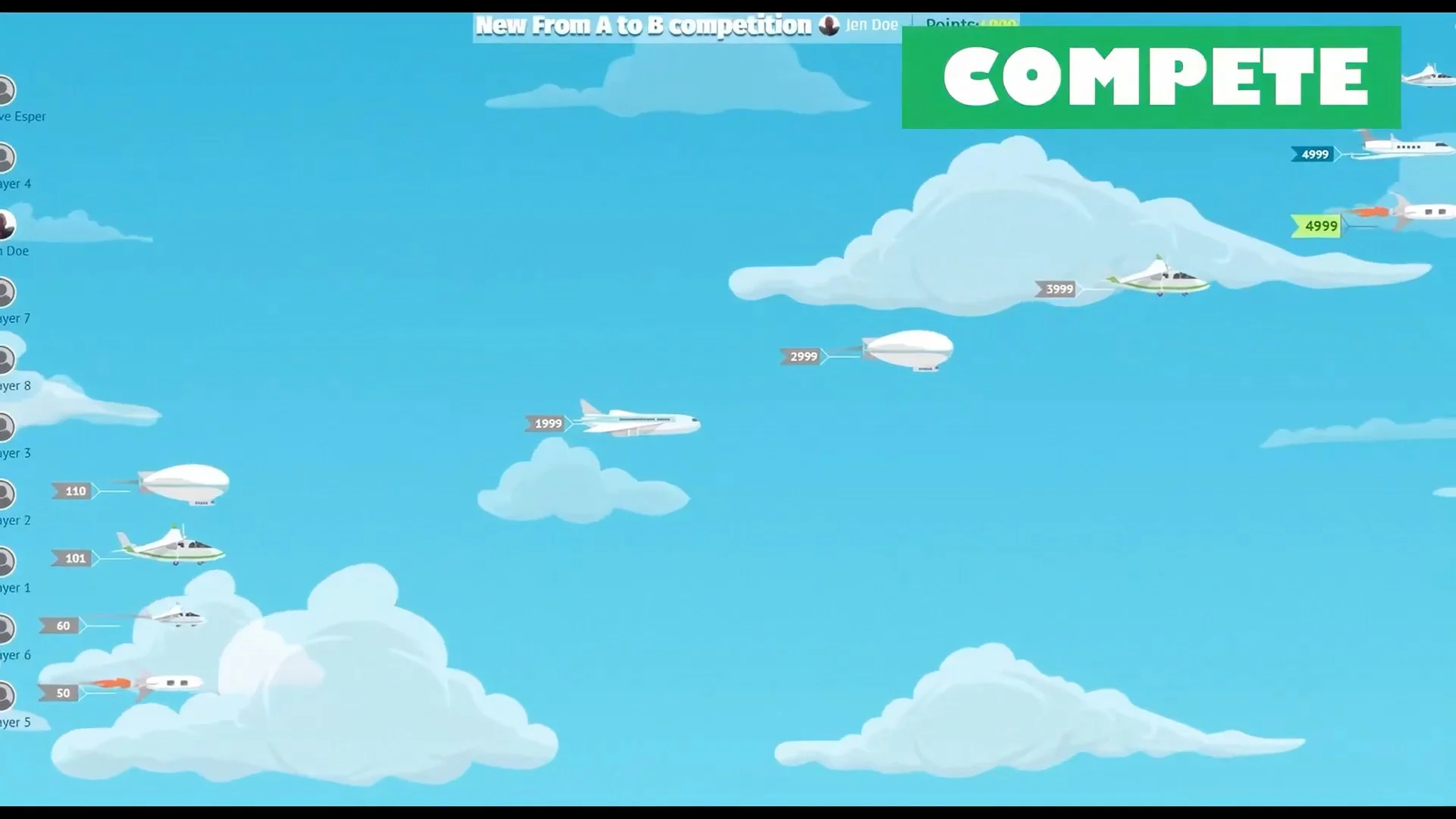
Daily bonuses, quizzes, and seasonal competitions make customers open the app not only when they feel hungry but out of habit — to check rewards, complete a task, or keep a streak alive.
In this way, the service becomes part of the daily routine and order frequency noticeably increases.
Brand Recognition and Word of Mouth
Competitive mechanics and gifts for inviting friends turn customers into brand ambassadors. They tell others about the service on their own, share their results, and bring in new users. Organic reach grows while acquisition costs decrease.
Overall Revenue Growth
All mechanics work toward a single result: repeat purchases raise customer lifetime value, the average order value grows, order frequency increases, and new users arrive by referral. The combined effect is a predictable increase in revenue with the same marketing costs. This is the core value of gamification for a food delivery business.
Gamification Formats for Food Delivery Based on Company Goals
In food delivery, customers easily switch between services — the difference is made by emotion. Gamification turns an order into a game with a clear reward, increases engagement, and ties the user to the brand.
But each format solves its own task: retention, average order value, or reactivation of inactive users.
We select mechanics based on your business metric: order frequency, repeat purchase share, or reactivation of "sleeping" customers.
In a Telegram Web App, this works especially naturally — the user is already in the messenger, and the reward arrives immediately as a promo code or bonus. The core formats are listed in the table.
Core Gamification Formats
| Format | For Whom | What It Gives the Customer |
|---|---|---|
| Quizzes and tests | New users who haven't chosen a service yet | Engage from the first contact, help choose a dish, and collect taste preferences for recommendations |
| Loyalty bonuses | Regular customers ordering 1–2 times a month | Increase order frequency and average order value: customers top up their bonuses toward a reward and return more often |
| Mini-games with rewards | Broad audience during low-demand hours | Entertain and hold attention: players get a promo code for the result and immediately place an order |
| Promotions and challenges | Customers who have stopped ordering | Bring back the dormant audience: a task with a reward for a repeat order motivates them to return |
How the Project Works: From Brief to Launch
We structure our work so that you see results at every stage and can influence the project. No "black boxes": you always know what's happening, and approvals take minimal time.
Work Stages
-
Brief and immersion — we discuss your goals, audience, and expected results. You get a transparent plan with a timeline estimate.
-
Strategy and scenario — we develop a gamification concept that increases repeat orders and holds customer attention.
-
Prototype and design — we show what the game will look like inside Telegram and approve every screen and mechanic.
-
Development and assembly — we build a working version; you see intermediate results and can make changes.
-
Testing with a real audience — we validate the scenario on a small group of customers and fix any issues.
-
Full rollout to all users — we publish the gamification in your Telegram channel or app and connect promotions.
-
Analytics and refinement — we monitor customer behavior, improve rewards, and boost engagement levels.
In the end, you get a working tool that increases loyalty and raises the average order value. And thanks to a clear process, you get confidence in timelines and results. We support the project after launch and help adapt the mechanics to new goals.
What's Included in a Gamification Project Delivery
You get not "code on a disk" but a ready-made working tool that generates orders from day one and collects customer data. We handle the entire cycle: from designing the game mechanics to integrating them into your delivery processes.
Here's what's included in the delivery:
- Game scenario tailored to your business: a well-thought-out customer journey — from the first order in Telegram to repeat visits. Point accumulation, task completion, and reward mechanics all work toward retention and a higher average order value.
- Design in your brand style: interface design, icons, and animations in your brand colors and style, so the gamification looks like a natural extension of your delivery, not a third-party app.
- Configured integration with your kitchen: a connection to the menu, shopping cart, and order processing system. Points are credited automatically, and promo codes are applied without operator involvement — no manual entry needed.
- Admin dashboard: a clear panel where you can see user activity, reward costs, and campaign performance. You can change game conditions and prizes without hiring a programmer.
- Technical documentation and training: instructions for your managers and operators so the launch doesn't slow down your call center or delivery service.
- Warranty and post-launch support: we stay with the project, monitor stability, and help adjust the mechanics when you see the first results.
We'll also state it explicitly: all player analytics is configured to your tasks — you see not just "number of participants" but conversion to order, purchase frequency, and the game's impact on revenue. This turns entertainment into a measurable sales tool.
We work on professional software and server architecture, so the interface handles peak loads during lunch and dinner hours, when most of your traffic arrives. You get not a toy but a full-fledged sales channel that pays for itself through increased loyalty and repeat orders.
Case Study: How Gamification Increased Repeat Orders
A food delivery network came to us with a typical pain point: customers ordered once or twice and then left for competitors. Marketing promotions created short-term spikes but didn't build a habit. They needed a tool that would engage customers after every order and motivate them to come back.
We proposed gamifying the customer journey inside Telegram — where the audience already spends its time. Instead of a boring catalog and personal account, we built an interactive quest: with every order, the customer earned points, unlocked levels, and unlocked bonus tasks.
Progress was visible instantly, and rewards nudged them toward the next step — topping up for free delivery, ordering a new item, or inviting a friend.
Results
Over three months of running the mechanics, the share of repeat orders grew by 43%, and the average order value among regular customers increased by 27%. The number of customers placing more than three orders per month doubled.
Most importantly, guests came back not because of discounts but for game progress and status, which reduced the business's dependence on price undercutting.
Why It Worked
Gamification in Telegram worked because it was embedded into a natural scenario: order → earn points → unlock a new reward. The system didn't require installing an app and reminded users of itself at the moments when they were ready to eat.
We used simple, battle-tested tools, so the game ran reliably even during peak hours, and the client had no delays in fulfilling orders.
After the project was completed, the delivery network implemented two more gamification stages: seasonal events and team orders for offices. The client confirmed that these mechanics became part of their business model, not a one-off promotion.
If you want customers to choose you out of habit rather than because of a promotion — this case study can serve as the foundation for your strategy.
Frequently Asked Questions About Gamification Implementation
You're implementing gamification in food delivery — and that's the right move: competition is high, and customers easily switch between services.
But along with expectations of growing repeat orders come doubts: is it safe, how much time will setup take, and who is responsible for the result. Below are answers to the questions business owners ask most often.
Is it safe to implement gamification in a running business?
Yes. We connect the game mechanics to your current order system without changing familiar processes for employees and couriers. Everything works through an add-on in Telegram Web App: the customer gets a familiar interface, and you get new ways to retain them. The changes don't affect logistics, warehouse, or financial reporting.
How long does the setup take?
Usually between two and four weeks, depending on the complexity of the mechanics. At the start, we collect a brief and connect the basic set: bonuses, levels, tasks.
The launch happens in small steps so you have time to check the results and, if necessary, adjust them together with us.
What if the mechanics don't bring the expected effect?
We don't abandon the project after release. During the first month, we collect analytics on repeat orders and engagement and compare them with your usual metrics.
If we see that the result is weaker than expected, we refine the mechanics free of charge — this is stated in the contract.
Who is responsible for support after launch?
You're not left alone with the system. We take on technical maintenance, monitor application stability, and update the game mechanics in line with changes in customer behavior. One responsible partner — no need to find separate contractors for specific tasks.
How to Choose a Gamification Format for Your Goal?
Start with the business goal, not the mechanics. The same gamification works differently for retention, average order value growth, or acquiring new customers.
In food delivery, speed and simplicity matter most: the user makes a decision in seconds, so the mechanics must be understandable without instructions or lengthy explanations.
If the goal is to win back customers who haven't ordered in a long time, personal goals and loyalty levels with surprises work well. If you need to raise the average order value — logical "build a set" mechanics or a challenge with an easy next step.
For new customers, a welcome quest with a bonus on the first order works best, and for regulars — a closed club with special offers.
The choice of format also depends on the audience and scenario: how often the user opens the app and at what stage they decide to order. Younger users find challenges and ratings interesting, while older audiences prefer simple loyalty bonuses. At the same time, gamification shouldn't create barriers: one screen, one goal, instant reward.
That's why we start with a short brief and analytics, then offer 2–3 options with a forecast of customer behavior, rather than just "building a game." This approach eliminates unnecessary costs and helps implement mechanics that truly affect revenue.
Submit a request — during a free consultation, we'll analyze your case and select a gamification format for your goal and budget. We'll also show you how to use a Telegram mini-app for food delivery and share real-world examples.
Submit a Request for Gamification Development
Ordering gamification for food delivery isn't about "just another service" — it's an opportunity to turn an ordinary order into a game customers want to return to.
We'll consult for free, calculate the cost, and propose mechanics tailored to your audience — without abstract promises, but with clear implementation steps. Submit a request, and within one business day you'll receive a plan you can evaluate right away.
After you reach out, you'll get:
- Custom mechanics for your business — from loyalty points to quests and giveaways adapted to food ordering;
- A clear cost and timeline estimate — no hidden work, broken down by stages;
- A turnkey launch plan — from prototype to publishing in Telegram, taking your current processes into account;
- Customer engagement recommendations — how to increase order frequency and average order value;
- A repeat-order strategy — mechanics that retain and bring back users;
- Answers to all your questions — about integrations, load, promotion, and support of the finished solution.
Start with a short consultation: we'll explain which scenarios work best for food delivery and show examples from real projects. Submit your request in the form below — we'll call you back at a convenient time.