

Why clients quit workouts without fitness gamification
Clients walk into a fitness club with bright eyes, but within a month or two half of them start skipping workouts. The reason isn't laziness — monotonous sessions simply stop delivering strong emotions, and sport turns into an obligation.
Without game mechanics, people lose interest, find excuses, and eventually freeze their memberships.
For a club, this means direct revenue loss: retaining clients costs several times cheaper than acquiring new ones. If a visitor doesn't see a goal, progress, or excitement, they leave for competitors or quit sports altogether.
The problem isn't the quality of equipment or training programs — it's the lack of systematic client motivation.
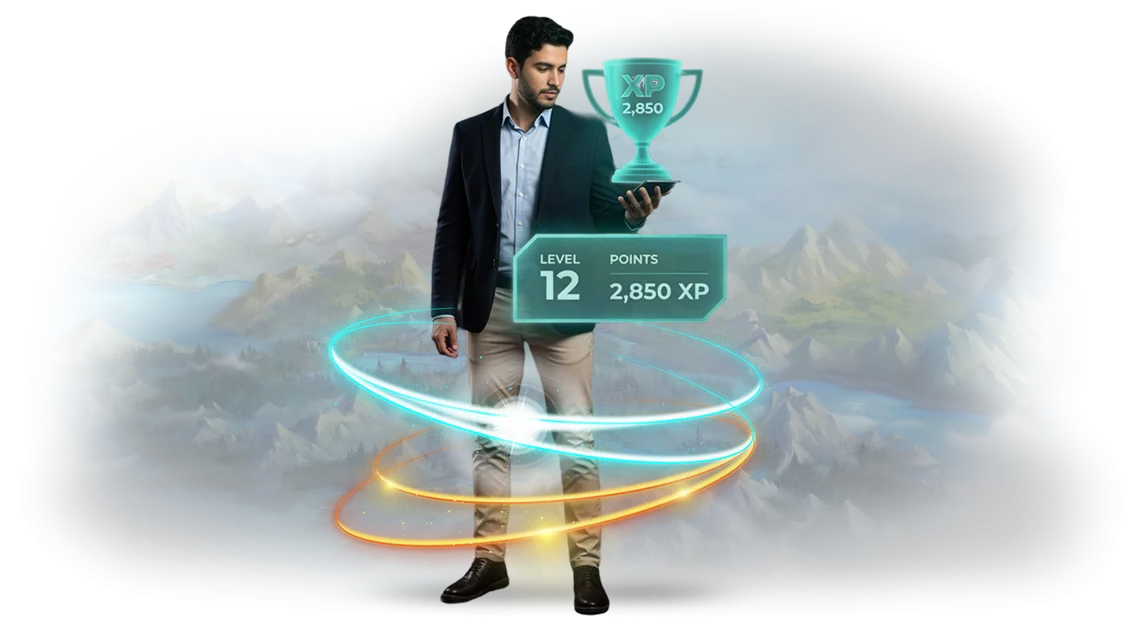
Fitness gamification solves this: levels, points, challenges, competitions between members, and personal records turn workouts into a game.
People want to unlock the next level, keep their workout streak, or overtake a friend in the rankings — and that brings them to the gym even when they're in a bad mood.
Game mechanics tap into the natural drive to achieve goals, so client retention stops being the admin staff's burden.
A sports club gets predictable attendance, regular membership renewals, and extra revenue from service sales. When client motivation is fueled automatically, staff doesn't need to win people back manually through calls and discounts — the system itself keeps people engaged.
We help implement such game mechanics right inside a Telegram Web App — without installing a separate application, in a familiar interface.
Fitness gamification becomes a business tool rather than just entertainment: you see retention growth and can manage motivation for every individual client.
What a game app in Telegram gives a business
For a fitness club or studio, the hardest part is keeping a client after their first workout. Most people lose motivation within a month, and memberships don't get renewed. A game app in Telegram solves this: every visit turns into a game with points and rewards.
A client doesn't just go to the gym — they accumulate points and earn bonuses. The mechanic keeps them coming back again and again, and the messenger itself is always at hand. Here's what a business gets from such a project:
- Higher audience engagement. Every workout becomes a quest. Clients see their progress, compare themselves to others, and spend more time in the app.
- Retention and a loyalty program. The level system and prizes tie clients to the club. Churn drops, membership duration grows, and you don't have to keep offering discounts.
- Brand recognition. Game mechanics encourage people to share wins on social media. Every post is free advertising featuring real client faces.
- New leads. Invitation mechanics motivate members to bring friends. Trial workout requests arrive on their own, without extra ad spend.
We've been building such turnkey solutions for over 10 years. We design game scenarios, build the app, and support it after launch — so you get a real result, not just a "game for the sake of a game."
Gamification formats for fitness tailored to business goals
Gamification in fitness works differently for different audience segments. A beginner needs support and clear progress, an active client needs competition and status, and those who come in groups need a shared result. There's no one-size-fits-all mechanic, so we match formats to a specific business goal.
Three formats cover most fitness tasks:
| Format | Who it's for | What it gives the client |
|---|---|---|
| Competitive challenge | Active clients who love to win | Higher visit frequency and an emotional bond with the club |
| Accumulation program | Beginners and those who quit in the first month | Retention and a gradual habit of regular workouts |
| Team competitions | Groups and corporate clients | A bigger base through friends and family, repeat purchases |
Once a format is chosen, we tune the mechanics to your processes: timelines, rewards, and how points are awarded. Gamification needs to integrate with your loyalty system and not demand extra effort from clients. That's how it lifts membership conversion and raises the average check on additional services.
We show on a prototype how each format looks in a Telegram Web App and help you pick the one that will deliver the biggest impact for your client base.
How gamification of business processes development works
We guide you through every stage of developing gamification for business processes — from the first task description to app launch and project support. For fitness, this matters a lot: you get a tool that retains clients and motivates them to come back.
- Brief and task description. We listen to how you want to change client behavior: increase workout regularity, boost returning visits, warm up your audience. We capture goals and success criteria — and then work toward them.
- Designing game mechanics. We propose scenarios that fit your business process: points, levels, challenges, rewards for real actions. We explain every mechanic in plain words, without technical details.
- Prototype approval. We show what the Telegram app will look like: screens, tasks, prizes. You can make changes before development starts — this saves time and budget.
- Development and testing. We build the app on proven professional tools. We test scenarios across different devices and user types so the launch goes smoothly.
- App launch. We help set up access, connect analytics, and train the team. You get a ready-to-use tool plus a clear instruction manual.
- Project support. We stay in touch after launch. When needed, we refine mechanics, add new tasks, and help gamification grow alongside your business.
What's included in the delivery after gamification development
We pin down the delivery scope upfront so you know what you get at every stage. No abstractions: strategy, prototype, the app itself, staff training, and documentation — everything in one package.
This lets you plan the launch without surprises and immediately see how the project is moving toward results.
Here's what's included:
- Gamification strategy — a description of scenarios, game mechanics, and how they boost engagement among clients and employees.
- Interactive prototype — a clickable model of the future app, perfect for testing logic before development starts.
- Ready app — a fully configured Telegram Web App adapted to your business processes.
- Staff training — short practical sessions for the team: how to administer the app, update activities, and work with results.
- Instructions and project documentation — clear guides for admins and users, plus a description of the solution architecture.
- Technical support after launch — we support the project through the initial period and quickly fix any issues so you operate without downtime.
This package covers all needs: you get a strategic document, a working tool, and team training. You won't depend on developers for every small change — your staff can manage activities on their own through an intuitive interface.
The main thing you get isn't just "code" — it's a ready-made tool for growth. Out of the box, the app helps increase client activity, raise loyalty, and collect data on user behavior.
That same data later becomes the foundation for future marketing decisions and new loyalty programs.
If you're planning to launch fitness gamification, the whole project is packaged so that your team can start using results right after implementation. And we stay in touch to develop mechanics and add new scenarios when your business is ready.
Example: how a sports club won back clients with game mechanics
We had a telling case: a chain sports club was losing clients in the second month of membership — after the initial excitement, attendance dropped, and only a handful made it to the end of the term.
Standard email blasts and discounts produced a short spike but didn't change the habit of training regularly.
We built a gamified Telegram Web App that fit into visitors' daily routine. Workouts started earning points, unlocking levels, and positioning members in the club-wide ranking.
Tasks ranged from easy ones (attend a workout, drink water) to serious ones (complete a challenge), so the game worked for both beginners and seasoned athletes.
Results in numbers
After two months, the club won back 68% of clients who had been gone for three weeks or more. Average visit frequency rose by 41%, and 55% of players brought friends through referral links — the club gained new clients without spending extra on advertising. Retention in the third month after launch was twice as high as with the previous loyalty program.
What the client said
The club director noted that the mechanic resonated with the audience right away: "We expected interest to last a couple of weeks at most, but people are reminding each other about workouts just to climb the rankings. This gave us membership renewals that discounts could never achieve."
This case isn't about technology — it's about client behavior. When a visitor understands the goal and sees their progress, they come back on their own. We take the same logic and adapt it to your task: winning back clients, raising visit frequency, or launching a new service.
How to choose the right game mechanic format for your business
There's no single "right" game mechanic — what engages people in a quiz won't work for keeping them coming to workouts.
Choosing a format starts with two questions: what business goal stands before you (attract clients, raise attendance, motivate regular sessions) and who your audience is — beginners or regular visitors.
We help you approach this systematically: we run an audience audit, analyze current processes, pick two or three suitable mechanics, and show how they'll affect user behavior. Below is a quick reference: how formats line up with typical fitness club goals.
| Format | Business goal | Fitness example |
|---|---|---|
| Quest with tasks | Engage beginners and introduce services | A series of challenges with rewards for first visits |
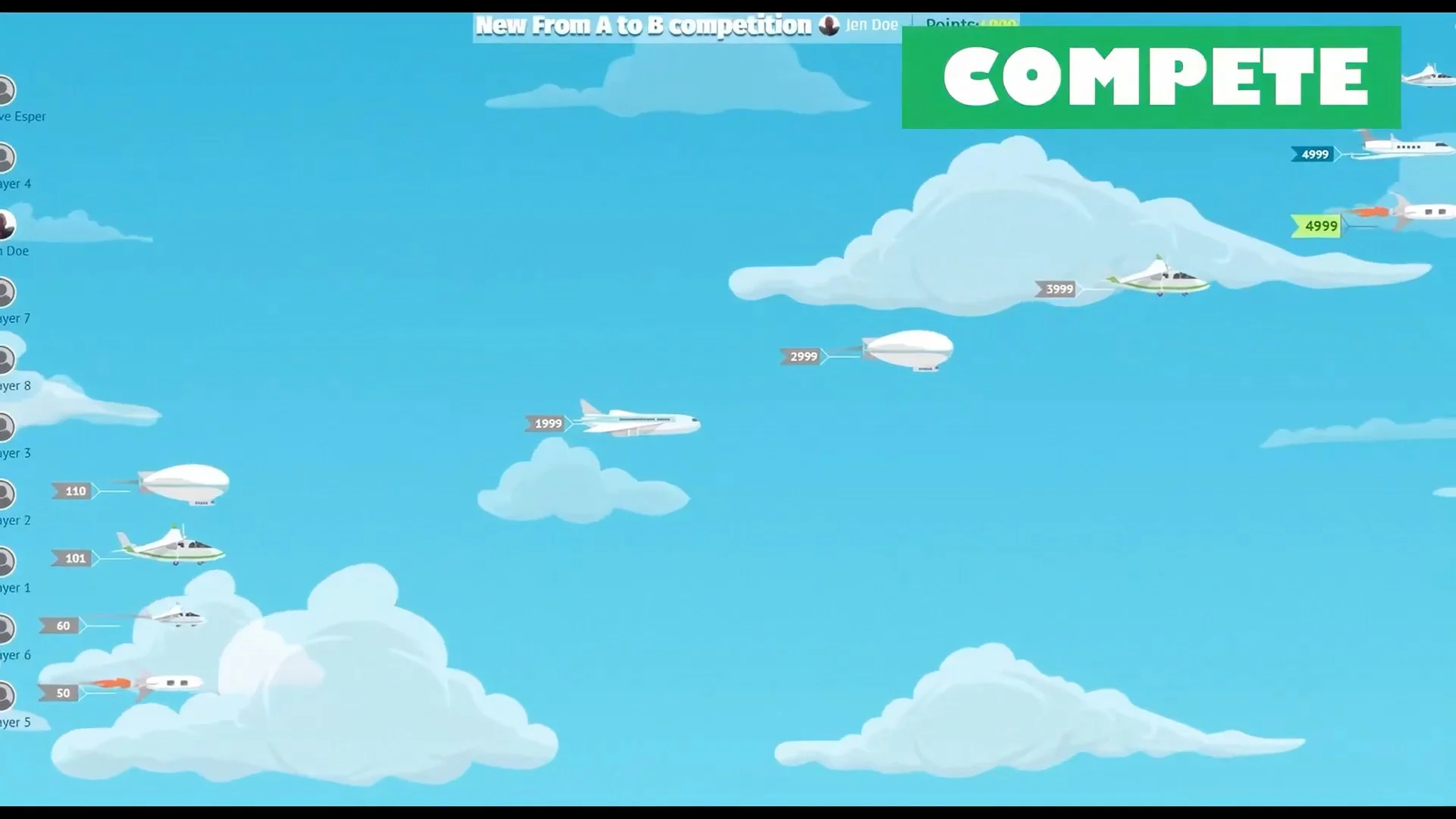
| Ranking and competitions | Raise workout regularity | A leaderboard by visits with a prize for the top member |
| Point accumulation | Retain clients and raise the average check | Points for workouts — exchange for a massage or smoothie |
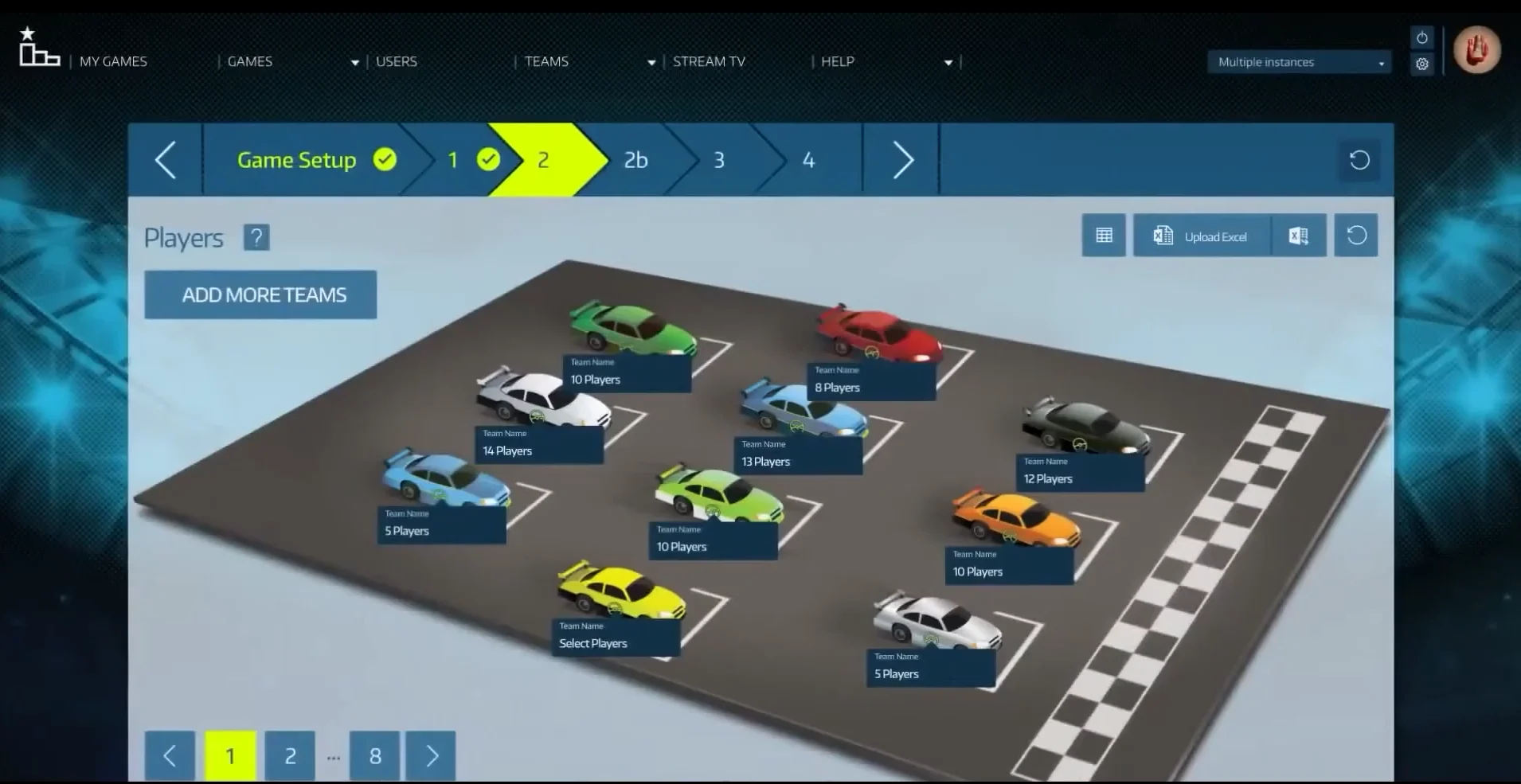
| Team competitions | Build a community around the club | A shared run or marathon: group progress, a common goal |
Each mechanic has its own role, so we don't pick the flashiest idea — we pick the one that delivers measurable results for your business. If needed, we combine them: for example, points as the base system plus a quarterly team competition on top.
After the audit, you get a recommended format with justification and an implementation plan. We quickly assemble a Telegram app prototype, test it with a real audience, and decide based on the numbers whether to scale the mechanic. This way you avoid expensive mistakes and launch gamification that actually works.
Frequently asked questions about business gamification and Telegram apps
When it comes to gamification, clients tend to have similar questions: where to start, how fast results come, and who supports the app after launch.
Based on our experience, we've put together short answers to the most common concerns — so you understand how everything will work before you even start.
Is it hard to implement gamification into business processes?
No. We handle all the development — from idea to launch. Your role is to define the business goal and give feedback in time.
We adapt the mechanics to your processes, so employees won't need to learn a new system. They keep working in the familiar Telegram, and game elements simply make the routine more interesting.
How long does a project take?
A typical project takes two to four weeks — we give an exact timeline after the brief, once we understand the scope. You get a clear plan with dates and stage-by-stage results, so there are no surprises.
If you need it urgently for an event or a campaign launch, we can speed things up using ready-made modules.
How do we train employees or clients to use the app?
No separate training is needed: the interface is built on familiar Telegram actions. A short instruction that we prepare is enough.
For your team, we'll run a demo and answer questions if needed. People pick it up quickly — usually a couple of days is enough for everyone to get comfortable.
Who supports the app after launch?
We don't abandon the project after delivery. After launch, support and warranty remain — we check mechanics, make fixes, and help users.
You can always reach us through your usual communication channel and get a prompt response. Updates and improvements are done in a way that doesn't break existing workflows.
Will the app work with our accounting system?
Yes. We integrate the app with your accounting system — CRM, client database, or attendance tracking. Data is pulled automatically, which removes manual work and reduces errors.
During the brief, we'll clarify what you use and propose the best integration approach. For you, it's a transparent process: you keep using your familiar tools, and the app complements them.
Let's discuss your task: turnkey gamification of business processes
Leave a request for gamification development for your fitness business, and we'll get in touch within one business day to discuss the task. No vague promises: just a concrete conversation about your club, audience, and goals.
After a short brief, we'll prepare a cost estimate and a personal proposal — free and without any obligation. You'll see how gamification will affect attendance, client retention, and revenue before you even make a decision.
What you get right after reaching out:
- prompt feedback and answers to all your questions;
- an analysis of your task from a fitness business perspective, not just a "pretty mechanic";
- a clear cost estimate and timeline for launching gamification;
- a personal proposal tailored to your goals, not a template rate;
- a plan of next steps: from brief to launch and post-release analytics;
- support at every stage of implementation — from prototype to working with results.
After you confirm, we lock in the plan and get to work. Typically, launching gamification takes from two weeks to two months — the exact timing depends on scenario complexity and the integration format.
We stay in touch after release too: we help analyze participant activity, improve the mechanics, and build it into your client motivation system.
Leave a request — we'll respond, calculate, and launch. The first step takes a couple of minutes, and the result will keep working for your business for a long time.