

Gamification for Conference Halls: How to Bring Back Participant Interest
Every organizer knows how hard it is to hold participants' attention during long sessions. After 20–30 minutes of a presentation, people dive into their phones, and by evening the conference becomes a formality — attendees are formally present but not truly engaged.
For a conference hall owner, this is a warning sign: guests don't get value, don't share impressions, and don't come back.
Declining participant interest directly hits the business. Organizers notice empty seats, hear negative feedback, and choose another venue for their next event. As a result, hall occupancy drops, and with it revenue.
Rebuilding reputation is hard — every event becomes a test of whether the venue can withstand competition.
Gamification of conference halls solves this problem. Instead of passive listening, participants engage in interactive scenarios: they answer questions, earn points, compete as teams, and share results on social media.
Game mechanics hold attention throughout the entire event, create an emotional connection with the brand, and turn a boring presentation into a lively process.
For the venue owner, this isn't just entertainment but a built-in tool for the venue's business processes. You increase the value of rentals: organizers come not for square meters but for a guarantee of an active audience.
This gamification boosts participant interest in the event, strengthens engagement, and makes the hall a place people want to return to. Investments in interactive technology quickly pay off through repeat bookings and referrals.
We help implement conference hall gamification turnkey — from scenario to technical implementation. We develop solutions that fit organically into any format: conferences, forums, corporate meetings.
Together with you, we turn passive listeners into active participants and strengthen the commercial potential of your hall.
Why Gamification of Business Processes Pays Off in Three Months
Executives often doubt: is it worth investing in gamification if regular programs already work? But it's precisely conference halls that suffer from a typical problem: participants listen passively, get distracted by their phones, and leave right after their session.
Gamification turns participation into a game — it holds attention, creates emotions, and makes guests come back.
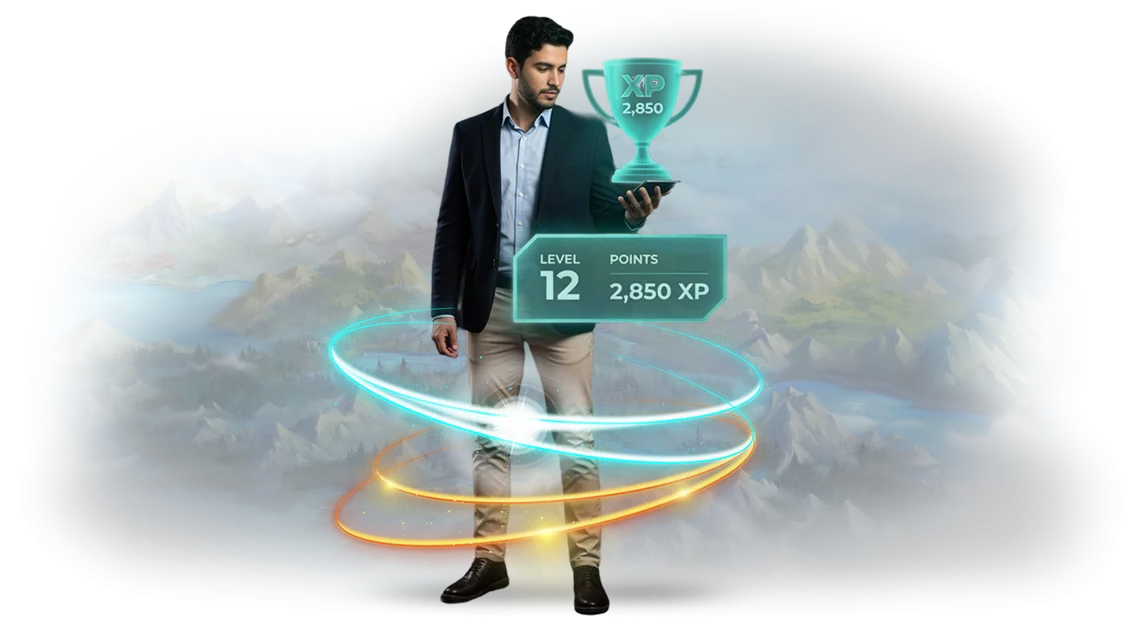
The first effect is engagement. When point and prize mechanics are active in the hall, every participant becomes a player, not a spectator. They follow the rating, complete tasks, photograph moments, and share them.
This activity increases time spent at the venue, meaning every square meter of the hall works for your brand.
The second is loyalty. An emotionally engaged guest remembers not the walls and schedule but the experience. If a participant leaves the event with a pleasant experience and a won bonus, they are highly likely to return for the next event. Repeat visits are the base of a permanent audience that comes without additional advertising costs.
The third is measurable behavior. The Telegram Web App system shows which mechanics worked, where guests lost interest, and what motivates them to act. Based on this data, you adjust the program within a week, not a quarter.
That's why payback happens within three months: you quickly get both increased engagement and reduced costs for attracting new guests.
If you're planning a conference or a permanently operating conference hall, gamification is not entertainment but a tool that returns investment. We help launch it within a month and provide support after launch so the result is measurable and stable.
Gamification Formats: Choosing for Your Conference Hall's Goals
Conference halls host events with different goals: attracting investors, training employees, strengthening team spirit, or building a base of potential client contacts. The same mechanics won't suit all cases — they might create excitement but fail to achieve the business goal.
That's why we've compiled basic gamified application formats on Telegram that we use in conference halls. This is a guide for selection: if needed, we combine mechanics and adapt them to a specific event.
Summary table of formats
| Format | For whom | What it gives the client |
|---|---|---|
| Quiz with leaderboard | Business conferences, plenary sessions | Holds audience attention, sets an energetic tone, highlights the most engaged guests |
| Zone-based quest | Exhibitions, demo areas | Increases booth traffic, extends guest stay, and introduces them to the product |
| Points auction | Corporate events, team building | Creates excitement, encourages participant activity, unites teams |
| Gamified contact exchange | Networking, partner meetings | Sparks real introductions, builds a base of potential clients without formality |
| Learning with gamification | Trainings, seminars | Improves material retention, relieves fatigue, and engages even the passive part of the group |
How to read the table? If you're unsure which format to choose, start from the event's goal: to hold attention — a quiz, to help networking — gamified contact exchange, to show the product in action — a quest.
Better yet, trust us: at the briefing we'll choose mechanics for your hall size, guest count, and schedule so the format works toward your event's results.
Stages of Turnkey Gamified Application Development
Turnkey development is a structured process where you see what you're getting at every step. We don't overload the client with technical details but show the result: from idea to a working application that conference hall guests use on the day of the event.
How turnkey development works
-
Brief and goals. We dive into the conference's objectives, visitor profile, and desired game mechanics. We record success criteria, timelines, and budget framework.
-
Scenario and prototype. We show how a guest will take the quiz, earn points, and receive rewards. Approval happens in clear language — without diagrams or code.
-
Design mockups. We create the interface in your brand style, adapted for phones and in-hall screens. You approve the visuals before the main stage begins.
-
Build and testing. We prepare the application, test it on different devices and under load. All feedback is fixed before launch, not after.
-
Launch and support. We connect the application to conference hall screens, train your team, and stay in touch on the event day and after.
This sequence makes development predictable: you always know where the project stands and can influence the outcome. Approving each step removes risks, and launch goes without surprises — guests immediately join the game, and you get measurable engagement growth.
Delivery Package: What You Get for Your Conference Hall
We've put together the delivery package so you get not "sources on a disk" but a ready, working tool for your conference hall. Everything needed for launch, management, and scaling to future events is already included in the project.
No hidden stages or "we'll finish it later": after delivery, you independently update content and see results in real time.
What's included in the package
- Gamified application for your conference hall — the very solution guests open from their phones via a QR code on the screen. No installs or registrations: scan, play, get the experience.
- Admin panel — a clear dashboard for your event manager or marketer. Through it, you change questions, prizes, logos, texts, and game rules without involving developers. No code edits — only a form on the screen.
- Ready launch instructions — a step-by-step scenario for your team: how to put the game on the screen, how to check the connection, how to close registration, and what to do if a guest gets stuck at a step.
- Team training — a short, practical session for those who will work with the admin panel on the event day. Plus a recording of the session to show a new employee in a month.
- Branding for your conference hall — logo, corporate colors, prizes, and text tone. Guests see your style, not an abstract template.
- Statistics access — data on participants, completion, and engagement collected in one report. You see how many guests reached the finish and which mechanics worked best.
- Technical support at launch — we're available on the day of the first event to back up your team and resolve any questions in real time.
All of this addresses the client's biggest fear: "we'll get a product but won't know what to do with it." On the contrary, you get a package you can use at the very next conference — and later simply change prizes and questions in the admin panel.
Case Study: How Gamification Doubled Attendance
Organizers of a business conference faced a typical problem: registrations come in, but less than half of attendees show up in the hall. Guests get lost between sessions, and by the key presentations the audience noticeably thins out. They needed to hold attention and keep participants from missing important program blocks.
We developed a gamified Telegram Web App for the conference hall as part of the project for «Digital Leaders Forum».
Participants scanned a QR code at entry, received a personal route, and earned points for attending sessions, answering speaker questions, and actively engaging with colleagues.
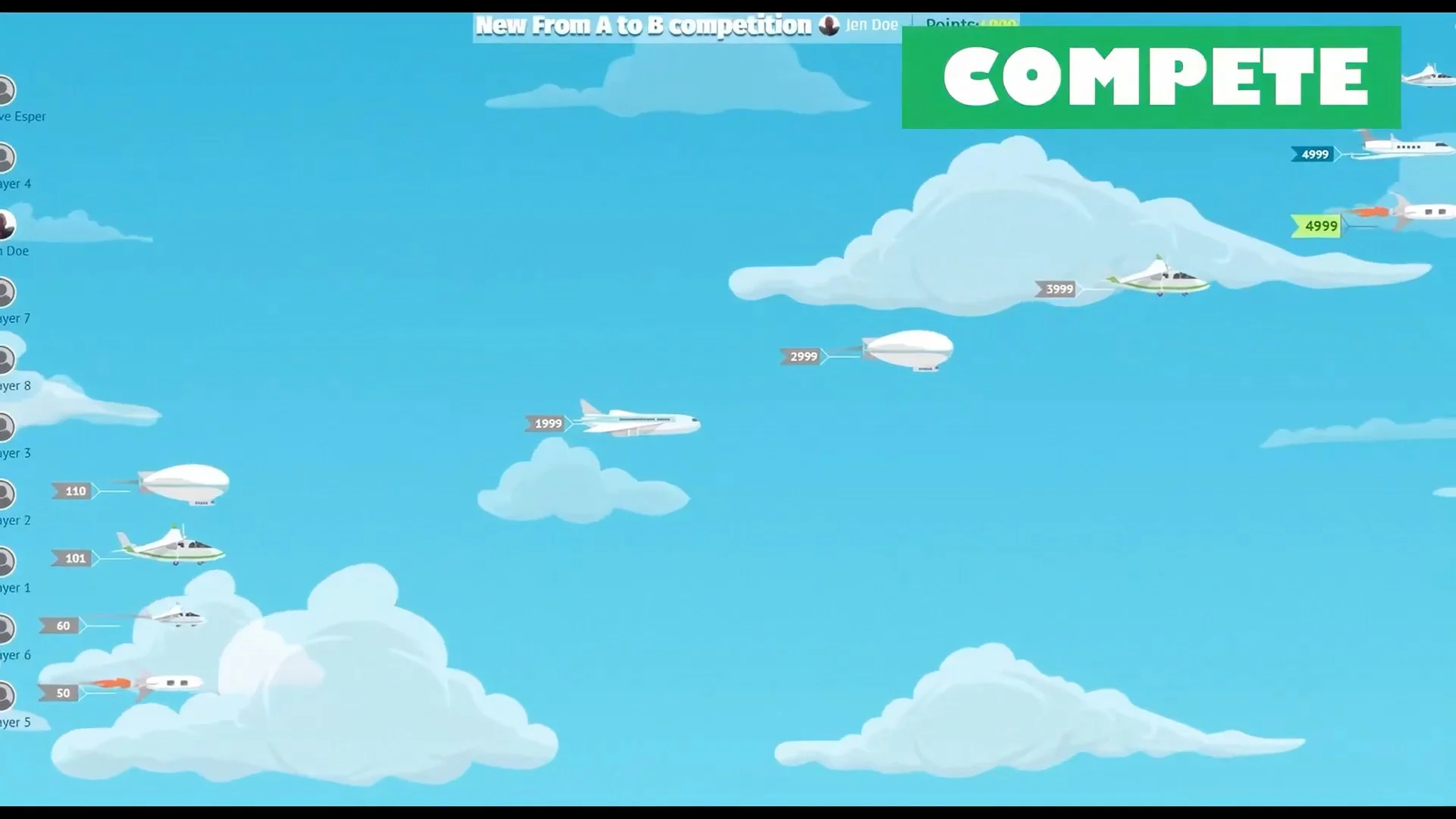
A live leaderboard appeared on the hall's screens — it created healthy competition and motivated people to stay until the end.
The result exceeded expectations: actual session attendance doubled compared to the previous event. Engagement changed too — the average participant completed more than half the program, and the number of questions to speakers tripled.
Organizers got clear analytics: which topics are more interesting, how much time guests spend in the hall, and where they lose interest.
Most importantly, the client returned to us with a new project. In their words, gamification didn't just entertain guests — it solved a business problem: hall occupancy and participant satisfaction grew, and organizers immediately built the next forum into their program. Measurable results like these are what we consider the main indicator of success.
Answers to Questions About Gamification of Business Processes
Before launching gamification, clients always have the same questions: will the game crash, will guests manage, what result will the business get. Below are answers to the main concerns.
Is it safe to use gamification in a conference hall?
Yes. We work on professional equipment and a proven infrastructure, so failures are ruled out. Data is protected and not shared with third parties. Before the event, we do a full run-through, and during the game we monitor stability in real time.
How much time is needed for preparation?
A standard project takes two to three weeks: we approve the scenario, configure the Telegram Web App, and test the game. If deadlines are tight, we use ready-made modules — launch is possible even faster.
What if guests don't want to participate?
The game is built on simple actions — nothing to download, and the rules are clear. With the right mechanics, the majority of the hall gets engaged, and the host keeps the excitement going. You get statistics: how many guests entered, completed tasks, and returned for results.
What does gamification give business beyond entertainment?
Passive listeners become active participants: they absorb material more attentively, remember your brand, and share impressions on social media. You get attention measurements, contacts of interested guests, and a lasting positive impact after the event.
Submit a Request for Gamification Development for Your Scenario
Your conference hall's working scenario is unique — standard solutions don't deliver the needed effect. Submit a request, and we'll analyze exactly your task: from event format to participant behavior. No templates — only a specific plan for your business.
We've worked with events for years, so we immediately see where mechanics will deliver results and where they'd be unnecessary.
After you reach out, you get:
- Personal consultation: we'll clarify goals, audience, and scenario so gamification solves your task rather than being mere entertainment.
- Quick analysis: we'll tell you where in your process mechanics will strengthen engagement and where they're excessive.
- Preliminary concept: we'll show how participants will interact and what results you'll see.
- Transparent development plan: stages, timelines, and responsibilities — you always know what's happening.
- Demonstration of intermediate results: you see the product before final launch and can make changes.
- Support after delivery: we support the launch and refine mechanics based on the first events' outcomes.
Submit a request — we'll get in touch within one business day, answer your questions, and propose a collaboration format. The consultation is free and non-binding.
If you decide to move forward, we'll hand the task to development — and within the agreed timeline you'll get ready gamification for your conference hall. We support clients at every stage, so you're never left alone with the task.
Fill out the form below — we'll start with a conversation about your scenario. It's the first step toward making your conference halls memorable and more valuable.
How to Choose a Gamification Format for Your Conference Hall?
A gamification format is never "good" or "bad" — it's appropriate for a specific hall, audience, and task.
Before choosing, answer three questions: how many people are in the hall at once, what position they're in (sitting, moving around, talking in groups), and what you want to get in the end — engagement in discussion, warm-up before a speech, or collecting contacts and feedback.
If your venue is a classic conference hall with rows of chairs where guests are fixed in their seats, formats that work through personal smartphones suit you: polls, quizzes, speaker ratings.
People don't need to stand up or look for a screen on the wall — everything happens in a familiar messenger interface. This removes the participant's main fear of "looking foolish" and boosts activity even among introverts.
For buffet zones, lounges, and spaces with free movement, quests and competitive point mechanics make more sense. Flexibility is key here: a person can join at any moment, see their progress, and reach the end at their own pace.
This format turns a break into networking — guests interact with each other for a common goal rather than just staring at their phones.
Separate case — hybrid events where part of the audience is physically in the hall and part is connected online. In this case, choose mechanics that work equally well on a big screen and on a personal device.
Otherwise you'll get a split: the hall is engaged while remote attendees drop out of the process and watch from the sidelines.
Our experience says: there's no universal solution, but there are the right questions.
When you clearly define the scenario of how people move through the hall and the desired reaction (applause, laughter, discussion, contact exchange), it only remains to match mechanics to those requirements.
Describe your hall and goals to us — we'll suggest a format that will work specifically for you and adapt it to your participant count and the venue's technical setup.