

Are clients losing interest? Gamification for logistics companies
In logistics, every day is the same: dispatchers process requests, drivers follow routes, managers monitor deadlines.
Routine gets boring, engagement drops, and this quietly hits the business: processing speed decreases, turnover grows, and clients leave for those who respond faster.
This is especially felt when a company grows: processes become more complex, while the interest of employees and clients stays at the same level.
That is why more and more logistics companies are looking for ways to hold attention and motivate the team — in other words, they implement logistics gamification.
It is not a game for the sake of a game, but a working tool that brings back excitement and makes the service noticeably livelier.
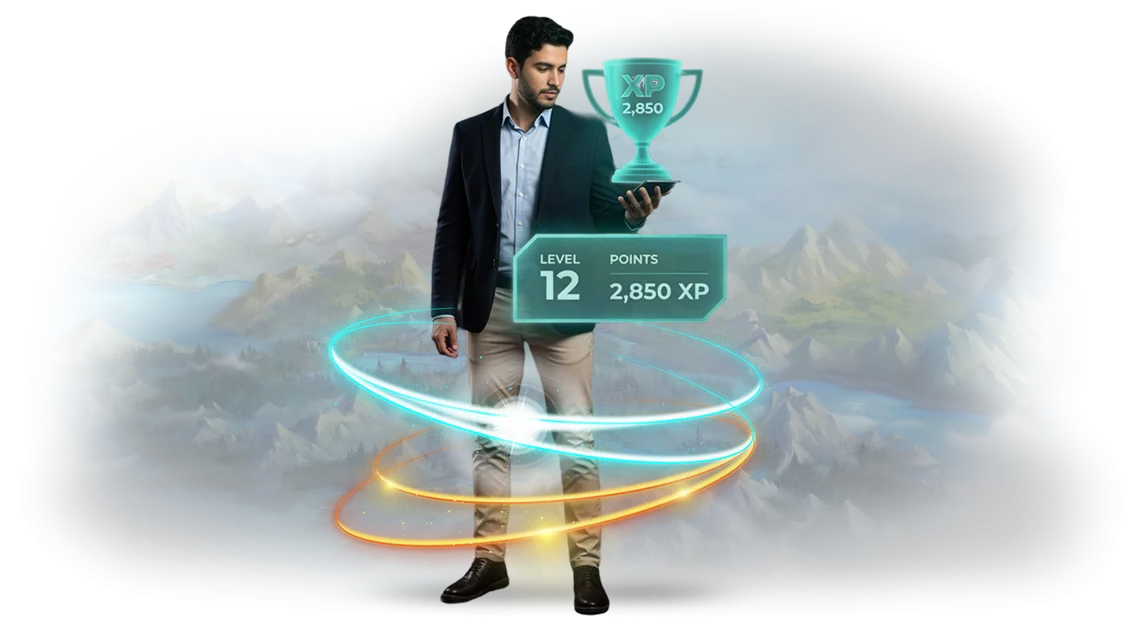
Gamification turns routine tasks into a format of achievements: a driver sees ratings and bonuses for punctuality, a dispatcher sees levels for processing speed, a client sees statuses and pleasant surprises for regular orders.
As a result, employee motivation increases, client retention grows, and the service stands out from competitors. All of this works in the familiar Telegram interface — without installing additional apps.
Wehave been designing such mechanics for business for over 10 years. We help implement gamification so that it brings measurable results: growth in engagement, reduced churn, and clear motivation for every employee. Tell us about your task — we will show how this will work specifically for you.
What gamification will give: from loyalty to profit growth
Gamification turns routine actions into a game — and this directly reflects on money. Clients who receive emotions and rewards return more often, and partners are more willing to participate in programs.
For logistics companies, this is especially valuable: drivers, dispatchers, and customers are all on the move, so targeted game mechanics work in any scenario — at home, on the road, or at the warehouse.
At our team we know this from our own projects: game mechanics pay off not only with loyalty, but also with measurable profit growth.
Check the checklist of what you get right from the start:
- Customer loyalty. Game mechanics hold attention and create a habit of returning. The participant gets involved in the process themselves, so you do not need to spend budget on constant discounts and promotions.
- Sales increase. Points, levels, and bonuses motivate an increase in average order value and order frequency — especially when progress is visible and within reach.
- Brand awareness. The emotions of the game make participants share results on social media. Each participant brings new people, and the brand gains reach without advertising costs.
- Lead generation. Quizzes, quests, and giveaways help collect contacts naturally. The client leaves data for the sake of participation and benefit, not because of an intrusive form.
Thus, gamification solves four business tasks at once: from customer retention to revenue growth. It does not require complex implementation — modern mobile platforms allow launching mechanics quickly and with a clear budget.
It just remains to choose a scenario that suits your team — and we will help turn it into a working sales tool.
Gamification formats for logistics companies: what to choose?
In logistics, everything rests on people and deadlines. If warehouse employees and drivers act without engagement, delays and errors grow. Gamification turns routine into a game with clear goals and rewards — performance improves without strict control.
To choose a format, identify the bottleneck: speed up order processing, retain clients, or make delivery predictable. For each task, there is its own tool. Below is a table of the main formats.
Main formats and their tasks
| Format | For whom | What it gives the company |
|---|---|---|
| Quests for employees | Warehouse, sorting, delivery department | Faster order processing, fewer errors, team engagement |
| Loyalty program | Regular shippers, corporate clients | Repeat orders, increased shipping volume, predictable workload |
| Delivery gamification | Recipients and end customers | Transparent status, fewer support calls, positive experience |
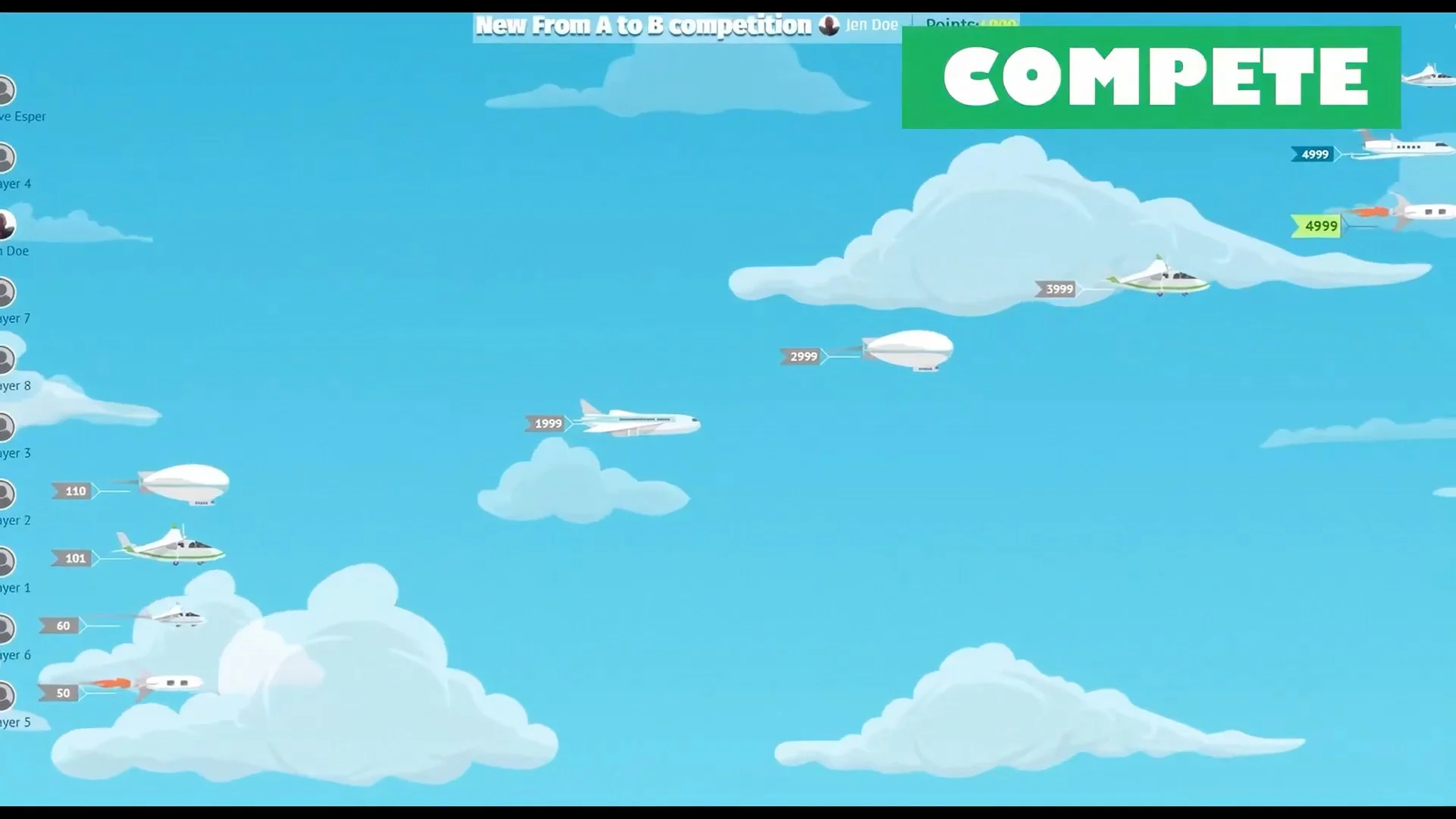
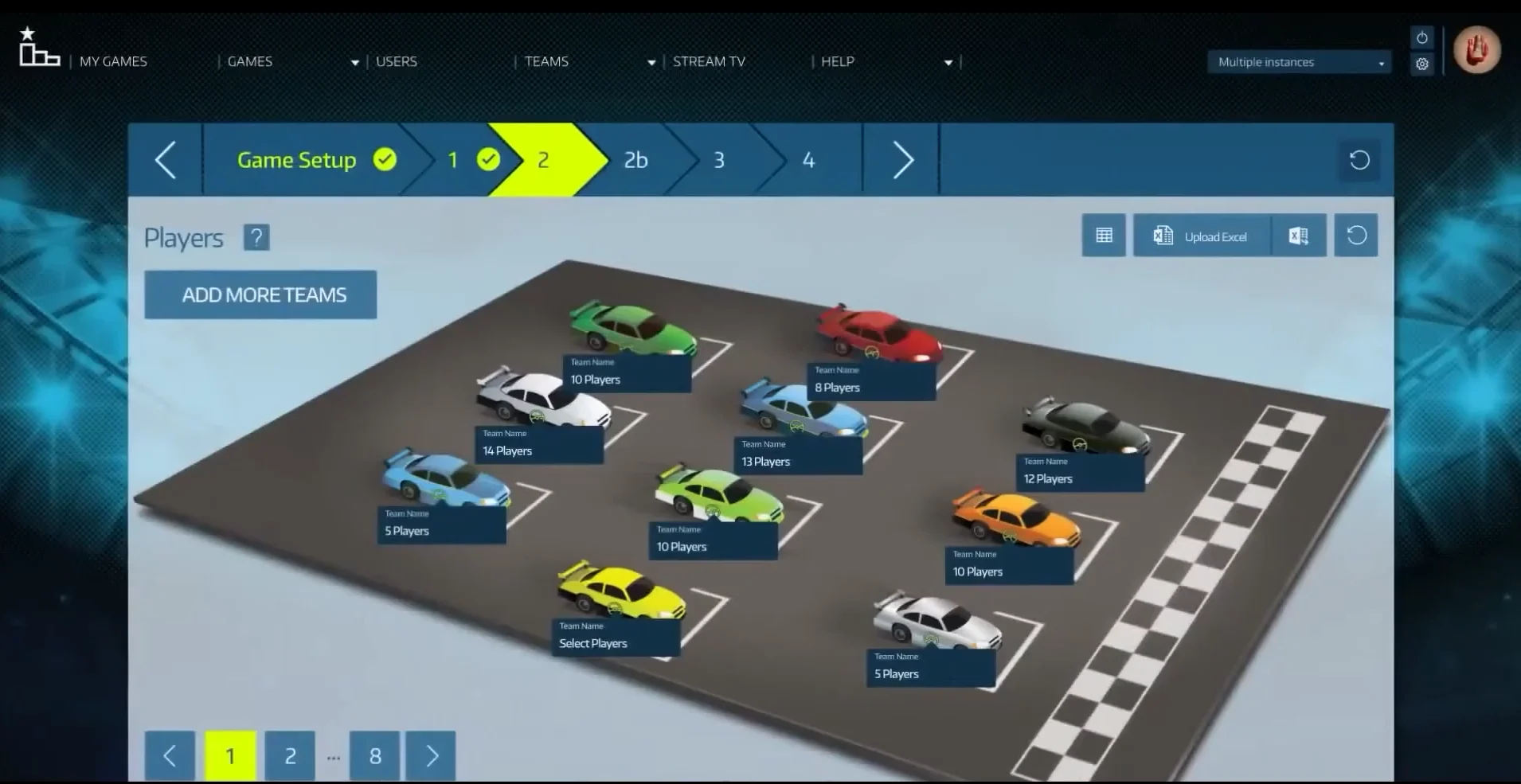
| Competitions between shifts | Teams, branches, warehouses | Meeting plans, experience sharing, healthy competition |
In practice, the best result comes from a combination: quests for employees increase efficiency, while delivery gamification strengthens loyalty. Other formats are connected as the system grows.
Start with a pilot quest at one site — in a couple of weeks you will see the dynamics. We will help you choose a format for your logistics and implement it in a Telegram application, so that employees and clients use it without installing additional programs.
How we build a project: from brief to launch
The work on a project follows a transparent scheme: at each stage you understand what is happening, what is already done, and when the result will be. We do not overload you with technical details, but talk about timelines, cost, and the effect on business.
-
Gamification brief. We record the task: what we motivate — drivers, dispatchers, clients. We discuss the metrics we want to improve: request processing speed, engagement, error reduction. The output is a document with goals and success criteria.
-
Process audit. We look at how the work is currently organized in your company. We identify points where employees lose motivation or time. We find where game mechanics will give the maximum effect without changing key business processes.
-
Plan and estimate. We propose a concept: which mechanics we use and how they will be integrated into Telegram. We show timelines by stage and cost. You get a clear plan — without hidden work or “surprises” in the process.
-
Approval. We discuss the details and make edits. We approve the final version — design, scenarios, reward and incentive system. After approval, we fix the scope so that development goes exactly according to expectations.
-
Implementation. We build the application: interface, logic, integration with your accounting systems. We show intermediate versions so you can see progress. We test for usability and correctness.
-
Application launch. We help with publication and setting up access for employees. We conduct training for administrators and key users. On launch day we are in touch and quickly resolve any issues.
-
Project support. We monitor metrics and collect feedback. We propose improvements: new levels, rewards, scenarios. The application lives and develops together with your business, not remaining “dead” after release.
Delivery package: what you get at the end of the project
You get not just a game, but a ready-made solution integrated into your processes. We hand over all materials so that you can manage the mechanics and control the result. Below is the delivery checklist.
- A working game in Telegram — a ready-made web app for drivers, dispatchers, or clients. Participants complete tasks in a familiar messenger, without installation or training.
- Integration with your systems — we connect game events to the accounting system: orders, routes, indicators. Data is transferred automatically, without double accounting.
- Admin management panel — you can independently change tasks, prizes, and promotion conditions. No programmer needed — the interface is enough.
- Training and documentation — instructions for administrators, memos for participants, demonstration for the team. Employees will quickly master the tools.
- Launch report — after 2–4 weeks, we show how the game affected indicators: order fulfillment, reaction time, engagement. Numbers in a clear form.
- Adaptation to business tasks — we configure mechanics for specific goals: driver motivation, onboarding of newcomers, increasing customer loyalty.
- Guarantee and support — during the warranty period, we fix errors and help with setup. We are available during working hours.
All materials and accesses remain with you. You are not tied to the contractor: you can develop the game with your own team or order enhancements. Guarantees are fixed in the contract, and reporting is adapted to your format.
Case: how we increased repeat client orders
For a logistics company working with corporate clients, we developed a gamified Telegram Web App. The task sounded simple: clients placed an order, received the service, and disappeared for several months.
It was necessary to turn one-time requests into regular ones — and do it without discounts that “eat up” margin.
We built the mechanics on a system of levels and personal goals: for each delivery, the user received points that unlocked priority support, free cargo storage, and a personal manager.
All of this — right in the Telegram interface, where the client already communicates with the company. No need to install a new app or learn something new.
Two months after launch, repeat orders grew by 37%. At the same time, the share of clients who returned within 30 days increased 2.3 times. The average order value of program participants turned out to be 18% higher than that of the rest.
A particularly pleasant bonus was the viral effect: participants shared their achievements in chats, and the company received an additional influx of requests without advertising costs.
Now we will tell you more about how it looked. We worked with the courier service network Bystry Logist — they have about 1,500 active corporate clients. Before gamification, the average interval between orders was 45 days. A month after launch, it dropped to 28 days, and after a quarter — to 19.
The key was not just earning points, but creating a clear goal: the client saw their progress, understood that after 3 orders they would get free cargo insurance, and deliberately planned shipments.
We did not change their business processes — we simply added motivation inside a familiar communication channel.
As a result, the company received not only growth in repeat orders, but also valuable analytics: it became clear which clients are at risk and leaving to competitors.
Gamification became a retention tool, not just a “toy.” The client is so pleased with the result that they have already ordered a second phase — with individual scenarios for large clients.
If you want the same result — tell us about your task, and we will select the mechanics for your business.
How to choose a gamification format for your task?
Choosing a gamification format starts not with technology, but with the question: what business problem are you solving?
For a logistics company, this could be accelerating the onboarding of new employees, increasing the accuracy of order picking, or motivating drivers to follow schedules.
Each task requires its own scenario: some approaches hold attention through daily activity, others through a long-term program with levels and rewards.
The second question is who the user will be: employees, partners, or clients. If you need to quickly train staff, choose a format of sequential tasks with clear stages.
If the goal is to increase customer loyalty, a program with points and statuses that works right in Telegram without installing apps is suitable. This removes the entry barrier, so the maximum number of participants joins the game.
The third is the resources you are ready to invest. A light format, such as regular competitions between teams, can be launched in a few weeks.
Full gamification of business processes is a project lasting several months, but it gives a measurable result: growth in completed orders, reduced staff turnover, more repeat requests.
That is why we always start with diagnostics — we analyze your process, find bottlenecks, and offer two or three formats with an effect forecast.
This way you get not just a game, but a working tool that fits your budget and timeline. If you are unsure which format to choose, start with a consultation: we will show examples for logistics companies and help you decide in one day.
Frequently asked questions about gamification implementation
Logistics is a live process: trucks are on routes, dispatchers distribute requests, drivers report manually. When implementing gamification, a manager has legitimate concerns: what if motivation does not work, how is stability ensured, and who is responsible for the result. Below are answers to the questions our clients most often ask before starting a project.
What if gamification does not produce the expected effect?
We fix target indicators at the brief stage: growth in the number of completed requests, reduction of downtime, increased engagement.
If after launch we see a deviation, we refine the mechanics at our own expense — we select other rewards, change the frequency of tasks, simplify the interface. The guarantee of the result is spelled out in the contract, so the risks remain with us, not with your company.
Who is responsible for uninterrupted operation of the service?
After launch, we remain in touch: we monitor the system, watch the loads, and quickly eliminate failures. Access to the service is protected, and backup is configured automatically.
For you, this means that drivers and dispatchers will continue to receive tasks and bonuses without downtime, even during peak hours.
How is the security of employee data ensured?
We work under a contract with confidentiality. Personal data of drivers and dispatchers is stored on secure servers, and access to it is limited — employees see only their own statistics and their rewards.
Commercial information of the company is not transferred to third parties, and internal reports are available only to management.
What does post-launch support include?
We do not abandon the project after delivery. Support includes training your team (administrators and managers), consultations on setting up mechanics for changing tasks, and regular updates — we add new types of tasks, rewards, and reports.
Support works on an ongoing basis, so you can change motivational scenarios without engaging a contractor again.
If you still have questions about implementation — we will discuss them at a free consultation and show how gamification fits into your business processes.Ready to improve efficiency? Leave a request
Effective gamification does not begin with development — it begins with proper problem definition.
We have been working with businesses for more than ten years, including logistics, and we know where employee motivation is most often lost and how to turn routine into a measurable result.
Leave a request on the website or in a messenger — and we will provide a free consultation on whether this format is suitable for your team. Next, you will receive a concrete plan: from process assessment to cost and timeline calculation.
What you get after your request:
- A call or online meeting at a convenient time — you tell us about the task, we ask clarifying questions;
- A free preliminary consultation on gamification of business processes in logistics;
- Analysis of your operations and departments — we find points where gamification will produce a quick effect;
- Project calculation with a transparent estimate and timelines — without hidden work or additional payments along the way;
- A brief summary describing the result, stages, and areas of responsibility;
- Personal recommendations on employee motivation and indicators that can be baked into the mechanics;
- A launch plan and support after the start — you know in advance what will happen every month.
No obligations at this stage. We do not sell “a pig in a poke”: first we show the value, then we discuss launch. You will get maximum information for a decision — and we will start implementing gamification only when we are sure it solves your task.
Fill in the form below or write to us directly — we respond within a business day. Let us start with a free consultation and project calculation, and then you decide for yourself how beneficial it is for your business.