

Are Media Losing Their Audience? Gamification Reignites Interest
Readers are tired of monotonous content: the news feed turns into noise, and clicks on an article rarely turn into regular return visits.
Media lose their audience not because of content quality, but because of a lack of emotional connection with the reader — people consume information and leave without a trace.
Without interactive and game mechanics, even strong editorial content loses to bots and short videos that deliver instant gratification.
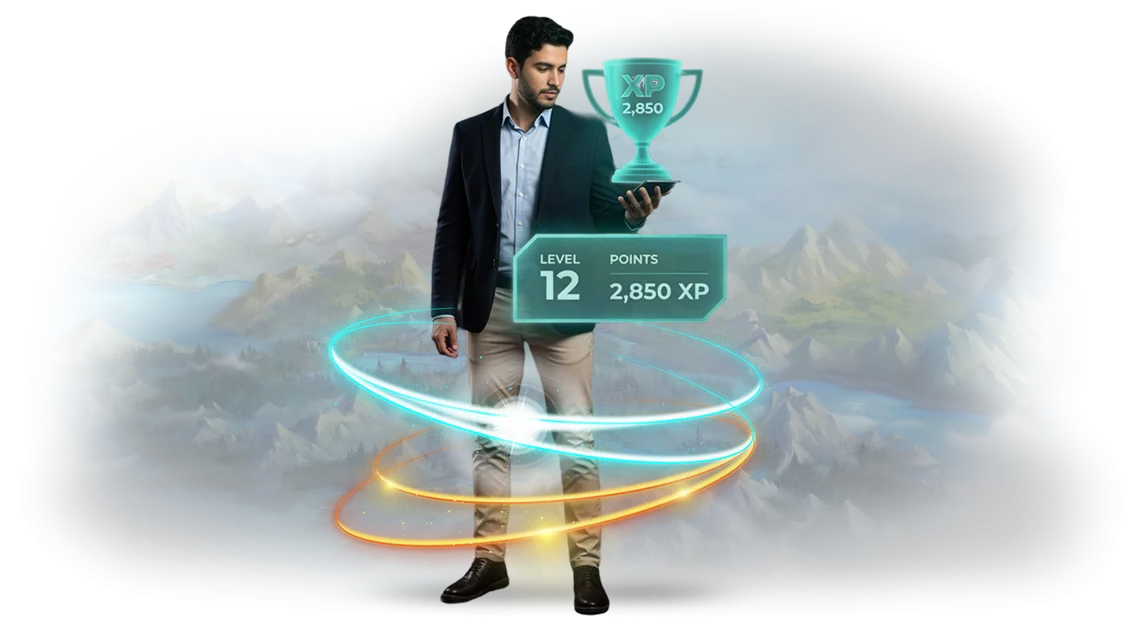
Gamification turns reading from a passive act into an active process: the reader doesn't just scroll the feed, but participates, earns points, competes, and unlocks bonuses.
This brings interest back to the publication, because every visit starts to deliver a tangible result — status, prizes, access to exclusives.
Interactive media content holds attention many times longer than a regular article, and most importantly, it builds the habit of coming back.
Mechanics can be built into an existing website or Telegram channel: quizzes on fresh publications, event predictions, task series that reward regularity, and ratings of the most active readers.
The reader becomes a participant in the editorial process, and this changes their attitude toward the brand — instead of a background news source, the media outlet becomes a community, a platform for self-expression.
For the editorial team, something else matters more: game mechanics deliver clear engagement metrics, show which content really resonates, and increase the share of return visits without advertising spend.
We deploy such gamification on a professional platform tailored to media formats, and adapt the mechanics to your editorial strategy — from simple polls to multi-level loyalty programs.
In the end, you get not a "game for game's sake," but a tool that retains the audience, increases return rate, and helps monetize attention.
What Results Gamification Will Bring to Your Project
Gamification in media solves the main problem: the battle for attention. A reader comes for a news story but within a minute is already back in their social media feed.
Mechanics based on accumulating points, levels, and rewards hold them not for one screen but for an entire series of interactions with your content.
The first thing you'll notice is an increase in time on site. When users complete tasks and unlock new opportunities, they view 3–5 times more materials than during ordinary reading.
This isn't "metric padding": people genuinely immerse themselves in your content, and therefore remember your brand and ad integrations better.
The second result is repeat visits. Daily challenges and accumulating statuses build a habit. The audience returns on its own, without reminders or extra investment in traffic.
The share of regular users grows, and the media outlet stops depending on one-off traffic spikes after major news stories.
The third effect is loyalty. Gamification turns readers into participants in your ecosystem.
They feel they're contributing to a shared outcome, receive recognition, and forge an emotional connection with the project — exactly what makes them choose your media outlet over dozens of competitors and recommend it to friends.
The bottom line is measurable business metrics: more ad views, more completed forms, subscriptions, and leads. Gamification doesn't just "bring the site to life" — it converts attention into concrete actions. All of this works as a systemic growth tool that pays for itself in the first few months.
Gamification Formats for Your Media Outlet's Goals
Media audiences are overloaded with content: news, newsletters, social feeds. To keep a reader not just clicking on an article but staying and coming back, you need interactivity — a task, a game, a competition.
But the same mechanic works differently: different formats suit a news portal versus a niche media outlet.
Below are four core mechanics and the conditions under which they deliver results.
| Format | Best for | When to use | What it delivers |
|---|---|---|---|
| Quiz | News portals, lifestyle publications | Testing knowledge of current events, engaging readers in an article | Quick response, increased time on page, a reason to share results |
| Quest | Longreads, special projects, city media | When you need to hold readers from start to finish | Deep immersion, high completion rate, a series of brand touchpoints |
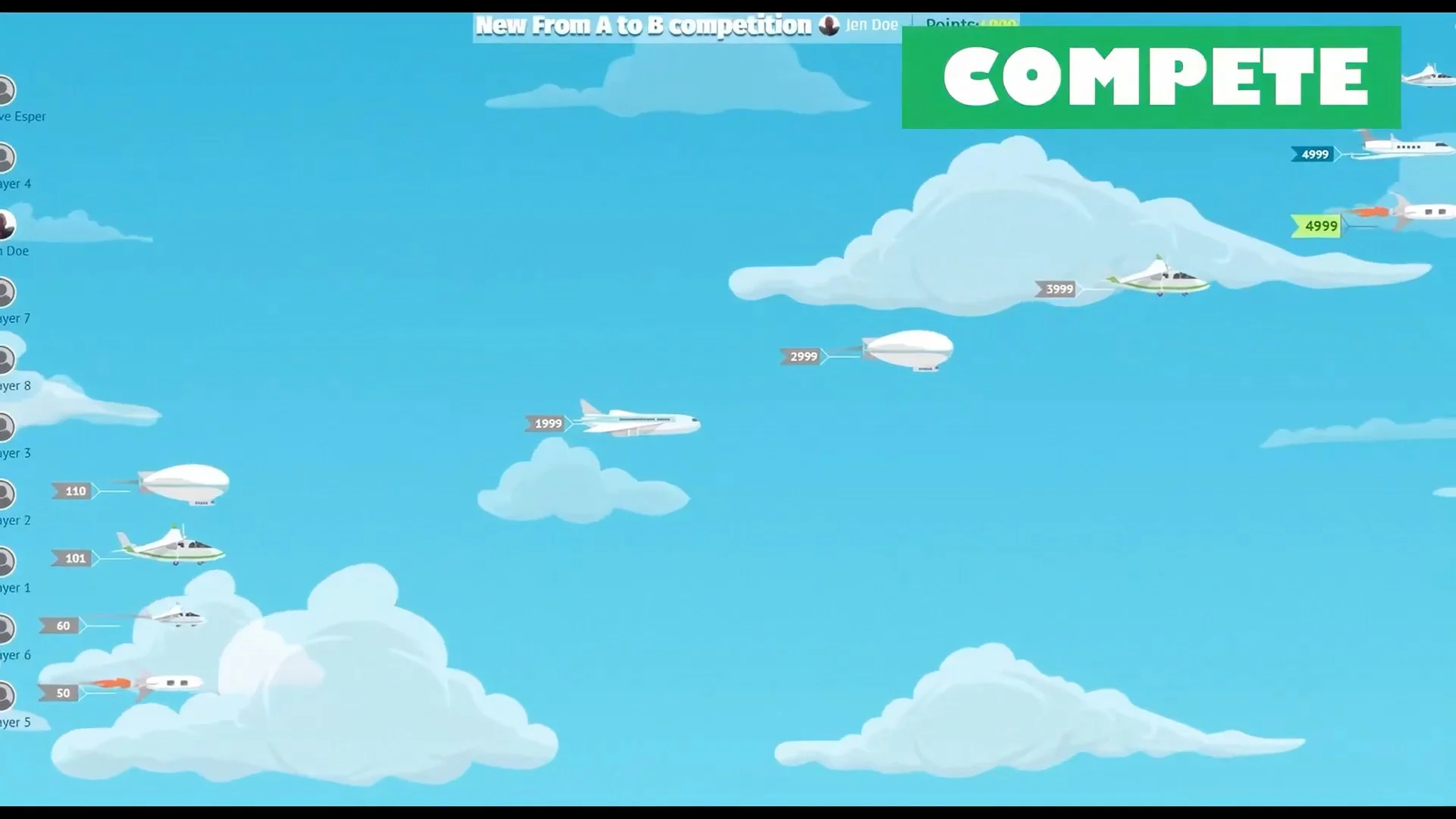
| Rating | Communities, sites with user-generated content, analytical publications | When you need to showcase audience activity and encourage participation | Competitive spirit, return visits to improve rankings, higher engagement |
| Simulator | Business, finance, education media | When you need to explain a complex process through experience | Visual scenario, learning by doing, trust in the publication |
Formats can be combined: a quiz inside a quest or a rating after a simulator amplifies the effect. We'll help you choose the right mechanic for your editorial task, analyze your audience, and propose a scenario that drives both reach and reader retention.
How Gamification Development Works: Project Stages
We understand that for media outlets, timelines and predictability are the decisive factors when working on a game. That's why we've broken the process into six steps — from brief to post-launch support.
At each stage, you see interim results and can influence the product, rather than just accept a finished solution. This approach makes gamification development transparent and manageable.
- Brief — we set the goals: what the game should deliver for the editorial team — reach, audience retention, or data collection. We define the participant profile and the core mechanics that will be genuinely interesting to your readers.
- Project plan — we create the concept and the game scenario, and split the work into manageable blocks. You get a plan with clear deadlines and control points, so you can schedule your own advertising activities in advance.
- Layout approval — we show an interactive prototype of the future game. You can review the participation logic and design before full-scale development begins — this lets you make changes without extra costs or surprises at the finish line.
- Implementation — we build the screen designs, response scenarios, and set up the server side. It will be easy for your users to play on any device, and we hand your marketing team ready-made tools for tracking activity.
- Launch of gamification — we publish the game in Telegram and set up transitions from posts and pinned messages. Together with you, we walk through all scenarios to make sure that a participant enters the game, plays, and comes back.
- Post-launch support — we monitor user behavior, collect feedback, and quickly fix any issues. We also suggest and implement mechanic updates so the game stays fresh and aligned with your goals.
This process turns Telegram game development into a clear project with working mechanics, on-time launch, and post-launch support. You get a tool that not only entertains but also delivers measurable results for your media outlet.
What You Get in the End: A Complete Launch Kit
You get not just a game, but a completely launch-ready kit for your editorial team. It includes all the artifacts that companies usually order separately and wait months for from different contractors — here it's a single system delivered with the gamification.
The delivery kit includes:
- A ready-made Telegram game — a format adapted to a media audience (quiz, trivia, interactive) with unique mechanics, ready to publish in your channel right away.
- An admin panel for the game — an intuitive interface where your editors can change questions, prizes, and conditions themselves: no programmer needed to update the content for the next issue.
- A team instruction guide — a step-by-step guide in Russian: how to fill the game, launch it, react to errors, and collect results. Learning takes no more than an hour, even for those who haven't worked with such tools before.
- Project analytics — a dashboard with key metrics: number of participants, completions, conversion to subscription or site visits. You'll see exactly what makes the game successful and can improve it from one issue to the next.
- A training video — a short video that shows your team the entire workflow without reading documentation. Great for new employees and for a quick start.
This is not just a "folder with files." Everything is tied into a single process: the game can be launched the day you receive the kit, and updates take minutes, not days.
For a media outlet, this means a steady stream of interactive content without overloading the editorial team — which translates into higher subscriber engagement and more reasons to return to your channel.
All that's left for you is to fill the game with your content and include it in your editorial plan.
Case Study: How a Game Doubled Reader Returns
For media, one of the key metrics is audience return: a reader comes, reads, and leaves, and a week later they're already gone for good. We designed a game scenario that turns a one-time visit into a daily habit.
As a result, for the media project Svoya Sreda, the gamification case showed: audience returns doubled, and time on site increased by 40%.
What We Did
Instead of yet another "interactive for likes," we implemented a Telegram Web App — a lightweight quiz on the publication's fresh content.
Every day, the reader receives a question about the news of the day, and after answering — a personalized result card and an invitation to share it in messengers.
This way the game works toward two goals at once: it keeps attention inside the site and triggers free reach through sharing.
Why This Works for Engagement
The quiz format creates a short cycle: "learned — answered — saw the result." Readers come back not because they "have to," but because they want to test themselves and continue the streak.
We added streaks and achievements mechanics — no complex rules, but they give people a reason to open the project again.
Engagement metrics confirm it: users who played at least once visit 2 times more often. Average session length grew by 40%, and the number of repeat visits per month doubled.
For a media outlet, these are direct numbers of monetizable attention — advertising inventory and audience trust.
This example of a game project is not a "case for case's sake" but a working model. If you want to understand which game scenario suits your media outlet, we'll calculate the metrics, timelines, and expected results before launch.
How to Choose the Right Gamification Format for Your Project?
During negotiations, clients often ask which game format fits their project. That's a fair question: there's no one-size-fits-all solution, and ready-made templates rarely produce real results.
Especially when the task isn't standard — not just a "quiz to drive traffic," but a full-fledged tool for engaging a media audience in regular interaction with a brand.
We work in the opposite logic: first the business problem, then the format. It's important to understand whom you're engaging — regular readers, casual visitors, or Telegram channel subscribers. Different audiences require different mechanics.
Regular readers need a game that evolves and accumulates results; new people need a simple, instantly understandable scenario. This determines both the complexity of the rules, the length of the session, and how many people will return in a week.
For media, a solution that ties the game to content is especially valuable: an editorial co-choice, predictions, a quiz on fresh materials. This format gently educates the audience, increases brand recognition, and gives a reason to come back.
It's for these non-standard requests that we design custom gamification — from the first brief to adapting the scenario for the Telegram Web App interface.
The key question isn't "which game is trendy," but "which habit do you want to build?" We match the mechanic to your audience's actual behavior, then help measure the effect: return rate, share of completed steps, publication reach. This lets us gently adjust the difficulty and reward system without reworking the entire project.
If your task doesn't fit the typical list of game mechanics — that's normal. The more unusual the request, the higher the value of the solution: you get a mechanic that your competitors don't have.
We develop several options, assemble a working version, and test it on a small group of users before launch. This way the result isn't a "game for game's sake," but a measurable tool for growing your audience and its engagement.
Answering Your Questions Before the Project Starts
Before launching gamification for a media product, clients ask about risks, timelines, branding, and support. We answer the main concerns — so you can decide with peace of mind.
We've been creating interactive projects for media for over 10 years. The approach is simple: we set the goal, show the mechanics before launch, and stay in touch after.
What are the risks and how do you address them?
We start with a brief and a prototype: you see the future mechanics before development begins. Changes at this stage are inexpensive, and the final result won't be a surprise.
The contract fixes the scope of work and deadlines — no unexpected "oh, and one more thing" moments. If something changes, we show you in advance how it will affect the timeline and budget.
What guarantees do you provide?
We test the product on the target audience, collect feedback, and fix bugs before and after launch. The contractual warranty covers the game mechanics and correct display on all devices.
We also support your first launch: we help run the promotion so the mechanics generate reach and engagement right away.
Will you take our brand identity into account?
Yes. We use your colors, fonts, avatars, and tone of voice — the gamification looks like part of your channel, not an external quest. We integrate your brand guidelines or carefully adapt the style to Telegram Web App.
What are the timelines and support?
A typical project takes 2–4 weeks from brief to launch. The exact timeline is fixed in the contract; for urgent launches, we offer a separate schedule.
After launch, we stay on board to support you: we fix issues, refine features, and help with new mechanics. You won't be left alone with the product.
Order Gamification Development and See Metric Growth Within a Month
Want to order gamification and see your metrics grow in a month? Interactive content in Telegram Web App works faster than a regular promotion: readers don't need to install anything — everything opens right in the messenger they already use.
We've been building gamification for media for 10+ years. Fast project launch is our standard — the development request takes 10 minutes, and every step after that is clear.
- Development request — you leave your contacts, and we send you questions and timelines.
- A 30-minute call — we discuss your audience, goal, and target metrics.
- We select the right mechanic for your media: test, quiz, series of reward-based tasks.
- We develop a mini-app: design, mechanics, event analytics.
- We launch the promo and, a month later, show how your metrics have changed.
After launch, you get:
- Higher engagement — readers spend 2–3 times more time with your content.
- Repeat visits — rewards and ratings bring the audience back to your site.
- Extra reach — participants share results in stories and chats.
- Clear audience data — what interests them, which formats work.
- Post-launch support — adjustments and refinements throughout the campaign.
Leave a development request — that's the first step to metric growth. In a month, you'll get not just a game, but a working tool that engages readers and brings them back.