


Clients stop coming, profitability drops — how do you fix it?
For sports clubs, client churn is not just numbers in a report — it’s a quiet signal that the value of a membership is slipping.
People arrive motivated, but after a month or two their interest fades: workouts become routine, attendance dips, and the club is forced to lure newcomers with discounts just to keep revenue up.
Low engagement is the result of a boring loyalty program. Standard points for attendance and one-off bonuses don’t build a habit, don’t create excitement, and give the client no reason to come back tomorrow.
The modern visitor expects emotions, progress, and recognition of their efforts — but instead gets a dull points card they forget about within a week.
In the end, the club falls into a vicious cycle: falling attendance → declining profitability → shrinking development budget → even weaker service. While you spend resources on advertising to attract new clients, regulars leave silently, taking potential referrals with them.
Keeping the club’s economy afloat through acquisition costs more than retaining the people who already walk through the door.
We close this gap with gamification: we turn ordinary workout attendance into a living system of goals, levels, and rewards. The client wants to return on their own — not because it’s “paid for,” but because it’s interesting.
That’s how attendance grows, revenue stabilizes, and a predictable base of regular clients takes shape.
What gamification brings to your business: growth in loyalty and profit
Gamification in a sports club is not just points and rewards. It’s a system that turns occasional visits into a regular habit and clients into active participants in the club’s life. Game mechanics motivate people to return, set personal records, and bring friends.
For the business owner, the numbers are clear: higher attendance, a larger average spend, and more repeat sales.
For fitness clubs and gyms
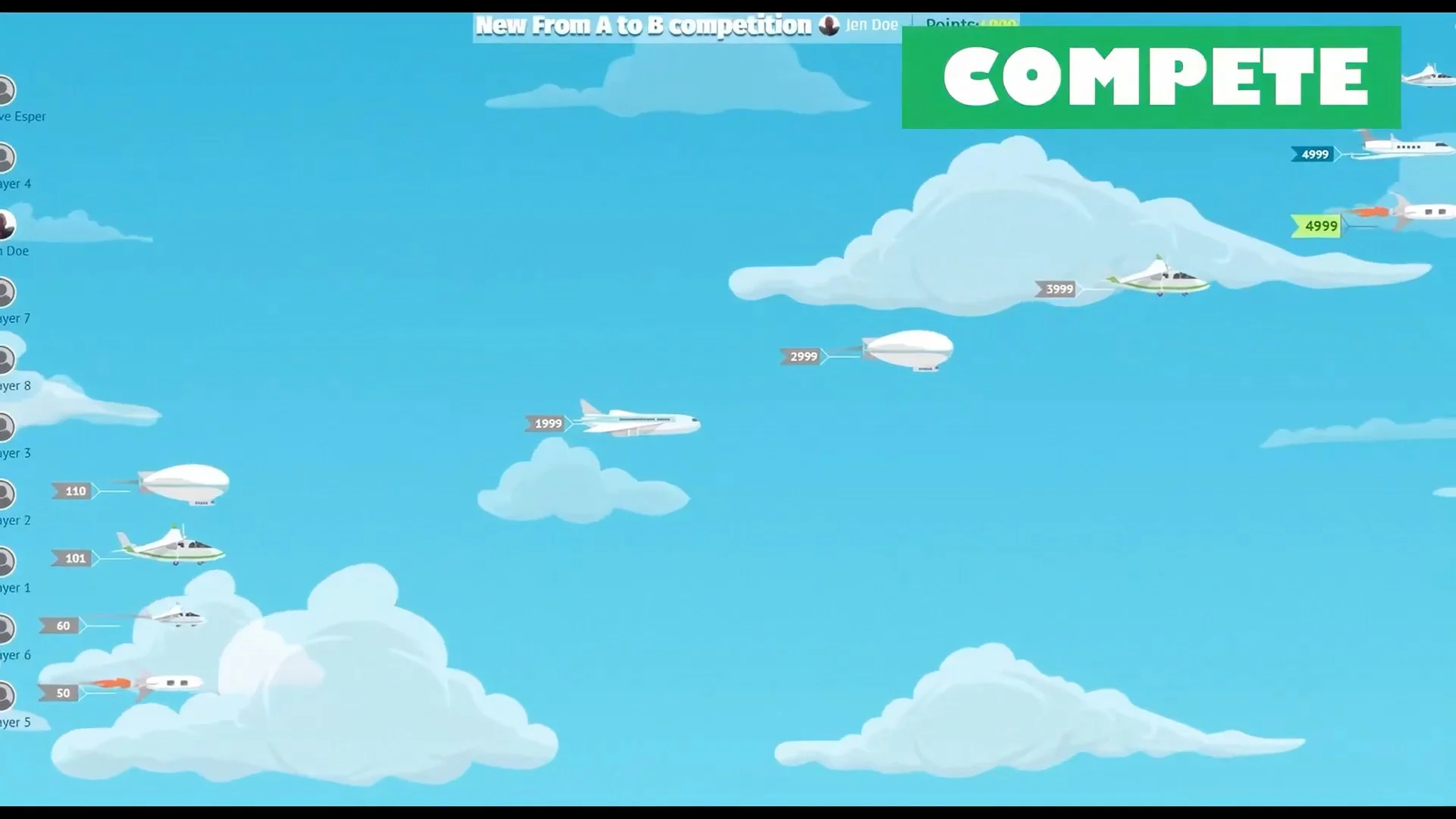
Here the main goal is client retention. The game program in Telegram turns the training process into a light competitive format: accumulating points for sessions, attendance streaks, unlocking achievements.
The club gets more memberships and fewer renewal rejections — the client sees their progress and doesn’t want to lose accumulated bonuses.
For group program studios and martial arts
The focus is on the viral effect and increasing revenue. Participants share results on social media, compete within teams, and invite friends. Every invitation is a new client without advertising costs. Challenges and locked levels drive purchases of personal training and additional services.
For swimming pools and tennis clubs
Gamification collects participant analytics and helps build personalized communication. The club sees who hasn’t shown up in a while, which classes are popular, and which age group is most active.
This makes it possible to launch targeted offers and bring back “sleeping” clients — a direct path to greater loyalty and long-term profit.
In any format, gamification works as a tool for managing client behavior. The visitor becomes emotionally engaged, gets used to the club, and returns more often, while the business gets stable revenue.
Gamification formats for sports clubs: choose by your objective
A sports club faces one challenge: how to retain a client when there are dozens of alternatives around. A membership is only the first step — after that, you need motivation to keep coming back. A well-chosen gamification format turns routine into a game and turns visitors into regulars.
Formats for different club types
The format is selected based on your audience and business objective. All options work inside a Telegram Web App — no app installation needed, participation starts in one click.
| Format | For whom | What it gives the client |
|---|---|---|
| Quests | For clubs with a steady flow of visitors | Engage clients in a series of workouts, boost attendance |
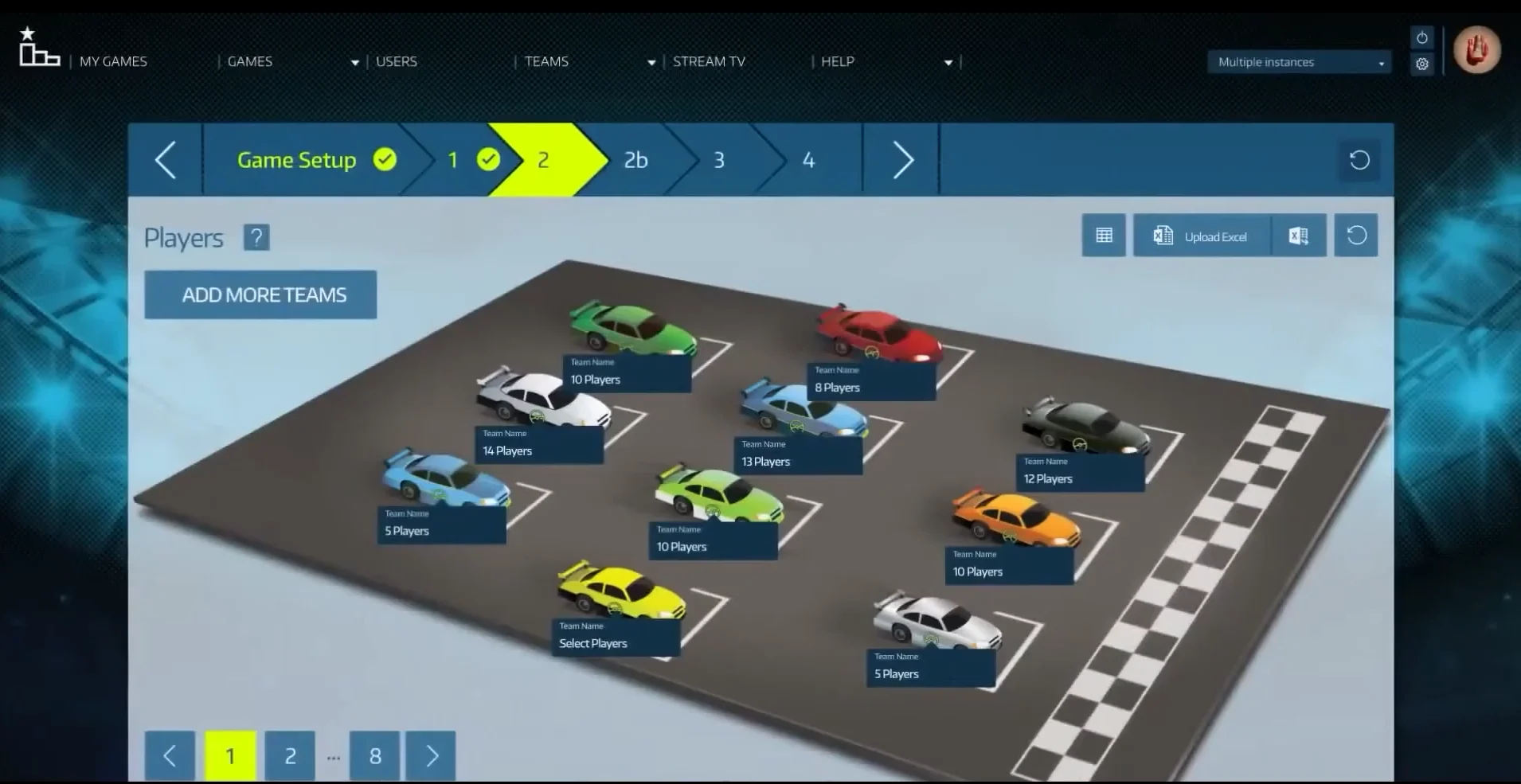
| Challenges | For team sections | Create excitement and team spirit, retain participants |
| Ratings | For martial arts and individual sessions | Provide recognition and an incentive to grow, reduce churn |
| Lotteries | For attracting new clients and bringing back “sleeping” ones | Quickly activate the base, a clear incentive to participate |
Owner of a stretching studio chain: “At first we wanted ratings, but after analysis we chose challenges — attendance grew within a month.”
How we help you choose the format
At the start, we look at your client base, attendance, and goals: retention, win-back, or acquisition. We propose two or three suitable formats and launch without stopping your operations. You get a tool that works for your business.
Launch process: from brief to support
We understand: for a sports club, launching gamification is a way to retain visitors and attract new ones — not a “trendy experiment.” That’s why the process is built around clear stages: you always know what’s happening and when you’ll get the result.
- Brief and technical specification. We discuss the club’s objectives: attract visitors, increase workout consistency, grow additional services. We lock in the goals and success criteria.
- Concept and mechanics. We propose a scenario tailored to your club: points for attendance, workout streaks, competitions, rewards. We agree on it before work begins.
- Mockups and interface. We show what the app looks like for the client: profile, point accruals, rewards. You make edits before development — this saves budget.
- App development. We build the Telegram Web App on a professional stack: fast, stable, with schedule and membership integration.
- Testing. We verify the scenarios: registration, earning points, redeeming rewards. You take part in acceptance and see the result before launch.
- Launch. We publish the app, set up access via Telegram, and train your administrators.
- Support. We stay in touch, monitor performance, and help update scenarios for seasonal promotions and activities.
What you get in the package: scenarios, mechanics, analytics
In gamification, the key is not the “presence of a game” but a measurable result: higher attendance, workout consistency, participant retention. That’s why we deliver not separate modules but a ready-to-use package you can put into action immediately.
You get game mechanics, a motivation system, and control tools — all configured for the needs of a sports club.
Standard package (included in the price)
- Game scenarios for the club’s key goals: seasonal challenges, tournaments, consistency tasks — with ready-made rules and point-earning conditions.
- Points and levels system: participants see their progress and receive rewards for attendance, completed benchmarks, and activities.
- Participant personal account in the Telegram Web App: workout schedule, current status, reward history, and friend invitations.
- Analytics dashboard for the club: in real time, you see attendance, visit frequency, engagement by group, and conversion to repeat workouts.
- Instructions and guidelines: step-by-step guides for administrators, coaches, and participants — how to start, run, and adjust the game without a programmer.
Additional options (expand the package)
- Custom game mechanics for the club’s specifics: team competitions, partner programs, special events.
- Integration with your CRM or client management system — so game analytics combine with sales and membership data.
- Automated engagement scenarios: welcome series for newcomers, “win-back” of participants after missed visits, personal reminders.
Every item in the package is already adapted to the sports industry and proven in real projects. You get not scattered files but a systematically working tool for growing the club’s loyalty and revenue.
Gamification for sports clubs: a case study of 40% revenue growth
For a sports club chain with three locations, the main task was to bring guests back after the post-New Year slump. Standard mailings and discounts were working worse and worse: memberships were renewed reluctantly, and the gym sat empty on weekdays. We proposed not another promotion but a game mechanic right in Telegram.
Case study: the Atletika fitness club chain
Atletika is a chain of three clubs with a membership model. Instead of a static app, we developed a Telegram Web App: a workout journal, a level system, and internal currency for visits.
Each visit earned points that the participant and their team accumulated — they could be exchanged for guest passes and merch. The app showed the club rating, so friends and colleagues started competing.
Results within two months: weekday class attendance grew by 35%, membership renewals by 40%. The average spend on additional services also increased: guests more often bought personal training to level up faster.
The club director summed up the results: “We expected loyalty growth, but didn’t think gamification would replace half of our marketing campaigns. People bring friends on their own because they want to compete.”
After the launch, the club ordered a second phase — gamification for corporate clients. That’s the clearest sign the mechanic paid off and became part of systematic work with the audience.
How to choose a gamification format for your club’s specifics?
There is no one-size-fits-all solution — the gamification format should mirror the logic of your club and the behavior you want to reinforce in clients.
So the first step is to define the main goal: increase visit regularity, drive additional service sales, or build a community around the club. That determines whether it will be a points accumulation system, a competitive challenge, or a personal achievement program.
For a fitness club, the “regularity + competition” pairing usually works best. Clients want to see progress and compare themselves with others — formats with points for workouts, seasonal challenges, and “beginner → expert” levels are a good fit.
This kind of format motivates people not to skip sessions and to return for a new status, while the club gets more repeat visits and reasons to send out communications.
A swimming pool suits calmer motivation and habit-building. Visitors often come “on a doctor’s recommendation,” and tangible progress matters more to them — distance, technique, consistency.
Formats with attendance streaks (“come 8 times a month”), personal goals, and completion rewards work well here. They create a routine without excessive pressure, which is especially valuable for a family or wellness audience.
A tennis center is about skill and social interaction. Players want to compete, raise their rating, and find opponents at their level. The best format is tournament brackets, personal win statistics, doubles alliances, and team cups.
This kind of gamification increases time on court, motivates players to bring friends, and builds an active community that extends the club’s life.
We don’t impose a single template — we choose the format for your club type, audience, and business goal, and then adapt the mechanics to your processes.
At the consultation, we’ll show which format will deliver quick results and which will build long-term loyalty, and we’ll design a solution that works toward your club’s specific indicators.
Common doubts: what if gamification doesn’t work?
Doubts before launching gamification are normal. A club owner invests in mechanics for client retention and worries it will produce zero results. We hear this question constantly.
Honestly: it’s impossible to guarantee an exact growth figure. But we do guarantee systematic work on the result and transparent communication.
Over 10 years, we’ve developed dozens of game mechanics for sports clubs and we know: “not working” is usually an adaptation problem, not a problem with the mechanic itself.
our team expert: “We don’t abandon the client after launch. No result — you get an improvement plan, not a formal report.”
What happens if gamification doesn’t bring results?
In the first weeks, we track engagement and return rates together with the club. If the numbers don’t grow, we conduct a free audit and make changes to the scenario or rewards.
Refinements are included in the price — until we reach the agreed goal (for example, a 20% increase in attendance within two months).
Can we get our money back if the game doesn’t take off?
A refund is a trust-building tool, but it has never come to that: every project has delivered metric growth. In the contract, we specify the conditions for a partial refund if, after refinements, the game still fails to engage visitors.
When will we see an effect?
Sports clubs see first results within 3–4 weeks: class sign-ups and repeat visits grow. The main effect builds by months 3–4, once the mechanic becomes familiar to regular clients.
So the fear of “being left with a game that doesn’t work” is covered by the contract, support, and refinements. The club gets a predictable result: client retention, a higher average spend, and a steady base of visitors.Order gamification development for your business processes today
To make gamification deliver measurable results — higher attendance, club member retention, new sales — start with a short request. We’ll get in touch within one business day, clarify your objectives, and advise which mechanics will work specifically for your sports club. The consultation is non-binding: you get an expert opinion, not a presentation.
After your request, we prepare a free brief — a structured questionnaire that helps accurately describe your audience, goals, and customer touchpoints. Based on it, we calculate the cost and implementation timeline and transparently define the scope of work. This way, you order development with a clear budget and know exactly what you’re paying for.
Delaying is unprofitable: every week without the game means missed visits and lost sales. The sooner we start, the faster visitors become engaged and start bringing friends.
What you get after your request:
- Free brief: takes 15–20 minutes, and the result lives up to your expectations.
- Cost estimate: we fix the scope of work and the price before the start so your budget is predictable.
- Specific timeline: we give you the launch date and a step-by-step plan with checkpoints.
- Personal manager: one point of contact from brief to launch and beyond.
- Transparent mechanics document: you see which gamification elements are implemented and why.
Submit your request — starting today, the conversation won’t be about abstract “development” but about concrete mechanics that will retain club members and bring in new ones. If it’s more convenient, write to us in a messenger — we’ll respond quickly.