


Why Taxi Services Lose Regular Passengers and Drivers
Passenger loyalty in taxi services is formed not by habit but by circumstance. Today, people have dozens of identical aggregators, and choice is determined by price and pickup speed.
If your service is no different from the one next door, the customer leaves after the first delay or surcharge — and forgets about you forever.
Driver turnover is the second hidden threat. When a driver doesn't see a reason to stay with you specifically, they move to a competitor over a paltry difference in income.
This results in a shortage of cars during peak hours, longer pickup times and, as a result, even more passenger churn. Driver motivation built solely on money collapses at any fluctuation in demand.
Discounts and promotions are a dead end: they reduce margins and don't create habits.
Customer retention is impossible if every ride the person compares apps anew based on "where's cheaper." Repeat orders in such a logic happen by chance, not systematically — and never become the foundation of loyalty.
To turn the situation around, you need internal motivators: status, progress, rewards for regular actions. Game mechanics turn a routine taxi ride into a clear and pleasant process people want to return to.
They retain passengers and at the same time create non-financial incentives for drivers — then loyalty and motivation stop depending on external factors. Gamification addresses the pain of both sides and makes your service the choice out of habit, not coincidence.
How Gamification Increases Taxi Profits Without Discounts
The discount race eats up taxi margins: every promotion attracts one-time customers who leave for a competitor at the next offer. Regular users also get used to cheapness and stop paying full price.
Taxi gamification changes the model itself: instead of one-off concessions — a system that retains customers and increases their value without harming revenue.
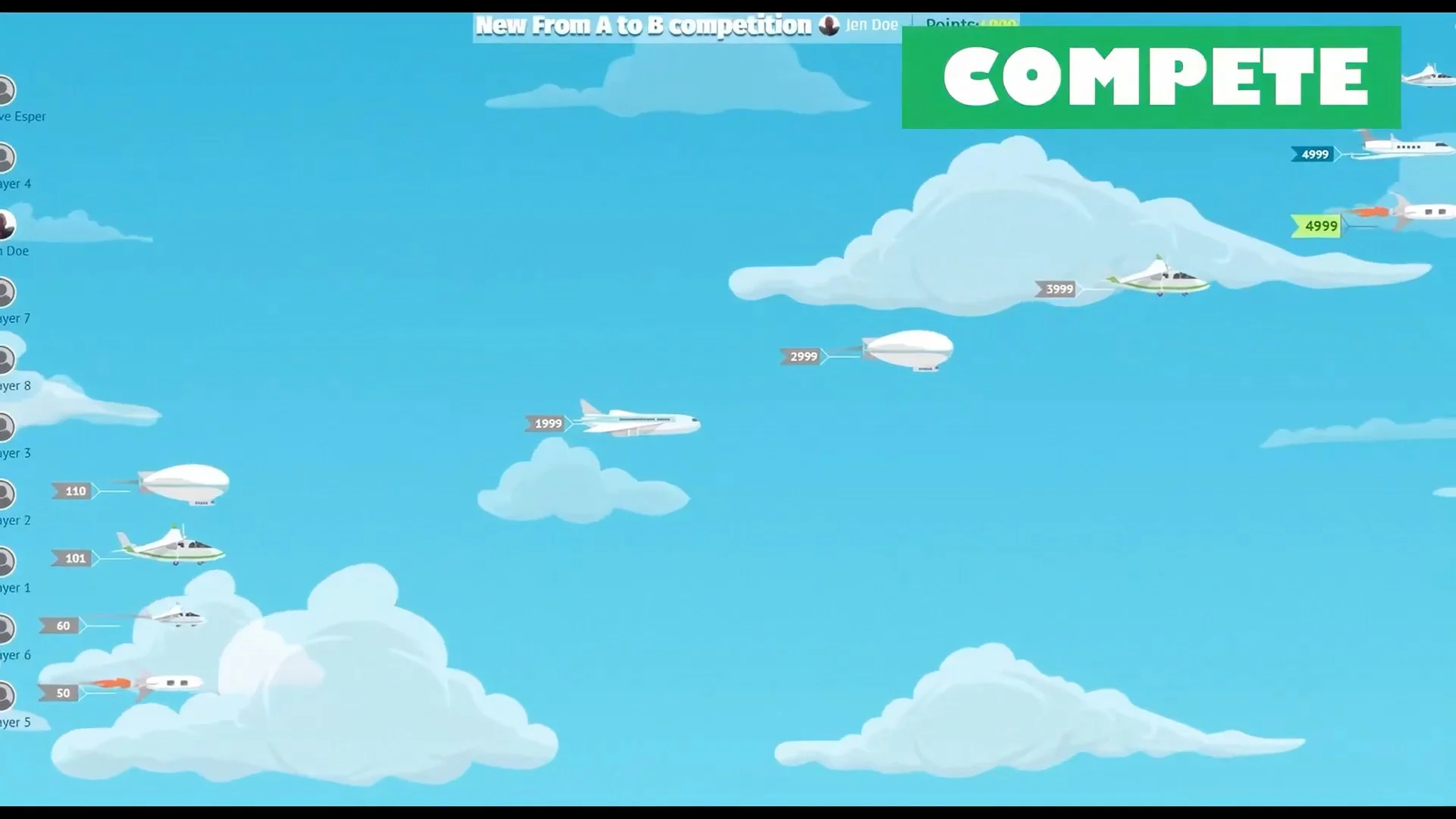
Bonus mechanics turn a ride into a game: the passenger accumulates points, unlocks levels, receives rewards for frequent orders and inviting friends. This gives the customer a personal reason to return to you — even if there are cheaper offers on the market.
Drivers also join the game: for meeting their plan, rating and accident-free driving they receive additional bonuses, meaning they are more willing to take shifts and serve passengers better.
We implement gamification as a Telegram Web App — a separate mini-service that opens directly from a chat with the bot. No need to install an app or teach customers complex interfaces: everything is already where users are used to communicating.
For example, for the City Express taxi fleet, we launched a system of levels and seasonal challenges — within two months, the share of repeat orders grew by a third.
Gamification doesn't require revising tariffs — you keep the average fare but increase ride frequency. The customer pays full price and gets not a discount but interesting tasks and statuses.
This increases loyalty more than one-time discounts: game mechanics engage emotions and competitive spirit.
As a result, the taxi service gets sustainable profit growth: higher order frequency, stable driver motivation, growth in average fare through upsells and friend referrals. You don't enter a price war — you create a system that increases revenue without discounts.
Gamification Formats for Transport Company Goals
Gamification for a transport company works with two audiences — passengers and drivers. Each has its own expectations: the passenger wants a pleasant bonus with the ride, the driver wants recognition and a tangible incentive. The game format must match the point of contact, otherwise the mechanic won't work.
We help choose a scenario for a specific goal: customer retention, driver loyalty growth, or brand awareness. Below are typical formats that we adapt to the specifics of a taxi fleet or aggregator.
| Format | For whom | What it gives the business |
|---|---|---|
| In-ride games: collect bonuses for routes, unlock statuses and prizes | Passengers | Growth in repeat rides, emotional attachment to the service |
| Driver competitions: ratings, challenges for completing orders | Drivers | Improved service quality, fewer refusals, retention of active drivers |
| Branded mechanics: seasonal quests, team promotions | Passengers and drivers | Additional reach, virality, brand recognition in the city |
One format rarely covers all goals. We combine mechanics: a passenger game increases order frequency, while a driver competition improves dispatch stability and courtesy. This approach delivers measurable results within the first weeks after launch.
When choosing a format, it's important to consider fleet size and the audience's digital habits. We analyze your specifics, propose a scenario that fits into the existing application, and implement it without stopping operational processes. The client gets clear mechanics, not a "game for the sake of a game."
How Gamification Implementation Works: Project Stages
Every gamification project for a taxi service starts with the question: how quickly will drivers start participating and when will it affect orders. We structured the process so that at every stage you understand what's happening, what's ready, and when the result will appear.
Below are seven steps the implementation goes through. Most clients meet deadlines because mechanics are agreed upon before development starts, not during it, when edits are expensive.
-
Brief and business process audit. We analyze how driver motivation currently works: what actions need strengthening, where orders are lost, what mechanics would be natural for your region and fleet.
-
Game mechanics approval. We present 2-3 scenarios: for example, levels for meeting the plan, ride streaks, or team challenges. You choose the right one, we lock in the rules — before development begins, without hidden edits.
-
Interface prototype. The driver sees a clear screen: progress, rewards, conditions. At this stage, you evaluate how motivating the mechanic is and make initial adjustments to copy and logic.
-
Game development. We build the mechanic on a professional platform with crash protection and high response speed. You get a stable product that can withstand a simultaneous influx of active drivers during peak hours.
-
Integration and configuration to your rules. We connect the mechanic to your order system and configure accrual and deduction conditions. The driver notices nothing — for them it's just a new section in a familiar app.
-
Test launch on a group of drivers. Before scaling, we test the mechanic on a small fleet: we watch how drivers react, whether they reach goals, and whether there are errors in accruals.
-
Full launch and support. We open access to all drivers, support the first weeks, collect feedback and fine-tune the balance if needed. After launch, you receive a metrics report: participation, goal completion, impact on repeat orders.
This sequence allows you to launch the project in 3-5 weeks and not spend budget on blind refinements. You make key decisions at the mechanics approval stage, and development follows the already-approved logic — with predictable results and timelines.
What's Included in the Deliverable: Game Launch Kit
You don't need to understand game design or programming — you get a ready-made kit for launching a game in Telegram. All that remains is to connect it to your channels and invite the first participants: drivers, customers, or employees.
The kit includes everything needed for the game to work immediately, not after months of development. This is not a template but a system adapted to taxi processes: rides, orders, tips, and completion bonuses.
- Game scenarios for three audiences: drivers (rewards for completed orders), customers (gifts for rides), dispatchers (bonuses for quality).
- Reward and level accrual mechanics — you choose the rules rather than writing them from scratch.
- Admin panel with a prize showcase, condition configuration, and current participant results — make changes in minutes, without a programmer.
- Launch guide for engaging the first group of participants — where to start and how to get feedback quickly.
- Team training: how to change scenarios, monitor activity, and adjust rules as the business grows.
- Technical support at launch and after — if a question arises, we're in touch.
This kit shortens the path from decision to a working game from several months to a couple of weeks. You don't build mechanics from scratch but immediately get a tool used by drivers, passengers, and your marketing department.
Case Study: How a Game Kept Drivers from Quitting
The pain of every taxi operator is driver turnover. Every driver who leaves means search costs, training costs, and lost orders. For the taxi service Forward, we developed a gamified Telegram Web App that turned boring routine into a competition with rewards.
Drivers received daily tasks: complete an order in a "hot" district, get a high rating from a passenger, work a peak shift. Points, levels, and nice prizes — from fuel discounts to boosted ride bonuses — kept interest high.
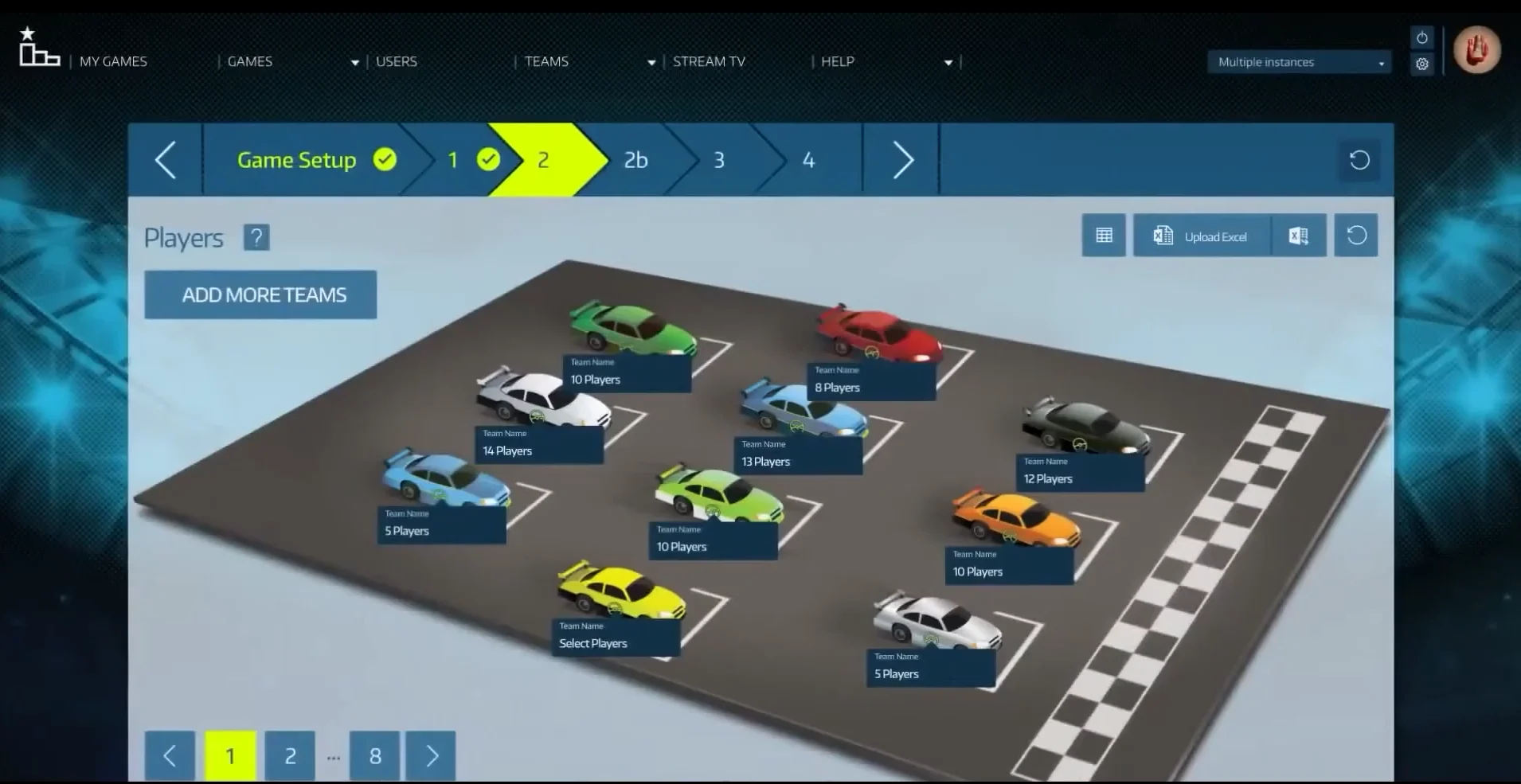
The driver saw their progress and compared it with colleagues in the overall ranking, so they got into the game from day one.
Business Results
Within two months, driver attrition dropped by 27%, and the average number of shifts per week rose by 18%. The number of orders during peak hours increased by 12% — drivers deliberately chose profitable time slots instead of skipping them.
Passenger ratings also improved: game motivation directly raised service quality. And along with the number of cars on the line, the share of orders that didn't have to be canceled grew — passengers got their taxis on time more often.
The client was satisfied and scaled the solution: added team tournaments between districts and seasonal leagues. Within a quarter, active driver retention grew by another 34%, and the taxi operator ordered the next stage of the game from us.
Thus, gamification not only solved the turnover problem but also lifted key metrics across the entire service.
How to Choose the Right Gamification Format for Your Business
There is no universal format — the choice of mechanics depends on your business goal and audience. For a taxi service, it's important to understand who you want to activate: passengers, drivers, or both groups at once. Gamification selection starts from that.
If the goal is to increase ride frequency among regular customers, accumulation points and levels work. When you need to attract and retain drivers, ratings, task streaks, and plan-completion bonuses are effective. And for new users, short quests with a prize for the first ride work well.
| Format | For whom | What it gives the business |
|---|---|---|
| Points and levels | Passengers who already take rides | Growth in repeat orders and a habit of using the service |
| Task streaks / challenges | Active drivers | Increase in completed orders per shift |
| Prize roulette | New audience | Quick engagement and a reason to share with friends |
| Ranking and statuses | Drivers and passengers | Higher loyalty and competitive interest |
The mechanic must be understandable and require no learning: the user opens the app and immediately sees which action brings a reward. The simpler the rule, the higher the participation.
This is especially critical in taxis — both the passenger and the driver interact with the service on the move, so a reward for a specific action (completed ride, car provided on time, review) works better than abstract multi-step schemes.
Start with one mechanic that solves the main pain point, not five simultaneously. Test it on a small group, look at the numbers: order frequency, share of active drivers, return rate. Only then scale.
We help clients choose the right format for their goal, calculate the scenario, and launch gamification turnkey — so the result is measurable, not just an "interesting gimmick."
Answering Frequent Questions About Process Gamification
Gamification in taxi services is a topic surrounded by questions. Most often clients worry about one thing: will the game break familiar processes, how long will the launch take, and how to know it actually brings profit.
We answer these concerns based on experience from our team projects — without technical details, only what matters for business.
What are the risks of implementing gamification and how do you mitigate them?
There is risk in any new tool: drivers may not accept the game, clients may not notice it, and the mechanics may not deliver expected order growth. We handle this in stages: first, a pilot on one group of drivers, collect feedback, and only then scale.
At each stage, you see clear metrics — number of participants, frequency of use, impact on the average fare.
How long does gamification development take?
A typical taxi project takes two to four weeks from scenario approval. This includes configuring mechanics, integrating with your order system, and testing on real users. If you need it urgently by a launch date — we have proven templates that cut the timeframe in half.
What happens if the game fails during operation?
We treat this as a matter of reputation: during the pilot, our specialists monitor operations in real time. Automatic alerts for abnormal situations are configured — response takes minutes, not hours. You also receive clear instructions for your team on what to do in an emergency.
How do you evaluate the game's effectiveness for a taxi service?
We look at business metrics, not click counts. The key ones for us are growth in completed orders, reduction in driver idle time, and the share of repeat rides among passengers.
After the first month, you receive a report with the dynamics of these metrics and recommendations on what to strengthen.
Do you help after launch or hand over the project?
We don't abandon after release. For the first month, we support you: adjust the game balance, address driver questions, and refine scenarios to your goals.
After that, you can choose a support format — from consultations to full management of game mechanics — so the product keeps delivering results.
Launch Gamification and Get Results in Metrics
Gamification in taxi services is not rewards for entertainment but a tool that makes drivers more active and clients more loyal. A game built into a familiar Telegram Web App works every day: drivers strive to complete more orders, passengers return for bonuses. You're not ordering a "toy" but a system that delivers measurable value to the business.
Here's what you get immediately after placing an order:
- Analysis of your business process and selection of game mechanics that influence key metrics: number of shifts, completed orders, repeat rides.
- A game prototype in Telegram Web App before launch — you see the logic and can show it to drivers or partners.
- A phased implementation plan in which dispatcher operations don't stop for a single day.
- Integration with your order system: tasks, points, and rewards are accrued automatically, with no manual work.
- Team training: how to work with the admin panel, configure rules, and resolve disputes.
- A results dashboard in metrics: number of active drivers, average fare, share of repeat orders, and other indicators.
- Post-launch support and mechanic adjustments so the game keeps driving growth even months later.
Ordering gamification means getting not an abstract project but a working tool with clear performance criteria. Turnkey game implementation takes us a few weeks, and from the very start you see how key indicators change.
For a taxi service, this directly translates into profit growth: the same drivers and clients start generating more without spending on additional advertising. Leave a request — we'll show how it will work specifically for your business.