



Why Language School Students Drop Out Mid-Course
Every language school owner knows this picture: in the first months, groups are full and students are active, but by mid-course, some start skipping classes, putting off homework, and eventually leave.
Student churn at a language school is not just statistics — it's a direct loss of profit: you've already invested in advertising, teacher salaries, and rent, but the return on investment never materializes.
The reason is almost always the same: motivation drops. Adult students don't see quick progress, children get tired of monotonous exercises, and teenagers lose interest.
Low retention forces you to constantly spend on attracting new students instead of developing those who have already chosen your school.
Meanwhile, competitors are actively launching loyalty programs, speaking practice clubs, and interactive formats — and students go where it's more interesting.
Losing each student also means losing referrals. An unsatisfied or burned-out student is unlikely to recommend the school to friends, and word of mouth brings a significant share of clients in this field.
As a result, the marketing budget grows while ROI falls — a vicious cycle that's hard to break without changing the approach to learning.
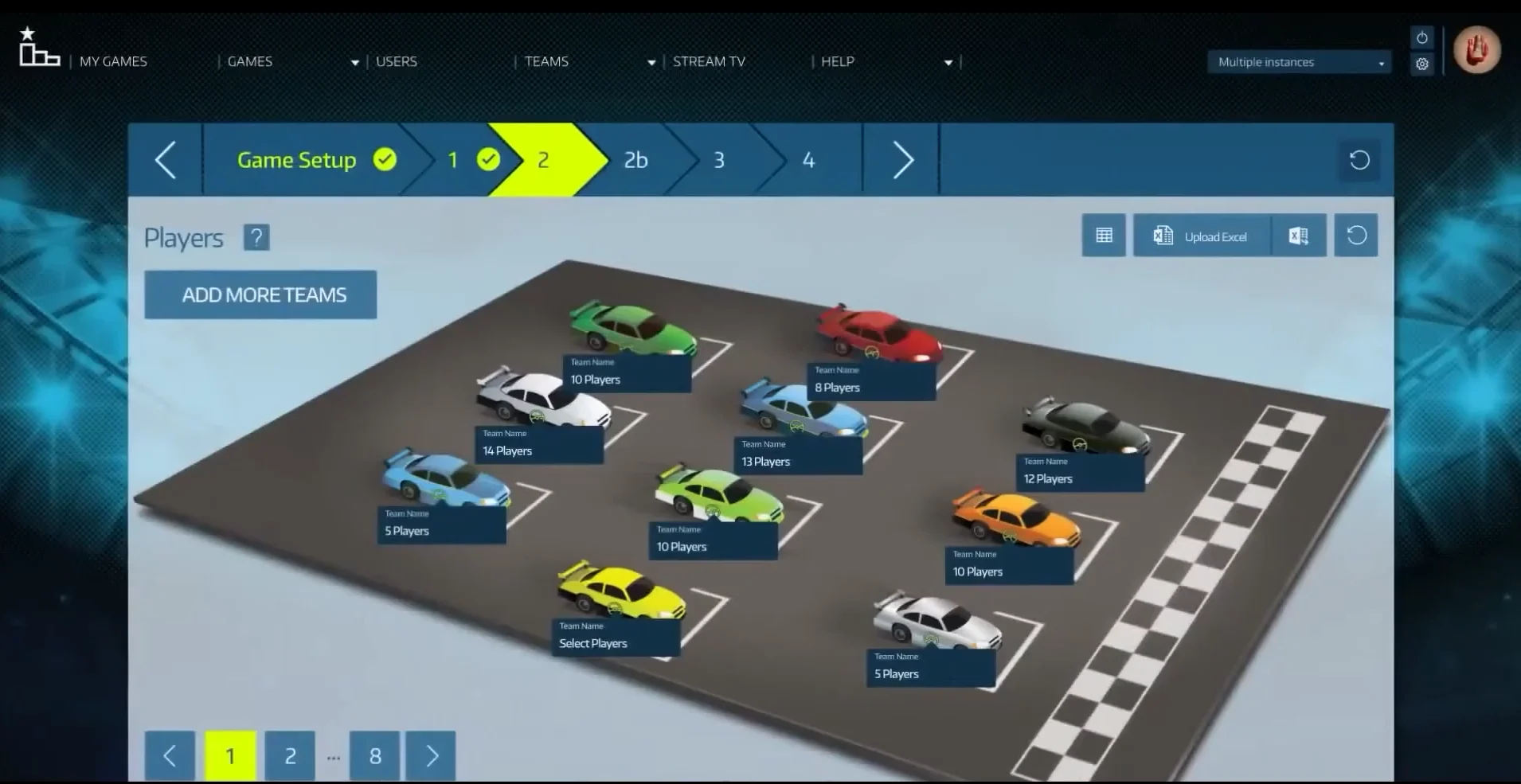
We help solve this problem through gamification of the learning process. We turn routine into a game: points for completing tasks, competitions between students, rewards for consistency — all of this sustains motivation throughout the course.
This way, you reduce churn, increase retention, and build a school that students return to and recommend to friends.
What Gamification of Business Processes Brings to Your Project
Gamification turns routine into a game, and at a language school it works in three directions at once: students study more willingly, teachers see progress without manual reports, and administration gets a transparent picture of motivation.
Instead of endless reminders about homework and attendance — natural dynamics that keep students engaged and boost loyalty.
Increased engagement starts with the student seeing their path: points for completed lessons, levels, rewards for streaks of attending classes. This builds a habit and reduces churn — the student returns to the app because they're interested, not because they have to.
For the school, this means direct metrics: you retain students longer, more courses are completed, higher average ticket from upsells.
Automated monitoring eliminates manual work for managers and teachers. All attendance statistics, test results, chat activity, and assignment completion are collected in one Telegram Web App window.
No need to maintain spreadsheets manually or "remind" students about absences — the system itself highlights problem areas and each student's successes. The team spends the freed-up time on teaching quality, not reporting.
Transparent motivation is a fair reward system for all participants. The student understands what earns them points and what they need to do to reach the next level. The teacher sees objective data, not their own impression.
Parents (if the school works with children) also see progress. No more "why do I have fewer points" disputes: the rules are uniform and clear to everyone.
As a result, the school gets a tool that works on its own: students are engaged, control is automated, motivation is transparent.
Implementing gamification in a Telegram Web App is not just "cute badges" but a management solution that saves manual labor and improves the school's financial performance within the first months of operation.
Gamification Formats for Language Schools for Different Goals
Students come to a language school for results, but interest quickly fades if classes become routine. Gamification formats turn learning into an engaging process while solving specific business tasks: attracting inquiries, retaining students, increasing loyalty. Gamification types differ by goal — it's important to choose mechanics that fit your specific task.
Core Game Mechanics for Language Schools
| Format | Purpose | What It Gives the School |
|---|---|---|
| Quest | Launching a new course or promotion | Surge of inquiries in a short time, social media buzz |
| Level system | Retaining students between lessons | Higher attendance, lower churn, regular repeat purchases |
| Referral game | Attracting new students via "bring a friend" | New leads without ad budget, expanded client base |
Each format can be adapted to the curriculum and the school's style: for example, add bonuses for homework or group assignments.
As a result, gamification works not as entertainment but as a tool that strengthens the student's connection to the school and delivers measurable results.
How Implementation Works: From Brief to Launch and Support
Implementing gamification at a language school is a clear path with measurable results. We've been through it with dozens of schools and handle all stages: from the first call to launch and growth. You stay in control and understand what's happening at each step.
How the Work Is Structured
-
Brief. We have a call and break down the tasks: attendance, homework completion, trial lesson sign-ups, or student retention. We clarify the audience.
-
Plan and concept. We propose a game scenario: levels, rewards, individual and team competitions. We show mockups of the future interface.
-
Approval. We finalize the concept with you and the teachers, then lock in timelines and scope of work. Revisions happen before development starts.
-
Development. We build the game inside Telegram: it opens on any smartphone with no installation required. We share intermediate versions.
-
Launch. We connect the app to groups and schedules, run a test launch with students, and fine-tune details.
-
Support and growth. We don't disappear after launch: we monitor activity, add new levels and events, and answer teachers' questions.
This approach delivers predictable results: you see the project evolve, and students return to their studies with interest. The launch happens without interrupting the learning process — you get a live mechanic that boosts engagement and brings in inquiries.
What's Included in the Delivery and What Resources You Get
You don't just get a game — you get a working tool that impacts student engagement and return rate from day one. The project is adapted to your school: mechanics are built around your curriculum, not abstract templates.
The basic package includes everything needed for launch and daily operation:
- A ready-made game app in Telegram. Students complete quests, earn points, and see progress without leaving the messenger. This lowers the entry barrier and increases how often students engage with the school's materials.
- An admin panel for your team. You manage content yourself: change tasks, rewards, rules, and event feeds without developers or coding knowledge. Updating scenarios takes minutes, not weeks of approvals.
- Launch instructions for administrators and teachers. Clear guidelines on how to register a group, award points, and run the first game day. Your team won't have to "figure out" the process from scratch.
- Methodological tips for engagement. We'll show you how to embed game mechanics into your current curriculum so they amplify results rather than add extra workload for staff.
- Student analytics dashboard. You can see which students are active and which are "fading out." This lets you bring a teacher in on time and keep the student through the end of the course — protecting your revenue.
Every stage — from setup to handover — is personally supported by us at the start. We don't disappear after release: we help train your staff, review the first game sessions, and adjust the scenario based on your early data.
The bottom line: you get a working growth channel without needing to hire a game designer or developer. We handle the technical side and hand over a transparent system that your school runs on its own.
Case Study: How Gamification Brought Back 200+ Students in 2 Months
What We Did and What Results We Got
A language school approached us with a problem: after the first month of study, some students "dropped off" without reaching the end of the course.
The department head wanted to retain students and bring back those who had stopped studying — without discounts or aggressive outreach campaigns. We proposed a gamified Telegram Web App that turned routine homework and class attendance into an engaging quest.
In two months, the school achieved a tangible business result: more than 200 students returned and resumed their studies, and average attendance increased by a third.
The key point — the system worked without adding extra load on teachers: they simply shared a link to the app, and the entire motivation mechanic ran automatically.
Project Results
| Metric | Before | After |
|---|---|---|
| Active students per month | 140 | 380+ |
| Course completion rate | 41% | 76% |
| Repeat course enrollments | 28% | 64% |
The numbers confirm: gamification is not entertainment but a tool that directly impacts revenue and client retention. The app paid for itself in the first month of operation, and the school gained an additional flow of referrals from satisfied students.
We didn't just build a "quest with rewards." We designed a mechanic that targets exactly the points where students lose motivation: missed a class — got a personal challenge task; completed a series of lessons — unlocked access to the speaking club. Every step is clear and shows visible progress.
"Honestly, I didn't believe we could bring students back this fast. A month after launch, we saw people who had silently disappeared six months earlier signing up for classes again and bringing friends.
That was a turning point for us — gamification has now become part of our core program" — Director of the Lingva language school, Minsk.
If your business faces a similar situation — students leaving after the first month, clients losing interest in the product, repeat sales falling — gamification could be exactly the lever you need. We've already proven it in practice and are ready to do the same for your business.
How to Choose the Right Gamification Format for Your Goal?
Before choosing a format, determine which student behavior the school wants to change. If the goal is to bring in new clients, quizzes and contests with friend invitations work best.
If you need to retain already-enrolled students and encourage them to attend regularly, you'll need a system of levels, points, and rewards for consistency — it works over the long haul. Let's look at how to choose gamification for your goal without trial and error.
The right fit also depends on the environment where students find it easiest to participate.
Telegram Web App is convenient for language schools precisely because students already live in the messenger: no need to download a separate app, hunt for links, or figure out a new interface.
The game area opens in one click from the chat — this removes the biggest barrier at the first step, and with it, participant drop-off at the start.
The second key criterion is the length of the game cycle. A short two-week campaign is great for motivating quick action: signing up for a trial lesson, taking a level test, or inviting a friend.
A long semester-long program builds the habit of returning to the app every day, completing extra tasks, and seeing progress. A common mistake schools make is mixing these scenarios and expecting months of retention from a one-off quiz.
The decision guide is simple: each mechanic must correspond to a specific result. Want more inquiries — choose a competition with a reward for action. Want higher attendance — build a system of point accumulation and statuses.
Make sure the format is scalable: start with one channel, and after the first results, expand to the entire student group rather than launching everything at once and having no way to measure the effect.
The right format choice is when the school's goal and the mechanic align, and the result can be measured: new inquiries, the share of students who reach the end of the course, repeat sales.
We help you avoid mistakes at the start — we analyze your audience, touchpoints, and processes, and propose a solution that solves your specific problem, without over-scaling or wasting budget on ideas that don't work.
Frequently Asked Questions and Concerns Before Launch
Launching gamification at a language school raises the same concerns: will we hit deadlines, will the team be overloaded, what happens if there's a technical failure, and who supports the project after launch. Here's how we address these blockers in practice.
How long does the launch take?
A typical project — from brief to launch — takes 2–4 weeks. It depends on the complexity of the scenario: a welcome quiz, a lesson series, or a full marathon with rewards.
We work in iterations: first a basic version that can be launched and tested, then we add levels, points, and prizes.
For you, this means a predictable deadline and a clear result at every stage. You always see what's ready and what's in progress.
How much extra work will this add for our team?
Your involvement is only needed at the brief and text approval stage — one or two calls a week. We handle all the technical work and design ourselves. Teachers continue working as usual, and the administrator gets a simple panel showing student results.
No tasks for your IT department and no need to hire new staff. At most, one person to set up activities and answer student questions in the chat.
What if something breaks on launch day?
Before the start, we run load testing and set up backups, so the school handles hundreds of students logging in simultaneously. If a failure does occur on the user side, we fix it within the same business day. On launch day, personal support is provided so you're never left alone with a problem.
You don't need to understand technical details — just reach out to us through any convenient channel, and we'll get everything back up quickly.
What happens after launch?
After release, you get a clear instruction manual and short training for the administrator. After that, it's your choice: a support package with improvements and student activity analysis, or a self-service mode.
We stay in touch so gamification doesn't just run — it brings in new students and retains current ones longer.
If you come up with an idea for a new scenario or want to change the reward system — we'll build it in without restarting the entire project.
If your question isn't on this list — just write to us. We'll tell you how we solve the challenge in your specific case and show examples of similar projects.Launch Gamification and Retain Students This Month
Students leave language schools not because of poor teaching quality but because of lost motivation: monotony kills interest, and students go to competitors. Gamification brings back interest and retains students, but every month of delay means lost students and missed revenue.
We launch gamification in a Telegram Web App for your language school this very month. Right after you reach out, you get:
- An express audit of the curriculum and student drop-off points — within 2 days.
- A prototype of game mechanics tailored to your curriculum and students' ages.
- An implementation plan with launch dates and task allocation.
- Telegram Web App setup under the school's brand: levels, rewards, tasks.
- A test launch with a group of students and mechanic adjustments.
- Full implementation, team training, and ongoing support.
Why not put this off? The peak demand season for language learning is at the start of the season, and schools with gamification already in place get the advantage.
By launching the game this month, you'll have time to collect feedback, refine the mechanics, and approach the season fully prepared. Competitors are implementing these solutions right now — every month of delay widens the gap.
Leave a request today: we'll get back to you within one business day, clarify your goals, and prepare a personalized proposal. We take the entire process — from idea to launch — off your hands. Launch gamification that retains students this month.