

Customer Churn in Energy and Utilities: Causes and Solution
In energy and utilities, the subscriber is passive by default: they remember the company only when they need to submit meter readings, pay a bill, or file a complaint. The rest of the time, the brand doesn't exist for them, and the connection is sustained only by habit.
Habit is not loyalty. As soon as an alternative appears with a transparent price and convenient service, the subscriber leaves — and the company loses not just the subscriber but also a share of the market.
Energy retail companies often focus on acquiring new customers rather than retaining existing ones. Yet it is the engagement of current subscribers and partners that provides a steady cash flow.
Without it, even favorable tariffs do not prevent churn, and loyalty programs run idle — because customers don't know about them and don't understand how they work.
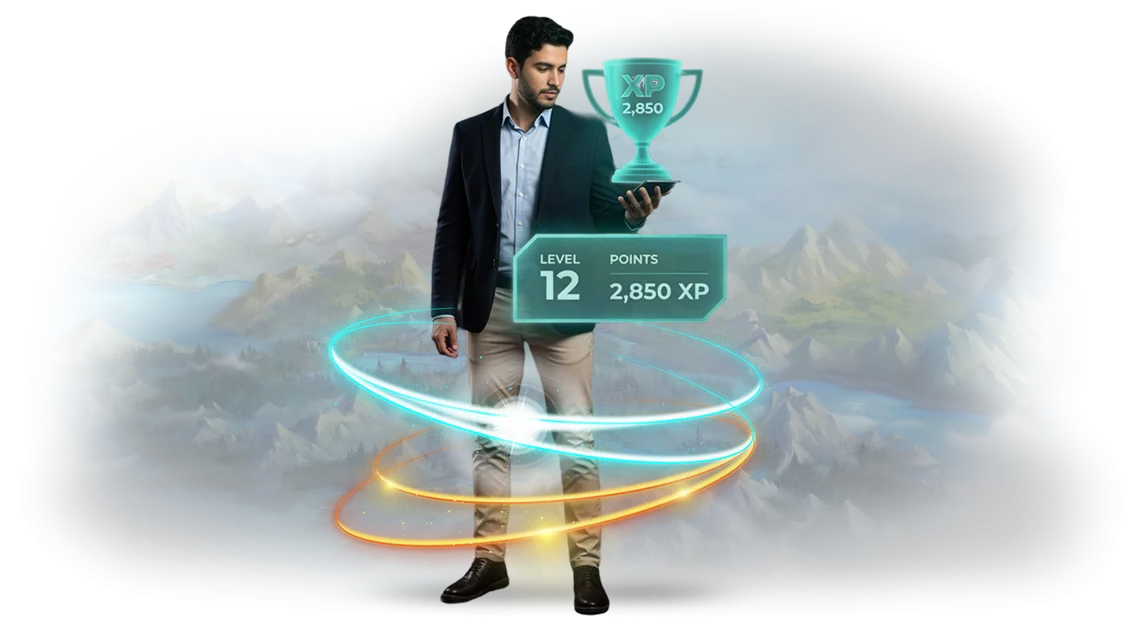
The solution is to make the service interesting and understandable for people. Gamification transforms routine into a scenario with clear steps: submit meter readings — get a bonus; take part in a survey — get a discount; pay on time — move up in the personal subscriber rating.
The customer starts interacting with the company daily, on their own, without reminders, and sees the benefit of that interaction.
Such engagement directly affects subscriber retention and loyalty growth. A person becomes a participant in the process rather than an outside observer, and stops looking for a replacement provider.
Our experience shows that companies implementing these mechanics reduce churn and receive steady feedback from customers. This is exactly the task our solution addresses.
What Gamification Brings to Business: Engagement, Loyalty, Sales Growth
Game mechanics have long moved beyond entertainment — smart motivation systems, levels, rewards, and competitions help businesses solve practical problems. In energy and utilities, they are especially effective because interaction with customers and staff is regular.
We design gamification around your specific context so that every element delivers measurable results: increased activity, improved service, additional sales.
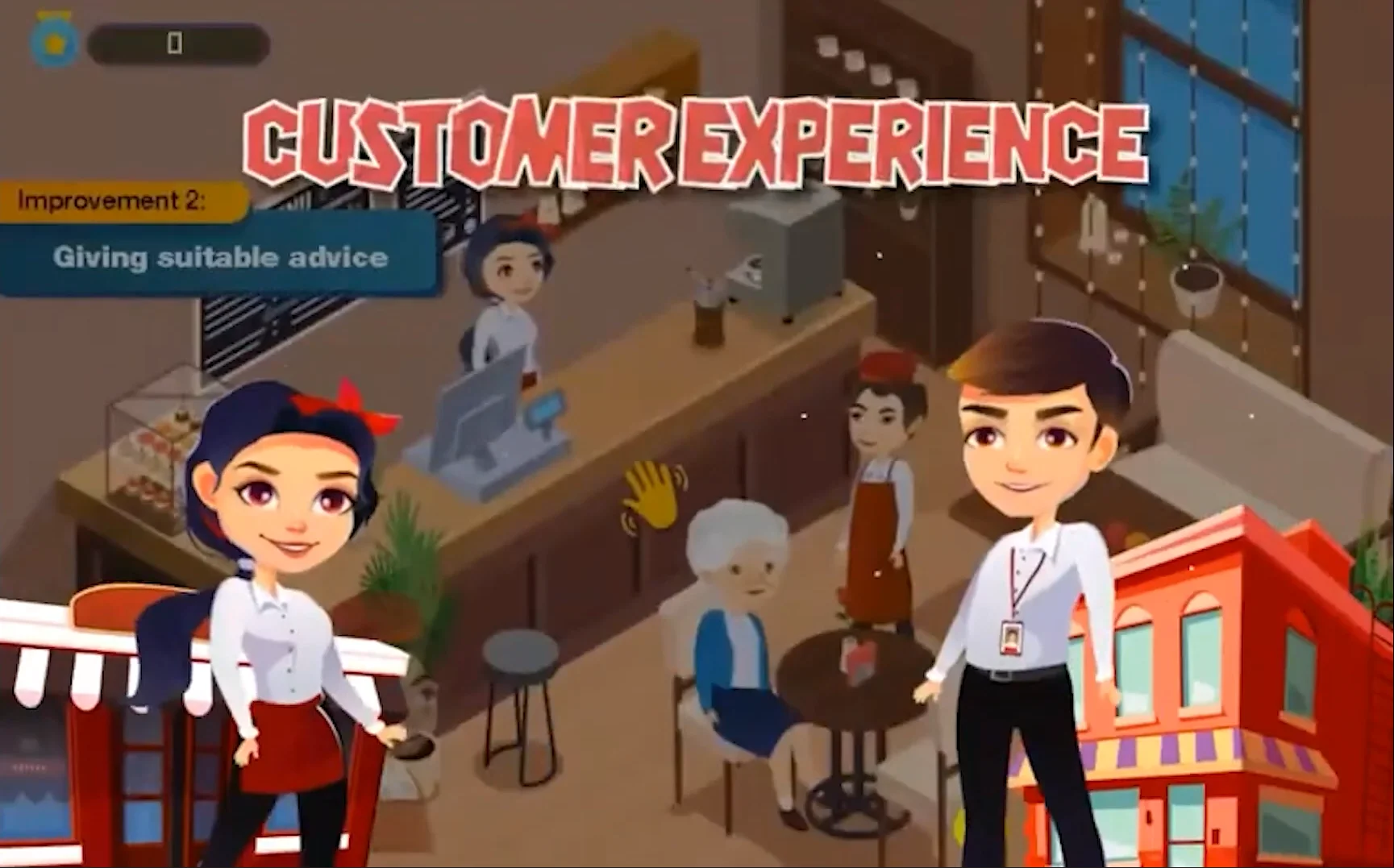
For customer experience, this turns routine into a game. Submitting meter readings, paying bills, submitting connection requests — for every action, the customer receives points, levels, or bonuses.
This approach increases the frequency of interactions and keeps the user engaged long-term. As a result, conversion to additional services and equipment sales rises, along with a steady flow of inquiries without advertising costs. At the same time, you can see which mechanics work and enhance them in real time.
Employee training and loyalty are the second key area. Briefings and regulations turn into quests and simulators, while a system of grades and competitions motivates staff to perform better. New specialists get up to speed faster, make fewer mistakes, and turnover decreases. This is especially important for companies with large workforces and remote teams.
The main thing gamification gives business is transparent analytics and growth in key metrics. You see customer activity, repeat interaction rates, employee training speed, and the direct link to sales.
As a result, customer satisfaction increases, employee loyalty grows, and, consequently, so does company revenue.
We implement such solutions on a reliable server architecture that withstands peak loads and ensures the portal runs stably at any time. We handle the project turnkey: from task analysis to launch and support.
If you want to assess the impact on your business, start with a brief consultation — we will select game mechanics tailored to your context.
Formats of Game Solutions: From Portal to Mobile App
Gamification in the energy and utility sector is not just a "game"; it is a way to turn routine customer and partner actions into an understandable scenario.
With it, you increase loyalty, encourage regular payments, reduce call-center load, and bring the brand closer to the consumer.
A properly chosen format determines how quickly you get measurable results — from lower accounts receivable to more applications through digital channels.
We develop game mechanics for all audience types, from end consumers to corporate partners. Whichever scenario you choose — web portal, mobile app, or a hybrid scheme — each format solves specific business tasks. Below is a cheat sheet on formats to help you navigate.
| Format | For whom | What tasks it solves | What it gives the client |
|---|---|---|---|
| Web portal in personal account | Individuals, service consumers | Increases payment frequency, encourages meter reading submissions, teaches responsible consumption | Fewer overdue payments, more digital payments, fewer support requests |
| Mobile app | End consumers, younger users | Holds attention, rewards regular actions, scans meters, provides personal recommendations | High engagement, higher NPS, constant contact with the customer without SMS campaigns |
| Corporate portal | Employees, internal departments | Motivates staff to meet KPIs, trains new regulations, accelerates information exchange | Increased labor efficiency, lower turnover, uniform work standards |
| Partner area | Management companies, resource suppliers | Engages partners in joint promotions, automates bonus calculations, provides transparent statistics | Stronger relationships, an additional sales channel, control over contract terms |
In every project, we choose the format or combination of formats that delivers maximum effect for your specific business model. Technically, it is built on a standard web stack — no complex infrastructure, but fast launch and clear analytics.
You get not scattered "gimmicks" but a system that is embedded in your operational process and measurable by business results.
Gamification Implementation Stages: From Brief to Launch
Transparent implementation stages are how we structure work with the client. You always know where the project stands, what decisions are needed from you, and when the first results will appear.
Below are six steps that are recorded in the contract and plan so there are no surprises regarding timelines and budget.
-
Brief and task immersion. At the start, we meet with you or your team and analyze the gamification goals: increasing customer loyalty, motivating employees, training, or boosting digital activity.
We define the audience, success metrics, and put together a technical specification that is approved by you.
-
Prototype and game mechanics. We propose a concept of scenarios, points, levels, and rewards — visually, without diving into code. You see how familiar processes will change and adjust the details before development begins. This is the cheapest stage for making changes.
-
Design concept and integration. We adapt the interface to your corporate style and plan how the portal will integrate with existing channels: personal account, internal portal, CRM, or mobile app. You receive a layout of key screens and a connection plan.
-
Development and testing. We build the portal on a professional stack, run internal testing, and a pilot run on a small group of users. Based on the results, we show you the solution in action, fix any issues, and prepare the portal for the production launch.
-
Launch and training. We deploy the system, configure access, and prepare short instructions for your employees or customers. At this stage, you get a working tool, not a "raw" product that needs to be refined on the fly.
-
Support and development. After launch, we stay in touch: we monitor stability, analyze engagement, and propose improvements based on real data. When necessary, we expand scenarios — adding new tasks, seasons, or integrations as your needs grow.
What the Project Includes: A Complete Package for Your Team
Gamification implementation is not just a technical solution; it is a ready-to-use working tool that your team will start using immediately after launch. We deliver not scattered files but a comprehensive package — from the script to the admin panel and ongoing support.
What is included:
- Game script — a well-designed mechanic that is clear to employees and motivates them to perform target actions: process requests faster, complete training, and master new regulations. The script is adapted to the specifics of energy and utilities.
- User interface — intuitive screens for all roles: regular employees, managers, and administrators. The interface requires no lengthy learning curve, so onboarding takes hours, not weeks.
- Instructions and regulations — simple materials that help your employees quickly understand the game rules and start participating without slogging through technical documentation.
- Team training — we run short practical sessions for administrators and users, answer questions, and make sure the team works confidently with the tool.
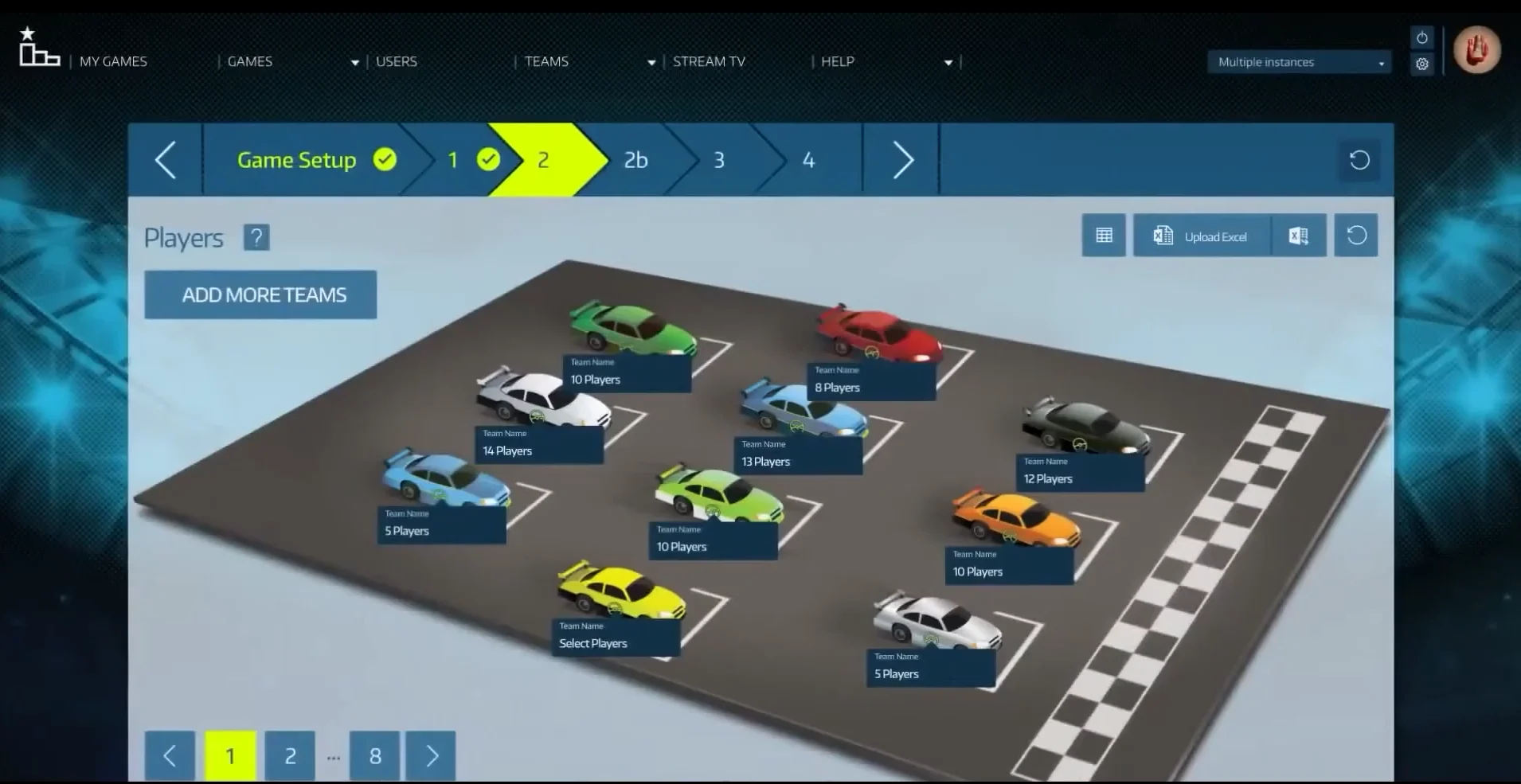
- Admin panel — you manage settings yourself: change tasks, levels, rewards, deadlines, and add new participants. You don't have to wait for a developer for every little thing — all changes take just a few clicks.
- Warranty support — after launch, we stay in touch: we promptly fix issues and help with configuration and game development. You get stable system operation without downtime.
This package addresses the main implementation risk — when a project "stalls" after handover and the team is left alone with non-working processes.
Here, everything is thought through: from the first launch to daily use, continuous support, and the evolution of mechanics as your business processes change.
Case Study: How We Increased Engagement at an Energy Company
For a large energy company, we developed a gamified web portal for customers. The task was not easy: heat and electricity bills are paid out of habit, not brand love, and the company wanted to change that attitude.
The goal was not just to remind customers about the brand but to create a reason to visit the portal regularly, understand their own data, and receive clear bonuses for doing so.
We launched a program with levels, accumulating points, and seasonal challenges. Customers receive rewards for paying on time, submitting meter readings, and participating in surveys — while the company sees a live picture of which users are active and which are losing interest. The mechanics are simple enough for people of all ages, from students to pensioners, to understand.
The results exceeded expectations. In the first quarter, the number of regular portal visits tripled, and the share of payments made through the personal account rose by 27% — reducing the load on the call center and offices.
Average time spent on the site grew from one to four minutes, precisely the time when customers explore their tariffs, services, and offers.
Management also noted higher loyalty: customers began recommending the company to friends more often, and the number of complaints dropped noticeably.
The key takeaway: gamification works when it is embedded in a real business process rather than sitting as a separate "toy." We connect the mechanics to company goals — payments, meter readings, loyalty — so the result is measurable in money, not just likes.
After the first phase, the company ordered portal expansion for new regions: the portal scales without losing quality and delivers the same effect on a different audience.
How to Choose a Gamification Format for Your Tasks?
Choosing a gamification format starts not with mechanics but with the business task. Customer retention, employee training, and sales growth require different approaches, although each is based on the same principle: motivation through engagement.
That is why we first define which action should become a habit: regular payment, completing a course, or purchasing an additional service.
For customer retention in the energy and utility sector, long-term mechanics work: accumulating bonuses, "reliable payer" statuses, personal challenges, and rewards for timely actions.
This format makes communication with the company less formal: the client sees their progress, receives clear benefits, and is less likely to switch to a competitor.
When the task is employee training, scenario-based simulators and interactive quizzes are more effective. The employee works through short, realistic situations, makes errors without consequences, and reinforces the skill through instant feedback. This shortens the onboarding period and improves service quality.
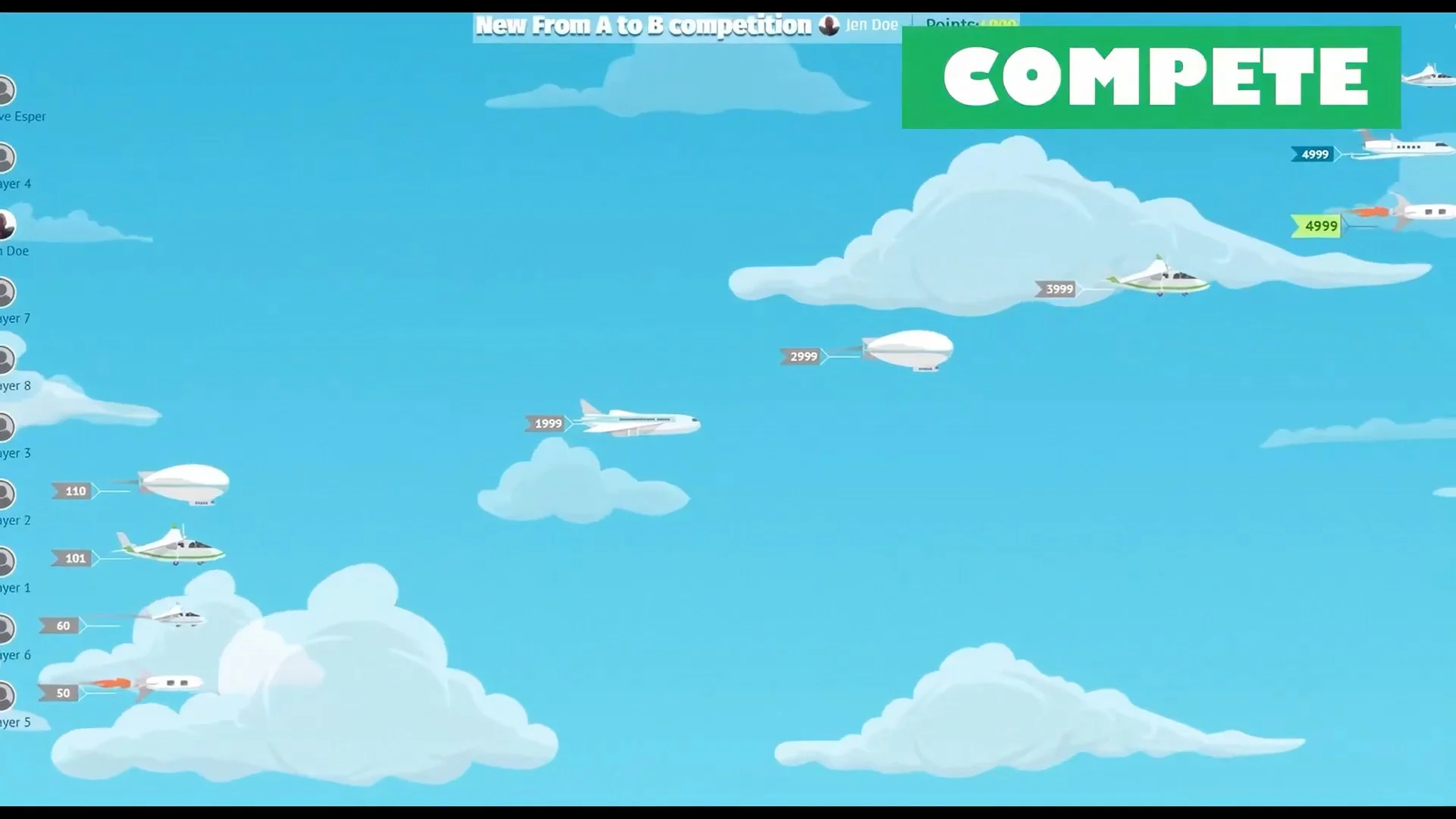
For sales growth, competitive formats work well: team contests, leaderboards, and plan-progress bars. Participants see the result of their actions, while the manager sees a transparent activity picture.
You can also build in rewards for targeted actions — for example, for signing up for a service or enabling a new option.
Often tasks overlap, and then the format is combined: one portal integrates training and sales motivation, while customer retention gets a game core. The key is not to copy someone else's template but to start from the specific metrics we set at the beginning.
We choose the format and mechanics that solve your task, not just add "animation" to the site.
Frequently Asked Questions About Gamification Development
Before a project starts, clients from energy and utilities ask the same questions. The industry is conservative: accounting systems have been running for years, customer data is protected, and any innovation must integrate without downtime or risks to billing. We address the main concerns upfront so the decision can be made calmly.
Below are the questions most often asked before the start. Don't see yours in the list? Ask during a consultation — we will examine your case in detail.
How long does development take?
The scope varies: from a portal with a couple of mechanics to a loyalty program with points and levels. We work in stages — before the start, you receive a plan with timelines for each phase. A typical project takes one to two months.
Is it difficult to integrate gamification into our accounting systems?
We do not change your infrastructure. The platform connects to personal accounts, billing, and CRM via standard data exchange mechanisms. Employees continue working in their familiar systems, and customers get a new interaction interface.
How secure is customer data?
Role-based access is configured: each employee sees only the data needed for their work, and data transmission is encrypted. The project is built taking into account your company's requirements, and we can sign a confidentiality agreement if necessary.
What happens after launch?
Launch is the beginning of working with the audience. We support the project: monitor stability, collect analytics, and adjust mechanics. Every month you receive a report — showing activity, which scenarios work best, and what to strengthen.
Let's Discuss Your Project and Plan the Implementation Scenario
To ensure gamification delivers measurable results in energy and utilities, it is important to understand the implementation scenario in advance.
A free consultation is the first step: we examine your task, audience, and goals, then propose a solution that increases customer loyalty, engages employees, and accelerates the transition to digital services.
Leave a request and we will prepare a cost estimate and a pilot project plan tailored to your tasks. Here is what you get after launch:
- A clear implementation scenario with stages and realistic timelines.
- A cost estimate and expected impact — with no hidden fees or unnecessary work.
- Adaptation of mechanics to your audience: customers, employees, or both groups.
- A pilot project launch on a limited group — we test hypotheses and gather data before scaling.
- Analytics tools: you can see what actions participants take and how that affects key metrics.
- Post-launch support and training for your team on how to use the platform.
Start with a short request — we will reply within one business day, ask the right questions, and propose a scenario that will pay off.
A free consultation and cost estimate are already available at the start, and the pilot project will let you confirm the results before a full-scale launch.