



Gamification for Fintech Companies: How to Stop Losing Clients
Financial services face a paradox: the easier an app is to use, the faster clients lose interest in it. They download it, check their balance, order a card — and a month later, they forget it exists.
Fintech is highly competitive, so user retention becomes more important than acquisition: attracting a new client costs many times more than keeping an existing one.
At the same time, classic push notifications and discounts no longer work — people have grown used to them and scroll right past.
Gamification of business processes solves this problem through mechanics familiar to everyone since childhood: points for actions, status levels, personal challenges, rewards, and virtual achievements.
Every action in the app — payment, saving, investment — earns points that can be exchanged for privileges, cashback, or exclusive terms.
This turns routine into a game with clear goals and fast feedback, thereby increasing engagement and strengthening client loyalty to fintech services.
We design and implement gamification for the specific needs of each product: from simple loyalty systems to full-fledged scenarios with levels, quests, and community features.
We analyze your audience's behavior, select mechanics that will motivate users to return, and integrate them into your existing platform. This way, you stop losing clients — they come back on their own because they've gotten used to receiving a reward for every step.
Gamification of Business Processes: Technologies and Benefits
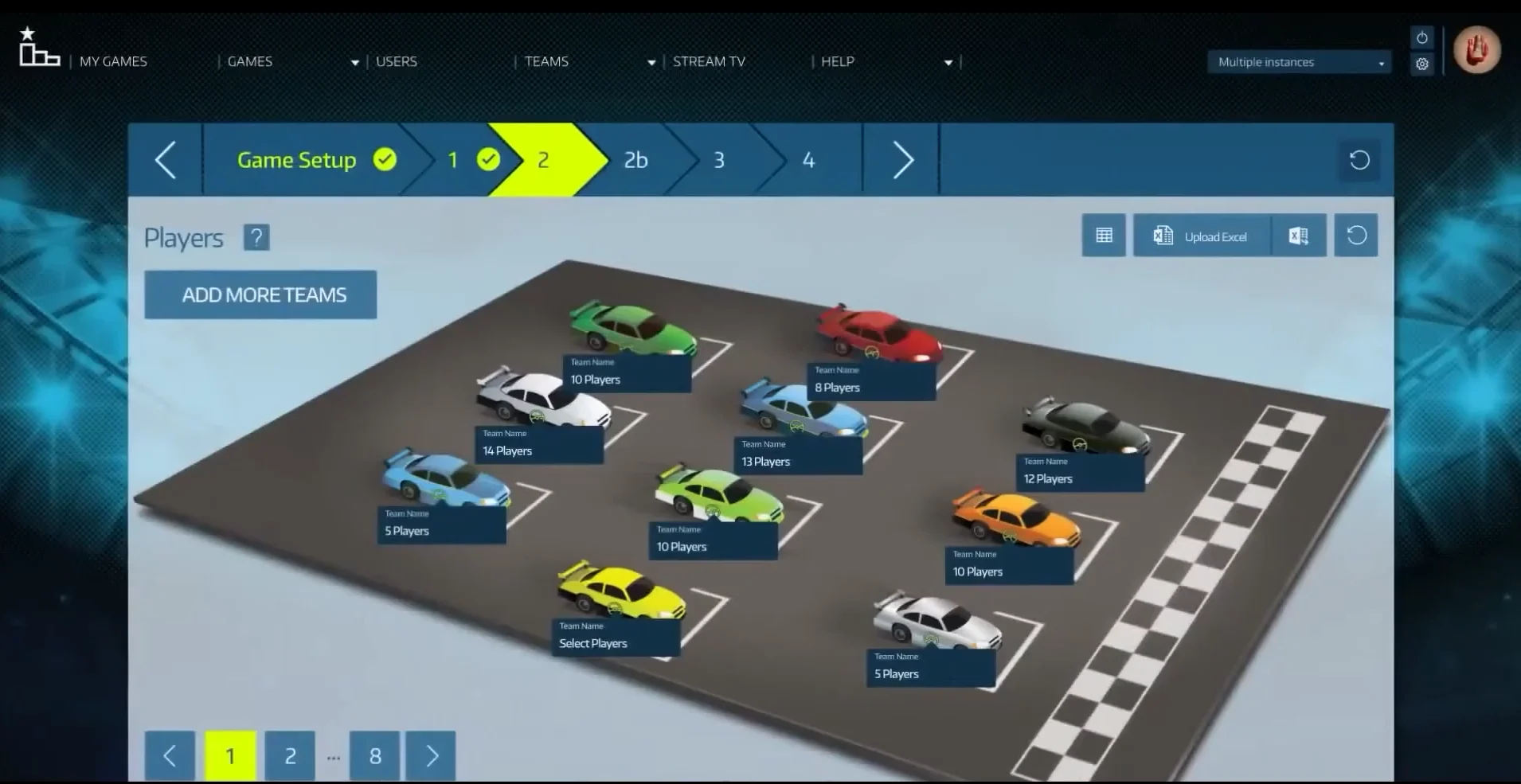
Gamification of business processes means integrating game mechanics into everyday work tasks: earning points, levels, competitions, team goals.
For fintech companies, this approach works especially well: it turns routine into a meaningful challenge, boosts engagement, and reduces employee turnover.
The technological foundation of our solutions is a modular architecture and modern web technologies that easily integrate with existing accounting and analytics systems.
We use professional server hardware — this guarantees fast response and stable operation even under high load, when employees work in the portal simultaneously.
Game mechanics are not chosen abstractly but tailored to specific business processes: sales, support, internal document flow, training.
We analyze key metrics, identify bottlenecks, and design scenarios that directly affect measurable outcomes — such as ticket processing speed, service quality, and plan completion.
This approach lets employees see their contribution to the overall result, while managers get an objective picture of motivation.
Clients notice the effect within the first weeks after launch. Based on our observations, companies achieve up to 30% higher efficiency without expanding headcount, reduced onboarding time for new specialists, and improved work quality.
The system remains transparent: management sees the team's real achievements and can adjust processes in real time.
In the end, gamification stops being "a game for the sake of a game." It becomes a structured management tool that helps achieve measurable business results, retain valuable employees, and create healthy competition within the team.
For fintech companies, where precision and speed matter, such technologies become a competitive advantage.
Gamification Formats for Fintech Companies
Financial products are hard to grasp for users: clients have doubts, employees are overloaded with regulations. Gamification in fintech is not a game for fun but a way to turn routine into clear scenarios with measurable results. The key is choosing the right format for the specific task.
Below are the main formats we implement in fintech companies and how they relate to business goals.
| Format | Who it's for | What it gives the client |
|---|---|---|
| Educational quests and simulators | New employees, operations departments | Faster onboarding and fewer process errors |
| Ratings and levels | Sales and support departments | Higher engagement with routine, healthy competition, meeting targets without pressure |
| Badges and virtual rewards | Mobile app users | More activity, higher transaction frequency, habit of using the product |
| Accumulation mechanics | Active users | Better retention and repeat usage, increased customer value without direct discounts |
| Team competitions | Cross-functional teams | Better interdepartmental cooperation and shared focus on results |
The format is not chosen abstractly. We analyze the audience, current metrics, and pain points, then combine mechanics: for example, an educational quest for employees and an accumulation program for clients can work within the same ecosystem. This lets you cover operational tasks and marketing goals without unnecessary expenses.
How Gamification Implementation Works: From Brief to Launch
Implementing gamification in a fintech portal is a process we make transparent and predictable. You always know where the project stands, what is already done, and what comes next. Below is the typical path from the first conversation to a working system.
-
Brief and immersion in the task. We meet with you, study the business process you want to activate, and examine the portal's audience. You share your goals, and we propose gamification ideas that fit your scenario.
-
Plan and approval. We formalize the concept, timeline, team composition, and acceptance criteria. You receive a document with stages and cost, make edits, and approve the plan — after that, we begin work.
-
Designing mechanics and interface. We map out scenarios: tasks, points, levels, rewards. We show you prototypes for approval so you can see the future portal before development begins.
-
Development and testing. We build a working portal and test it against real usage scenarios. You receive intermediate demos — you see progress and can influence details before the final version.
-
Launch and support. We deploy the portal, help your team get comfortable with it, and launch together with you. After launch, we stay in touch: we fix issues, collect analytics, and suggest improvements based on results.
Each stage ends with a concrete deliverable: a document, a prototype, a working version. This allows you to control the budget and timeline and to feel confident throughout the implementation process.
What Is Included in a Gamification Project Delivery
After the project is completed, you receive not just a working portal but a complete package for launching, supporting, and developing gamification.
We combine all results into a single delivery so your team can quickly train employees, monitor metrics, and scale the mechanics without hiring outside developers.
What is included in the delivery:
- A working gamified portal — an adaptive web interface for employees and clients, with a well-designed system of tasks, points, levels, and rewards. Everything works immediately, with no hidden follow-up work.
- An admin panel — you manage point accrual rules yourself, create new promotions, and change conditions without involving programmers. A manager can launch a new campaign in minutes.
- Documentation for your team — a clear description of the portal's functionality, the gamification logic, and usage scenarios. The instructions are written in business language, not technical jargon — any department head can understand them.
- Administrator training — we run a hands-on session with your employees: we show how to configure mechanics, track participant progress, and respond to changes. After the training, your team works independently.
- A test-launch results report — a document with user activity analytics, conversion to target actions, and recommendations for improvement. You see which mechanics work and which should be adjusted.
- Technical documentation for your specialists — if you have an internal development team, we provide source code and architecture descriptions so they can continue developing the portal.
- Warranty support — during the warranty period, we fix bugs and help with configuration free of charge. You are not left alone with problems after launch.
This package allows you to quickly integrate gamification into everyday work, measure its effectiveness, and flexibly change the rules as your business grows.
Case Study: How Gamification Increased Conversion in a Fintech Service
When the fintech service PayFlow faced the task of increasing the share of completed registrations and first payments, the marketing department had already tried standard mechanics: discounts, email campaigns, reminders.
There was some growth, but it was small, and clients quickly dropped off at the third or fourth step.
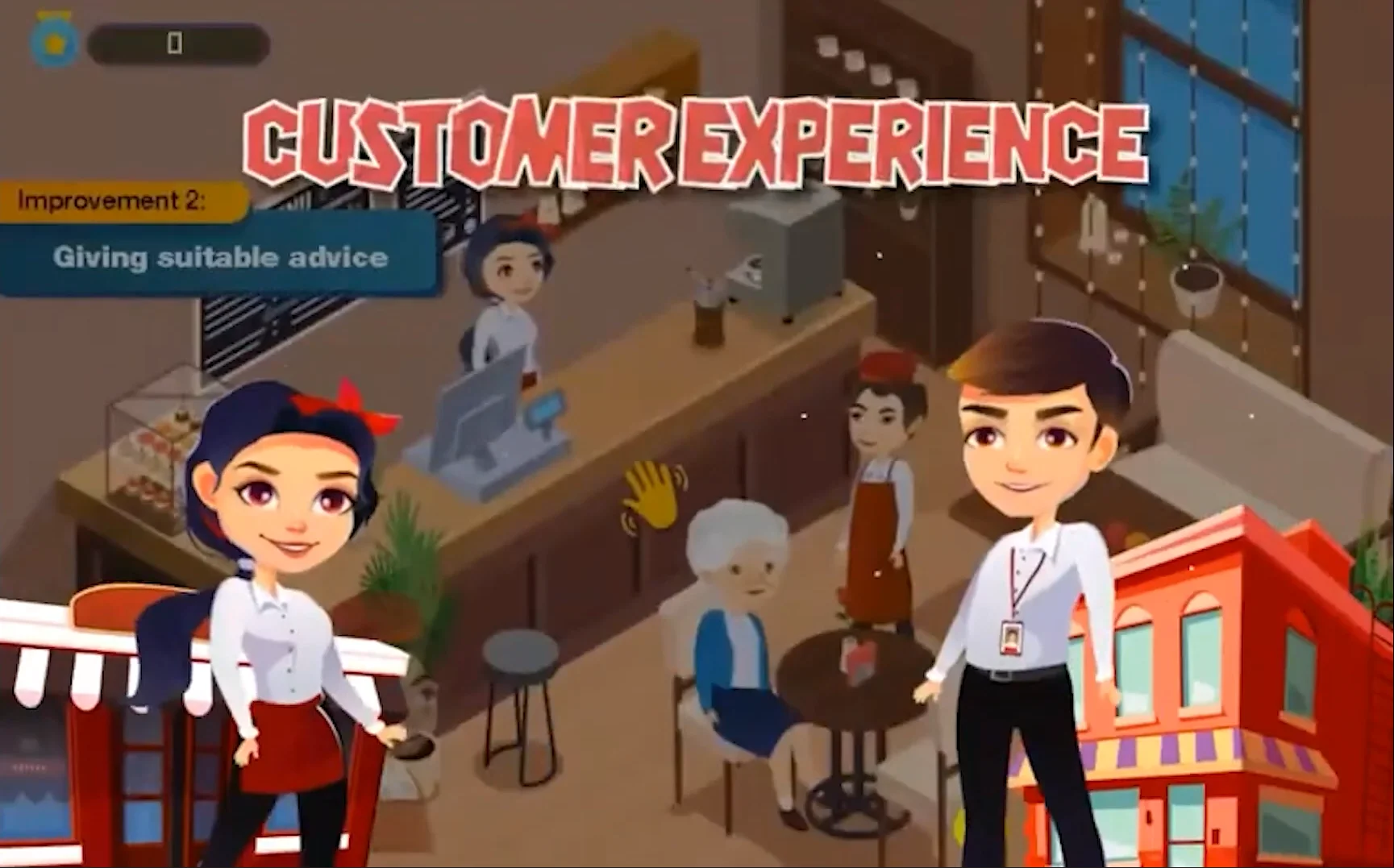
Instead of another promotion, we proposed gamified onboarding: we turned the product discovery process into a series of short interactive steps with point accumulation and visible progress.
Here is what we did: we created several game levels, each explaining one key feature of the service. For example, to move to the next step, the user had to create their first payment in demo mode and earn a virtual bonus for it.
The client received a tool that required no special knowledge — everything was intuitive. Importantly, we worked on our proven platform, so integration took less than a month and required no significant development investment from the client.
Now the results. Two months after launch, the share of users who reached their first real payment increased by a third. Conversion from registration to active usage grew from 11% to 17%.
The average client "warm-up" period was cut in half — previously people spent weeks exploring their personal account; now many figured it out in one or two sessions.
Repeat transactions also became more frequent: 20% more clients made a second payment within the first week.
For the business, the main thing is payback. The project paid for itself within four months thanks to a larger paying audience. Moreover, the gamification itself can be scaled: add seasonal tasks, levels for new products, quizzes to boost loyalty.
The client's team supported the launch without hiring contractors — all analytics and content management are available in a single panel. This is a case where game mechanics bring measurable value to the business rather than merely "decorating" the interface.
How to Choose a Gamification Format for Your Task
There is no universal gamification format — and that is normal. The choice depends on the business goal: attract new clients, improve financial literacy, or retain users in the app.
The answer to "what exactly should the game change" determines both the mechanics and the complexity of the solution. So the right approach is not to take a popular template but to analyze your own situation.
In fintech projects, you usually have to choose between product onboarding scenarios, educational simulators, and loyalty programs. If the goal is to teach clients how to use the service, quizzes and step-by-step scenarios work well.
If you need to increase transaction frequency, use statuses, rewards, and competitive mechanics. Each format solves a specific problem, so it is important not to start with a ready-made idea but to begin with the metric you want to move.
To make the choice well-founded, we start with a short survey of stakeholders: marketing, product, and customer service.
We don't ask "what mechanic do you want" but rather "what user actions are not happening right now, and why." Based on the answers, we form a hypothesis and select a gamification format that will affect exactly the pain point. This preparation takes a few days but protects you from an expensive and useless implementation.
As a result, you get a portal with game elements tied to business goals. After launch, we monitor behavior and adjust the scenario if we see a deviation from the goal.
This allows us to strengthen weak spots in time and confirm the project's positive effect — without guesswork or unnecessary investment.
Common Client Concerns About Gamification
Before launching gamification in a fintech project, business owners tend to have the same questions: won't a game format scare off serious clients, won't it break business processes, and is it safe. Let's address the main objections using web portals for financial companies as an example.
Isn't gamification too frivolous for finance?
No. This is not about "toys" but about motivation mechanisms: progress, statuses, rewards for targeted actions. They help clients understand the product and take steps that benefit both them and the company.
In fintech portals, gamification is used as a system of hints and incentives, not as a game for entertainment.
How safe is it for data and processes?
Security is built into the architecture: all game mechanics operate within your business rules, and access to financial data remains under your control. We do not modify accounting systems; we add an external layer of motivation. As a result, the client sees only the "wrapper" — risk management and data remain yours.
Is it difficult to implement, and will the project drag on?
We break the implementation into short stages: first we launch basic mechanics in one segment, then we expand. This way, results appear within a few weeks rather than at the end of a long project.
Integration with your portal goes through standard interfaces — without restructuring existing systems.
The key point is that gamification solves a business problem: it increases engagement, the number of completed operations, and the share of repeat interactions. Fears arise from a lack of understanding of the mechanics, not from real risks. Next, let's look at how this works in practice.Order Gamification: Get a Cost Calculation and Implementation Plan
You submit a request — and within a day you receive a cost calculation with specific timelines and budget. We don't make you wait or feed you promises: we formalize agreements, assemble the team, and show you the work plan before launch.
From there, the collaboration follows a transparent scenario where you always know where the project stands and what comes next:
- Request and brief. You describe your task — we ask clarifying questions to understand which business metrics you want to achieve: higher engagement, user returns, or faster employee training.
- Calculation and commercial proposal. Within 1–2 days, you receive an estimate for your scenario: scope of work, timeline, and cost calculated after audit. No hidden surcharges — only what is truly needed for the result.
- Implementation plan. We show the gamification stages, participant roles, and areas of responsibility. You approve the mechanics logic and design concept before development begins — this saves your budget.
- Implementation and intermediate demos. We work in sprints: you see results every 1–2 weeks, give feedback, and adjust details without losing time.
- Launch. We deploy the portal, connect analytics, and run testing together with your team. Everything is ready to go on launch day.
- Support and growth. We stay with the project after launch: we track metrics, suggest improvements, and add new levels and scenarios as your business grows.
For fintech, this is especially important: we account for security and regulatory requirements, so game mechanics do not conflict with your products and processes.
You get not an abstract "game" but a working tool that increases user loyalty and reduces the load on support.
The result is gamification that pays off: increased client activity, more repeat operations, and clear motivation for employees.
Leave a request for a cost calculation — we'll show how this would work in your specific situation and propose an implementation plan tailored to your timeline.