

Why retail loses customers without gamification
Customers see the same discounts and promotions every month, so these quickly stop generating interest. The client gets used to the benefit and leaves for somewhere slightly cheaper or more emotional.
Business invests in acquisition but fails to retain — the marketing budget leaks away on new customers instead of working with existing ones.
The reason is that classic loyalty mechanics have long stopped creating emotions. A cumulative card or seasonal sale is arithmetic, while the customer makes the decision with their heart.
When retail has no engaging scenario, buying becomes routine, and the client easily switches to a competitor.
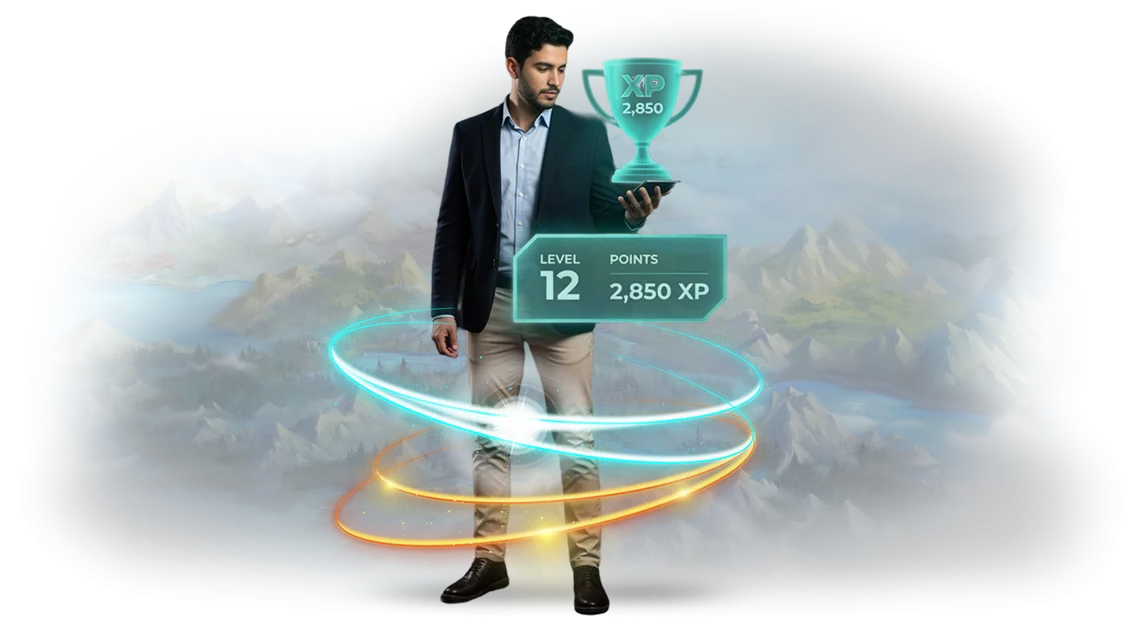
Retail gamification changes the behavior model: purchases become part of a game — the client collects points, unlocks levels, completes tasks and receives rewards. This creates excitement and a sense of progress that work more powerfully than simple discounts. Customer motivation is built on emotions and achievements, not on monotonous special offers.
For business, this means higher sales and better customer retention: repeat visits, a larger average order value, and natural engagement through game mechanics. The client does not just return — they return with the desire to continue the game and reach the next level. This kind of loyalty lasts longer and does not require constant price reductions.
We help retail implement gamification so that it fits into current processes and delivers measurable results.
We design scenarios for your audience, configure the mechanics, and launch a system that turns ordinary shopping into an engaging experience and brings more repeat sales to your business.
What gamification of business processes gives: 5 measurable benefits
Gamification of business processes in retail is not a game wrapper but a mechanism that changes the behavior of customers and staff. Routine actions turn into a system of goals, rewards and progress, where every element works toward a measurable result. Here are five benefits we build into projects and back up with numbers.
Higher average order value. When only a small amount is missing before a reward, the customer is more willing to add a product to the cart. Game mechanics naturally increase the order — without discounts that eat margin. The average order value grows steadily, not just on promotion days.
Increased loyalty. Accumulated points and levels create a sense of progress and belonging. The client returns not only for the product but also for the status they have already earned. This reduces churn and makes the regular customer base predictable.
Higher engagement. Gamification of business processes holds attention more strongly than standard email campaigns. Challenges and quests make customers spend more time on the portal, increasing the number of brand touchpoints and the likelihood of purchase.
More repeat sales. When every visit brings the client closer to a new reward, a habit of returning forms. With our clients, the share of repeat orders grows noticeably within the first months.
Transparent staff motivation. For retail this is a separate value: salespeople get clear goals and a visible rating, service becomes better, and plans are met more willingly. Managers see an objective picture without complex reports.
These five benefits are not promises but project goals. We integrate gamification into your business process, design the mechanics around your metrics, and support the result after launch.
Gamification formats for retail tasks
Retail sells not a product but a recurring need. But discounts no longer retain customers: they go where it is more interesting. A gamified web portal turns buying into a game and the customer into a regular participant.
Which format to choose depends on the goal: increase visit frequency, launch a new product line, or build a contact base. Below are typical scenarios that a web portal for retail covers.
| Gamification format | For whom | What it gives the client |
|---|---|---|
| Points-and-levels loyalty program | Regular customers | Higher purchase frequency and average order value |
| Quests and challenges | New product category | Sales of specific product groups |
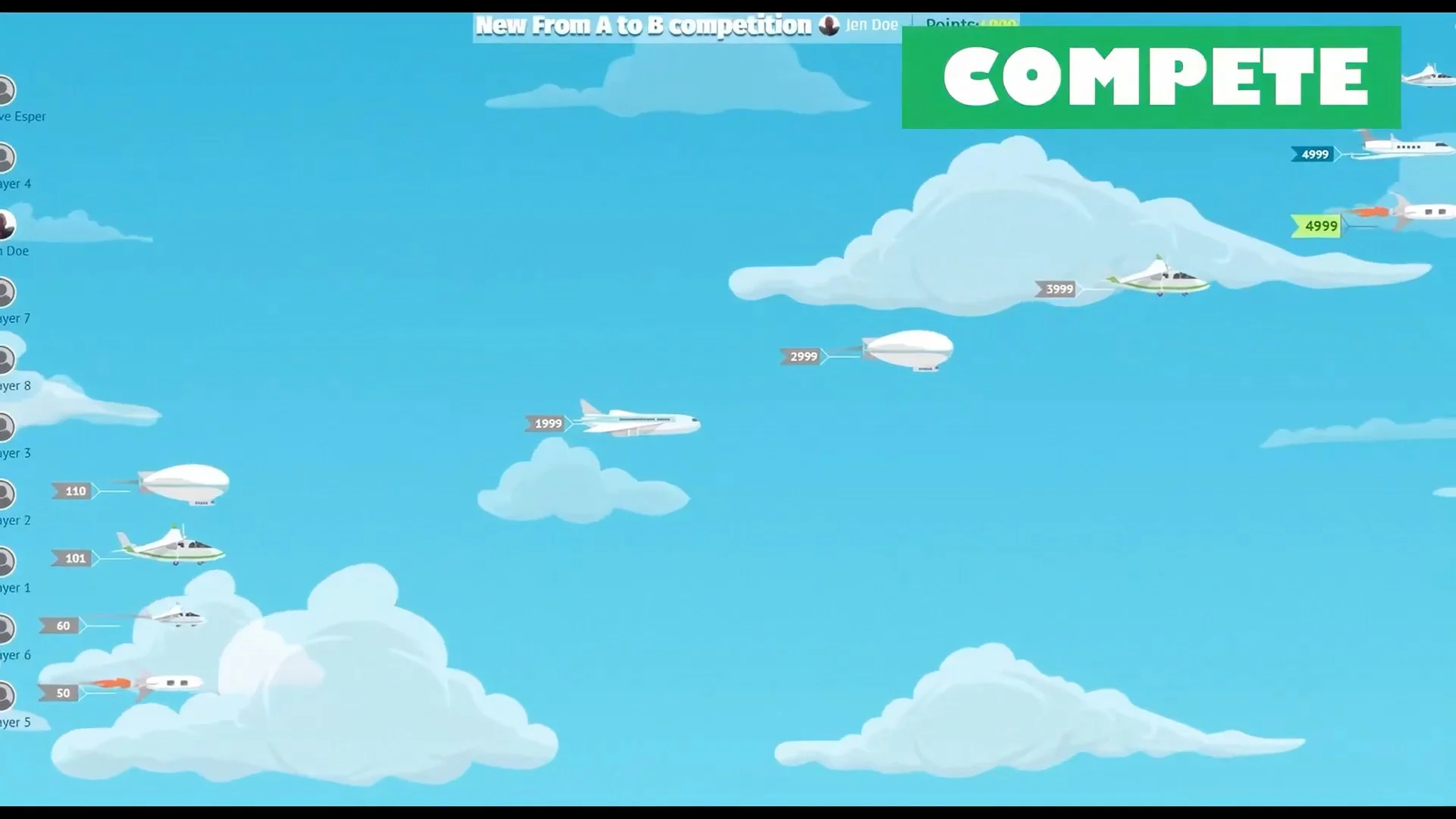
| Ratings and competitions | Active brand community | Retention, viral reach |
| Interactive showcase with rewards | New audience | Contact capture, higher conversion |
We do not take a “generic portal” — we select mechanics for your funnel and connect them to your existing loyalty program. At the start, we calculate for free which format will deliver the greatest result for your category.
How a gamification project goes: 6 steps
For gamification to actually increase sales and engage employees, it must not be a random set of mechanics but a well-designed tool. We have structured the process so that you see results at every stage — from brief to portal launch and further support. Here are the 6 steps a project goes through.
-
Brief and task immersion. We get to know your business, processes and goals. We find out what prevents effective work and determine which gamification mechanic to launch first.
-
Strategy and development stage plan. We fix target indicators, timelines and the sequence of work. You receive a clear plan that makes it easy to control the project's progress.
-
Prototype and scenario. We design the portal logic: tasks, levels, rewards, competitive elements. We show how it will look and work before development begins — so you can see the future result in advance.
-
Build and testing. We create the portal on a professional platform and test it on your scenarios: point accrual, prize withdrawal, reports. We fix all errors before users see the portal.
-
Portal launch. We configure access, connect employees, announce the start. We conduct training so the team immediately joins the game and begins achieving goals.
-
Support and development. We support the portal after launch: update content, monitor metrics, add new tasks and mechanics. Gamification does not freeze — it evolves together with your business.
In the end, you get not just a “game for employees” but a working tool that motivates the team, increases engagement and directly affects company results.
What is included in the gamified portal delivery
After the project is completed, you receive not just a working service but a complete set for managing gamification as an independent business tool. Here is the delivery scope — it is fixed in the contract and transferred together with portal access.
- Gamified web portal for retail — a responsive interface for employees and customers, personal account, role and reward system. It works in the browser, so no separate IT training is needed.
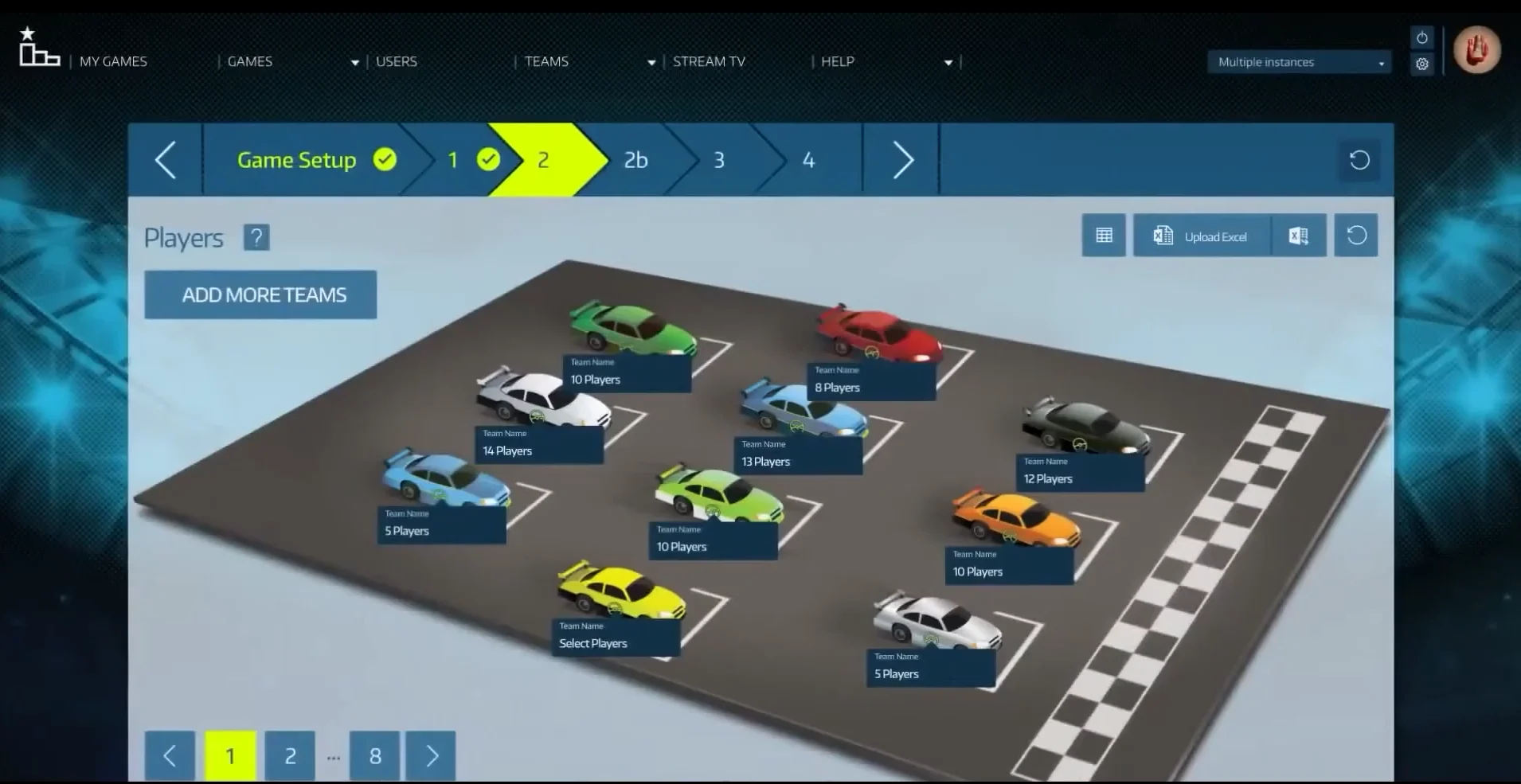
- Admin panel — you configure scenarios, points, levels and prizes yourself without developers. Game rules change in minutes — for a seasonal promotion or a new product.
- Engagement reporting — clear dashboards with participant activity, task completion rate and dynamics by department or store. Data is exported in a format your team understands.
- Methodological materials — launch regulations, administrator instructions and a participant guide. We adapt them to your trade format: a single store or a chain of branches.
- Integration package — data exchange with your accounting system so accruals and results are recorded automatically. Manual entry and its related errors disappear.
- Training session for the team — a practical online session on configuring and managing the portal daily. The recording stays with you.
- Warranty support — post-launch assistance, fixing issues and consultations on developing mechanics.
Special attention goes to reporting. You see how many people participate, which tasks work better, and how gamification affects key indicators: plan fulfillment, average order value, repeat order frequency. This turns gamification from entertainment into a measurable management tool.
The entire package is transferred under an acceptance act. In the end, you get not a “black box” but a transparent system your team is ready to use from day one. Want to see a sample delivery scope for your trade format? Ask us — we will send a checklist.
Case: how we increased repeat sales in a retail chain
In this case for the Product-Market chain, we developed a gamified web portal that turned one-time purchases into regular ones. Before that, marketing relied on discounts: they ate margin but did not create a habit of returning. The task was specific — increase repeat sales and make loyalty work automatically.
We built the portal on the Unity game engine and integrated it with the loyalty program. The customer receives levels, tasks and rewards, and the store sees which clients are ready to return and what to offer each one.
The entire mechanic works in the browser: a person only needs to follow a link from a receipt or SMS to start participating.
Result for the retail chain
Within three months, repeat sales grew by 31%, and the share of customers who returned within a month doubled. Revenue from program participants reached 40% of the chain's total revenue, and the average order value of a participant was 18% higher than that of regular customers.
The time between orders dropped from 45 to 28 days, and out of 10,000 invited customers, more than 4,000 registered in the first month.
The marketing team stopped assembling promotions manually: scenarios launch automatically, removing the dependence on manual labor. This case confirms: after the pilot, the chain expanded the portal to another 20 stores and extended support. We are now jointly refining seasonal scenarios based on sales data.
Frequent doubts before ordering gamification
Any responsible manager asks the same questions before launching a project: will deadlines drag on, will working processes have to be reworked, will the investment pay off.
In retail gamification, these doubts are natural: it is one thing to buy a ready-made application, and quite another to embed a game into sales, staff motivation and customer service.
We have collected the three most common customer fears and answer them briefly and to the point — without technical details or filler.
What if gamification does not deliver the expected effect?
At the start, we set measurable goals — growth in repeat purchases, increase in average order value, number of completed scenarios. We show interim results after the first test period. If we see that a mechanic is not engaging the audience, we quickly make adjustments. Responsibility for the result is written into the contract, not in vague promises.
How fast will we launch, and won't we miss deadlines?
We work in stages: first the plan and prototype, then implementation in separate modules. First results are visible within a few weeks. Each stage is tested on a limited group — this reduces risks and allows us to adjust course without stopping store operations. We meet agreed deadlines: every stage has its own schedule and a responsible manager.
Will we have to stop trading processes?
Gamification is integrated into the existing system carefully, through separate scenarios. It works in parallel with cashier operations, the loyalty program and product accounting without interfering with them. Before launch, we test on real data without loading core services. This way we integrate even into an existing retail operation without downtime.
We are ready to discuss your project and show in practice how we remove such risks. Below we have collected answers to other common questions — about guarantees, working conditions and post-launch support.How to choose a gamification format for your retail specifics?
The main selection criterion is not how “trendy” a format is, but the business scenario you want to strengthen.
In retail, this is usually three tasks: increase the average order value and repeat purchases, engage the customer during a visit or on the site, and motivate store teams to work with guests more actively.
Each task has its own mechanic: for loyalty — cumulative points and “golden” customer levels, for fun and reach — quizzes and challenge games, for staff training — short competitive tests with a rating.
Retail specifics influence format requirements more than it seems. You have a large visitor flow, many locations and different product categories, so the portal must “forgive” unfinished scenarios: a person stops by for a couple of minutes, gets distracted, returns a day later.
That means simple navigation, quick start, and clear progress that saves automatically. For a store chain, it is important that the mechanic can be scaled without losing quality: it must work equally well in a large hypermarket and in a small island kiosk.
Pay attention to seasonality. In retail, demand jumps: pre-holiday weeks, sales, school holidays. The format should easily adapt to the current promotion or collection, and launching should take days, not months.
If you change the game rules every two weeks, choose a constructor with flexible settings rather than a “hardcoded” solution.
Customers lose interest in monotonous mechanics quickly, so plan scenario changes in advance — it is better to have a base platform and change prizes and decorations.
Another important criterion is clarity for different audiences. Among guests there are both young people and older people: the fewer steps to participate, the higher the conversion.
The ideal format for retail is one where the first action takes no more than 10 seconds: for example, scanning a code, answering one question, or getting an instant bonus for registration.
Complex multi-level quests are good for marketing campaigns, while short cycles with quick rewards work better for daily portal operation.
We help you choose a format for your specifics: we do a short audit, look at your customers' behavior, staff workload and communication channels, and then propose 2–3 solutions with a forecast for engagement and reach.
You receive not an abstract platform but a scenario that fits into existing retail processes — from checkout to loyalty program. This reduces launch risks and helps you see measurable results faster.
Leave a request — we will design gamification for your business
Leave a request for development — and we will start on your task immediately, without long questionnaires or deep technical immersion.
The first step is a short consultation: in 30–40 minutes we will review your business process, growth point and the gamification format that can actually deliver results. This is free and non-binding.
After the conversation, you will receive a clear project plan: goals, audience, game mechanics, implementation stages and timelines.
You will immediately understand how gamification will affect employees or customers, which metrics we will improve, and how much time launch will take.
Here is what the first steps include:
- A short consultation with an expert who understands gamification of business processes, not just sells “cool features”.
- A review of your scenario: where engagement is lost, what needs to motivate, and which result matters most.
- A preliminary concept: a game mechanic that is easy to understand and implement into current processes.
- Timelines and resource assessment — without hidden work or unexpected stages.
- A transparent cost estimate after scope is fixed — you know what you pay for and what you get.
- Recommendations on metrics: how to track growth in activity, repeat actions and loyalty.
No abstract promises — only specifics for your business. We have been designing gamification for retail for 10+ years and know which mechanics work and which remain just decoration. Your project will be handled by a team that takes it to launch, not just makes presentations.
Leave a request for development — we will start with a free consultation, and within a couple of days you will already have a project plan with clear steps and timelines in your hands. The rest is a matter of technique and our responsibility.