

Does Routine Kill Motivation? Implement Gamification on Linux
Routine tasks are the number one motivation killer. Doing the same process day after day dulls attention, reduces productivity, and drives valuable employees to look for new challenges outside the company.
In turn, the business loses not only efficiency but also money on recruiting, onboarding, and training new hires.
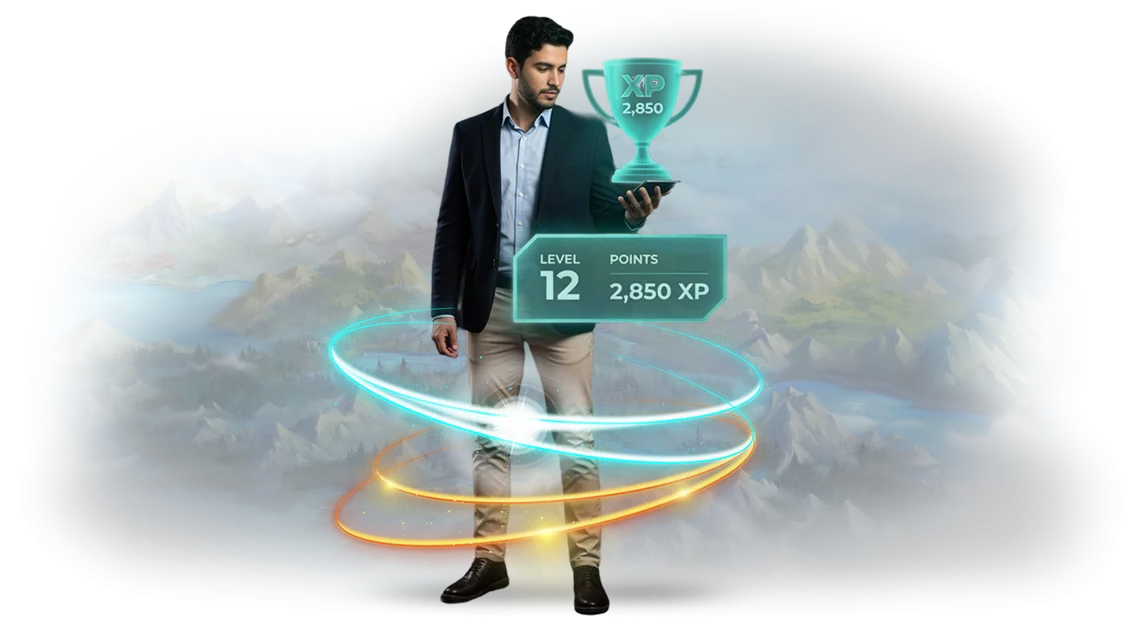
Gamification changes the attitude toward work: routine turns into a game with clear goals, rewards, and levels. Employees get real-time feedback, see their progress, and compete with colleagues.
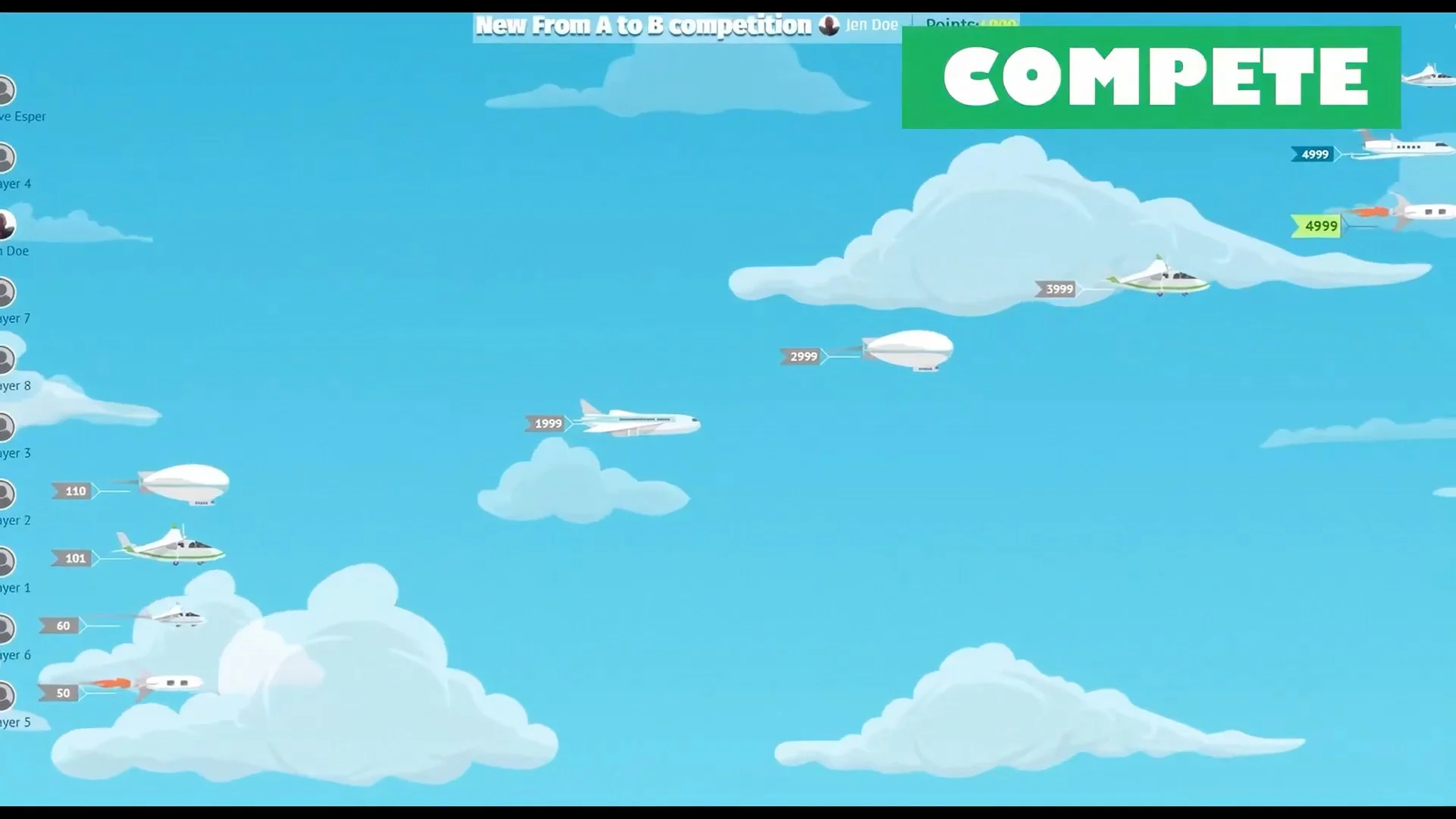
This increases engagement, makes processes transparent, and creates healthy competition within the team.
We implement such projects on the Linux platform. This is a choice that pays off: stable operation without failures, data protection, and no licensing costs. The corporate application runs on any employee device, deploys quickly, and scales easily as the team grows.
Implementing gamification on Linux is not just a technical solution—it is a motivation management tool.
We analyze the specifics of your business processes, design the game scenario, and configure the system so that it delivers measurable results: higher achievement of key indicators, lower turnover, and increased loyalty.
Imagine every employee seeing their contribution to the overall result, receiving recognition, and knowing exactly which actions will lead to promotion. Gamification works unobtrusively but systematically—it integrates into daily operations and sustains interest without coercion. This approach pays off through increased efficiency and reduced control costs.
Benefits of Gamification for Business: 5 Key Results
Gamification of business processes is not entertainment but a motivation system that uses game mechanics to help achieve work goals.
The employee sees progress, receives rewards for specific actions, and understands how their contribution affects the outcome—engagement grows alongside performance.
We build such applications on Unity for Linux, so they run reliably in your infrastructure and integrate easily into existing processes.
You get five key results right away. The first is higher productivity: routine turns into stages with quick feedback, employees focus on priorities, and the competitive element adds healthy excitement. More tasks in the same time, without losing quality.
The second is greater loyalty. Points, statuses, and public recognition create an emotional connection with the company. The employee feels valued, is less likely to think about changing jobs, and more actively supports the team.
The third is faster learning. Game scenarios make it safe to try something new and make mistakes without risk. Newcomers get up to speed faster, and experienced employees absorb processes in a format that is easier to remember than instructions.
The fourth is transparency. Gamification accumulates data on actions and achievements: you see who is engaged and who needs support, and you manage the team based on facts.
The fifth is team cohesion: team competitions and shared goals create a common language and speed up newcomer adaptation.
These results work together: productivity grows without burnout, loyalty is reinforced by fair recognition, and learning becomes continuous. Implementation pays off within the first months by reducing costs for control, recruiting, and onboarding.
Gamification Formats for Linux and Other Platforms
When it comes to gamification of business processes, the question “what will this run on?” comes up almost immediately. A company may have its own Linux fleet, employees may have corporate Windows laptops, and event participants may bring their own smartphones and tablets.
If the solution does not support at least one of these systems, part of the audience falls out of the game.
We design gamification so that it works equally reliably on all the listed platforms. Here are the typical formats we use in projects and where they run:
| Format | Target audience | Value for the client | Platform support |
|---|---|---|---|
| Quests and training simulations | New employees, training centers | Fast onboarding, better retention | Linux, Windows, web browsers |
| Ratings and point systems | Teams, sales departments | Healthy competition, regular motivation | Linux, Android, iOS, web |
| Interactive games for events | Guests, conference attendees | Live engagement, photo content for social media | Linux, Android, iOS, web |
| Marathons and challenges with progress | Regular customers, staff | Attention retention, return to the product | Linux, mobile devices, web |
Note that for us Linux is not a secondary option but a fully fledged working environment. We refine scenarios and the interface for it just as carefully as for other systems—so the client never gets “it won’t open” surprises on half of their devices.
How Gamification Development Works: The Step-by-Step Process
A clear process is half the success. We know how important it is for the client to see what stage the project is at and what they get as a result. That is why gamification development is divided into six steps—from the brief to post-launch support.
-
Brief and goals. We interview you and key employees, define the business process, the audience, and success metrics. We document this.
-
Scenario and prototype. We propose game mechanics—points, levels, team competitions. We agree on the scenario and show a clickable prototype.
-
Design and content. We create a visual style for your brand, texts, and a reward system. You see the layout before development starts.
-
Development and testing. We build the application on a professional engine and adapt it to the corporate environment, including Linux. We check stability and usability.
-
Launch and training. We deploy the application, set up access, and provide short employee training. You get a working tool.
-
Support and evolution. We analyze metrics and feedback, refine the mechanics, and keep the gamification effective.
Each stage ends with a clear result and a decision point—you control the process and the timeline. This approach eliminates surprises and gives you confidence in the outcome.
What Is Included in the Gamification Delivery Package
When we hand over a project, you get more than just an application—you get a ready-to-use tool with everything needed for launch and daily use. Below is the full delivery package, which is documented in the contract and transferred to you at the finalization stage.
- An adapted application for your corporate network or a separate device—already configured for your business processes and ready for the first launch.
- Clear documentation for administrators and employees: how to log in, complete tasks, how points are awarded, and where to track progress.
- An onboarding webinar for the team—a walkthrough of all mechanics using real examples, so your people can jump into the game right away without extra questions.
- An admin panel: participant activity, results, “burned out” employees—you see everything and change settings without a programmer.
- Access rights configuration: who views summary reports, who manages tasks, and who simply participates from a phone.
- Launch regulations and game rules—a clear document for employees that can be distributed or approved by order.
- A testing report: we ran all scenarios and confirm stable operation on your equipment.
- Technical support during the support period—we answer questions and help update mechanics if processes change.
All documentation and files are delivered within the agreed timelines, and the package composition is fixed in the specification. You receive a solution that launches without external dependency and runs on your infrastructure.
Case Study: Gamification Increased Engagement by 40%
Employees of the “Alfa-Market” retail chain completed mandatory training and internal surveys formally, spending minimal time on them. Average activity in the system was about a third of the team, and the business received reports but no real changes in performance.
We proposed gamifying the routine: instead of boring tests and briefings—a scenario with tasks, points, levels, and team competitions.
The application was launched on the company’s standard Linux terminals, so there was no need to buy new equipment or change the IT infrastructure.
Results after three months
Employee activity increased by 40%. The share of those who regularly log into the system rose from 32% to 86%, and the average score on final tests improved by 15%. Tasks were spread across the whole month instead of being concentrated in the final days before the deadline.
Why it pays off
Training stopped being a formality—employees remember work standards because they are engaged in the process. This reduces errors on the floor, speeds up newcomer onboarding, and improves service quality. Managers see transparent progress statistics for each employee and for the entire network.
How we measure value for the client
Instead of abstract “loyalty,” we show measurable indicators: the number of active users, task completion frequency, and progress dynamics. In this case, the numbers speak for themselves—the 40% engagement increase is confirmed by system data, not impressions.
After the first stage was completed, the company ordered a second module for new training seasons. That is the best signal that the result was what the business needed.
How to Choose a Gamification Format for Your Task?
Choosing a gamification format comes down to one question: what problem are you solving. If the goal is to train employees and reinforce new skills, quests and simulations are a good fit. If you need to increase customer loyalty—programs with points, levels, and rewards.
For regular team motivation—competitive mechanics with a transparent rating. In each case, the same technology works differently.
We do not start by choosing a platform or interface. First, we analyze your task: who the audience is, what behavior should change, and how to measure the result. Only then do we propose a format that will deliver measurable value.
This approach prevents situations where a beautiful application does not affect business metrics. We develop applications that run reliably on your infrastructure, including Linux environments—this removes compatibility issues and frees up your time.
For example, for staff training we often use narrative scenarios where an employee experiences real work situations. For a customer program—bonus accumulation mechanics with clear value. For a partner network—team challenges. We adapt all these formats to your industry and specifics.
The key is that the format should not just entertain but lead to a goal. That is why, at the brief stage, we always show how the chosen mechanics will affect conversion, engagement, or learning speed. You get not a “game for the sake of a game” but a tool with clear metrics.
If you are unsure which format is right, we will help you decide. During a free consultation, we will gather requirements and offer 2–3 options based on your budget and timeline.
Frequently Asked Questions about Gamification of Business Processes
Doubts before starting are normal. Any project with a new technology seems risky, especially when it comes to employee engagement. We have collected the most common questions and answer them honestly—without technical jargon.
What if the application does not want to work on employees’ Linux computers?
We develop the corporate application on the professional Unity engine, which runs reliably on Linux. Before launch, we conduct a test run on your equipment or in an isolated environment, so surprises on implementation day are ruled out.
If any incompatibility does appear, we resolve it during the pilot phase—this is built into the work plan.
What guarantees do you provide for the result?
We fix measurable indicators in the contract: the share of employees who regularly use the application, the increase in activity within processes, and the reduction in training time. Until these metrics are achieved, we refine the functionality at the project team’s expense. This approach eliminates the risk of a “beautiful but useless” product.
What if employees are not interested in game mechanics?
We design scenarios not abstractly but based on the motivations of specific roles in your company: competition, rewards, recognition, and a clear connection to work tasks.
Before the full launch, we run a pilot with a focus group and adjust the rules to engage even the most skeptical participants.
How difficult is it to integrate gamification into already running processes?
We start with an audit of current business processes and employee entry points. Integration does not require rebuilding the entire system—the application works as a standalone tool or connects to the corporate portal. You get a phased plan in which every step fits into the team’s normal working rhythm.
Next Steps: How to Start a Gamification Project
To start a gamification project, you do not need to understand technology or have a ready-made technical specification. Just submit a request—then we will go through simple and clear steps together.
You get a working tool that increases employee and customer engagement, and we handle all the complexities.
Here is what our path looks like:
- Request and consultation. You leave a request on the website or call us—we get in touch at a convenient time, discuss your tasks, and answer questions.
- Business process audit. We examine which employee or customer actions can be turned into a game. We define goals: sales growth, training, achieving target indicators.
- Scenario and prototype. We show what the gamification will look like: mechanics, rewards, interface. You see the result before development starts.
- Development for Linux. We create an application that runs reliably on Linux—this is the standard for most corporate servers and workstations. We integrate it with your systems.
- Launch and training. We help deploy the application and train employees. We make sure everyone understands how to use it.
- Support and evolution. We track results, gather feedback, add new mechanics, and improve the product.
To take the first step, simply leave a request—we will contact you within one business day. From there, each stage is transparent: you always know what is happening and what results you are getting. Start your gamification project right now—the first step takes just a couple of minutes.