

Employees get bored during training, and business goals are not achieved
Corporate training often becomes a formality: employees sit through the hours, “pass” tests, but a week later they can’t remember key rules.
The reason is not staff laziness but the format — lectures and briefings don’t hold attention and don’t show why this knowledge matters in real work.
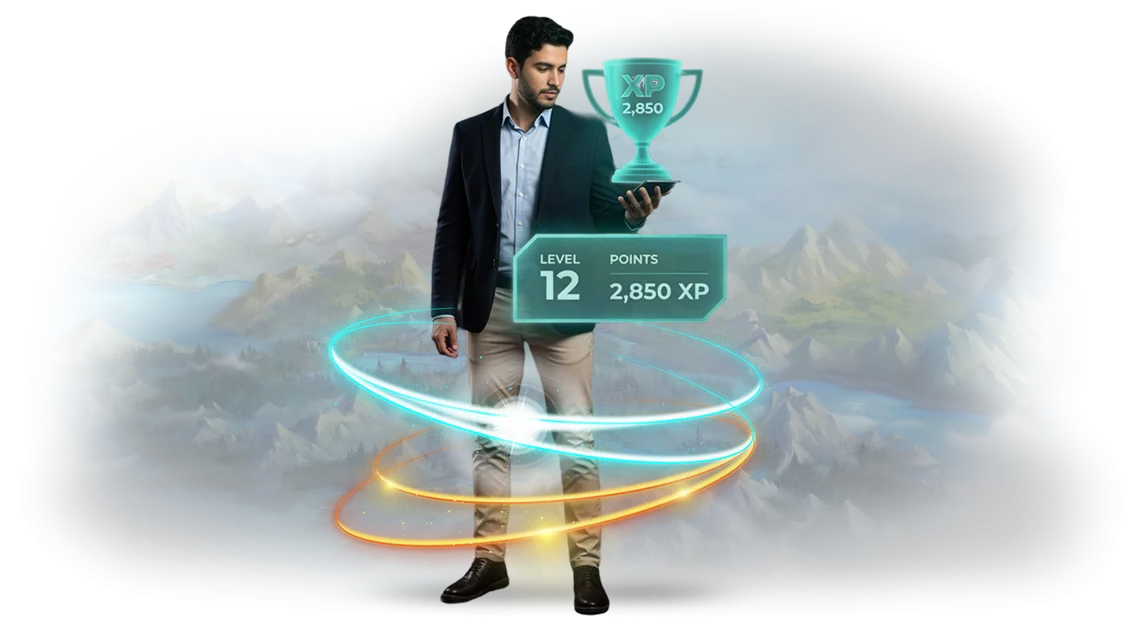
Gamification of business processes completely shifts the approach: instead of passively listening, an employee receives a task, solves it in a game-like situation, and sees the result of their actions firsthand.
And when training happens in virtual reality through Meta Quest, the effect multiplies — a person is physically immersed in the work environment, practices actions without risk to the business, and learns algorithms through practice rather than rote memorization.
We fill this need: we develop turnkey corporate applications on Unity for Meta Quest, turning boring regulations into scenarios where every employee is engaged, receives feedback, and is motivated to improve their performance.
As a result, training stops being a “must-do” and becomes a tool that drives KPI growth, reduces errors, and makes a measurable contribution to revenue.
What gamification gives business: emotion, reach, leads
Emotion, reach, and leads — the three pillars on which the success of any event marketing rests. Gamification in virtual reality turns an ordinary presentation or exhibition into an unforgettable adventure, and a guest into an active brand participant.
Audience engagement. Virtual challenges hold attention for 5–7 minutes and draw a queue around the booth. Guests don’t walk past — they want to try it, get a result, and share the experience.
Brand recognition. Unique VR scenarios with a logo and corporate style create a vivid image that people discuss long after the event. Visitors share photos and videos on their own — reach grows without additional ad spend.
Lead generation. Game mechanics collect contacts naturally: a participant leaves their data to get a result, a prize, or access to exclusive content. This way, virtual entertainment brings real leads to the sales department.
Employee retention. Internal quests and competitions turn routine training into a team game, increase loyalty, and reduce staff turnover. This works both at corporate events and in an ongoing motivation program.
“We ran a series of events with VR gamification for partners. In two hours, 300 guests visited the booth, and after the event we received 45 product requests — three times more than with a regular presentation. The repeat order came within a month” — Anna, Head of Marketing, EventPoint.
Want the same results? Let’s discuss your scenario — we’ll choose mechanics that solve exactly your task.
Corporate formats with Meta Quest: from quest to simulator
The same Meta Quest can solve different business tasks — the key is choosing the right format. This choice determines whether you get a cohesive team, a streamlined process, or a quick way to get a newcomer up to speed. Below are four standard scenarios that cover most requests.
| Format | For whom | What it gives the client |
|---|---|---|
| Corporate VR quest | Teams that need stronger collaboration | Real emotions, joint problem-solving, and discussion topics after the game |
| Business process simulator | Managers who want to test hypotheses | Safe “walk-through” of the process, practicing mistakes without losses, and clear results |
| Virtual reality training | Training centers and development departments | Higher employee engagement than webinars, plus risk-free practice for equipment |
| VR product presentation | Marketing and sales | Immersion effect that holds attention and improves material retention |
Each format is easily adapted to your specifics: a quest to company values, a simulator to real production or office operations. We handle the concept, scenario, and implementation, so you don’t need to dive into technical details. You get a ready-made solution that works for your business metrics.
The main point is not “game for game’s sake” but a measurable result: faster employee adaptation, higher engagement, and clear data for process improvement. Contact us to discuss which format fits your task.
How gamification launch goes in your company
We understand that launching gamification is not just “buying an app” — it’s changing the behavior of employees and customers. So we’ve structured the process so that at every stage you see results and control budget, timeline, and quality.
It all starts with diving into your business tasks: what needs to be strengthened — sales, training, engagement, loyalty. Then we design a scenario that fits your corporate culture, and only after that move to development.
This approach removes the risk of “building the wrong thing” and delivers a predictable effect after launch.
Below are the typical stages of gamification implementation in your company.
- Brief and analytics. We get to know your goals, audience, and current processes. We determine which actions need to be encouraged and which metrics will indicate success.
- Project scenario. We develop the concept: mechanics, narrative, reward system, and visual style. We align it with you so the gamification organically complements the brand.
- Prototype and testing. We build an interactive prototype, show it to key employees, and collect feedback. We make adjustments before full development begins — this saves time and money.
- Application development. We create a corporate gamified application, including for Meta Quest if an immersive effect is needed. We use proven tools, so this stage runs on a clear schedule.
- Launch and integration. We deploy the system, connect it to your workflows, and train employees and administrators. We launch without disrupting current operations.
- Support and development. After launch, we monitor activity, analyze results, and suggest improvements: new levels, tasks, competitions. Gamification keeps working and delivering value.
This path gives a company not just an application, but a working motivation tool with clear development stages and a measurable result. At every step you know what’s happening and what effect you’ll get in the end.
What is included in the corporate application delivery
When a business orders gamification, it’s important to understand exactly what you get on the output. We deliver not just an “application,” but a ready-made tool for training, onboarding, and personnel assessment.
The package includes:
- A ready-made VR application for Meta Quest, configured for your business processes. Employees start using it on launch day.
- Game scenarios and virtual situations based on your real work tasks: negotiations, handling objections, actions in emergency situations.
- An administrative dashboard with completion results, progress, and statistics for each employee — you see how training works.
- Methodological materials: guides and instructions for administrators and users, scenario descriptions, and recommendations for integrating into training programs.
- Team training: we conduct a session for trainers and administrators — how to launch sessions, work with statistics, and solve common issues.
- Post-launch support: warranty maintenance, updates, and consultations if you need to fine-tune a scenario or add a new one.
This package covers the full cycle: from first demo to daily use. You don’t need to hire developers or understand technical details — everything is ready and adapted to your task.
Case study: Meta Quest increased team engagement by 40%
How it all started
A retail chain with 500 employees approached us: standard onboarding for new hires took three weeks, and by the end of the course engagement dropped almost by half.
People simply memorized instructions but got lost on the actual sales floor — this led to service mistakes and extra strain on mentors.
We proposed replacing part of the theoretical lectures with practice in a virtual environment.
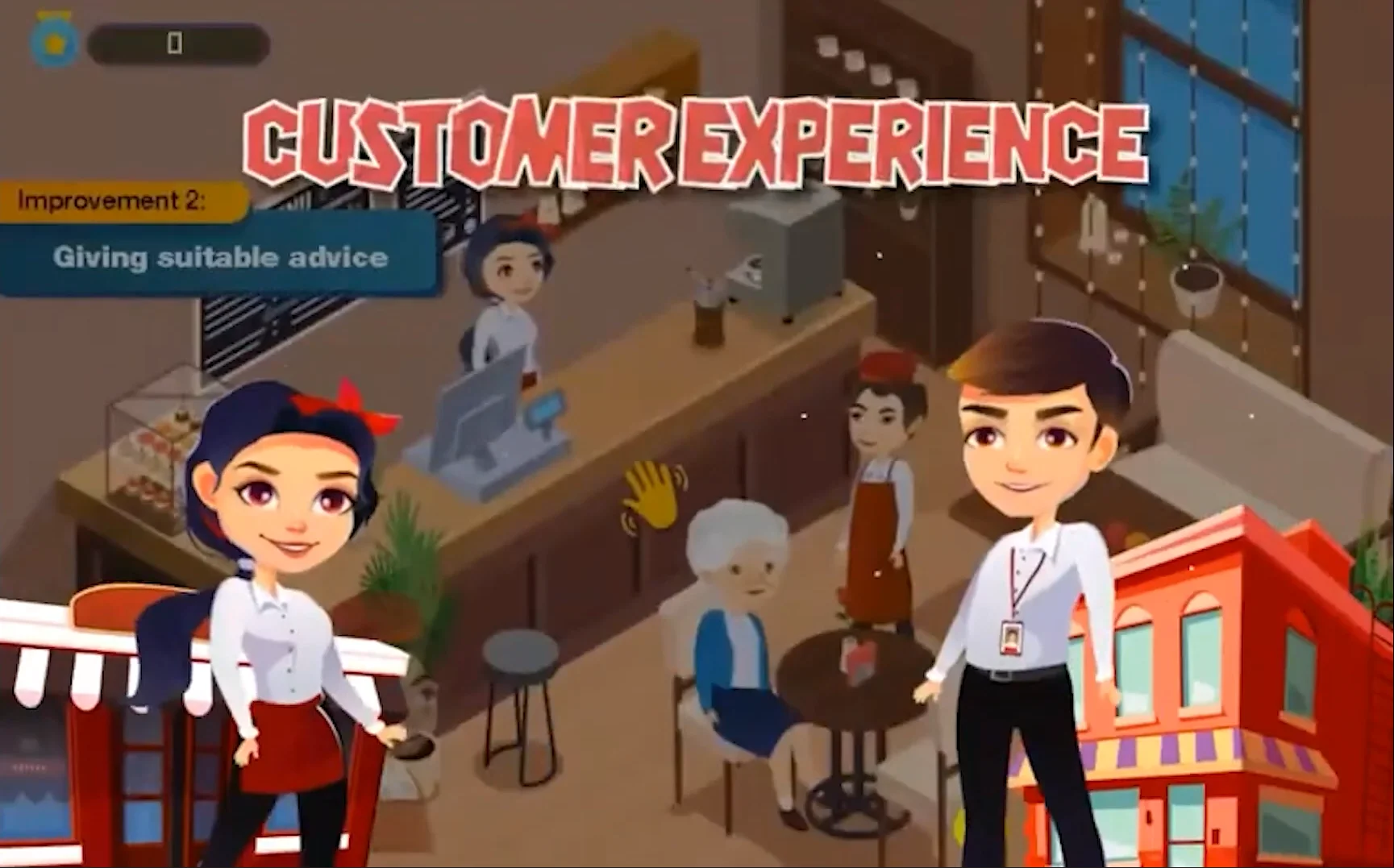
We developed a training application based on Unity for Meta Quest headsets, where a new employee enters a digital copy of the store and practices real scenarios: working with the cash register, difficult customer questions, emergency situations. A mistake costs nothing, but it’s remembered more reliably than a page from a training manual.
The numbers the client saw
Just a month after the pilot launch, we measured the effect. Team engagement grew by 40% — employees returned to the simulator on their own to improve their results, and a competitive element appeared between stores.
New-hire training time dropped by a third, and the number of errors in the first two weeks of independent work decreased twofold.
The client also noted that experienced employees started redoing modules — for them, it turned out to be a way to level up their skills without leaving their shift. Six months later, the client ordered expansion to neighboring regions and added scenarios for senior cashiers.
The main takeaway we hear from everyone who implements VR training: the result is visible in operational metrics, not in a technology usage report.
If you want to understand where gamification can deliver a measurable effect in your processes, let’s start with a short audit and a pilot plan.
How to choose a gamification format for a business task?
Choosing a gamification format starts not with technology but with a business goal. The same tool can solve different tasks — increase sales, accelerate newcomer onboarding, or strengthen team spirit.
So first we determine what exactly should change in the behavior of employees or customers, and only then do we select mechanics and scenario.
If your task is systematic training, gamification turns corporate learning into regular practice. Instead of boring lectures, employees go through interactive modules where every action leads to a visible result: ratings, levels, feedback. This way skills stick faster, and knowledge doesn’t fade after a week.
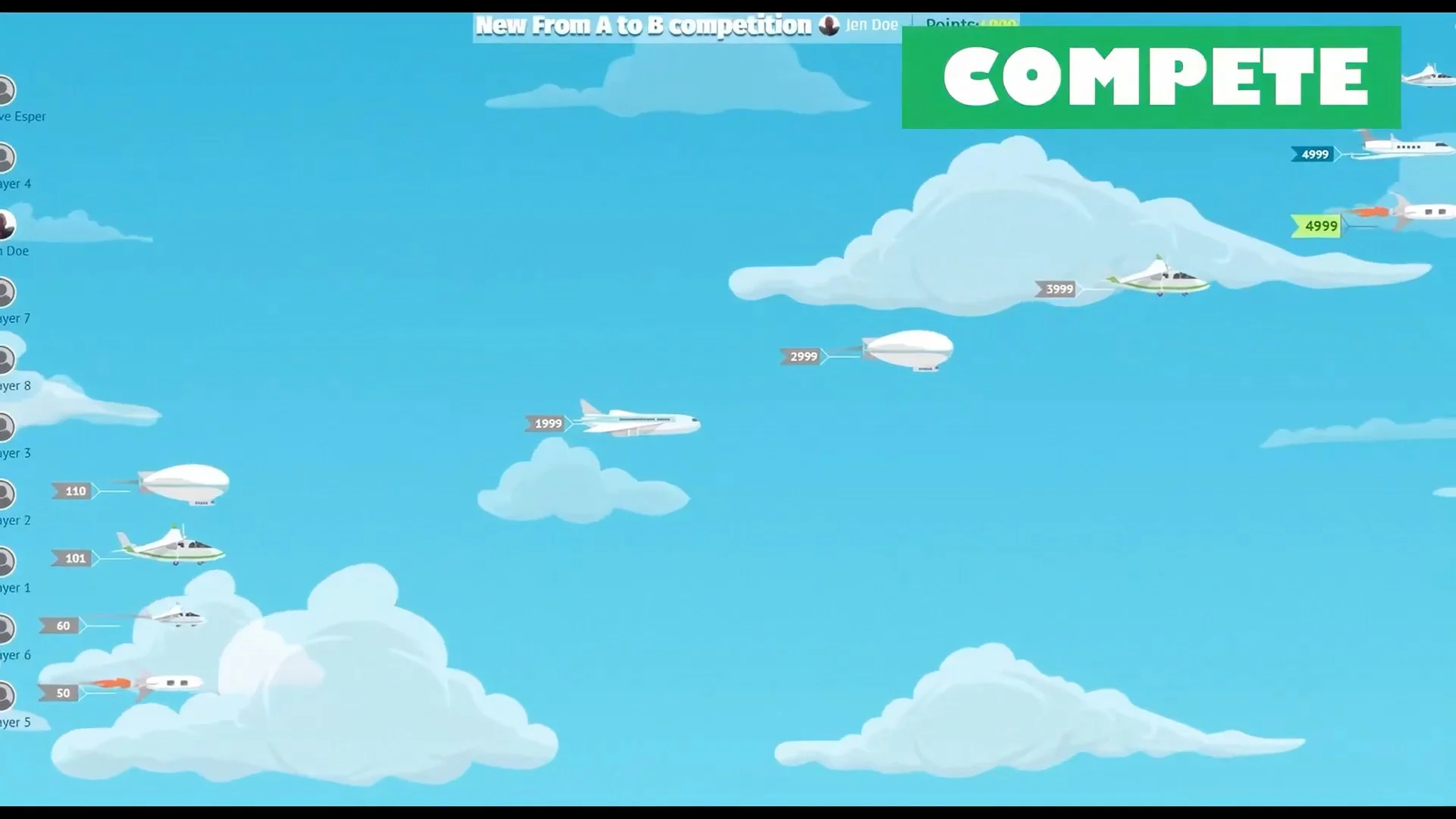
When you need to motivate a team to achieve key indicators, we choose a competition-and-rewards format.
This could be a seasonal race for leadership on a leaderboard, team marathons, or personal “skill levels.” The goal is not just entertainment but regular reinforcement of desired employee behavior.
For team building or product presentations, immersive formats are suitable, including virtual reality with Meta Quest.
This kind of team building breaks down barriers and engages even skeptics, while a product showcase through an interactive scenario lets a client “feel” the value through their own experience.
We don’t sell “shelf-ready solutions.” At the first brief, we listen to your request, analyze the target audience, and propose a gamification option for your task — with metrics by which you’ll understand that the format worked. So you get not a game for game’s sake, but a working business tool.
Frequently asked questions and concerns before starting a project
Before a project starts, clients ask the same questions: how much does it cost, when will we see results, will employees handle VR equipment, and what happens if something goes wrong. We answer directly — without technical details or hidden conditions.
How much does gamification of business processes cost?
The cost depends on the scope of tasks: a simple VR-quest training or a full-fledged motivation system with levels, rewards, and analytics. At the start, we fix the estimate and do not exceed it without your consent. You pay for the result — for employees mastering processes faster and making fewer mistakes.
What are the development timelines?
A typical project takes four to eight weeks — from brief to launch. We break the work into stages and show intermediate versions so you can see progress and adjust details. No “someday later” — we set a delivery date and meet it.
Is it difficult for employees to use the VR application?
We design the interface so that after 15 minutes of training, any employee can confidently work in the headset. Simple gestures, hints, and voice guidance remove the barrier.
For most, this is their first VR experience, so we include an onboarding scenario — people quickly feel comfortable and enjoy it.
What happens if something goes wrong?
We guarantee the application works and support the project after launch. A dedicated manager is available to promptly handle issues: from setup to updates. If difficulties arise during use, we come on-site or connect remotely and fix the problem within one business day.
We work with professional equipment and use Meta Quest — this provides stable results without failures during corporate events. We have dozens of implementations under our belt, and we know how to remove risks at every stage. So before you start, you get a clear plan, a transparent estimate, and a personal contact person — after that, all that’s left is to launch the project and see how employees get into the game.Get a free gamification demonstration for your team
The free demonstration is an opportunity to see how gamification integrates into your business processes before deciding on a full launch. We’ll show a real scenario adapted to your task, so you can evaluate the result not from a presentation, but in action.
After your request, you’ll receive:
- An interactive demonstration on your scenario — not an abstract example, but a situation close to your task.
- A brief engagement assessment: how participants react to the mechanics, what holds attention.
- A pilot project prototype with minimal risks — you understand how the technology works in your team.
- Implementation recommendations: which processes to gamify first and what effect to expect.
- Answers to questions from your managers and employees — without technical details, in the language of business value.
We demonstrate on professional VR equipment Meta Quest — this gives participants full immersion and lets them honestly assess the technology’s potential. You’ll see how gamification changes engagement, not just hear about it.
Submit a request for a free demonstration — we’ll agree on a time, select a scenario, and show how gamification works in practice. It will take no more than an hour, but it will give you a clear understanding of whether the solution fits your team.