

Gamification of business processes on WebGL: how to retain employees and clients
Most companies lose engagement for no obvious reason: employees perform the same tasks, clients stop coming back, and motivation rests only on bonuses. The problem isn't people — it's the format of presentation.
Ordinary instructions and discount programs are outdated; they don't create emotions or give a sense of progress.
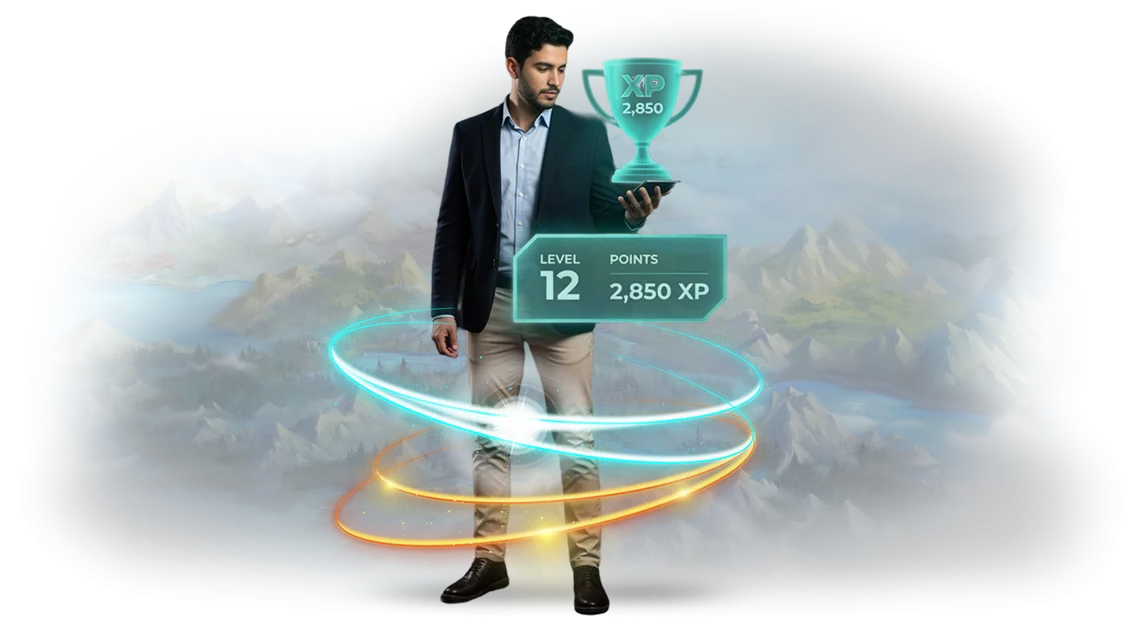
Gamification of business processes on WebGL solves this differently. Routine actions turn into a game scenario with levels, points, and rewards — the employee sees their progress and wants to keep going, and the client gets a clear loyalty system they want to return to. Motivation is no longer a one-off promotion; it's embedded in the work process itself.
WebGL technology opens the game right in the browser — without installing apps or extra barriers. An employee clicks a link and is already completing the first task within a minute; a client clicks a banner and starts accumulating bonuses.
It works on any device, which is critical for remote teams and mobile audiences. Research and experience show: such projects increase activity by 30–40%, and repeat client visits grow noticeably faster.
For business, gamification is a tool with a clear result: you see which actions are performed more willingly, where the process is stalling, and you can quickly influence the metrics.
Over 10 years, we've developed dozens of such solutions and know how to make a game useful rather than merely entertaining. You get not an "app for the sake of an app" but a manageable mechanism that works toward your business metrics.
What gamification delivers: growth in engagement, reach, and profit
Employees and clients remember not instructions but emotions and competitive excitement. Gamification turns routine processes into a game with clear rules, visible progress, and rewards — and this directly reflects on business metrics.
Increased productivity. Routine becomes a game: employees complete tasks faster, make fewer mistakes, and the points and levels system creates healthy competition within the team. A manager sees an objective picture of the work without extra reports.
Brand awareness. Game mechanics give people a reason to share their results — earn a reward, show off a status, invite a friend. Each participant brings the brand additional mentions on social media, generating reach that keeps working after the promotion ends.
Sales growth. Tasks and accumulating bonuses gently nudge the client to the next step: from first purchase to repeat purchase, from trial period to regular use. Business gets sales growth without aggressive advertising or direct discounts.
Client retention. Gamification creates a habit of coming back: daily tasks, reward series, and statuses form a long-term bond with the brand. The user stays in the system not because they have to, but because it's interesting.
Our applications run in the browser via WebGL — participants don't need to install anything; they just open a link from any device. This lowers the barrier to entry and ensures everyone joins the game: employees, partners, and clients.
Gamification formats for any task: from quest to training simulator
The gamification format determines how employees get involved in the process — through competition, exploration, or skill practice.
There's no universal solution: a quest brings the team together and creates excitement, a simulator helps master complex processes, and a survey collects honest feedback. Let's look at three main options so you can choose based on your scenario and budget.
Format comparison
| Format | Who it's for | What it gives the client |
|---|---|---|
| Corporate quest | Teams that need to unite and engage in a new project | Live competition, excitement, and memorable emotions in 1-2 hours |
| Training simulator | Newcomers and employees who need to quickly master processes | Skill practice without errors in real work, faster execution |
| Gamified survey | All employees when it's important to gather opinions and ideas | High response instead of boring questionnaires, quick and honest answers |
We don't bind ourselves to templates — we analyze the task and match the format to the specific audience. At meetings, we show examples of delivered solutions and help you decide before the development stage.
This rules out unnecessary spending and guarantees that the mechanics work with your employees specifically.
You don't have to pick a single format. In practice, a quest is often combined with survey elements, or a simulator with a competitive spirit. We assemble the mechanics to solve several tasks at once — from engagement to knowledge control.
All three formats work in the browser — participants don't need to install anything. This saves preparation time and lets you launch gamification in any office or remotely with a simple link on the corporate portal.
How gamification development works: from brief to launch
We work to a transparent scheme: you always know what stage the project is at and when you'll receive the finished result. No "black box" — the entire path from idea to launch is split into clear steps with agreed timelines.
- Brief and immersion in the task. First, we listen to you: business goals, employee or client motivation, current pain points, and the desired result. We record expectations and success criteria — this is the foundation we build on.
- Technical specification and work plan. We prepare a document describing scenarios, stages, roles, and timelines. Approving the spec prevents misunderstandings — you know exactly what you'll get.
- Prototype and design concept. We show a mockup of the future application: game mechanics, visual style, logic. You see the product before development starts and can adjust it to your taste.
- Development on Unity for WebGL. We build the application itself, which runs in an ordinary browser — no installation or complex setup for users. We work in iterations: every 1–2 weeks we show intermediate results and incorporate your edits along the way.
- Testing and refinement. We test the application on different devices and scenarios, and refine the interface and game logic. We fix bugs and polish details so the launch goes smoothly.
- Launch and integration. We deploy the application on your server or in the cloud, connect it to the necessary systems, and train the team. Everything is ready for use — all that's left is to invite users.
- Support and development. We don't disappear after launch: we monitor stability, analyze metrics, and suggest improvements. Gamification should grow together with your business.
Timeline depends on task complexity: a typical project takes 3 to 8 weeks, including approvals. We state the exact time and cost after the brief and fix them in the work plan — you get a predictable process without surprises.
What you get after implementation: a complete package for results
After implementation, you get not just a game but a working system that solves a business task: from employee engagement to training and result control.
Our team hands over a complete package so you can launch gamification right away and manage it without constant contact with the contractor.
Here's what the package includes:
- Event scenario — detailed rules and stages adapted to your business processes. It's clear how the game runs and what the participant gets at each step.
- Ready-to-use browser application — launches via WebGL; employees don't need to install anything. Works on computers, tablets, and smartphones.
- Instructions for the team — short guides for administrators and participants: launch, managing the flow, handling unexpected situations.
- Player analytics — the numbers show how many people reached the end, where difficulties arise, and what the gamification result is. Based on this data, you improve future games.
- Staff training — we conduct a workshop for facilitators and HR specialists so they can confidently manage the game and support participants.
- Source materials — content and settings stay with you: you can change tasks, add levels, and use the scenario for new events.
The package is designed so that after launch you can easily replicate the result and scale the game to other teams.
Case study: how WebGL gamification increased engagement by 40%
A large retail chain with a hundred stores hit a typical pain point: new display and service standards were rolled out through instructions and tests, but within a month employees slipped back into old habits.
Formally completing the training didn't affect real work, and staff turnover forced them to run training on a loop.
For the Progress retail chain, we developed a corporate game that runs directly in the browser thanks to WebGL technology.
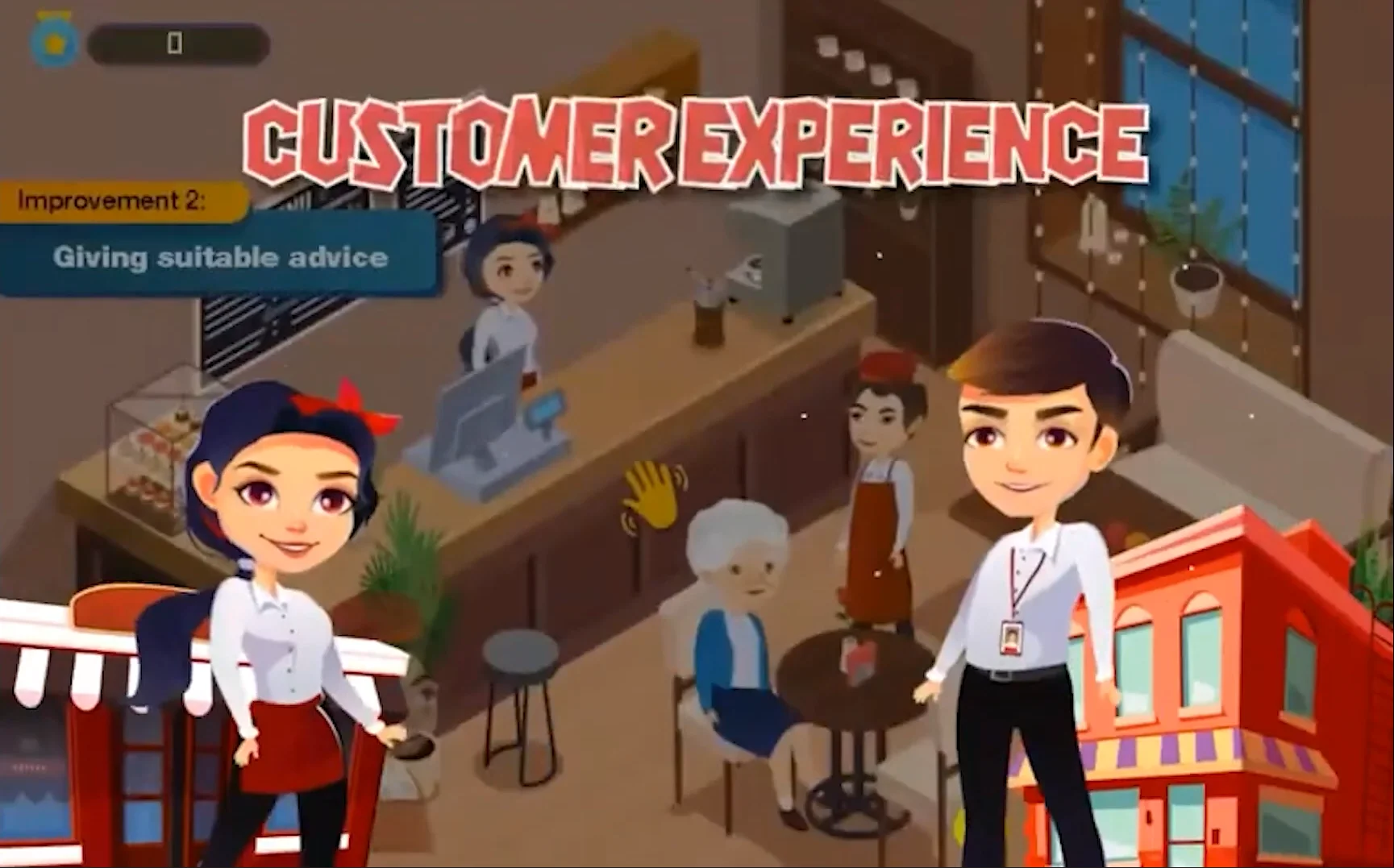
No installation or complex setup is needed — an employee opens a link, selects a scenario from their area of responsibility, and plays through situations in game form: from greeting a customer to handling a disputed return.
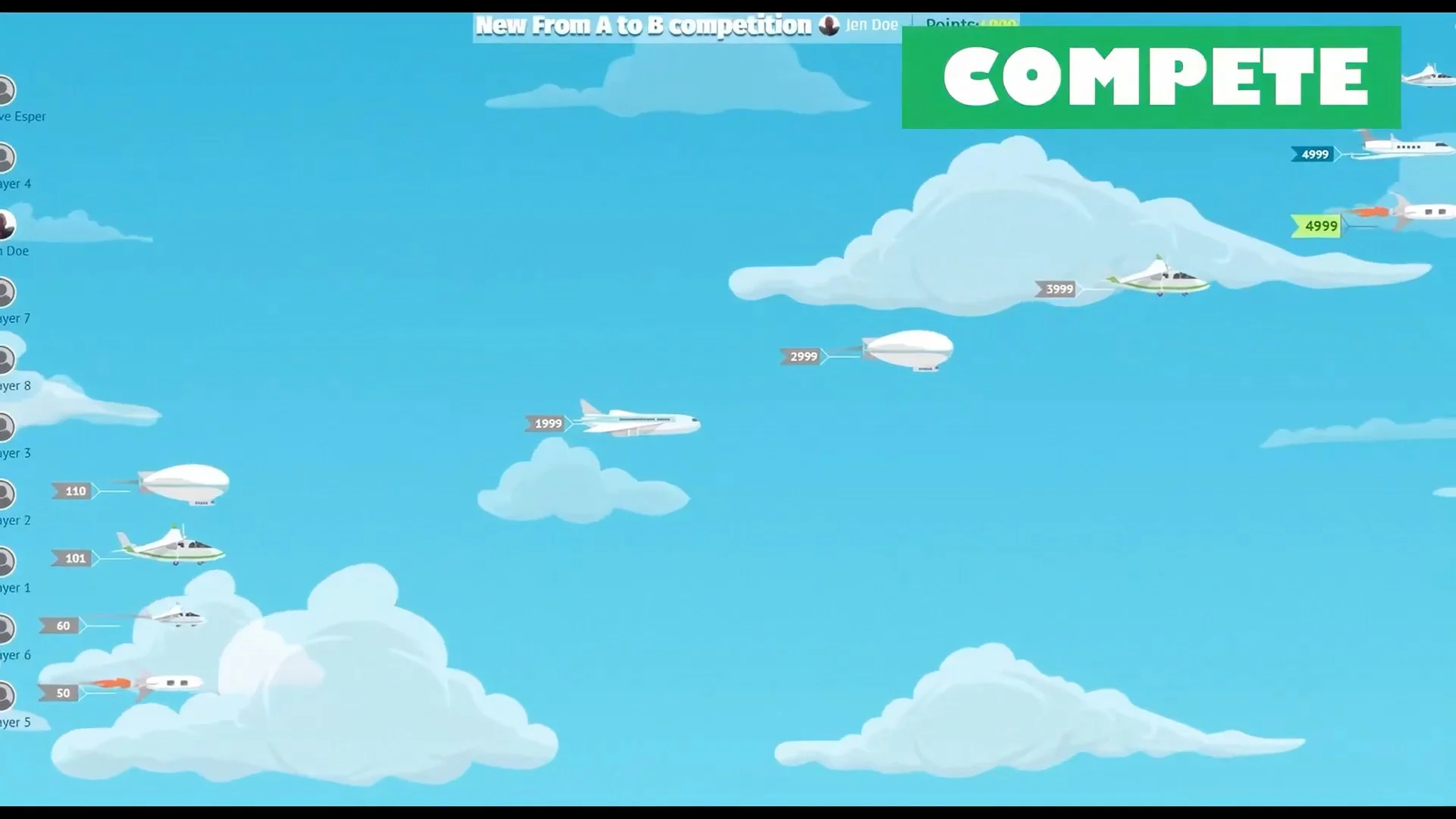
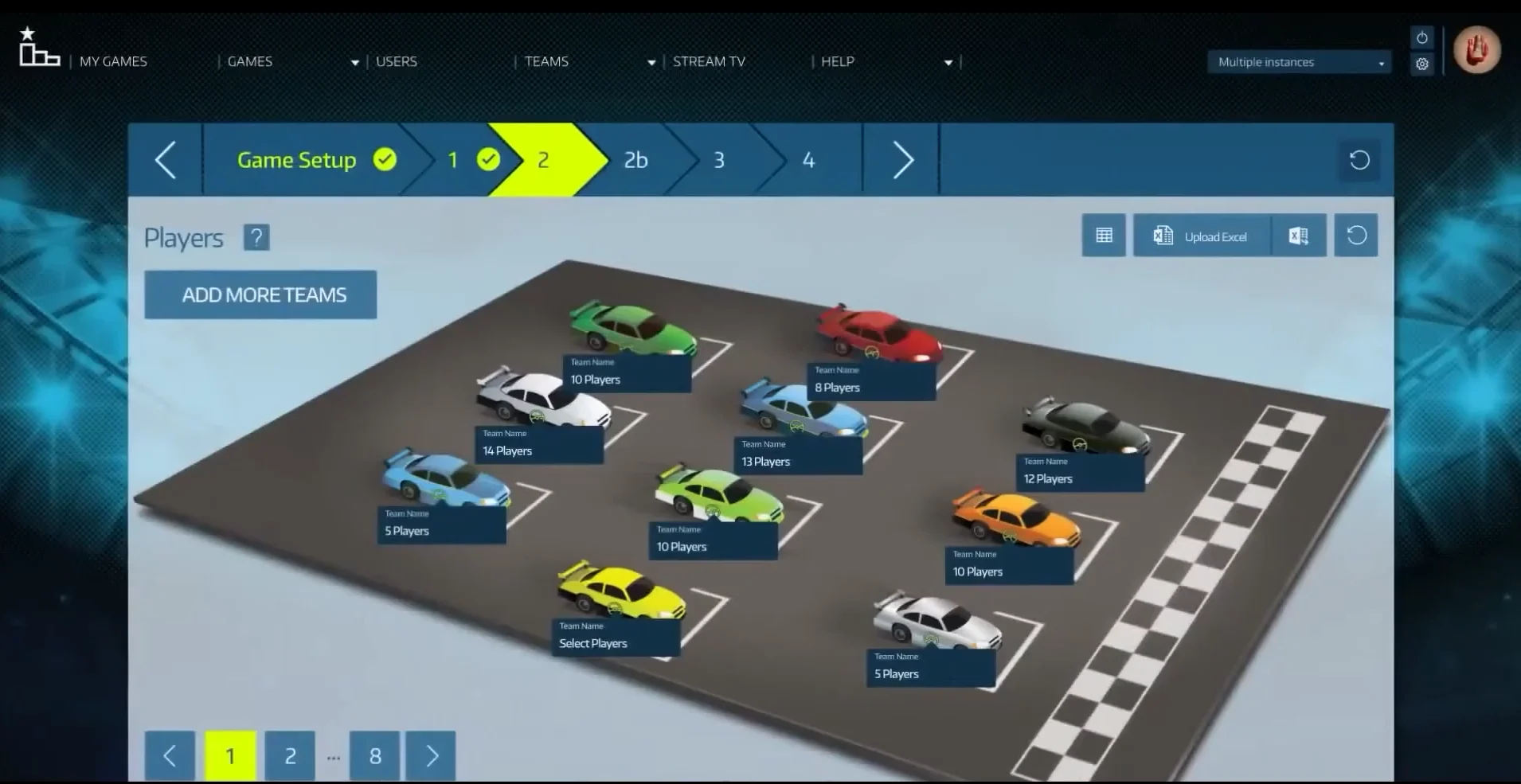
Competition kept interest high: each store saw its team's rating, and employees earned points and internal currency. Managers watched progress in real time and could help those falling behind — all without taking time away from work or adding extra oversight.
After a quarter, we measured the effect. Training participation activity jumped by 40% — employees began completing scenarios on their own initiative rather than just to check a box. Standard compliance rose from 62% to 91%, and onboarding time for new hires was halved.
Payback came within three months. A higher average check, fewer checkout errors, and rapid adaptation of new employees delivered a measurable economic effect that covered the development cost within the first quarter.
After these results, the chain expanded the program to the logistics and warehouse department — we received a repeat order. This case shows that gamification pays off when it's embedded in real business processes rather than being a one-off event.
How to choose the right gamification format for a specific task?
Choosing a format starts not with technology but with the business task. It's one thing to introduce new employees to regulations, another to keep clients engaged on the site or work through a complex product scenario.
A common mistake is to immediately look for a "fun game" and forget about measurable goals. Define what should change after launch: engagement, learning speed, repeat visits, KPI achievement.
The goal itself will tell you whether you need a simple quiz, a multi-stage quest, or a full-fledged trainer.
Once the goal is clear, assess convenience for participants. A corporate application running in the browser on WebGL requires no installation — an employee opens the link and immediately joins the game.
This removes the main barrier to adoption: no need to install software on every computer, configure access, or wait for updates.
For most internal tasks — onboarding, training, motivation — the web format is more practical than a standalone program that's hard to distribute across the company.
When choosing a contractor, look not at their list of tools but at their willingness to understand your business task. A good contractor first asks questions about the audience, scenario, and desired outcome — and only then proposes mechanics.
Ask them to show similar projects and explain how they measured the effect: whether conversion grew, whether training time shrank, whether users returned more often.
If a contractor talks only about the "engine" and technical features instead of your people, that's a reason to be cautious.
The bottom line is simple: choose a format for the goal, not for fashion. Determine how employee or client behavior will change, and the decision becomes obvious.
A WebGL application on Unity fits most corporate tasks: it's accessible from any device, easy to update, and quick to deploy. The key is that the contractor translates your task into the language of game mechanics and suggests a way to measure the result. Then gamification brings value, not just a couple of days of fun.
Frequently asked questions and objections about gamification development
Every client asks the same questions before launching gamification: how will it fit into current processes, how much will it cost, and who will be responsible after launch. Doubts are a normal part of working on a new tool, so let's address the most common objections right here.
So even before the call, you'll understand how we handle risks and what remains in our area of responsibility.
Is it hard to integrate gamification into our CRM and internal services?
No — this is a standard task for our team. We connect the application to your systems through data exchange formats your developers already know — this usually takes no more than a day or two of setup.
We don't ask you to change your infrastructure. We take care of all the integration work and give your team clear instructions.
What budget is needed to start and what does the price depend on?
The cost is made up of three components: the number of game mechanics, the depth of integration with your systems, and the design. That's why we start with a free brief to assess the scope.
You receive a cost estimate before work begins — we fix the price in the contract so it doesn't grow along the way. For initial projects, a basic set of mechanics is often enough, and it can easily be expanded later.
How long will development and launch take?
A typical timeline is two to three months from the approval of the technical specification. At the first stage, we show a prototype so you can see the logic and interface in advance.
We work in stages: you approve each one — so the final product reaches you on time, without surprises or postponements.
What happens after launch? Who supports and updates the system?
We don't walk away from responsibility after project delivery. The contract includes a support period: during this time we fix bugs, make small adjustments, and help your team master administration.
If you want to expand coverage or gather new analytics — you already have a contractor who knows the system from the inside.
What guarantees are there that gamification will really deliver results?
Guarantees in IT aren't empty promises but clear agreements. The contract sets the acceptance conditions for each stage and the final metrics — for example, the employee engagement level or the share of people who completed the training modules.
If testing shows that the mechanics don't work as intended, we fix them within the agreed timeframes. You pay for the achieved result, not for an endless process.
These answers cover the main concerns, but every business has its own context. Tell us about your task in a short brief — and within 30 minutes we'll suggest a solution that fits your budget, timeline, and current system.Ready to implement gamification in your business? Get a consultation
Implementing gamification isn't buying a "box" — it's a joint project.
So you understand right away what you'll get and how long it will take, we start with a consultation: we examine your tasks, audience, and current processes, then propose a solution for your business. The application will work in the browser via WebGL — employees won't need to install anything.
Leave a request — and after a short conversation you'll get:
- a preliminary implementation plan with stages and expected results;
- cost calculated after audit for your scale — without hidden fees or "surprises";
- a timeline estimate: from brief to launch of the working application;
- examples of similar projects where gamification has already produced a measurable effect;
- answers to questions: how employees will accept the innovation, how to measure the result, what's needed to start;
- a clear list of documents and data we need from you to begin work.
The consultation is non-binding: you'll get benchmarks and can calmly compare with other contractors. If the solution suits you, we'll prepare a detailed technical specification and fix the timelines. If not — we'll honestly say so and advise on what to do next.
To order gamification and get an estimate, send a request through the form or messenger. We'll reply within one business day, clarify the details, and send a preliminary plan with cost and timeline benchmarks. Start with a short conversation — the rest will be easier.