

Employees Abandon Training: What Business Loses
When employees abandon training, the company pays twice: once for the course itself and again for the fact that new skills never start working for the business.
Ordinary programs lose attention by the second week: learners formally open materials but don't remember the key points. As a result, the sales department continues using old scripts, managers make mistakes in service, and the costs of fixing errors grow.
Losses are especially noticeable when training is mandatory for everyone — for example, when launching a new product or changing regulations. If the system doesn't hold attention, you get not a trained team but a spent budget and missed deals.
Marketing invests in content, HR in organization, and the result is measured only by view counts, which say nothing about real comprehension or application of knowledge.
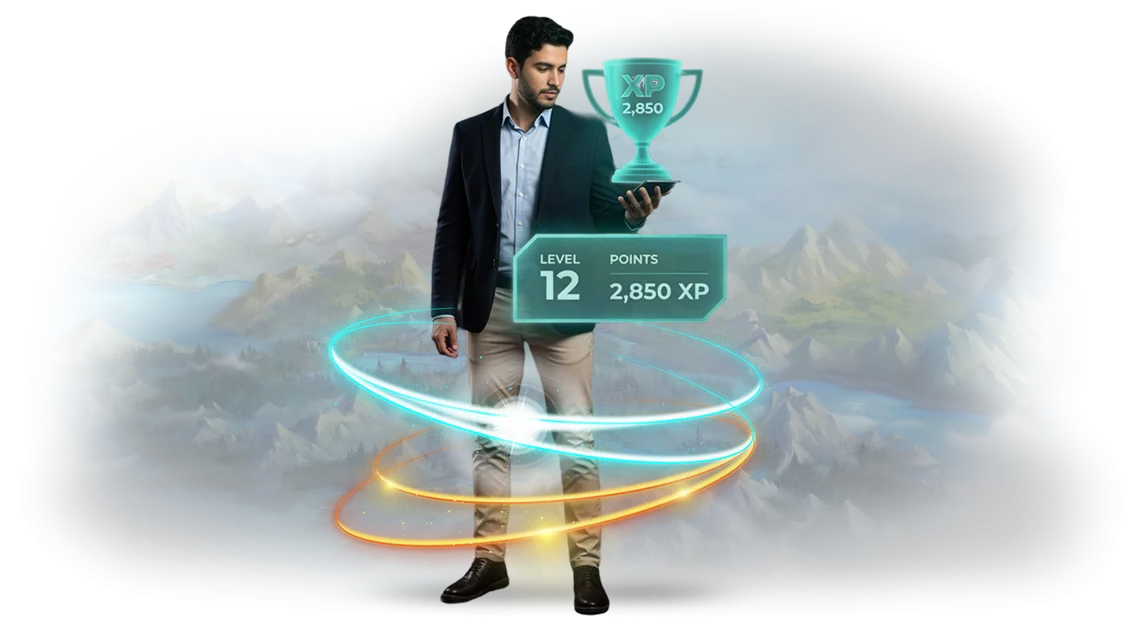
Gamification of training changes the economics of the process: it turns passive course completion into active action with a clear goal and feedback. The employee sees progress, competes with colleagues, receives rewards for achievements — and reaches the end of the program.
This is what sustains engagement, which directly affects training effectiveness and the speed of implementing new skills in work.
Wehelp businesses solve this pain: we design game mechanics that integrate into your training system and deliver measurable results — more completed courses, higher knowledge check scores, faster transition to real tasks. Below we explain what this looks like in practice and what business gets.
What Gamification of Training Processes Gives Business
Standard corporate training often fails not because of weak content but because of boredom: an employee opens a course, skims a couple of screens, and puts it off for later.
Gamification turns this process into a series of small wins — points, levels, visible progress, and fair competition trigger natural motivation.
People complete training not "because they have to" but because they want to beat a colleague to the next level or unlock the next module.
The key result is an increase in course completion to 85–90% versus the typical 20–30% in classic formats. This is not a "nice bonus" but savings on the training budget: each developed program fulfills its goal — onboarding, sales, handling objections, safety rules.
When a course is actually completed, repeated requests to mentors drop, the number of errors decreases, and deals close faster.
A separate value is transparent tracking of employee development. A manager sees not dry attendance statistics but a living picture: who masters material faster, who systematically leads, who needs additional support.
Gamification also simplifies newcomer adaptation — gentle competition helps them get into the rhythm faster, and a mentor sees growth areas without extra interviews.
We make training deliver measurable business results: higher conversion, shorter time for a newcomer to reach plan, and a strong team that wants to develop.
Professional gamification tools, refined across dozens of projects, ensure stable system operation without failures or extra load on the company's internal services.
Gamification Formats for Your Business Tasks
Gamification formats are not "games for games' sake" but a tool for a specific business goal.
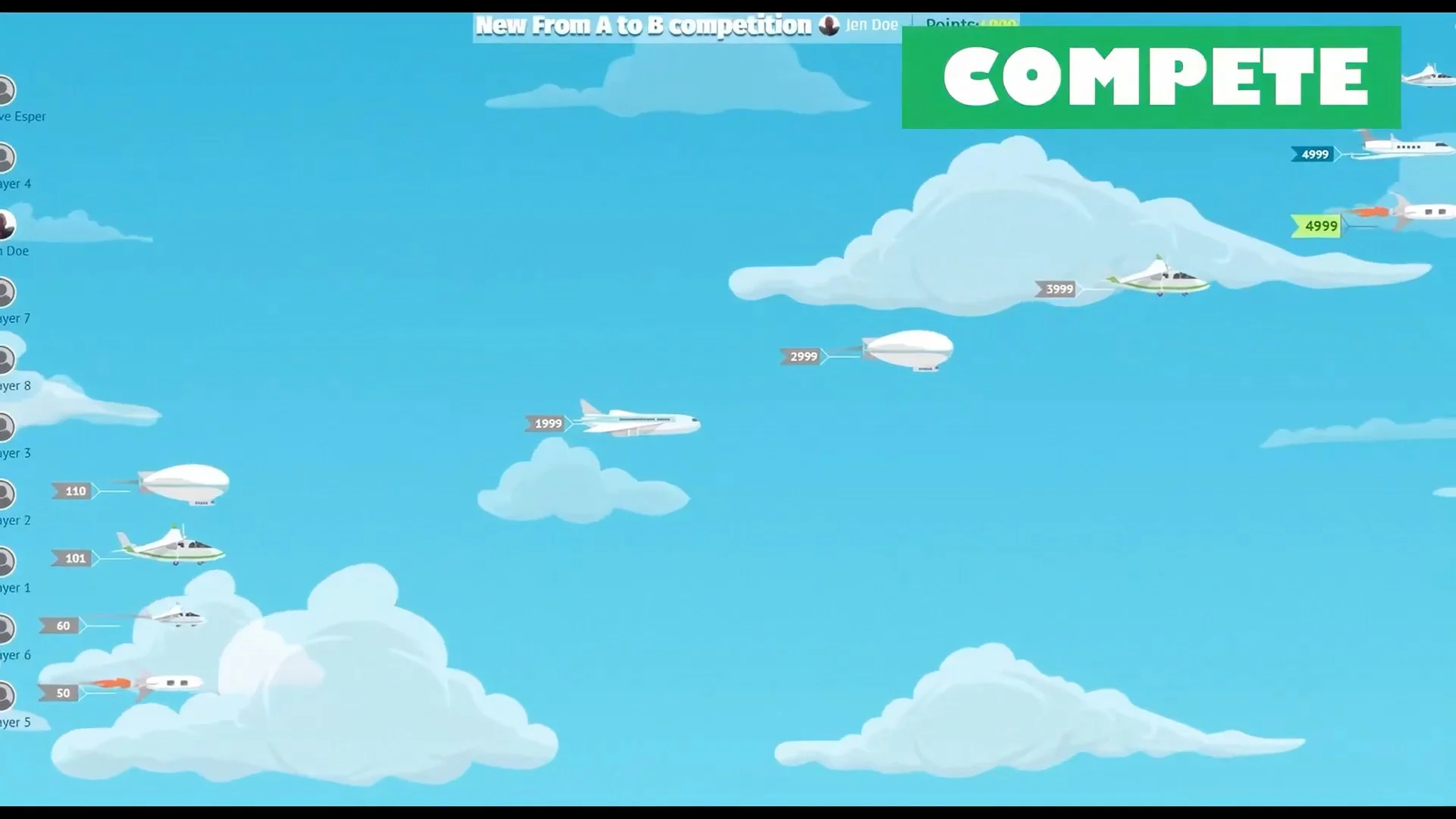
A quiz will revive corporate training, competition will unite departments around a common metric, and a role-play simulation will practice sales or negotiation skills without risk to the client base.
The main thing is not to choose a "trendy" format but to select the one that solves your task.
Below is a comparison of three working options. This is the base we adapt to your company's specifics: scale, audience, current metrics.
| Format | For whom | What it gives the client |
|---|---|---|
| Quizzes and tests | Training newcomers, knowledge checks after a course, staff adaptation | Quick engagement, clear knowledge snapshot, lower turnover: the employee sees progress |
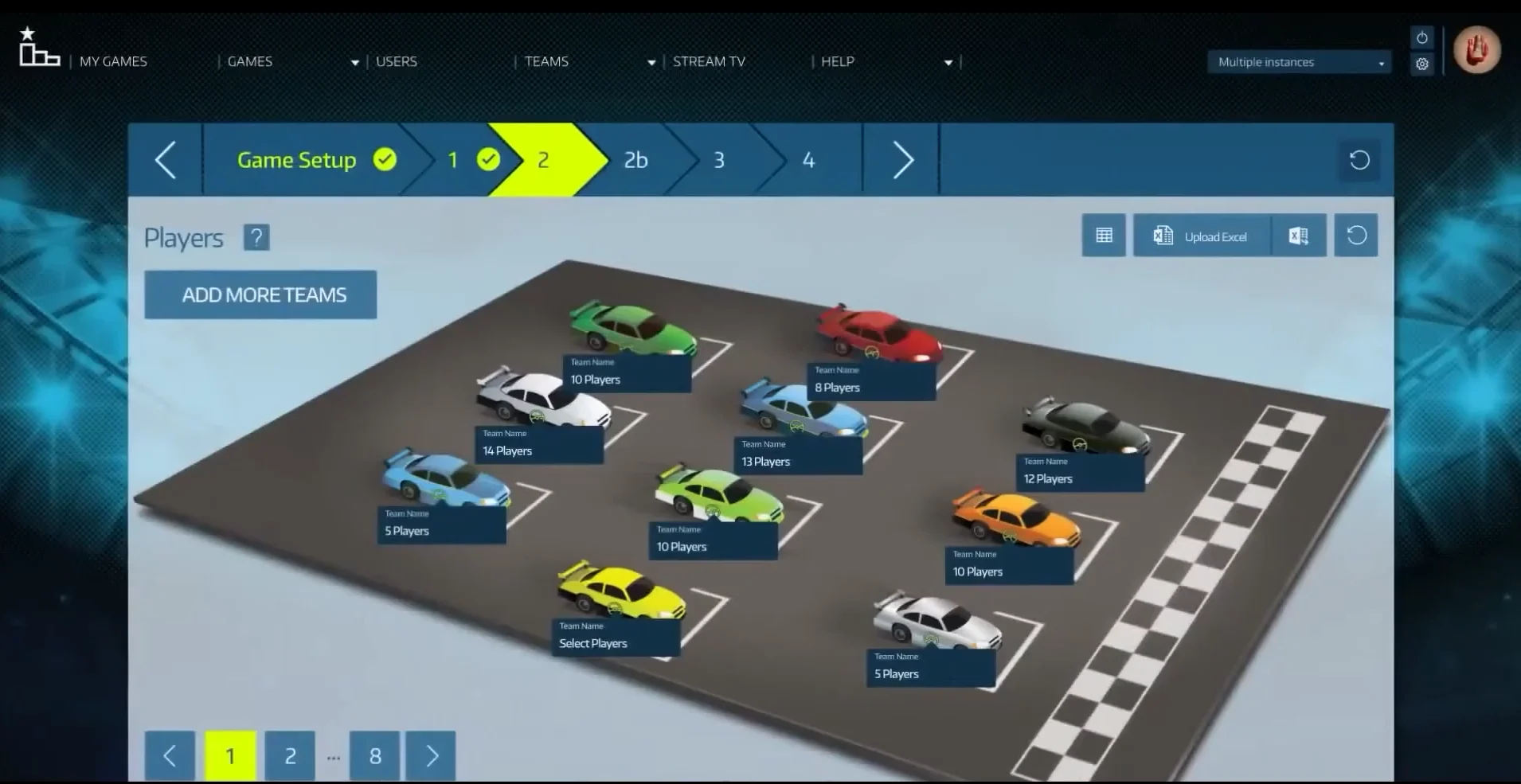
| Competition between departments | KPI teams, sales departments, regional branches | Revenue growth through healthy competition, team spirit, transparent motivation |
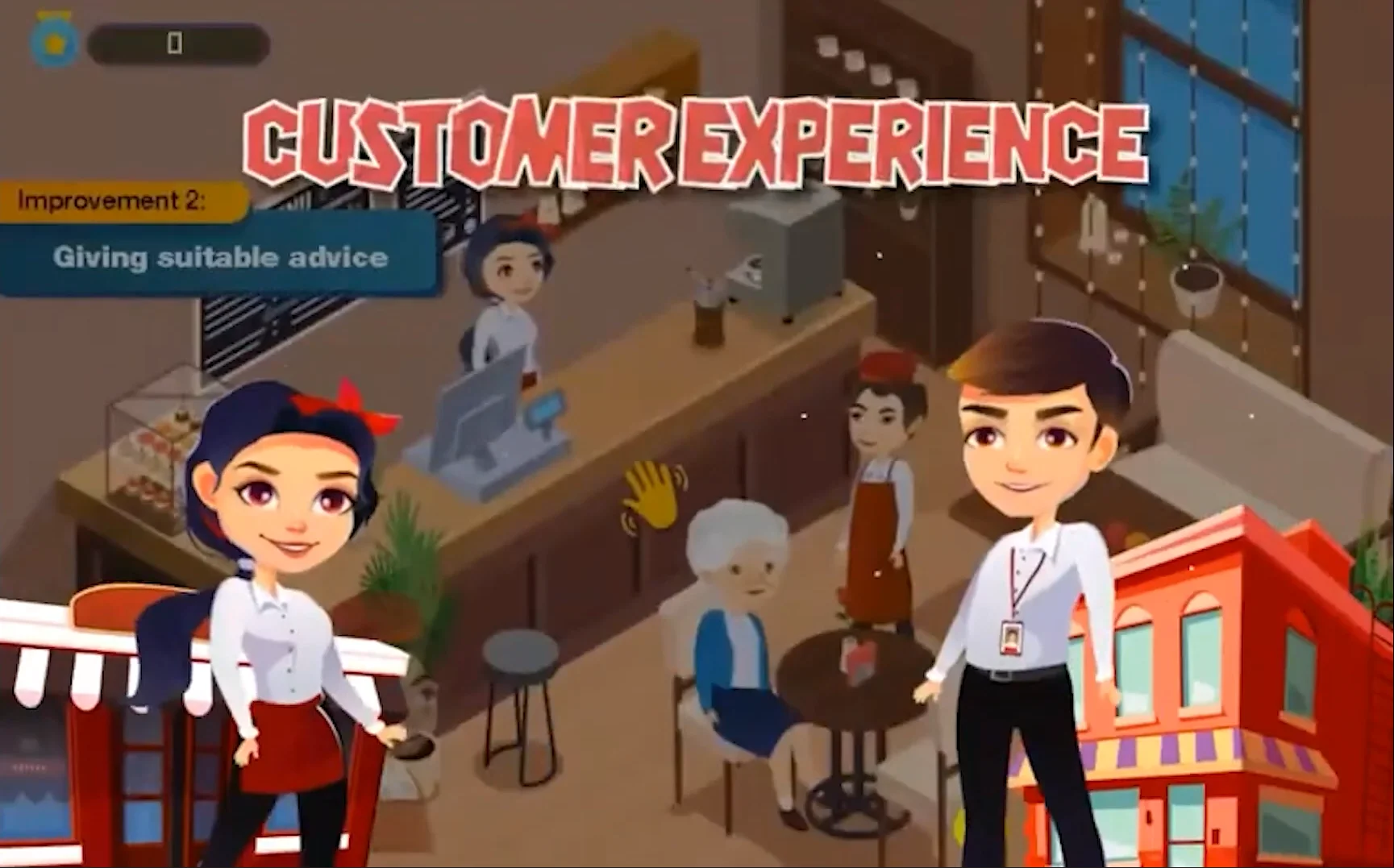
| Role-play simulations | Line staff, customer service managers, team leaders | Practicing complex dialogues without stress, lasting skills, fewer mistakes in real work |
It works like this: we take your real business situation — a client case, a call script, an internal regulation — and turn it into a game scenario. After the pilot, you get numbers: engagement, completion speed, errors, KPI dynamics.
Quizzes are worth launching when you need to quickly raise the basic level of knowledge. Competitions — if you want to increase sales and revive routine.
And simulations are indispensable when the cost of a mistake is high: here you can try, make mistakes, and learn in a safe environment.
We help you choose a format for your task, not sell a "box." At the consultation, we record the goal, timeline, and metrics — then propose a solution with an effect forecast. You get a game that works for your business result, not just entertains.
How Gamification Implementation Goes in a Company
We start with a brief, not with technical questions. It's important for us to understand how your processes work: who is trained, what tasks the program covers, what prevents employees from completing the course.
The entire further plan depends on this — so that it aligns with your business goals rather than existing on its own.
Next, we assemble a team and show you a clear roadmap: what we do, in what timeline, what results you will see at each stage. No "magic" — only transparent mechanics that you observe live.
- Brief and audit of the current program. We analyze what already works in training and what loses employee attention. We collect your wishes and constraints, fix goals: faster adaptation, sales growth, plan fulfillment.
- We design game mechanics for the business task. We determine which motivation model suits your team: points and levels, team competitions, choice-based scenarios. We work out how gamification will integrate into the existing training system rather than become a separate "island."
- We approve the prototype and scenarios. You see how the process will look from the employee's perspective: what tasks, what rewards, what progress looks like. We make changes before launch, not after.
- We develop and integrate the solution. We connect the mechanics to your platform or create a separate module. At this stage, employees can already test the system — we collect feedback and quickly adjust.
- We launch and support. We show administrators how to manage the program, monitor engagement, and change rules. We stay in touch after launch: we help with initial difficulties and analyze first results.
- We analyze the business effect. After a month or two, we look at the numbers: how many employees reached the end, how training indicators changed, where we can strengthen. We give recommendations for the next cycle.
The whole process is built as a partnership: you control every stage, and we are responsible for the result. You don't need to understand technical details — it's enough to see how gamification affects the team. The result is a clear system that works as part of your training, not hanging as dead weight.
What's Included in the Gamification Delivery Package
When you order training gamification, it's important to understand what you get after launch and what you can change yourself. We assemble a ready-made package that covers three tasks: employee motivation, progress control, and management without programmers.
The delivery package includes:
- Scenario and gameplay. Developed plots, tasks, levels, and rewards for your learning task. Participants understand why to complete the program and engage from the first stage.
- Motivation system. Clear rules for awarding points, bonuses, and statuses that maintain interest throughout the course.
- Templates and instructions for the team. Ready-made memos for the administrator, mentor, and participant, communication scenarios, launch checklists. Nothing needs to be created from scratch.
- Analytics dashboard. Clear reports: who completed the course, where difficulties arise, at which stage people stop. Adjust training based on facts.
- Administration. A personal account where you change rules, add tasks, manage roles and access without a developer.
- Launch instructions. A step-by-step plan for the first weeks: how to announce the start, engage participants, and collect feedback.
- Support and maintenance. Specialists in touch, ready to help with setup and mechanic improvements.
The package is assembled into a single system: the scenario is connected to rewards, rewards to analytics, analytics to management. You get a working tool that is easy to integrate into current training processes.
Case: How We Increased Course Completion for a Retailer
The "Severny" store chain approached us with a typical retail pain: new employees didn't finish training courses. Text instructions and videos didn't hold attention — barely a third of newcomers reached the end, and turnover in line positions remained high.
We proposed turning training into short game scenarios with levels, rewards, and competition between stores. No extra theory — only real situations from the sales floor: handling objections, product displays, cash register operations.
What changed in three months
Completion of the full course grew from 30% to 87% — almost everyone started finishing the training. The average time to full competency was reduced by two weeks, and sales by newcomers in the first months of work grew by 12%.
Store managers also noticed a side effect: employees themselves asked to unlock the next level instead of postponing training.
Separately, we measured the effect on turnover: over six months, the share of resignations among those who completed the course fell by a quarter. People quickly feel confident at the register and on the floor — less stress, more desire to stay.
After the first results, the chain ordered two more game modules from us: for senior sales associates and store directors. Now gamification covers not only basic training but also on-the-job professional development.
How to Choose a Gamification Format for a Specific Task?
Choosing a gamification format starts not with mechanics but with answering two questions: what result should employees achieve, and who specifically will undergo the training.
The same task — for example, increasing the speed of processing requests — is solved differently for young specialists and experienced managers, for team sales and individual work. Therefore, format selection always relies on the training goal and audience characteristics.
If the goal is to develop a specific skill (handling objections, product knowledge, action algorithm in a non-standard situation), scenarios and simulations are more effective, where the employee makes decisions and sees consequences.
When you need to increase engagement and motivation, competitive mechanics are used: ratings, team challenges, levels. And if it's important to reinforce regular actions, short recurring tasks with cumulative rewards work better.
The key factor is the employee audience. For some teams, public leadership in a results table works stronger; for others, team play. It's important to consider how accustomed employees are to digital tools, how they feel about competition, and what their real motivation is.
An incorrectly chosen format produces the opposite effect: instead of engagement — resistance and formal completion.
The right path is to first formulate a measurable training goal together with you, then study the audience and select mechanics that will deliver results for that audience.
We do this on every project: analyze the task, test the format on a focus group, and scale what really works. In the end, you get not "gamification for the sake of gamification" but a tool that solves your business task and is accepted by employees.
Common Doubts Before Launching Gamification
Before starting any training gamification project, many managers have the same doubts: won't the game distract employees, will the system break down, when will the first result appear.
We've collected the most frequent questions and answer directly — without technical details or general promises. If your question isn't in the list, just write to us — we'll discuss your situation.
Won't gamification distract from core work?
The game mechanics in our solutions are subordinated to learning goals: tasks, levels, and rewards help complete material faster, and competition only strengthens memorization. All scenario elements keep attention on the topic rather than leading it astray.
Training remains safe for the work process — courses are designed for short sessions of 10–15 minutes a day.
What if the system fails in the middle of training?
We use proven professional equipment and servers, so failures are excluded in 99% of cases. Every project is tested before launch, and after launch we stay in touch: if a question arises, a specialist will respond within a couple of hours. Your data is protected, and all training results are saved automatically.
When should we expect a return on investment?
We calculate the economic effect even before launch: you name the goal — faster adaptation, fewer errors, higher course completion. In your personal account, you see group progress and test results in real time, so the first dynamics can be assessed within a month. With active use, project payback usually takes 2–3 months.
How long will implementation take?
Setting up our gamification takes from 2 to 4 weeks — depending on the number of courses and integration with your learning management system. We handle all technical work and train your employees, so you won't need to allocate a separate administrator.
Support and updates are included in the plan, and changes to scenarios are made without long pauses.
How is the security of training results ensured?
We work according to the security policies you use in your company. All employee data is stored on your server or in a secure cloud; only you have access to statistics. We do not share information with third parties and do not use it for advertising.
Ready to Discuss Gamification for Your Business?
Employees complete training "just for show" and forget the material. Gamification turns skill acquisition into a game with goals, progress, and rewards. Engagement, newcomer adaptation speed, and the share of those who apply knowledge all increase. This affects revenue, turnover, and time to reach plan.
Perhaps you've tried bonuses and discipline — no lasting result. We design game mechanics for your business process, not just add points. One consultation shows where gamification will have an effect and where it isn't needed.
Leave a request: it's free and non-binding. We'll get in touch within one business day, clarify the task, and prepare a cost estimate for your scale. You'll receive a transparent cost calculation without hidden work.
What you get after contacting us:
- An initial consultation: we'll identify points in training where game mechanics will bring benefit.
- A cost and timeline estimate — concrete figures for your task, without "ranges."
- Examples of gamification projects in your field with client results.
- Format recommendations: from levels to a full-fledged platform with competitive elements.
- A transparent implementation plan: brief, scenario, development, launch, support.
- Post-launch support: we adjust the mechanics if the result is below expectations.
Now is a good time to make training measurable and engaging. Leave a request — we'll discuss the situation, calculate the cost, and show how gamification pays off.