


Onboarding costs are rising, and new hires leave in the second week
Each week of onboarding costs the business more than the last: mentors' time, team workload, prepared materials. At the same time, a significant share of new hires leave in the second week—at the moment when onboarding costs have already been incurred, but there's no return yet. Each such departure hits the budget and the team's morale.
The problem isn't people—it's the very format of introducing someone to the job. A stream of instructions, long presentations, and passive reading of policies don't let a new employee feel progress. Engagement quickly fades, and attrition rises.
Instead of developing their department, managers end up explaining the same things to new hires all over again.
Gamification turns onboarding into a clear sequence of stages with quick wins and feedback. The newcomer completes engaging tasks, sees their growth, and immediately understands how their work impacts the overall result.
They go through the steps themselves, get reinforcement, and keep moving forward. This kind of engagement reduces the stress of the first week and helps the employee settle into the working rhythm in a timeframe that previously seemed unattainable.
That's why we design gamification around your company's goals: from a welcome quest to an achievements system. You get an employee who doesn't take months to integrate but becomes part of the team within the first few days.
This addresses the business's biggest pain point—onboarding costs start paying off instead of going to waste.
What onboarding gamification delivers: engagement, speed, results
Every manager knows how expensive it is when a new hire slowly ramps up to full productivity. In the first weeks, the employee is figuring out processes, learning the product, looking for answers—while their output is close to zero.
If onboarding is boring, the person loses interest and often leaves before the end of the probation period.
Onboarding gamification solves this: it turns adaptation from a tedious obligation into an engaging journey with goals, levels, and rewards. The newcomer gets clear steps and instant feedback, so engagement grows from day one. They actually want to complete the training rather than just waiting for the workday to end.
Thanks to game mechanics, key skills are mastered faster—adaptation time noticeably shrinks, and learning becomes more effective. Knowledge is absorbed through action rather than reading instructions, so it sticks better and is easier to apply to real tasks.
The employee starts delivering results sooner, and mentors don't have to repeat themselves endlessly.
An additional benefit is staff retention. Engaging onboarding reduces anxiety, builds a positive attitude toward the company, and lowers turnover in the first months.
We design gamification around your business goals: you get a system that accelerates onboarding, boosts engagement, and reduces the costs of hiring new employees.
Gamification formats for different business goals
Onboarding new employees, training clients, launching a product—each task has its own scenario, and the same game mechanics don't work across all of them. That's why we first analyze your goal and audience, then choose a format that will deliver measurable results.
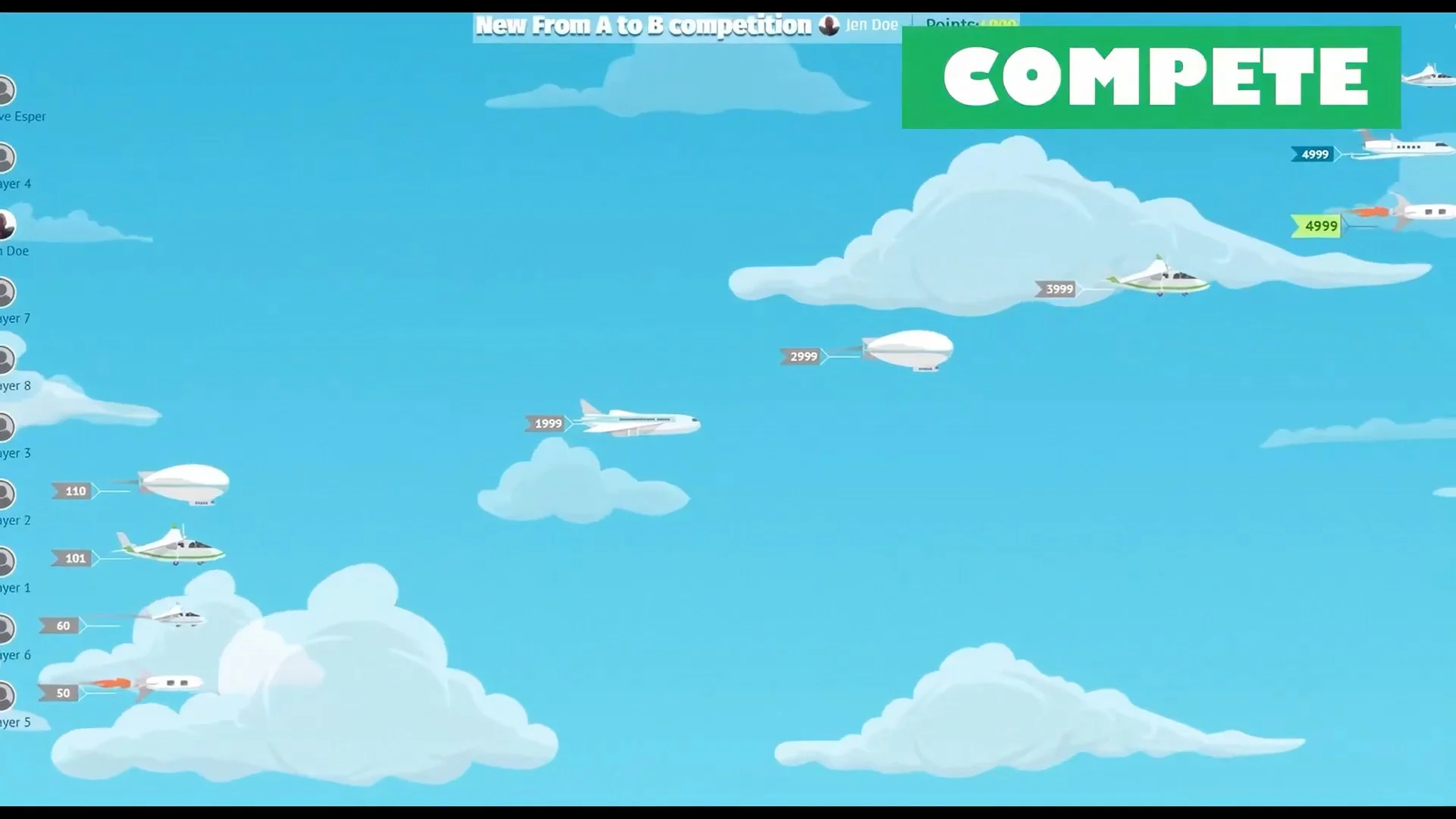
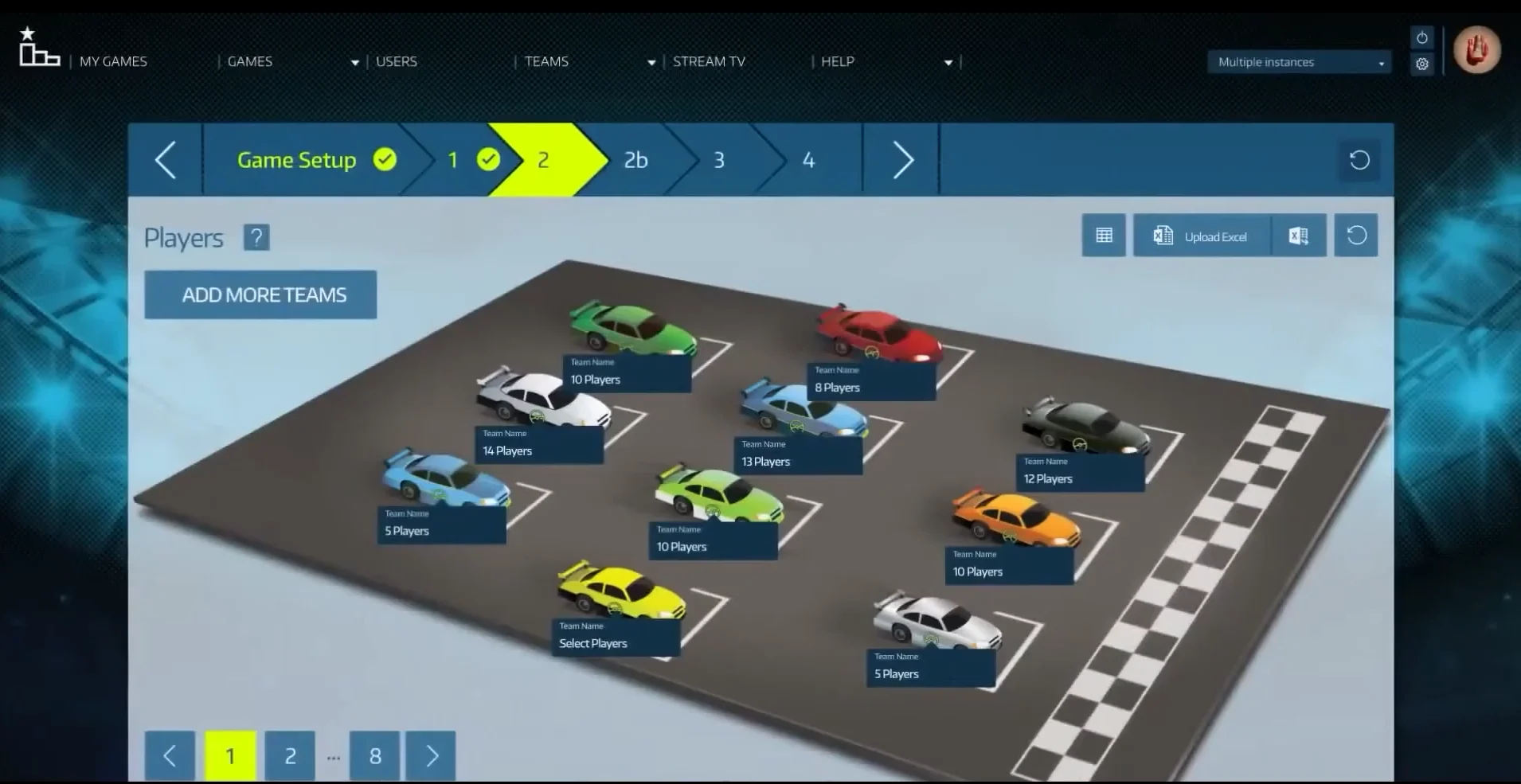
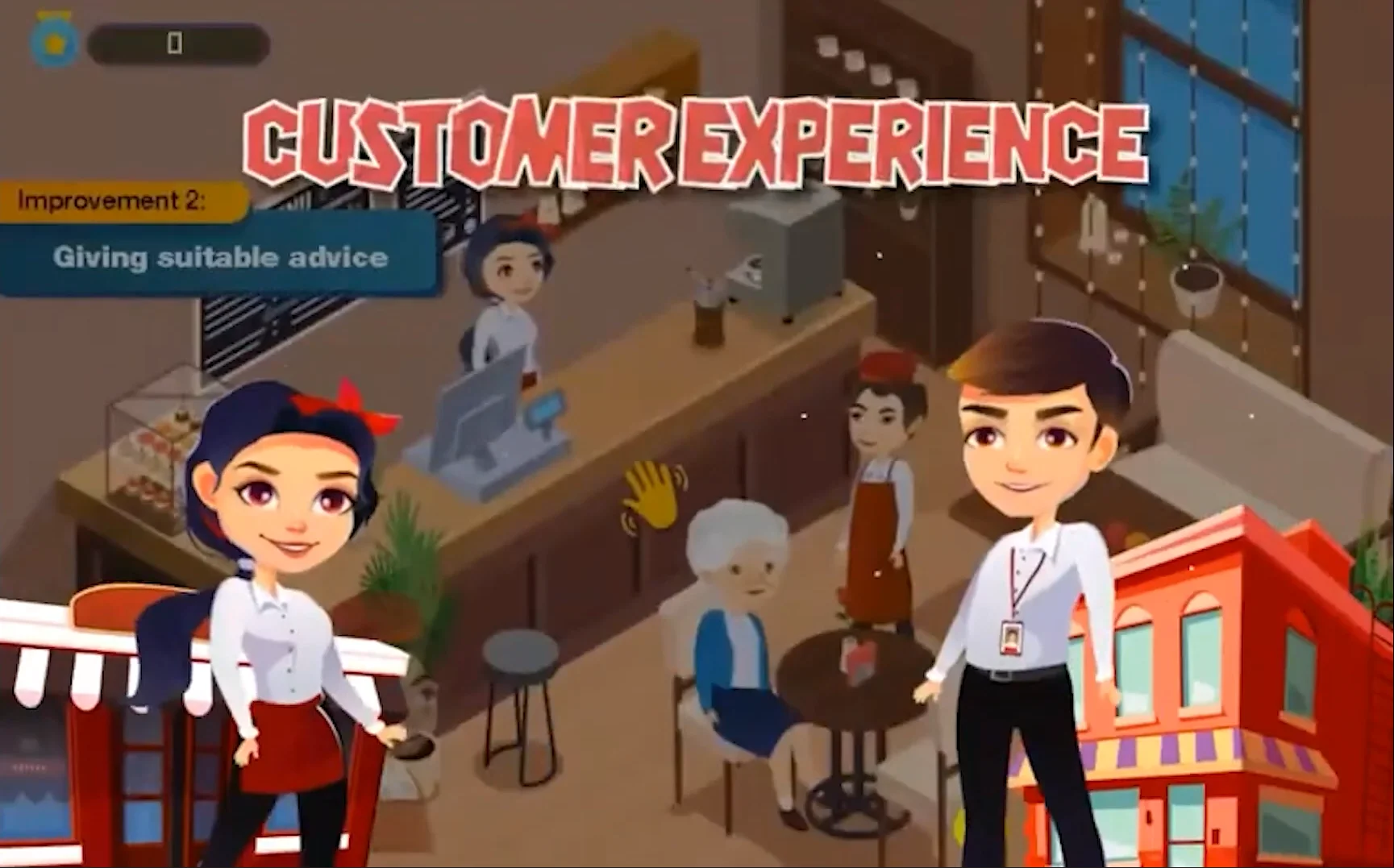
There are several gamification formats, each with its own purpose. For example, a quest guides a person through steps in sequence, a simulation lets them practice complex skills without risk, and a competition engages a large number of participants. The table below shows the main options and their business benefits:
| Format | For whom | What it gives the client |
|---|---|---|
| Onboarding quest | New employees, new users | Quick familiarization with processes, lower attrition during probation |
| Business simulation | Managers, salespeople, team leads | Skill practice in a safe environment, higher sales and better negotiation quality |
| Team competition | Departments, units, branches | Higher engagement, KPI achievement in game form |
| Interactive choice-based scenario | Clients, partners | Visual product training, higher loyalty and repeat inquiries |
| Game quiz | Broad audiences, event visitors | Fast reach, contact capture, brand messages remembered |
We adapt each of these formats to your specifics: rules, difficulty levels, storyline, and reward system.
What matters most isn't the game element itself, but the fact that participants hit the right business metrics: they ramp up faster, sell better, and return for purchases more often.
When you choose a format with us, you get a ready-made scenario that easily fits into your existing onboarding or training process. We support the project from brief to launch and make sure the mechanics serve exactly your objective.
How we implement gamification: 6 steps without setbacks
A transparent process is the key to making sure gamification implementation doesn't blow the timeline or turn into endless revisions.
We've broken the work into six stages: at each stage you see the intermediate result, understand the time budget, and can influence the decision before launch. No "magic in a black box"—just agreed steps with clear outcomes.
-
Brief and immersion in the task. We break down your onboarding: where new hires get lost, which questions they ask most often, and what result you expect from gamification. We document goals and success criteria.
-
Scenario and game mechanics. We propose a format that fits your employees: a quest, levels, team competition, or a mixed approach. We explain how the mechanics will accelerate ramp-up and increase engagement.
-
Prototype and approval. We show how the future system will look and work. At this stage, you can make edits without redoing anything: we refine the script, visuals, and logic before full build-out.
-
Integration and setup. We embed gamification into your current processes: connect it to HR and training systems, configure roles and access levels. You get a working tool, not a standalone toy.
-
Testing with real employees. We run a pilot with a group of new hires, collect feedback, and fix bottlenecks. This helps avoid issues during a full-scale rollout.
-
Launch and support. We help roll out gamification across the company, train administrators, and remain on support. After launch, we analyze metrics and fine-tune the mechanics to keep improving results.
This approach has proven itself across dozens of projects: clients see every stage, approve key decisions, and get a predictable result within agreed deadlines. You manage the process, and we handle the implementation.
What's included in the delivery: a complete launch kit
You get not a "talking presentation" but a ready-to-launch tool—with game content, rules, analytics, and team training. We hand over the project as one complete package: all you have to do is press "start" and watch the results.
What's included in the delivery
- Game scenario and content — quests, levels, tasks, and rewards tied to onboarding goals: the first days, product introduction, key skills. The employee understands why they're completing the stages and sees their progress.
- Motivation mechanics — points, leaderboards, team competitions, and achievements. The system motivates people to complete training without coercion, and the manager saves time on oversight.
- Metrics and analytics — clear reports on who completed each stage, where difficulties arise, and how long adaptation takes. You see onboarding effectiveness in numbers, not "by eye."
- Integration with current processes — we connect to your corporate portal, HR system, or learning platform. The employee doesn't need to switch between services, and you don't have to change familiar tools.
- Team training — a short practical course for HR and managers: how to launch activities, add files, configure rewards, and read analytics. Startup support is included.
- Documentation and support — clear guidelines for working with the system, rules, and turnkey launch. In the first weeks, we stay in touch to quickly fix details and make sure everything works.
All of this is delivered at once, not "in pieces on request." You get a working tool that you can use with the next wave of new hires and understand what effect it has on the business.
Case study: gamification reduced new-hire attrition by a third
Retaining new hires is one of the most expensive parts of onboarding. When a new employee leaves within the first few months, the company loses time on recruitment, training, and adaptation.
The Energy fitness club chain approached us with a request: reduce attrition during the probation period and make the role-entry process clear and engaging.
We developed onboarding gamification: instead of a boring lecture, newcomers went through a series of short quests, earned points for completed tasks, and saw their training progress.
Each stage was reinforced with instant feedback—the employee immediately understood what they were doing right and what to improve. As a result, engagement grew, and adaptation stopped being stressful.
Result after three months of operation: new-hire attrition dropped by a third, and time to reach planned working speed decreased by two weeks. Retention improved, and branch managers noted that new employees ask questions sooner and engage more actively in teamwork.
This gamification case showed: a properly structured retention process can deliver measurable business results as early as the first quarter.
We didn't just add points and badges—we rebuilt the adaptation scenario around the company's goals and got a metric that shows up in financial terms. If you want a similar result for your onboarding, let's discuss your process and propose a solution for your task.
How to choose a gamification format for your business specifics?
There is no one-size-fits-all template: what motivates sales managers is useless for onboarding new hires, and mechanics that speed up learning don't always suit routine operations.
So choosing a gamification format for your business starts not with trendy tools but with the goals you want to achieve and the specific challenges your team faces.
First, define the main task: speed up onboarding, increase engagement, reduce turnover, or boost productivity. Then study your audience—age, experience, and digital habits of your employees.
What excites young professionals often triggers skepticism in an experienced team, so game mechanics are chosen for real people, not an abstract profile. For onboarding, it's especially important that the first days are clear and visual—quests and levels work well here.
The nature of the tasks also matters. For a long onboarding, staged scenarios with intermediate achievements and a final reward work well; for short, repetitive operations, instant feedback and visual progress are better.
If a process requires high precision, competitive mechanics can do more harm than good: it's better to use cooperative formats where the outcome depends on team coordination.
We help you decide on a format based on your data: we analyze the process, find bottlenecks, and propose a scenario that fits into existing workflows rather than breaking them.
An individual approach isn't just a different wrapper—it's precise tuning of rules, rewards, and difficulty levels to your team and business metrics. In the end, you get mechanics that deliver measurable results: faster onboarding, higher productivity, fewer errors.
Start with a short brief, and we'll tell you which gamification format will be most effective for your goals.
Concerns: won't gamification disrupt work processes?
Introducing gamification into onboarding naturally raises questions among managers: won't it get in the way of work, won't it require restructuring processes, and won't it distract employees?
These concerns make sense: any innovation should bring benefit, not disrupt the usual way of doing things.
We hear these questions on every project and answer them directly—without technical details, in the language of results. Here's what business owners and managers most often ask before launching gamification.
Won't gamification break current processes?
No. Gamification doesn't replace work processes; it gently embeds into them. The employee performs the same tasks in the same system, just in a clearer and more motivating form. Critical operations remain under your control.
How will this affect work efficiency?
Positively. During onboarding, gamification helps a newcomer settle in faster: they're personally motivated to complete steps, see progress, and get feedback. The result is shorter adaptation time and fewer mistakes at the start.
How safe is this for data and reputation?
We work inside your infrastructure, use professional tools, and don't share data with third parties. The entire process is transparent: you can see how each participant is progressing and can step in at any time.
All of this isn't just talk—behind every project is a proven implementation methodology. We start with a pilot area, measure the result, and only then scale the solution. If you still have doubts, ask them during a consultation, and we'll show how gamification works on real cases.Order turnkey gamification and get an implementation plan
Leave a request—and you'll get not just an idea but a ready implementation plan for gamifying your onboarding. We handle everything: from analyzing the current process to launch and first results. You don't need to dig into details—just approve the key decisions, and our team handles the rest.
The turnkey project includes:
- Audit of your current onboarding — we find the points where new hires lose motivation and interest.
- Gamification scenario — clear mechanics that fit into your business process, not break it.
- Step-by-step implementation plan — a phased schedule with deadlines and responsible owners.
- Startup consultation — we explain how gamification will affect onboarding speed and employee retention.
- Launch and setup — we connect the tools, test, and pilot with a test group.
- Post-launch support — we accompany you, collect feedback, and adjust the mechanics if needed.
This approach eliminates the risk of "implement and forget." You get a working system that delivers measurable results: faster ramp-up to targets, higher engagement, and lower attrition among new hires.
Fill out the request form on the website—we'll get back to you within one business day to discuss your task and propose a solution based on your budget. The first consultation is free: we'll tell you which mechanics will suit your team and what they'll deliver for your business.