

Health and well-being of employees — the weak link of your business
Employee burnout is not a personal problem but a systemic risk to your business. When the team loses energy, productivity drops, service quality suffers, and clients leave for competitors.
Staff turnover forces you to repeatedly spend budget on recruiting, onboarding, and training new people — and that is a direct loss.
At the same time, caring about people is not just a kind gesture or a way to boost morale. Companies that systematically support team well-being get more loyalty, initiative, and stability.
But how can you motivate employees to regularly take care of their health and energy if it is perceived as another obligation from the “must do, not want to” category? Most corporate programs fail precisely because of lack of engagement.
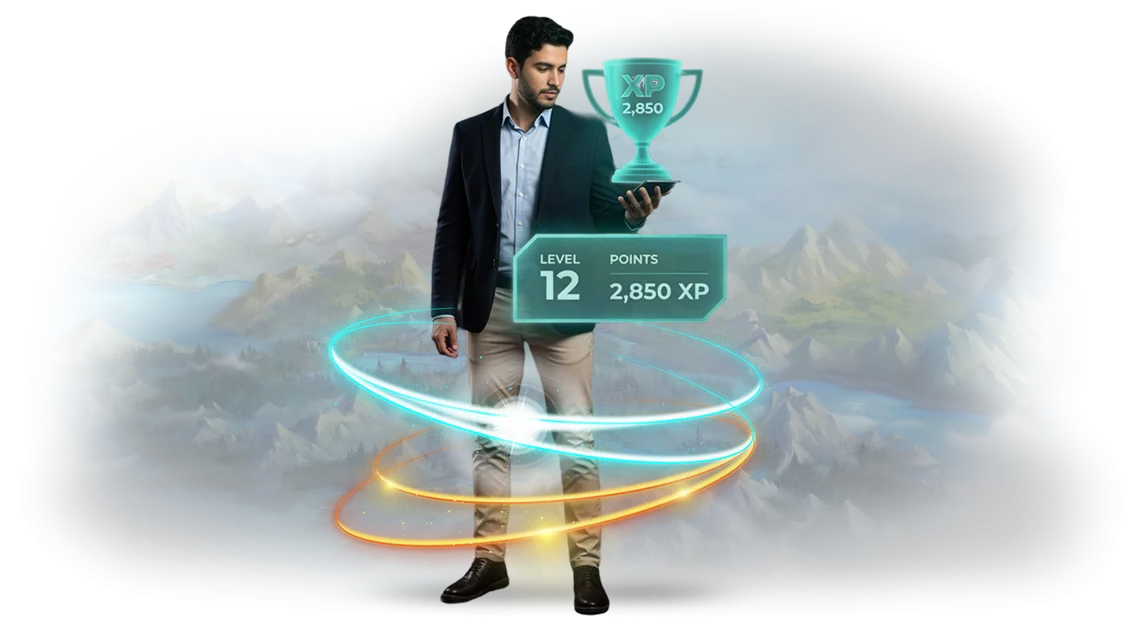
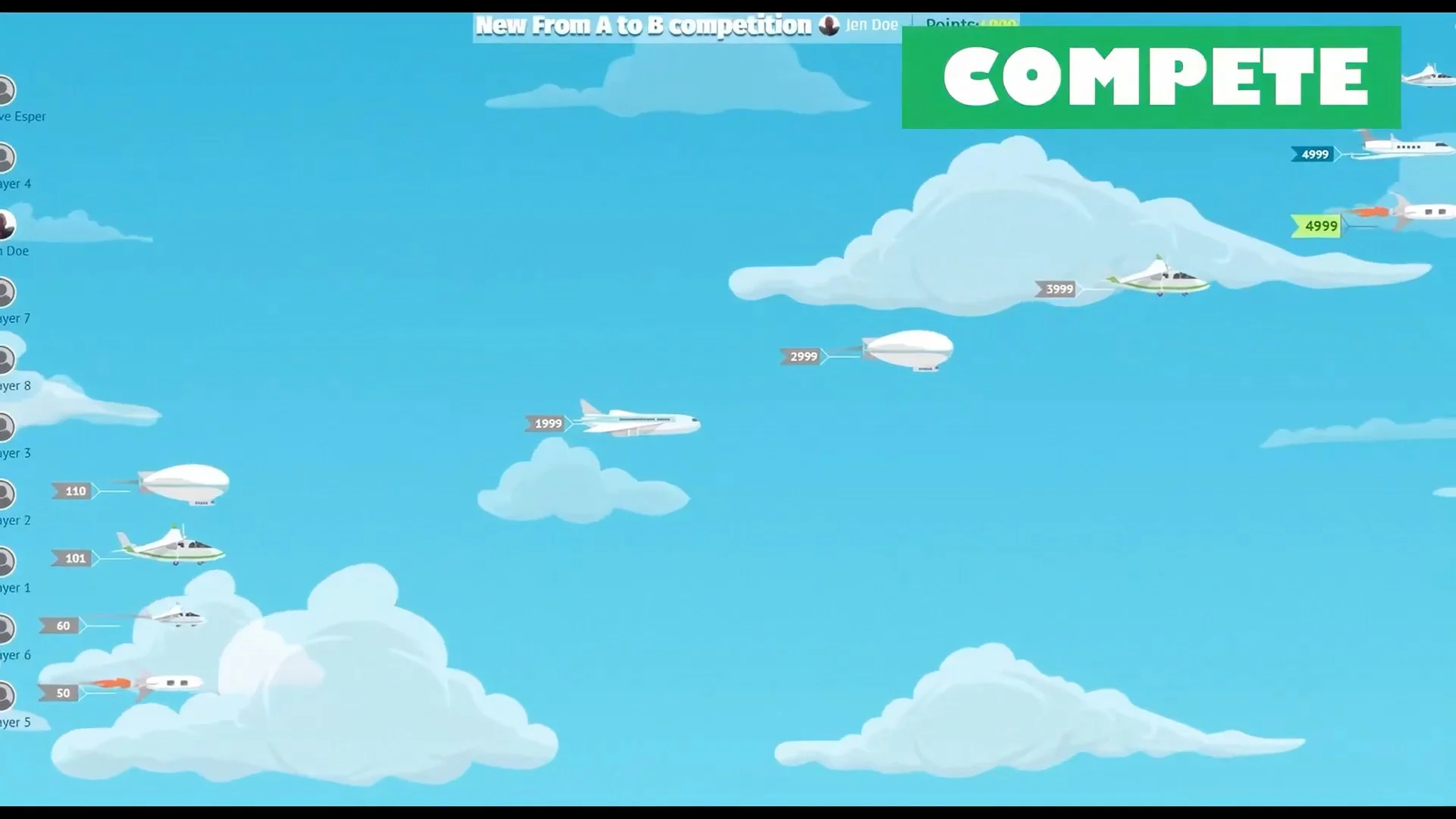
Gamification changes the attitude: instead of boring instructions and orders — clear goals, progress, rewards, and healthy competition.
Employees earn points for regular walks, healthy eating, participation in sleep or sports challenges — this turns self-care into a habit and makes it visible for the whole team. Business gets a measurable result: less burnout, lower turnover, higher productivity and engagement.
That is why we at our team create gamification programs for employee health and well-being.
We help turn care for the team into a system that works for your metrics: retains people, increases motivation, reduces staff replacement costs, and makes your company a place where people want to stay.
What gamification of corporate programs brings
Gamification of corporate health programs moves care for employees from the category of duty to an engaging process. People willingly participate in quests, competitions, and activities because it is clear, exciting, and rewarding. As a result, health programs do not gather dust in regulations but actually work every day.
The first thing business notices is growth in engagement. When an employee has personal progress and a visible goal, they undergo medical checkups, move more, and follow their routine without reminders.
This increases loyalty: a person sees that the company genuinely invests in their well-being, not just formally holds events.
The second measurable result is reduced morbidity. Regular activity and prevention decrease the number of sick leaves and doctor visits — productivity grows, losses from downtime and insurance costs shrink.
For the company, this means a stable work rhythm and predictable indicators even during the cold season.
The third effect is strengthening the HR brand. Modern job seekers choose an employer who genuinely cares about health. An engaged team itself tells others about a great program, which strengthens market reputation and attracts strong candidates without extra hiring costs.
This approach pays off at all levels: from an individual employee who becomes more energetic to the company's financial performance.
We design gamification so that the benefit is obvious to both the team and management: clear goals, honest rules, and measurable results for the business.
Gamification formats for employee health and well-being
Section Body
Each format gives a different result: one engages all employees, another only the active ones. The choice depends on the goal: raise the team's tone, reduce stress, or unite the team around a common idea.
We will select mechanics for your task and budget so that it works from day one — and we will tell you what to expect from each option.
| Format | For whom | What it gives the client |
|---|---|---|
| Health marathon | For large teams and remote employees | Mass engagement, habit of activity in 4–6 weeks, clear participation reporting |
| Step-count competitions | For departments and close-knit teams | Easy start without preparation, excitement and healthy competition between teams |
| Team quests | For team building and cohesion | Common goal, live communication, emotional release after work tasks |
| Corporate challenges | For regular tone support | Long-term interest retention, repeatability, integration into HR processes |
What to choose for your goal
If the main thing is to quickly involve as many employees as possible, choose step-count competitions: they require no preparation and are clear to everyone. If you need a sustainable habit for months — choose a marathon with stages and rewards for regularity. When the team lacks live communication, a quest with team tasks will deliver more than any rating.
We don't just implement mechanics; we design them for your culture: we take into account work rhythm, team distribution, and the motivation of different ages.
The result is growth in engagement, reduced tension, and noticeable dynamics in employees' well-being within the first weeks.
How gamification mechanics are implemented in companies
Each project starts with a simple question: what do you want to change in employee behavior — increase engagement, reduce stress, strengthen team spirit?
Then we build a clear process where at every stage you know what is happening, who is responsible for what, and when the result will appear.
-
Brief and immersion into the task. We hold a meeting with you, review the current health care program, team motivation, and internal communications. We record goals: growth in participation in activities, reduction of burnout, or habit formation.
-
Audit and work plan. We analyze which mechanics suit your company specifically and prepare an implementation plan: deadlines, stages, areas of responsibility. You get a transparent document showing what happens and when.
-
Project agreement. We discuss the plan with you and adjust it to the team's specificities if necessary. We agree on key launch points and success criteria — so you understand how we evaluate the result.
-
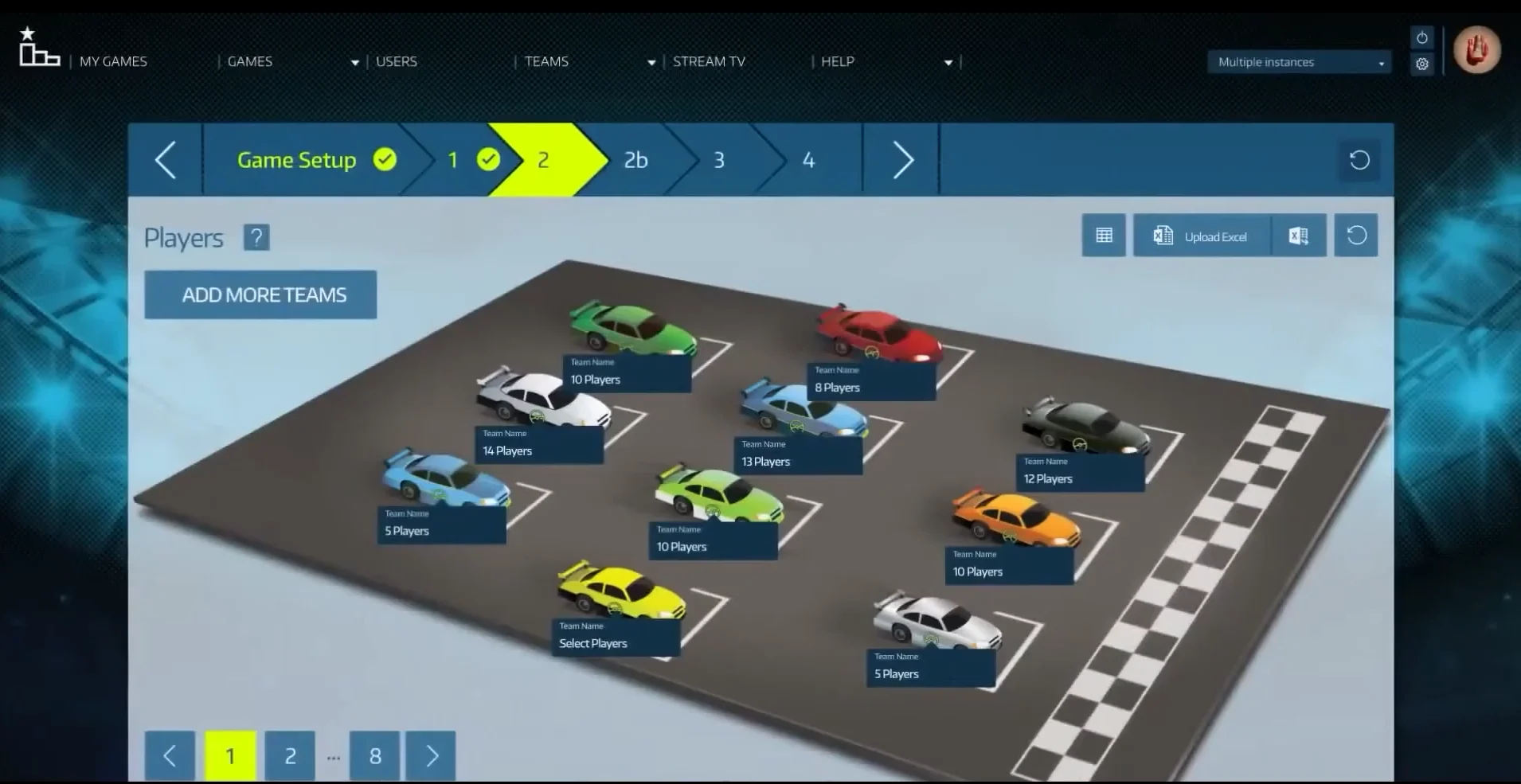
Development and preparation of the program. We configure game mechanics for your tasks: participation formats, points, rewards, competitions between departments. We prepare materials for employees and instructions for program administrators.
-
Program launch. We launch the process in pilot mode or immediately for the whole company — depending on the scale. At this stage, we stay in touch, quickly resolve issues, and ensure the first weeks go smoothly.
-
Post-launch support. We analyze activity, collect feedback, and adjust mechanics if needed. You receive a report with numbers: who participated, what habits are forming, and how engagement is changing.
This order helps implement gamification without failures or extra load on your team. You always know which stage the project is at, and post-launch support guarantees the program works and brings benefit to employees.
What is included in a game solution development project
An employee health gamification project is not just “an app with points.” It is a complex that combines game mechanics, a technical platform, and regular analytics — so the program works every day, not only at the start.
So that you understand what you pay for and what you get, here is the structure of a typical project.
- Game design tailored to your task. We create a plot, roles, rewards, and a motivation system that is understandable to employees. The scenario accounts for company specifics: from work format to corporate culture.
- Technical implementation on a professional platform. The project runs on our team's proven stack — you get stable operation without “surprises” under load. The solution is available on mobile devices and computers, so everyone can participate.
- Integration into current processes. We integrate the program into the company's existing tools. An employee doesn't need to learn a new system — they simply use familiar channels.
- Training for administrators and HR team. We teach your specialists to manage the program: set up contests, change rules, respond to activity. You are not dependent on us for day-to-day operations.
- Analytical engagement reports. We show who participates, which mechanics work, and which do not. Based on this data, we adjust the program to grow real engagement, not just registrations.
- Technical support throughout the project's life span. We answer employee questions, fix failures, and update the program. Support is included in the project and operates according to a clear procedure.
The result — you get a turnkey solution: from idea to a working system with clear outcomes. Inside the team, you get a tool that supports employee health, and you get transparent data for evaluating effectiveness.
Case: growth of engagement in a team care program
One of our clients — a manufacturing holding with several sites — faced a typical problem: the employee health care program worked formally.
People underwent medical checkups “for show,” corporate challenges gathered 5–7% of participants, and HR spent weeks on manual spreadsheets and mailings. Managers understood that resources were being invested, but there was no visible effect for the business.
We proposed turning the program into a game with clear rules. Employees joined teams, performed simple actions — check-ups, steps, participation in activities — and earned points.
Intermediate results and ratings were visible in a personal account, and leaders received prizes from the company. Participation became voluntary, but the competitive element did its job.
Implementation results
- Engagement grew from 6% to 64% — almost two thirds of the team accepted the program.
- The number of sick days decreased by 18% per year — fewer downtimes, a more stable schedule.
- HR stopped collecting data manually — saving about 40 hours per month per specialist.
- Turnover among participants decreased by a third — employees began to value the company more.
Client testimonial
“We expected more activity, but didn't think it would affect business metrics this much. The program stopped being an ‘obligation’, teams engage themselves, and the health and loyalty numbers confirm — the investment paid off in the first year,” notes the holding's HR director.
The main takeaway — gamification doesn't just entertain; it solves specific business problems: reduces costs associated with sick leave and recruitment, and strengthens the employer's reputation.
These are exactly the metrics we build into every project so the client sees a measurable result, not just a “fun corporate event.”
How to choose a gamification format for your company's tasks?
Choosing a gamification format starts not with technology selection, but with the company's goals.
It is important to understand what you want to change: increase employee engagement in health programs, reduce emotional burnout, motivate regular preventive checkups, or create an environment where self-care becomes a habit.
Each of these tasks has its own suitable scenario, and there is no equally effective universal scheme.
Key selection criteria — team size, corporate culture, and project budget. For a small team, light challenges based on a corporate messenger are enough: step-counting marathons, emotional state maps, weekly mini-practices.
For a large company with several branches, multi-level programs with a personal account, ratings, team scoring, and HR portal integration are better suited. But the main thing is not the number of options, but how clear and close to people the mechanics are.
Budget determines scale but doesn't guarantee results. Small budgets allow launching a pilot in 3–4 weeks and quickly testing a hypothesis.
If the goal is systematic long-term work on health and well-being, it is wiser to invest in a platform solution with gamification in all areas.
At the same time, we always build the program so that it pays off through reduced turnover, fewer sick leaves, and increased productivity — these are measurable indicators visible after the first months of operation.
To avoid guessing, we start with an audit of the task. At the meeting, we analyze current processes, points of demotivation, communication channels, and employee expectations. Based on this, we offer 2–3 formats with a cost range, timelines, and an effect forecast.
You make a decision not on abstract descriptions, but on the results of an analysis tailored to your situation.
The main principle — the format should solve a business problem, not just be a trendy feature. Therefore, we do not sell ready-made templates; we build mechanics around your goals and culture. If you are not sure which option suits your team, start with a short audit. It will save budget and give you an accurate roadmap.
Answering common doubts before you start
Before launching gamification for employee health and well-being, managers have the same doubts: “what if they don't get involved,” “how to integrate it into HR processes,” “will it be too expensive.” We hear them on every project and answer honestly — based on experience, not promises.
Usually fears subside after the first stage, when the team sees simple mechanics and HR sees a transparent tool. Below are the three most common objections and how we address them.
“Employees won't participate”
The issue is not a lack of interest, but motivation. We tie mechanics to real actions: health checklists, activity, participation in events. First we launch a pilot with 10–15% of the team, show results, then scale. In the pilot, 70–80% of employees participate already in the second week.
“Difficult to integrate into HR processes”
We design gamification as part of your system: it connects to rewards, insurance, and internal communications. HR doesn't have to restructure processes — just a couple of hours a month. Our manager accompanies the launch until the team gets comfortable.
“Is it expensive to maintain?”
Maintenance is not a developer's salary, but a budget for new scenarios and rewards. We create solutions that update without reprogramming: challenges, prizes, and conditions change.
Clients order a new scenario once a quarter, and it pays off through reduced turnover and sick leave.
So before you start, a short audit is enough — we take care of the rest. Leave a request, and we will send a plan for your task.Ready to turn care for your team into a working tool?
For care for your team to become a real tool, not just a line in the budget, it needs a system: goals, mechanics, and an understanding of what exactly you want to change in employee behavior.
We suggest starting with a free audit — we'll look at what well-being processes you already have, where engagement is lost, and which gamification format will bring a measurable result.
Leave a project request — and within a couple of days you will receive:
- Free audit of your current health and well-being support programs: what works, what employees don't notice, and where there are growth points.
- Demo version of a gamified system: what it will look like for your people, which activities and rewards will engage them.
- Cost calculated after audit for your scale: number of employees, activity frequency, necessary integrations — a transparent estimate without hidden extras.
- Consultation with our corporate well-being expert: we'll show how such mechanics strengthen the HR brand, reduce turnover, and increase productivity.
- Implementation recommendations — what steps to take first so the result is felt in the coming months.
No obligations — only value. You'll get a concrete picture: what will change in team behavior, which metrics we will track, and how long the launch will take. Then you decide whether to go with us into implementation or use the ideas in your own work.
We work remotely worldwide, have been designing gamification for business for more than ten years, and are accountable for the result at every stage. If you want to turn employee health care into a tool that is visible in numbers, fill out the form on this page.
In response, you will receive an audit, a demo, and a cost calculation, and we will arrange the next step.