

Developing Soft Skills: Why Employees Aren't Unlocking Your Company's Potential
Many companies invest in professional training, but it's soft skills that determine how an employee communicates with clients, negotiates, and works in a team. Underestimating soft skills is costly: conflicts, lost deals, delayed decisions. And yet people do have the potential — there just isn't an environment created where it can unfold.
Classic seminars often involve passive listening and little practice: within a week, only a small portion of the information remains. The employee falls back into old habits because there was no opportunity to practice new behavior patterns in real situations.
This is where gamification of business processes changes the approach: learning becomes regular practice with quick scenarios, clear challenges, and visible progress.
Game mechanics directly boost employee engagement — they go through scenarios themselves, see their growth, and compare results with colleagues.
This way, soft skills develop in a safe environment, without fear of mistakes, and immediately transfer to work tasks: negotiations, presentations, handling objections. The skill is reinforced through repetition, not through note-taking.
In the end, the business gets a team that reaches agreements faster, understands clients more accurately, and acts more confidently in non-standard situations. Service quality improves, internal processes speed up, and staff turnover drops.
We help identify employees' strengths and gently develop them through game formats embedded directly into the work rhythm.
What Gamification of Business Processes Gives the Company and Its Employees
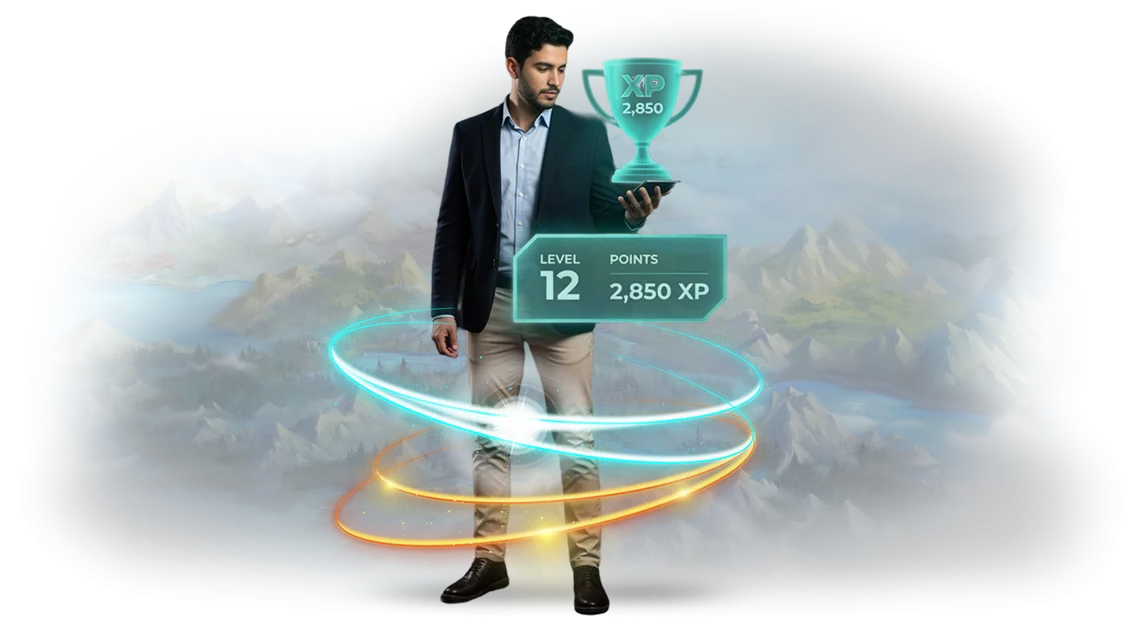
Employees treat routine reports and complex projects the same way — if they don't see personal benefit. Gamification turns work tasks into a clear system with rewards, levels, and visible progress.
As a result, the team starts acting more proactively not because they're forced to, but because the process of achieving results becomes interesting in itself.
The main benefit for business — productivity growth without increasing headcount. When every employee step is backed by feedback and recognition, plans get executed faster and decision quality improves. People stop putting things off and see how their efforts affect the company's overall results.
The second major win — staff loyalty. An employee who receives recognition and opportunities to grow in a game system is less likely to think about changing jobs. They feel valued and developed, which builds a long-term connection with the company. This reduces staff turnover and the costs of constantly hunting for new specialists.
Additionally, gamification directly strengthens corporate culture. Shared goals, fair competition, and joint challenges unite departments that previously worked in silos. Instead of competing for resources, a team spirit emerges, and healthy rivalry grows into collaboration.
This creates an environment inside the company where initiative is welcomed, and each person's success becomes everyone's win.
For the client, this means measurable results: higher engagement in processes, faster adoption of new standards, and more ideas that generate profit.
Gamification of soft skills is not entertainment — it's a working tool that pays for itself through the energy the team starts investing in business growth.
Which Gamification Formats Suit Your Team
Gamification formats should be chosen not on the "trendy" principle, but based on a specific business goal. If the team needs to improve communication — role-play scenarios work well; for decision-making under stress — simulations; for team bonding — team quests.
Game mechanics allow you to model work situations without risking real projects: participants try new behavior patterns and see results immediately.
A properly chosen format turns learning into a desired event rather than a chore. Lectures are forgotten within a week, while vivid game experiences stay with employees for a long time, creating an emotional attachment to the skill.
We select the format based on a diagnostic of the team's goals and the business industry, so the result is measured not by hours spent, but by the growth in employee effectiveness.
| Format | For Whom | What It Gives the Client |
|---|---|---|
| Team quest | Sales departments, project groups | Live interaction, quick onboarding of new hires, breaking down communication barriers |
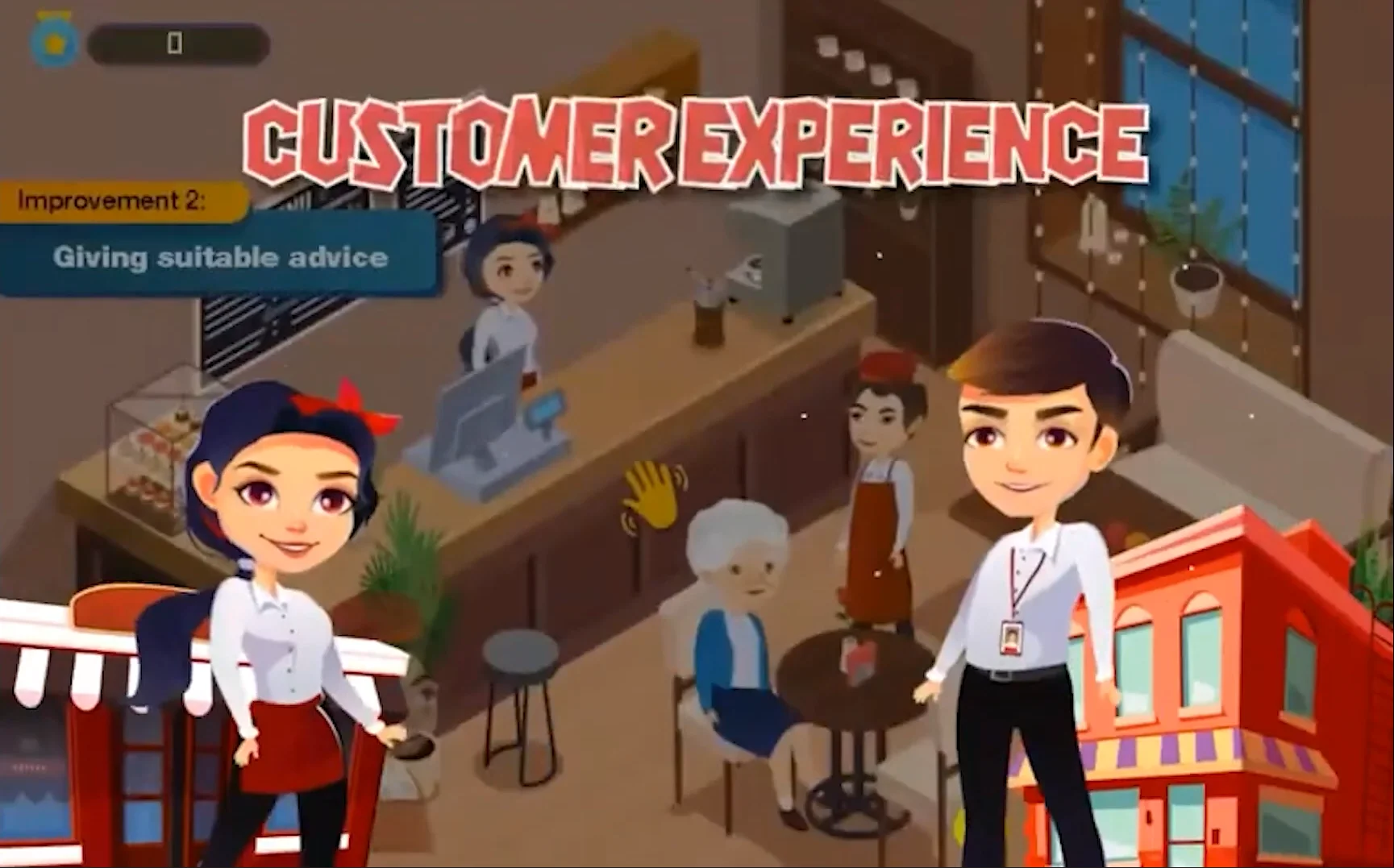
| Role-play simulation | Managers, HR, customer service | Practicing negotiation skills and empathy in a safe environment without stress to the business |
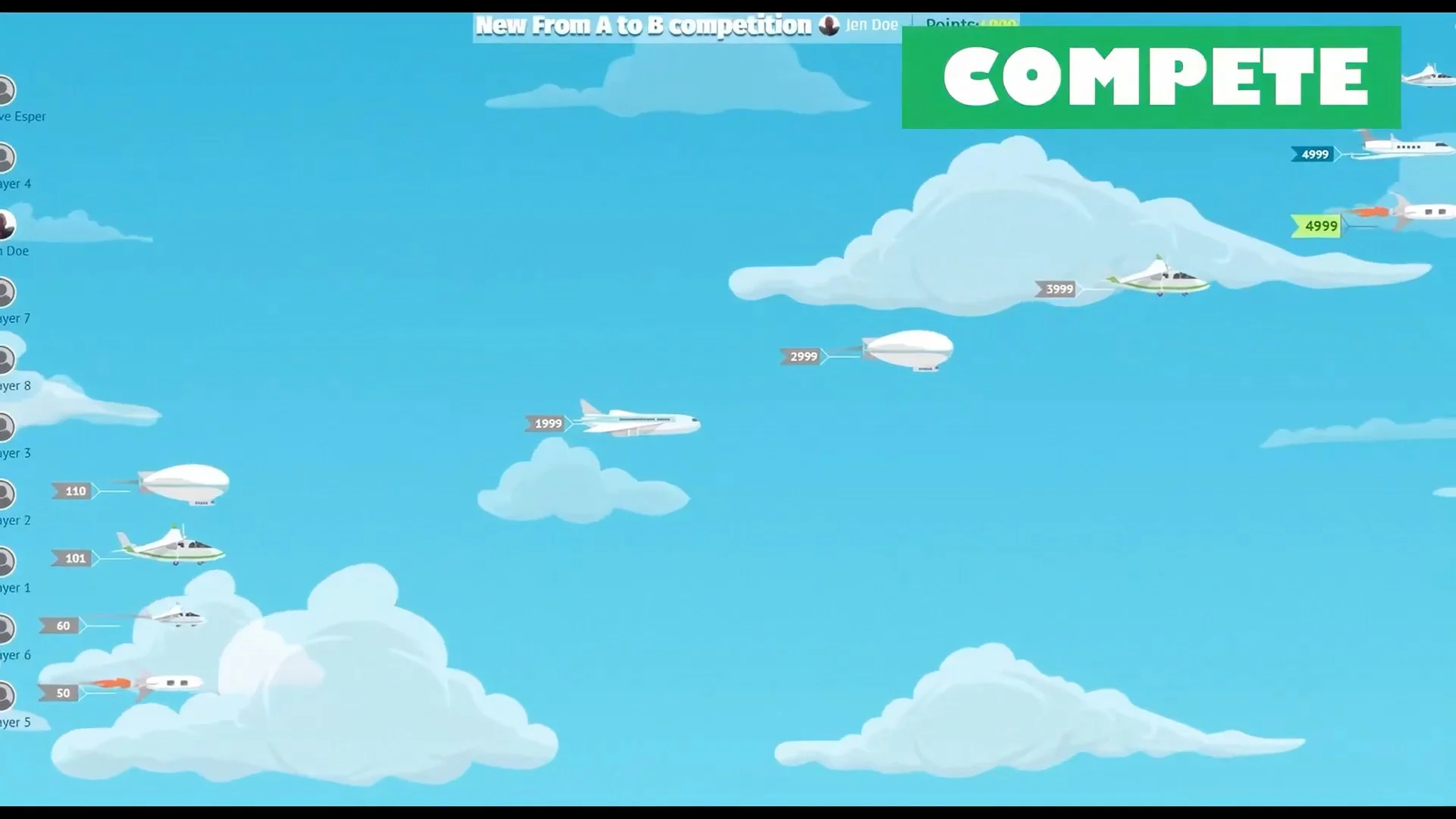
| Competitive mechanics | Marketing, product team | Higher engagement, fresh idea generation under tight deadlines, excitement and team spirit |
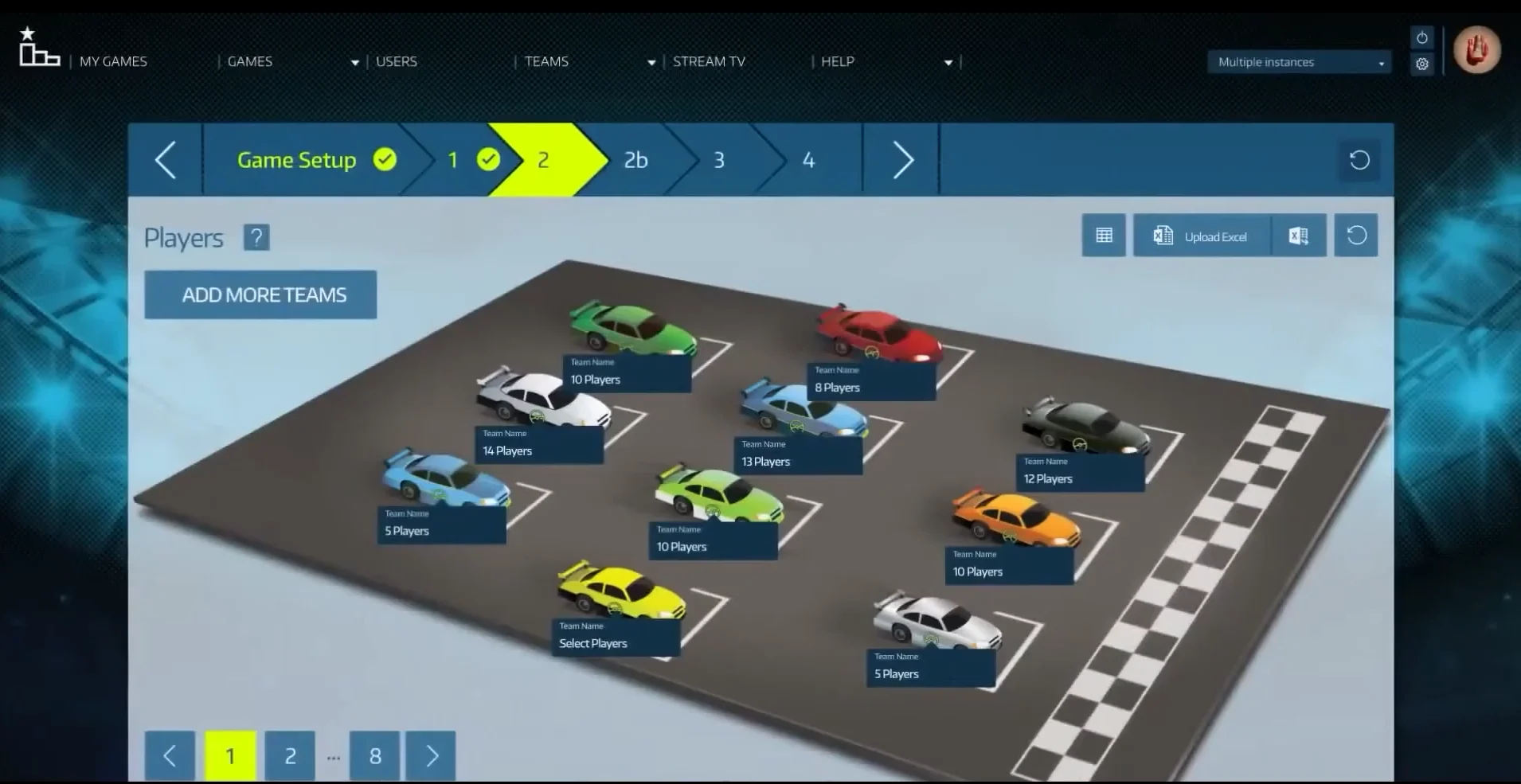
| Business board game | Mixed teams, different departments | Identifying leaders, clarifying roles, preventing conflicts and hidden tensions |
| Individual track with levels | Remote employees, mass online learning | Transparent progress system, greater autonomy and motivation to grow |
How Gamification Implementation Works: Stages and Control
Implementing soft skills gamification is a project with clear stages and oversight. We follow a transparent process: you always know where the project stands, what the timelines are, and what we're responsible for. This delivers a predictable result.
Work Stages
- Brief and audit. We look at which soft skills the business actually needs and conduct interviews with managers. We document goals, timelines, and success criteria — so the result can be assessed afterward.
- Scenario design. We think through game mechanics, storyline, and rewards, and integrate them into work processes. Progress metrics are approved before development begins.
- Prototype and approval. We show you a working sample — you can see how employees will go through the scenarios. You make edits before launch, not after.
- Development and integration. We build the full solution, connect it to your internal systems, and configure roles and access for administrators and participants.
- Quality assurance. We verify scenario logic and stability when many employees are working simultaneously. We record "before" metrics so the effect can be evaluated afterward.
- Launch and support. We train employees, publish the solution, and stay in touch: we help with settings, answer questions, and adjust the mechanics based on the results.
Quality Control
The typical implementation timeline is three weeks to two months, depending on the scale. Quality control is built into every stage: you get intermediate results, not a "black box" at the end. If something goes wrong, it's visible right away and easy to fix.
What's Included in the Gamification Project Deliverables
In a soft skills gamification project, the client receives not a "game for the sake of a game" but a working tool embedded into the team's current processes.
We hand over a complete package — from ready-made game mechanics to post-launch support — so that employees can use it immediately and without additional investment.
Here's what's included in the deliverables:
- Ready-made mechanics for soft skills development goals: scenarios, levels, tasks, and a rewards system that employees understand without lengthy training.
- A configured platform where the team sees progress, ratings, and achievements in real time, and the manager sees the overall engagement picture.
- Methodological materials for HR and managers: launch instructions, skill assessment criteria, and feedback templates for employee reviews.
- A manager dashboard with activity metrics, progress dynamics, and team growth areas — for decision-making, not reporting for its own sake.
- Regulations and documentation: participation rules, roles, and the process for updating tasks for the next period.
- Team training: briefings for HR, managers, and participants so the project works from day one.
- Post-launch support: technical assistance, mechanics adjustments based on feedback, and a final results report.
As a result, the client gets visible project outcomes: higher employee engagement, measurable progress on specific skills, and assets that stay with the company. They can be updated and scaled to new departments or tasks.
Case Study: How Gamification Accelerated Soft Skills Development in a Sales Department
Soft skills development in a sales department often turns into a series of boring trainings. A week after the course, the knowledge fades away, and managers slip back into old habits. The manager invests budget in team development but sees no measurable effect.
In the end, both sales metrics and employee motivation suffer — negotiation and objection-handling skills stay at the same level.
A Gamification Case: A Story from Practice
One of our projects was a distribution company with a 40-person sales department. The goal was specific: accelerate soft skills development among frontline managers — specifically negotiation, argumentation, and confident handling of objections.
We built gamified scenarios of real dialogues where each employee faced situations as close to real work as possible and received instant feedback.
Over eight weeks, the team completed more than 1,200 game sessions. Each practice session took only 15 minutes, so the exercises were easy to fit into the workday.
The key point — employees came back to the game on their own: the competitive element and visible leaderboard proved stronger than forced training sessions.
Implementation Results and Client Feedback
The effect showed up in business metrics: sales conversion grew by 23%, and the average order value went up by 17%. New hires reached target performance two weeks faster than usual.
The head of sales at "TechnoLogistik" assessed the outcomes this way: "The gamification case paid for itself — we saw rapid skill growth in newcomers and better results among experienced managers.
The team saw it as a game rather than another training session and got involved without any reminders."
After the pilot, the client ordered scaling of the mechanics to adjacent departments — in our view, that's the best indicator of satisfaction. This kind of gamification requires no expensive equipment and easily fits into current business processes.
The client gets transparent analytics on each employee's progress and sees which skills need improvement. The key difference from classic courses — measurable results in business metrics, not just a training satisfaction score.
How to Choose a Gamification Format for Your Company's Goals?
The right gamification format isn't determined by trends; it's determined by a specific goal: engaging employees in ongoing learning is one thing; building negotiation skills or accelerating newcomer onboarding is another.
If the goal is soft skills, what matters isn't competition but practice and feedback. So we start by breaking down your situation: who the audience is, which skill we're developing, and what outcome we'd consider a success.
After that, we propose a suitable scenario — from short case-based scenarios for practicing reactions to longer storylines with roles and branching.
For example, sales departments benefit most from dialogue simulations with error analysis, while managers gain from business games with time-constrained decision-making.
The important thing is that the format gives employees a safe environment for trial and error — that's how lasting habits are formed.
We don't tie ourselves to a single template, and we don't offer "games for the sake of games." Together with you, we define the optimal format based on budget, timelines, and the team's skill level.
The result — gamification that employees engage with enthusiastically, while the business sees measurable growth in the right competencies.
If you're not sure which option fits you best — let's start with a short free analysis of your goals. We'll send format and scope recommendations, and only then you make the decision.
Frequently Asked Questions About Gamification of Business Processes
Doubts before starting are a normal part of any project. Here we answer the questions clients most often ask: what the contract guarantees, when the first results appear, and how support works after launch.
Below are not vague promises but the work process you get along with the project.
What if employees don't get engaged in the game?
We study the corporate culture in advance and adapt the mechanics to your team. Before launch, we run a pilot with one group to make sure participants understand the rules and see the personal benefit — recognition, status, career growth. This minimizes the risk of indifference.
How will gamification fit into existing processes?
You won't have to change procedures or introduce complex tools. We configure game mechanics around your current tasks and employee roles — they simply start doing familiar actions in a new format, with no stress or downtime.
When will the first results appear?
The first changes are noticeable within two to four weeks, after the first game cycle. We collect solid skill development metrics within two to three months. You receive intermediate checkpoints at every stage, not just at the end of the project.
Who supports the system after launch?
We stay with you after implementation. Support is included in the contract: administrator consultations, scenario updates, and adding new tasks. You always know who to contact and are never left one-on-one with the system.
What guarantees do we get under the contract?
We formalize timelines, the scope of work, and measurable performance indicators. The project is broken into checkpoints — you approve each stage separately. If the agreed-upon metrics are not met, we make corrections at our expense.
Order Gamification Development for Your Team
Soft skills gamification turns routine training into an engaging format that employees go through with interest rather than under pressure.
It helps cement skills through practice and makes progress visible, while managers get data on participation and results without extra reporting.
At the same time, gamification is not just "rewards and points." It's a well-thought-out mechanic that weaves into your business processes — from newcomer onboarding to developing your manager team.
We design every element around a specific task and budget, so the solution pays for itself through employee engagement and performance growth.
Submit a request — and we'll prepare a proposal tailored to your needs, with timelines and cost.
- Saving time and resources: we handle the development and launch.
- Guaranteed results: we formalize timelines and key metrics in the contract.
- Transparent pricing: we calculate the cost before the work starts and don't change it along the way.
- Adapted to your team: the mechanics account for employee skill levels and your internal culture.
- Support after launch: we help with administration and adjust the scenario as things evolve.
Order gamification to develop your team's soft skills systematically. We'll calculate the cost and propose a scenario for your task — just submit a request. We'll get back to you within one business day with clarifying questions for the brief and a plan of action.