

Gamification for Developing Internal Communications: Why Does It Work?
When employees stop reading corporate emails, skip meetings, and treat shared goals formally, it is a sign that internal communications have stopped working.
The problem is not in the texts or channels, but in the lack of personal interest: it is hard for a person to engage in a process that does not provide quick feedback or show their contribution to the overall result.
Gamification of business processes turns the routine of communication into a game with clear rules, progress, and rewards.
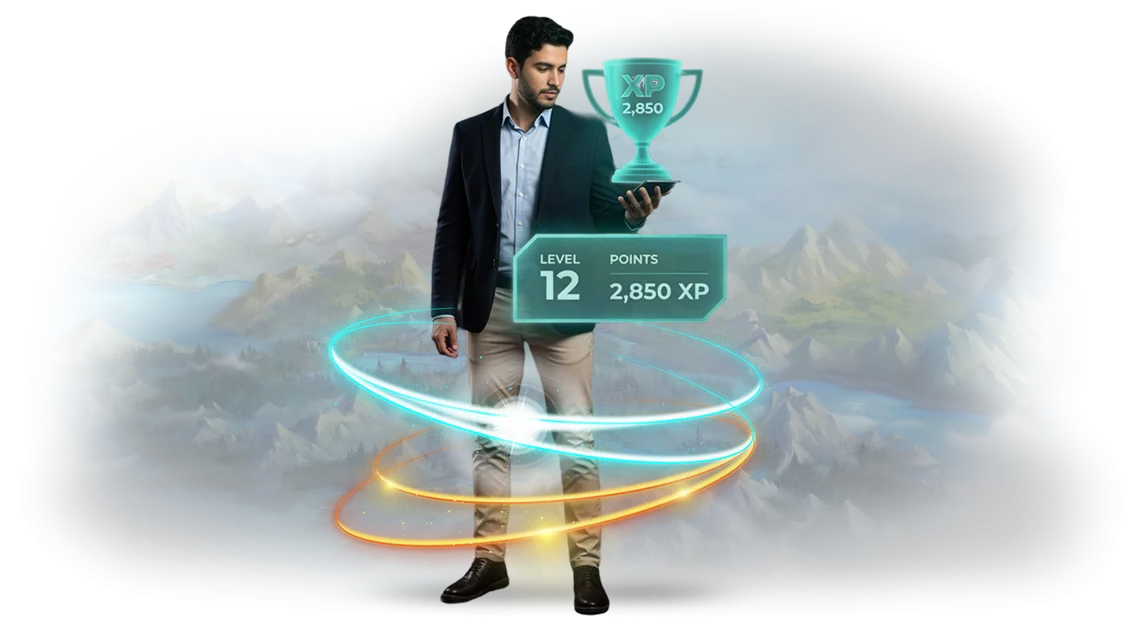
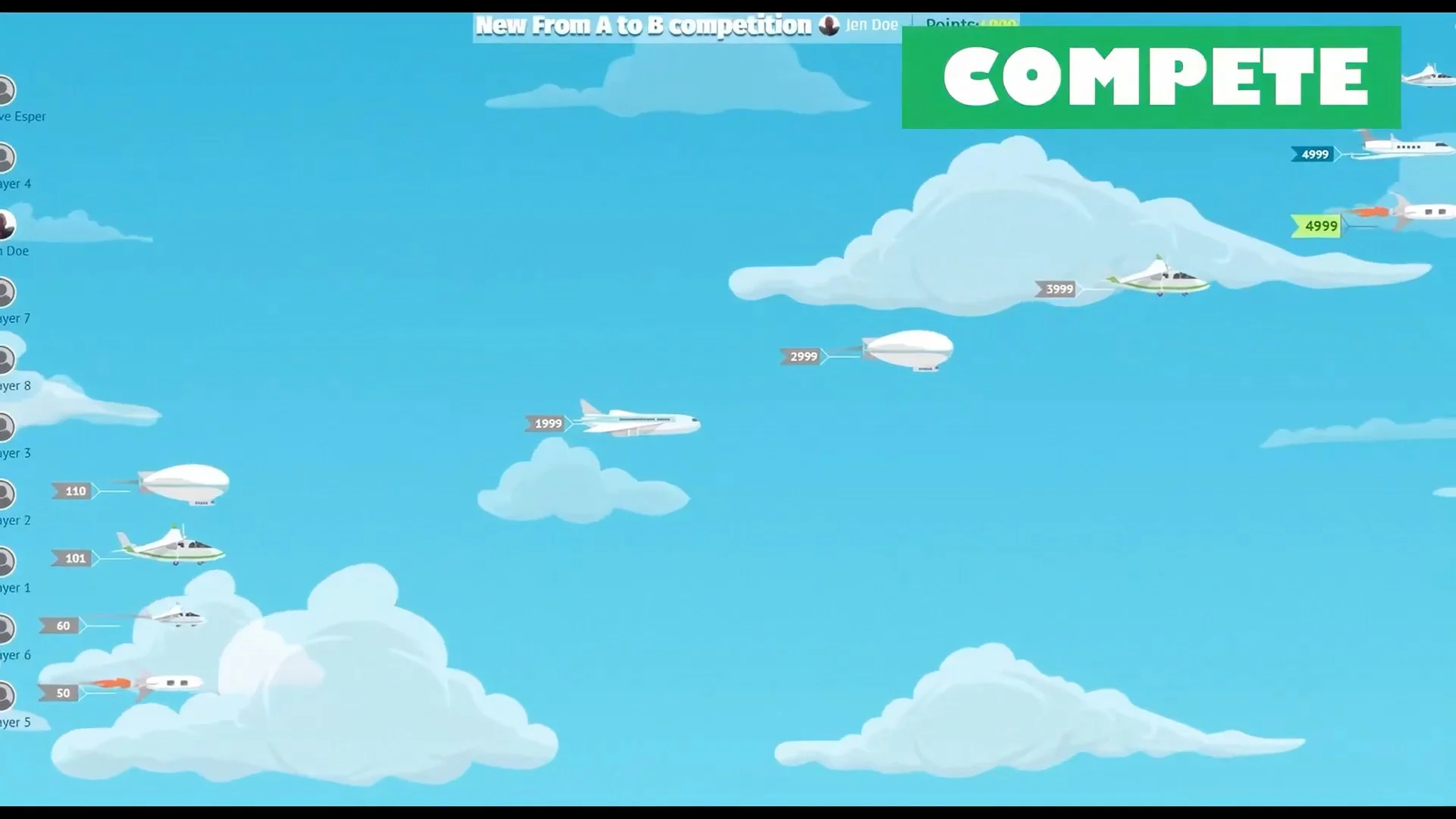
An employee sees their level, compares results with colleagues, earns points for participation, and unlocks achievements—this creates an internal incentive to engage in company life.
This is not entertainment for its own sake, but a tool that shifts attention from "must" to "want."
Developing internal communications through gamification delivers measurable business impact: employee engagement grows, information spreads faster, and new hires adapt to the team more quickly.
Short game mechanics—quizzes, quests, ratings—hold attention better than long newsletters because they engage emotions and healthy competition. As a result, knowledge stops getting lost, and decisions are made faster.
We help companies build such a system tailored to their needs: we design the rules, integrate rewards, and set up real-time feedback. You get a tool that continuously increases employee engagement, not just on days of all-hands meetings.
Gamification does not replace live communication, but makes it regular, visible, and productive—exactly what most internal communications are missing.
What Benefits Does Gamification Bring to Internal Communications?
The benefits of gamifying internal communications are visible within the first weeks after launch. Employees stop perceiving corporate news and regulations as mandatory mailouts—they engage through game mechanics, tasks, and rewards. Engagement grows because everyone sees their personal progress and the results of their actions.
First of all, game formats accelerate information exchange between departments. Instead of long emails and meetings—short challenges, quizzes, and collaborative scenarios that make the team discuss tasks, share experience, and find solutions faster. This directly affects team efficiency: less time on approvals, more time on actual work.
The second major benefit is reduced resistance to change. When new processes or company values are presented through a game, they are absorbed more easily.
Employees remember key rules without rote learning, and management gets a transparent picture of who is already engaged and who needs additional support.
Finally, regular game activities strengthen loyalty and retain valuable specialists. Positive emotions, recognition of achievements, and healthy competition create an environment people want to stay in.
This reduces employee turnover and strengthens the employer brand—it pays off even faster than the direct costs of the program.
Thus, gamification of internal communications turns routine into drive and a workforce into a team focused on a shared result.
Which Gamification Formats Suit Your Team?
When a team faces the task of developing internal communications, one-size-fits-all solutions don't exist. Some need to introduce employees to each other, some need to train newcomers, and some need to improve information exchange between departments.
The game format must match the goal; otherwise, even the most brilliant mechanic will not deliver a business result.
We compared four popular formats we use most often in internal communications gamification projects.
| Format | For whom | What it gives the client |
|---|---|---|
| Quizzes and trivia | Large distributed teams | Engages employees without taking them away from work, helps consolidate knowledge |
| Quest through internal processes | New employees during onboarding | Quick introduction to regulations and colleagues in a game form |
| Team marathons | Departments that need to improve interaction | Develops horizontal connections and a sense of shared purpose |
| Ratings and rewards | Units with clear measurable indicators | Boosts activity and healthy competition |
It is important to emphasize: we choose not the trendiest mechanic, but the most suitable one. For regular employee training, we use quizzes with repetition of difficult topics. For onboarding—a quest that introduces internal services and key people. For maintaining momentum—short competitions with rewards.
The effect is visible from the start: employees engage in the process on their own, spend less time distracted by unrelated chats, and exchange useful information more often. And managers get a clear tool that works for communication and learning at the same time.
If you don't know where to start, begin with the format that solves your most pressing problem. We'll help you choose and adapt the game to your team—not the other way around.
How a Gamification Project Goes: 5 Steps
A transparent process is half the success. We structured the gamification project so that at every stage you understand what's happening, what decisions are being made, and when the result will appear. Below is a five-step route from the client's perspective.
-
Brief and immersion. We fix the goals: which employee behaviors need to be strengthened—knowledge sharing, feedback, team interaction. You tell us about the company and the pain points, we ask clarifying questions and define success metrics.
-
Audit and concept. We study the current internal communication channels and team habits. We propose mechanics that fit your culture and show how they will affect activity. At this stage we agree on timelines and responsible parties.
-
Scenario design. We develop tasks, levels, rewards, and events. We make sure employees have a clear motivation—competition, personal progress, or team achievement. All elements are linked to real business processes.
-
Implementation and pilot. We build the solution on a professional platform, fill it with content, and test it with a small focus group. This allows us to smooth out rough edges before the full launch and adjust details based on feedback.
-
Launch and support. We present the mechanics to employees, launch, and support them in the first weeks. We analyze participation, collect feedback, and prepare a report with recommendations—what to keep, what to strengthen, what to adjust.
The entire gamification project takes from four to eight weeks—depending on the scale and complexity of the mechanics. As a result, you get not a one-off campaign but a working tool for developing internal communications that employees use on their own and enjoy.
What Is Included in the Result: Implementation Package
Gamification of internal communications delivers results only when it is not a "toy for the sake of a game" but a well-thought-out system that changes employees' daily behavior.
That's why we provide you not with a technical platform but a ready-to-use package that can be implemented within a couple of weeks, with the first changes in engagement visible immediately.
What is included in the implementation package:
- Strategy and mechanics design — tailored to your goals and corporate values, with a clear motivation framework and understandable rules for participants.
- Ready-made platform with corporate branding — all elements are styled to match your brand, so employees enter a familiar environment rather than a "foreign service".
- Integration with work tools — messengers, portal, or internal network, so participation requires no context switching.
- Methodological materials for HR and managers — launch scenarios, engagement tips, and ready-made messages for teams.
- Administrator training — your specialist will quickly learn to manage settings and launch new activities on their own.
- Analytical dashboard — see participation dynamics, departmental activity, and the impact on internal communications in real time.
- Support and system evolution — after launch we stay with you: we support the first weeks, collect feedback, and refine the mechanics in response to new challenges.
This package covers the full cycle: from setting the task to regular analytics. You get not abstract gamification but a manageable tool for increasing engagement that is easy to scale to new teams and processes.
With this approach, gamification results are visible within the first month—in activity metrics and employee feedback.
Case Study: How We Strengthened a Team by 35% — Client Review
A logistics operator Biznes-Impuls approached us: 120 employees, three departments, but internal communications were out of sync with real tasks.
New people could not find the information they needed for weeks, ideas got stuck in departments, and meetings turned into monologues by managers.
We implemented gamification for developing internal communications: shared missions, points for experience sharing, and departmental ratings.
Employees did not notice how they started helping each other—the mechanics were embedded in everyday work tasks, not a separate "game" for the sake of ticking a box.
After two months, we measured the result: team efficiency grew by 35%, new hire onboarding accelerated by a third, the number of joint initiatives tripled, and the internal chat turned from a bulletin board into a working tool. This is not impressions but a comparison of metrics before and after.
"We expected it to be just interesting, but we got a working tool. The team itself suggests improvements, and you can see it in the numbers. In six months, we are launching the program in a second division," says the client's HR director.
Such gamification is not entertainment but a way to improve communications and achieve a measurable business effect. We are ready to repeat this result for you: we will start with a process diagnostic, choose the right mechanics for your team, and show the dynamics in numbers.
How to Choose a Gamification Format for Your Task?
There is no universal gamification format, and that's fine. Choosing a format always starts with the question: what exact task are you solving?
Developing internal communications can mean introducing new employees to colleagues, sharing knowledge between departments, increasing engagement in corporate events, or reducing the distance between management and the team. Each task requires its own game mechanic.
To understand how to choose gamification, just answer three questions. First—who is your audience: age, habits, level of digital literacy. Second—what result do you need: fast onboarding, regular participation in company life, or the formation of cross-functional connections.
Third—how will you measure the effect: surveys, chat activity, task completion speed. The answers immediately narrow down the range of suitable solutions.
If the goal is to introduce employees from different offices, team quests and online quizzes with unexpected questions about colleagues work well.
If you need to establish experience sharing, "expert hunt" and game marathons are effective, where each participant shares knowledge and earns points. When maintaining ongoing interest matters, ratings and reward systems help.
This is not entertainment for its own sake but a tool that gently embeds the desired behavior into the work rhythm.
We help you choose a format with no obligations and no unnecessary theory. First, we conduct a short interview with you and future participants, then analyze the communication flow, and based on that, propose two or three scenarios with an engagement forecast. You see how each format serves your goal and choose the one that suits your team best.
Properly chosen gamification is the one you don't notice as a "game for the sake of a game" but perceive as a natural part of work processes. It itself guides employees on how to communicate, help each other, and enjoy working together.
If you want us to help you choose a format for your internal communication, start with a short message—we'll guide you from there.
Frequently Asked Questions About Gamification Implementation
Before launching gamification, clients always have questions: will it distract the team, how quickly will the effect appear, what to do if employees don't engage. That's normal—a new format needs to be understood. Below are answers to the most common concerns we hear at the start.
What if employees don't want to participate?
Gamification is built on natural motivation: excitement, recognition, competition. We design mechanics for your team—with clear rules and rewards that people value. Engagement grows gradually, and the pilot already shows which mechanics work best.
Won't this turn into a game for the sake of a game and distract from work?
We tie game mechanics to specific business metrics: task completion, knowledge sharing, request processing speed. An employee sees that their actions are moving toward a real goal—and becomes more engaged.
How long does implementation take and when will we see results?
It depends on the scale: simple mechanics can be launched in a few weeks, complex systems in a couple of months. The first changes in activity are usually visible within the first month of operation. After that, we adjust the mechanics based on data.
How will we know it pays off?
We set metrics at the start: participation growth, plan completion, reduced turnover. After launch, you see a report with the dynamics of indicators—and understand that gamification is driving business results.
If you don't see your question here, ask us directly. We will provide a free consultation and show what gamification could look like in your case.Launch Gamification Today — Leave a Request
Internal communications often stall: information is lost in chats, innovations meet resistance, and ideas don't reach decision-makers. Gamification turns routine into a game with clear rules and rewards—employees engage on their own, and managers see results without coercion.
Leave a request, and we will prepare a solution for your task. You get:
- Audit of current communications — we identify where engagement is lost and determine which mechanics will work specifically for you.
- Ready-made game concept — a scenario, competition elements, and a reward system that every employee understands.
- Fast implementation — we go from idea to launch in 2–3 weeks without stopping work processes.
- Transparent analytics — see who participates, which channels work, and how team activity changes.
- Post-launch support — we adjust mechanics based on real data and help maintain interest.
- Repeatable result — we reinforce useful habits: knowledge sharing, mentoring, quick feedback.
We have already implemented such solutions for companies ranging from 50 to 5,000 employees—in every case, engagement grew in the first weeks. Now one step is enough: tell us about your task, and we will suggest a format that suits you.
Fill out the form or write to us in a messenger—we'll call you back, clarify the details, and prepare a preliminary solution. The sooner we start, the faster your employees will start speaking the same language and deliver more value to the business.