

Staff rotations: how gamification reduces turnover and boosts motivation
Staff rotation is not just moving people between departments. When it happens spontaneously, employees see no prospects and perceive the transfer as punishment.
As a result, the company loses experienced specialists, pays for recruiting and training newcomers, and high turnover becomes a familiar background. Managers notice the problem only when the best employees leave — and by then it is already costing time and money.
Yet rotation is a powerful retention tool when it has clear rules. People need to see where they can grow, what skills they can learn, and how that will affect their careers.
Without that transparency, staff motivation fades, work becomes routine, and the company becomes a stopover point. A well-designed rotation system, by contrast, links a person's goals to business goals and makes employees want to stay.
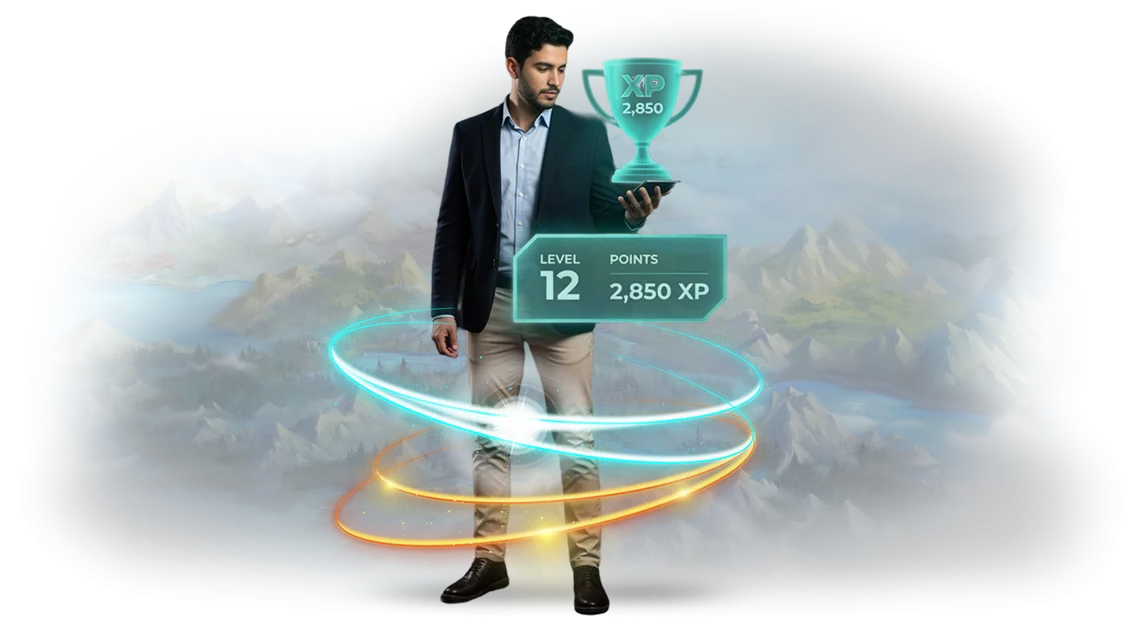
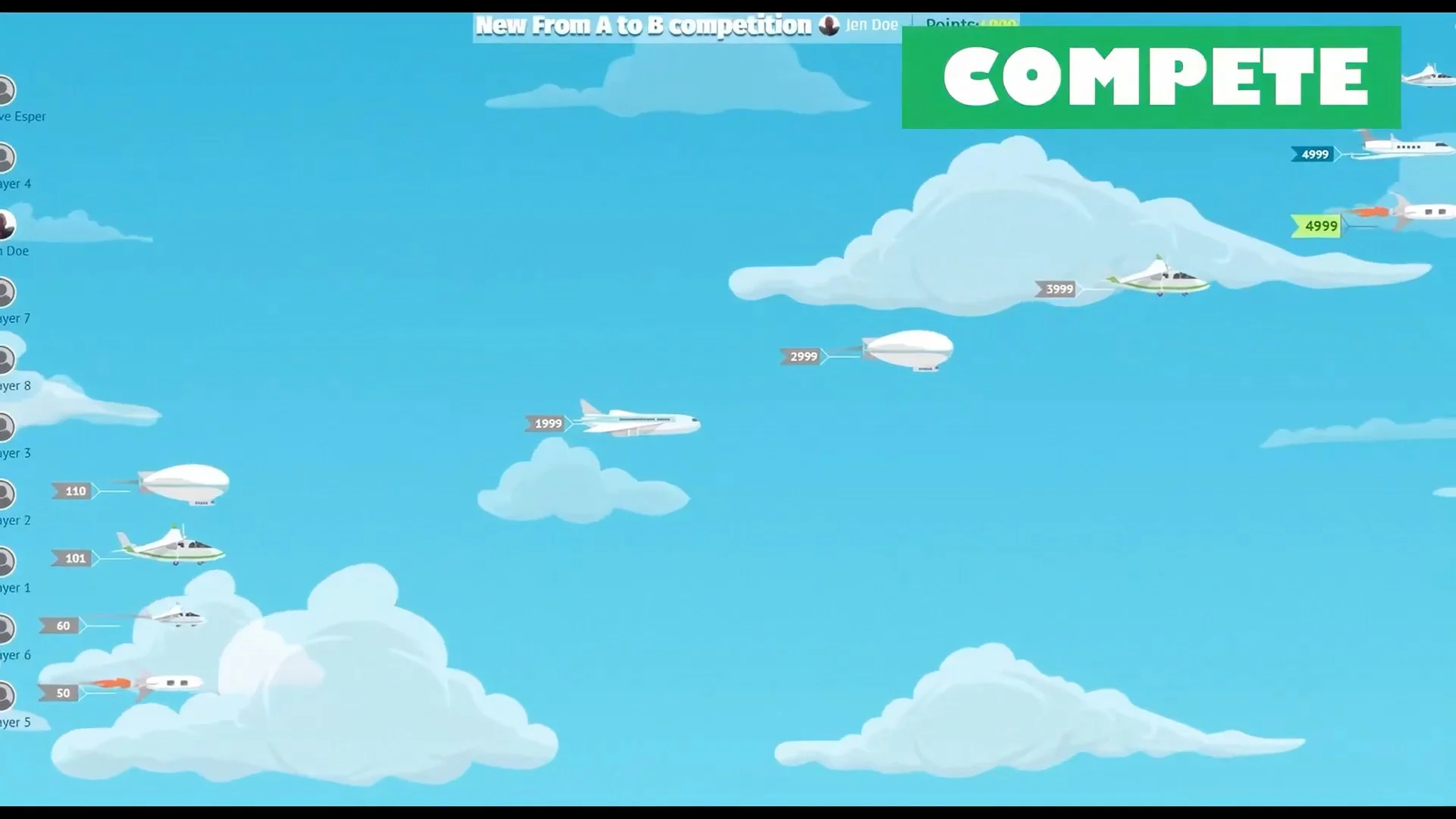
Gamification solves this problem by speaking to employees in the language of play. Levels, quests, achievements, visible progress — these are not child's play but proven mechanics that spark interest and healthy excitement.
Game mechanics turn staff rotation from a set of orders into an engaging path: employees themselves strive to develop, try new roles, and earn recognition for it. At the same time, the company gets a predictable evolution of skills without a dip in performance.
Business wins twice. Employees stay because they see growth and interesting work, and the company saves on hiring, onboarding, and the loss of knowledge.
Loyalty grows, and with it the speed of response to change: people switch to new tasks more easily when they know they are valued. That is how gamification turns an HR process from a cost center into an investment.
For more than ten years, we at our team have been designing game systems for business — from mentoring to lateral moves. Our approach is to first understand your situation and then propose mechanics that deliver results.
Practice shows: when rotation becomes part of the game, turnover goes down, motivation goes up, and employees begin to see the company as a place for long-term growth. Leave a request, and we will review your case and show you how it works.
What gamification of business processes gives to business and the HR team
Gamification of staff rotation is not an entertainment quest but a personnel management tool with a measurable effect. When the process of changing roles or directions turns into a clear game with goals and feedback, the HR team gets five key results that show up in the numbers.
The first benefit is higher staff engagement. Employees stop seeing rotation as a mandatory procedure and start taking part in it consciously.
Activity in the program, the number of applications submitted, and the stages completed — all of this is easy to measure and compare with the period before implementation. The company gets a team that actively seeks development opportunities instead of waiting for instructions.
The second is higher employee loyalty. A person who understands where they can grow and what rewards they will get for completing stages is less likely to think about leaving. Personnel turnover decreases, and the average length of service grows. HR sees this in the dynamics of resignations and in the results of satisfaction surveys.
The third is team efficiency. Rotation built on game mechanics shortens the time needed for adaptation and reduces the number of mistakes in a new position. Employees integrate into the process faster because they understand the rules and goals in advance. As a result, departmental productivity grows without additional spending on hiring and training.
The fourth is job satisfaction. When achievements are recognized and progress is visible, the overall mood improves. Internal surveys show a higher satisfaction index, and teams encounter burnout less often. This affects both the atmosphere and the quality of work.
The fifth is a strong HR brand. A company where rotation is interesting and transparent becomes attractive to job seekers.
Candidates see that the company cares about development and are more willing to respond to vacancies, while current employees recommend the employer to their acquaintances. In the end, recruitment costs go down, and the employer brand acts like a magnet for top specialists.
Implementation formats: from a board game to a digital platform
Staff rotation is a process that easily turns into chaos if people do not understand why they should change roles or functions. Gamification removes fear and resistance: employees see the transition as a game, not a threat.
But the format must match the size of the team and the task — what works for a department of five people will not fit a company with several branches.
We choose the format to fit your situation, not the other way around. Below are three basic options that we combine and adapt to your business process and corporate culture.
| Format | For whom | What it gives the client |
|---|---|---|
| Board game for business | Team of 4–12 people, pilot launch | Live communication, quick testing of mechanics, involves even skeptics. Results are visible within 2–3 hours. |
| Team training with game mechanics | Department of up to 50 people, adjacent divisions | Practicing rotation scenarios in a safe environment, reducing anxiety, practicing communication between roles. |
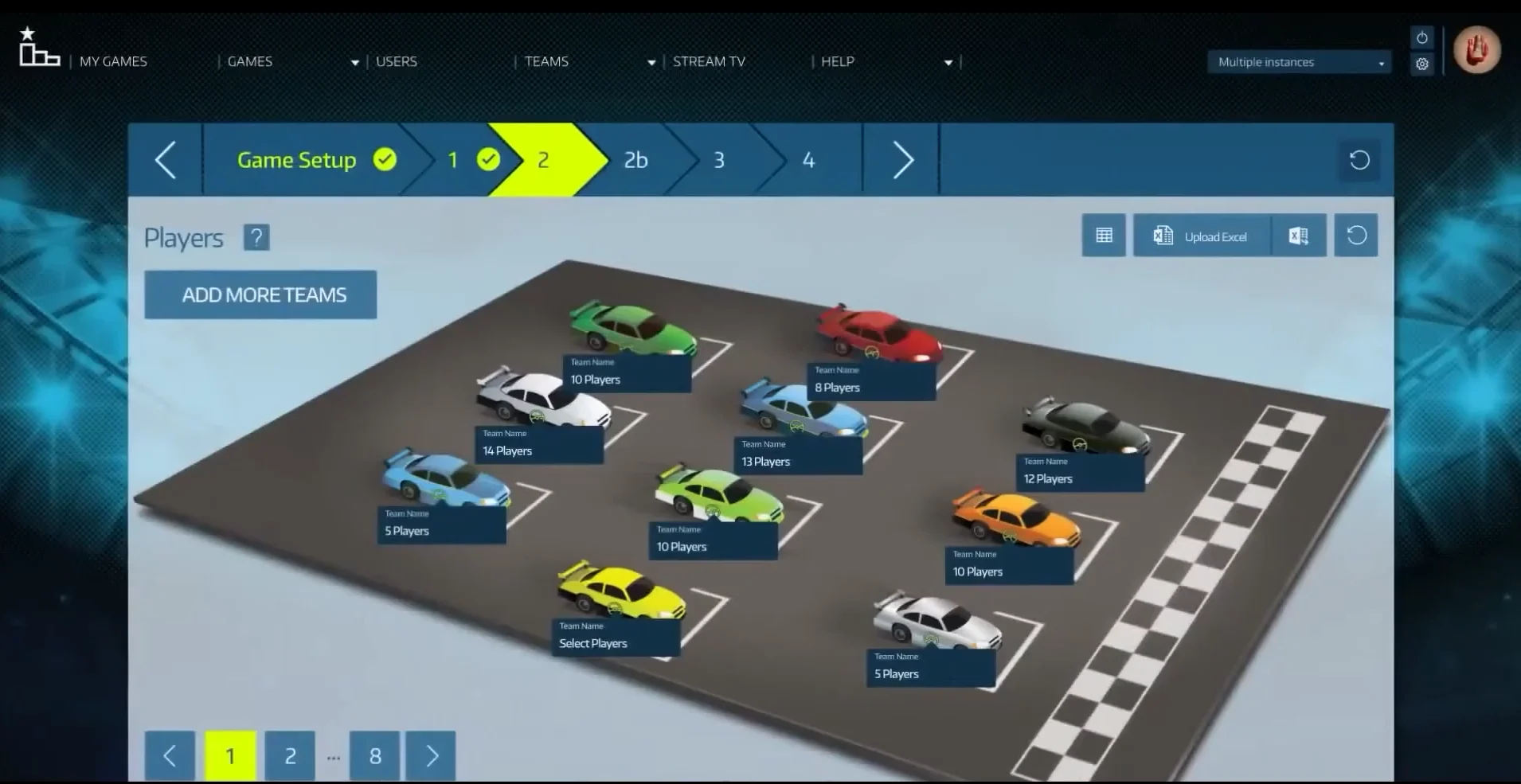
| Digital game platform | Entire company, multiple sites, regular rotation | Constant access, analytics collection, transparent rules and ratings. The process runs without manual HR involvement. |
The board format is good for the first step: it is inexpensive to launch and shows the value of the game to real people.
A digital platform is for a systematic solution, when rotation becomes a regular business process and you need to engage employees remotely or in different cities.
We often combine both approaches: an offline game starts the process and collects feedback, and the platform keeps it going. This way you get a quick effect at the start and a sustainable result without stoppage.
Tell us how many people are involved in rotation and what process you want to digitize — we will suggest a format that fits your task and budget.
How to automate staff rotations: stages of a gamification project
Staff rotation is a living process: some people leave, others come, tasks change. Without a clear procedure, the manager gets bogged down in manual approvals, and employees lose motivation.
Gamification turns rotation into a transparent scenario with stages, bonuses, and visible progress — all that remains is to automate it.
For more than 10 years, we at our team have been designing such mechanics. Below is a proven work sequence with checkpoints at every step.
Stages of developing rotation gamification
- Development brief. We capture your goals: which positions are filled through rotation, how many people are involved, and what indicators we will improve.
- Analysis and scenario. We study current processes and find bottlenecks. We design the game logic: levels, points, rewards, and the connection to employee moves.
- Project approval. We show a prototype and an implementation plan. You make edits before development starts — this saves budget and time.
- Development and setup. We build the mechanics on a professional platform, configure access rights, integrations with the HR system, and notifications. You see intermediate versions.
- Testing and game launch. We run a pilot with a group of employees and refine scenarios. Then we launch for the whole team and enable support.
- Support and development. We track engagement and adjust the rules. After a month, we provide a report on metrics and recommendations.
The stages are not drawn-out: most of the time goes into the brief and approval, so there are no surprises at launch. At every step you receive an artifact — from a plan to test access.
This is how rotation gamification implementation proceeds predictably and delivers the desired result.
What is included in the delivery: a package of ready-to-use materials for HR
At the end of the project, you receive not a report and presentation but a working package that the HR team can implement as early as the next week. All materials are adapted to staff rotation tasks: from onboarding to lateral moves and the talent pool.
Here is what the delivery includes:
- Project delivery — the game structure, its goals, implementation stages, and performance criteria. You immediately understand how the mechanics fit into current HR processes and what benefits they bring to the business.
- Methodological materials — detailed instructions for HR and managers: how to launch the game, how to support participants, how to collect feedback. No improvisation: every step is documented and proven in practice.
- Game rules — clear rules for employees with examples of game situations. They explain how the level rises, what bonuses a participant gets, and how the game helps with career development.
- Game scenarios — ready-made scenarios for different rotation cases: new employee onboarding, lateral moves, forming a talent pool. All you have to do is choose the right one and launch it.
- HR training — a short training block for your team: how to moderate the game, resolve disputes, analyze results, and adapt the mechanics to company changes.
All documents are provided in editable formats so you can adapt them to your corporate style, add your own terminology, and update them when needed. This is not a one-time event but a tool that stays with you and keeps working for employee development.
Case study: how a company increased engagement in its talent pool
A company with high employee turnover faced a typical problem: the internal talent pool existed only formally, and employees saw no point in development. People rarely applied for promotions, rotation moved slowly, and middle managers were burning out.
External hiring was expensive, so the question arose — how to "switch on" employees and speed up promotion without losing quality.
We proposed turning the process of entering the talent pool into a game. For Vektor we developed an internal gamification system: employees completed game missions — performed real tasks for departments, earned levels, and received feedback from mentors.
The leaderboard made progress transparent, and the final offer was not a "order from above" but a reward for visible achievements.
Implementation results
In the first six months, the number of applications to the talent pool tripled. For supervisor and branch manager positions, we filled 80% of vacancies with internal candidates instead of the usual 20%.
The average time to fill a vacancy was halved, and the retention of employees who completed the game program was twice as high as that of externally hired staff.
Most importantly, the team's attitude changed: rotation was no longer seen as dull bureaucracy. Employees themselves asked to join the program, and HR invited us to the next stage — scaling it to related areas.
Client testimonial
HR Director at Vektor: "We expected an entertainment format, but we got a management tool. The team is building careers with us rather than looking for jobs elsewhere.
This is what gamification really is — an honest, transparent path to growth that people themselves believe in."
This project taught us the main lesson: engagement in a talent pool is created not by badges and achievements but by a clear connection between effort and career.
If you have a similar situation, we recommend starting with a diagnosis of your current talent pool and a game pilot at one of the entry points.
How to choose the right format for your company's goals?
Choosing a gamification format is not a question of "what is trendier" but "what will solve your problem." Staff rotation is often associated with a loss of interest and the absence of a clear growth path.
First, determine which problem you are solving: retaining newcomers, accelerating adaptation, or motivating employees to develop within the company.
The second step is scale and audience. For a team of 15 people, a light mechanic with regular tasks and recognition of achievements is enough. If you have hundreds of employees working in different branches, you need systemic solutions: levels, ratings, team competitions. The larger the audience, the more important automation and simple rules become.
The project budget also influences the choice, but not directly. An expensive platform with complex graphics will have no effect if there is no clear logic inside. A simple points-and-rewards system brings results when embedded in real processes.
That is why we select a format to fit business goals and budget — from light solutions to a full-fledged platform — so you do not overpay for unnecessary options.
For example, short cycles and visible "levels" work well for reducing turnover among frontline staff. For managers, long-term scenarios are more important: mentoring, career tracks.
The right format is one that employees understand from day one and that noticeably reduces resignations and increases engagement.
We will be your guide in making the choice. We will analyze your company's goals, audience, and budget, propose 2-3 suitable options, and show which one will deliver the greatest result for your investment. You will get working gamification without overpaying or unnecessary complexity.
Frequently asked questions about implementing game mechanics in HR processes
Implementing game mechanics into staff rotation processes raises questions among managers: how long it will take, how not to disrupt current processes, and who will provide support. Below are answers to the most common concerns.
How long does implementation take?
We launch the pilot project in 4-6 weeks: from the task definition to a working scenario. Full implementation in HR processes takes 2-3 months.
How difficult is it to configure and maintain?
Setup is tailored to your processes without restructuring the HR department's work. We handle the technical side, updates, and analytics.
Can we launch a pilot project first?
We choose one department or category of employees, run the mechanics for 2-3 months, and measure engagement and the speed of filling vacancies. Based on the results, we decide whether to scale the project.
What risks are there?
The main risk is formal participation and loss of interest. We design scenarios so that company goals align with employees' interests, and we adjust the mechanics based on metrics.
What does support include?
We stay in touch after launch: we monitor metrics, update scenarios, and help adapt the mechanics to new needs. You do not need to look for additional specialists.
Launch gamification of HR processes within a week
To launch gamification of HR processes, you do not need to wait for months or rebuild the entire system. We have packaged the work so that a week after your request you will see the first results — a plan, an estimate, and a working prototype. Right after your request, you will receive:
- Gamification request — you leave your contact details, and we get in touch within one business day to clarify your goals.
- Free consultation — we analyze your situation and suggest which mechanics will help retain and motivate employees.
- Cost calculation — we fix the estimate before work starts, with no hidden surcharges or "surprises" along the way.
- Demo version — using live examples, we show what rotation will look like in your company: clear cards, points, levels, rewards.
- Project launch — in 7 days we prepare an implementation plan, pilot the mechanics with one group of employees, and get the first numbers.
- Support after launch — we adjust the settings based on the pilot results so the system works toward the desired outcome.
Each item is not a promise but a concrete step with a clear value for the business. You know in advance what you will get, how much it costs, and when the changes will begin.
Leave a request for gamification — and within a week, staff rotation will stop being a source of chaos. We will start with a free consultation and a cost estimate: the rest will follow.