

Why Specialist Certification Needs Gamification
Specialist certification is not a formality, but an investment in the quality of a company's work.
But for employees, it often becomes routine: the same questions, the same procedures, no feedback except "passed" or "failed." When certification produces no emotional response, people go through it "just for show"—and the business gets a specialist who has confirmed knowledge on paper but is not motivated to apply it every day.
This is where the client's main pain comes from: time and money are spent on training, yet the service level does not improve. Customers notice the difference, the company's reputation suffers, and the manager is forced to keep returning to the same staff mistakes.
This is especially acute in industries where quality standards are the face of the brand: retail, medicine, finance, HoReCa, and customer service.
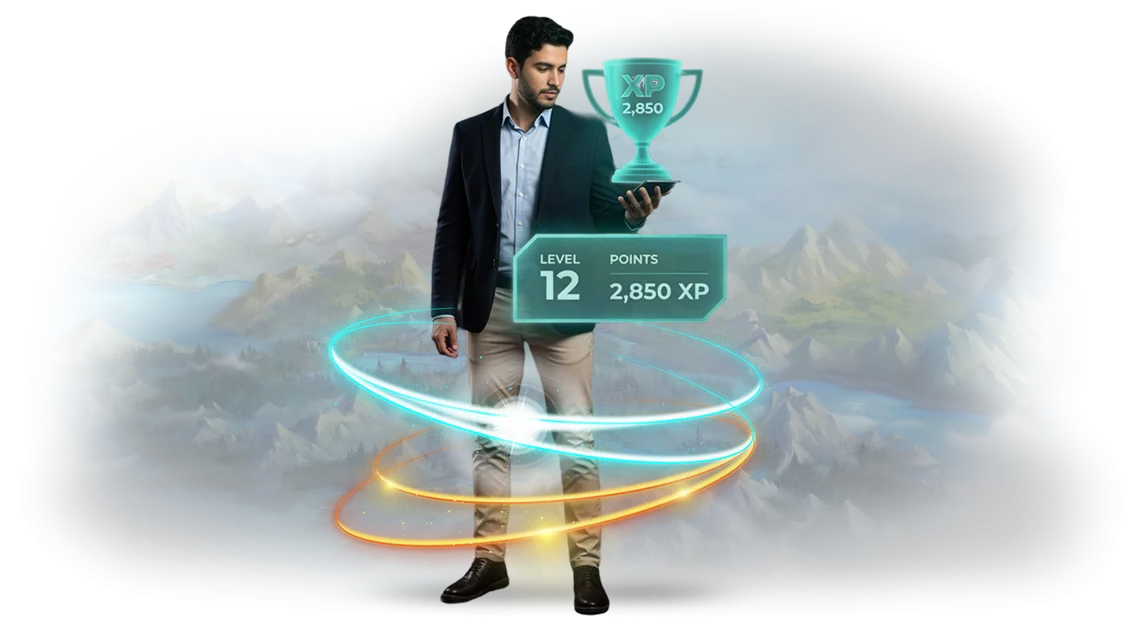
Gamification of business processes turns certification from an "exam" into regular practice with clear value for the employee. We transform certification into a system where what matters is not "cramming and stress," but engagement, progress, and results.
The employee sees their level, understands what growth gives them, and gains motivation to keep developing.
For a business owner, this means predictable quality of work: standards are followed not under pressure, but because the team finds it interesting. Routine fades, engagement grows, and with it—the speed of processing requests, customer loyalty, and repeat sales.
We solve the problem of a formal approach to training and return certification to its true purpose: a stable service level that sets your company apart from competitors.
Which Business Processes Benefit from Game Mechanics
Gamification changes not only the mood, but also the economics of processes. The effect is especially visible where qualifications need to be confirmed regularly: specialist certification, annual attestation, and onboarding training for new employees.
Without game mechanics, these processes often turn into a formality—people take tests "for show," and the business does not get a real picture of competencies.
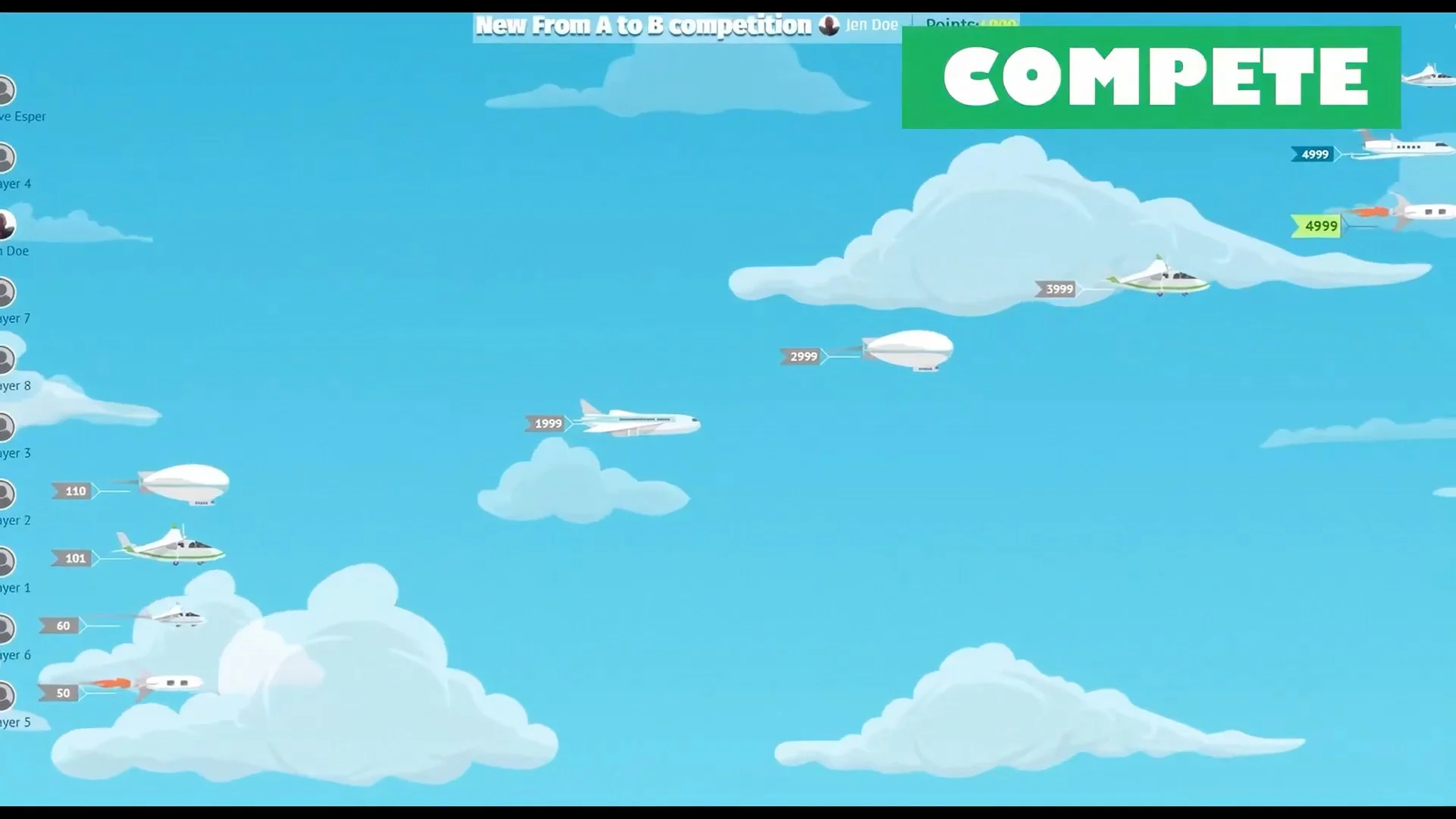
With game scenarios, certification becomes an event that people look forward to. Employees see their progress, compete in a rating, and receive rewards for completing levels—and this directly increases engagement.
In our experience, the share of employees who complete certification voluntarily and on time grows several times over. our team builds such mechanics so that the player's interest aligns with the business goal: each level is a real skill, not a virtual achievement.
The key advantage is the speed and quality of certification. Instead of long lectures and paper tests—short interactive modules where a mistake is immediately explained and practiced.
The employee reaches the required level faster, and the company sees a transparent picture: who is ready to work with clients and who needs additional training. The process becomes predictable, and risks are reduced.
And most importantly, gamification provides measurable KPIs. In the dashboard, you see not abstract academic performance, but concrete metrics: module completion, time per task, number of retry attempts, and changes in results before and after.
This data allows you to manage quality and motivation with precision, not "by average across the board." If you want to turn mandatory certification into a driver of growth—this is exactly the case where game mechanics pay off quickly and predictably.
Gamification Formats for Specialist Certification
Specialist certification often becomes a formality: tests are taken "for show," and the company gets a distorted picture of competencies.
Gamification turns the process into a clear game—the specialist sees progress, compares themselves with colleagues, and is personally interested in a strong result.
We choose the format based on the task rather than using a ready-made template. In some cases, short game stages are enough; in others, a rating marathon is needed. The basic options are summarized in the table.
Main Gamification Formats
| Format | For whom | What it gives the client |
|---|---|---|
| Quest-based training | New employees | Fast onboarding—knowledge is absorbed through play |
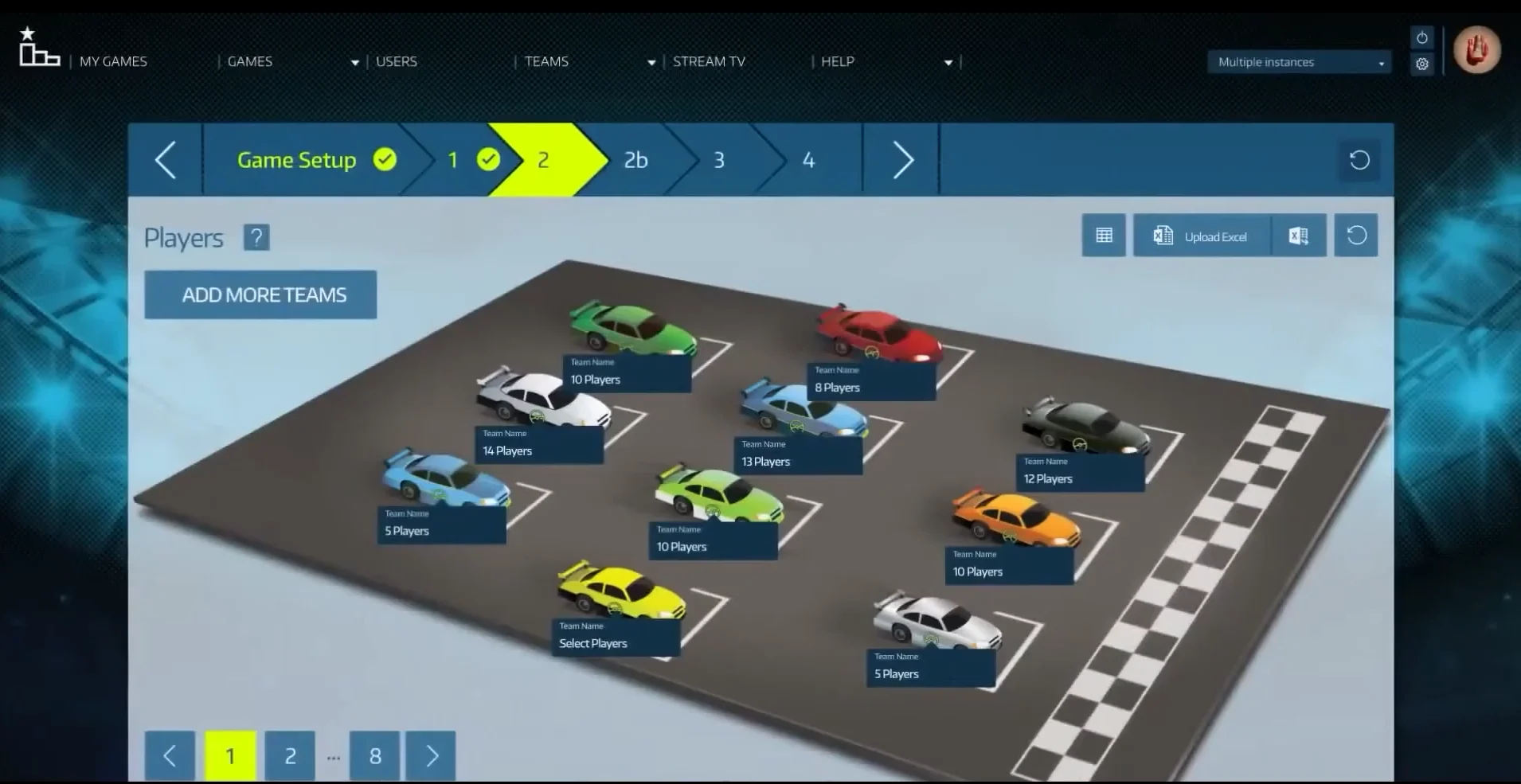
| Team competition | Departments and branches | Engagement and experience sharing without coercion |
| Ratings and levels | Experienced specialists | Transparent competency assessment and motivation to grow |
| Exam game | All employees before certification | Reduced stress and objective results |
| Mentoring duels | Candidates for promotion | Skill comparison and a talent pool |
How to Choose a Format
There is no universal solution: for regular certification, a combination of a rating and short stages works best; for one-time attestation, an exam game is better.
At the start, we analyze the audience and goals, then propose a format with clear metrics: engagement, the share of employees who successfully pass certification, and the speed of specialist preparation.
How a Gamification Implementation Project Works
A gamification implementation project for a certification process is not "buy and plug in," but a joint effort where each stage brings you closer to a measurable result: higher specialist engagement, lower drop-off at the exam stage, and clear statistics for the manager.
We handle everything—from the brief to post-launch support—so you always see what stage the project is at and what you will get as an outcome.
- Brief and immersion in your task. During a call, we analyze how certification currently works: where participants drop off, what specifically motivates your specialists, and which metrics you consider success. We record the goals so there is something to compare against after launch.
- Audit of the current process and implementation plan. We study your materials, regulations, and internal rules. The result is a clear plan: what we change, in what order, which certification stages become game-based, and which remain strict. We agree on timelines and checkpoints.
- Scenario and rules approval. We show exactly how the mechanics will look: points, levels, rewards, and feedback. You make edits before anything is built—and approve the final version. No surprises at the launch stage.
- Implementation and testing. We build a prototype and test it on real scenarios together with your employees. This is the stage where we catch awkward moments and adapt the mechanics to your corporate culture, not to abstract standards.
- Launch and participant training. We connect the system and prepare short instructions for specialists and responsible staff. You receive a ready-to-use tool, not a "raw product we will finish later."
- Support and development. After launch, we stay in touch: we answer questions, collect feedback, and adjust settings if we see that some element is not working. After 2-3 months, we suggest improvements based on real statistics so engagement only grows.
This sequence allows you to launch gamification without chaos or downtime: you know in advance what you will get in 4-6 weeks and how it will affect certification completion.
What Is Included in the Game Solution Delivery
You receive not just a game scenario, but a ready-to-launch tool for specialist certification. All the design and configuration work is already done—you only need to run the process and get the result.
We deliver a complete package covering the methodological, technical, and organizational parts, so your team can launch certification within days, not months.
The delivery includes everything needed for autonomous operation: from scenarios and assessment rules to instructions for administrators and training materials. Below is the full composition of the package.
- Certification methodology — scenarios, participant roles, assessment criteria, and completion rules. This is a base that can be immediately applied to your competencies.
- Game mechanics configuration — difficulty levels, points, statuses, and feedback. The parameters are adapted to your program and can be easily adjusted without involving developers.
- Instructions for administrators and participants — step-by-step guides that help you understand the system in one day. For participants—a short reference card; for organizers—a full set of regulations.
- Training for your team — a practical session with those who will launch and support certification. After it, your employees independently handle setup, launch, and result analysis.
- Automated reporting — summaries for each participant and group: progress, errors, completion time, and final scores. You see where specialists are struggling and can adjust the program in a timely manner.
- Support at the start — we accompany the first launch and remain available for consultations. This removes risks at the implementation stage and ensures the solution works in your real practice.
After the package is delivered, you have full control over the certification process. The methodologies and settings remain with you, the training has been conducted, and reporting is collected automatically.
As a result, you get a transparent and reproducible assessment process that can be launched at any time and easily scaled to new areas.
Case Study: How We Improved Service Quality by 30%
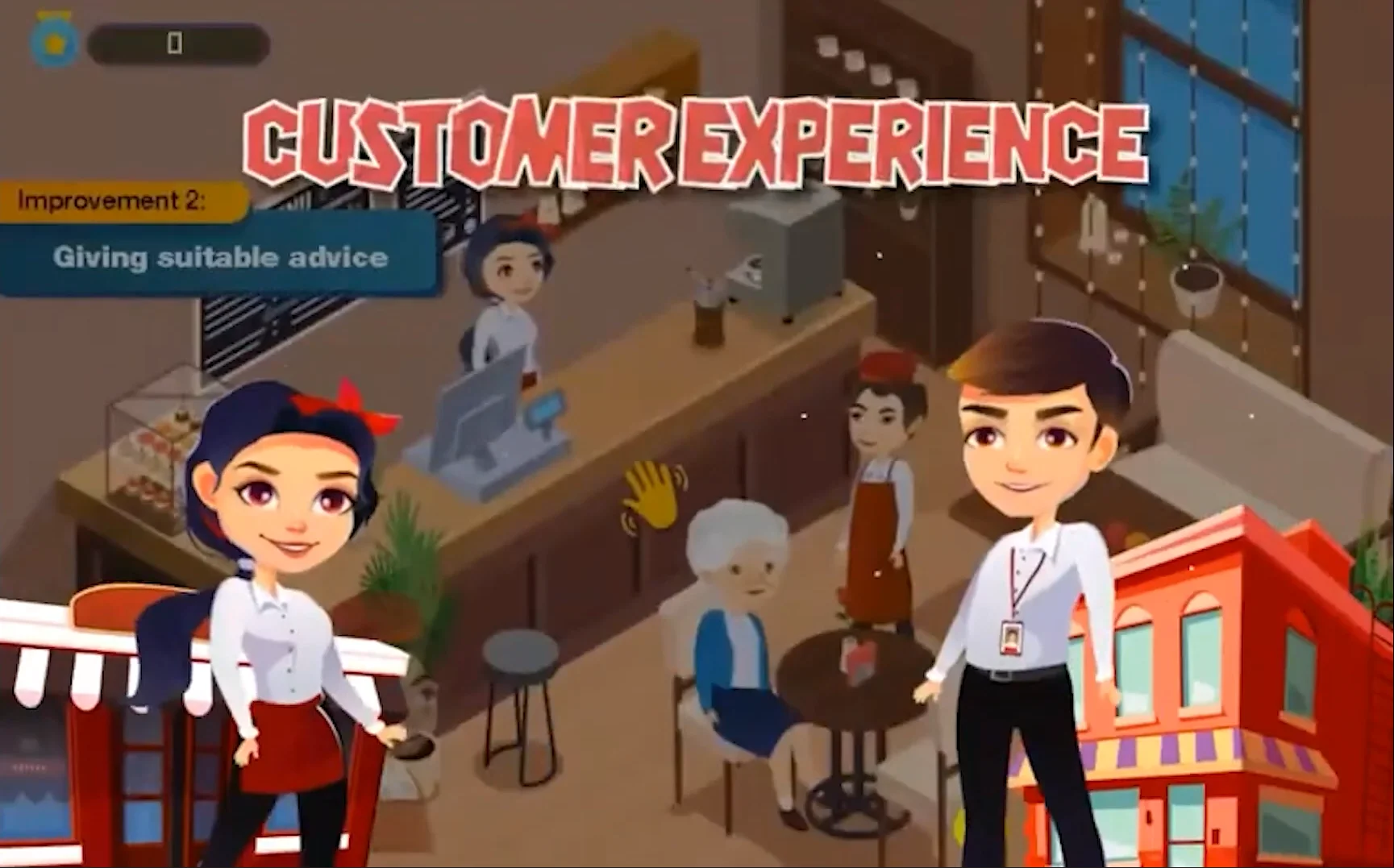
For the Zerna coffee shop chain, barista certification was a formality: employees took a test once a quarter, grades were recorded in a log, and the quality of service did not change.
The department head saw the problem in the numbers—spot checks showed the same mistakes: slow service, no upselling, and indifference to guests. The "exam—grade—forgot" format did not motivate staff to apply knowledge in practice.
We proposed turning certification into a game-based growth trajectory.
Instead of a one-time test, an employee sequentially progresses through the "Trainee → Master → Legend" levels, earning points not for memorizing instructions but for real actions in the café: drink preparation speed, greeting guests, and offering desserts.
Each employee's results are visible in a personal dashboard, and a shared rating of locations works for the team—the competition between coffee shops triggered healthy excitement.
What Changed
After three months, a follow-up check showed a 30% increase in service quality: order wait time was cut in half, and the share of upselling increased by a quarter.
Staff turnover among newcomers nearly halved—employees saw a clear growth path and did not leave after the probation period. The manager received transparent statistics on each barista, and guests began leaving more positive reviews mentioning specific employees.
The client valued the result so much that six months later we launched a second stage—with new levels and seasonal tasks. The company now uses this mechanic as an ongoing motivation system, not a one-time promotion.
This confirms that gamified certification delivers measurable business impact, not just "entertainment for staff."
How to Choose the Right Gamification Format?
There is no universal "best format"—the right option always depends on your business goals and audience.
For a specialist certification program, it is important to understand what you want to achieve: increase the pass rate, reduce preparation time, boost the motivation of experienced employees, or make onboarding more engaging.
Each task requires its own mechanic: for example, competitive elements work for salespeople, while step-by-step scenarios with feedback work for technical specialists where the sequence of actions matters.
Therefore, we start not with platform selection, but with an audit: we analyze exactly who undergoes certification, what the current "pain points" are—fear of failure, boredom with theory, loss of interest after the first module.
Then we look at your internal processes: how certification is currently structured, where employees "drop off," and which stages require control.
This analysis takes little time, but it determines whether the format will focus on competition, collective progression, role-playing scenarios, or accumulating badges with real bonuses.
We separately take budget and timelines into account—not everyone needs a large game platform. Often a light format delivers high results: a series of short interactive quizzes embedded in your learning management system, with visible progress and a leaderboard. This option is cheap to launch, quickly pays off, and is easy to update for new standards.
If certification is part of the company's prestige, then a deeper format with a storyline and mastery levels makes sense—one that becomes an element of motivation and a reason for internal PR of employee achievements.
The choice is always collaborative: you know your audience and business well, and we know what works in gamification across different industries.
We offer not an abstract consultation, but a concrete analysis of your current certification program: as an outcome, you receive recommendations with format options, resource estimates, and forecasts for key metrics.
This allows you to decide quickly and without the risk of launching a mechanic that does not fit your specialists. Ultimately, you get not a "game for the sake of a game," but a tool that genuinely improves certification effectiveness and employee loyalty.
Frequently Asked Questions About Implementing Game Mechanics
Before a project launches, clients tend to ask the same questions: will it miss deadlines, will the mechanic turn out to be a "toy" that does not pay off, and who will maintain the system after launch. This is normal for any new tool.
Over ten years, we have implemented gamification in dozens of companies—and here we explain how we address each of these risks.
We resolve specific objections at the brief stage, but the most common ones are better discussed upfront.
What if gamification does not deliver the expected effect?
We do not create "mechanics for the sake of mechanics." First, we define a measurable goal: an increase in the number of certified employees, a reduction in training time, or higher test completion rates.
After launch, we show the numbers in a report—if the metrics are not improving, we adjust scenarios and rewards under the warranty period. The client's risk is minimal.
How long does implementation take?
A typical project takes from two weeks to two months, depending on the number of roles and certification stages. We state the deadline in the contract.
At the start, we provide a schedule with checkpoints: after the first sprint, you already see a prototype and can influence the result.
How quickly do investments pay off?
We calculate payback based on the cost of a failed certification or employee replacement. If gamification reduces specialist preparation time by 20-30%, the return on investment occurs in the first certification cycle. After that, the system works for you.
Who maintains the platform after launch?
We take over support: content updates, adding new scenarios and rewards, and technical monitoring. You do not need to find another contractor—we stay by your side throughout the entire life cycle. If desired, we train your team to manage the mechanics without programmers.
If you recognize yourself in these concerns—we will send you cases from your industry and calculate the timeline and payback for your certification process. This is free of charge and carries no obligation.Order Gamification Development for Your Task
We take on the entire gamification journey—from the first consultation to implementation and support. That means the development becomes a working tool for specialist certification and motivation, not just a "game for the sake of a game."
What is included in our standard approach
- Consultation—we analyze your task, audience, and growth points so you get a clear picture: how game mechanics will strengthen training and knowledge assessment.
- Scope and timeline estimation—we give you a realistic budget and schedule before we start, with no surprises during development.
- Scenario design—we select game mechanics that fit your business logic: points, levels, rewards, team modes, quizzes.
- Process integration—we connect certification, tests, or training so employees quickly understand the rules and start participating from day one.
- Post-launch support—we analyze metrics, adjust the difficulty balance, and add new mechanics as your system grows.
We have already implemented dozens of specialist certification systems across various industries. Usually, after launch, there is a noticeable increase in course completion rates and answer quality—and we make sure interest in learning does not fade months later.
How to Order Leave a request on the website or write to us via messenger—both methods are convenient. On the initial call, we will clarify the specifics of your certification, answer your questions, and propose estimated options.
This is not binding: you will get a clear understanding of how gamification fits into your processes, and we will get a task we are excited to solve.