

Employee Retention: Why Gamification Solves the Turnover Problem
Staff turnover is not just a line in an HR report—it is a direct loss of money and time. Every employee departure means spending the budget again on recruiting, onboarding, and training, plus a drop in team productivity for several weeks.
According to various estimates, the cost of replacing a specialist reaches 50–60% of their annual income—and if a key player leaves, the losses can be even higher.
Why do people leave? Most often not because of salary, but because they lose interest and feel that their development has stalled. Repetitive tasks, a lack of visible progress, and little feedback demotivate faster than any HR order.
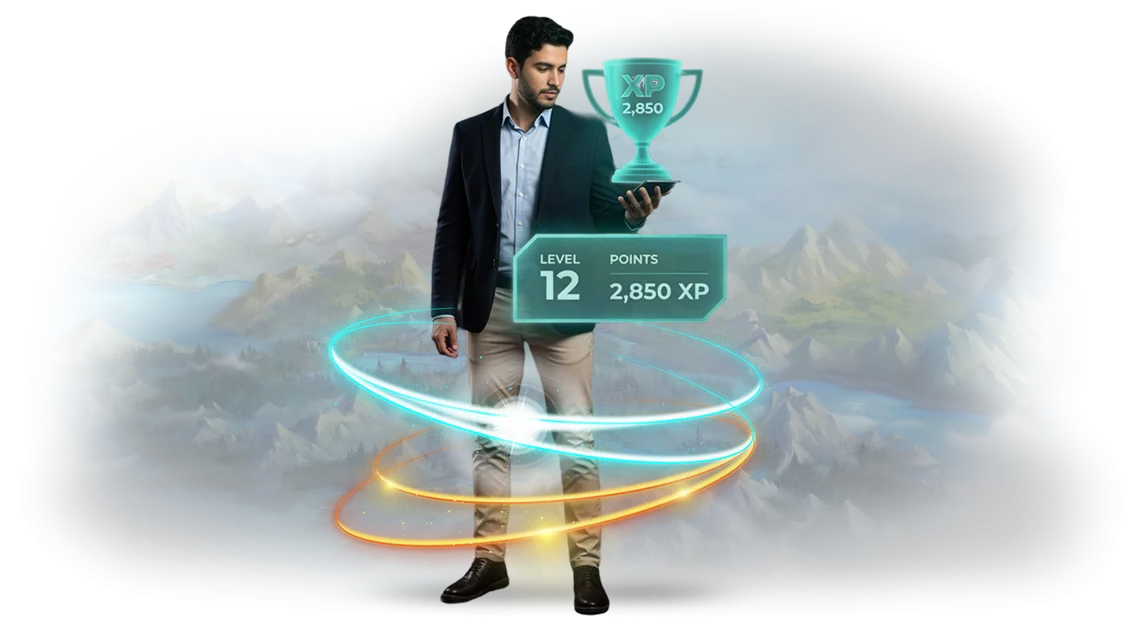
This is where gamification changes the picture: it turns routine into a clear system of goals, rewards, and growth, where every employee sees their contribution and receives recognition.
We have been implementing such mechanics into business processes for more than 10 years and see the main thing: retention does not require huge budgets. It is enough to build motivation properly, make achievements measurable, and progress visible.
As a result, turnover decreases, and the team starts working more stably and loyally—this is the first step to solving the turnover problem.
What Gamification Gives the Business and Team
Employee Loyalty and Reduced Turnover
Routine demotivates: people burn out and leave. Gamification turns work tasks into a clear achievement system: points, levels, statuses. Employees see their progress and recognition—and stay with the company longer.
Reduced turnover directly saves the budget: there is no need to constantly search for, hire, and train new people. The team becomes stable and therefore predictable in results.
Employee Engagement
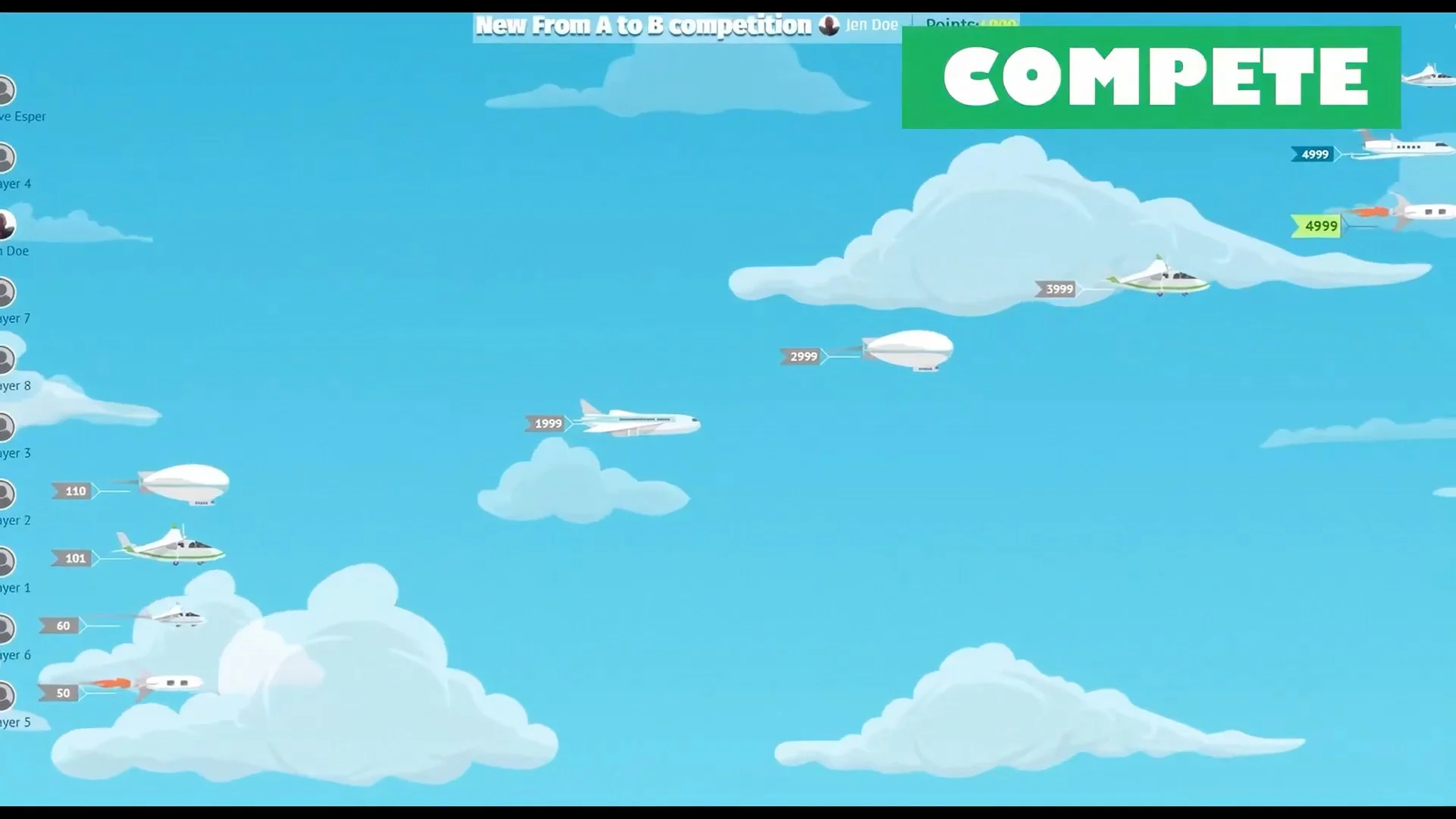
When company goals are presented as a quest or competition, interest arises on its own. Employee engagement grows without force: people get involved in tasks themselves, offer ideas, and help colleagues.
An engaged employee works with energy, not “from bell to bell.” This immediately affects the speed and quality of processes.
Improving Efficiency
Game mechanics set the rhythm: short cycles, feedback, clear criteria. Employees understand what to do and see the results of their actions. Efficiency improves naturally—through transparent motivation.
A United Team
Shared missions and common tasks remove barriers between departments. People start communicating, sharing experience, and supporting each other. This reduces conflicts and speeds up problem solving.
We build gamification around a business goal, not for the sake of entertainment. So the client gets not just a “game,” but a working tool for retaining employees and growing efficiency.
Gamification Formats: How to Match Them to the Task
Choosing a gamification format is not about trendy mechanics, but about a specific business task. If turnover among new hires is high, you need onboarding; if the team is burning out, you need levels and ratings; if you need to unite departments, you need quests. Each format solves its own problem rather than entertaining just for the sake of ticking a box.
We have collected the typical scenarios we work with most often. Use the table as a cheat sheet: find your task and see which format will deliver quick results.
| Format | Who it’s for | What it gives the client |
|---|---|---|
| Employee quests | For teams that need to improve interaction and launch a joint project | The team goes through challenges together: adjacent tasks get completed, engagement increases, and a common goal appears |
| Ratings and leaderboard | For sales and service departments where each person’s result matters | Sales growth, healthy competition, clear evaluation criteria—employees see their contribution and push upward |
| Levels and statuses | For long-term motivation and career growth | Employees understand their development path, turnover decreases, and “old-timers” appear who lead newcomers |
| Mentoring and roles | For onboarding and knowledge transfer | New employees get up to speed faster, the manager’s workload decreases, and loyalty grows |
Each format can be combined: for example, an onboarding quest with levels, or mentoring with a rating. We choose mechanics to fit your goal and then measure the result: retention, adaptation speed, engagement.
How a Gamification Project Works in 6 Steps
Retention gamification seems complicated until you understand what stages it involves. We have made the process transparent: you always know what happens at each step, what results you get, and what we are responsible for.
- Brief and immersion. We study the task: we analyze the current motivation system, collect feedback from employees, and determine which actions need to be strengthened in order to retain the team.
- Concept and plan. We propose suitable gamification mechanics—not a “game for the sake of a game,” but a clear system that fits into work processes. We show timelines, stages, and the expected effect.
- Alignment. We approve the concept with you: rules, rewards, success criteria. You see which metrics will be tracked and how this affects employee retention.
- Implementation. We create the gamification tool: interface, logic for awarding points and statuses, and integration with your internal system. At this stage, you receive intermediate results for review.
- Testing and launch. We check how the system works in real scenarios and launch it for a pilot group together with you. We prepare instructions and a short training video for employees.
- Support and development. We monitor activity, analyze what works and what should be adjusted. We regularly share reports so you can see the dynamics of engagement and retention.
At each stage, you receive only clear deliverables: a brief, an approved concept, test access, a launch report, and a development plan. No “black box”—you always understand what step the project is at and what will happen next.
What Is Included in Developing a Gamification System
When developing a gamification system, we include not just game mechanics, but a ready-to-use tool that strengthens team motivation and reduces turnover. You get a set of several interconnected blocks—from engagement scenarios to an analytics dashboard. Below is what exactly is included in the project.
- Game mechanics tailored to your business goals. We think through which employee actions to reward: meeting KPIs, training, helping colleagues, closing deals. Each mechanic works for retention and interest in the work, not just for points.
- A clear interface for employees and managers. Participants see their achievements, progress, and rewards in a convenient window. Managers get a simple dashboard where they can adjust rules and track dynamics without developer help.
- Analytics and reports on results. We track which mechanics actually increase engagement, where participants lose interest, and how turnover changes. Based on this data, you adjust the program and see the return on implementation.
- Catalog of rewards and bonuses. Together with you, we set up prizes that truly motivate your team: from non-material recognition to company-paid training. Everything is automated—an employee receives a reward as soon as they achieve the goal.
- Rules and gamification scenarios. We document how points are awarded, which levels exist, and what happens in disputed situations. Transparent rules eliminate conflicts and create a sense of fairness in the team.
- Documentation and operating regulations. You receive a description of the mechanics, instructions for administrators, and reminders for employees so the system keeps working even without our involvement.
- Training for your team. We conduct a webinar or live session and show how to manage the system, launch new contests, and review analytics. Your HR and department heads quickly become independent users.
After the project is completed, you don’t get a “piece of code,” but a working tool that supports employee interest for months. We support the launch and, in the early stages, advise which mechanics are best to scale as the team grows.
Case Study: Gamification Reduced Turnover by 40%
A chain with 2,000 employees faced a typical retail pain point: staff turnover reached 60% per year. Every cashier or salesperson who left meant costs for recruiting, training, and service quality while a new hire got up to speed. Salary alone could not retain them—engagement was needed.
A federal retail chain agreed to a pilot project on retention gamification. We turned onboarding into a game: new hires earned levels for mastering standards, practicing scripts, and completing their first successful shifts.
Mentors saw each person’s progress in real time and promptly supported those who were “stuck.” Onboarding became a manageable process.
After six months, the HR department saw numbers that changed their approach to motivation. Turnover among those who completed gamified onboarding fell by 40%.
The cost of recruiting and training a salesperson decreased by a quarter, and the time to reach planned productivity dropped from 6 to 3 weeks.
| Metric | Before implementation | After implementation |
|---|---|---|
| Turnover of new employees | 60% per year | 36% per year |
| Time to reach planned productivity | 6 weeks | 3 weeks |
| New-hire engagement score | 3.1 out of 5 | 4.4 out of 5 |
The chain scaled the solution to all regions where it operates. Gamification is not entertainment—it is a tool that pays back its cost in the first months.
How to Choose a Gamification Format for Your Company?
There is no single template for all companies—and that is normal. The gamification format must take into account team size, current tasks, and the culture within the group.
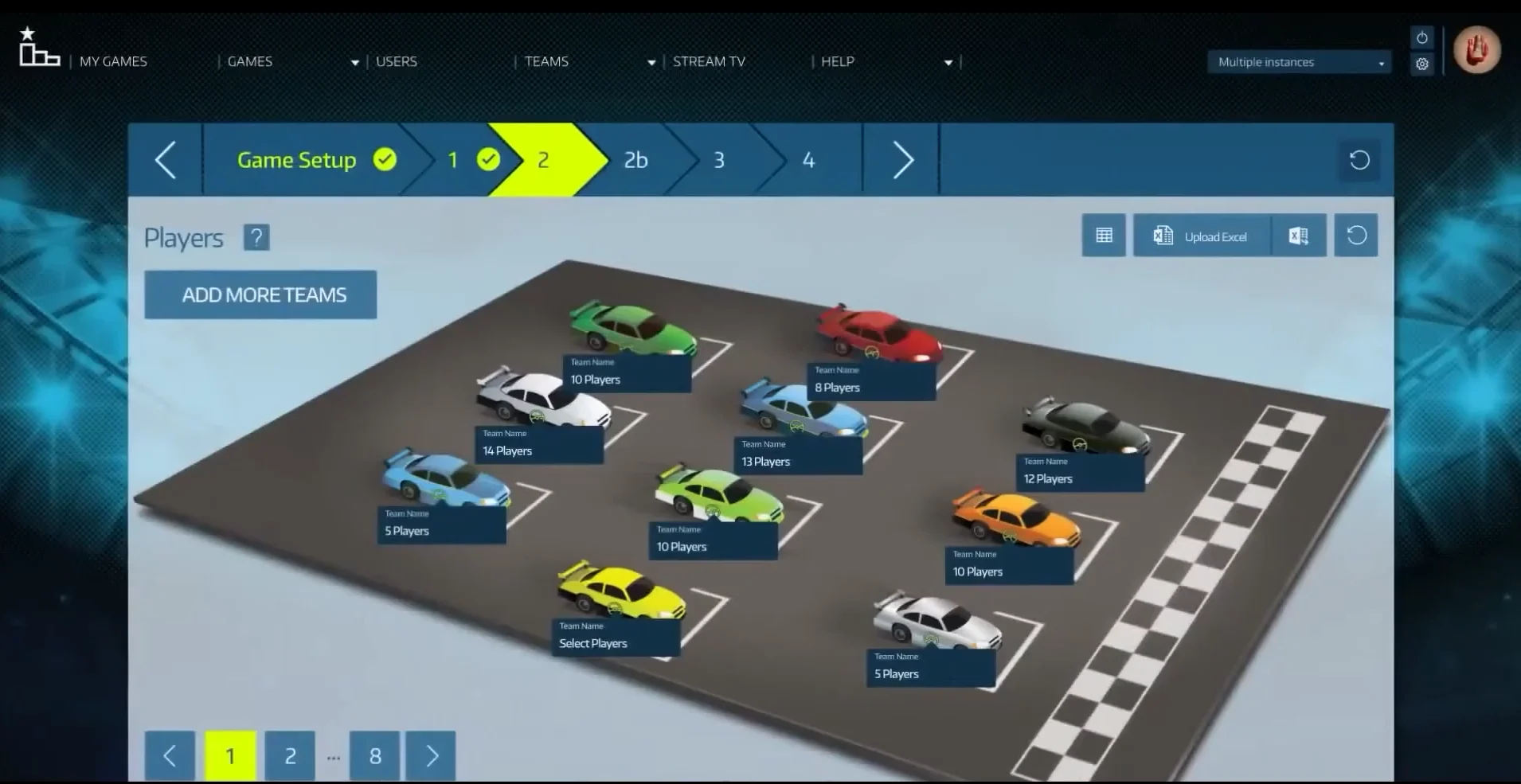
If a light bonus-and-rating system is enough for a small sales department, then a distributed network of branches requires team scenarios and a common competitive mechanic.
How do you choose the right option? Start from your goal: retaining employees requires long cycles—levels, statuses, accumulating privileges. Training and onboarding new hires require gradual quizzes and feedback-based scenarios.
Improving operational efficiency requires short quests with quick results. When the goal is clear, it becomes obvious which mechanics will work and which will be unnecessary.
Data about your team is no less important: audience age, current engagement, familiar tools. Gamification easily adapts to any group—from design and language to the method of recognition. For example, some value a public rating, while others value personal recognition. We select mechanics to fit your specifics, not the other way around.
The best way to test a format is to start with a pilot project on one group of employees and measure the result. This removes risks and shows what works specifically in your case.
In our experience, companies that run a pilot first are many times more likely to move on to full implementation and achieve measurable growth in engagement.
If you are not sure which format to choose, contact us: together we will define the criteria and select a solution for your goals. This is free and with no obligation.
Gamification for Employee Retention: Answering Your Questions
Clients often hesitate about whether to introduce gamification into retention processes: will it distract employees, will it break the existing atmosphere, and what happens if the plan does not produce the expected effect. This is normal—any change in people’s work requires care and clear guarantees.
We have collected the main questions managers ask before starting and briefly answered each. If your question is not here, ask us directly—we will discuss the details in a free consultation.
Won’t it turn into a game and reduce the seriousness of work?
Gamification does not replace work with a game; it helps people see progress in routine tasks. The mechanics are customized to your culture: you choose the level of competition and the visibility of rewards.
The result is a transparent system where an employee understands how their actions are connected to company goals.
How quickly will the first results appear?
The first changes are visible 3–4 weeks after the pilot launch: growth in engagement and task quality. Full implementation takes 2–3 months; we work in stages with interim reports.
What if the chosen approach does not deliver the expected effect?
First, we launch a pilot on one group, analyze the metrics, and adjust the scenario. If after the agreed refinements there is still no effect, you do not pay for that stage. We document this condition in the contract.
Is gamification safe for corporate data?
Employee data remains inside your perimeter; we do not transfer it to third parties. Access is configured by roles, and only you receive reports. If necessary, we sign a confidentiality agreement.
Order Turnkey Gamification — Start with an Audit
Every company faces staff turnover and declining engagement—and most often the problem is not salary, but the lack of a clear connection between an employee’s efforts and the result.
We propose starting not with a new motivation system, but with an audit: we will see exactly where interest is lost, which processes slow the team down, and where gamification will have a quick effect.
A free audit is a way to see your company from the outside and understand whether the game is worth the candle.
If there is potential, you receive a consultation and an accurate calculation of costs and timelines for your business. Implementation is phased, so you control each step and see results at the start—without long approvals and downtime.
What you get by ordering turnkey gamification:
- Free audit of processes and demotivation points—you will learn which mechanics will actually work in your team.
- Transparent calculation of costs and timelines before work begins—no hidden payments or “unexpected” surcharges.
- A solution tailored to your task: employee retention, sales growth, onboarding new hires, or internal communications.
- A clear motivation system: points, levels, rewards, and recognition—employees see that their contribution is valued.
- Support at all stages: from development to launch and results control.
- A guarantee of achieving target metrics—for example, lower turnover or increased engagement within the agreed timeframe.
Leave a request right now—we will call you back within one business day, answer your questions, and conduct a free audit. Start with a simple step that will save you months of trial and error: order a consultation and get a cost estimate for gamification for your business.