

Improving the Social Climate in Teams Through Gamification
Turnover and burnout are a quiet threat that costs businesses more than it seems. When key employees leave, a company loses not only time spent hiring replacements, but also institutional knowledge, client relationships, and team momentum.
Most departures happen not because of salary, but because of tension within the team and the feeling that your contribution isn't noticed.
The root of the problem is almost always the same: a weak social climate. People don't feel like part of a shared result, communication becomes purely formal, and initiative is avoided. Engagement drops, processes slow down, and internal resistance drains even strong specialists. Managers try to motivate with bonuses and orders, but that only produces a short-term effect.
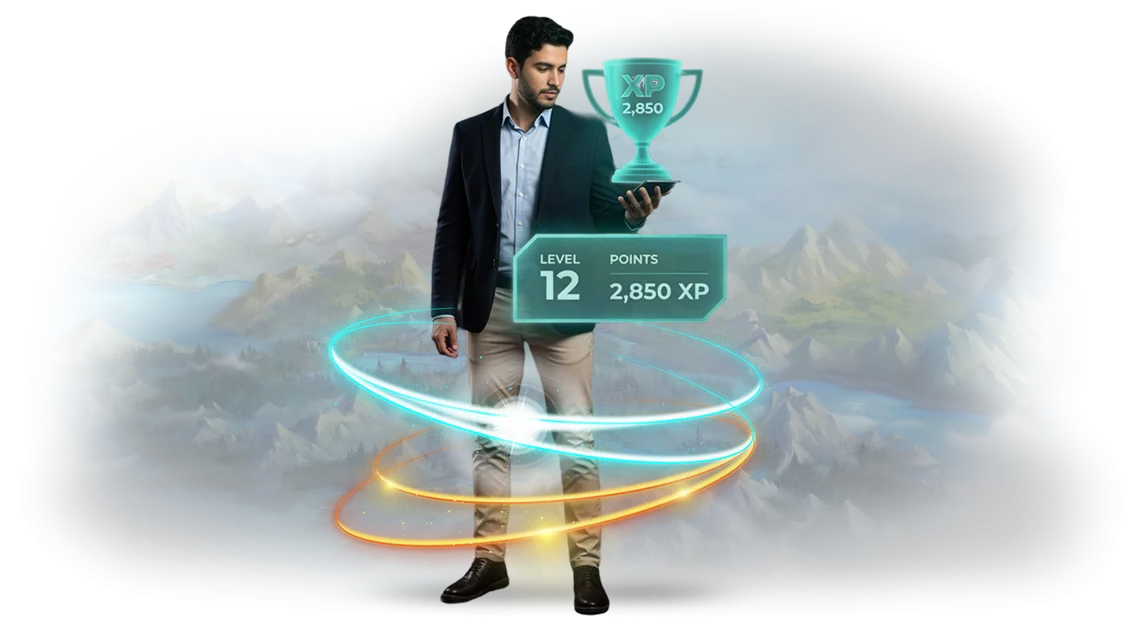
Gamification of business processes solves this differently. It turns routine actions into a light, clear game where everyone sees their own progress and contribution to the shared result.
Team goals, a transparent achievement system, and healthy competition create an environment people want to be part of. Employees start talking about tasks, helping each other, and taking pride in shared wins.
That's how sustainable improvement of the social climate in the team is achieved. When employees see their efforts turn into points, levels, and shared achievements, trust grows.
The result is lower turnover, higher employee engagement, and faster project delivery without extra hiring costs. This is not a one-off initiative, but a systemic change in the atmosphere inside the team.
We help implement gamification tailored to your company's goals: from simple mechanics to comprehensive programs that pay off through employee retention and productivity. You get a team that people want to work in — and that means stability and predictable business growth.
What Gamification of Business Processes Gives Managers
A manager sees the team every day, but doesn't always notice how interest in routine tasks declines. Meetings drag on, deadlines slip, and the best employees burn out.
Gamification of business processes turns ordinary work tasks into a clear game with transparent rules, goals, and rewards.
Game mechanics for business aren't points for the sake of points. They're a way to give every employee fast feedback, a sense of progress, and a reason for healthy competition.
When a task is divided into stages with cumulative bonuses, employee motivation grows without extra spending on salaries or penalties.
For a manager, the main result is control and transparency. You see who is genuinely engaged, where bottlenecks appear, and which processes are stalling.
At the same time, the system doesn't require manual oversight: a well-tuned platform collects data and shows dynamics on its own.
As research by Gallup shows, employees who receive recognition and clear goals work noticeably more productively.
Gamification creates exactly that kind of environment: every step an employee takes brings them closer to a personal goal, and the team as a whole closer to business results.
A bonus for managers: an improved social climate in the team. Transparent rules reduce tension and conflicts, while shared achievements unite the team. In the end, you get predictable unit performance, less turnover, and faster implementation of change.
Gamification Formats: Matching the Task and Team Scale
The same approach to a game won't work for a five-person office and a production site with a hundred employees.
The task is different: sometimes you need to relieve tension between departments, sometimes speed up the onboarding of new hires, and sometimes turn routine quality control into a clear and engaging system.
That's why the format of a corporate game is chosen according to a specific goal and team scale — otherwise the mechanics will irritate people or go unnoticed.
| Format | Who it's for | What it gives the client |
|---|---|---|
| Tabletop or business game | Teams up to 15 people, office meetings, strategy sessions | Live communication, conflict resolution in a safe environment, quick agreements |
| Quest around the office or site | Companies with several departments, 20–200 people | Cross-department familiarity, immersion in corporate culture, vivid photos and shared memories |
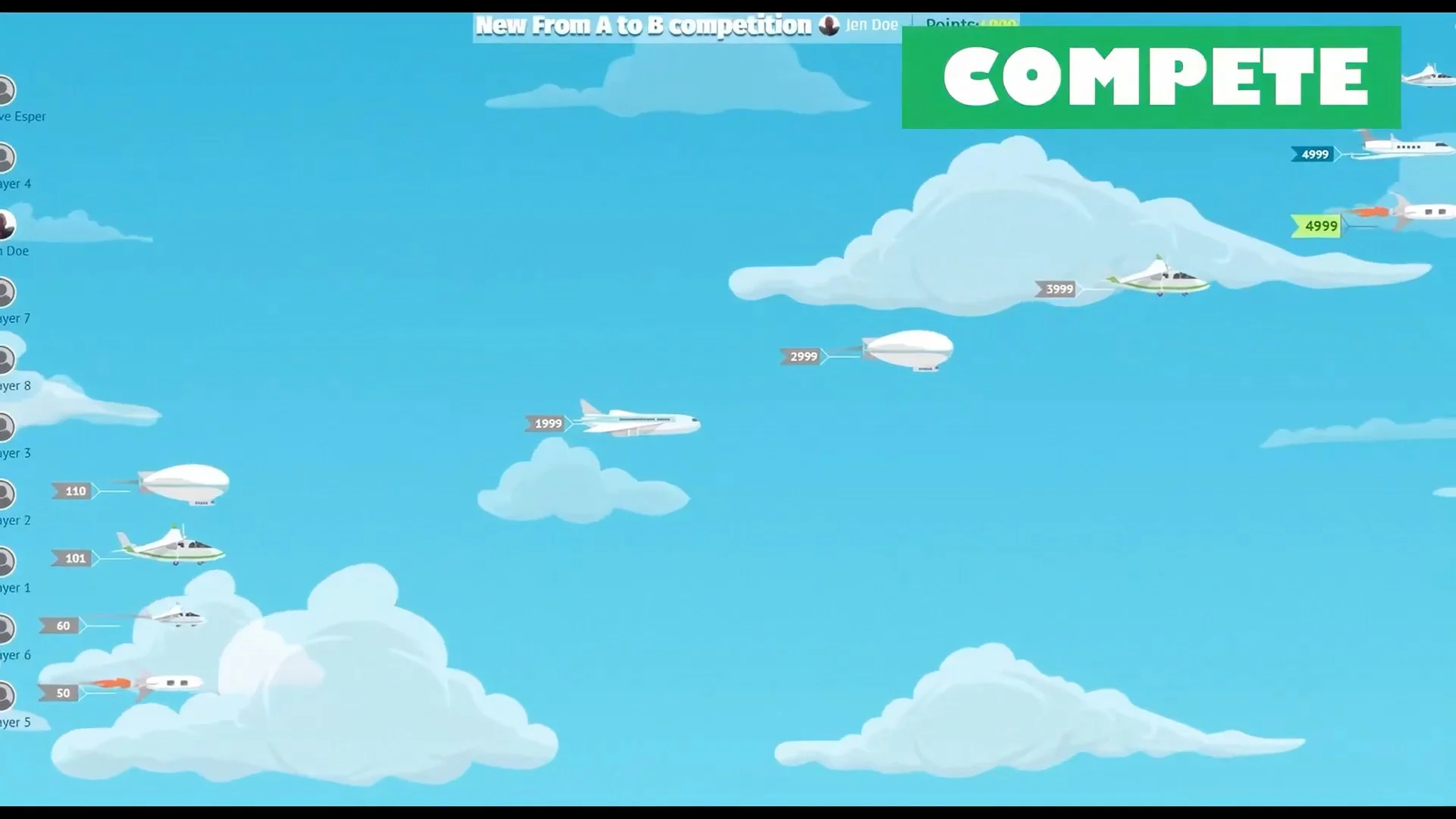
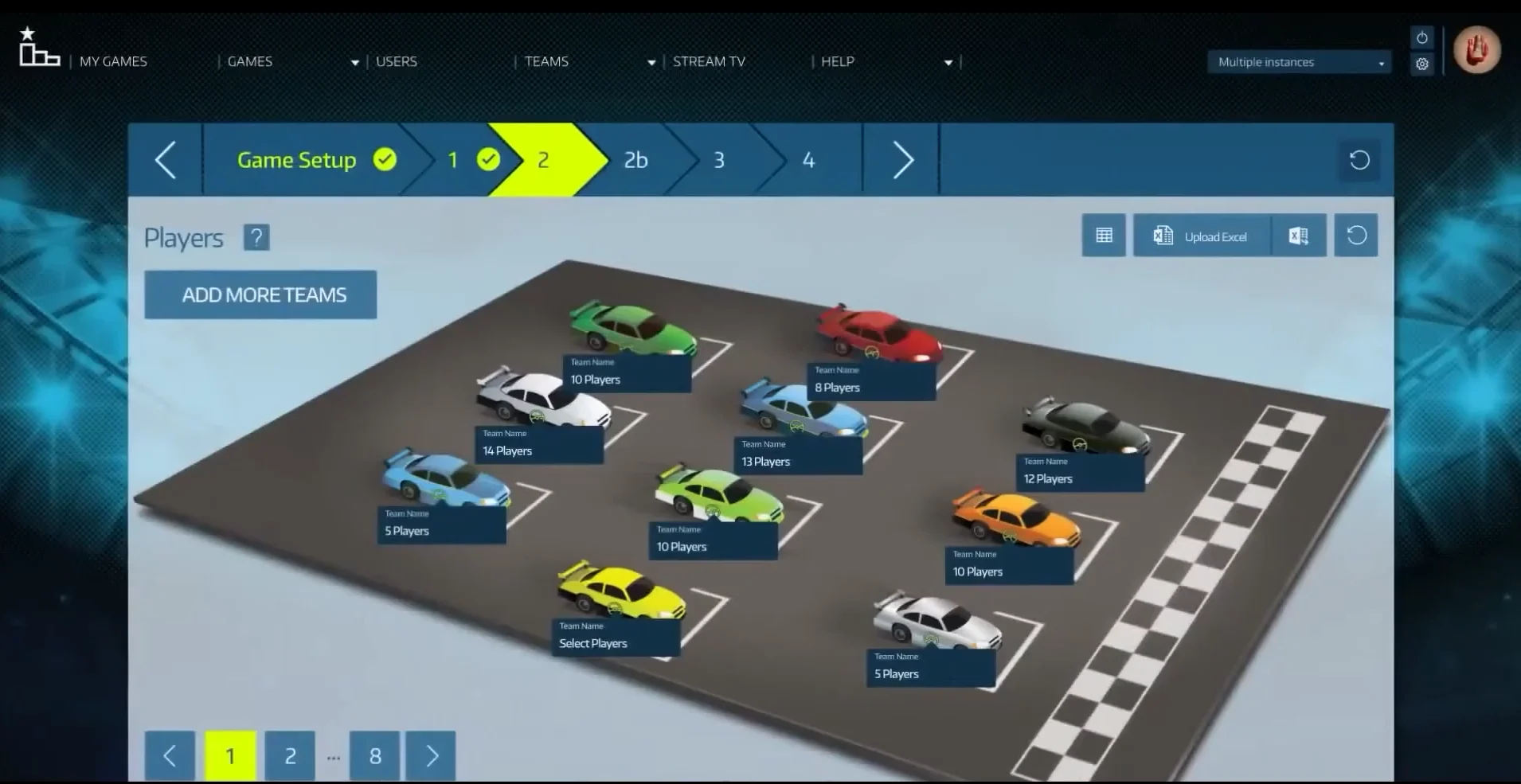
| Digital competition between teams | Mid-sized companies, 50–500 employees | Healthy competition, KPI growth through play, transparent analytics for managers |
| Gamification of production operations | Workshops, warehouses, service departments | Fewer errors, faster operations, motivation not tied to bonuses |
| Online game for distributed teams | Remote employees, branches in different cities | A sense of one team, regular participation, lower turnover among remote staff |
If you clearly define what needs to change — atmosphere, process speed, or engagement — choosing the format takes one day. For small groups, live scenarios work better; for broad reach, digital mechanics with individual progress work better.
We choose a format for your situation and budget, and after launch we adjust the mechanics based on early results — so the game serves the business, not just entertains.
How the Project Works: From Brief to Launch
We've structured the process so you can see results at every stage and influence the direction of the project. No "black box": you know what's happening, when, and what we're responsible for — and what your team handles. Below is the path a gamification project takes from the first brief to launch and handover.
-
Brief and immersion. We gather the task: goals, audience, current team atmosphere, and pain points. We clarify what result you consider a success — lower turnover, higher engagement, or better collaboration between departments.
-
Concept and mechanics. We propose a game scenario tailored to your corporate culture. We show which employee actions will be rewarded, how points are awarded, and what leaders get. This is a draft you can edit until approval.
-
Scenario and rules approval. We lock in all details: cycle duration, participant roles, reward system, and integration with internal policies. You approve the final version — then implementation begins.
-
Gamification project implementation. We build the platform, configure the mechanics, and prepare materials for employees and management. At this stage you get test access to see the game from a participant's perspective.
-
Testing and launch preparation. We run a trial run together with your administrators, smooth out rough edges, and test against real scenarios. A few days before the start, we give you a launch checklist.
-
Corporate game launch. We help announce the start, answer the first participant questions, and make sure everything goes smoothly. In the early days, it's especially important that the game delivers a positive experience right away — that builds trust in the mechanics.
-
Game support and analytics. After launch, we regularly collect feedback, adjust the balance, and add new challenges if we see interest fading. We provide clear reports: who participates, how the climate changes, and which departments are active. If needed, we extend the game or scale it to other teams.
What's Included in the Delivery: Everything You Need to Launch the Game
As a result of the project, you receive not a description of an idea, but a ready-to-use kit for launching a game in your team. Everything needed is packaged into clear materials — from the scenario to the result evaluation system.
Our team adapts the composition to your task, so the kit reflects the specifics of your business and your goals for improving the social climate in the team.
Here's exactly what's included in the delivery:
- Game scenario with roles, rules, and interaction mechanics — employees understand what to do, and the facilitator manages the process.
- Materials for the team: task cards, feedback forms, and a presentation for the kickoff meeting — launch the game without additional preparation.
- Administrator personal account — participant progress, round results, and change dynamics. You see how the team climate is shifting.
- Effectiveness metrics — a set of indicators for evaluating the game's impact on teamwork, engagement, and mutual support.
- Facilitator instructions and participant guide — you eliminate the "what do I do" questions and reduce the risk of failure at the start.
- Training for your employees — a short hands-on session on launching and supporting the game so the team feels confident.
This isn't "material for the drawer" — it's a working tool. The client gets a complete kit to launch the game at any time, without a long preparation phase. We stay in touch: if questions come up during the first run, we help adjust the game to the team's current needs.
In the end, you get a measurable result — an improved social climate in the team, higher engagement, and less tension among employees. And the effectiveness metrics let you show management a concrete impact from the project, not just words.
Case Study: How a Game Changed the Atmosphere in a 120-Person Team
A team of 120 people means different departments, different work rhythms, but a shared task. In practice, such teams often live in their own bubbles: daily tasks consume time, employees rarely communicate with each other, and the climate suffers from misunderstandings.
That was the case for our client — the retail chain Svoya Polka, where we brought gamification of business processes.
We built the project as a four-week game: mixed teams received tasks that required help from neighboring departments, and every joint activity earned points and unlocked new levels.
Importantly, it wasn't a mandatory exercise for a rating, but an exciting mechanic with clear goals. Launch didn't require mastering complex software — the game ran through familiar communication channels and the internal portal.
Results were measured after three months: in the satisfaction survey, the climate improved by 38%, engagement in shared projects rose from 32% to 78%, and turnover in the pilot group dropped by half.
Departments that used to shift responsibility began finding shared solutions on their own. Six months later, the client ordered a new round of the game for three hundred employees — as a permanent tool for onboarding and internal communications.
"It's amazing that in one month we got what we couldn't achieve through years of corporate events and trainings — a living connection between people from different branches. The team itself is asking for more," says the HR director.
For us, that's the main metric: the game is not a one-off event, but a sustainable change in the environment.
How to Choose a Gamification Format for Your Team?
There is no universal format that fits every team — and that's normal.
Gamification only works when the mechanics match the team's current challenges: sometimes you need to relieve tension between departments, sometimes speed up onboarding, and sometimes bring back interest in routine processes.
That's why the first step is always diagnostics: what exactly hurts in your team, and what result do you want to achieve in 2–3 months.
We recommend answering three questions before choosing a format: what communication problem is the most acute right now, who will participate — the whole company or a single team — and what level of competitiveness is acceptable in your corporate culture.
The answers immediately rule out half the possible options. For the rest, a simple mapping table helps — you can estimate the direction even before talking to a contractor.
| Gamification format | Who it suits | What it gives the client |
|---|---|---|
| Team quests and joint tasks | Departments with little live communication and misunderstandings between roles | Better social climate, new shared topics, and informal connections |
| Competitive leagues and ratings | Teams where initiative and healthy competition matter | Higher engagement, more employee activity in work processes |
| Levels and personal achievements system | Companies with distributed teams and remote employees | Individual motivation, reduced sense of isolation among employees |
| Corporate challenges and marathons | Any team that needs to quickly unite around a shared goal | Fast emotional lift, reduced stress, and a positive team atmosphere |
This is a basic framework, but in practice formats are combined. For example, sales departments often take a competitive league and add team challenges on top so competition doesn't undermine mutual support.
In production teams, joint quests with shared rewards work better — they directly strengthen the social climate.
We don't sell an off-the-shelf template. First we run a short team audit, then we propose 2–3 suitable formats with an impact forecast, and only then do we start development.
The client always sees which aspect of the social climate each element of the mechanics addresses — from the first brief to launch.
If you're unsure which option to choose, start with a consultation: in 30 minutes we'll review your situation and suggest a format that will deliver a quick, visible result. Submit a request — we'll match gamification to your team's goals.
Common Doubts Before Starting Gamification
Before launching gamification, most managers have the same doubts: what if employees don't get involved, the result isn't what expected, and the budget is wasted. That's normal — any new direction requires caution. That's why we address the main fears in advance and show how we work with risks.
What if employees don't want to participate?
We don't introduce mechanics blindly. Before launch, we run a short team diagnostic: what already motivates people, which formats they're comfortable with, and where the tension zones are. We adapt the game to the real audience, not the other way around.
As a safety net, we start with a pilot stage — a small group where reaction can be seen before scaling.
How quickly will there be a result?
The first changes in the atmosphere are usually visible within 3-4 weeks: people communicate more, there are fewer conflicts, and they engage more actively in shared tasks.
We define clear metrics in advance — for example, a satisfaction index or the frequency of joint activities — and show the dynamics in interim reports.
What if gamification doesn't affect the team climate?
Then we refine the mechanics at our own expense until the agreed target indicators are reached. We include this condition in the contract, so you don't risk the budget. In 10 years of practice, we haven't had a project where the approach didn't work after adjustments.
Will it take long and cost a lot?
There are formats for different tasks: from light mechanics for a quarter to a comprehensive system with ongoing support. At the first free consultation, we'll choose a solution for your budget and timeline. A typical project takes 2 to 6 weeks — faster than it seems.
Let's Discuss Your Task: Get an Implementation Plan
A good social climate in a team isn't an abstract value — it's a measurable factor: lower turnover, faster task completion, fewer conflicts. Gamification helps start these changes naturally, by engaging employees in a game. But any mechanics work only when they're designed for your team and its real challenges.
That's why we suggest starting with a conversation. Submit a request for the project — we'll contact you within one business day, clarify your goals, and send an implementation plan.
This is a free gamification consultation: you'll see exactly how the mechanics will be embedded into the company's processes, what indicators they'll improve, and what's needed from your side.
What you'll get after the request:
- An analysis of your task and a selection of game mechanics that solve precisely your problem.
- A preliminary implementation plan with stages, timelines, and areas of responsibility.
- A forecast of the impact on the team climate and employee engagement levels.
- Recommendations for integration with current policies and internal rituals.
- A clear assessment of the scope of work and collaboration terms.
- A clear next step so the project doesn't stall at the idea stage.
- Additional examples of successful solutions for your industry.
From there, it's simple: a short call, clarifying questions, preparation of the plan in 2-3 days, and a meeting for presentation and discussion. You don't pay anything for this stage — the consultation stays free even if you decide to postpone the project.
And when you're ready to order gamification, you'll already have a plan in hand and a clear understanding of the result.