

Gamification of change management: how to engage the team
Resistance to change is a natural reaction in any team. Employees fear uncertainty, the loss of familiar processes, and their own relevance. This fear slows down transformation even when the new rules are objectively beneficial to the business.
Orders and presentations don't ease the anxiety — they only add pressure. Gamification turns change into a game with clear rules, goals, and rewards. The employee becomes a player who is invested in the outcome. In this way, resistance to change gives way to interest and healthy excitement.
When employees see progress and get quick feedback, staff engagement grows significantly. Game mechanics help people master new processes step by step, without the fear of making mistakes.
As a result, employee loyalty increases: they feel the company values their participation rather than simply demanding compliance.
For the business, this means faster implementation of changes and fewer losses during the transition period. The team adapts without stress or turnover, and the manager gets a clear picture of the process. Gamification doesn't mask the problem; it changes the staff's attitude toward transformation.
We design gamification for specific business processes and change stages. We account for the team's specific context, its readiness for change, and the company's goals. As a result, changes go smoothly and employees stay engaged. Shall we talk about your project?
What benefits gamification brings to business
Gamification of business processes turns routine into a meaningful game, where each employee sees their progress and influences the overall result.
For business, this isn't entertainment but a change management tool: it helps implement new standards faster and keeps the team focused on goals. Our team use this approach to deliver measurable benefits for you, not just an "interesting project."
Here's what changes in practice:
- Higher productivity. Employees complete tasks with a clear goal and instant feedback. This reduces errors and speeds up processes without extra oversight.
- Reduced turnover. Engaged employees quit less often: the game provides recognition, career direction, and a sense of achievement. For HR, this means lower recruitment and onboarding costs.
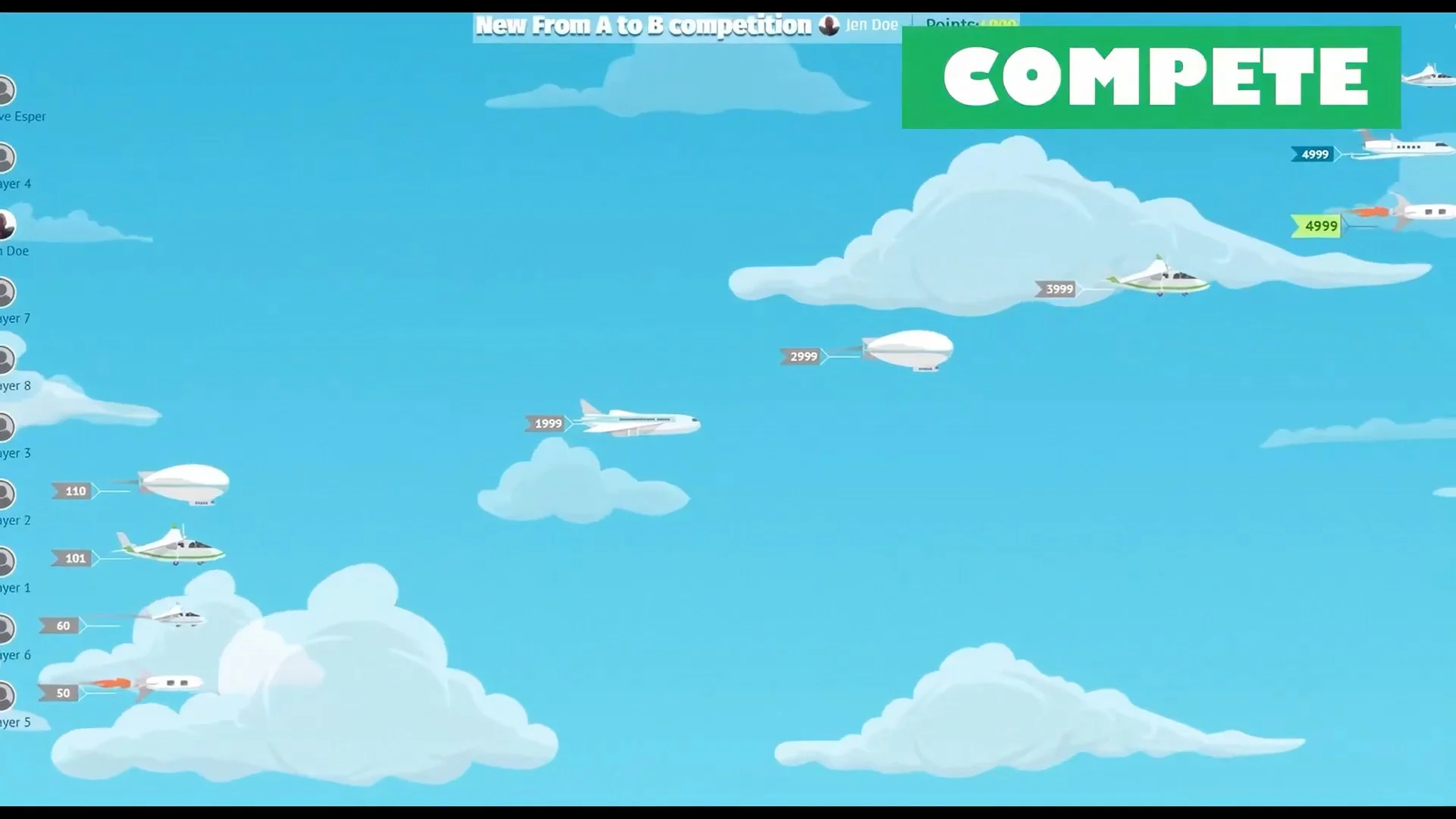
- Increased engagement. Healthy competition unites the team, boosts initiative, and increases loyalty to change. People suggest improvements on their own because they're interested.
- Faster change. Gamification of change management helps employees accept new processes faster. New procedures are learned through practice rather than orders, so resistance decreases naturally.
These are the gamification benefits that directly affect financial performance and the team climate. Start with one process — and you'll see how the team gets into the game.
Gamification formats for change management to fit the task
Change management rarely fails because of a weak strategy — more often it's due to people's resistance.
Employees find it hard to change familiar processes, so the task of gamification isn't to "entertain" but to gently move the team to new rules through clear game mechanics.
We choose a format for the specific task — staff training, speeding up the launch of a new procedure, or sustaining interest over a long haul. Below are three proven options.
| Format | Best for | What the client gets |
|---|---|---|
| Training simulation game | Mastering new processes, practicing difficult situations in a safe environment | Staff gets up to speed faster and makes fewer mistakes when switching to new procedures |
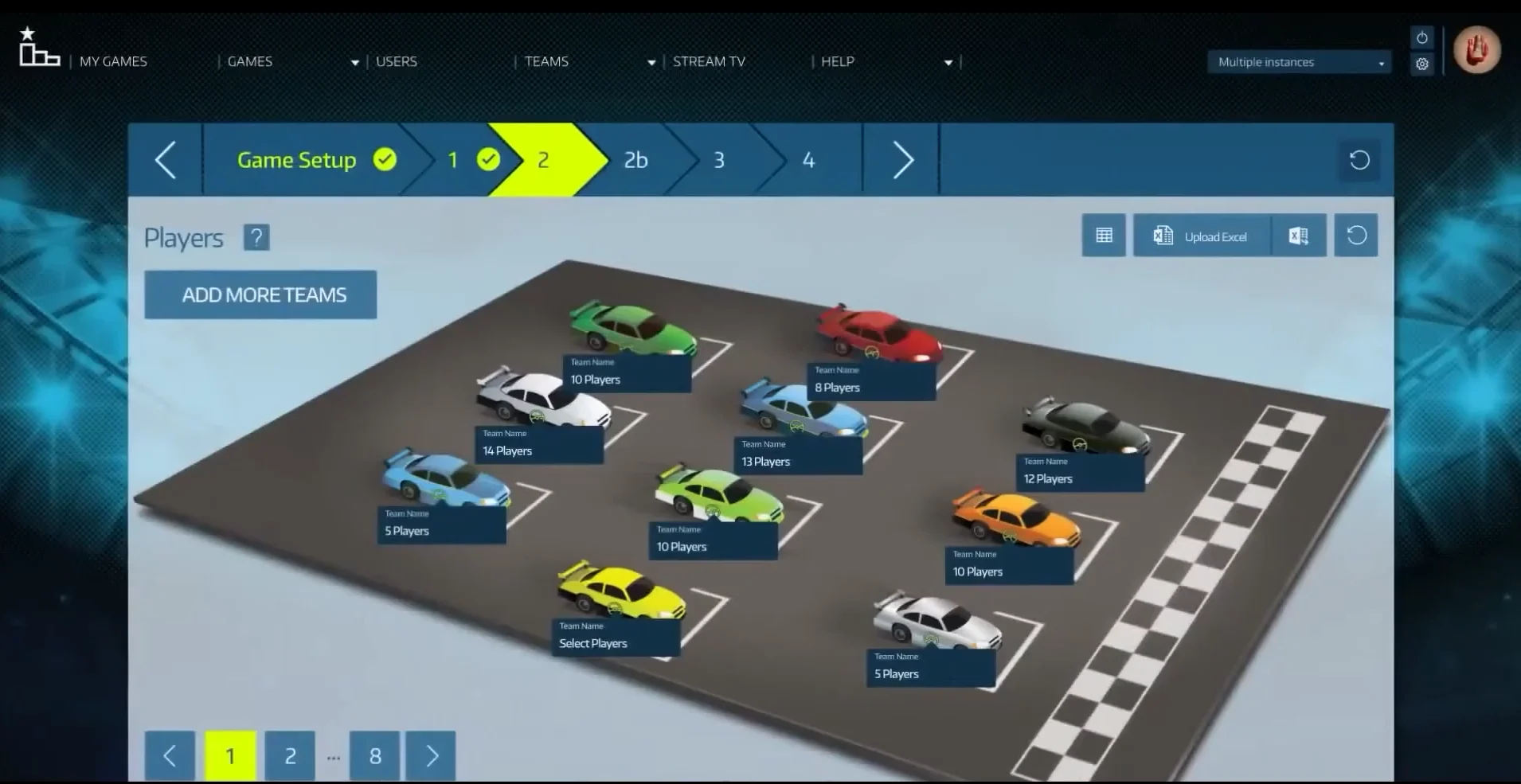
| Team challenges and quizzes | Building team cohesion, easing tension around change | Higher engagement, healthy competition, less pushback against change |
| Quest with stages and levels | Long implementation projects where focus must be held for weeks | Employees see progress and their personal contribution, interest stays alive, results stick |
The choice of format depends on the scale of change and the number of participants. For a single team, a light quiz is enough; for several departments, a combination of simulator and staged quest works better.
We adapt the mechanics to your business metrics: not just "play and forget," but we link game actions to real metrics — speed of adaptation, number of correctly completed operations, share of employees who have accepted the change. This way gamification becomes a tool, not a one-off campaign.
How a gamification implementation project proceeds
Gamification implementation is not a "magic button" but a step-by-step process that delivers results only when it's managed properly.
We've completed dozens of projects across different companies and built a clear path: you get transparent stages, timelines, and control points, not an abstract "we'll make it nice."
- Brief and audit of the current process. We analyze how tasks are currently structured, where engagement gets lost, and what changes need support. The output is clear goals and success criteria that everyone on the team understands.
- Scenario and mechanics. We design the game logic for your task: what an employee does, what reward they get, and how it affects the result. No "just add points" — only a link to business metrics.
- Prototype and approval. We show what the solution will look like and refine it before launch. You see the future system in advance rather than getting a "surprise" at the final stage.
- Setup and integration. We connect gamification to your work systems — a portal, internal accounting system, or a standalone app. We configure permissions, roles, and rules so they don't break current processes.
- Launch and training. We launch the system and run short training sessions for employees. Everyone understands why it's needed and how to use the new tool, which reduces resistance to change.
- Analytics and support. We track real metrics: engagement, task completion speed, and share of participants. We make targeted adjustments if something can be improved, and stay in touch after launch.
The result is not "implemented and forgotten" but a living system that helps manage change and turns routine into achievement. You get a working tool, not a report on the work done.
What's included in the gamified platform package
You're not getting a "raw" program but a ready-to-use tool that can be immediately integrated into your change management system.
The deliverable includes everything the team needs to understand the new rules, accept them, and start working by them without a long adaptation period.
Here's exactly what you get at the end of the project:
- Mechanics documentation pack — a description of gamified scenarios, point rules, levels, roles, and rewards. This is the basis for a transparent discussion of changes with employees.
- Platform settings tailored to your business processes — a ready-made configuration that doesn't require manual refinements. We connect your stages, KPIs, and job positions — the platform immediately reflects your actual structure.
- Instructions for staff — simple step-by-step guides and action scenarios for each role. Employees don't have to figure anything out: open the guide and see how to participate.
- Training materials for managers — manuals and templates on how to explain the meaning of change to the team, track progress, and sustain motivation.
- Regulations for contests and result summaries — we set the reward frequency, winner selection criteria, and feedback procedure. This eliminates disputes and any feeling of unfairness.
- Administrative documentation — a guide for those who will configure the platform and add new participants after launch. You won't depend on us for routine matters.
- Launch and support plan — a schedule for the pilot stage, control points, and the process for prompt support during the first weeks.
Thanks to this package, you get a solution that can be replicated: it can be scaled to new departments or branches without rewriting the rules from scratch. All the information stays with you — you fully own the system and the process.
Case study: gamification in a retail chain
Retail chains constantly update their standards: new scripts, product displays, procedures. Staff greets changes with resistance — service quality drops and turnover rises.
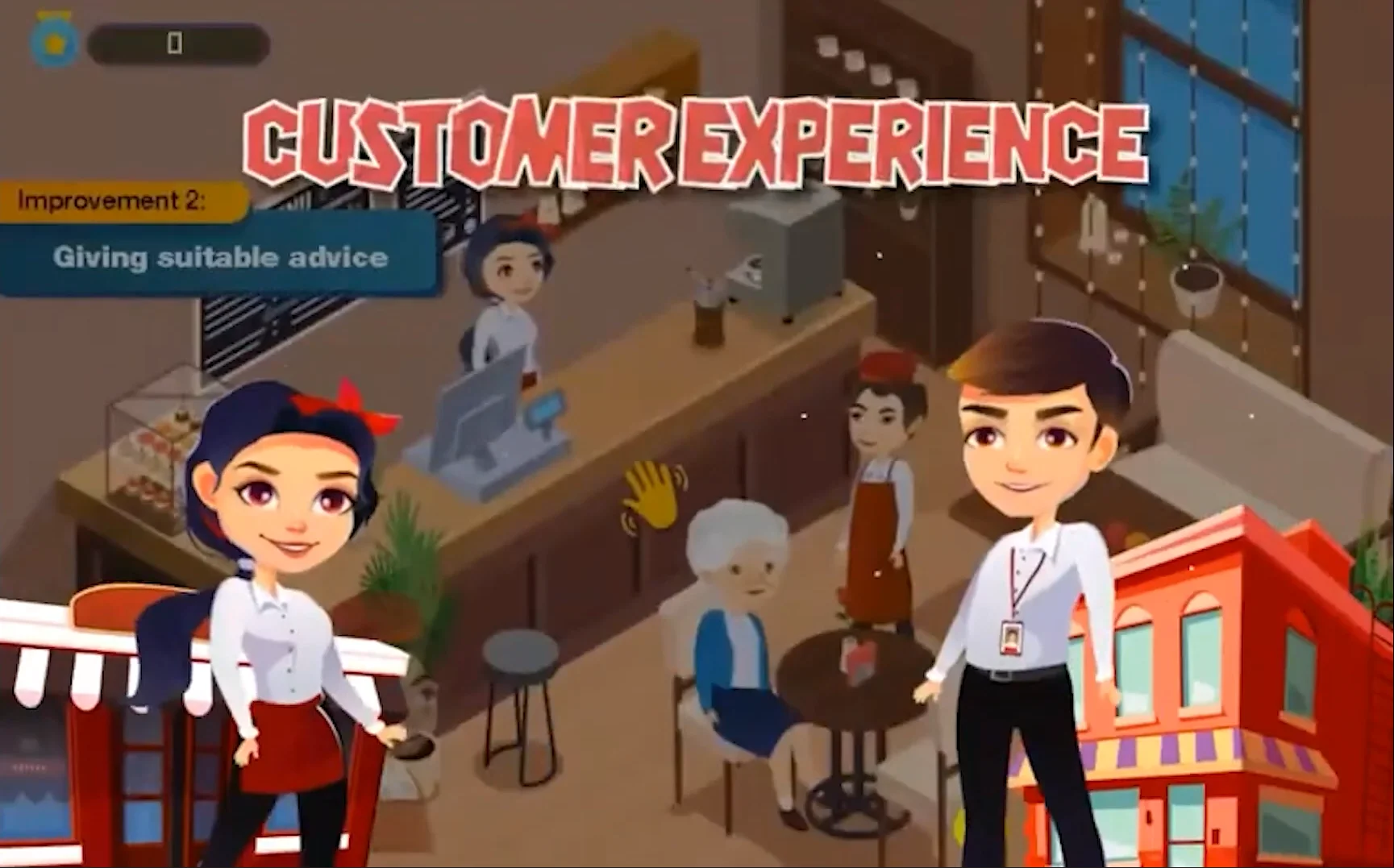
That's exactly what a retail chain — let's call it Fruit House — faced when, after another update to customer-service rules, sales associates' engagement in training dropped sharply and resignations became more frequent.
We rebuilt the change management process using gamification. Instead of dry instructions — team competitions in a mobile app, points for implementing new standards, a rating among stores, and quick feedback.
Employees started competing for the title of best team, and the new rules became not an obligation but an interesting challenge. Store managers got simple analytics — which store adopted changes faster and where additional support is needed.
What the pilot showed
Over a year in the test group, staff engagement grew by 37%, and turnover dropped by a third. The HR director summed it up: "For the first time, we see employees asking to continue training.
Change has stopped being scary — it became a game you want to win." After this result, the chain scaled gamification to all stores and ordered a second project phase for cashiers.
Why this works long term
Gamification doesn't entertain; it changes attitudes toward change. Employees see their progress, get recognition from colleagues, and understand the personal benefit of the new rules.
This reduces resistance, speeds up adaptation, and retains people — which cuts the cost of finding and training new hires. The company implements any changes faster because employees now expect them as a game rather than a threat.
How to choose a gamification format for your task?
There is no single "correct" gamification format: what works well for a young digital team may not resonate with a manufacturing workforce or employees in regional offices.
The choice always starts with the specific task — accelerating new process implementation, training staff, or maintaining attention during a long transformation.
So the first step is to understand your specifics: how many people are involved, where they are, how they usually react to change, and what serves as their natural motivation.
For example, short competitive mechanics suit tight deadlines, while long-term changes call for point-accumulation systems with team goals and regular feedback.
We don't offer a template solution from a catalog. First, we analyze your business situation and individual requirements: internal policies, corporate culture, time constraints, and resource limits.
Then we choose a format — from a board game or quest to a digital platform with competitive elements — and adapt it to your terminology and workflows.
A properly chosen format reduces resistance to change and makes the process clear and manageable. Employees see the point in the new rules, and you get measurable results: processes launch faster, engagement is higher, and fewer manual approvals are needed.
If you have specific requirements, tell us about them at a preliminary meeting. We'll propose two or three format options with projections for reach and timelines, and after the pilot launch we'll adjust the mechanics based on your feedback.
Frequently asked questions about gamification implementation
Gamification for change management is a way to help employees accept new rules faster and start working in a new way. Before the start, clients naturally have questions: how will this affect the business, how risky is the project, and who will support the result. We've put together answers to these concerns — briefly and without jargon.
What are the risks of a gamification project?
We mitigate risks through a pilot: we launch the mechanics in one department, collect feedback, and adjust the approach before full rollout. This helps avoid mistakes on a company-wide scale and strengthens employees' trust in change.
What happens after launch?
After handover, we don't disappear: we train your team, hand over instructions, and support the mechanics for the first few months. If needed, we quickly adjust the scenario so engagement doesn't drop and results stay stable.
When will we see results?
The first changes appear within the first few weeks: growth in activity, task completion speed, and engagement. We define metrics in advance and show their trends in a clear report, so you can manage the process based on data rather than guesswork.
Didn't find your question? Describe your task — we'll tell you how gamification can help your specific business and suggest the next step.Let's discuss your task and propose a solution
Leave a request, and we'll prepare a proposal that solves your change management task. Tell us what you want to change in employee or customer behavior, and we'll suggest gamification for your business, with a cost estimate and timelines.
What you'll get in response to your request:
- An analysis of your situation and suitable gamification mechanics — not "everything at once," but what works specifically for your goal.
- A cost estimate tailored to your scale — clear, with no hidden payments or fine-print asterisks in the contract.
- A business proposal with goals, stages, and expected impact — you immediately see what you get for your investment.
- Examples from our practice on similar tasks — so you can rely on real results, not promises.
- Answers to questions about timelines, integration, and support — before we start, so there are no surprises.
At <cite>our team</cite>, we've been implementing gamification projects for over 10 years for companies that need to accelerate change and boost engagement.
Our team handles all stages — from idea to launch and support — so you don't need to dive into mechanics and technical details.
Ordering gamification is simple: fill out the form or message us in a messenger. We'll get back to you within one business day, ask clarifying questions, and propose a solution for your task — without unnecessary bureaucracy or drawn-out approvals.