

Stress Management and Burnout Prevention in the Team
Employee burnout and chronic stress are not just a personal problem, but direct losses for business: productivity drops, turnover rises, and customer service quality suffers.
Managers often notice this too late, when the team has already lost interest in tasks and is working on autopilot. Gamification of business processes makes it possible to spot the first signals and turn the situation around before it becomes critical.
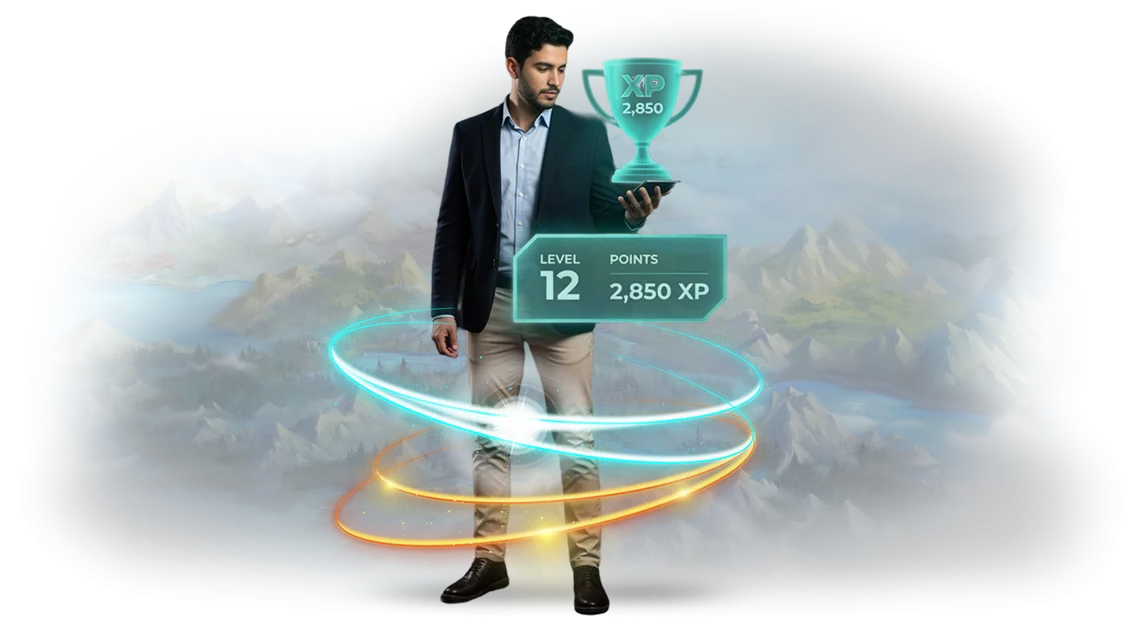
Instead of forced motivation and endless meetings, employees get a system in which ordinary work tasks turn into an engaging process with clear goals, levels, and rewards.
This reduces daily tension because a person sees not an endless stream of duties, but sequential steps where each result is reinforced by feedback. This approach is an effective stress management tool: it restores the sense of control that is lost during overloads.
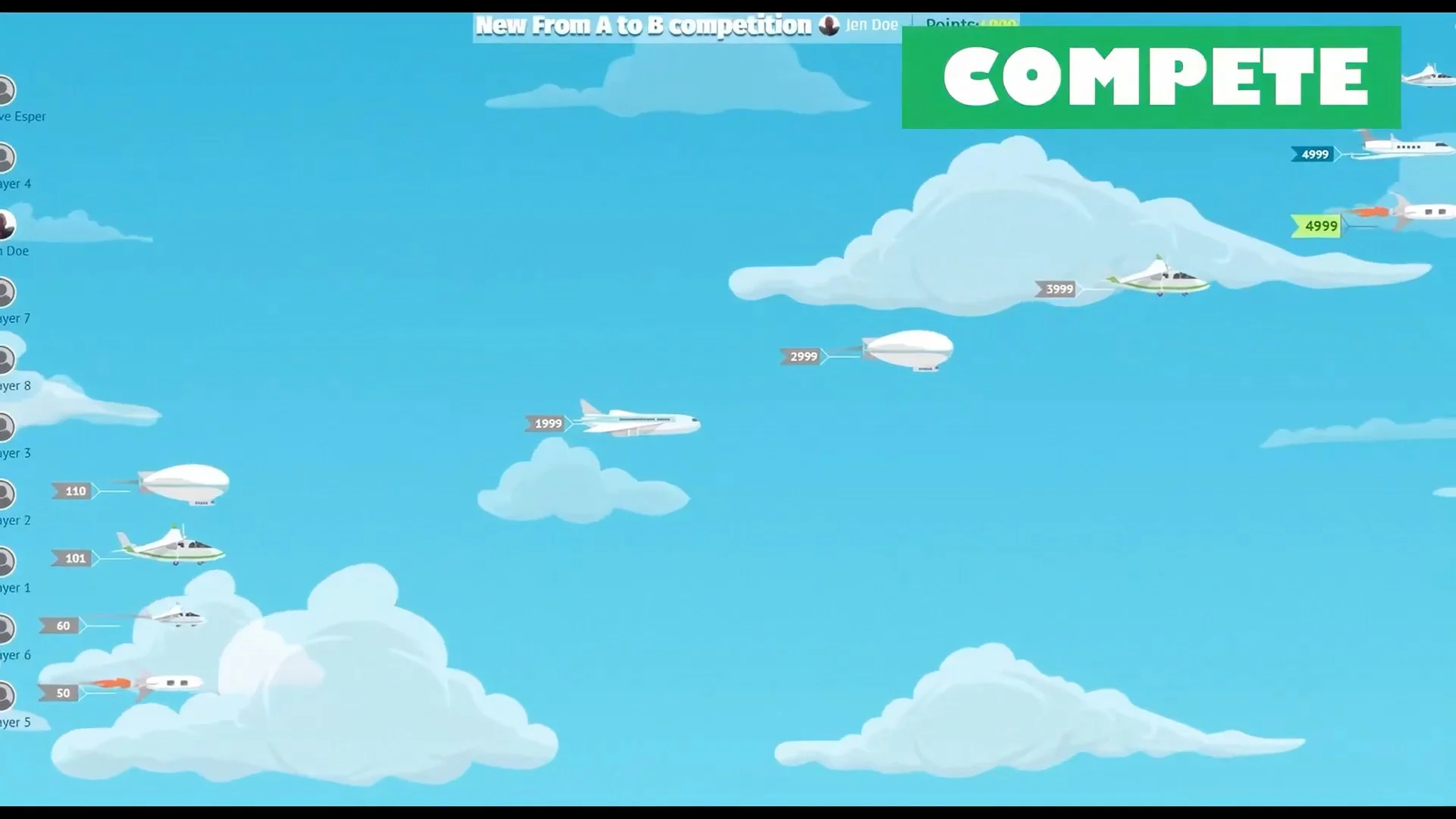
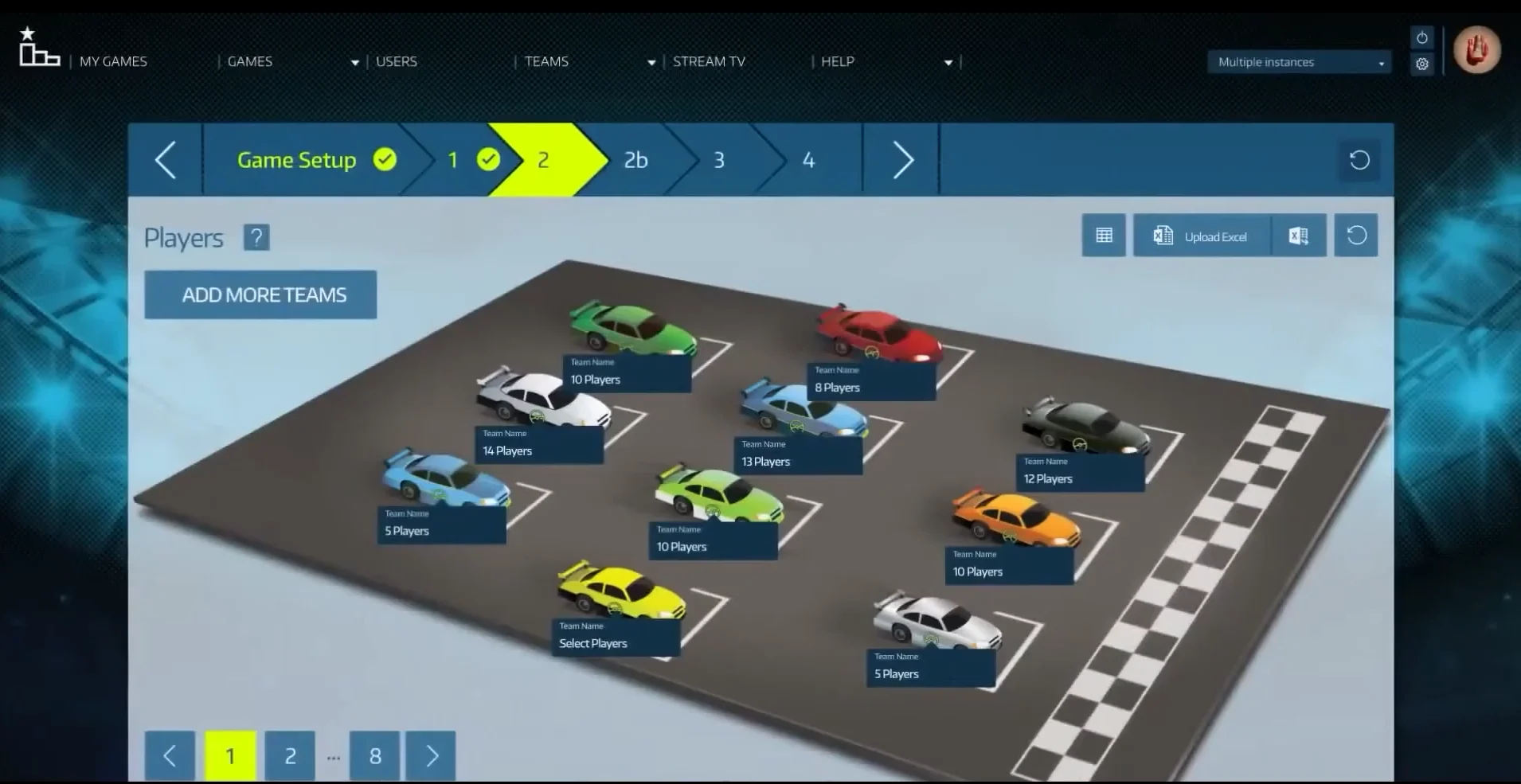
Gamification also works as soft team building. Joint challenges, team goals, and shared achievements unite the team and create a safe environment where supporting one another is the norm, not competing in fierce struggle.
As a result, anxiety levels drop, the atmosphere improves, and employees are less likely to slip into emotional burnout. For business, this means a stable team, fewer sick days, and higher engagement with the overall result.
Wehave been implementing gamification of business processes for more than 10 years, solving the challenges of burnout prevention and stress management in teams of various sizes.
Our solutions help not only entertain employees, but systematically reduce mental load and build healthy work habits. If you feel that the team is tired and productivity is declining, this is a reason to discuss how gamification can restore energy and interest in work.
What Results Does Business Get from Implementing Gamification
Implementing gamification directly affects HR metrics that show up in reports within the first months. The first and most tangible result is lower turnover: employees less often resign not because of money, but because of burnout and a lack of visible progress.
Game mechanics create a sense of movement, small victories, and growth, so a person stops seeing work as a rut and stays with the company.
The second measurable result is higher employee engagement. When routine tasks become achievable goals with clear feedback, employees get involved on their own: the number of initiatives grows, along with activity in shared chats and task completion speed.
This is not “entertainment for entertainment's sake,” but a tool that brings back interest in work and reduces losses from formal presence.
The third effect is an improved psychological climate in the team. Team mechanics and shared challenges lower stress levels, reduce conflicts, and build a healthy habit of supporting one another.
Managers notice this through indirect signs: fewer sick days, fewer missed deadlines, and a warmer atmosphere at all-hands meetings.
Finally, a manageable burnout prevention system emerges. Instead of dealing with the consequences of resignations and apathy, you see the signals in advance and gently adjust the workload.
Gamification turns care for the team's condition from a “vague initiative” into a regular process with clear rules and outcomes. Business gets not just loyal employees, but a predictable team that consistently delivers results.
Gamification Formats: Choose the Right One for Your Task
A burnout prevention program will only work when the format matches the task and the audience. In-person training delivers lively engagement, an online platform offers convenience and reach, and hybrid learning combines the strengths of both approaches. Below is a comparison to help you choose an option without overpaying or unnecessary effort.
| Format | Suitable for | What it gives the client |
|---|---|---|
| In-person training | Small teams (up to 20 people) that need live contact and group dynamics | Maximum engagement, hands-on practice of techniques during the session, team-building effect |
| Online platform | Distributed teams, traveling employees, multiple branches | Unified reach without gathering in one place, access at a convenient time, progress tracking for each participant |
| Hybrid learning | Companies where part of the team is in the office and part is remote | Equal experience for all employees: live exercises for the office and high-quality online for remote staff |
To make a decision, answer one question: what matters more — intensive group work or wide reach without schedule constraints? In the first case, choose the in-person format; in the second, online. If you need both, hybrid learning will cover both tasks at once.
If you are unsure which format will deliver the best result for your team, tell us about your situation, and we will help you choose the optimal option and adapt the program to your request.
How Implementation Goes: Step-by-Step Process
Gamification of stress management and burnout prevention processes only brings benefits when the program is embedded into employees' daily routines and accounts for real workloads. That is why we work according to a transparent scheme: from the first brief to post-launch support.
You do not need to understand technical details — you always know what stage the project is at and what result you will get.
- Brief and diagnostics — we dive into the team's situation: we record the current workload, identify stress triggers, and determine which business processes need support.
- Scenario development — we design game mechanics that reduce tension, develop mindfulness, and naturally integrate into the work rhythm without distracting from tasks.
- Program approval — we present a prototype of the future gamification, discuss rules, roles, timelines, and performance criteria. At this stage, you see how the program will work specifically in your team.
- Launch preparation — we bring together organizational processes, select tools, and prepare clear materials for participants and internal administrators — so the launch does not require a separate team from you.
- Pilot stage — we run a trial launch for a small group of employees, collect feedback, and fine-tune the details: scenarios, task difficulty, frequency of events.
- Full launch and support — we roll out the program to the whole team, monitor dynamics, answer participant questions, and adjust the course so that burnout prevention produces a lasting effect.
What Is Included in the Program Delivery
For the burnout prevention program to work, it is not enough to give employees a link to a manual. You need ready-made scenarios, support, and tools that the team can use from day one.
That is why the delivery includes not just a set of materials, but a complete package — everything needed to launch and support the program inside the company.
Here is what you get:
- Methodological guide for HR and managers: step-by-step implementation scenarios, group meeting formats, and criteria for assessing employee well-being.
- Access to a stress management platform: short practices, well-being trackers, reminders, and a personal account for each participant.
- Moderator training program: practical sessions, test sessions, and handling tricky situations, so your specialists can confidently lead groups.
- Communication materials kit: announcements for the internal portal, email templates, and cheat sheets — to engage the team with minimal effort.
- Administration and technical support at all stages: access setup, participant assistance, and prompt resolution of issues throughout the contract term.
- Reporting dashboard for management: clear indicators of engagement, participant progress, and stress level dynamics — without deep data analysis.
This approach removes the main pain point for HR: the need to assemble a program piece by piece and figure out the details on your own. We hand over a working system in full, and the support team stays in touch even after launch.
Case Study: How We Reduced Burnout in an IT Company
When signs of burnout began to grow in the IT company AlfaTech with a team of 120 people — employees were getting tired, engagement was declining — managers saw an alarming signal: annual staff turnover jumped to almost a third of the team.
Replacing each specialist was expensive: weeks of searching, onboarding, and lost knowledge. The managers turned to us for a solution.
We proposed not abstract trainings, but gamification of stress management processes. Instead of boring instructions, the team took part in recovery challenges, practiced short mindfulness techniques with point scoring, and competed between departments for a shared result.
For each completed cycle, employees received not only points, but also real bonuses — from an extra day off to shared leisure activities. This triggered natural motivation and made self-care a habit.
Results
We measured the results with anonymous surveys and HR metrics. After three months, the burnout level in the team dropped by a third, and two months later, turnover also fell: instead of a third of the team per year, the company lost only a few people.
Employee satisfaction grew from a low level to a consistently high mark, and internal surveys showed that people felt cared for by the management.
Here is what this means for business. Stress management and burnout prevention ceased to be “soft” bonuses and turned into a team retention tool. The company saved on hiring and training new people, preserved expertise, and accelerated product releases.
Managers finally stopped guessing who would hand in their resignation next — the team became stable, and the atmosphere healthy.
This example is not the only one. In our practice, gamification consistently reduces burnout and turnover in teams of any size. The key is to design the mechanics properly for a specific company's culture and goals, and then the result is not one-off, but long-term.
How to Choose the Right Gamification Format?
Choosing a gamification format starts not with trends, but with your goals and budget. If the task is to reduce employee stress and prevent burnout, you don't need to build complex applications.
It is enough to select mechanics that fit naturally into the team's daily life and support the desired state.
For burnout prevention, soft regular formats work best: mindfulness marathons, gratitude programs, short recovery practices. They don't require much time from employees and create a sense of care rather than competitive pressure. It's important that the game shows visible progress and motivates people to return to it every day.
Budget determines scale, but not the result. You can launch a light program inside a team with minimal investment, or organize a corporate game with prizes and ratings.
Our experience shows that even a small budget produces measurable results if the mechanics are chosen for your audience and regularly supported.
The selection criteria are simple: convenience for employees, clear rules, and measurable indicators — for example, stress level, satisfaction, reduced sick leave. It is important that the format is easy to implement and maintain, then the result will be sustainable.
We work on a professional platform that allows you to quickly configure scenarios and track their effectiveness in real time.
If you are unsure which format suits you, start with a consultation. We will analyze your situation, offer two or three options for your budget, and help you launch the program within a couple of weeks.
This will save time and money, and most importantly — keep the team in good shape and prevent burnout.
Frequently Asked Questions and Client Concerns
Clients often ask whether gamification really helps with stress management and burnout prevention, or whether it's just entertainment. We understand your doubts: this is a serious topic, and you want to rely on proven solutions. Here are answers to common questions.
Won't it become a game at the expense of work?
We design the program so that game mechanics reinforce useful habits: breaks, breathing exercises, team support. Employees don't get distracted from tasks; instead, they get a rhythm that reduces tension. We evaluate effectiveness by engagement and feedback, not by “points for points' sake.”
How will the program fit into our culture?
We start by studying the company's objectives and auditing the current state of the team. We select formats — from short online practices to offline sessions — and adapt scenarios to your schedule and values. You get a solution that feels “native” rather than imposed from outside.
Who will support the program after launch?
We don't disappear after project delivery. We help engage the first participants, train internal curators, and provide communication materials. Afterwards, it's your choice: you run the program yourself, or we stay on support and adjust the mechanics based on results.
When will the first results appear, and are there guarantees?
The first changes in participants' state are noticeable within a couple of weeks. For sustainable burnout prevention, we plan a horizon of 2–3 months — enough to establish habits and see dynamics in surveys and turnover. We document agreements in the work plan and provide a guarantee for launch and support.
Submit a Request for Gamification Development
Submit a request, and we will immediately show you how gamification will reduce stress and prevent burnout in your team. You don't need to understand mechanics and scenarios: we will propose a solution for your task and budget ourselves.
Immediately after your request, you will receive:
- Free audit of your current stress management and burnout prevention processes — you will see weak spots you might not have suspected.
- Online consultation with a gamification expert: we will discuss tasks, employees, and expectations, and answer all questions without jargon.
- Preliminary implementation plan tailored to your budget — you will understand where to start and what results to expect at each stage.
- Cost and timeline estimate for development based on your request — transparent, with no hidden fees or “fine print”.
- Examples of successful projects in similar companies: how colleagues in your industry have already reduced stress levels and retained their teams.
- Clear recommendations on first steps, even if you're not ready for a full-scale launch yet.
Submitting a request is not binding — it's a way to get specifics and understand whether gamification is right for you. We don't “sell” unnecessary options: if we see that a light solution is enough, we'll say so to save your budget.
Fill out the form or write to us on a messenger — we'll call you back within one business day, conduct an audit, and prepare a custom proposal.