

Employee Resistance Kills New System Implementations
Employee resistance is the main reason why implementing new systems turns into a months-long struggle. Even a technically perfect solution fails if employees see it as a threat rather than a helper. The company loses time, money, and team trust — and ultimately reverts to old processes.
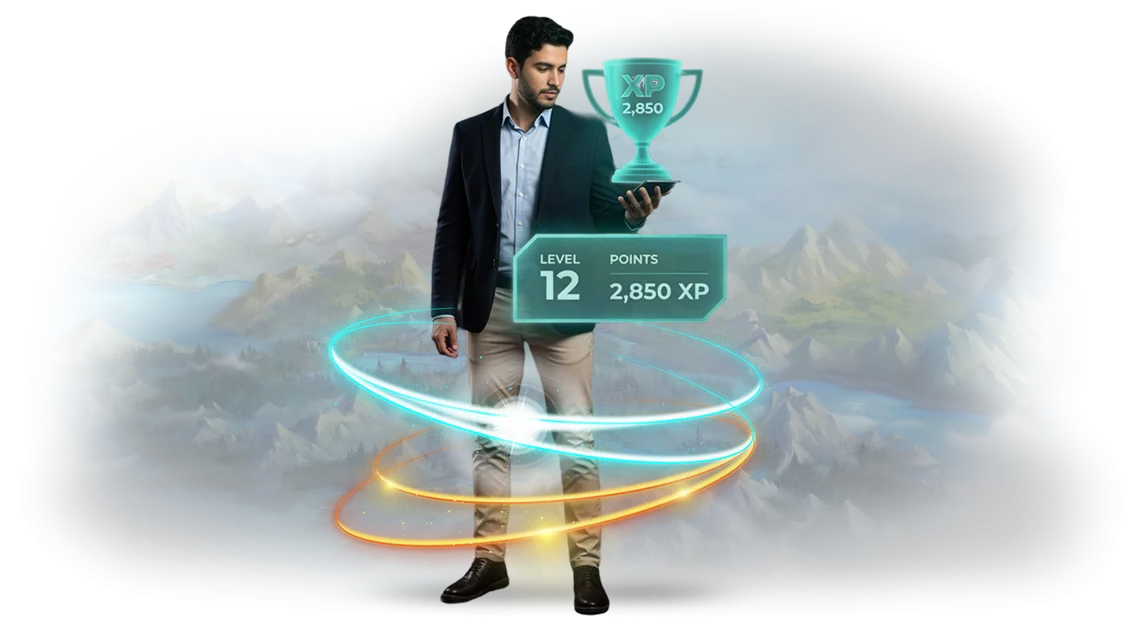
Gamification of business processes solves this problem at the level of motivation rather than coercion. Instead of instructions and control, we create a scenario in which mastering a new system becomes clear and even engaging. Employees get quick wins, see progress, and understand the personal benefit of the transition.
When new system implementations are accompanied by game mechanics, tension fades and employee engagement grows. Mistakes are no longer a reason for punishment — they are just a stage of the level.
The team itself starts helping each other, and staff resistance gives way to interest and healthy competition.
As a result, the transition to new processes takes several times less time and happens without sabotage. Employees do not just accept the change — they become its champions.
This is how gamification turns a risky implementation project into a manageable process with a predictable outcome.
What Business Results Gamification Delivers
Companies most often lose money not on software purchases, but on employees sabotaging the new system. People fear change, resist processes that seem complex and confusing — and the project stalls for months.
Gamification results prove: when an employee is engaged through play, implementation speed accelerates severalfold, and productivity grows without burnout.
Look at business metrics: gamification delivers measurable efficiency growth. Systems of quests, levels, and rewards turn routine into competition — people meet standards more willingly, close tasks faster, and get distracted less often.
Research by Gallup shows that engaged teams perform better and make fewer mistakes. By introducing play into processes, you work not with the “hardware” but with motivation — and that is what delivers the numbers in your report.
What Changes for the Business After Launch
- Productivity growth — employees complete the plan faster because they see their progress and compare results with colleagues.
- Lower turnover — an engaging format reduces the desire to leave; the company keeps experienced people and the money it would spend on finding replacements.
- Faster onboarding — new hires master procedures in weeks rather than months and hit target metrics sooner.
Employee loyalty grows precisely because of clear goals and instant feedback. The employee sees that their contribution is noticed and rewarded — they stop seeing the implementation as a threat and begin treating it as a personal challenge. The manager gets a transparent picture: who is leading, who is struggling, and who needs support.
Ultimately, process gamification is a change management tool that pays off already at the launch stage. Metrics are calculated automatically, and navigating the new system stops being a problem for staff.
If you need a predictable result and a team that does not resist — let’s discuss your process to get started.
Gamification Formats for Your Business Goals
Every business process is unique, so there is no universal game. Gamification works when the format is tailored to a specific task: training employees to work in a new system, uniting the team during change, or accelerating adoption of new procedures.
Below are the main formats we use in new system implementation projects. They combine easily and adapt to scale, timelines, and corporate culture.
| Format | For whom | What it gives the client |
|---|---|---|
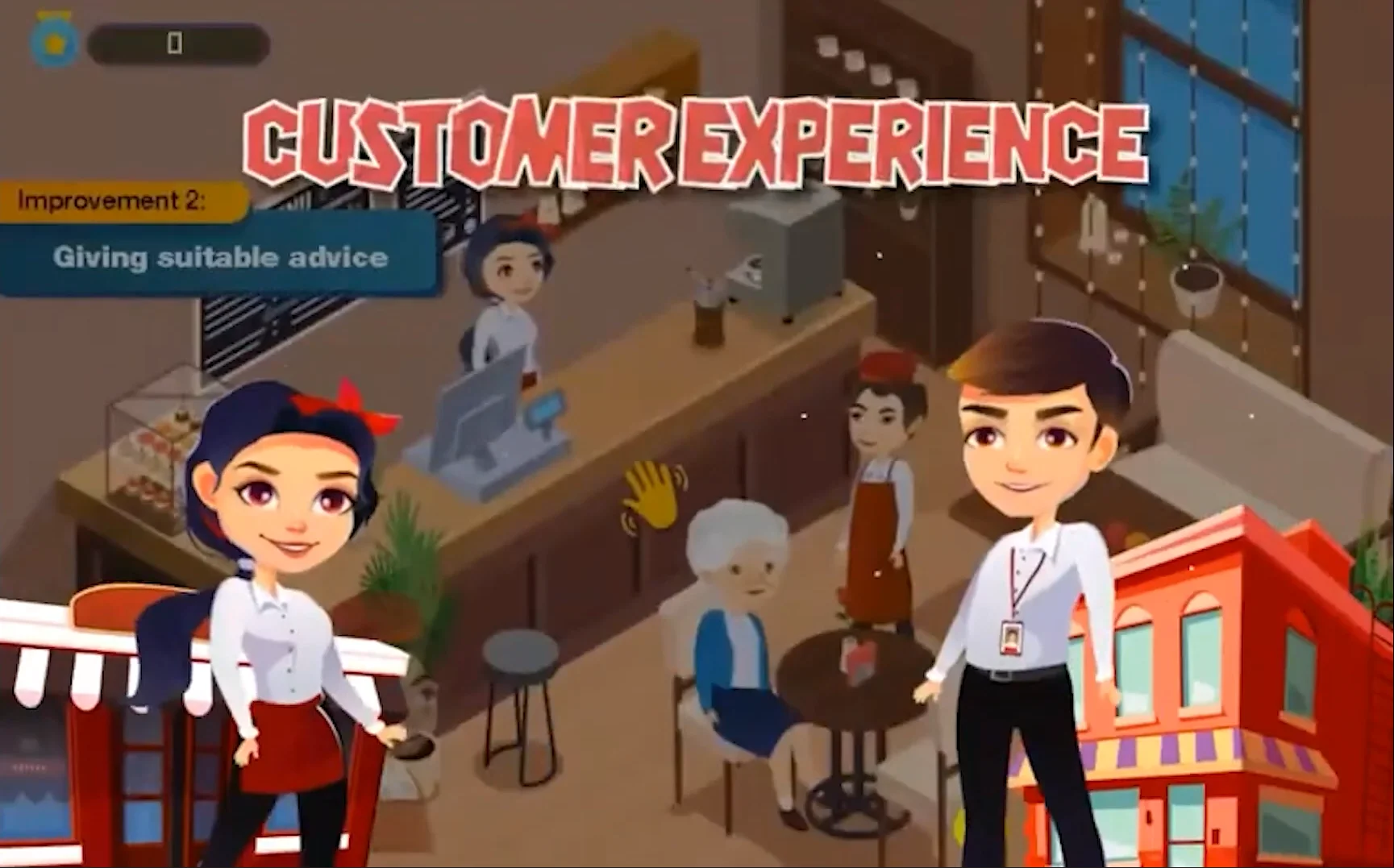
| Quests | Employees mastering a new system or procedure | Fast immersion in the process through real-task scenarios. Resistance to change decreases, confidence in error-free work grows. |
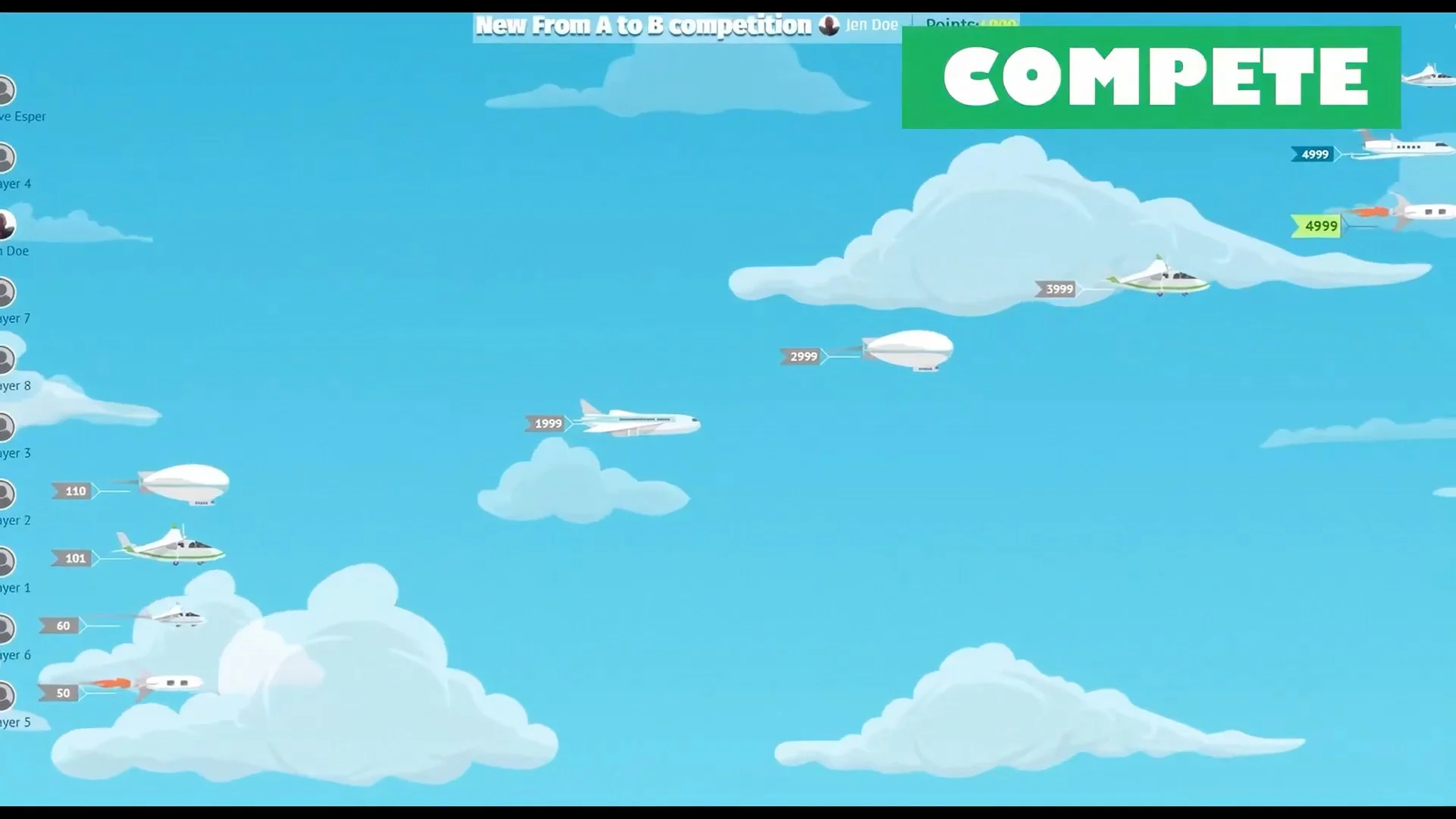
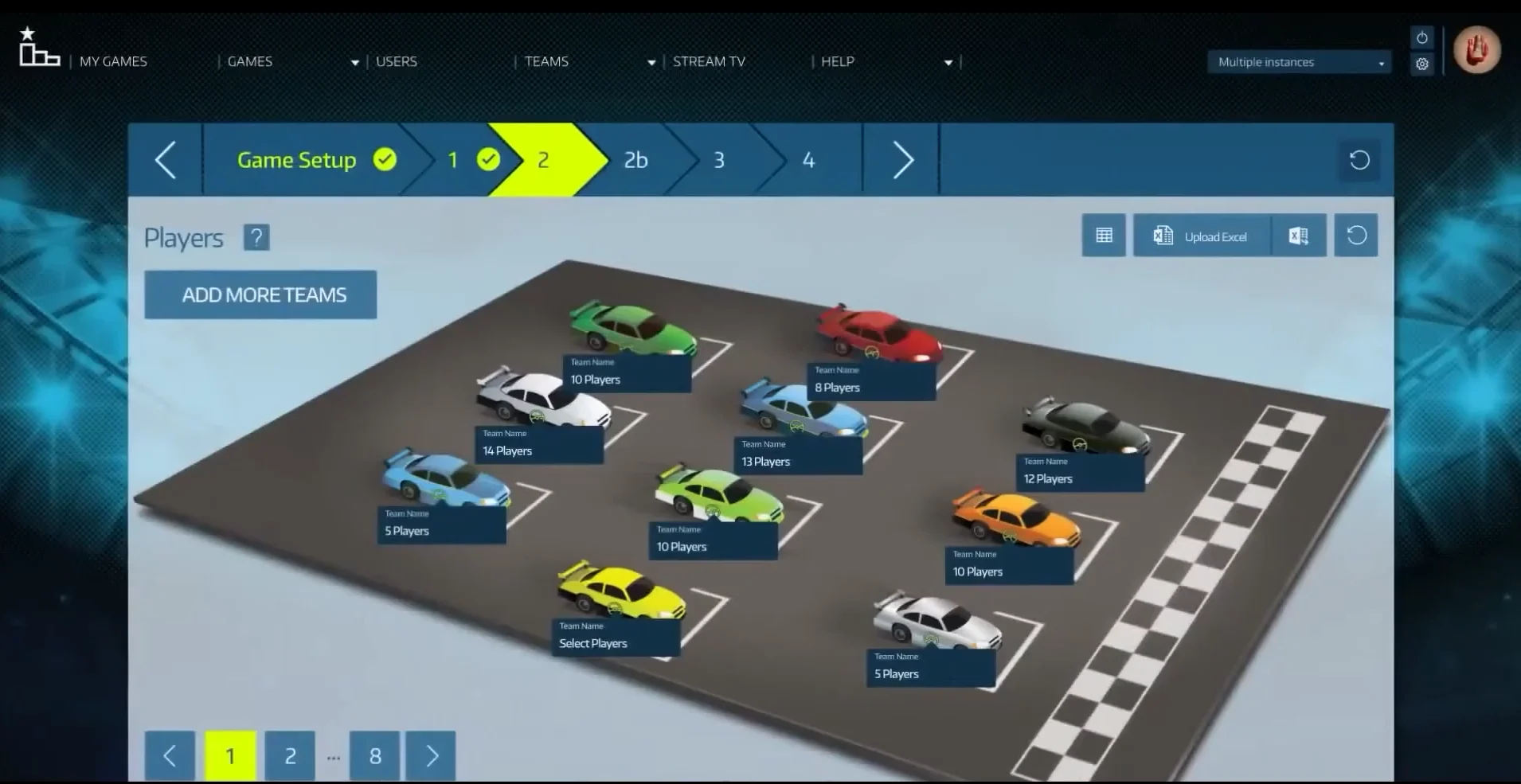
| Competitions | Departments, branches, competing teams | Engagement through healthy excitement. Activity and speed of mastering new tools increase in a short period, visible progress appears. |
| Simulations | Managers, executives, rare complex scenarios | Skill practice without risk to the business. Allows testing decisions in a safe environment and preparing staff for non-standard situations. |
| Training levels | New employees, mass workforce | A clear sequence of steps with instant feedback. Reduces onboarding time and decreases the load on mentors. |
| Team marathons | Project groups, cross-functional teams | Build a common pace and a sense of unity when transitioning to new processes. Help reach target indicators faster. |
Choosing a format is not entertainment; it is a change management tool. We match the mechanics to your task so that the result is measured not by emotions but by business metrics: implementation speed, the share of employees who accepted the system, and error reduction.
Five Steps to Implement New Systems with Gamification
Implementing a new system is slowed down not by technology but by people: employees resist change, see no point, and put off learning until the last moment. Gamification turns this path into a motivating game where the goal is clear to everyone and progress is visible.
Wehave developed a step-by-step method over years of practice that fits into five stages and delivers a predictable result — without missed deadlines or team sabotage.
- Brief and diagnostics — we meet with you and key employees, find the bottlenecks of the implementation, and determine which actions need to be reinforced. The result is a clear technical specification with success criteria so the project does not need to be redone halfway through.
- Scenario design — we create game mechanics for your process: tasks, roles, levels, rewards. You see exactly how people will be engaged and how that will affect performance indicators immediately, before development starts.
- Development and testing — we build the solution on proven tools, run it through real scenarios, and polish it to stable operation. You get a product that does not “crash” at the most critical moment.
- Launch and pilot — we connect a pilot group, collect feedback, and make targeted adjustments. Only after that do we expand coverage to the whole team — without chaos or loss of motivation.
- Support — after launch, we stay in touch: we answer questions, monitor activity, and adjust the mechanics when business tasks change. Gamification lives together with your process; it does not end on release day.
What’s Included in the Delivery: Launch Kit
After the project is completed, you receive not an abstract report but a working kit that lets your team launch gamification without our ongoing support.
It includes game rules, manuals, settings, and templates — everything needed to replicate the mechanics across other departments and new directions.
- Game rules — a clear description of mechanics, roles, levels, and rewards. Employees understand what earns them points, and managers see the evaluation criteria.
- Administrator manuals — a step-by-step guide for setting up and launching rounds. Suitable for training a new employee: all steps are described, no secret knowledge remains.
- Settings and templates — ready-made configurations for your processes, print layouts, and internal mailings. Nothing needs to be created from scratch.
- Team artifacts — texts, design elements, and announcement drafts. With them, it is easy to engage participants from day one.
- Project results documentation — engagement measurements before and after launch, participant feedback. Ready-made material for reporting to management and replicating the practice.
- Support policy — areas of responsibility, incident response times, and planned control points. It is clear when to contact us and what your team can handle on its own.
Such a kit allows your team to launch new rounds independently and quickly adapt the game to process changes. We stay in touch: if refinement or a new scenario is needed, you already have a foundation to build on.
Case Study: How We Engaged 300 Employees in a New Process
Implementing a new system is always stressful for staff. Employees fear change, keep working the old way, and the speed of adopting innovations drops.
In a project for a large retailer, we faced a classic situation: the sales department sabotaged the transition to a new ERP system, and training was completed just “for show.”
Instead of orders and dry briefings, we proposed gamifying the implementation process. We broke the transition into stages, added ratings, badges, and team competitions — every employee saw their progress and understood their contribution to the overall result. People began competing not against management, but against their own laziness.
A month after launch, all 300 employees had entered the system — that is 100% engagement without a single order. Key metrics improved: order processing speed increased by 40%, and data entry errors decreased twofold.
Department heads noted that teams themselves asked for additional training to master the new tool faster.
The project lead at RetailGroup admitted that this was the first implementation experience that went without resistance. Employees perceived the change as a game, not a threat. Within two months, we received a repeat order — to gamify the onboarding of new company employees.
This case confirms the key point: gamification turns a forced change into conscious participation. The result is faster implementation of any system, higher staff engagement, and measurable business growth. This is exactly what we build into every business process gamification project.
How to Choose a Gamification Format for Your Task?
There is no universal gamification: what accelerates customer registration will not work for training employees in a new system.
That is why the first question we ask ourselves and the client is what specific behavior needs to change: speed up implementation, reduce errors, increase engagement, or help a newcomer reach target metrics faster. Selecting a format starts with the goal, not with trendy mechanics.
To match gamification to a task, we look at the business process itself: where losses occur, at what point employees resist the system, which stages “stall.” After that, we propose two or three formats that solve exactly that problem.
A short challenge works where you need to quickly engage the team and show early results. A narrative game with stages suits a long-term new system implementation when you need to sustain interest for weeks. Team competition strengthens knowledge sharing between departments and accelerates adaptation.
The key principle is that the format should not “entertain” but deliver a measurable indicator: the number of completed documents, request processing speed, or the share of active users.
That is why, at the selection stage, we agree on metrics that will be measured before, during, and after the program. This makes it possible to see within a few weeks whether the chosen scenario works and, if necessary, adjust it without losing momentum.
A personal consultation on format selection is free and takes about an hour. On the call, we analyze your process, audience, and bottlenecks, and you leave with a recommendation containing gamification options and expected results.
If a decision is not yet ripe, we will suggest where to start and how to test initial hypotheses on a small group. This way, you choose a format deliberately, not at random.
Frequently Asked Questions and Doubts Before Starting
Every new process meets resistance — that is human nature. So before starting gamification, the same questions come up: how much it costs, whether it will disrupt work rhythms, and whether employees will want to participate. We answer the main concerns right away so decisions are made based on facts, not fears.
Is it expensive, and will it pay off?
The cost depends on your task: you can strengthen one department or launch a company-wide program. Gamification pays off faster than traditional procedures and trainings — employees become engaged and require less control.
We suggest starting with a pilot in one division. You see real numbers before scaling, while we set target metrics and take responsibility for the result at every stage.
Is it difficult to implement? Will work stop?
We take the entire cycle on ourselves — from process audit to launch and support. Employees do not need to learn new tools: the mechanics work through familiar channels and do not distract from responsibilities.
Game scenarios are embedded into daily tasks, so new rules and systems are adopted faster, and resistance decreases.
Will employees even want to participate?
Gamification is built on motivation, not coercion: people enjoy seeing progress, competing in teams, and receiving recognition. In our projects, activity reaches 70% of the team within the first weeks, and interest remains even after the program ends.
Still have doubts? Tell us about your task during a consultation — we will show examples of similar projects and offer an option suited to your scale.Ready to Discuss Your Task? Leave a Request
Implementing a new system is not about technology, but about the people who need to work in a new way. Employees resist, deadlines slip, and management loses money.
Gamification turns the process into a clear game with steps and rewards — so we suggest starting with a short conversation about your task.
When you leave a request or call, we will review your process for free and suggest which mechanics will fit. No obligations — only concrete ideas and an assessment of the result. After that, you can comfortably order gamification. We work remotely and stay in touch in whatever format suits you.
What you get after contacting us:
- advice from an expert who has implemented game mechanics in dozens of business processes;
- an analysis of your process and a plan showing where gamification will deliver quick results;
- an estimate of timelines and cost with no hidden fees;
- examples of projects from your industry and their results;
- a technical specification and a clear launch plan.
You don’t need to write a technical specification or spend weeks looking for a contractor. Get in touch — tell us what system you are implementing, and we will propose a solution.
Leave a request: you will save time, and your employees will start achieving the desired results faster.