

Why Customer Success Managers lose interest in work
Customer Success Managers are people who directly influence client retention and repeat sales. But over time, their engagement declines: monotonous tasks, endless tickets, and the absence of visible results lead to manager burnout.
When a specialist loses interest, the efficiency of the whole team suffers. The number of errors grows, clients receive slow responses and formal treatment — which means loyalty drops and churn increases.
Burnout translates into staff turnover. Every departure of a key employee is a loss of expertise, time spent on finding and onboarding a newcomer, and the risk of losing part of the client base that was used to a specific manager.
Employee motivation is not a "nice bonus" but a factor that directly affects profit. Companies that ignore the problem pay twice: first through reduced efficiency, then through replacement costs and reputation recovery.
We help close this gap through gamification of business processes. We turn routine into a measurable game with clear goals, rewards, and progress — bringing back interest, energy, and the desire to grow within your team.
What benefits will the business get from gamified motivation
Increased team engagement
A Customer Success Manager works with dozens of tickets every day, and monotonous tasks inevitably dull attention. Game mechanics turn routine into a lively process: employees see progress, receive real-time feedback, and become personally invested in the outcome.
The team stops working "under the whip" — internal motivation to do the work better emerges.
Higher KPIs without pressure
Instead of strict orders to "hit the plan," the employee gets clear goals with clear rewards. Closed a ticket faster, helped a client solve a complex issue, retained a subscription — all of this is reflected in game progress.
Employee engagement directly affects service metrics: response speed grows, along with the quality of solutions and the share of successfully closed tickets. And that means better financial results for the business.
Client retention and staff loyalty
When a manager cares about a client because they genuinely find it interesting, the client feels it. Satisfied users stay with you longer, switch to competitors less often, and renew contracts more willingly.
At the same time, gamified motivation reduces turnover: specialists see career growth and recognition of their achievements, not just another task on a list. A stable team means stable service.
A proven solution for your business
Wehave already implemented game systems for client service departments: growth in key metrics is visible within the first months, and the team adapts to changes faster.
Game mechanics are not a toy but a working tool that pays off through increased client loyalty and employee efficiency. You get a system that works for your business every day.
Formats of gamified motivation systems for company goals
CSM departments solve different tasks: some employees focus on retention, others on upsales, others on response speed. There is no universal "game for everyone": gamification delivers results only when the mechanics match the team type and its key metrics.
We have identified three basic formats of gamified motivation systems that cover most tasks for customer success managers. We combine and customize the rest for a specific business model.
| Format | Who it suits | What it gives the client |
|---|---|---|
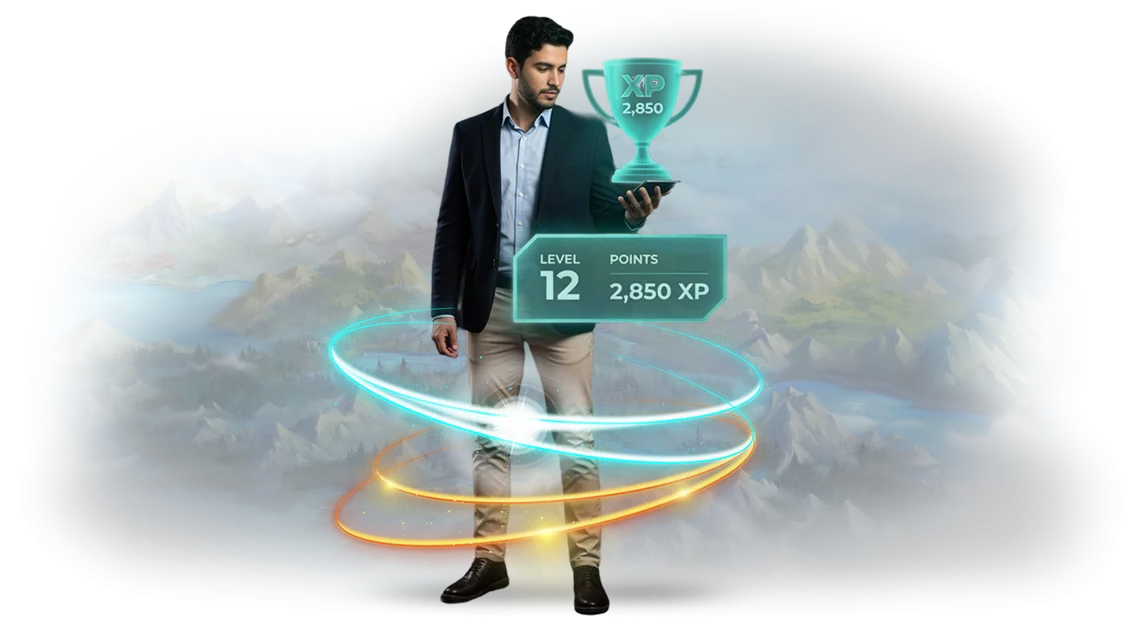
| Points, levels, achievements | Teams with clear regular KPIs: number of touches, task list completion, response speed | A transparent picture of each employee's contribution, better discipline, and plan completion without manual control |
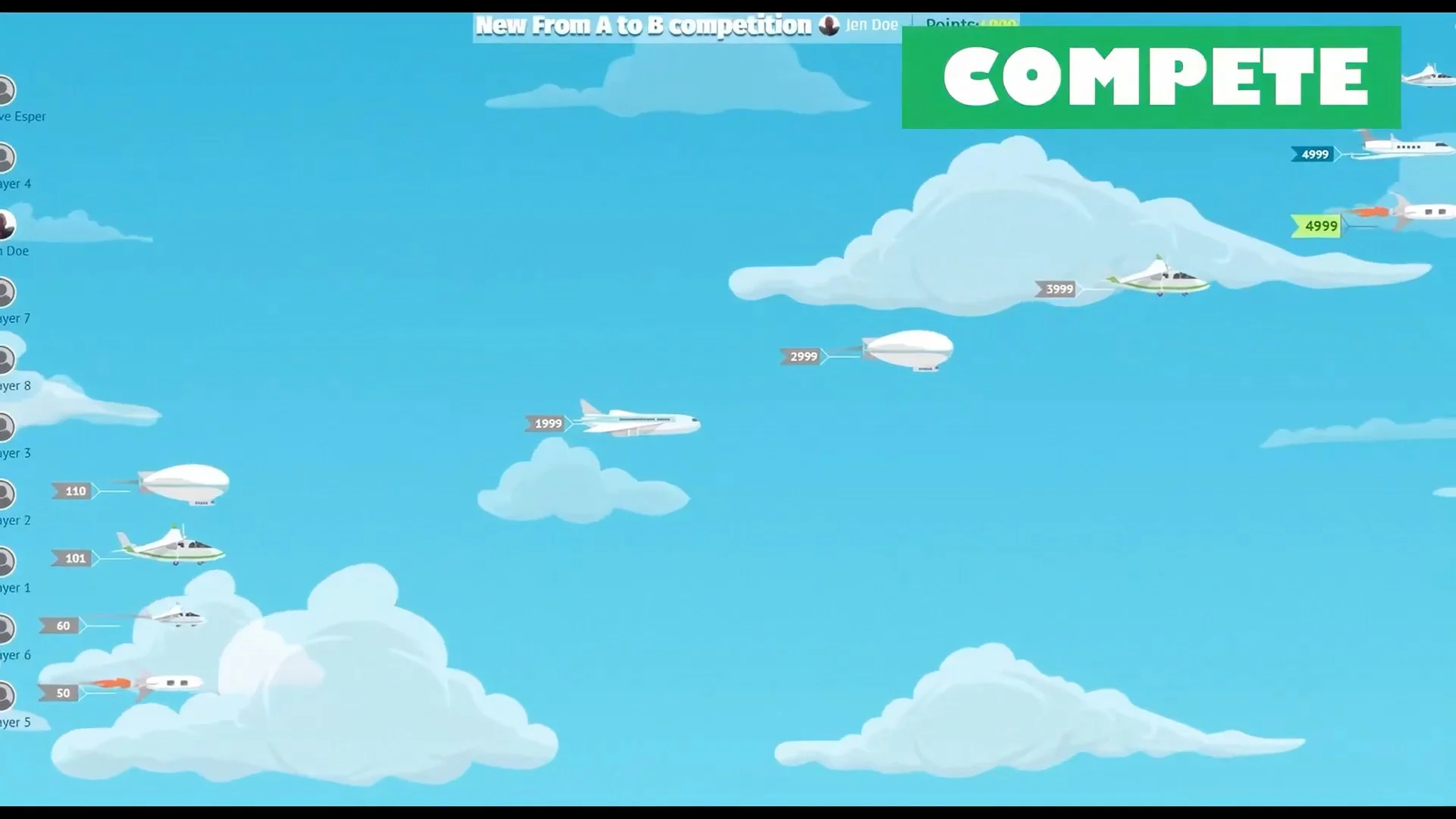
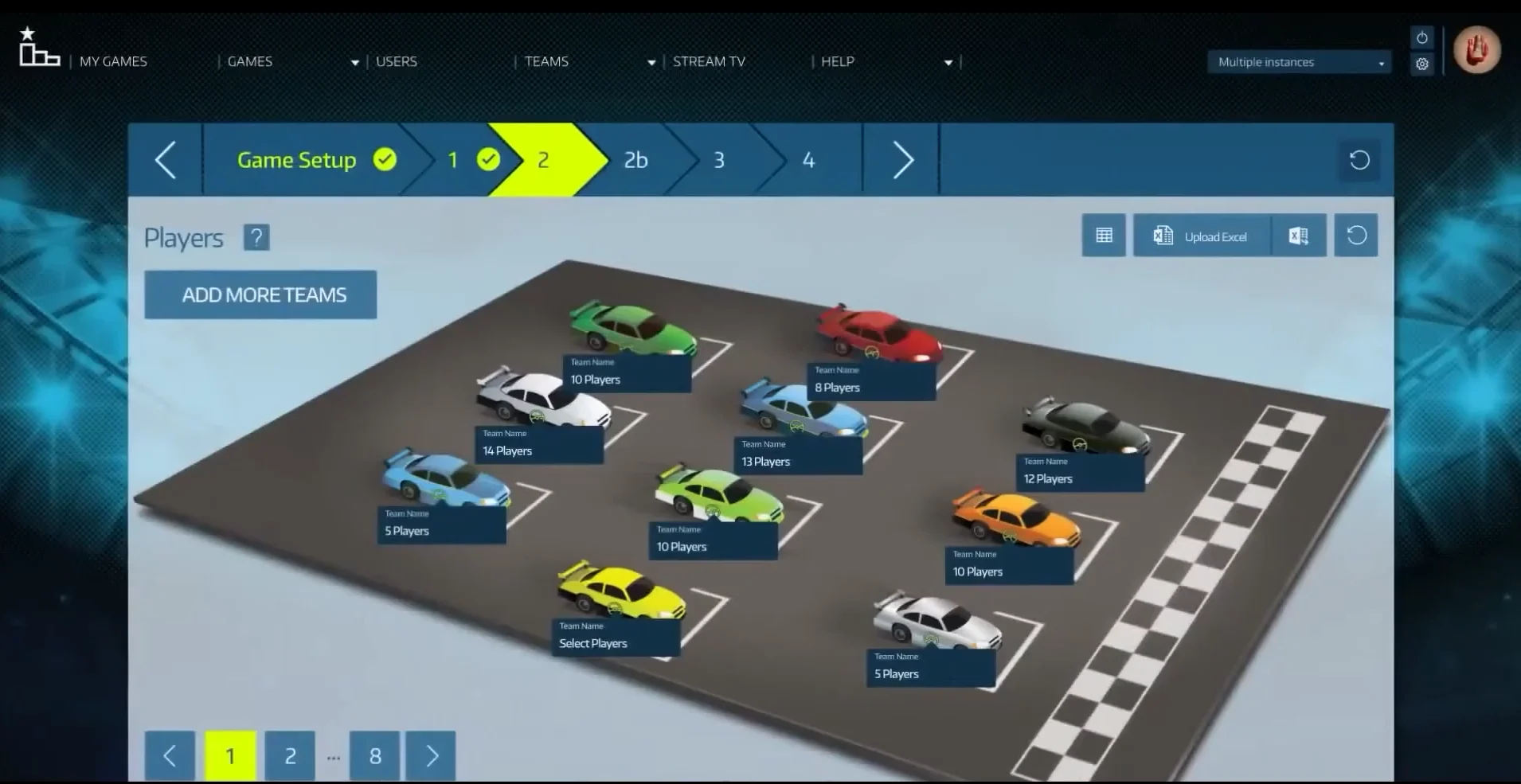
| Leaderboards and races | Motivated CSMs who enjoy competition and work with active sales | Higher conversion to upsales and repeat sales, healthy competition, clear leaders for bonus decisions |
| Team quests and collaborative tasks | Close-knit support and client service departments where mutual help matters | Reduced burnout, smoother teamwork, focus on the common goal instead of individual races |
These are not rigid boundaries: in one project we often combine mechanics — for example, a shared team quest plus personal points. The key is that the game leads to business metrics: higher client retention, growth in repeat sales, or reduced response time.
At the start, we analyze team motivation and select a format that delivers quick results without restructuring work processes.
Stages of implementing gamification in a client service department
We don't just "draw pretty dashboards" — we build a system that genuinely improves the quality of Customer Success Managers' work and noticeably reduces turnover.
The implementation process has been refined across dozens of client service projects and is broken into clear stages: you always know what is happening, who is responsible for what, and when the result will arrive.
-
Brief and audit of current motivation. We review how your CSMs work: which metrics are already tracked, what demotivates them, where engagement is lost. You fill out a short questionnaire and take part in an interview — then we take it from there.
-
Gamification concept design. We propose a game mechanics scenario: quests, levels, team challenges — tailored to your business goals. We align on it so the system motivates exactly the actions that matter for client retention and sales growth.
-
Prototype and approval. We create a visual mockup of the future interface and game rules. You see how tasks, points, and rewards will look for employees and make edits before development starts.
-
Development and integration. We set up the system so it works with your existing tools: CRM, tasks, chats. CSMs get a clear dashboard with progress and tasks without switching between programs.
-
Pilot group testing. We launch the system for several employees, collect feedback, and adjust the balance of rewards and difficulty. You see the first results and the team's readiness for a full launch.
-
Launch and support. We roll out the system to the entire department, train team leads, and advise on how to keep the team's enthusiasm alive. After launch, we stay in touch: we analyze metrics, suggest improvements, and make sure the game keeps working for your results.
The entire project takes two to eight weeks depending on the department's size. You control the key milestones without diving into development details — that's our area of responsibility.
In the end, you get not just "entertainment" for employees but a predictable tool visible in the numbers: higher client retention, faster ticket processing, and team engagement.
What's included in the delivery: a kit for launching the game system
After the project is complete, you get not just a program but a ready-to-use kit for launching a gamified motivation system. All documents, settings, and training materials are packaged so your team can launch the game on its own — without involving developers.
- Scoring and leveling rules — clear rules that are easy to adapt to your department's business processes.
- Game mechanics scenarios for CSM managers — quests, challenges, and team competitions aimed at growing client service metrics.
- Employee interface — a personal account with progress, ratings, rewards, and clear progression logic.
- Admin panel — a convenient tool for managing participants, rules, and game campaigns without help from programmers.
- Training materials — a short course for employees, an administrator's guide, and checklists for daily work.
- Launch plan — a step-by-step script for introducing the game to the team and getting the first results in the first week.
- Presentation for management — a clear summary of how the system affects results and what steps to take for further development.
All materials are delivered electronically, and you receive full rights to use them. After launch, we stay in touch: we'll help with setup, answer questions, and adjust the rules if needed — so the game keeps working toward results.
Case study: client activity growth after gamification implementation
A typical customer success manager lives in a routine: reminders, checks, reports. Attention scatters, tickets "stall," clients feel the cold — and leave for competitors.
That's how it was for the fintech service "Kler": the department managed to respond to 6 out of 10 tickets, and client activity declined month after month.
We embedded gamification into existing business processes — without changing the CRM and without stopping operations. The manager earned points for every client touch, bonuses for fast responses, and a new level for closing a contract.
On a shared dashboard, the team lead saw who was leading, where things stalled, and who needed support. For the team, it was a clear game with rewards; for the director, a transparent management system.
Project results after three months
- Client activity grew by 43%: customers return to the product more often and renew contracts.
- The share of tasks completed on time rose from 61% to 89% — "stalled" tickets disappeared.
- Department turnover halved: managers stopped burning out and saw career levels ahead.
Most importantly, the result holds after launch. Six months later, the team itself proposes new challenges, and clients notice the care.
The client scaled gamification to the sales department and ordered a second phase — the mechanics became part of the company's motivation system.
This case confirms: gamification is not entertainment but a tool that delivers measurable business impact and strengthens the team.
Frequently asked questions about developing gamified motivation systems
We understand your doubts: gamified motivation for Customer Success Managers isn't as familiar as KPIs or bonuses. That's why we've collected answers to the questions most often asked before getting started — so you can make a decision calmly, without fear of making a mistake.
What if employees don't embrace the game mechanics?
This is the main risk, and we close it before launch. At the start, we run a short team survey: what CSMs truly value, what reward formats resonate with them. We build the system on this data, not on abstract templates.
After launch, we spend the first two weeks in "fine-tuning" mode: we watch where employees lose interest and adjust the scenarios. If a mechanic doesn't land, we change it — we don't force the team to adapt.
What guarantees are there that the system will actually increase motivation?
We guarantee not a "magic pill" but a process: over our time in the field, we've accumulated experience implementing game systems for client teams across different industries.
Already at the brief stage, we show which mechanics will drive specific metrics — response time to clients, share of completed tasks, growth in repeat inquiries.
After launch, you get clear analytics: you can see which CSMs engaged, which actions became more frequent, and where the team is struggling. If metrics don't move, we stay in touch and refine the scenarios.
How long does implementation take, and won't it distract the team from work?
The standard cycle is two to four weeks from the brief. We follow a phased plan: first we dive into your processes, then we design the mechanics, and only then do we run a pilot on one group.
Employees don't need to learn complex tools — the whole game integrates into work processes and takes a couple of minutes a day. The pilot lasts one to two weeks, after which we jointly evaluate the results and scale the system to the entire team.
What stops CSMs from treating the game formally, "just for show"?
The short answer is proper mechanics. We design the system so that achieving real client goals is what's genuinely interesting: closing tickets, retaining users, collecting feedback. Competition and rewards are tied to actions that are already part of the job.
Plus, we build in content updates: new tasks, seasonal goals, and levels appear regularly, so the system doesn't have time to get stale. If a couple of months in you feel the enthusiasm fading — we'll come back and refresh the mechanics.
If you didn't find your question — call or write to us. We'll explain how gamified motivation could work in your specific team and help you make a decision without risk.Order a gamified motivation system for your CSMs
You don't need to be a technical expert to order gamification — just submit a request, and we'll handle the rest. You get not an abstract "game implementation" but a working tool that boosts CSM engagement and directly impacts client retention and plan completion.
Right after your request, we hold a short consultation to understand your goals: improve NPS, reduce churn, increase KPI achievement, or speed up onboarding for new employees.
Based on that, we prepare a launch plan, align it with you, and implement it without stopping work processes.
What you get after the project launch:
- A detailed motivation map: which CSM actions are rewarded and how this connects to business metrics.
- A transparent system of levels, points, and rewards that every employee can understand.
- Automated engagement reports — you can see who is active and who is losing interest.
- Ready-made scenarios for team leads: how to respond to motivation drops and maintain healthy competition.
- Integration with your current tools — no need to retrain the team.
- Support and refinement after launch: we adjust rewards and rules if we see something isn't working.
The main result: you stop manually tracking employee sentiment and get a predictable rise in their effectiveness. The team itself pursues the right actions because it becomes both rewarding and interesting.
Submit a consultation request — we'll discuss your tasks and show what gamification would look like in your specific case. The first step takes five minutes, and from there we support you through launch and the first results.
How to choose the right gamification format for your team?
There's no universal gamification format — what unites a small support team may fail in a department of twenty CSMs with different experience levels.
So you should start not by looking for a "trendy" mechanic but with the goal: improve response speed, reduce client churn, raise manager engagement, or improve the quality of initial consultations. Determine exactly what behavior you want to reinforce — that becomes the main selection criterion.
Next, assess the conditions: team size, whether employees are distributed across regions, and which KPIs are already tracked in the CRM. For a small department with a tight schedule, short tournaments and levels without a complex economy work well.
For a distributed team — team challenges or shared goals, to keep the spirit of competition without overloading people with daily races.
Expert tip: don't try to implement a large-scale system from day one. Choose one simple format that addresses the main pain point. After two or three weeks, check the dynamics: did ticket processing speed increase, did repeat sales appear, what do the CSMs themselves say?
If the metric moved — strengthen the mechanics; if not — change the format. This pilot approach reduces risk and almost never causes resistance.
Unusual conditions are not an obstacle but part of our working scenario.
Non-standard schedules, multiple time zones, a niche product, mixed employee motivation — for each such task, we assemble gamification from individual elements: levels, badges, shared goals, and personal progress.
At the first brief, we analyze your work rituals and propose a format that doesn't require breaking familiar processes. You get a system the team accepts as a natural tool, not as a mandatory game.