

Why logisticians and pickers at warehouses lose motivation
At a warehouse, every employee is a link that determines the speed and accuracy of the entire process. But monotonous work quickly loses its appeal: the same routes, the same zones, the same operations day after day.
As a result, staff turnover at the warehouse reaches dozens of percent per year, and training each newcomer takes weeks — during which their work proceeds slower than usual.
At the same time, the number of picker errors grows: missorting, missed items, damaged goods. Each such failure costs the company not only returns and compensation but also damaged customer trust.
When orders ship late or with the wrong contents, the reputation suffers, and fixing the consequences costs three times as much.
Low staff motivation directly affects overall warehouse productivity. An employee who doesn't see the point in working faster does exactly the minimum and stops as soon as external control disappears.
Managers try fines and orders, but pressure without engagement produces only a short-term effect and then demotivates even more.
We solve this problem with game mechanics built into daily processes. Logisticians and pickers at warehouses receive clear goals, visible progress, and competition that turns routine into a task with a result.
This restores interest in work, reduces turnover, and increases picking speed without losing quality.
What a gamified motivation system gives the business and the team
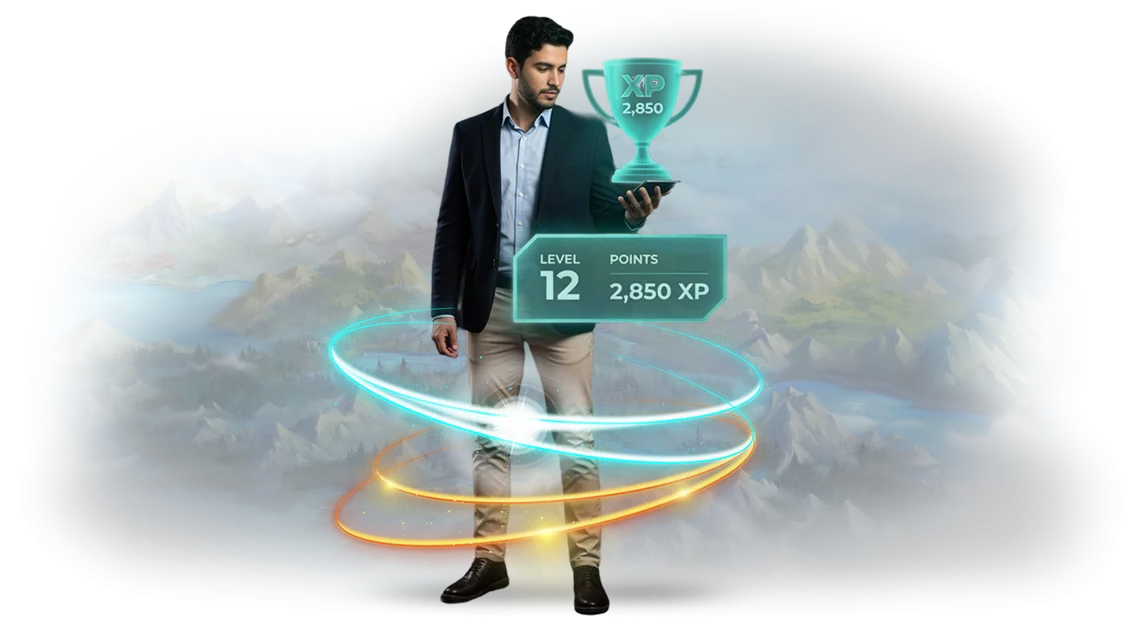
A gamified motivation system turns routine warehouse tasks into a clear race for results. The employee sees their contribution to the common cause and receives feedback not at the end of the month but every day.
For a manager, this isn't a game — it's a working management tool: it changes team behavior without additional pressure or control.
Efficiency gains show up in concrete numbers: order picking speed increases, assembly errors become rare, and equipment downtime shrinks. Game mechanics set a rhythm in which employees themselves strive to meet and exceed the target. The manager doesn't need to remind anyone about deadlines — the motivation system does it for them.
Employee engagement is the second key effect. When work becomes a game with levels, points, and rewards, the feeling of "I'm just a cog" disappears.
A logistician or picker sees their own progress and that of their colleagues, and understands what they're being rewarded for. This is especially important for warehouses with high turnover: people stay where their efforts are noticed.
Reduced turnover is directly tied to atmosphere. Healthy competitive relationships appear in the team, with fewer conflicts and more mutual support.
The team starts working as a single organism: experienced employees help newcomers because the collective result matters in the game too. The manager gets a stable team and saves resources on recruitment and training.
The game system is configured to your business processes and accounts for the warehouse's specifics. We use professional tools, so the result is predictable.
You get not just a game but a manageable mechanism that increases efficiency, retains valuable people, and creates an atmosphere people want to come to.
Gamification formats: from pilot to permanent system
Gamification of warehouse processes doesn't always require a large-scale rollout from day one. Often it's better to start with a small pilot — for example, on a single shift or picking area — evaluate the effect, and only then scale the solution to the entire warehouse.
In other cases, it's more profitable for the business to immediately build a permanent motivation system that works on daily metrics. Each format has its own purpose, timeline, and result.
| Format | Who it suits | What it gives the business |
|---|---|---|
| Pilot project (2–4 weeks) | Companies that want to test a hypothesis without large investments | Fast measurable results: 10–15% output growth, visible dynamics without changing the entire motivation system |
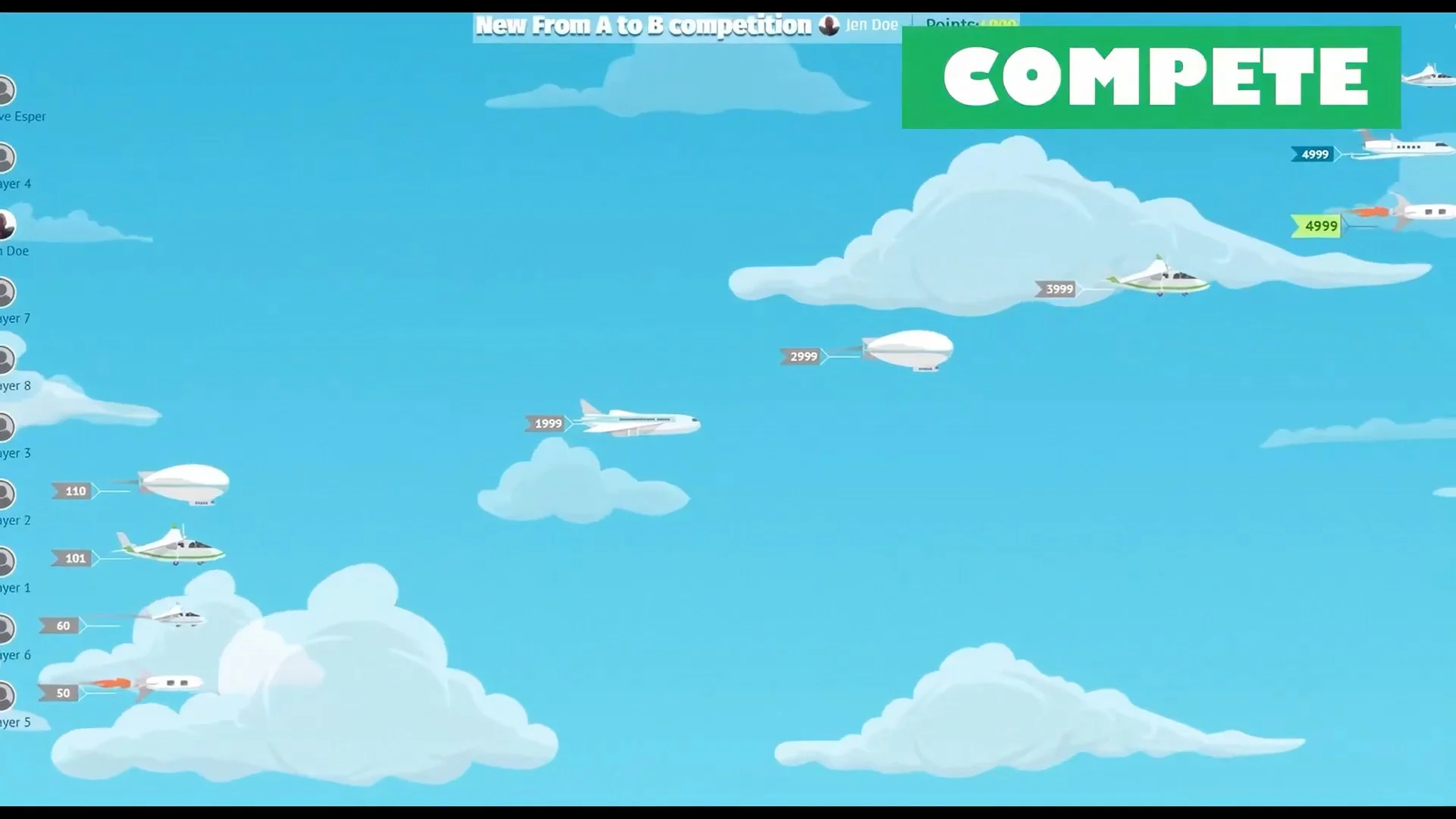
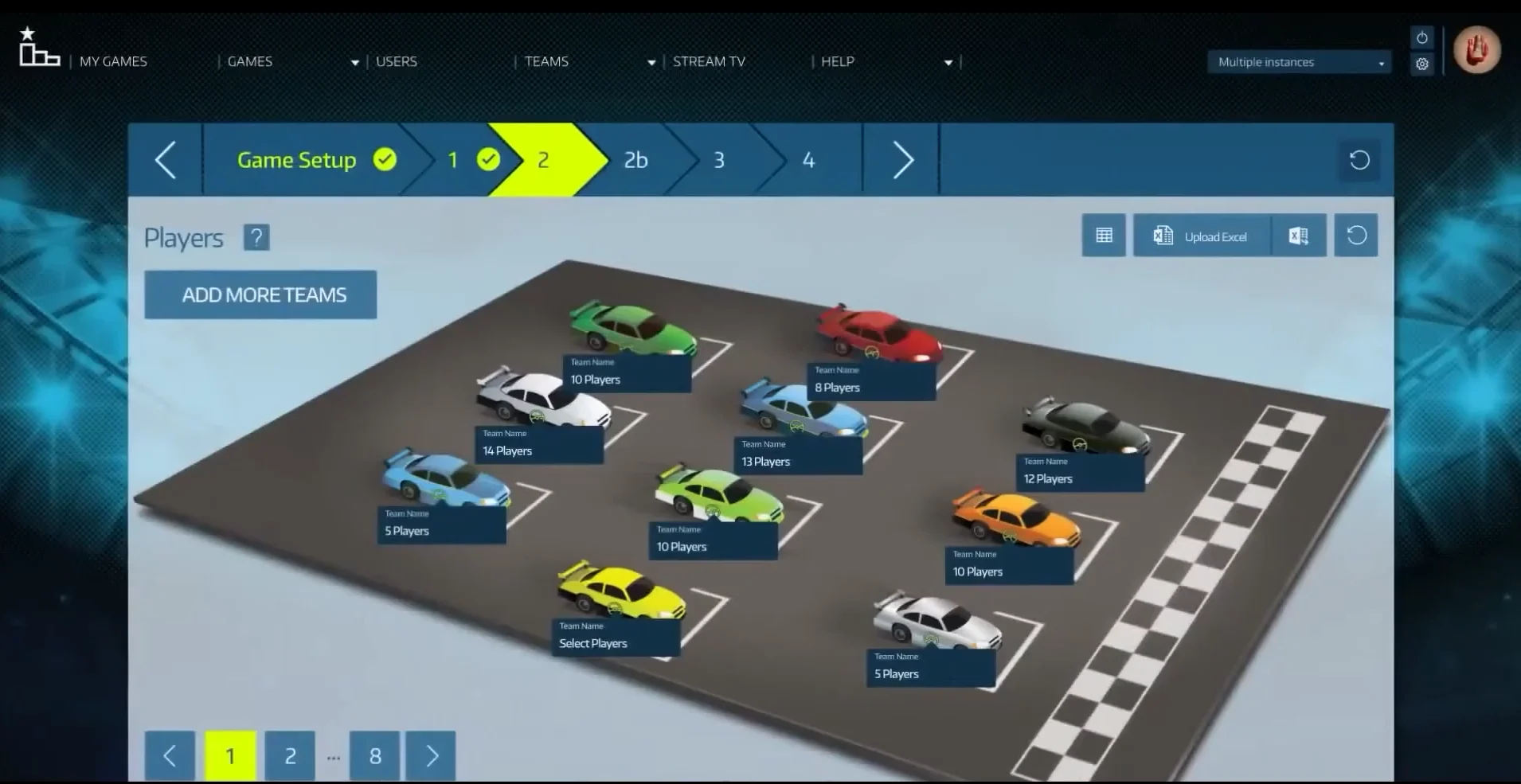
| Competition between shifts or teams | Teams of 20+ people where teamwork matters | Higher engagement, less downtime, healthy competition, and clear evaluation criteria |
| Gamified training | Newcomers and employees when new processes are introduced | 1.5–2x faster onboarding, fewer picking errors, quick ramp-up to standard productivity |
| Permanent motivation system | Established warehouses with high turnover or a need to retain staff | Long-term KPI growth, lower turnover, regular feedback, and accumulated points/statuses as a non-financial incentive |
The choice of format depends on process maturity and the pain point. If the priority is to quickly show results to management and "sell" the idea inside the team, choose a pilot.
If you want to systematically improve productivity and retain key employees, implement a permanent system — it pays off through reduced recruitment and training costs.
In any case, we'll help design mechanics around your metrics and support the launch until the result is sustainable.
How gamified motivation development for a warehouse works
Implementation stages
Developing gamified motivation for a warehouse is a step-by-step process with clear stages and checkpoints. We don't hide details behind abstractions: you see how the game will affect the work of logisticians and pickers, and you can make decisions at every step.
-
Brief and audit of your warehouse. We study the processes, metrics, and team tasks: picking speed, error rates, turnover. We determine which mechanics suit you — individual leaderboards, team competitions, or quests.
-
Game system design. We develop gamification around your business metrics: what points are awarded for, how the ranking is formed, what statuses and rewards the best employees will receive. You approve the rules before the game appears on the warehouse floor.
-
Integration with operational data. We connect the game platform to data on orders, picking, and shipments. Results are calculated automatically — no manual entry and no arguments over who picked what.
-
Pilot game launch. We run the mechanics on one shift or area, collect employee feedback, and fine-tune the balance. At this stage, you see the first numbers and understand how people respond.
-
Scaling across the warehouse. After the effect is confirmed, we roll the gamified motivation out to other zones and shifts. We train shift leads, explain the rules, and set up screens and notifications.
-
Project support and development. We stay in touch after the launch: refresh assignments, add seasonal events, and make sure interest in the game doesn't fade. You get not a one-off campaign but a long-term people-management tool.
In the end, the process is transparent: at every stage, you understand what's happening, what decisions have been made, and when to expect measurable results.
What's included in the employee game delivery
When you order gamification, it's important to understand what you get in the end — not just a presentation with an idea, but a working tool that can be implemented immediately.
We hand over a complete package so your team doesn't ask "how does this work?" and doesn't waste time guessing.
- A ready-made solution for your processes. The game mechanics are already configured for warehouse tasks: receiving, picking, packing, shipping. You don't need to adapt generic templates — the system works on your logic from day one.
- Game rules for employees. A clear guide describing levels, points, bonuses, and winning criteria. A logistician or picker needs five minutes to understand and join in.
- Admin panel for the manager. You see rankings, progress, and team performance in real time. It's easy to track who's leading and who needs support, and to make decisions based on facts rather than feelings.
- Staff training. We run short sessions for line employees and managers: explain the mechanics, answer questions, and show how to use the system. Training takes minimal time and doesn't stop warehouse operations.
- Documentation for your team. All regulations, cheat sheets, and setup and operation instructions are handed over to you. Even if the person in charge goes on vacation, the system won't break — colleagues will figure it out on their own.
- Launch support. We're there in the first weeks: help with setup, answer questions, and fine-tune the mechanics to real processes if needed.
All of this is packaged into a single kit that starts delivering results right after launch. You get not a "game for the sake of a game" but a management tool that increases work speed and reduces turnover — without extra costs of building from scratch.
Case study: how we reduced staff turnover in two months
"Logistika-Region" is a distribution center with 320 employees, including 120 pickers and logisticians.
The gamification case started with an acute pain point: staff turnover reached 40% per year, training a newcomer took three weeks, and peak orders were missed due to a shortage of hands. Each departing employee cost the company a month of downtime and a missed deadline. The warehouse lost up to 30% of its time adapting new people.
We conducted a two-day audit and implemented a gamified motivation system at the warehouse: team competitions, levels, and rewards for picking speed and accuracy. Instead of abstract metrics, employees got clear rules, and managers got a live leaderboard. The focus was on long-term engagement rather than one-off bonuses.
Results of the implementation
In two months, staff turnover dropped from 40% to 18% on an annualized basis, productivity rose by 22%, and picking errors fell by 30%.
No one in the pilot department resigned voluntarily, and recruitment costs were cut in half — there was no need to hire anyone before the season.
Client testimonial
The warehouse manager confirms: "At first I doubted that grown adults would chase points. Two weeks later, the teams themselves were asking to put the leaderboard on screen. The main result isn't the numbers — it's that people stopped leaving.
We got through the season calmly, without firefighting and extra hiring." The project paid for itself within the first six weeks through lower hiring and downtime costs.
After the pilot, the client expanded the system to the entire warehouse and logistics department, then ordered implementations in three more branches. We stayed on for support and update the game scenarios monthly to keep interest alive.
How to choose a gamification format for your team
Choosing a gamification format isn't a question of "what's trendy" but of "what will solve your problem." A warehouse with night shifts and high turnover needs one system; a small team where picking accuracy matters needs a completely different one.
There's no universal recipe, so start by defining the problem: is picking speed dropping, is the error rate rising, or is employee engagement falling?
The right format comes from analyzing your processes: how many people per shift, how responsibility zones are divided, what metrics you already collect, and what you want to improve. If the goal is to reduce errors, individual challenges with clear criteria work well.
If you need to speed up order processing, team competitions between crews are the answer. If the task is to retain staff, a system of levels and accumulating bonuses where employees see their own growth is the way to go.
We don't force your team into a ready-made template. First, we study your warehouse, talk to logisticians and pickers, look at real metrics — and only then calculate which format will deliver results.
Gamification should fit into the workflow, not distract from it: the employee sees a clear goal, and the manager sees transparent statistics without additional manual work.
For this to work, presentation matters too: one team needs the spirit of competition, another — quiet individual goals instead. We help you choose mechanics that won't be rejected by the team and prepare a launch plan that accounts for the specifics of your shifts and workload.
Leave a request for a consultation — in 15 minutes we'll discuss your situation, suggest which gamification format fits, and give a preliminary estimate of the implementation cost for your tasks. This is free and doesn't obligate you in any way.
Frequently asked questions about gamification implementation
Implementing a gamified motivation system raises the same questions among warehouse managers. Most often they worry that employees will reject the innovation, that shipments will stall during setup, and that the game won't fit into established processes.
We answer these concerns based on our logistics project experience — and show how we address each risk.
What if employees refuse to participate?
Gamification doesn't replace the pay system and doesn't force anyone to play against their will. We configure the mechanics so they complement existing metrics and are understandable from the first days.
In the pilot area, employees see their results in a personal dashboard, and the shift lead retains the right to encourage without pressure.
Will warehouse operations stop during implementation?
Implementation runs in parallel with core operations. We don't change picking routes or require shipments to stop: first we connect the module on one shift, then scale it. Usually two to three days of adaptation are enough, and during that time the warehouse operates as usual.
How does the game adapt to our processes?
Every project starts with an analysis of your operations: what you measure, how you distribute tasks, where the bottlenecks are. The mechanics are configured around these parameters, not the other way around. If a process changes, we adjust levels and scenarios without stopping work.
What happens when interest in the game fades?
A gamified motivation system isn't static: we monitor activity and periodically refresh assignments, introduce new levels, or launch team competitions. That's why the effect lasts for months rather than fizzling out after the first week. Plus, you receive a dynamics report so you can see the system's value and make adjustments in time.
Discuss your task and get an implementation plan
We'll prepare a gamification cost estimate, an implementation plan, and a solution presentation tailored to your warehouse's tasks.
To start, leave a request for a quote: we'll review your current motivation system and show how game mechanics will speed up order processing and reduce turnover among logisticians and pickers.
What you get in response to your request:
- A gamification cost estimate for your scale: number of employees, transaction volume, and timelines.
- A step-by-step implementation plan: from configuring metrics to pilot launch and result tracking.
- A solution presentation for management: visual, with a forecast for key warehouse metrics.
- Recommendations on game scenarios: competitions, levels, rewards — what fits your team best.
- Implementation examples for warehouses with similar specifics and the expected effect.
- A consultation with the company's manager: we'll answer questions and adjust the plan to your business processes.
After your request, our gamification specialist will contact you. They'll clarify the details: the number of logisticians and pickers, current performance metrics, and which tasks need motivation first.
As a result of the conversation, you'll receive a transparent cost estimate and a clear implementation plan — without generic phrases or technical detail.
Leave a request for a quote — it doesn't obligate you in any way. Instead, you get specifics: what gamification costs, how to launch it, and when to expect the first results. Fill out the form or message us — we'll arrange a consultation at a convenient time.